Home Blog Page 125

The deep depression in the Bay of Bengal to intensify further and move northwestwards

0

The deep depression in the Bay of Bengal to the southeast of Sri Lanka (At 04:00 a.m. on Jan 9th, 2026 located about 200 km South east of Batticaloa) is very likely to intensify further and move northwestwards towards the coast of Sri Lanka between Pottuvil and Trincomalee in the evening today, the 9th January 2026. 

Cloudy skies can be expected over most parts of the island.

Showers or thundershowers will occur at times in Northern, North-central, Eastern, Uva, Central and North-western provinces. 

Showers or thundershowers may occur at several places elsewhere during evening or night.
Heavy falls above 100 mm are likely at some places in Northern, North-central provinces and in Matale, Trincomalee and Puttalam districts. Fairly heavy falls about (50-75) mm are likely at some places in Kandy, Nuwara-Eliya and Batticaloa districts.

Very strong winds at times about (50-60) kmph and gusting up to 70 kmph can be expected at times over Eastern slopes of the central hills, Northern, North-central, North-western, Central, Uva, and Eastern provinces and in Gampaha and Colombo districts. 

The general public is kindly requested to take adequate precautions to minimize damages caused by temporary localized strong winds and lightning during thundershowers.

The Sorry State into Which Harini Has Fallen

0

By Adolf

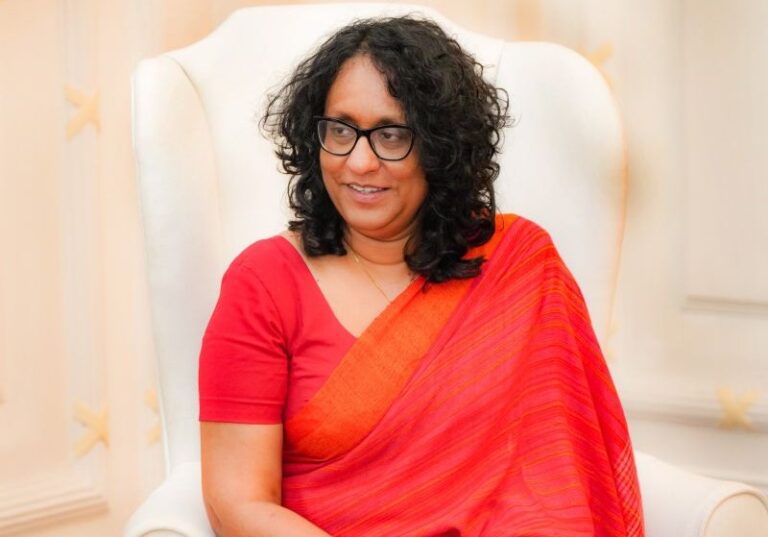
Harini Amarasuriya’s political ascent is, by any standard, extraordinary. From a life once grounded in modest routines—travelling by bus or three-wheeler to the Open University—she rose, by a remarkable stroke of circumstance, to occupy the 2 nd highest executive office in the land. Such leaps are rare, and when they occur, they demand not celebration alone, but humility, restraint, and a deep respect for the weight of public office.Unfortunately, that humility now appears to be in short supply. The transition from academic and activist spaces into the office of Prime Minister is not merely a change of designation; it is a profound shift in responsibility. Public office is not a classroom seminar, nor is it an NGO forum. It requires political judgement, institutional sensitivity, and an understanding that personal beliefs—however sincerely held—must always be filtered through democratic process, public consultation, and national consensus.


Attitude of Harini

Instead, what the country has witnessed is a rapid transformation not just in office, but in attitude. The optics alone are troubling. The move from public transport to convoys, luxury vehicles, and layers of security may be justified as “protocol,” but symbolism matters in a country still grappling with economic scars, institutional fatigue, and eroded public trust. Leaders are judged not only by policy outcomes, but by conduct—and visible disconnect sends the wrong signal at a fragile moment.


Education Sector

More troubling, however, is the controversy surrounding the Grade 6 English Language module. The inclusion of sensitive and questionable content, combined with factual and pedagogical errors, exposed serious weaknesses in the government’s approach to education reform. What followed was even more damaging: confusion, deflection, and an unconvincing attempt to shift blame when public concern mounted. Governance by scapegoating is neither ethical nor competent. If decisions are taken at the top, responsibility must also be owned at the top. Hiding behind officials or committees when pressure mounts is an abdication of leadership.


Liberal outlook

Harini’s personal worldview is no secret. Her Western academic exposure and progressive social outlook are well documented, and she is entitled to those views. In a pluralistic democracy, such perspectives have a legitimate place in debate. But entitlement to belief does not translate into authority to impose. When it comes to children, education, and deeply rooted cultural sensitivities, the bar must be higher—not lower. Curriculum reform, particularly on issues intersecting values, identity, and family, demands rigour, transparency, and broad-based consultation. Parents, educators, and subject specialists must be part of the process. It cannot be driven by ideological enthusiasm or activist urgency. To do so is to confuse advocacy with governance, and conviction with consent. The Prime Minister’s response to criticism has only compounded the problem. The reflexive tendency to shift blame or involve law enforcement agencies such as the CID in matters of public debate creates a chilling effect and undermines democratic accountability. Governments are elected to govern, not to intimidate dissent or deflect scrutiny. Public patience is not limitless.


Impeachment

It is against this backdrop that the opposition has moved to prepare a no-confidence motion against Dr. Harini Amarasuriya in her capacity as Minister of Education. On 7 January 2026, a discussion was held under the auspices of Leader of the Opposition Sajith Premadasa, with wide participation from opposition Members of Parliament. According to those involved, the motion is being planned due to unsuitable content in school materials, numerous errors in subject matter, and the failure to address these shortcomings in a timely, transparent, and systematic manner.Calls for resignation do not arise in a vacuum. They emerge when a pattern forms—of weak execution, poor judgement, and an inability to manage fallout responsibly. The real issue here is not rights versus conservatism, nor progress versus tradition. It is about process, accountability, and respect for the public. A Prime Minister is a trustee of the people’s mandate, not a custodian of personal preference. When that distinction is blurred, institutions suffer and trust erodes. Sri Lanka has endured enough damage from leaders who believed they knew better than the people. We cannot afford another chapter of moral certainty coupled with political inexperience. When serious errors are made, the only credible response is ownership, correction, and accountability. If the discipline demanded by high office proves incompatible with personal convictions or governing style, then stepping aside is not a failure—it is an honourable duty.History is unkind to leaders who mistake power for permission. Sri Lanka, at this fragile moment, deserves better.



Gem Sri Lanka 2026 Set to Shine on Global Stage

0

By: Staff Writer

January 08, Colombo (LNW): Building on the momentum of its first two highly successful editions, Gem Sri Lanka 2026 is set to become a landmark event for the country’s gem and jewellery industry when it unfolds on 7, 8 and 9 January 2026 at the prestigious Shangri-La Colombo.

Organised by the Ceylon Gem and Jewellery Traders Association (CGJTA) Sri Lanka’s largest industry body representing more than 2,000 members the exhibition has rapidly evolved from a focused trade showcase into an internationally recognised marketplace for coloured gemstones.

The shift to Shangri-La Colombo marks a significant milestone in the exhibition’s journey. What began as a niche industry initiative has grown into a major global event, reflecting the expanding scale and international relevance of Sri Lanka’s gem trade. With over 100 world-class exhibitors already confirmed, Gem Sri Lanka 2026 is expected to be the largest display of coloured gemstones ever held in the country.

Organisers anticipate double the number of foreign buyers and trade professionals compared to previous editions, alongside a wider international audience. This surge in participation reinforces Sri Lanka’s reputation as one of the world’s most trusted and admired sources of premium sapphires and coloured gemstones.

Adding to the event’s stature, Prime Minister Dr. Harini Amarasuriya will attend as Chief Guest at the official inauguration, underlining the national importance of the gem and jewellery sector as both a cultural legacy and a key contributor to the economy.

Visitors can expect an immersive industry experience, featuring an exceptional collection of sapphires and high-value coloured gemstones. A major social highlight will be “Gala 2026 – Brilliance and Beyond,” designed as a glamorous networking platform that brings together traders, international buyers and industry leaders.

Another defining moment will be the launch of a landmark publication titled “The Sapphire Legacy,” chronicling Sri Lanka’s centuries-old association with gemstones and its enduring global influence.

With its expanded scale, prestigious venue, high-level leadership presence and heritage-focused initiatives, Gem Sri Lanka 2026 represents far more than a trade exhibition. It is a powerful statement of confidence in Sri Lanka’s gem industry and its future direction.

As global attention turns to Colombo this January, Gem Sri Lanka 2026 is poised to reaffirm the island’s position at the pinnacle of the international gem and jewellery trade.

Sri Lanka’s gem and jewellery sector is entering a decisive phase, shaped by renewed global demand, growing foreign exchange needs and increased competition among gemstone-producing nations. Events such as Gem Sri Lanka 2026 highlight how the industry is repositioning itself not only as a heritage-driven trade, but as a modern, export-oriented sector aligned with global standards.

A key challenge today is market access and buyer confidence. International buyers increasingly seek transparency, traceability and streamlined trade processes. This is where FACET plays a crucial role. By supporting industry facilitation, structured engagement and trade connectivity, FACET helps bridge local traders with global markets, enabling smoother transactions and stronger international trust.

Platforms like Gem Sri Lanka, supported by facilitation mechanisms such as FACET, allow Sri Lanka to showcase scale, quality and credibility in one setting. This collective approach strengthens bargaining power, enhances value addition and positions the industry to contribute more effectively to export earnings at a time when non-debt foreign exchange inflows are critical.

Private Sector Pensions on the Table as EPF Faces Overhaul

0

By: Staff Writer

January 08, Colombo (LNW): Sri Lanka’s proposal to transform the Employees’ Provident Fund (EPF) from a lump-sum retirement payout into a monthly pension marks one of the most significant potential reforms in private sector social security. Announced in early 2026 and reiterated in Parliament by Deputy Minister of Labour Mahinda Jayasinghe, the initiative aims to provide long-term financial stability for millions of private sector workers who currently exit employment with a single payment and no guaranteed post-retirement income.

The rationale behind the proposal is clear. While the EPF was designed as a safety net for retirement, lump-sum payments often expose retirees to financial risk. Poor financial planning, inflation, rising healthcare costs, and longer life expectancy mean that many retirees exhaust their EPF savings within a few years. In contrast, a pension-style system would provide a steady monthly income, similar to what public sector employees receive, ensuring sustained income security throughout retirement.

Under the proposed framework, EPF and the Employees’ Trust Fund (ETF) may be restructured into a part-pension fund under the Treasury. Retiring members would have options: withdraw a portion as a lump sum while converting the balance into a monthly pension, or withdraw the full amount at retirement. Officials have noted that legislative amendments to the EPF Act would be required, as the current structure does not qualify as a pension scheme. Discussions on funding mechanisms and governance reforms are already underway, with amendments anticipated following policy groundwork laid in late 2025.

From a feasibility standpoint, the reform has several advantages. Sri Lanka’s ageing population and shrinking workforce make pension sustainability a national priority. Converting EPF into a pension-style system could reduce future elderly poverty and lessen reliance on state welfare. Pooling funds over longer periods may also allow more strategic, long-term investments, potentially improving returns for contributors.

However, viability depends heavily on governance, transparency, and trust. EPF funds have historically been managed by the Central Bank, and the proposal suggests moving oversight under the Treasury an idea that raises concerns about political interference. Past attempts, notably in 2011, collapsed amid public protests fueled by fears that workers’ savings would be used to finance government deficits.

There are also structural challenges. Pension liabilities are long-term commitments, requiring actuarial discipline, robust regulation, and insulation from short-term fiscal pressures. Without these safeguards, a pension scheme could become financially unsustainable or erode contributor confidence.

In essence, transforming the EPF into a pension fund is conceptually sound and socially beneficial, but its success hinges on design integrity. If implemented with strong legal protections, member choice, and transparent management, it could redefine retirement security for Sri Lanka’s private sector. Without them, it risks becoming another well-intentioned reform undermined by execution.

IMF Orthodoxy Risks Renewed Crisis for Sri Lanka

0

By: Staff Writer

January 08, Colombo (LNW): Sri Lanka’s continued reliance on the IMF-led debt restructuring framework may offer short-term stability, but critics warn it also carries serious long-term risks particularly if the country deviates from promised reforms or if the programme itself proves too rigid to absorb new shocks.

The ongoing restructuring rests on strict targets set by the IMF’s Debt Sustainability Analysis, which aims to restore market confidence and prevent a repeat of the 2022 default. Yet even the IMF has acknowledged that Sri Lanka’s recovery path is “knife-edged,” with a significant probability of renewed debt distress if growth falters or external shocks intensify.

Recent cyclone damage has exposed these vulnerabilities. Reconstruction is expected to cost between US$6–7 billion, far exceeding available foreign exchange reserves. At the same time, external debt servicing continues to absorb a large share of government revenue, leaving little room for emergency spending without breaching IMF targets.

Supporters of the programme argue that deviating from IMF conditions would jeopardise access to concessional financing and scare off investors. Any unilateral suspension of debt repayments, they warn, could undermine credibility and delay Sri Lanka’s return to international capital markets.

However, critics counter that rigid compliance carries its own dangers. Continuing repayments while borrowing more for recovery simply shifts the burden into the future, increasing the risk of another restructuring. Moreover, heavy dependence on external discipline limits the government’s ability to respond democratically to voter demands for social protection, climate resilience, and inclusive growth.

There is also the question of fairness. Private creditors, particularly holders of international sovereign bonds, benefited from high interest rates during boom years. If Sri Lanka is forced to maintain harsh fiscal adjustments to satisfy these creditors, public trust in both domestic institutions and the international financial system may erode further.

Deviating from the IMF programme is not without cost, but neither is blind adherence. Failure to adapt targets to new realities such as climate disasters or global downturns could lock Sri Lanka into a cycle of low growth, social strain, and repeated debt renegotiations.

The debate ultimately centres on sovereignty and risk-sharing. A more flexible approach, critics argue, would involve deeper debt relief, temporary suspension of repayments during crises, and greater recognition of climate-related losses. Without such adjustments, Sri Lanka may technically remain “on programme” while remaining economically fragile.

As restructuring talks continue, policymakers face a stark choice: prioritise credibility with creditors at all costs, or recalibrate the programme to ensure long-term sustainability and social stability before another crisis forces the issue.

When Power Forgets Justice: A Warning from History’s Fallen Strongmen

0

By: Roger Srivasan

History has an unforgiving memory. Dictators may rule by fear, deception, and brute force, but time has an unerring habit of lifting the veil. The illusion of invincibility dissolves; the record remains. From Latin America to the Balkans—and yes, closer to home—the rise and fall of despots offers a singular, immutable lesson: crime never pays—if not before men, then before history itself.

Let us revisit three notorious figures whose ascent was swift, whose cruelty was systemic, and whose downfall was inexorable.


Manuel Noriega — The Proxy Who Outlived His Usefulness

Manuel Noriega’s rise was forged in the murky corridors of Cold War expediency. Groomed as an intelligence asset, he ascended Panama’s military hierarchy to become the country’s de facto ruler in the 1980s—a strongman shielded by usefulness.

Yet power corrupted absolutely. Torture, disappearances, and political assassinations became routine, while narcotics trafficking and money laundering flourished behind the mask of authority. Elections were subverted; dissent was crushed. When Noriega ceased to be convenient and dared to defy his patrons, the shield vanished.

In 1989, foreign troops entered Panama. Noriega was captured, tried abroad, and imprisoned. His story is a brutal reminder: those who rule as proxies are ultimately expendable.


Augusto Pinochet — Order Built on Terror

Augusto Pinochet seized power amid ideological hysteria, promising order and stability after the overthrow of a democratically elected government. What followed was not order, but institutionalised terror.

Thousands were executed or “disappeared.” Tens of thousands endured torture, exile, and psychological ruin. For years, Pinochet believed constitutional immunity and distance would protect him.

Then came 1998. Arrested in London under the principle of universal jurisdiction, he learned a sobering truth: borders do not shield crimes against humanity. Though he died before final judgment, the myth of eternal impunity died first.


Slobodan Milošević — Nationalism as a Weapon

Slobodan Milošević weaponised grievance. In the chaos following Yugoslavia’s collapse, he inflamed ethnic nationalism, portraying brutality as patriotism and conquest as defence.

The consequences were catastrophic: ethnic cleansing, mass displacement, and crimes that scarred Europe anew. Milošević ruled as if sovereignty were a permanent shield.

It was not. Overthrown by his own people and extradited to The Hague, he became the first sitting head of state tried for war crimes. He died in custody—his legacy sealed not by monuments, but by indictments.


A Mirror Held Up to Sri Lanka

Sri Lanka, too, was not devoid of its own home-grown dictators, if we are honest enough to trawl back through the troubled chapters of our once battered and bruised nation. Power here was often personalised; institutions hollowed out; dissent suppressed. The state was bent to serve narrow political dynasties, while fear and patronage masqueraded as governance.

Those years left scars—economic, social, and moral. They fractured trust and fractured identity, teaching citizens to see the state not as a guardian, but as a predator.

Yet today, there is a rare and remarkable reprieve.

Under the new administration led by Anura Kumara Dissanayake, governance has begun—carefully, deliberately—to speak the language of probity, restraint, and accountability rather than entitlement. What is most striking is not merely a change of leadership, but a change of national mood.

For the first time in our post-independence history, people are beginning to feel Sri Lankan together—not divided by ethnicity, class, or political lineage, but united by a shared stake in the future of Sri Lanka.

Cynicism is slowly yielding to civic pride; fear to participation; resignation to responsibility.

This moment does not demand blind adulation. It demands vigilance. But it does deserve recognition. After decades of authoritarian drift and moral exhaustion, Sri Lanka appears—at last—to be relearning the art of collective self-respect.


A Stern Warning—and a Hopeful Coda

To the tyrants still ruling by repression, propaganda, and violence: the ledger is being kept.
Big Brother may not knock today.


Justice may not arrive tomorrow.

But history never forgets—and when the reckoning comes, it arrives without mercy.

Call it international law, collective memory, or—if one prefers—divine justice. The name is immaterial. The outcome is not.

Crime does not pay. Not in the end.

And Sri Lanka’s tentative renewal stands as living proof that even nations once bruised by authoritarianism can reclaim dignity—when power is humbled, and people rediscover themselves not as subjects, but as citizens.

Sri Lanka’s Recovery Tested by Politics, Policy, and Contradictions

0

By: Staff Writer

January 08, Colombo (LNW): Sri Lanka’s fragile recovery is being tested not only by external pressures but also by internal contradictions that continue to blur policy direction and weaken investor confidence. While the government projects stability and reform, inconsistencies in political messaging, economic management, and foreign policy are raising concerns about whether the country is fully prepared for the next phase of its recovery.

At the heart of the challenge is governance coherence. The ruling coalition brings together ideologically diverse forces, ranging from pragmatic reformists to hardline Marxists. This ideological tension often spills into public discourse, creating confusion among international partners and domestic stakeholders alike. Recent mixed signals on foreign policy, particularly regarding major global powers, highlight the risks of speaking in multiple voices in an interconnected world.

Economically, Sri Lanka has made measurable progress since its debt default, with growth hovering around 3.9% in 2024 and 2025. Manufacturing, construction, and services have shown resilience, and macroeconomic stability has improved. However, this recovery remains shallow and vulnerable. High exposure to external shocks such as shifting trade policies, energy price volatility, and weakening global demand continues to loom large.

The ongoing tariff dispute with the United States underscores these vulnerabilities. Although reciprocal tariffs have been reduced to 20%, they remain at historically high levels and disproportionately affect export-dependent sectors like apparel and rubber. Thousands of jobs are at risk, and export earnings are under pressure at a time when foreign exchange inflows are critical.

Beyond trade, structural weaknesses persist. Productivity growth remains sluggish, investment levels are below potential, and policy execution often lags behind rhetoric. Weather-related disruptions, especially floods and droughts, are increasingly affecting agriculture and infrastructure, while dependence on remittances from the Middle East exposes the economy to geopolitical and labor-market shifts beyond Colombo’s control.

Constructive criticism must also address political accountability. While the government emphasizes transparency and reform, public trust hinges on consistent decision-making, clear communication, and demonstrable outcomes. Investors and development partners look for predictability not ideological posturing or mixed signals that can undermine confidence.

Yet opportunities remain. Sri Lanka’s strategic location in the Indo-Pacific, its educated workforce, and improving tourism prospects provide a foundation for sustainable growth. Deepening trade partnerships, investing in climate resilience, and accelerating digital and technological adoption could help insulate the economy from external shocks.

Ultimately, Sri Lanka’s challenge is not merely economic but institutional. Recovery will depend on aligning political ideology with economic reality, ensuring foreign policy discipline, and translating reform promises into tangible results. Without that alignment, progress risks stalling just as the country begins to regain its footing.

Defence Consultative Committee Reviews Northern Development and Coastal Concerns

0

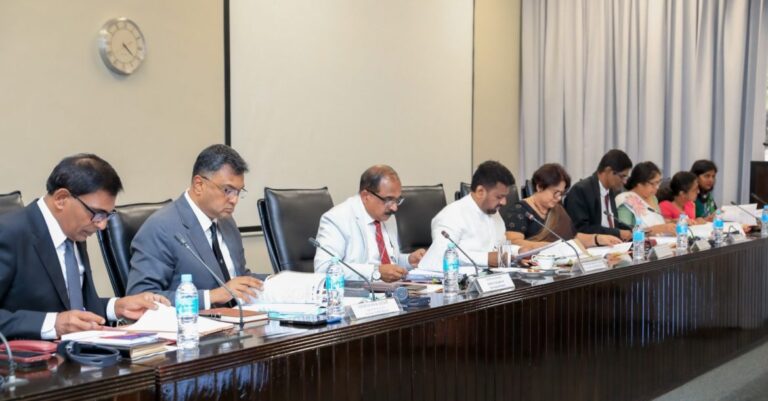
January 08, Colombo (LNW): The Ministerial Consultative Committee on Defence of the 10th Parliament met this week under the chairmanship of President Anura Kumara Dissanayake, with discussions centred on national security matters and several region-specific development issues.

At the meeting, members reviewed the follow-up action taken on decisions reached at earlier sessions. Progress was reported on a number of long-standing concerns, particularly initiatives linked to the Northern Province, including the phased release of land, the reopening of key road networks and steps taken to ensure the uninterrupted functioning of schools. Participants also examined obstacles that continue to delay full implementation and explored practical solutions to overcome them.

Considerable attention was given to ensuring unhindered public access to the Sandy Bay beach area in Manayaweli, Trincomalee, alongside ongoing problems faced by local fishing communities. Members discussed measures aimed at balancing security requirements with the livelihoods of coastal residents.

The committee also addressed the issue of severe coastal erosion near the Oluvil Harbour, which has affected surrounding lands and infrastructure. President Dissanayake informed the meeting that the Ministry of Fisheries, Aquatic and Ocean Resources has been directed to undertake a fresh feasibility assessment, with technical support from the National Aquatic Resources Research and Development Agency, to determine sustainable options for the harbour’s future use.

Broader defence-related matters were also on the agenda, including the welfare of service personnel, plans to increase Sri Lanka’s participation in United Nations peacekeeping operations and the need for urgent upgrades to the country’s helicopter fleet.

The meeting was attended by Cabinet Ministers, Deputy Ministers and Members of Parliament, along with the Secretary to the Ministry of Defence, retired Air Vice Marshal Sampath Thuyacontha, and senior officials representing the defence establishment.

SLBFE Recovers Hundreds of Millions as Crackdown on Overseas Job Scams Intensifies

0

January 08, Colombo (LNW): Sri Lanka’s Bureau of Foreign Employment has reclaimed more than Rs. 374 million on behalf of migrant job seekers who were cheated by individuals and unauthorised recruitment operators during 2025, highlighting an intensified push to combat overseas employment fraud.

The Bureau said the recoveries followed a series of investigations and court actions triggered by public complaints, as well as targeted enforcement operations carried out under the direction of Deputy General Manager Nelum Samarasekera.

These efforts focused on dismantling networks involved in deceptive recruitment practices and false promises of foreign jobs.

Official figures show that nearly 4,800 complaints linked to overseas employment were lodged with the Bureau over the past year, leading to the filing of 791 cases in courts across the country. Many of these cases involved financial exploitation, forged documents and unauthorised intermediaries operating outside the law.

As part of its enforcement drive, the Special Investigation Division conducted 20 raids, including action against two registered recruitment agencies found to be violating regulations. In total, 121 suspects were taken into custody, among them several individuals connected to licensed agencies.

To further strengthen oversight, the SLBFE established a dedicated police unit within the organisation last year, staffed by specially trained officers. The Bureau says this unit has improved the speed and transparency of investigations, while ensuring that offenders are held accountable.

Amid a rise in scams promoted through social media and online messaging platforms, the SLBFE has once again cautioned prospective migrant workers to exercise vigilance. Job seekers are advised to verify the legitimacy of any overseas employment offer by contacting the Bureau’s 1989 hotline before handing over money, personal documents or passports to recruiters.

Sri Lanka-Born Astrophysicist Named to Lead Caltech Through Uncertain Times

0

January 08, Colombo (LNW): Renowned astrophysicist Ray Jayawardhana has been appointed as the next president of the California Institute of Technology, stepping into the role at a moment when the prestigious science-focused university is navigating funding pressures and shifting federal priorities for research.

The decision was confirmed by Caltech’s board of trustees following an extensive international search, after current president Thomas F. Rosenbaum announced earlier this year that he would be leaving office. Jayawardhana is set to assume leadership of the institution on July 01.

Currently serving as provost at Johns Hopkins University, Jayawardhana brings both academic and administrative experience to Caltech, a 134-year-old institution widely regarded as one of the world’s leading centres for science and engineering.

Based in Pasadena, the university spans 124 acres and is home to more than 300 faculty members and approximately 2,400 students. Its alumni and researchers include dozens of Nobel Prize winners and pioneers behind major scientific advances.

Caltech also oversees NASA’s Jet Propulsion Laboratory, which faced significant workforce reductions last year amid broader constraints on space and science funding. The new president is expected to guide the university through these challenges while protecting its research mission and global standing.

Addressing staff and faculty shortly after his appointment, Jayawardhana reflected on his personal journey into science. He recalled growing up in Sri Lanka during the 1980s, when a booklet from the Jet Propulsion Laboratory — filled with striking images of planets such as Jupiter and Saturn — ignited a lifelong fascination with the cosmos. He described the moment as formative, shaping both his career in astrophysics and his belief in the power of scientific discovery to inspire across borders and generations.