Home Blog Page 1284

Sri Lanka: Proposed Online Safety Bill would be an assault on freedom of expression, opinion, and information

0

The ICJ is concerned that the newly proposed Online Safety legislation, if adopted in its present form, would serve to crush free expression and further contract an already shrinking civic space in Sri Lanka.

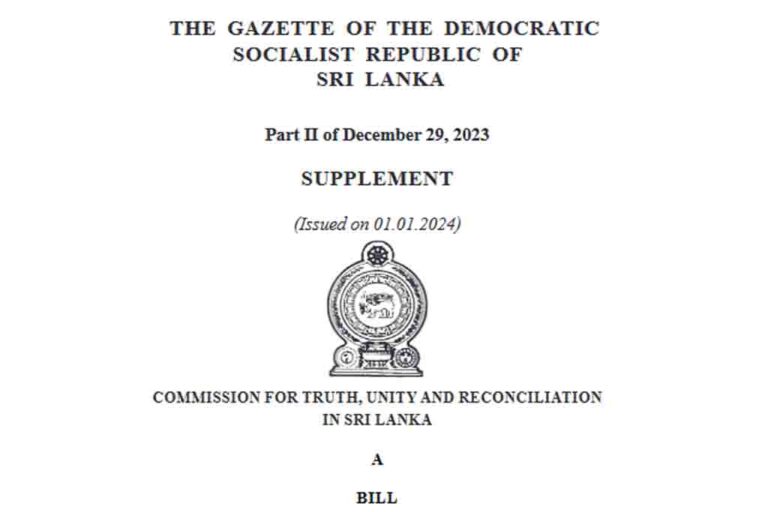
On 18 September 2023, the Ministry of Public Security gazetted a bill titled “Online Safety” intended to dramatically regulate the content of online communication, including by the general public.

The ICJ considers that several provisions of the bill would serve to undermine the exercise of human rights and fundamental freedoms in the country, including freedom of information and expression.  Of particular concern are provisions related to the setting up, appointment and functions of an Online Safety Commission and other experts, the vague and overbroad wording of conduct designated as punishable offences and unnecessary and disproportionate punitive sanctions.

“While the spread of online hate-speech and disinformation need to be tackled, this bill is deeply flawed in its design and would be open to abuse by the Sri Lankan government, which has persistenty failed to uphold freedom of expression,” said Ian Seiderman, ICJ’s Legal and Policy Director. “It risks being used to suppress important public debate regarding  the conduct of the government and matters of public policy,” he added.

The Bill would establish an “Online Safety Commission” that would act to: “prohibit online communication of certain statements of fact; prevent the use of online accounts and inauthentic online accounts for prohibited purposes;  make provisions to identify and declare online locations used for prohibited purposes in Sri Lanka and to suppress the financing and other support of communication of false statements,” as well as other unspecified matters.

The Bar Association of Sri Lanka has called for the immediate withdrawal of the bill and for the adoption of a process of meaningful consultations with all relevant stakeholders prior to gazetting bills which ‘have a serious impact on the community at large.’

“The current draft fails to adhere to the principles of legitimacy, necessity and proportionality required for any State activity that restrict rights. It must be withdrawn or amended to be brought in line with Sri Lanka’s international human rights obligations guaranteeing freedom of expression, opinion, and information.” Seiderman added.

The ICJ considers that the Bill should not be evaluated in a vacuum, but instead must be read in conjunction with existing and proposed legislation that threaten human rights. Such laws include the extremely misused ICCPR Act of 2005, the Prevention of Terorrism Act (PTA), the Bureau of Rehabilitation Act, and the proposed Anti-Terrorism law which seeks to replace the PTA. This body of legislation, taken together, fosters a chilling effect on the exercise of fundamental freedoms restricting civil society while unduly expanding the reach of the security state.

Article 14 (1) (a) of the Sri Lankan Constitution gurantees the freedom of speech and expression. Article 19 of the International Covernant on Civil and Political Rights, to which Sri Lanka is a party, affirms the right to freedom of expression and opinion.

In July 2018, the UN Human Rights Council adopted by consensus a resolution  affirming that “the same rights that people have offline must also be protected online, in particular freedom of expression, which is applicable regardless of frontiers and through any media of one’s choice, in accordance with articles 19 of the Universal Declaration of Human Rights and the International Covenant on Civil and Political Rights.”

Contact: Ian Seiderman, Legal & Policy Director, e: [email protected]

See annexed below a summary analysis of some problematic aspects of the Online Safety Bill.

Sri Lanka: Selected flaws in the Online Safety Bill

  • Wide ranging and overly broad powers of the Online Safety Commission and appointed Experts

The bill provides for the establishment of a five-member ‘Online Safety Commission’ that is to be appointed on the sole discretion of the President (clause 5). This is in contrast to other notionally independent commissions in Sri Lanka, the appointments to which require the consent of the Constitutional Council by way of nomination or ratification. This bill would give the president unfettered discretion where both appointment and removal is concerned.

The Commission would also be vested with a wide range of powers, some of which encroach into the functions of the judiciary. It essentially acts as sole arbiter of matter of fact and is entitled to issue notices or directives against any person, internet service provider (ISP) or internet intermediaries who/which is alleged to have communicated a prohibited or false statement. The bill does not specify the process through which the Commission would arrive at this decision.

Moreover, the Commission is granted authority to block websites and instruct ISPs to restrict access to specific online locations. This may result in undue government overreach and censorship and impermissible limitations on the exercise of the right to information protected by Article 14A of the Constitution and international law.

Further clause 37 allows for the Minister to appoint ‘Experts’ to assist police officers in investigations. The experts are private individuals who can accompany police officers during search procedures, but are also given the power upon authority granted by a police officer above the rank of a sub-inspector to require a person to hand over any documents or device, provide traffic data or be orally examined (clause 37 (6)). Such excessive powers in the hands of unaccountable private individuals provide avenues for abuse.

The bill does not provide provide for judicial review of the Commission’s decisions or procedures. Instead clause 49 seeks to protect the Commission, its staff, or any expert appointed under clause 37 from being brought to court for any act or omission done in good faith.

  • Vague and overbroad offences

A particularly problematic aspect of the bill are provisions of vague and overbroad definitions of offences.

Article 19(3) of the ICCPR provides that the right to freedom of expression and opinion may be subject to certain restrictions, but that these restrictions must be provided by law and necessary for one of a limited numbers of legitimate purposes, namely to protect the rights and reputations of others, national security, public order or public health or morals.  The measure of limitation must be proportionate, using the least restrictive means possible to achieve the purpose. The requirement that any restrictive measure be provided by law means that they must comply with the principle of legality, by which the law must be stated with precision as to allow persons to be able to conform their conduct in compliance.

Similarly, Article 15 (2) of the Sri Lankan Constitution provides for possibility of  restriction of the right “as may be prescribed by law in the interests of racial and religious harmony or in relation to parliamentary privilege, contempt of court, defamation or incitement to an offence.”

The prohibitions listed in this draft legislation go beyond the restrictions allowed for under the  ICCPR and the Sri Lankan Constitution, as clause 12 states that “any person who poses a threat to national security, public health or public order or promotes feelings of ill-will and hostility between  different classes of people, by communicating a false statement, commits an offence.”

In addition, several acts that would constitute offence are only vaguely defined, if at all. This includes communicating a false statement “with the deliberate intention of wounding the religious feelings of any other person” (clause 16) or “outraging the religious feelings of any class of persons, insults or attempts to insult the religion or the religious beliefs of that class” (clause 17). These clauses are overbroad in that they would encompass expression that is protected under human rights law. Clause 14 makes it an offence to ‘wantonly giving provocation by false statement to cause riot’. This language is open to abuse by the authorities, as evidenced by practices arising from other legislation, including    the ICCPR Act  and the PTA.

Repeated mention of ‘religion’ in these provisions is a cause for concern as they come in a context where there is ongoing strife relating to contested religious sites between majority and minority religious communities, thus creating risk of selected application to silence expression by persons from minority religious communities.

  • Disproportionate Punishment

The draft bill prescribes unjustifiably hefty punishments of fines and a period of imprisonment ranging from one, two, three or five years for overbroad and ill-defined offences. It also states that “in the event of a second or subsequent conviction, such term of imprisonment or fine or both such imprisonment and fine may be doubled.”

Clause 25 of the bill, which refers to ‘failure to comply with the directives of the Commission’ would make it an offence to fails to comply with such directive within a period of 24 hours and makes the person liable to imprisonment for a term not exceeding five years or to a fine not exceeding one million rupees.

International Commission of Jurists (ICJ)

SriLankan Airlines Forms Interline Partnership with Virgin Australia for Enhanced Connectivity

0

SriLankan Airlines has established its first-ever interline partnership with Virgin Australia, a move aimed at expanding its network in Australia and providing customers with extensive connectivity options. This partnership allows passengers to incorporate select Virgin Australia domestic and international connections into their SriLankan Airlines bookings, streamlining multi-airline itineraries under a single ticket.

Dimuthu Tennakoon, Head of Worldwide Sales & Distribution at SriLankan Airlines, emphasized the significance of this partnership, particularly for the sizable Sri Lankan diaspora in Australia. He noted that the Australian routes are popular year-round, especially for those visiting friends and family or pursuing higher education. This collaboration enhances connectivity and offers benefits to valued customers.

SriLankan Airlines presently operates daily flights from Colombo to Melbourne and thrice-weekly flights from Colombo to Sydney. Through this partnership, passengers traveling to Melbourne or Sydney with SriLankan Airlines can seamlessly connect to various Australian cities, including Adelaide, Brisbane, Canberra, Cairns, Darwin, Hobart, Hamilton Island, Launceston, Gold Coast, and Perth with Virgin Australia. Additionally, travelers have the option to continue their journey beyond Australia to New Zealand, Samoa, and Fiji.

This partnership is advantageous for Sri Lankan and Indian Australians residing in these cities, as they can now book a single SriLankan Airlines ticket for flights to Sri Lanka or India. Passengers can enjoy a seamless experience with a single check-in, including baggage, at the departure airport, bypassing transit check-in queues.

The introduction of interline flight options with Virgin Australia enhances accessibility to Sri Lanka for Australian outbound tourists, contributing to the growth of leisure travel from Australia to Sri Lanka. It also offers convenient connections for SriLankan Airlines passengers traveling to Australia via Colombo from the Maldives, India, Nepal, Pakistan, and Bangladesh.

Since resuming flights to Melbourne in October 2017 and Sydney in June 2020, nearly a million passengers have chosen SriLankan Airlines for their journeys to Australia. This new partnership aims to further elevate SriLankan Airlines’ service in the Australian market.

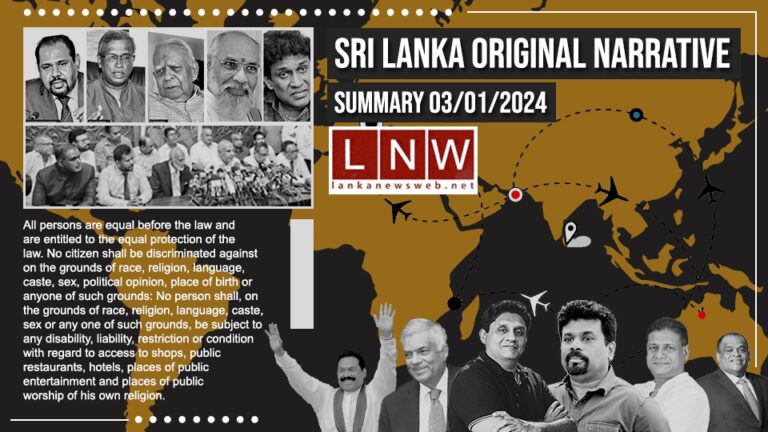
Sri Lanka Original Narrative Summary: 29/09

0
  1. President Ranil Wickremasinghe says the IMF doesn’t have a mechanism to help bankrupt countries: also says some of the proposals put forward will not ensure stability: warns there’s a point beyond which the people can be burdened, and that SL is now going beyond that point: analysts point out that, unfortunately, those who hurriedly declared bankruptcy had apparently not considered that basic reality.
  2. IMF Senior Mission Chief Peter Breuer says more tax reforms are needed to increase the taxes: also says the population could be affected as the utility prices are high due to high inflation and it could be “very burdensome”: asserts it is important to strengthen tax administration, remove tax exemptions, and eliminate tax evasion.
  3. Opposition leader Sajith Premadasa says the IMF itself has said the Govt has failed to achieve the revenue targets: also says the Govt took the challenge pretending that they are economic experts and funds will overflow after Ranil Wicremesinghe becomes President, but has failed to achieve the targets: promises an era of economic development which will be fulfilled by the son of Ranasinghe Premadasa.
  4. Lanka Electricity Company announces that the Social Security Levy will be added to all bills with effect from 8 September’23.
  5. Secretary of the GMOA Dr Haritha Aluthge warns that Doctors would limit the medical resources made available to peripheral hospitals after the next 2 weeks if the Health Ministry fails to provide them with a feasible solution to address the brain-drain amongst the medical fraternity.
  6. International Trade Office Chief Negotiator K J Weerasinghe says SL will commence negotiations with Malaysia & South Korea for FTAs following the completion of the trade agreement with Thailand, with the vision of joining the Regional Comprehensive Economic Partnership (RCEP).
  7. SLFP Chairman & former President Maithripala Sirisena says all who do not have his principles are his enemies: laments he has become the common enemy of former SLFP General Secretary MP Dayasiri Jayasekara and former Army Commander MP Sarath Fonseka because they do not have his principles.
  8. Govt of Liberia invites SL Ambassador in Kenya, Kana Kananathan, to monitor and oversee the upcoming Presidential and Parliamentary elections to be held in Liberia on October 10, 2023: this marks the 5th African nation to seek Kananathan as an election observer.
  9. Mullaitivu District Judge T Saravanarajah tenders his resignation from his posts due to threats on his life and stress: sends resignation letter to the Secretary of the Judicial Services Commission on Sept 23.
  10. Judge Sarah Huggett of Sydney’s Downing Centre District Court finds top SL cricketer Danushka Gunathilaka, 32, “not guilty” of the sexual assault of a woman introduced via a Tinder date: following the acquittal, Sri Lanka Cricket to consider lifting the ban imposed on Gunarhilaka.

Sri Lankan and Kazakh Presidents Discuss Strengthening Bilateral Relations

0

During the Berlin Global Dialogue forum, Sri Lankan President Ranil Wickremesinghe engaged in discussions with President Kassym-Jomart Tokayev of the Republic of Kazakhstan. President Tokayev highlighted the robust partnership between the two nations, characterized by mutual support and meaningful political dialogue.

Emphasizing the untapped potential in trade and investment ties, President Tokayev called for effective government-level measures to unlock this potential. He also stressed the importance of simplifying visa requirements and establishing regular direct flights between Sri Lanka and Kazakhstan to enhance connectivity.

The leaders explored various aspects of collaboration within international organizations, including their involvement at the United Nations. President Tokayev extended an invitation to President Wickremesinghe to participate in the Astana International Forum scheduled for 2024, further cementing diplomatic ties between the two nations.

Environmental Concerns Raised Over Halting Elephant Safety Program

0

Environmental organizations have voiced concerns over the apparent cessation of a program aimed at preventing collisions between wild elephants and trains. Hemantha Withanage, Senior Advisor to the Centre for Environmental Justice, highlighted that several initiatives had been launched along the Habarana railway line in the past to mitigate these collisions. These efforts included plans to construct two bridges over the railway line for wild elephants to safely cross.

Withanage pointed out that the interruption of these plans has resulted in the deaths of wild elephants. Tragically, four elephants were killed in a collision with a night mail train traveling from Colombo to Kankesanturai on the morning of Thursday, September 28, between the Galgamuwa and Ambanpola railway stations. Among the casualties were a mother elephant and her calf near the 125km post in Palugaswewa, Habarana.

Responding to inquiries, an officer from the Department of Wildlife confirmed that wildlife officers are currently not deployed to accompany locomotives traveling along the Habarana railway line. However, he added that deploying officers in this manner may not be an effective means of preventing elephant-train collisions.

Sri Lanka’s Electricity Board Seeks Tariff Increase to Cover Power Generation Costs

0

The Ceylon Electricity Board (CEB) has submitted a request to the Public Utilities Commission of Sri Lanka (PUCSL) seeking approval for an increase in electricity tariffs to offset the expenses incurred in power generation. This request is currently under consideration by the PUCSL, as confirmed by its Chairman, Professor Manjula Fernando.

Dr. Narendra Silva, General Manager of the CEB, explained that the additional costs arose due to a shortfall in hydropower production this year. Although the expected hydropower capacity was set at 4,500 gigawatt hours, only 3,750 gigawatt hours were generated. To compensate for the shortfall, 750 gigawatt hours had to be sourced from thermal power plants, resulting in additional expenses.

The request for a tariff increase was made on Wednesday, September 29, to address the financial implications of power generation under these circumstances. The CEB will provide all relevant data to the PUCSL for review and consideration on Monday, October 2.

A Comprehensive International Dialogue Essential to Address Global Challenges in 2024

0

President Ranil Wickremesinghe expressed the need for a comprehensive dialogue between Western nations and China, the United States of America and China and the European Union and China, as a critical component of a robust international plan capable of addressing the global challenges anticipated in 2024.

The President also highlighted that initiatives such as the ‘Belt and Road’ have led to increased scrutiny of countries like Sri Lanka, potentially impacting the economic prospects of nations in the Global South. Nevertheless, he emphasized that Sri Lanka has a history of engaging with countries like the United States, India, and China, making such interactions a familiar and essential part of international relations.

President Ranil Wickremesinghe made these remarks while delivering the opening speech on the first day of the ‘Berlin Global’ Dialogue in Berlin, Germany, yesterday (28).

During the subsequent round table discussion, President Ranil Wickremesinghe also expressed gratitude for the support received from India and Bangladesh in addressing Sri Lanka’s recent economic challenges.”

President Wickremesinghe underlined the contrast between advanced economies, which possess buffers and reserves to weather these shocks, and developing nations that lack such resources. He emphasized that this disparity was the starting point for the sovereign debt crisis.

The President cautioned that without immediate corrective measures, the world could be on the brink of another crisis. He acknowledged that many developing countries are burdened with substantial debt, highlighting the inadequacy of existing mechanisms like the IMF to address this new situation. He shared Sri Lanka’s experience when declaring bankruptcy, which led to a halt in foreign funding and triggered a political crisis.

President Wickremesinghe praised Germany for its significant contribution to the Green Climate Fund, which has been instrumental in addressing climate change mitigation and debt restructuring challenges. However, he stressed that the current funding available is insufficient to meet the immense challenges.

The President called for utilizing the $100 billion with the IMF as a starting point, emphasizing that it is better than having no funds at all. He noted that the financing needs for climate prosperity and clean energy technology to achieve net-zero emissions are substantial, even for countries facing economic hardships.

President Wickremesinghe stressed the urgency of global coordination and leadership to resolve these challenges, which have not been sufficient to address their magnitude. He highlighted the need for a new international financial architecture to replace the existing one, designed nearly 80 years ago. The President urged ambitious action to reform the international financial architecture, making debt restructuring less complex and more effective.

He advocated for a significant increase in concessional financing through multilateral development banks, emphasizing the importance of broader accessibility, even for middle-income nations facing economic vulnerabilities. President Wickremesinghe acknowledged that the current IMF negotiation process is not tailored to address countries in crisis.

The President called for immediate action and urged a comprehensive dialogue between Western countries, China, and other key global players. He emphasized that 2024 is the year to act, given the reduced leadership capacity of the United States due to its impending elections.

President Ranil Wickremesinghe concluded by highlighting the need for cooperation and collective action to create an international financial architecture that better reflects today’s global realities and provides effective representation for nations in need.

The Berlin Global Dialogue serves as a crucial platform for leaders to address critical global economic issues, and President Wickremesinghe’s speech contributed valuable insights to the discussions on these pressing challenges.

Following is the full speech of President Ranil Wickremesinghe at the Berlin Global Dialogue under the theme ‘Worldwide Economic Shocks and the Impact on the Global South”

I must begin by thanking Professor Lars-Hendrik Röller, Chairman Berlin Global Dialogue, for inviting me to this inaugural session.

Where the way I look at it, the global economy has many shocks since in the last two decades. Starting from 2008, we’ve gone through a series of the European debt crisis. Then we’ve had the COVID-19 pandemic, and the economic shocks that have come from it, the whole issue of funding for climate change, and the sovereign debt crisis.

I don’t think in any other period of modern history have we gone through this type of a crisis. And in all these instances, it’s the developing economies and the global south that has suffered extremely. We are now faced with stubbornly high inflation in advanced economies, oil prices edging towards US $100 a barrel, and monetary tightening by the global central banks.

One example is that Sri Lanka’s export to Europe has not increased at all this year, so far this year. That’s an indication of how we are being affected as we try to recover from the crisis we face.

The confluences of factors face serious risk for many developing countries. In the global south, we are facing rising import costs, food, energy, insecurity, and the problems of our exports. The resulting balance of payment stress translates into a weaker economy for all of us.

The difference between the advanced economies and the developing nations is that you all have all the buffers and reserves to deal with these shocks. We haven’t. And it’s from here that the sovereign debt crisis started.

In this context, I think the world may be on another crisis if corrective measures are not taken immediately. Many developing countries find themselves with large debt burdens. For example, IMF has no mechanism to face this new situation. When Sri Lanka declared bankruptcy, all foreign funding ceased and that started the political crisis. If not for the help given by World Bank in re-graduating Sri Lanka, and the help given by my old friend Samantha Power in funding us with fertilizers, the chances are that I may not be, I would not be able to come here today. I would not have been in the position.

It’s so bad. And there’s no way in which you can help any country which declares bankruptcy. But in this case, especially, I’m glad that Germany is doing its part as the largest cumulative contributor to the Green Climate Fund. We have both the climate change mitigation and debt restructuring, both of which we have to handle with minimum funds available.

The funding on the table is woefully inadequate to address the vast challenges at hand. So we haven’t got any money. But we do have 100 billion with the IMF. Let’s start with that money.
100 billion is better than nothing. Then let’s see how we can raise the rest of it. Because though I talk of Sri Lanka, I must say Africa’s need, especially of the low-income countries, are far greater than ours. And the problems Africa face need not be described by me because I think there are enough representatives here. The developing countries require financing up to US 5.9 trillion to fulfil their nationally determined contributions. Then further US 4 trillion, for clean energy technology to achieve net zero emissions, look at Sri Lanka’s financing needs for our climate prosperity plan to succeed. We need 26 five billion US dollars by 2030.

These are a country that’s bankrupt. And with the IMF states, we’ll have for the next few years a growth rate of 3.5% if you are lucky. Here again, global coordination and leadership to resolve these challenges have simply not been sufficient to address the magnitude of the urgency of the problem. So what we need here is a new architecture.

Now we’ve been talking of the many crises and shocks we have discussed today are interlinked. And we’ve been talking of what we have to do. First, we’ve all agreed that the core of the international financial architecture today was designed almost 80 years ago. The world has seen dramatic changes since then with many emerging economies in Asia, Middle East, South America, and Africa becoming global economic powerhouses.

However, the international architecture has seen relatively mild reforms. The international financial architecture available makes the debt restructuring too complex. This we have all agreed on. The magnitude of the challenges discussed today requires ambitious action. Developing nations will not be able to mobilize the financing required to combat climate change. There’s an urgent need for a significant increase in the envelope of concessional financing made available through the multilateral development banks.

The MDB assets are considerable. It can be deployed in risk mitigating instruments. Tax havens are still left out of this question. Why don’t we bring them in the same sanctions we have applied to Russia?

There are many, the concessional financing should be accessible by a broader group of countries, including the middle income nations facing numerous economic vulnerabilities. In the depth of Sri Lanka’s economic crisis of 2022, even though the country was implementing robust IMF supported reforms, the country could not access any new foreign concessional financing due to its situation or debt distress. I must tell you that the negotiation with the IMF is certainly not tailored for these situations. It’s still the old way of negotiating.

So then what do we require? I think we have a whole lot of proposals, starting from the Bridgetown Initiative onwards as how to deal with it. The Paris Climate Summit is preparing a roadmap.

Now, I’m not going to add anything more to it. All I’m saying is choose from this. Let’s act. But it’s aggravated because the developing countries to emerge from the prevailing economic challenges, including debt request, a critical requirement, is open access to trade, investment, capital, technology force.

But unfortunately, the great power rivalries and geopolitics have been an emerging threat for such market success. The Washington Consensus was rejected in Jake Sullivan’s address at the Brookings Institute. With new concept of de-risking and decoupling, the developing South, which was compelled to follow the Washington Consensus, is now asked to do a 180 degree turn even without consultation with us. Since decoupling, and since the Brookings speech, whatever it is, we have been asked to change the system. We were compelled to get into it. Now we are told this is no longer relevant.

Furthermore, Belt and Road Initiative has been labelled as a cohesive program, and the participating countries like Sri Lanka is looked upon with suspicion. This will further hurt economic prospects in the global South, and the polarization will become more evident.

For a country like Sri Lanka, we have learned to live with pressure from America, India, and China. I mean, that’s nothing new for us anymore. The United States is witnessing an acrimonious run-up to the 2024 election year, which will detract from its ability to lead in this instance. It is creating a vacuum, because if the US wants a new order, the US must lead. But we know from now onwards, till end of next year, that leadership will gradually reduce as they start focusing more and more on their 2024 elections. So then what happens to the rest of us? Then, on the other hand, you are finding a challenge to G7 and QUAD, which is the expansion of the BRICS, what you call the BRICS Plus. The South is now looking for alternative leadership. And we can see the G20 has been downgraded. So in this situation, are we going to act in 2024?

Let’s talk, it’s useless giving any more solutions. It’s what are we going to face? We know in 2024, the US leadership may not be there. Then who is going to act? So I think it’s a chance for the EU to come up and work with the other countries. There’s no one else. So I am suggesting that EU, together with G20 BRICS, certainly USA, and some selected other Asian and African nations not represented, the IMF and the NDBs, and you can bring in the big financial institutions, private ones, sit down and find urgent solutions.

We are talking of the summit for the future, summit for the future is in September next year. Elections are in November next year. So I can’t see a summit for the future bringing anything out before the elections take place in 2024. But 2024 is the year to act. We are watching 2024. And whether you can come up, whether we can come up with a new international architecture that better reflects the global realities of today and provide effective representation for those who need it. So we have the resources, we have the solutions, we just need the willpower to decide how it’s going to be.

It has to be done urgently. We require a constructive dialogue between the West and China. We need a constructive dialogue between US and China. We need a constructive dialogue between EU and China. Otherwise we will not move forward. So this is the stark reality. It’s a question of how we get together and how we work, and who’s going to take the lead in 2024.

WEATHER FORECAST FOR 29 SEPTEMBER 2023

0

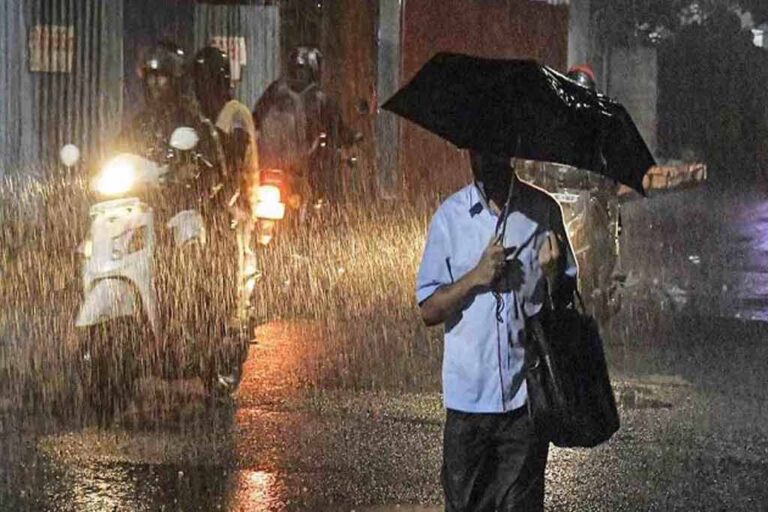
The prevailing showery condition in south-western part of the Island is expected to continue further.

Showers or thundershowers will occur at times in Western, Sabaragamuwa, Southern and North-western provinces and in Kandy and Nuwara-Eliya districts. 

Fairly heavy showers above 50mm can be expected at some places in Western and Sabaragamuwa provinces and in Galle, Matara and Puttalam districts.

A few showers will occur in Northern province and in Anuradhapura district.

Fairly strong winds about (40-45) kmph can be expected at times in western slopes of the central hills, Northern, North-central, and North-western provinces and in Trincomalee and Hambantota districts.

Showers or thundershowers may occur at a few places in Ampara and Batticaloa districts during the evening or night.

General public is kindly requested to take adequate precautions to minimize damages caused by temporary localized strong winds and lightning during thundershowers.

Negotiations to collect second IMF tranche positive: Minister

0

Colombo (LNW): The negotiations to secure the second tranche of the debt facility provided by the International Monetary Fund (IMF) are progressing positively, announced Acting Finance Minister Shehan Semasinghe, speaking to a briefing at the President’s Media Centre (PMC) today (28).

Further commenting, the Minister noted that the government’s efforts in economic reform are currently under review by the IMF, adding that steps necessary to finalise the staff level agreement in this regard are set to conclude following President Ranil Wickremesinghe’s official visit to Germany.

“Undoubtedly, our nation is currently navigating through challenging phases. Yet, if the economic restructuring led by the President persists on this path, there is a promising future where Sri Lanka stands robust in its economic stature,” Semasinghe noted.

He went on: “While certain factions seeking short-term political gains might view the nation’s economic fortification sceptically, the upcoming disbursement from the International Monetary Fund paves the way for a brighter economic outlook for Sri Lanka by 2024.”

President underscores necessity of a broad dialogue to face global challenges in 2024

0

Colombo (LNW): Fostering meaningful dialogue between China and Western nations, including the United States and the European Union would be necessary for the formulation of a robust international strategy capable of addressing the looming global challenges in 2024, emphasised President Ranil Wickremesinghe, during his opening address at the Berling Global conference in Berlin, Germany today (28).

The Sri Lankan President pointed out the significance of China’s “One Belt – One Road” initiative, and emphasised its focus on nations such as Sri Lanka, believing that this initiative will reshape the economic landscape of the Global South.

Despite this evolving landscape, the President reassured that Sri Lanka is no stranger to navigating the intricate dynamics and pressures from major global players like the USA, India, and China.

His remarks at the conference serve as a testament to the need for collaboration and understanding among global powers to ensure a stable and prosperous future.