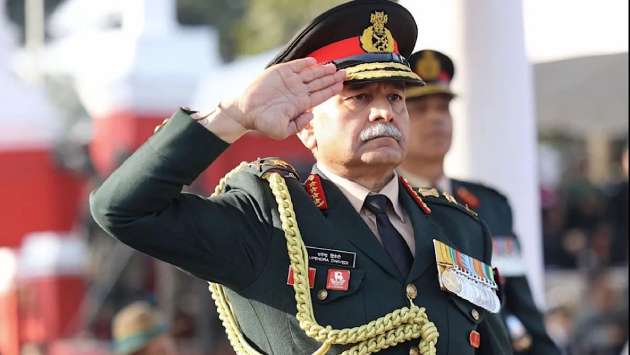
January 05, Colombo (LNW): Indian Army Chief of Staff General Upendra Dwivedi is due to arrive in Sri Lanka later this week on an official visit aimed at reinforcing defence and security ties between the two countries.
According to reports in the Indian media, the visit forms part of New Delhi’s broader efforts to deepen military cooperation with regional partners and enhance collective approaches to security challenges in the region.
During his stay, General Dwivedi is expected to hold discussions with several senior Sri Lankan figures, including the Army Commander, the Defence Secretary and the Minister of State for Defence. Talks are likely to centre on expanding joint training programmes, strengthening professional exchanges and addressing shared regional security concerns.
The Indian Army Chief is scheduled to conclude his visit and depart the island next Thursday, following a series of official engagements and meetings.
Indian Army Chief to Visit Sri Lanka
SL Foreign Affairs Minister Calls for Respect of Sovereignty Amid Venezuela Crisis
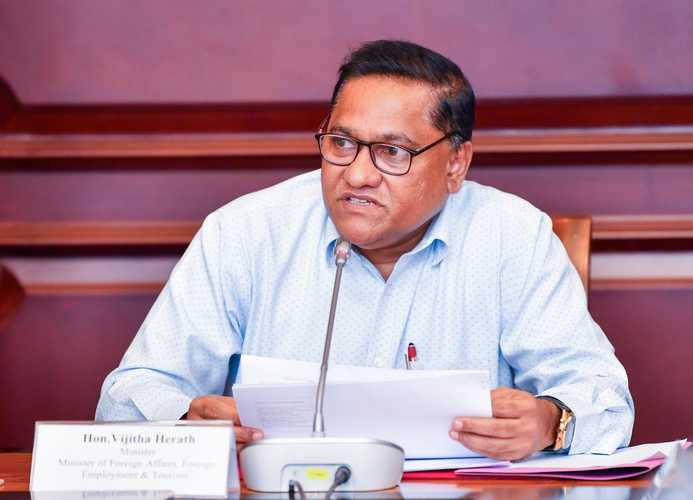
January 05, Colombo (LNW): Foreign Affairs Minister Vijitha Herath stressed that the independence of nations must be protected in accordance with the principles of the United Nations Charter and established international law, warning against actions that undermine state sovereignty.
He made the remarks in response to the unfolding situation in Venezuela, referring to reports of the Venezuelan President being detained by US forces and the subsequent military action carried out by the United States.
The Minister said such developments raise serious concerns about adherence to international norms and the rule-based global order.
Herath was addressing journalists at a media briefing held yesterday (04) at the Department of Government Information, where he reiterated Sri Lanka’s position that disputes between states should be resolved through dialogue and lawful international mechanisms rather than unilateral force.
Ex-Minister Johnston Fernando Appears Before FCID Over Sathosa Vehicle Inquiry
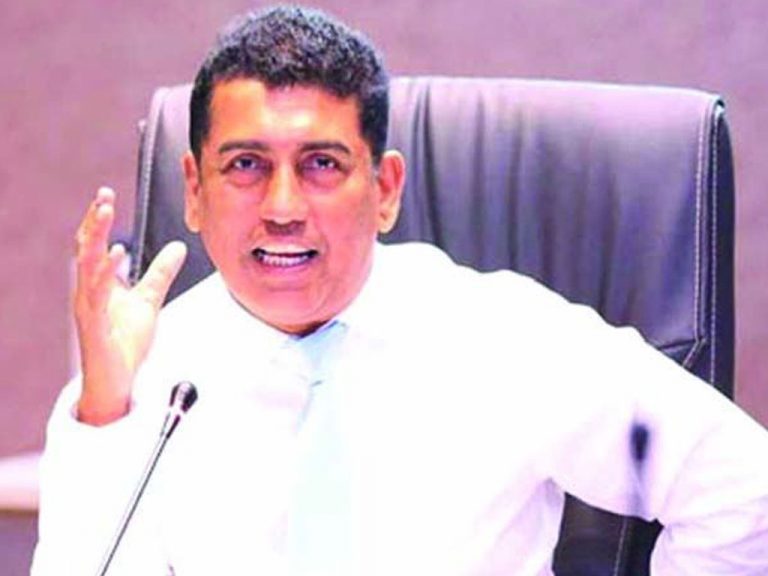
January 05, Colombo (LNW): Former cabinet minister Johnston Fernando presented himself before the Police Financial Crimes Investigation Division (FCID) today (05) as part of an ongoing inquiry into the alleged improper use of a state-owned Lanka Sathosa vehicle.
Fernando had been instructed to appear before investigators after preliminary steps were taken to secure his arrest in relation to claims that a Sathosa lorry was deployed for unauthorised purposes, resulting in a financial loss to the government. The inquiry centres on the period during which he held the portfolio of Cooperative and Internal Trade.
The investigation gathered momentum a day earlier with the arrest of Indika Ratnamalala, who served as Transport Manager at Lanka Sathosa during Mr Fernando’s tenure. After being produced before the Wattala Magistrate’s Court, Ratnamalala was remanded until January 09.
Authorities allege that forged documentation had been prepared to facilitate the use of the Sathosa lorry by a private ethanol company linked to the former minister, reportedly for the benefit of his son, Johan Fernando. Police say further statements and evidence are expected to be recorded as the investigation continues.
Sri Lanka Engages Diplomatically After Fishing Boat Destroyed Off Seychelles
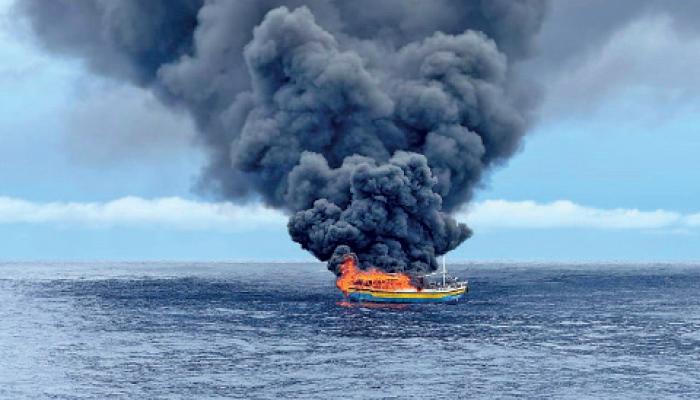
January 05, Colombo (LNW): Sri Lanka’s government has begun diplomatic and consular steps following the interception and destruction of a local fishing boat by authorities in the Seychelles, according to the Deputy Minister of Foreign Affairs and Foreign Employment, Arun Hemachandra.
The vessel, identified as Ishani-1, had set sail from the Wellamankaraya Fisheries Harbour in Wennappuwa earlier this month with six Sri Lankan fishermen aboard. It was detained by Seychelles maritime security forces late in December after entering waters under Seychelles jurisdiction. Officials there later confirmed that the boat was destroyed.
Mr Hemachandra said Colombo is working in close coordination with officials at the Sri Lankan High Commission in Seychelles to assess developments and maintain communication with local authorities. He added that the government has reviewed the statement issued by Seychelles security agencies and is continuing to follow the matter carefully.
The Deputy Minister also confirmed that consular support has been extended to the fishermen involved, with arrangements made to safeguard their welfare while diplomatic discussions continue. He noted that Sri Lanka remains committed to resolving the issue through established international and bilateral channels, while emphasising the importance of protecting its nationals overseas.
Showery conditions inspired by low-level atmospheric disturbance continue: Fairly heavy falls above 50 mm expected (Jan 05)

January 05, Colombo (LNW): The low-level atmospheric disturbance is currently established to the southeast of the island, the Department of Meteorology said today (05).
Showers will occur at times in Eastern and Uva provinces and in Nuwara-Eliya, Matale, Polonnaruwa, and Mullaittivu districts.
Fairly heavy falls above 50 mm are likely at some places in Eastern province and in Nuwara-Eliya, Matale, Badulla, Polonnaruwa, and Mullaittivu districts.
Several spells of showers will occur in Anuradhapura, Jaffna, Kilinochchi and Vavuniya districts.
Showers or thundershowers may occur at a few places in Western and Sabaragamuwa provinces and in Galle and Matara districts after 2.00 p.m.
Strong winds up to 50 kmph can be expected at times over Eastern slopes of the central hills, Northern, North-central, North-western and Eastern provinces and in Hambantota, Gampaha Colombo and Monaragala districts.
The general public is kindly requested to take adequate precautions to minimise damages caused by temporary localised strong winds and lightning during thundershowers.
Marine Weather:
The low-level atmospheric disturbance is currently established in the Bay of Bengal sea area southeast of the island. Navel and fishing communities are requested to be attentive to the future forecasts and bulletins issued by the Department of Meteorology in this regards.
Condition of Rain:
Showers will occur at several places in the sea areas off the coast extending from Kankasanthurai to Pottuvil via Trincomalee and Batticaloa.
Winds:
Winds will be north-easterly and wind speed will be (30-40) kmph. Wind speed can increase up to (55-60) kmph at times in the sea areas off the coast extending from Beruwala to Kankasanthurai via Colombo and Puttalam. Wind speed can increase up to 50 kmph at times in the sea areas off the coast extending from Kankasanthurai to Hambantota via Trincomalee and Batticaloa.
State of Sea:
The sea areas off the coast extending from Beruwala to Kankasanthurai via Colombo and Puttalam will be rough at times. The sea areas off the coast extending from Kankasanthurai to Hambantota via Trincomalee and Batticaloa will be fairly rough at times. The other sea areas around the island may be moderate.
Inquiry Report Handed Over as Probe Continues into Grade 6 English Textbook Controversy
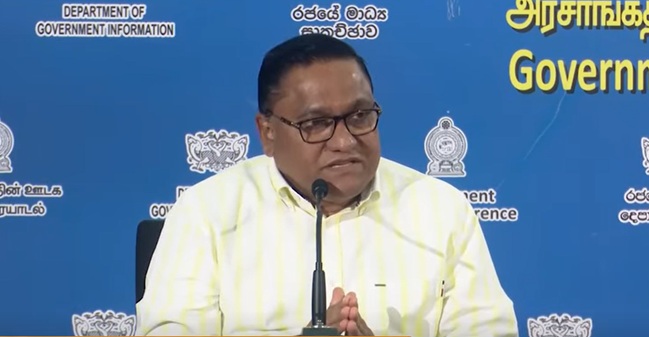
January 04, Colombo (LNW): The committee appointed to examine irregularities found in a newly produced Grade 6 English learning module has completed its investigation and submitted its findings, according to Education Minister Vijitha Herath.
Addressing journalists at a media briefing held today (04) at the Department of Government Information, the minister said the report would now be reviewed and that appropriate measures would be taken in line with its conclusions. He added that the authorities intend to act swiftly to prevent similar lapses in future educational materials.
The controversy arose after it emerged that the newly printed module contained a reference to an unsuitable website, prompting the immediate suspension of its distribution. The Ministry of Education launched an internal inquiry following a formal complaint, amid concerns over how such content found its way into material meant for schoolchildren.
The textbook was developed by the National Institute of Education (NIE) and had already gone to print when the issue was detected. Subsequently, the Secretary to the Ministry of Education, Nalaka Kaluwewe, filed a complaint with the Criminal Investigation Department, requesting a parallel criminal probe into the matter.
Mr Kaluwewe indicated that there was reason to believe the reference may have been inserted deliberately by an external party without authorisation. He stressed, however, that the document in question was not the final, legally approved version of the textbook and that ultimate responsibility for approval rests with the relevant education authorities.
As investigations continue, the Director General of the NIE, Professor Manjula Vithanapathirana, has temporarily stepped aside from her post, pending the outcome of the inquiry. The ministry has reiterated that safeguarding educational standards and protecting students remain its top priorities.
Parliamentary Pensions (Repeal) Bill Gazetted
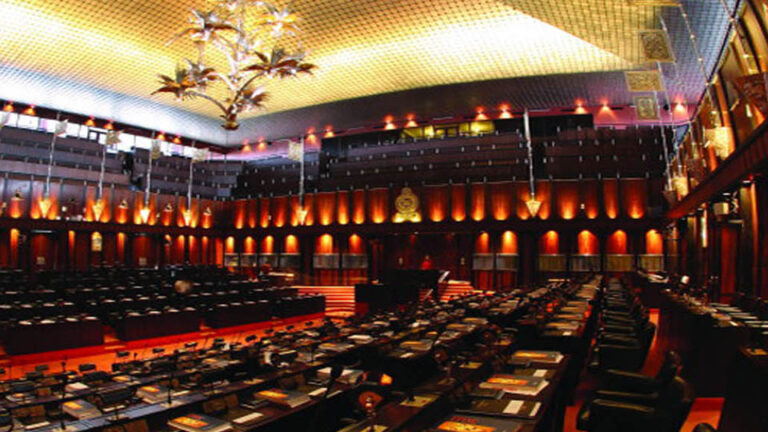
January 04, Colombo (LNW): Steps have been taken to dismantle the long-standing pension scheme for Members of Parliament, with a new bill formally published in the government Gazette proposing the repeal of existing legislation.
The Parliamentary Pensions (Repeal) Bill aims to do away with pension benefits currently enjoyed by MPs and their spouses, which are provided under the Parliamentary Pensions Act introduced in the late 1970s. If enacted, the proposed law would bring an end to these entitlements altogether.
The gazette notification was issued under the authority of the Minister of Justice and National Integration, signalling the government’s intention to press ahead with the reform. The move follows earlier approval by the Cabinet of Ministers to place the draft legislation before Parliament for debate and endorsement.
Before its publication, the bill was examined and cleared by the Attorney General, after which the Cabinet authorised both its gazetting and its subsequent submission to Parliament. Cabinet ministers had already agreed in principle to repeal the parliamentary pension law at a meeting held on June 16, 2025, paving the way for the current step.
JVP Denounces US Action in Venezuela as Assault on Sovereignty
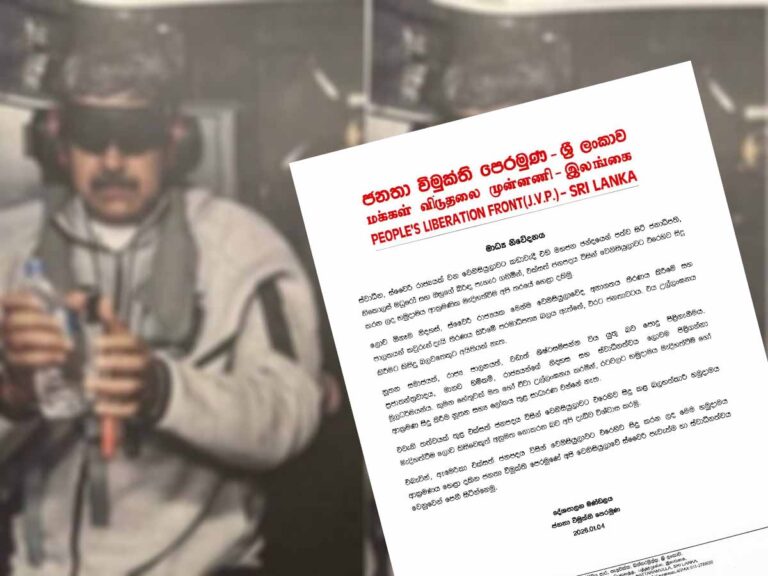
January 04, Colombo (LNW): The Janatha Vimukthi Peramuna (JVP) has sharply criticised recent actions by the United States in Venezuela, including military strikes and the detention of President Nicolás Maduro and his wife, describing the episode as an unacceptable violation of international norms.
In a statement released today, the party said the United States had overstepped all boundaries by intervening in the affairs of what it called an independent and sovereign nation. The JVP argued that President Maduro, having been chosen through a popular mandate, could not be lawfully removed or detained by an external power acting unilaterally.
The statement emphasised that, as with any self-governing country, decisions about Venezuela’s political future and leadership must rest solely with its citizens. According to the JVP, no state—regardless of its military or economic power—has the authority to override the will of another nation’s people.
The party also warned that such actions undermine the very principles frequently championed by the international community, including democracy, human rights and respect for national sovereignty. Resorting to military force, it said, erodes global stability and sets a dangerous precedent in international relations.
Concluding its remarks, the JVP reiterated its firm opposition to the United States’ intervention in Venezuela and expressed solidarity with the Venezuelan people, calling for respect for their independence and the peaceful resolution of political disputes.

Western Province Debt Surge Raises Alarms over Fiscal Stability

By: Staff Writer
January 04, Colombo (LNW): Sri Lanka’s local government debt profile has taken a sharp and uneven turn, with the Western Province emerging as the epicentre of a dramatic escalation that is raising serious concerns about fiscal discipline, service delivery, and the long-term economic health of the country’s most economically vital region.
According to Finance Ministry data, total outstanding debt held by Provincial Councils and local government authorities rose by nearly 25% in the six months to 30 September 2025. In absolute terms, liabilities increased by Rs. 1,268 million, reaching Rs. 6,419 million. However, this aggregate figure masks a striking regional imbalance. The Western Province alone accounted for more than the entire net increase, with its debt ballooning by Rs. 2,349 million—a staggering 389% surge within just half a year.
The Western Province, home to Colombo and the nation’s commercial core, plays an outsized role in Sri Lanka’s economy. As such, mounting liabilities at the local level carry broader implications. Economists warn that rising debt could constrain future infrastructure spending, crowd out essential services, and eventually require either higher local taxes or increased transfers from the central government.
In contrast, several other provinces moved in the opposite direction. The North Western Province reduced its outstanding debt by over Rs. 600 million, while the Uva and Central Provinces posted reductions exceeding one-third of their previous liabilities. These declines suggest that fiscal consolidation is possible under existing frameworks, further intensifying scrutiny of Western Province financial management.
While some provinces recorded modest increases such as the Southern and Sabaragamuwa Provinces their debt growth was marginal compared to the Western Province’s spike. Finance officials note that the concentration of debt growth points to province-specific factors rather than a nationwide trend.
For residents, the implications are tangible. Local government debt is often linked to delayed maintenance, stalled development projects, and reduced spending on sanitation, transport, and public health. If servicing costs rise, citizens may face higher rates, levies, or reduced quality of municipal services. In a province already grappling with congestion, cost-of-living pressures, and infrastructure strain, additional fiscal stress could deepen everyday challenges.
Analysts also warn that unchecked local debt could become a contingent liability for the national government, particularly amid Sri Lanka’s ongoing efforts to restore fiscal credibility. With the Western Province contributing a significant share of national revenue, financial instability at the local level risks undermining broader economic recovery.
The data underscores a pressing need for tighter oversight, transparent borrowing frameworks, and clearer accountability mechanisms especially in provinces where debt growth is accelerating at an alarming pace.
SL Electricity Tariff Shock Amid Crisis: Is Cost-Reflective Pricing Justified?
By: Staff Writer
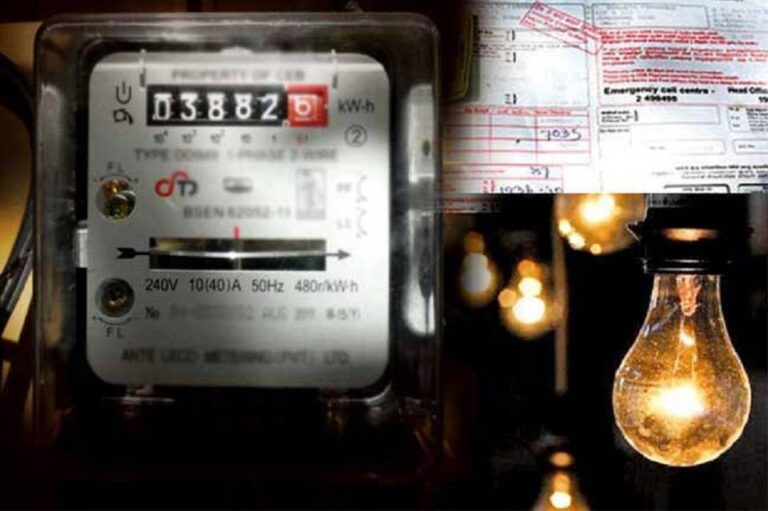
January 04, Colombo (LNW): Sri Lanka’s proposed electricity tariff increase has reignited a contentious national debate, placing the Government’s economic reform agenda on a collision course with public hardship and political accountability. As households reel from the aftermath of Cyclone Ditwah and rising living costs, the proposed 11.57% tariff hike has drawn sharp criticism, particularly from the Opposition, who argue that the timing and scale of the increase are both unjust and contradictory to electoral promises.
Opposition Leader Sajith Premadasa has emerged as one of the strongest critics, warning that millions already displaced or economically strained by the cyclone would bear an unfair burden. He has accused the Government of abandoning commitments made while in Opposition, when current leaders pledged to reduce electricity bills by as much as 33%. Instead of relief, consumers now face higher charges, a move Premadasa describes as a breach of the public mandate.
However , the Government’s position is rooted in structural reform. In response to public backlash, the Ministry of Energy has released the National Electricity Policy for public consultation, outlining a binding framework aimed at restoring financial discipline to the power sector. Issued under the amended Sri Lanka Electricity Act, the policy marks a decisive shift away from politically administered tariffs toward a pricing regime based on long-term system costs and financial sustainability.
Central to the policy is the reaffirmation of cost-reflective tariffs, a cornerstone of Sri Lanka’s ongoing International Monetary Fund (IMF) Extended Fund Facility program. The policy asserts that electricity prices must reflect the true cost of generation, transmission, and distribution, while ensuring the financial viability of utilities. Any subsidies, it states, must be transparent, targeted, and explicitly funded rather than hidden through cross-subsidisation.
To address social concerns, the policy allows for limited “lifeline” tariffs for vulnerable consumers, subject to regulatory approval. However, it makes clear that broad-based subsidies are incompatible with long-term sector stability. The framework also formalises the unbundling of the Ceylon Electricity Board (CEB), creating separate entities for generation, transmission, distribution, and system operations, with a strengthened National System Operator overseeing planning and dispatch.
Renewable energy expansion is positioned as a strategic priority, but the policy introduces tighter controls, emphasising competitive procurement and grid stability over ad hoc approvals. Digitalisation, loss reduction, and demand-side management are also highlighted as tools to contain future tariff pressures.
The IMF has repeatedly underscored the importance of these reforms. During its last review mission, IMF officials stressed that cost-recovery pricing remains a continuous structural benchmark, warning that losses at the CEB would ultimately fall on taxpayers. While the tariff hike may be economically defensible within this framework, critics argue that without timely relief measures, cost-reflective pricing risks deepening social inequities during a period of national vulnerability.