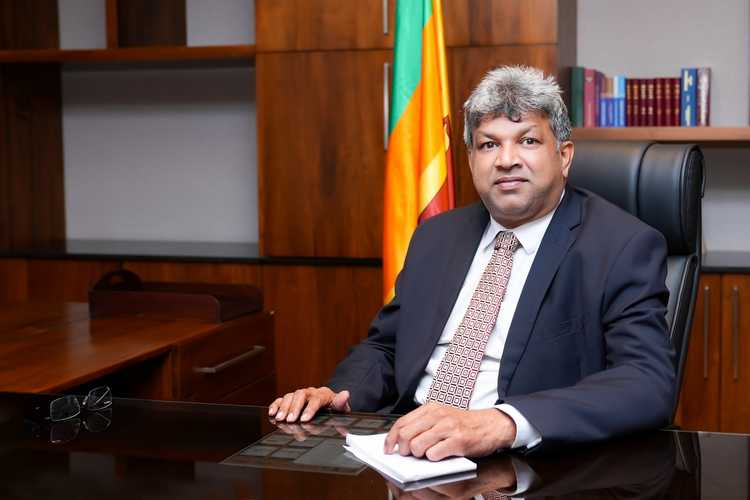
Justice and National Integration Minister Harshana Nanayakkara said yesterday that investigations into complaints of enforced disappearances will commence early this year, stressing that rebuilding the country requires trust, fairness, the rule of law and national unity.
Speaking at a ceremony held at the Ministry to mark the commencement of work for the New Year, the Minister highlighted the importance of restoring social trust through national integration. He noted that equitable language access, equal service delivery, respectful law enforcement and inclusive policymaking are essential elements in this process.
“Cyclone Ditwah has reminded us that fostering social trust through national integration and unity, rather than division, is essential for saving lives,” he said.
The Minister added that when citizens feel acknowledged in their own language, treated fairly by the law and protected regardless of their identity, it is a clear sign that national integration is taking place.
He further said steps will be taken to ensure that, within the coming month, the public will be able to access all forms required for government-related work in all three official languages.
Reflecting on the recent disaster, Nanayakkara said Cyclone Ditwah had tested the country’s systems, institutions and citizens, while also highlighting the resilience of the Sri Lankan people. He emphasised that the phrase “Rebuilding Sri Lanka” should not be dismissed as mere propaganda, but recognised as a social responsibility.
“Rebuilding Sri Lanka begins with trust, justice, law and unity. As we move towards 2026, the government has set a clear objective to rebuild the country in a gradual, inclusive and sustainable manner. The first priority is the reconstruction of systems,” he said.
The Minister also underscored the need to reform the justice system, stating that a foundation must be established to transform it from one that instils fear among the people to one that earns their trust.
Highlighting the spirit of global and regional cooperation, the Sri Lanka Navy today acknowledged the invaluable assistance provided by foreign warships that arrived in the country to participate in the International Fleet Review (IFR) 2025 and extended crucial Humanitarian Assistance and Disaster Relief (HADR) operations during the recent adverse weather disaster.
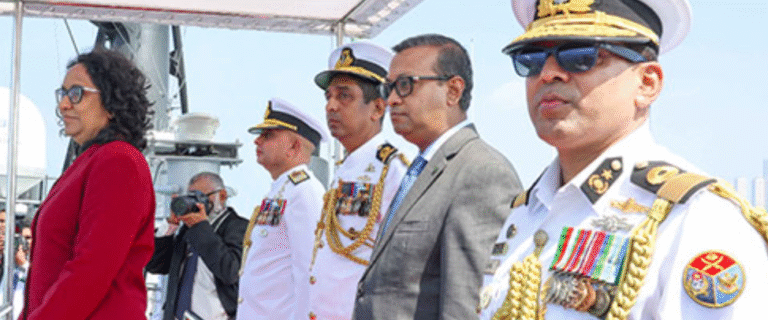
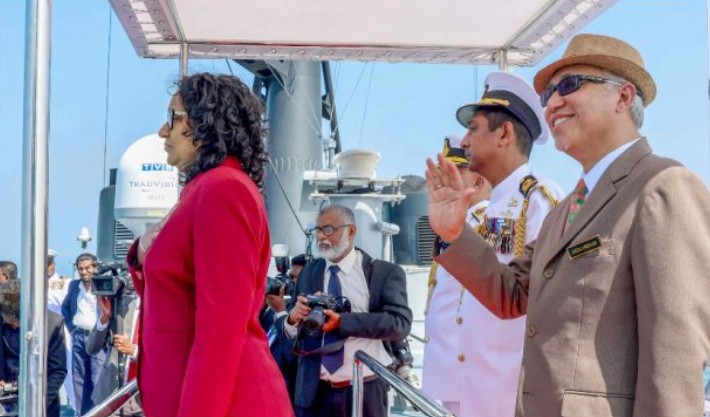
The IFR 2025 was held off the Galle Face seas as part of the Sri Lanka Navy’s 75th anniversary celebrations, according to a Navy statement. Representing the Government of Sri Lanka, Prime Minister Dr. Harini Amarasuriya graced the event and received the traditional naval salute onboard SLNS Gajabahu as participating foreign warships paid their honours.
Eight foreign naval vessels arrived in Sri Lanka by November 27 to take part in the IFR under the theme “Sailing Strong – Together.” The participating warships were Bangladesh Navy’s BNS Prottoy, Indian Navy’s aircraft carrier INS Vikrantand INS Udaygiri, Iran Navy’s IRIS Naghdi, Maldivian Coast Guard’s CGS Huravee, Royal Malaysian Navy’s KD Terengganu, Pakistan Navy’s PNS Saif, and Russian Navy’s Gremyashchy.
Due to the disaster situation caused by severe weather conditions across the island, the foreign warships were promptly redirected to support humanitarian relief operations. In particular, helicopters deployed from the Indian Navy’s INS Vikrant and the Pakistan Navy’s PNS Saif played a commendable role in search-and-rescue missions for affected communities.
The Navy said the participation of these warships in the IFR not only honoured maritime traditions and Sri Lanka’s naval heritage but also reinforced collective cooperation and partnerships needed to address non-traditional maritime threats and climate change-induced natural disasters in the region.
The Prime Minister also expressed her gratitude to diplomatic representatives present at the event for their support in disaster relief efforts. Officials in attendance represented the High Commissions and Embassies of Bangladesh, India, Iran, Maldives, Malaysia, Pakistan and Russia in Sri Lanka.
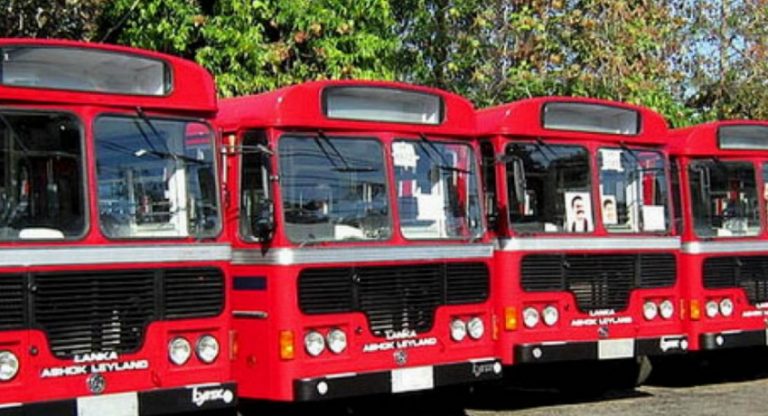
Under a nationwide initiative to introduce innovative digital solutions, the Ministry of Transport, Highways, and Urban Development today (01) launched a new programme for Sri Lanka Transport Board (SLTB) buses, enabling passengers to pay fares using electronic cards.
Implemented with the guidance of the Ministry of Digital Economy, the initiative aims to strengthen public transport services while enhancing transparency and accountability between passengers and conductors.
The project was inaugurated at the Makumbura Multimodal Centre (MMC) under the patronage of SLTB Chairman Sajeewa Kanakaratne. The card-based payment system allows passengers to pay only the exact stipulated fare and will not impose any additional charges on commuters.
Officials said the government plans to further refine and improve the system by assessing strengths and weaknesses identified during the initial phase of implementation.
The pilot project commenced today on selected routes, including Makumbura–Galle and Makumbura–Embilipitiya.
The launch event was attended by the Advisor to the Ministry of Digital Economy, Sumudu Rathnayake, officials from People’s Bank, and several other distinguished invitees.
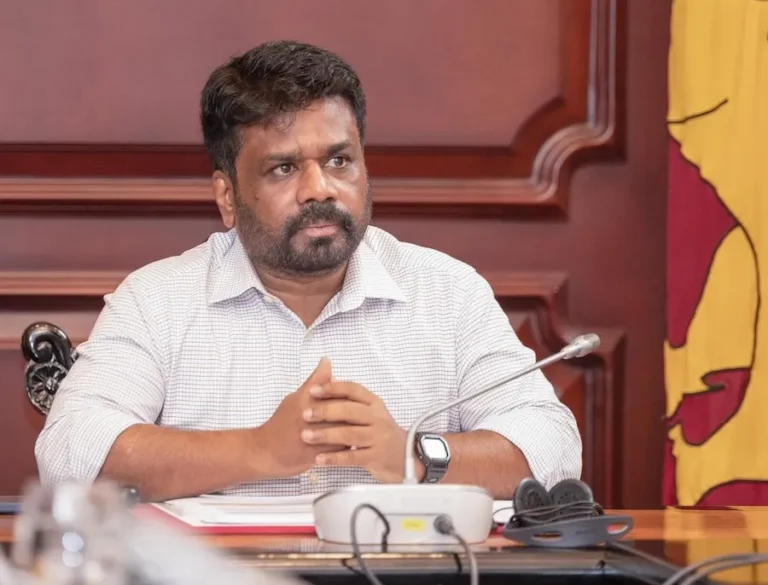
President Anura Kumara Dissanayake visited the temporary shelter operating at the Sri Sudarshanaramaya Temple in Welgala, Poojapitiya, Kandy, yesterday afternoon (01), to inquire into the well-being of families displaced by the landslide in the Ankumbura, Gankotuwa area and to review ongoing resettlement efforts.
According to the President’s Media Division (PMD), the landslide, triggered by recent adverse weather conditions, resulted in the complete destruction of six houses and partial damage to 15 others. In addition, residents of 30 houses located in areas identified as high-risk zones were evacuated as a precautionary measure.
A temporary shelter was established at the Sri Sudarshanaramaya Temple on November 28, accommodating around 189 individuals from 47 families. At present, about 23 individuals from seven families continue to stay at the shelter.
During the visit, the President held cordial discussions with the affected residents, inquiring into their living conditions and immediate needs. He also reviewed matters relating to welfare assistance, relief measures and future resettlement plans in consultation with relevant officials.
The visit was attended by the Chief Incumbent of the Sri Sudarshanaramaya Temple, Venerable Bambaragahakande Gnanasiri Thero, Deputy Minister of Transport and Highways Prasanna Gunasena, Member of Parliament Thanura Dissanayake, Chairman of the Poojapitiya Pradeshiya Sabha Sanjeewa Edirisinghe, Divisional Secretary Shanika Deegala, and several other officials.
Showery condition is expected to enhance in Eastern, Northern and Uva provinces during the coming days, due to the development of a low-level atmospheric disturbance to the East of Sri Lanka.
Showers will occur at times in Eastern, Central, North-central and Uva provinces and in Hambantota district. Fairly heavy falls above 75 mm are likely at some places in Central and Uva provinces and in Batticaloa and Ampara districts.
Several spells of showers will occur in Northern province.
Showers or thundershowers may occur at several places elsewhere after 2.00 p.m. Fairly heavy falls above 50 mm are likely at some places in these areas.
A few showers may occur in coastal areas of North-western and Western provinces and in Galle and Matara districts.
Misty conditions can be expected at some places in Sabaragamuwa and Central provinces and in Galle and Matara districts during the early hours of the morning.
The general public is kindly requested to take adequate precautions to minimize damages caused by temporary localized strong winds and lightning during thundershowers.
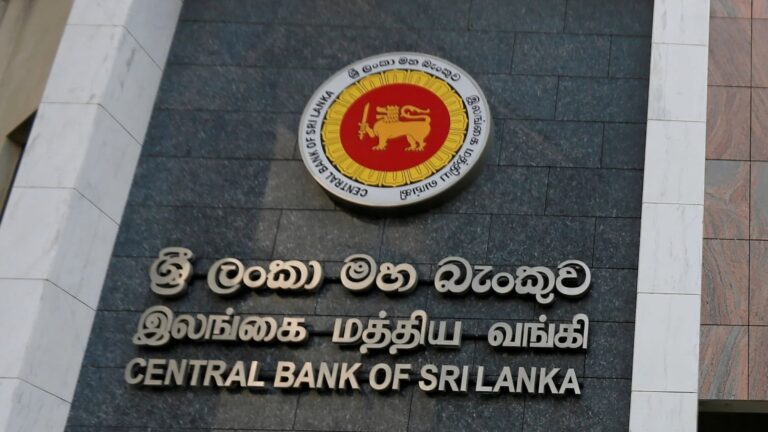
January 01, Colombo (LNW): The Central Bank of Sri Lanka (CBSL) has announced a major reorganisation of its debt management operations, effective January 01, 2026.
The move includes the closure of the Public Debt Department (PDD) and the transfer of its LankaSecure Division to the Payments and Settlements Department (PSD).
This change follows the establishment of the Public Debt Management Office (PDMO) within the Ministry of Finance, Planning and Economic Development under the Public Debt Management Act No. 33 of 2024.
The PDMO became fully operational in December 2025, taking over all debt management responsibilities previously handled by the PDD. The CBSL stated that the transition aims to improve accountability, transparency, and operational efficiency in managing the nation’s debt.
Despite the closure of the PDD, the CBSL will continue to maintain critical systems for government securities under the PSD. This includes the Scripless Securities Settlement System and the Central Depository System, with the PSD Director formally appointed as Registrar of Government Securities.
The Bank indicated that this arrangement will ensure the smooth functioning of government securities operations while centralising oversight under the restructured framework.
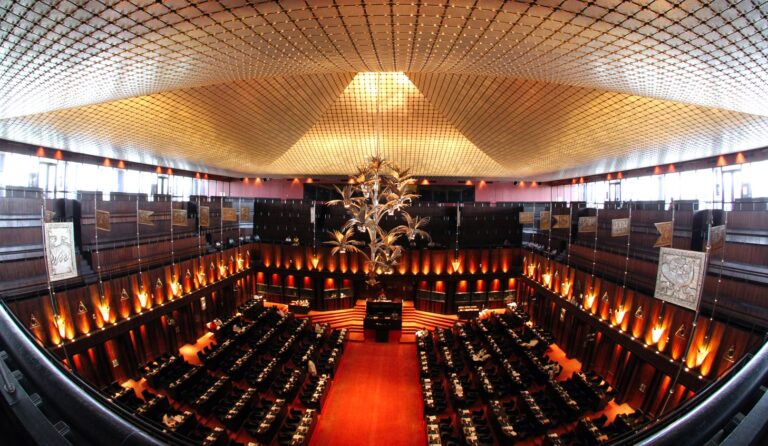
January 01, Colombo (LNW): The Parliamentary Business Committee has confirmed that lawmakers will return to the chamber for the first sitting of January 2026, scheduled to run from January 06 to 09.
The announcement came following a meeting of the Committee on Parliamentary Business, which was presided over by Speaker Dr Jagath Wickramaratne.
January 01, Colombo (LNW): Sri Lanka’s aviation industry appears to be regaining momentum, with the first eleven months of 2025 delivering markedly stronger results than the same period last year.
Official figures indicate that international passenger traffic reached approximately 9.23 million movements between January and November 2025, representing a robust increase of just over 15 per cent compared with the corresponding months of 2024.
Aircraft activity also rose steadily, with 58,454 international flight movements recorded during the period, reflecting growth of nearly 15 per cent year on year.
Tourism arrivals by air mirrored this upward trend. Around 2.1 million visitors entered the country by air during the January–November 2025 timeframe, an improvement of close to 17 per cent from the previous year, signalling renewed confidence among travellers and airlines alike.
Industry observers attribute this resurgence to renewed policy focus following the change in government, which placed aviation high on its economic recovery agenda. Targeted interventions, operational reforms and improved coordination across agencies are said to have helped ease earlier bottlenecks and restore stability.
The progress achieved under the direction of the responsible ministers, together with the sustained efforts of airport authorities, airline partners and frontline staff, is increasingly being viewed as the early stages of a broader revival.
If current trends continue, the aviation sector is expected to play a central role in strengthening connectivity, tourism growth and overall economic performance in the year ahead.
January 01, Colombo (LNW): The Sri Lanka Navy has paid tribute to the vital role played by overseas naval forces that sailed into Colombo for the International Fleet Review 2025, an event staged alongside celebrations marking the Navy’s 75th year of service.
Beyond ceremonial duties, the visiting warships proved their value on the ground by assisting Sri Lanka during a spell of severe weather that affected several parts of the island.
Held off the waters of Galle Face under the banner “Sailing Strong – Together”, the fleet review brought together regional and extra-regional partners in a show of maritime solidarity. Prime Minister Dr Harini Amarasuriya attended as the Government’s representative and took the customary naval salute aboard SLNS Gajabahu, as ships from friendly nations lined up in formation offshore.
A total of eight foreign vessels participated in the review, representing Bangladesh, India, Iran, the Maldives, Malaysia, Pakistan and Russia. Among them were India’s aircraft carrier INS Vikrant, Pakistan’s PNS Saif and Russia’s Gremyashchiy, highlighting the breadth of international engagement with Sri Lanka’s navy.
When heavy rains and rough conditions struck soon after, the visiting ships swiftly shifted from pageantry to practical support. Aircraft and crews from the Indian and Pakistani navies were deployed for search and rescue operations, assisting local authorities to reach stranded residents and assess damage in affected areas.
Naval officials noted that the episode underscored the real-world value of multinational cooperation at sea, particularly as climate-related disasters become more frequent. The fleet review, they said, was not only a celebration of history and tradition but also a reminder of shared responsibility in responding to humanitarian emergencies and emerging maritime challenges.
Addressing diplomats and senior officers present, Prime Minister Amarasuriya expressed appreciation to the High Commissions and Embassies of the participating nations for their swift assistance and continued partnership, describing the collective response as a reflection of enduring goodwill and regional friendship.
January 01, Colombo (LNW): The recent uproar over a Grade 6 English language module in Sri Lanka has ignited intense public debate, intersecting educational policy, cultural norms, and the politics of LGBTQIA+ rights. At the centre of the controversy is a reference in the module to a website that, when accessed, directs users to content aimed at a gay audience — material widely deemed inappropriate for young learners.
The Telecommunications Regulatory Commission of Sri Lanka (TRCSL) responded by blocking access to the site, whilst the Ministry of Education has launched internal and Criminal Investigation Department (CID) inquiries to determine how it was included in the first place and who bears responsibility.
This episode is far more than an isolated curriculum oversight. It has become a flashpoint in the broader dialogue about how sensitive topics, such as sexual orientation and gender identity, intersect with traditional cultural values in a deeply religious and conservative society.
But it also raises important questions about how best to educate children about human diversity and respect, without sensationalising, politicising or misunderstanding the goals of inclusive education.
Not the “Right Way” to Advocate LGBTQIA+ Rights
Critics have argued that even well-intentioned efforts to promote inclusivity can be undermined when presented carelessly. Introducing a link that inadvertently leads to adult content – regardless of its audience – into school materials for 11- and 12-year-olds is not appropriate advocacy.
Children at this age require protection and guidance suited to their developmental stages, and unexpected exposure to material perceived as explicit naturally alarms parents and carers. Moreover, conflating the promotion of LGBTQIA+ rights with unsuitable content fuels misunderstanding and resistance, reinforcing the very prejudices proponents aim to challenge.
Promoting awareness and acceptance of LGBTQIA+ individuals in society is both legitimate and important, but doing so via a schoolbook link that was not properly vetted undermines credibility and obscures the educational intent with controversy and backlash.
What “Right” Sex Education Looks Like
Effective sex and relationship education for children is age-appropriate, scientifically grounded, and delivered transparently with parental and community involvement. It should focus on respect, consent, emotional intelligence, and diversity without dwelling on explicit material that could confuse or distress young learners.
In curricula around the world, themes such as recognising diversity, understanding families of different structures, and nurturing empathy can be introduced gradually, with sensitivity to cultural context and community expectations. Importantly, such content is typically accompanied by teacher training and guidance for parents so that learning is not isolated within the classroom but supported at home.
Sri Lanka’s education reforms aimed at modernising curricula provide an opportunity to embed such principles. But reforms must be comprehensive and built on consultation, piloting, quality assurance and clear age-appropriateness checks before publication.
Minimising Public Uproar: Transparency and Dialogue
The scale of public reaction to this textbook issue reflects deeper anxieties about cultural change, the influence of Western norms, and a perceived lack of transparency in curriculum reform. Measures to minimise similar disputes should include robust review processes involving educators, parents and subject experts. Education authorities should proactively communicate the rationale behind curriculum content and establish feedback mechanisms that can pre-empt misunderstandings.
Open town halls, explanatory releases, and transparent editorial oversight can help diffuse misinformation and reassure the public that reforms are thoughtful and safeguards are in place. In this instance, the Ministry’s swift suspension of the module’s distribution and CID referral is a start, but broader engagement with stakeholders is also crucial.
Socio-Political Reality: Cultural Norms Versus Rights Advocacy
The controversy cannot be disentangled from Sri Lanka’s socio-political landscape, where conservative cultural norms, strong religious influences, and legal constraints on same-sex relations shape public perception of LGBTQIA+ issues. Many religious leaders have voiced opposition to what they see as “Western influence” eroding traditional values; such sentiments can be mobilised politically to stoke concern whenever LGBTQIA+ topics enter public discourse.
In this context, any perceived advocacy for queer rights — even through legitimate educational content — is likely to be scrutinised and contested. This tension underscores the challenge of advancing human rights in a setting where cultural preservation is interpreted as a bulwark against moral decline.
Political Homophobia or Political Strategy?
Amid the debate, there are voices questioning whether the scandal is being leveraged for partisan advantage. Calls for the Prime Minister’s resignation and allegations of sabotage suggest a willingness amongst some political actors to weaponise fear of LGBTQIA+ issues to embarrass the government and erode public confidence in its reforms. Whether out of genuine concern or strategic calculation, political homophobia — exploiting prejudices against queer individuals to score points — risks deepening social divisions and detracting from rational discussion about educational quality. This is not something new, for decades queerbaiting has been a sharp weapon against regimes in power, to weaken them, outsmart them, or even oust them.
Growth of Maggots on Rotting Flesh
Disturbingly, the controversy has also created fertile ground for openly anti-LGBTQIA+ groups that had previously remained relatively dormant due to limited platforms or public traction. Seizing on the textbook issue, these groups have launched coordinated hate campaigns across the country, using social media, religious gatherings and political rhetoric to vilify queer communities.
Under the guise of “protecting children” and “defending culture”, they have amplified fear-laden narratives that conflate education with moral corruption, further marginalising an already vulnerable population and poisoning the broader public discourse.
The dispute cannot be divorced from Sri Lanka’s socio-political realities. Conservative cultural norms, powerful religious institutions and the criminalisation of same-sex relations shape how LGBTQIA+ issues are perceived. In such an environment, even neutral or human-rights-based discussions of sexuality can be framed as cultural aggression. This tension highlights the difficulty of advancing equality in a society where tradition is often positioned as being under siege.
Demanding a Thorough, Transparent Probe
Given the complexity and sensitivity of the matter, an immediate, thorough, and transparent investigation is essential. The CID probe and internal review should not merely apportion blame but examine systemic weaknesses in curriculum development, review processes, and quality control. Findings should be shared publicly to rebuild trust.
This episode is a reminder that curriculum reform touches the nerves of society’s values, beliefs and aspirations. A nuanced, respectful and inclusive approach — underpinned by rigorous safeguards and open communication — is indispensable for navigating these fault-lines in a way that enriches education without fracturing social cohesion.