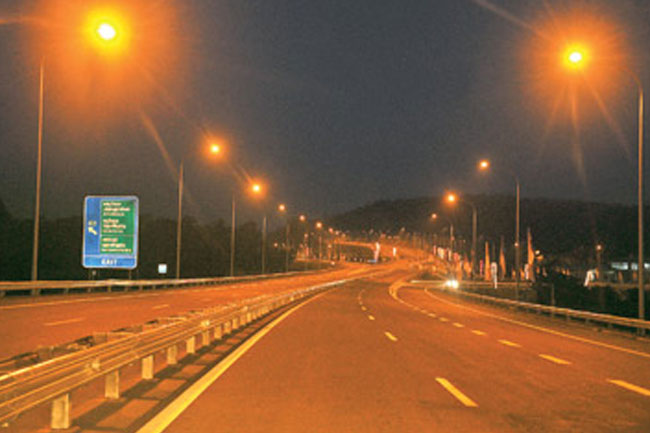
The All Ceylon Expressway Employees Union, led by Chairman Hasitha Munasinghe, initiated a strike at 7 AM on Wednesday (22), impacting the operations of the Expressway Ticket Counters. Munasinghe highlighted that the strike stemmed from various grievances, notably pension-related concerns among others.
Despite the walkout by ticket counter employees, the Road Development Authority (RDA) assured the public that the strike would not disrupt traffic flow along the expressway. L. V. S. Weerakoon, Director General of the RDA, confirmed that armed forces personnel have been deployed to safeguard the expressway. Additionally, military personnel will step in to manage the ticket issuance process, ensuring continuity of service despite the strike action.
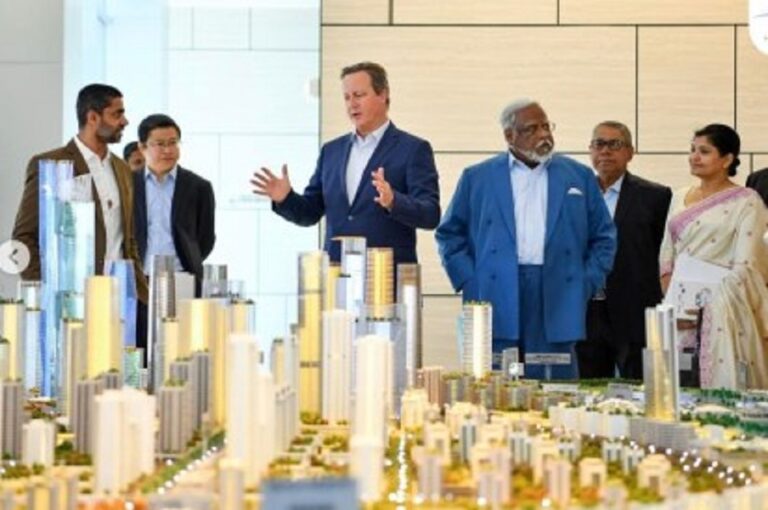
Colombo (LNW): The newly appointed British foreign secretary and former Prime Minister David Cameron helped win US $3bn for the Colombo Port city project which is eagerly waiting for foreign investments.
The former prime minister visited Dubai and Abu Dhabi and lobbied potential investors on behalf of Port City Colombo, a development in the Sri Lankan capital that critics fear could become a Chinese military base.
It is part of the Belt and Road Initiative, Beijing’s flagship foreign policy aimed at extending Chinese trade and military influence, and was unveiled by Xi on a visit to the island almost ten years ago.
The developer’s parent company is China Communications Construction Company (CCCC), a state-run firm blacklisted by America for building military bases in disputed waters, British media reported.
US citizens and companies are banned from holding shares in the Beijing-headquartered company.
Cameron, the newly appointed foreign secretary, became involved in the port during a visit to Sri Lanka in January where he met Yang Lu, director of CHEC Port City Colombo, the CCCC-owned developer that has invested more than $1 billion.
The pair shook hands and posed for photos as part of a tour. Cameron, 57, also accepted a gift from Lu. A source close to Cameron said he could not remember what it was other than a “token with no value whatsoever”.
Speaking at back-to-back events at the Ritz Carlton in Abu Dhabi and the Burj Khalifa in Dubai, he implored delegates from Middle Eastern sovereign wealth funds to pour money into the port
Cameron has said he was paid by the Washington Speakers Bureau, a US speaking agency, which was in turn contracted by the Sri Lankan branch of KPMG.
His spokesman said: “Mr Cameron has not engaged in any way with China or any Chinese company about these speaking events.”
The claims are challenged by Dilum Amunugama, the Sri Lankan investment minister, who was reported in local media last month as saying: “The whole event was handled by CHEC Port City. The government did not select David Cameron. He was selected by the Port City Company.”
The visits were brokered by Nirj Deva, a former Conservative MP and MEP who ran an EU-China Friendship Group and is an adviser to the Sri Lankan president. He said Cameron did “brilliantly”, demonstrating an intimate knowledge of the “clauses, currency controls and tax holidays” designed to lure investors.
A source close to the project said Gulf investors pledged $3 billion off the back of his visit, none of which has been publicly announced. The funding remains subject to legal agreement. Asked if the money could have been raised without Cameron, Deva, 75, said.
Colombo (LNW): In the wake of air traffic controller’s shortage at the Bandaranaike International Airport control tower, the aviation ministry has taken measures to fully digitalize air traffic operations.
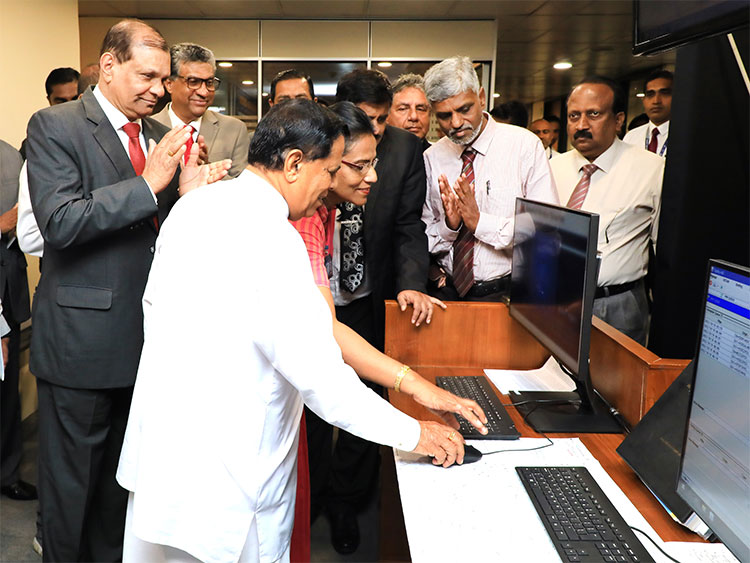
The Main Air Traffic Control Tower and the RADAR Operations Centre at Bandaranaike International Airport have initiated operations utilizing full digital technology, the aviation ministry announced.
These advancements are integral components of the ongoing modernization process to enhance Air Traffic Control operations at the airport.
The financial investment made by Airport and Aviation Services (Sri Lanka) Ltd to establish this cutting-edge system amounts to approximately Rs. 1.2 billion.
Sri Lanka is on the brink of a major aviation ‘breakdown’ due to lack of Air Traffic Controllers’ who have migrated in large numbers to Oman and other countries for unmatched financial benefits.
An official from the Air Traffic Controllers’ Association (SLATCA) said Sri Lanka should have 150 air traffic controllers to man airports in Katunayake, Ratmalana, Mattala and Jaffna but they currently have only around 80.
It’s the Civil Aviation Authority that produces air traffic controllers and though it’s a one-year Course it takes around 10 years to produce a highly qualified staffer. Due to national security issues, the private sector is not keen to train Air Traffic Controllers.
Air traffic controllers organize the flow of air traffic and prevent collisions. “If an air traffic controller makes a mistake over a flight, it can crash, killing hundreds of passengers.”
With a view of tackling this issue and to modernizing the air traffic control system, the inauguration of this latest Digital Air Traffic Management System took place yesterday, presided over by the Hon. Minister of Ports, Shipping, and Aviation, Nimal Siripala de Silva.
Previously, Air Traffic Controllers manually documented information pertaining to departing and arriving aircrafts, a process managed between the Air Traffic Control Tower and the RADA Centre.
The introduction of the latest Air Traffic Management System facilitates real-time dissemination of essential data to pertinent nodes.
This innovation expedites and optimizes all air navigation services within Sri Lankan airspace, accommodating an increased volume of aircraft through the implementation of this state-of-the-art system.
In contrast to its predecessor, the new system boasts superior technological capabilities. While the former system could solely measure the cruising altitude, position, and airspeed of an aircraft, the latest system at the airport enables the acquisition of comprehensive data directly from the aircraft cockpit.
This enhancement results in a 100% improvement in data accuracy concerning the safety of aircrafts.
The Department of Government Information has confirmed that the anticipated Sri Lanka – Thailand Free Trade Agreement (SLTFTA) is scheduled for signing on February 3, 2024. This significant agreement is expected to follow the conclusion of rounds of discussions by December 2023.
In alignment with the agreements reached during rounds 06 and 07 of these discussions, the Cabinet of Ministers has given approval to the customs levy releasing program of Sri Lanka. This program has been devised to facilitate the phased release of categorized serial numbers, allowing for the release of 80% of the combined categorized serial numbers over a 15-year period based on the 2022 data. Additionally, a provision has been made to partially release 5% of the combined categorized serial numbers within a span of 15 to 18 years. The remaining 15% of the combined categorized serial numbers will be included in the minus list, pending submission by the President for their consent, according to the Department of Government Information. This step represents a strategic move towards the facilitation and regulation of trade between the two nations
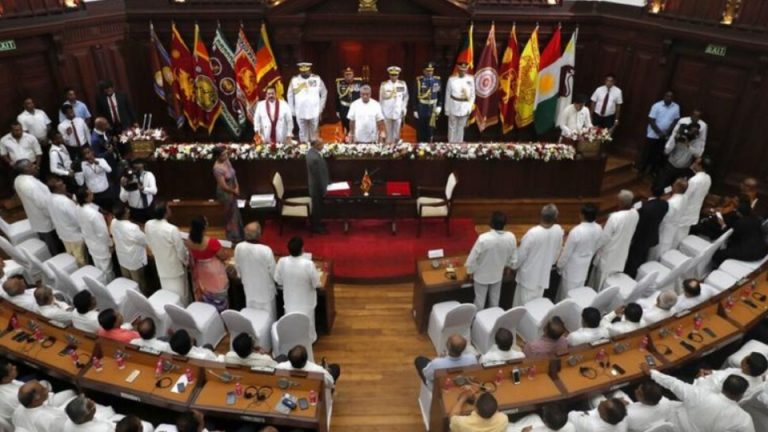
Parliament witnessed an unprecedented move as State Minister Sanath Nishantha faced a two-week suspension due to his disruptive behavior within the Chambers on Tuesday (Nov. 21). Speaker Mahinda Yapa Abeywardena made the announcement to Members of Parliament following the initiation of the Third Reading and Committee Stage debate on the 2024 Budget this morning.
The suspension highlights a rare and consequential action taken against a sitting member, emphasizing the significance of maintaining decorum and respectful conduct within the parliamentary sessions.
CB Governor Nandalal Weerasinghe says SL will move to a “fully floating exchange rate” & the CB will no longer have to collect foreign reserves: also says SL would like to see reserves around 3 months of imports, but not large volumes as recommended by the IMF.
Former President Mahinda Rajapaksa says he rejects recent allegations regarding the economic management by his team: also says that he remembers how people who talk about depriving the rights of persons, actually worked when in power: asserts it is not necessary to respond to mudslinging whenever people resort to it.
Former Diplomat & respected Senior Journalist C A Chandraprema says politically interested parties seem to have gone overboard in paroxysms of hatred & triumph, due to the manner in which many media outlets reported the Supreme Court Majority judgement in the FR case against the former Presidents and others: explains that what it stated in the Majority Judgement is that Mahinda Rajapaksa & others had “demonstrably contributed” to the economic crisis, but that there is a significant difference between saying that someone is “responsible” for a certain situation and saying that someone has “demonstrably contributed” towards such situation: further says the Majority Judgement further says that – (a) it would not be appropriate to order the Respondents to pay compensation to the Petitioners & therefore no compensation is ordered: (b) Court notes the Respondents’ argument that the root causes for the economic debacle spread well beyond the time period covered in the Plaint, & therefore no responsibility could be attributed to these Respondents as claimed by the Petitioners: (c) Court notes the Respondents’ claim that heavy borrowings of previous Governments & mismanagement of such funds had a direct impact on the debt sustainability of the country.
Former Diplomat & respected Senior Journalist C A Chandraprema says Justice Jayawardena’s Dissenting Judgement had dismissed the FR case and covered the following points: (a) Plaintiffs have not invoked the jurisdiction of the Court within 1 month of the alleged infringements, as per Article 126(2) of the Constitution: (b) the decision not to go to the IMF had been communicated to Parliament on 10th Dec’21 by then Finance Minister, the and Cabinet had also decided on 3rd Jan’22 not to get IMF assistance but to pursue a “homegrown” solution to the the fiscal & economic issues faced: (c) the Auditor General’s Report shows the Govt had considered the pros & cons of going to the IMF, the past experiences with IMF, & the effects an IMF programme on the economy & the people, and thereafter taken the “policy decision” not to go to the IMF: (d) Courts do not interfere with “policy matters” or economic decisions, as such matters are highly technical and even experts in those fields hold different opinions on the same point.
BOI says that RM Parks Inc (a US Petroleum products distributor) has signed an agreement with the BOI to bring USD 110 mn worth Shell products to Sri Lanka: a RM Parks Inc & Shell collaboration to also operate 200 fuel stations & provide services of mini-supermarkets with EV charging facilities as well.
Dept of Census & Statistics says the overall rate of inflation measured by NCPI on a YoY basis has increased to 1.0% in Oct’23, from 0.8% in Sep’23: Food inflation unchanged in Oct’23 at -5.2%.
Colombo Stock Market falls for the 6th consecutive market day, wracked by the money market being almost perennially short, complemented by the Govt’s huge borrowing appetite: ASPI now at 10,507 points: turnover at a miserly Rs 912 mn.
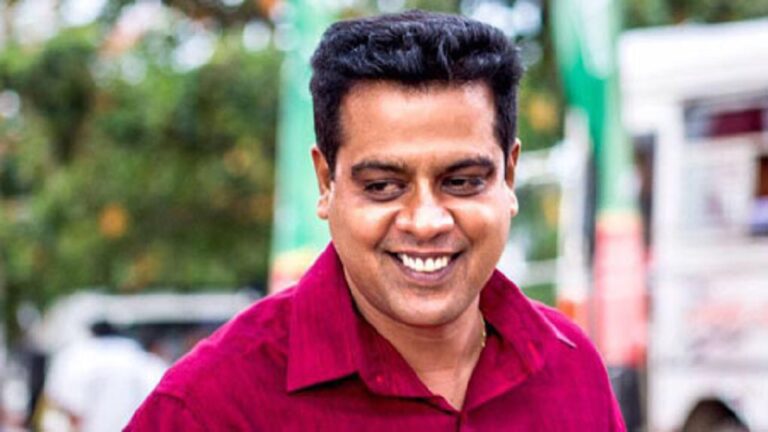
Energy Minister Kanchana Wijesekera says an agreement for a USD 5 bn Refinery to be built by China in Hambantota district will be submitted to Cabinet next week: also says if the Cabinet approves & the agreement is signed, it will be the single largest investment project ever.
Sri Lanka’s left-arm speedster Dilshan Madushanka included in the ICC Men’s Cricket World Cup 2023 Team due to his phenomenal individual performances across 7 weeks of high-class international action.
ICC moves the Under-19 World Cricket Cup to South Africa from Sri Lanka: ICC says the decision has been taken in view of the administrative uncertainty in SL Cricket: further says Cricket involving the SL team will continue uninterrupted.
In response to mounting concerns and recent backlash surrounding the proposed Broadcasting Regulatory Commission bill, Sri Lanka’s Cabinet of Ministers has taken decisive steps to introduce new legislation aimed at regulating electronic media.
Cabinet Spokesperson and Minister Bandula Gunawardena addressed the media, revealing that following extensive discussions, the Cabinet approved a resolution directing the Legal Draftsman to craft a new bill based on the foundational draft for the establishment of the Broadcasting Regulatory Commission.
The Government Information Department highlighted that the primary objective behind this resolution is to ensure precise media practices within the electronic media landscape while safeguarding the fundamental rights of freedom of speech and expression.
During the Cabinet meeting held on 22nd September 2022, a Cabinet Sub-Committee, chaired by the Minister of Justice, Prison Affairs, and Constitutional Reforms, was appointed. This committee’s mandate was to provide recommendations on crucial policy matters for consideration in drafting the proposed bill. Subsequently, the committee formulated a foundational draft incorporating appropriate provisions for the envisaged broadcasting regulatory commission.
The Cabinet of Ministers, therefore, granted its approval for the resolution presented by the Minister of Mass Media, directing the Legal Draftsman to create a comprehensive draft bill based on the outlined foundational principles.
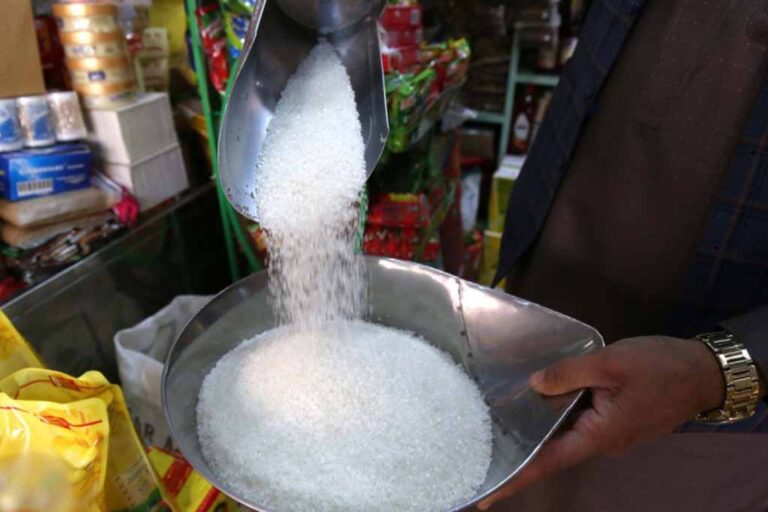
In response to the ongoing scarcity of sugar in the local market, the Consumer Affairs Authority (CAA) has made a significant decision. CAA Chairman Shantha Niriella announced the removal of the maximum retail price (MRP) on sugar in a Gazette Extraordinary released on November 21.
This move comes as a reversal of the previous November 3, 2023 gazette notification that enforced price controls on sugar. The rescinding of this notification is effective immediately.
Under the previous communication, packed and unpackaged white sugar were capped at Rs. 295 and Rs. 275 per kilogram respectively. Additionally, packed and unpackaged brown sugar were mandated to be sold at Rs. 350 and Rs. 330 per kilogram respectively.
Before the imposition of price controls, the Finance Ministry had escalated the Special Commodity Levy on imported sugar from 25 cents to Rs. 50. Consequently, these actions led to a shortage of sugar in the market.
To address the scarcity, the government decided on November 20 to acquire sugar stocks imported under the previous levy of 25 cents per kilogram. These stocks will be made available to consumers through Lanka Sathosa, supermarkets, and cooperative outlets at a set price of Rs. 275 per kilogram within a month.
Trade Minister Nalin Fernando had previously indicated that once the government assumes control of the imported sugar stocks, the necessity for an MRP on sugar would diminish. This decision aligns with the government’s plan to subject future sugar imports to the special commodity levy of Rs. 50.
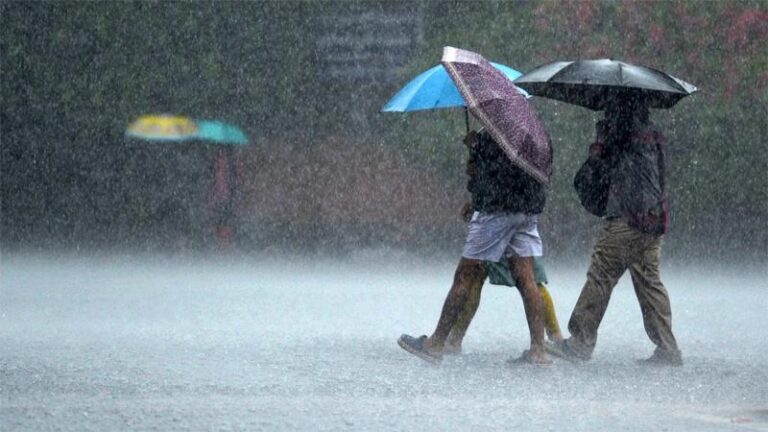
A further enhancement of the prevailing showery condition over the Island is expected today.
Showers or thundershowers will occur in most provinces of the island after 01.00 p.m.
Heavy showers about 100 mm are likely at some places in Central, Sabaragamuwa, Western, North-western, North-Central and Uva provinces.
Showers may occur at some places in Northern and Eastern provinces during the morning too.
The general public is kindly requested to take adequate precautions to minimize damages caused by temporary localized strong winds and lightning during thundershowers.
Under the leadership of Sagala Ratnayaka, Senior Advisor to the President on National Security and Chief of Presidential Staff, a high-level meeting transpired at the Presidential Secretariat involving delegates from the Asian Development Bank (ADB).
The primary agenda revolved around Sri Lanka’s forthcoming water supply sector reform, set to be actualized with the financial support of the ADB. Deliberations predominantly focused on formulating a comprehensive policy framework and an efficient monitoring system crucial for the successful execution of the proposed reform program.
The core objectives of these reforms aim at elevating the administration of climate-resilient, safe, and environmentally sustainable water supply systems across the country.
In-depth discussions encompassed strategies geared towards reinforcing the policy architecture, highlighting governance, sustainability, efficiency, resilience, and capacity-building within water operations.
Crucially, it was emphasized that the collaborative execution of this pivotal initiative would involve concerted efforts from the Prime Minister’s Office, the Ministry of Water Supply, and the National Water Supply and Drainage Board.
The meeting witnessed the participation of Water Supply and Estate Infrastructure Development Minister Jeevan Thondaman, President’s Senior Adviser on Economic Affairs Dr. R.H.S. Samaratunga, Secretary of the Water Supply Ministry R.M.W.S. Samaradivakara, alongside ADB’s Country Director for Sri Lanka, Takafumi Kadono, and other notable representatives.