Home Blog Page 141

Sri Lanka’s IMF Emergency Borrowing: Expensive Shortcut or Necessary Relief?

0

 Sri Lanka’s decision to seek emergency financing from the International Monetary Fund (IMF) under the Rapid Financing Instrument (RFI) has sparked caution among economic analysts, who warn the move could impose significant long-term costs amid the country’s already strained debt situation.

 Economic think tank Verité Research highlighted that the effective cost of IMF RFI borrowing may exceed 6% in US dollar terms and more than 11% in Sri Lankan rupee terms when factoring in exchange rate fluctuations, Special Drawing Rights (SDR) valuations, and time-based surcharges. These surcharges alone add 2.75% to the loan after three years, making the debt potentially more expensive than other available financing alternatives.

 Dr. Nishan de Mel, Executive Director at Verité Research, stressed that “knee-jerk” borrowing decisions in response to Cyclone Dakwah-related recovery spending could replicate past fiscal missteps. According to him, domestic funding options, including three-year rupee bonds yielding around 9%, or US dollar borrowing from local markets where Sri Lankans and the diaspora lend at approximately 5%, could provide cheaper alternatives.

 Verité proposed creative financing mechanisms to mitigate costs. These included issuing a domestic US dollar bond through a yield-capped second-price auction or an ESG-linked International Sovereign Bond (ISB) tied to cyclone recovery KPIs and underwritten by a multilateral development bank. Both approaches could attract investment at lower yields while ensuring transparency in the use of funds.

 The think tank also advocated for non-debt solutions, recommending that the Government pursue disaster recovery grants equivalent to 1% of GDP (around $1 billion) from multilateral and bilateral partners. Legal adjustments, such as temporarily lifting the 13% of GDP cap on primary expenditure under Section 16 of the Public Finance Management Act, were suggested to allow more flexible spending on recovery without worsening debt.

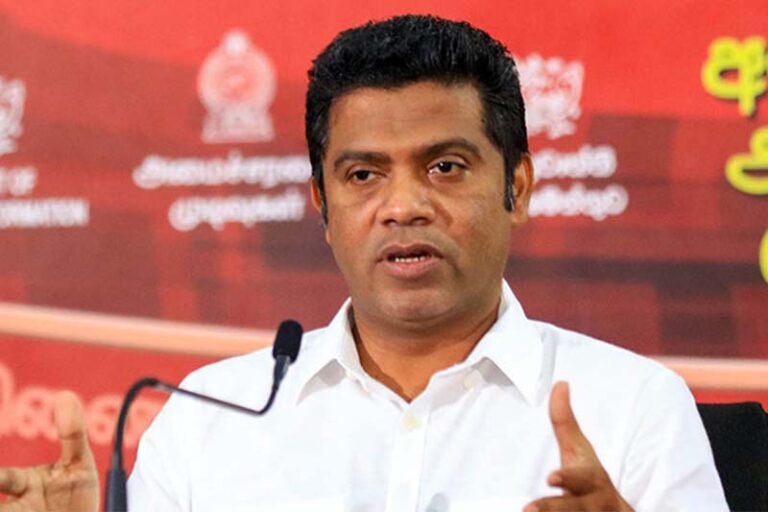
 Despite these warnings, the Government expressed confidence in its RFI request, valued at SDR 150.5 million (approximately $200 million), noting that it would address immediate foreign exchange needs triggered by Cyclone Ditwah while keeping Sri Lanka’s broader IMF-supported reform program on track. Finance and Planning Deputy Minister Dr. Anil Jayantha Fernando stated that the emergency support was fully justified under IMF rules and would prevent destabilization of ongoing fiscal reforms.

 Originally expecting a $347 million disbursement under the Extended Fund Facility (EFF) for December, Sri Lanka opted for the RFI after cyclone-related pressures intensified. An IMF team is slated to visit next month to adjust the staff-level agreement in line with the revised fiscal outlook, while safeguarding critical social protection measures.

 Verité Research’s analysis underscores the delicate balancing act facing Sri Lanka: immediate relief versus long-term fiscal sustainability, urging policymakers to explore lower-cost and non-debt alternatives before committing to expensive emergency borrowing.
Western Province Dominates GDP, Other Regions Show Steady Gains

0

Sri Lanka’s Western Province retained its position as the country’s economic powerhouse in 2024, contributing nearly half of the national output, though growth in other regions signaled a subtle rebalancing of economic activity. Provisional data from the Central Bank of Sri Lanka, based on Statistics Department estimates, show that the Western Province accounted for 42.4% of nominal Gross Domestic Product (GDP) last year, down from 44% in 2023.

 The decline, while modest, reflects comparatively stronger growth in other provinces, particularly the North Western and Central regions. The North Western Province secured the second-largest share at 11.5%, followed closely by the Central Province at 10.7%. Other provinces also increased their economic contribution, with the Southern Province at 8.9%, Sabaragamuwa at 7.7%, and notable gains across Uva and Eastern provinces.

 Sri Lanka’s overall nominal GDP grew to Rs. 29.9 trillion in 2024, up from Rs. 27.4 trillion in 2023, indicating a steady expansion of economic activity amid lingering post-pandemic recovery challenges. The Western Province generated Rs. 12.66 trillion of output, while the North Western and Central provinces produced Rs. 3.45 trillion and Rs. 3.20 trillion respectively.

 Sectoral performance highlighted distinct provincial strengths. The North Western Province dominated agricultural production, contributing 20% of national agricultural value added, followed by the Central Province (13.9%) and Southern Province (11.8%). Industrial activity remained heavily concentrated in the Western Province, which accounted for 47.6% of total industry output, with North Western (12%) and Central (9.6%) provinces trailing. In services, the Western Province again led with 44.5% of national output, while Central (10.7%) and North Western (10.1%) maintained significant shares.

 Economists suggest that while the Western Province continues to drive national growth, the rising contributions from other provinces may foster a more balanced regional development in the medium term. Analysts note that policy measures aimed at enhancing industrial infrastructure, agricultural productivity, and service-sector expansion in non-Western regions could sustain this diversification trend, with potential implications for employment generation and regional investment flows in 2026.

 The Central Bank emphasizes that provincial GDP estimates are derived through a top-down approach, disaggregating national GDP figures based on relevant indicators, with 2024 figures currently classified as provisional. The data provides an early signal for policymakers seeking to prioritize resource allocation, regional investment, and sector-specific interventions as Sri Lanka navigates a year of economic consolidation.

Media Freedom Intact, Action Needed Against Fake News – Minister Nalinda Jayatissa

0

Media Minister Nalinda Jayatissa has rejected allegations that the government is suppressing media freedom, stating that criticism from all forms of media is fully permitted, but action must be taken against the deliberate spread of false information.

“There is absolutely no media suppression. Social, electronic, and print media are free to criticize us and point out our weaknesses,” Jayatissa said, responding to recent claims of media restrictions.

However, he expressed concern over what he described as the intentional dissemination of fake news by certain media outlets and social media groups. He warned that such misinformation is especially harmful as the country seeks to recover from a recent disaster, citing false reports related to the health sector and national security.

“These are not mere criticisms, but calculated attempts to create public distrust and threaten national stability,” the Minister said, adding that the government is legally bound to act under existing laws.

Jayatissa also noted that there is growing public pressure on the government to address misinformation. “People are accusing us of not taking action. They have given us a mandate, and the public call is for the government to act against fake news and false reports,” he said.

Sri Lanka Tourist Arrivals Reach 2.25 Million Despite December Slowdown

0

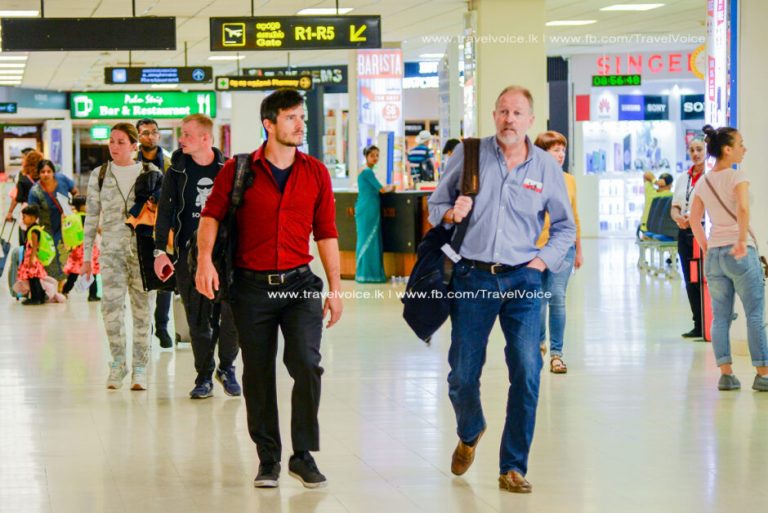
Sri Lanka’s tourist arrivals have reached 2.25 million as of yesterday, despite a slowdown in the first two weeks of December caused by Cyclone Ditwah, a Tourism Ministry official said.

According to the Sri Lanka Tourism Development Authority (SLTDA), 212,906 tourists arrived in the country in November, marking a 15.6 per cent increase compared to the same month last year.

The Authority noted that total tourist arrivals from January to November 31, 2025, stood at 2,103,593, reflecting a growth of 16.6 per cent year-on-year. The lowest monthly arrivals were recorded in May, with 132,919 visitors.

“These figures demonstrate a strong recovery momentum in the tourism sector following the Covid-19 pandemic and the subsequent economic crisis,” the SLTDA said, highlighting a steady upward trend throughout the year.

September recorded the most significant growth, with arrivals rising by an impressive 30.2 per cent, indicating Sri Lanka’s growing success in attracting visitors during the traditional shoulder season. Strong double-digit growth was also observed in January, April, May, June, August, October, and November, pointing to consistent demand across multiple tourism periods.

Europe emerged as the leading source market in November, contributing 108,100 tourists, accounting for 50.8 per cent of total arrivals for the month. This strong European presence is attributed to favourable winter travel trends and well-established travel connections.

India remained the single largest source country, with 51,391 tourists arriving in November, followed by Russia with 24,953 visitors. The United Kingdom ranked next, with 16,915 tourists. Meanwhile, tourist arrivals in December have continued to surpass expectations, further strengthening confidence in the sector’s recovery.

Fraud Complaints Filed Over Postponed Ne-Yo Concert in Colombo

0

Media reports state that fraud-related complaints have been lodged with the Kollupitiya Police against the organisers of the postponed Ne-Yo concert in Colombo.

Police said two complaints have been recorded against the organisers, Brown Boy Presents, including one filed by Cinnamon Grand Colombo over unpaid dues. The complaints are to be forwarded to the Colombo Fraud Investigation Bureau for further investigation.

The concert, scheduled to be held on December 28 at the Sugathadasa Outdoor Stadium, was cancelled citing “unforeseen circumstances.” While the organisers have announced that ticket refunds will be issued, no confirmed timeline for the refund process has yet been provided.

Former Minister Douglas Devananda Arrested by CID Over Missing Personal Firearm

0

Former Minister and Eelam People’s Democratic Party (EPDP) leader Douglas Devananda was arrested yesterday by the Criminal Investigation Department (CID) in connection with an ongoing investigation, police sources said.

According to the sources, Devananda was taken into custody after providing a statement to the CID regarding an incident in which his personal firearm reportedly ended up in the possession of an organised criminal gang. The firearm in question had been issued to him by the Sri Lanka Army for his personal protection in 2001.

WEATHER FORECAST FOR 27 DECEMBER 2025

0

A few showers may occur in Northern, Eastern and Uva provinces and in Polonnaruwa, Matale and Nuwara-Eliya districts.

Showers or thundershowers will occur at a few places in Galle, Matara, Rathnapura and Kaluthara districts after 2.00 p.m.

Fairly strong winds of about 40 kmph can be expected at times over Eastern slopes of the central hills, Northern province and in Hambantota and Monaragala districts.

Misty conditions can be expected at some places in Western, Sabaragamuwa and Central provinces and in Badulla, Galle and Matara districts during the early hours of the morning.

The general public is kindly requested to take adequate precautions to minimize damages caused by temporary localized strong winds and lightning during thundershowers.

Dilith Jayaweera Writes to President Over Police Complaint Against Hiru Media Network

0

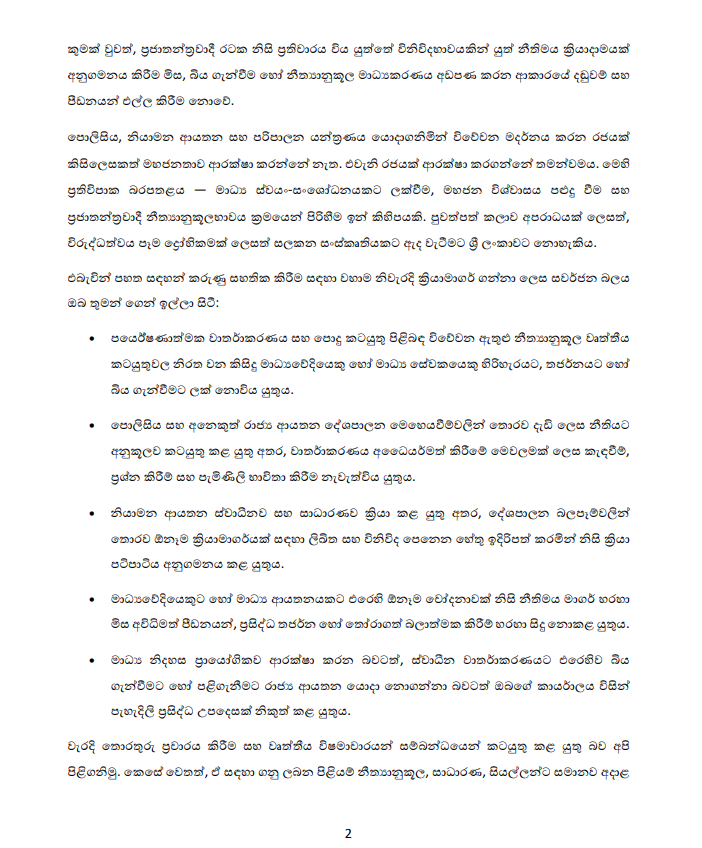
The Sarvajana Balaya Party, led by Mr. Dilith Jayaweera, has sent a letter to President Anura Kumara Dissanayake regarding a complaint made by the Police to the Telecommunications Regulatory Commission against the Hiru Media Network.

The letter, sent by the party’s General Secretary, Attorney-at-Law Ranjan Senewiratne, states that regardless of the subject matter of the reporting in question, the appropriate response in a democratic country should be to follow a transparent and lawful process. It emphasizes that such matters should not be addressed through intimidation, or by imposing punishments and pressure that undermine lawful media practice.

The full text of the relevant letter is provided below.

Turning Point: The Colombo Coup—Town Hall in Turmoil

0

By Faraz Shauketaly

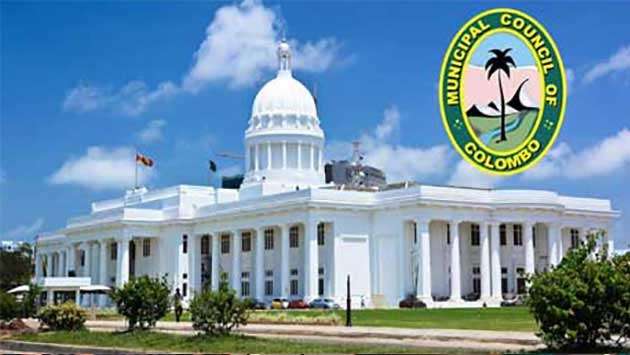
They say if you want to see a disaster, look at a mountain after a landslide. But if you want to see a political disaster, just look at the Colombo Municipal Council (CMC).

Today at Turning Point, we are dissecting the high-drama defeat of the NPP’s maiden budget for the city. It wasn’t just a “no” vote; it was a public execution of the administration’s financial roadmap for 2026.

The Tally: A Three-Vote Mutiny

Let’s get straight to the numbers—because the math doesn’t lie. The budget was defeated 60 votes to 57.

• The Flipped Switch: The real story here isn’t the opposition SJB or the SLPP voting against it—that was expected. The “Turning Point” was the Sarvajana Balaya and a handful of independents. They were the kingmakers who decided to pull the rug out from under Mayor Vraîe Cally Balthazaar.

• The Mayor’s Reaction: Mayor Balthazaar didn’t go quietly. She told the chamber, “You didn’t defeat the NPP’s budget, you defeated your conscience.” It’s a powerful line, but in the brutal world of municipal politics, “conscience” doesn’t pay for garbage collection or street lighting.

The Fallout: Does the Mayor Resign?

I’ve been flooded with messages asking if the Mayor is clearing out her desk. Here is the reality:

1. The 14-Day Clock: Under the Municipal Council Ordinance, Mayor Balthazaar has a grace period. She isn’t out—yet. She has roughly two weeks to re-work the numbers, horse-trade with the independents, and present a “Version 2.0” to the council.

2. The “Deemed Resignation”: If that second attempt fails, then the law is merciless. She will be “deemed to have resigned,” and Colombo will be thrown into a leadership crisis in the middle of a national recovery.

3. The Financial Freeze: Practically speaking, the city is now on a “starvation diet.” Until a budget is passed, no new contracts can be signed. That means road repairs, drain clearing for the monsoon, and digital upgrades are all sitting in a file marked “Pending.”

Prajashakthi vs. The Central Fund: Grassroots or Gimmick?

While Town Hall is eating itself alive, the government is frantically pushing the Prajashakthi National Programmeas the “humane” face of rebuilding.

• The Digital Hook: They’ve allocated LKR 369 Millionto digitize village councils so you can “track every rupee.” It sounds lovely. But we are also being told that LKR 150,000 is being handed out to farmers for “pain of mind.”

•  

• The India Factor: Minister Jaishankar was just here, pledging USD 450 Million. A huge chunk of that—USD 100 Million in grants—is supposed to go through these community-level Prajashakthi schemes to build 7,000 houses in the hills.

The Final Word

The “Turning Point” is this: We have a government trying to manage a USD 4.1 Billion national disaster with one hand, while their own capital city council is cutting the other hand off.

Mayor Balthazaar has 14 days to find her 60th vote. If she doesn’t, the “Budget of Conscience” will be remembered as the budget that broke the NPP’s momentum in the city. Colombo deserves a plan, not a pantomime.

I’m Faraz Shauketaly. Turning Point.

Treasury Autonomy Essential to Prevent Next Debt Default

0

Sri Lanka’s reserve management is at a critical juncture. The IMF’s latest report revising the Net International Reserves (NIR) to $2.16 billion by December 2025 underscores that the country remains vulnerable to debt shocks, particularly amid rising private credit and recent pro-cyclical interest rate cuts. Without structural changes, the economy risks repeating patterns that led to the 2019 default.

The central bank has limited room to intervene effectively. Past experiences demonstrate that rate cuts designed to stimulate credit, when not accompanied by deflationary policy measures, erode reserve accumulation and trigger currency depreciation. Analysts highlight that the Treasury’s current dependency on the central bank for dollar acquisition constrains debt repayment flexibility, leaving the economy exposed.

Pragmatic solutions are available. A dedicated dollar trading mechanism at the Treasury, alongside direct dollar taxation powers, would allow proactive reserve management. Additionally, transferring central bank profits in dollars rather than newly issued rupees would reduce inflationary pressure, safeguard reserves, and enhance debt servicing capacity.

Policy coordination between the Treasury and the central bank must prioritize debt sustainability over short-term credit expansion. Lessons from past crises show that political expediency, unchecked rate cuts, and aggressive fiscal concessions compromise macroeconomic stability. Strengthening Treasury autonomy, modernizing reserve management, and implementing quantitative controls on liquidity can prevent a repeat of prior defaults while providing credibility to Sri Lanka’s IMF program.

In essence, avoiding another default requires structural reform, operational independence, and proactive dollar management. By adopting these measures, policymakers can stabilize reserves, safeguard debt repayment capacity, and restore market confidence without undermining central bank credibility.