Showers will occur at times in Western, Sabaragamuwa and North-western provinces and in Kandy, Nuwara-Eliya, Galle and Matara districts.
A few showers may occur in Hambantota district.Showers or thundershowers may occur at a few places in Uva province and in Batticaloa, Ampara districts during the evening or night.Fairly strong winds about (40-45) kmph can be expected at times in western slopes of the central hills, Northern, North-central, and North-western provinces and in Trincomalee and Hambantota districts.General public is kindly requested to take adequate precautions to minimize damages caused by temporary localized strong winds and lightning during thundershowers.
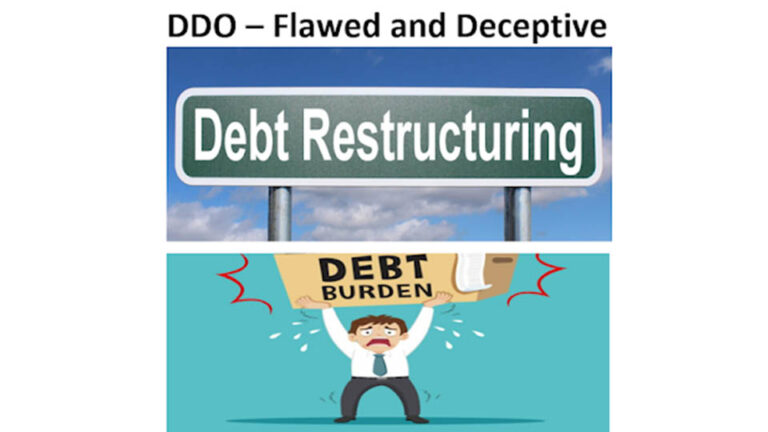
The media these days is full of news of the government’s plan to restructure its domestic debt through the restructure of Treasury bonds held by superannuation funds led by the EPF. The central bank (CB) presents that this is the only option available to the government to make its domestic debt sustainable in order to avoid a near-term default similar to the default of foreign debt on 12 April 2022. The CB also presents that this is the best option available to superannuation funds to protect their interests of the members.
The Parliament’s Finance Committee also took up this subject for consideration last week and seems to have given the concurrence after assessing the loss outcomes of the DDO proposal based on information submitted by the CB.
Therefore, this short article is intended to shed some light on the false information presented by the CB on this subject despite the fact that the CB has been managing the public debt for the past 73 years.
Can superannuation funds make domestic debt sustainable?
The answer is “it cannot.” The reason is bluntly seen from the data as cited below.
Domestic debt stock as at the end of 2022 : Rs. 15,033.8 bn
Total assets of superannuation funds : Rs. 4,345 bn (i.e., Rs. 3,459.9 bn of the EPF, Rs. 468.8 bn of the ETF and the balance Rs. 416.3 bn of other funds)
Investment of superannuation funds in domestic debt : Rs. 3,953.8 bn which is only 26.3% of the domestic debt stock.
Therefore, even if the government freezes or writes off all debt raised from superannuation funds, domestic debt stock will not decline to a sustainable level, given the acute profile of the present fiscal front.
Further, the debt restructuring proposal (DDO) is the exchange of Treasury bonds held by these funds for 12 new Treasury bonds carrying new interest rates/coupon rates of 12% (up to mid 2026) and 9% (from mid 2026 up to maturity from 2027 to 2038) which involves only in reducing the burden of interest payment component in debt service on Treasury bonds held by superannuation funds. However, the CB has not publicized relevant figures how the proposed reduction in interest rates payable to superannuation funds would make the present domestic debt stock (Rs. 15,664.5 bn in April 2023) sustainable.
Two restructuring options available to superannuation funds
Accepting the exchange of existing Treasury bonds for new Treasury bonds at lower interest rates.
If not opted for the option above, being subject to 30% of tax on investment income of superannuation funds in place of 14% tax at present.
As such, the proposed debt restructuring is targeting a reduction of the flow of interest payment on domestic debt (so called debt sustainability in the DDO proposal) or an increase in the tax revenue of the government to enable it to enhance its debt service ability.
This appears to be similar to the modus operandi followed by the government of Ghana for its DDO options applied for all investors in government securities.
Figures cited by the CB Governor at the Finance Committee meeting covered in the attached video
At the said meeting held last week, following figures and information were cited to show the impact of the proposed DDO on superannuation funds. This was based on assumptions-based projection of the growth of a fund portfolio of Rs. 100 bn during the proposed restructuring period from 2023 to 2038. see the video https://www.youtube.com/watch?v=HzCSLcZqPI0
The portfolio will increase to Rs. 387 bn if the portfolio grows as it is without participating in any restructuring option.
If participated in the debt restructuring, the portfolio will increase to Rs. 369 bn showing a reduction of the portfolio by 4.8% as compared to no restructuring position.
If the restructuring option is not exercised and the portfolio is subject to 30% tax, the portfolio will increase to Rs. 304 bn showing a reduction of 21.6% as compared to no restructuring position.
The 4.8% reduction is arrived at the assumption of the ability of the government to continue debt rollovers at current interest rates.
However, as the current deb stock is unsustainable, there is no status quo. Therefore, the government will have to default domestic debt very soon as was done on foreign debt whereas this position also has been informed to the Supreme Court through an affidavit filed by the CB Governor.
Accordingly, the Finance Committee praised the DDO on the ground of 4.8% loss to superannuation funds on debt structuring DDO option as compared to 21.6% loss due to 30% high tax DDO option.
Inapplicability and deceptiveness of the debt restructuring proposal
Information presented above establishes that the DDO proposal as presented by the CB is baseless and contains false data as highlighted below.
Domestic debt stock of the present level (Rs. 15,665 bn) cannot be made sustainable from the present DDO proposal.
The government does not have to default debt in sovereign currency as it always has the ability to rollover debt through the creation of credit at the contemporary interest rates structure partly determined by the central bank’s monetary policy. The government has this ability as the domestic debt is reflective of the risk-free investment portfolio of the private sector (banks, shadow banks, businesses and households). The default of the foreign debt in Sri Lanka was in fact a default of foreign currency payment by the CB. Therefore, the domestic debt unsustainability and the fear of the near-term default as cited by the CB Governor are baseless notions unless there is another hidden, fresh conspiracy to make the government default and bankrupt the country further.
The projected growth of the portfolio of Rs. 100 bn as presented at the Finance Committee is baseless as debt service at current interest rates is assumed for the estimation of the future growth of the portfolio until 2038. While this assumption is unpractical for a central bank which conducts the monetary policy and drive interest rates in the economy, the organic growth of a superannuation portfolio largely depends on the net contribution which is a combined result of new employment, retirement and wage rates in the future. For example, if the young and adults migrate the country at the current rate along with the ongoing aging profile and ongoing economic contraction, the organic growth of superannuation funds could be negative in the next decade. Therefore, the use of the CB’s projections for the DDO as proposed has no professional or macroeconomic basis.
The DDO as proposed is a type used in restructuring of bankrupt business entities in order to improve the quality of financial conditions (the balance sheet and income statement) for regaining the financial solvency. The application of this model as it is for governments is not appropriate because the fiscal front (government finance) is operated on various macroeconomic and public interest principles and objectives that are opposite to operations of business entities. This is evident from many countries which continue to struggle in decades after debt restructuring exercises.
Concluding Remarks and Concerns
It is questionable that the CB continues to manage public debt despite the hard fact that it has managed public debt for the past 73 years with international expertise to the present unsustainable level. Therefore, the same debt manager and officials trying to make debt sustainable now through such baseless DDO proposals is a grave concern over the governance.
The present DDO proposal targets the EPF which is about 80% of the superannuation sector assets whereas the same CB (Monetary Board) has been the financial manager of the EPF throughout the past. Therefore, the conflict of interest is a grave concern observed in the DDO governance. It is not secret that the CB has been using the EPF unduly for debt management and monetary policy’s interest rates control simultaneously at the expense to the EPF. As the CB Governor is the chief of both public debt management and EPF financial management, he cannot not expected to act at arm’s length of the good governance to balance the interests between the debt and EPF. Accordingly, the present DDO proposal is a fresh attempt to abuse the EPF in a new model of macroeconomic mismanagement.
If the CB Governor being the manager of public debt declares that domestic debt is unsustainable and likely to be defaulted soon, the superannuation sector (EPF, ETF and others) which has invested its almost all member funds in domestic debt due for default is also unsustainable now. This will be a grave public issue on the lives of the aged and retired population in the country. Therefore, what is immediately required for the government is to guarantee benefits to employees present and future if the government wishes to prevent a social rise potential in the near-term by maintaining the public trust in the system of the government. The situation world be unmanageable as the new CB will not be able to bailout banks hit by a liquidity crisis due to repeal of lender of last resort powers in the new Act.
The declaration of the domestic debt unsustainability and the near-term risk of default by the CB Governor at the Finance Committee casts doubts on the stability of the banking and financial system too as the system’s liquidity and trust are built on investments in govt domestic debt. Therefore, the resilience of the banking/financial system as viewed by the authorities is highly questionable. In that context, the CB Governor’s declaration as above is a serious matter to be investigated independently, given systemic risks connected.
Restructuring of debt raised in sovereign currency is an unnecessary concept not warranted in modern macroeconomics.
The discrimination of domestic debt in the DDO proposal between superannuation funds and other investors could lead to concerns over the violation of fundamental rights guaranteed by the Constitution of the country.
Therefore, the present DDO proposal would no doubt open up further sources of the instability to both the government and the economy and delay the recovery from the present foreign currency and debt crisis caused by the CB itself.
It is of grave concern as to why the CB being the failed public debt manager continues to manage public debt despite the fact that the government has hired international debt management experts for the purpose and the Parliament has approved of setting up an independent debt management office.
The recommendation of the Finance Committee to the CB Governor to talk only to economists rather than activists is also flawed as the CB Governor’s DDO has no economics while professional economists are not seen so active in the country.
It is hard to understand why such a DDO is proposed if superannuation funds will not incur any losses to their members due to the DDO whereas the EPF will be guaranteed the returns it received in the past as frequently stated by the authorities. It is the common sense that any restructuring of debt is intended to bailout the borrower at the expense of the lender. Further, the fondly reason expressed by the authorities to exclude banks from the proposed DDO on the ground of the financial system stability is baseless because financial system stability cannot be separated in the way the authorities wish. Therefore, the relevant authorities must reveal the bare truth to the public as they cannot deceive the public all the time.
Overall, the proposed DDO is a meaningless waste of another bureaucratic act costly to public funds.
Therefore, domestic debt unsustainability and the potential for a near-term default stated by the CB Governor at the Finance Committee are just his personal presumptions and views and, therefore, are not reflective of the facts, some of which are presented in this article. In that context, the contents of the affidavit referred to by the CB Governor at the Finance Committee may be questioned on grounds whether what have been sworn are the facts or unjustified, personal presumptions relating to unknown future that are not appropriate for making national decisions of this nature.
(This article is released in the interest of participating in the professional dialogue to find out solutions to present economic crisis confronted by the general public consequent to the global Corona pandemic, subsequent economic disruptions and shocks both local and global and policy failures.)
P Samarasiri
Former Deputy Governor, Central Bank of Sri Lanka
(Former Director of Bank Supervision, Assistant Governor, Secretary to the Monetary Board and Compliance Officer of the Central Bank, Former Chairman of the Sri Lanka Accounting and Auditing Standards Board and Credit Information Bureau, Former Chairman and Vice Chairman of the Institute of Bankers of Sri Lanka, Former Member of the Securities and Exchange Commission and Insurance Regulatory Commission and the Author of 12 Economics and Banking Books and a large number of articles published.
The author holds BA Hons in Economics from University of Colombo, MA in Economics from University of Kansas, USA, and international training exposures in economic management and financial system regulation)
The Minister of Ports, Shipping, and Aviation, Nimal Siripala de Silva, officially opened the Enquiry Centre at the Sri Lanka Ports Authority (SLPA) yesterday. This significant development is set to bolster the operational capabilities of the Port of Colombo, a pivotal hub for international trade and shipping activities.
The primary objective behind establishing the SLPA Enquiry Centre is to streamline and expedite the provision of information on port services, benefiting both local and international customers associated with the Port of Colombo. Moreover, it seeks to educate and inform the public about the intricacies of port operations.
Operating from 8:30 a.m. to 5 p.m. daily, the center will be accessible through the dedicated hotline number 1984. This hotline promises to be a valuable resource, particularly for individuals involved in import, export, and shipping endeavors.
For those seeking additional information, the SLPA Enquiry Centre, conveniently located at Lotus Road, Canal Yard, Colombo 01, welcomes walk-in inquiries. Alternatively, questions can be submitted via email to [email protected].
During the center’s inauguration, Minister Nimal Siripala de Silva placed the inaugural call to the hotline, emphasizing the significance of this service’s international connectivity. He highlighted how this initiative will provide swift access to the latest updates in the domains of trade, shipping, and ports.
“The efficiency of the Sri Lanka Ports Authority’s services is poised for a significant boost with the introduction of the new Enquiry Center,” noted the Minister. He added, “This proactive measure aims to reduce the need for in-person meetings between officials and customers, ultimately mitigating certain irregularities.”
Prominent figures in the SLPA leadership, including Chairman Keith Bernard and Managing Director Prabath Malavige, along with numerous senior officials, also graced the event with their presence.
Colombo (LNW)- The Information and Communication Technology Agency (ICTA) today informed all government institutions to keep their systems upgraded and to maintain them properly to prevent ransomware attacks.
ICTA Chief Executive Officer Mahesh Perera told the Daily Mirror that after restoring the email systems, they had an issue restoring two and a half months of email backup.
However, the ICTA has confirmed that a severe data loss incident that affected all government offices using the “gov.lk” email domain has been restored.
This email facility was provided to certain state institutions that do not have their own email facilities through a separate email platform, Perera said.
“The email service was upgraded to the 2013 email platform and continues until 2023. Until now, the email platform was not updated, and it was vulnerable to various types of information security attacks,” he said.
“The ICTA attempted to upgrade the service on three occasions, but it was not possible due to financial constraints and issues with the design.
Unfortunately, the email server was attacked by ransomware on August 26, and all emails got encrypted. Several online services included email backups were also encrypted,” he said.
“We are looking at a legitimate system to restore the encrypted email log.”Fortunately, we had a two and a half-month old offline email backup, and we restored it with the system. But we have lost the email that we received within a period of two and a half months,” Perera said.
The ICTA handed over the case to SLCERT to conduct investigations, and a police complaint was filed over this ransom attack.Finally, the ICTA has engaged in activities to upgrade the email services.
Some data of government offices under the purview of the President’s Office, Cabinet Office, Ministry of Education, and Ministry of Health were affected in the ransomware attack between May 17 and August 26, 2023, the Information and Communication Technology Agency of Sri Lanka (ICTA) reported.
Director of Strategic Communications at ICTA Sampath de Silva confirmed a severe data loss incident affecting certain government offices using the “gov.lk” email domain.
He said crucial government information is exchanged via Lanka Government Network (LGN), utilizing the “[email protected]” email domain.
Stating that the ransomware could have impacted approximately 5,000 email addresses, Sampath de Silva stated there was no offline backup for a critical two-and-a-half-month data period.
The online backup system was also compromised, resulting in the loss of emails during this time frame, Sampath de Silva further said.
He further said two key measures are being implemented to prevent future data loss, such as daily offline backup processes and the upgrading of the relevant application to the latest version with enhanced defences against virus attacks.
Conduct a discussion and present a report on the benefits of working with the BRICS countries – Committee Chair instructs. Attention directed towards the recruitment of Sri Lankan students abroad as volunteers to serve in foreign embassies.
41% of the world’s population lives, 24% of the world’s gross domestic product (GDP) and 16% of world trade activities are carried out in the BRICS countries, The Central Bank of Sri Lanka stated before the Sectoral Oversight Committee on International Relations. Furthermore, 10.3% of Sri Lanka’s exports and 47.3% of imports in the year 2022 are made from BRICS countries and for these reasons it is economically important to work with BRICS countries, the Central Bank officials further stated.
The said discussions were held at the Sectoral Oversight Committee on International Relations held in Parliament, Chaired by Hon. Namal Rajapaksa.
Accordingly, the Committee Chair recommended that a special discussion be held with the Central Bank of Sri Lanka and the Ministry of Finance under the initiative of the Ministry of Foreign Affairs to inquire about the social, economic and political benefits that can be obtained through working with the BRICS countries and submit a report to the Committee.
Moreover, the Chair also instructed the relevant officials to pay attention to the recruitment of foreign students, including Sri Lankan students who are studying abroad, as volunteers for the vacancies of employees in foreign embassies.
Members of the Sectoral Oversight Committee Hon. (Prof.) G. L. Peiris, Hon. Akila Ellawala, Hon. Madhura Withanage, Members of Parliament Officials of the Ministry of Foreign Affairs and a group of officials representing the Central Bank of Sri Lanka participated and the Hon. Chandima Weerakkody, Member of Parliament participated with the permission of the Chair of the Committee.
Colombo (LNW):Two Pakistani cricket officials are under the strict scrutiny of cricket authorities following allegations of visiting a Sri Lankan casino during their stay in the island to attend the Asia cup matches in Colombo, PTI reported.
It was highlighted in international media including the Deccan Herald and the the Times of India
Many Pakistani fans on social media questioned how officials of the Pakistani Cricket Board PCB could be so “immature” and “careless” as to indulge in gambling, it added.
Pakistan team’s current media manager Umar Farooq Kalson and board’s GM (International Cricket) Adnan Ali are under scanner after pictures and video footage emerged of the duo visiting a Colombo casino.
Both are in Colombo in official capacity as a part of the Pakistani contingent for the ongoing Asia Cup and visiting a gambling den is sure to attract attention of ICC’s Anti-Corruption Unit as it is one of the prohibited places as per code of conduc, PTI disclosed.
Pakistan’s Captain Babar Azam in a conversation with umpires Chris Gaffaney and Ruchira Palliyagurugeare after rain stops play (ANI)
Many Pakistani fans on social media questioned how officials of the PCB could be so “immature” and “careless” as to indulge in gambling. Many criticised the trend of many PCB officials going on to Colombo during the Asia Cup on official visits.
A PCB source said that at least 15-20 PCB officials had travelled to and from between Colombo and Lahore while some were stationed there permanently as Pakistan was the official host of the Asia Cup.
After some Pakistani news channels ran headlines, the two officials in the Casino later clarified that they had only gone to the Casino to have dinner, a claim ridiculed by all and sundry on social media and also by some former test players.
Colombo (LNW): Sri Lanka has posted a 74 percent increase in workers’ remittances during the first eight months of 2023, reaching nearly US$ 4 billion, compared to the corresponding period of the previous year.
Based on the most recent data released by the Central Bank, workers’ remittances in August 2023 increased to US$ 499.2 million, a substantial uptick from the US$ 325.4 million received in August 2022. However, this figure remained below the six-year average of US$ 584 million for the month of August spanning from 2015 to 2020.
For the January- August 2023 period, the cumulative remittance income stood at US$ 3, 862.7 million, compared to US$ 2, 214.8 million recorded for the equivalent period in 2022.
This translates to a substantial increase of 74.4 percent. “This isn’t just a statistic. It’s a testament to dedication, hard work, and perseverance of our Sri Lankan expatriates,” Labour and Foreign Employment Minister Manusha Nanayakkara said commenting on the latest data.
Sri Lanka has received 499 million US dollars in remittances through official channels in August 2023, up 53 percent from a year ago, data released by the central bank shows. The August number is slightly lower than 541 million US dollars in July.
Worker remittances coming through official channels fell in 2021 which could not be paid for by the banking system at the official rate as money was printed to sterilize interventions and keep a policy rate down, triggering parallel exchange rates, which were settled outside the formal banking system.
From April rates were hiked, slowing credit and the need to print money to keep rates down. Up to August 2023, Sri Lanka received 3,862.7 million US dollars from official channels, up 74 percent 2,214.5 million US dollar in 2022
“Our global workforce, spread across the world, has not only weathered the challenges brought about by the pandemic but has thrived and excelled. They have supported families, communities, and our nation’s economy through their tireless efforts,” he added.
“Let’s take a moment to appreciate their unwavering commitment and the sacrifices they make to uplift their loved ones and the country. Their remittances go beyond numbers; they are a lifeline, a beacon of hope, and a source of pride for Sri Lanka.
Together, we look forward to a brighter future, knowing that the global Sri Lankan community plays a pivotal role in our nation’s progress. As we celebrate these remarkable achievements, let’s continue to support and honour the dedication of our global workforce,” the Minister further said.
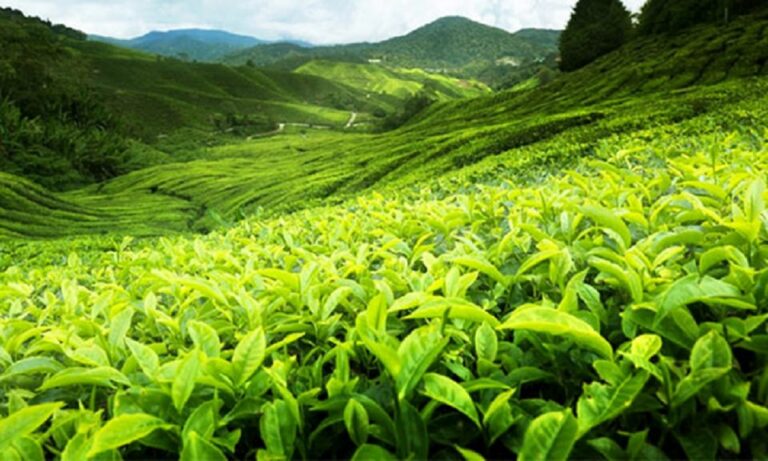
Colombo (LNW): Sri Lanka tea industry has strengthened its position as the largest revenue earner of tea in the world, second only to China, said Ganesh Deivanayagam, who was re-elected as the Chairman of the Tea Exporters Association (TEA) for his second tenure.
Deivanayagam highlighted Sri Lanka’s expertise in producing unique tea blends, which has propelled the country’s success in the global marketplace.
Sri Lankan tea commands an average FOB (Free on Board) price of US Dollars 5.10 per kilogram, surpassing India’s $3.58 and Kenya’s $2.60. Sri Lanka’s achievement can be attributed to its relentless pursuit of excellence, breaking global barriers, continuous innovation, and a willingness to take risks.
Moreover, Sri Lanka has established itself as a leader in tea blending, packaging, flavoring, and value addition, outpacing its competitors in these areas.
Despite facing challenges in both domestic and external markets, such as difficulties in importing raw materials and a high-tax environment, Sri Lanka has managed to sustain its tea export revenues through positive action, stakeholder collaboration, and prudent decision-making.
The stability achieved by the Sri Lankan tea industry provides a solid foundation for further growth and development.
Moving forward, the industry must focus on producing more healthy tea products for the global market, as these products have the potential to command higher prices.
Sri Lanka has sustained its tea export revenues and continues to lead, as a direct result of positive action, stakeholder symbiosis and prudent decision-making. It gives a stable platform on which to continue to build our resilient industry.”
The island nation remains the largest revenue owner of tea in the world, second only to China. Sri Lanka has achieved this feat through relentless pursuit, breaking global barriers, innovating, and taking risks.”
He also emphasized that Sri Lanka’s tea blending, packaging, flavouring and value addition are significantly ahead of its competitors.
Niraj De Mel, Chairman of the Sri Lanka Tea Board also shared his insights saying, “Our target is to touch at least 265 million kilos of tea production this year,” while emphasizing the need for sustainability amidst price fluctuations.
He also referred to discussions held with Minister of Plantation Industries, the Hon. Dr Ramesh Pathirana, with regard to increasing value addition, highlighting that Sri Lanka’s ability to produce a variety of teas, due to its diverse agro-climatic growing districts, could be more fully leveraged through value addition.
“Sri Lanka produces 3.9% of the global tea supply, with China and India being the other major producers,” De Mel continued.
“However, we believe that more can be done with the variety of teas produced in Sri Lanka, particularly in terms of adding value and attracting new markets. Ceylon Tea is unique and we may not be leveraging that distinction sufficiently.”
Instructions from the Committee Chair to call the National Secretariat for Persons with Disabilities and obtain their views and suggestions Seeking views of non-governmental organizations for persons with disabilities also suggested.
The appointment of Hon. Dullas Alahapperuma as the Chair to the Caucus were proposed by Members of Parliament Hon. (Prof.) Charitha Herath, seconded by (Hon. (Dr.) (Mrs.) Sudarshini Fernandopulle when the Caucus met for the first time. Members of Parliament Hon. Madhura Withanage, and Hon. Ajith Mannapperuma, were appointed as deputy Chairs to the Caucus, proposed and seconded by Members of Parliament Hon. Weerasumana Weerasinghe and Hon. Karunadasa Kodithuwakku.
Commenting on the future actions of the Caucus, the Chair of the Caucus instructed to call the National Secretariat for Persons with Disabilities for a discussion. The Chair mentioned that the Caucus can get an understanding of the current information and data about the persons with disabilities as well as the work plan carried out by the office.
The Chair further commented that there are many issues for people with disabilities in the areas of education, transportation, law and health. Accordingly, it was decided to invite non-governmental organizations working on behalf of disabled people and get their views and suggestions.
The Chair also recalled the need to obtain updated data on how many people with disabilities are present in the country since the last population census was conducted in 2012.
The Chair emphasized that everyone should stand up for the rights of persons with disabilities regardless of their party affiliation. Hon. Sajith Premadasa, the leader of the opposition, disclosing facts before the Caucus addressed the need to prepare a data system regarding persons with disabilities in this country. According to the said, the Gramasewa officials can begin to obtain the relevant data, the Opposition Leader said.
The members of the Caucus said that they should work with the aim of giving rights to persons with disabilities rather than pity.
Members of Parliament Hon. (Dr.) (Mrs.) Sudarshini Fernandopulle, Hon. Lalith Ellawala, Hon. (Prof.) Charitha Herath, Hon. Madhura Withanage, Hon. Jagath Kumara Sumithraarachchi, Hon. B. Y. G. Rathnasekara, Hon. Weerasumana Weerasinghe, Hon. Karunadasa Kodithuwakku, Hon. Udayana Kirindigoda, Hon. Yadamini Gunawardena, Hon. Premnath C. Dolawatte, Hon. K. P. S. Kumarasiri, Hon. Sudath Manjula, Rohini Kumari Wijerathna, Hon. Wasantha Yapabandara, were present at the Committee meeting held.
Colombo (LNW): The first ever mega Business & Trade Forum is to be held in UAE, and the Sri Lanka – RAK Business Forum & Trade Fair is to bring together over 25,000 of visitors per day consecutively for 5 days.
The number visitors including institutional and high-net worth business delegates, buyers from the regions including Middle East & North Africa, Asia, South East Asia, Europe and Americas will grace the occasion.
“This will be a key to kick starting new destination and business relations with Ras Al Khaimah and Sri Lanka, each one being one of the fastest-growing tourist destinations in their respective regions, with abundant investment opportunities,” A.M. Jaufer, President – Chamber of Tourism & Industry (CTIS) said.
He said the Sri Lanka – RAK Business Forum & Trade Fair is scheduled to be held from October 25th to 29th at RAK Expo Center from 9 a.m. to 9 p.m. at Ras Al Khaimah, United Arab Emirates. There will be over 200 stalls at the trade fair.
“We believe this event’s success will position Sri Lanka and our country’s products and services in the world’s fastest growing destination, the United Arab Emirates – the 3rd richest country in the world and the Gulf region, Jaufer further added.
This event will further enable Sri Lankan Businesses to explore new opportunities and to strengthen business collaboration in the Middle East and North African Region at a time Sri Lanka is moving towards strengthening the economy with social and economic revival.
The event is being held with the guidance of Sri Lanka’s Presidential Secretariat, Ministry of Foreign Affairs as it is significant to bolster bilateral relations between Sri Lanka and the UAE.
The Sri Lanka – RAK Business Forum & Trade Fair 2023 is a ministerial and business leaders’ conference and a large trade fair of Sri Lankan business companies.
The event is organized by Federation of Chambers of Commerce and Industry of Sri Lanka (FCCISL) and Chamber of Tourism and Industry Sri Lanka (CTISL) in partnership with Ras Al Khaimah Chamber of Commerce and Industry (RAK CCI) and in collaboration with Government of Sri Lanka.
United Arab Emirates (UAE) is the 8th export destination for Sri Lanka. Total export value from Sri Lanka to UAE was USD 345.82 Mn in 2022 and total imports from UAE to Sri Lanka for the same period were USD 950.36 Mn. UAE is the 3rd import origin for Sri Lanka in 2022.
Sri Lanka’s exports to UAE has increased by 20.11% in 2022 when compared to the year 2021.Imports from UAE has decreased by 32.52% in 2022 when compared to the year 2021.
Sri Lanka’s main export products to UAE in 2022 were Tea in Bulk, Petroleum Oils, Tea Packets, Women’s & Men’s Outerwear and under garments, Gems, Desiccated Coconut, Melons & Papayas and Coconut Fresh Nuts.
Sri Lanka’s main imports products from UAE in 2022 were Petroleum Oils, Standard Wire of Aluminum, Copper & Iron, Other Mineral Products nes, Other Products of Base Metal, other Products of Plastics, Fertilizers, Diamonds, Other Edible Fish, Other Petroleum Products.