Home Blog Page 1448

Sri Lanka: The fate of a protest that toppled a president: BBC Report

0

By Anbarasan Ethirajan

Udeni Kaluthantri, a 54-year-old port worker, became an overnight sensation last year for reasons that had nothing to do with his job.

Days after protesters stormed the presidential palace in the Sri Lankan capital Colombo, a video surfaced of Mr Kaluthantri lounging on a bed draped with the presidential flag.

Pictures of young men jumping into the pool inside the palace and bouncing on the presidential four-poster bed had already gone around the world. Mr Kaluthantri’s video joined all of the other imagery as poetic proof of how millions of Sri Lankans were fed up of what they regarded as inept and corrupt governance under President Gotabaya Rajapaksa.

Soon after, Mr Rajapaksa fled the country, resigning days later. It was hailed as a massive win for an unprecedented people’s movement but one year later, Sri Lanka looks quite different.

The people’s struggle

In early 2022, inflation in Sri Lanka skyrocketed as foreign reserves emptied and the country ran short of fuel, food and medicine. Residents experienced up to 13-hour power cuts in what was the worst economic crisis the country had faced since independence.

Many held then president Mr Rajapaksa and his family responsible. While his disastrous economic policies led to the shortfall in foreign currency, the Rajapaksa family was also accused of corruption and siphoning public money. But the Rajapaksas deny any wrongdoing and place blame elsewhere for the crisis: the sharp drop in tourism revenue because of the pandemic and the high cost of fuel after Russia invaded Ukraine.

I was in Colombo last year as crowds gathered at Galle Face Green, a popular beach-facing public space in Colombo. The demonstrations continued day and night, the crowds swelling in the evenings with families, students, priests, nuns, clerics and monks. Driven by the rallying cry “Gota go home”, the protests engulfed the country, uniting Sri Lanka’s three major communities – Sinhalese, Tamils and Muslims – for the first time.

Weeks later, they culminated in extraordinary scenes where protesters stormed the presidential palace, with the intention of forcing Mr Rajapaksa out of power. Mr Kaluthantri was among them. Mr Rajapaksa was not at the palace when the protesters broke in – so they made themselves at home, and took away all sorts of “souvenirs”, from bed sheets to books.

“I took the presidential flags away because I thought Mr Rajapaksa wouldn’t be able to act as president without those official symbols,” Mr Kaluthantri said. Sri Lanka’s presidential flags are unique to each president, and the design changes every time a new leader assumes office.

Five days later, Mr Rajapaksa fled the country and sent his resignation from Singapore. This was seen as a victory for the “aragalaya” or “people’s struggle” as the movement was called.

The decline of the Rajapaksa family would have been unthinkable a few months before. The politically powerful family was popular for crushing the Tamil Tiger separatists in May 2009 and ending the country’s 25-year civil war.

But now, a year on, it is the protesters who are in trouble, while the Rajapaksas and several other politicians singled out by public anger are back in the country – and in positions of power.

What happened?

The crackdown

After Mr Rajapaksa fled the country, veteran opposition politician, Ranil Wickremesinghe was elected as the new president in a parliamentary vote. He was backed by Mr Rajapaksa’s party, which had a landslide majority.

Hours after Mr Wickremesinghe was elected, the military was deployed to clear the crowds at Galle Face. Dozens of soldiers swooped on the site, dismantling tents and other belongings of the demonstrators.

Mr Kaluthantri himself surrendered to police and spent 21 days in custody on charges of desecrating the presidential flag. The case against him continues. “I have no regrets. I did it for the country and people,” says Mr Kaluthanthri, who was suspended from his job for two months.

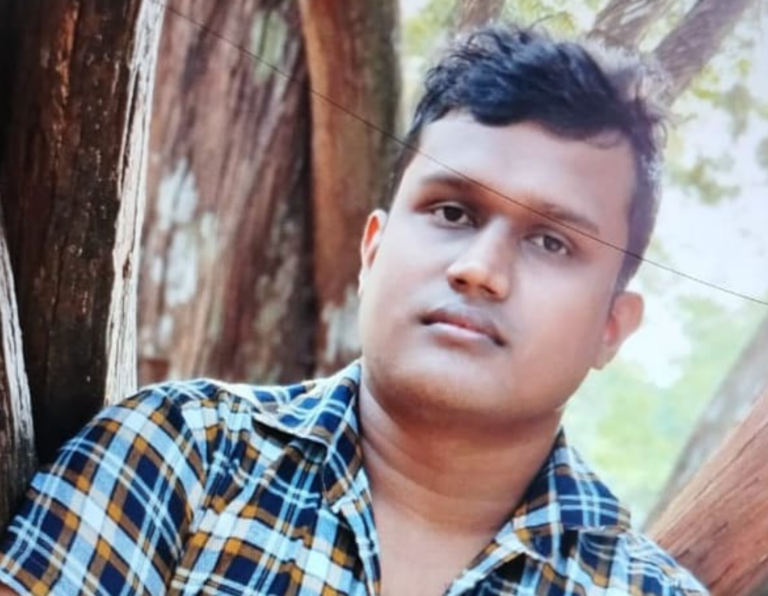
Udeni Kaluthantri,lounges on a bed draped with Gotabaya Rajapaksa's presidential flag
Image caption, Mr Kaluthantri says he took the flags so Mr Rajapaksa wouldn’t be able to act as president without them

His only regret: “We managed to force Gotabaya Rajapaksa to resign, [but] we were not able to introduce a new political culture.”

With Mr Rajapaksa gone and the new government taking steps to ease the acute shortage of fuel and other essentials, many protesters resumed normal life. The authorities then used force – deploying all the legal and punitive powers at their disposal – to clear the last, most committed of the demonstrators from the protest sites.

Weeks later, Mr Rajapaksa and his brother Basil, who had also fled the country, returned.

The former president is now living in a high-end government bungalow, while many of the members in his cabinet have been reinstated.

The silenced voices

One of those who faced the full wrath of the state was Wasantha Mudalige, a left-wing activist and former convenor of the Inter-University Students Union. He was at the forefront of the protest movement.

Mr Mudalige was arrested under the draconian Prevention of Terrorism Act (PTA) and spent more than five months in prison.

“I could have spent more time in prison if not for the courts. The government cannot suppress protests without solving people’s issues.” Mr Mudalige says.

A court in Colombo dismissed the terror charges against Mr Mudalige in February and ordered his release. The judge said the authorities had misused the act.

Ranil Wickremesinghe
Image caption, Hours after parliament elected Ranil Wickremesinghe as president he cracked down on the protests

Many other protesters have also been charged under various laws, and some have been sentenced to prison. Yet many of the protest leaders look back at the movement with pride.

Swasthika Arulingam, a human rights lawyer and a prominent activist, says it was a historic, unorganised movement that attracted people from all walks of life.

“But we have not achieved the long term goals of Aragalaya – like… no change in the political system, no accountability on corruption, and those who are responsible for stealing people’s money are still in power,” she says.

Although the protests have gone silent for now, some protesters like Samadhi Brahmananayake argue that the agitation showed what people’s power can do.

“The protest gave us hope and confidence. We have realised what we can achieve collectively. Several young people now want to become politicians. We have to work towards political change,” says Ms Brahmananayake.

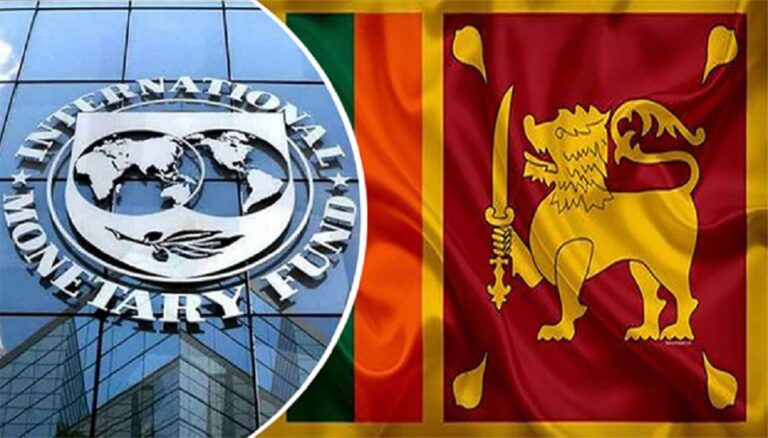
Mr Wickremesinghe’s government secured a $2.9bn dollar bailout from the International Monetary Fund in March. This has enabled Colombo to reach out to other international lenders to kickstart the economy, and find enough dollars to supply fuel, food and cooking gas.

Civil activists protests during protest against early morning military attack in Gota Go Gama near in Colombo, Sri Lanka July 22, 2022

With tourism and remittances from Sri Lankan workers abroad picking up again, the country is clawing its way back but still has a mountain to climb.

Sri Lanka’s total debt, both domestic and foreign, stands around $80 billion and it will be a challenge to repay the loans. Colombo is negotiating with creditors to agree a debt restructuring programme by September.

The government is calling for a 30% write-off in investors’ capital in dollar-denominated bonds. But opposition leaders say this could have an impact on the pension funds of Sri Lankan workers.

The proposals have also sparked concerns among many Sri Lankans and some warn against taking the current calm for granted.

“The country continues to be in a state of economic crisis,” says Ms Arulingam. “In addition to the spiralling cost of living, now there are worries over retirement savings. If people’s living conditions do not improve, they may take to the streets again.”

Source: BBC

C.D. Wickramaratne granted further service extension as IGP

0

By: Isuru Parakrama

Colombo (LNW): Former Inspector General of Police (IGP) C.D. Wickramaratne has been granted a further service extension of three months, based on a recommendation by Public Security Minister Tiran Alles.

The service extension was granted by President Ranil Wickremesinghe.

Within the period of three months, the next Senior Deputy Inspector General (SDIG) qualified for the post would be selected.

Navy operations seize 12 engaged in illegal fishing, 02 poaching trawlers in SL waters

0

The Navy apprehended 12 individuals on 07th and 08th July 2023 off Chalei and Chundikulam in Jaffna and Illuppukadawai in Mannar, while they were engaging in illegal fishing activities. During these special operations, the Navy also held 1870 illegally harvested sea cucumbers, unauthorised fishing gear and 04 dinghies used for these illegal acts.

The Navy conducts regular operations in the coastal and sea areas around the island in order to suppress illegal fishing activities performed by people. As an extension of these efforts, the Naval Deployment Veththalakerni in the Northern Naval Command carried out special operations in the dark hours of 07th July and nabbed 09 persons along with unauthorised fishing gear and 03 dinghies, whilst engaging in light-coarse fishing off Chalei and Chundikulam.

In addition, SLNS Buwaneka in the North Central Naval Command apprehended 03 individuals for fishing without valid passes off Illuppukadawai on the evening of 08th July. During this operation, the Navy also held 1870 illegally harvested sea cucumbers and a dinghy which was used for the illegal act.

The apprehended persons, ranging in age from 23 to 58, were from the areas of Dharmapuram, Vallipuram, Chilaw, Mailavapuram, Kallaru, Thalayadi and Walaipadu. Following the apprehensions, the Navy handed over the suspects, their belongings, and the illegally harvested sea cucumbers to the Department of Fisheries and Aquatic Resources, Jaffna and Mannar Assistant Directorate of Fisheries for onward legal action.

Meanwhile, the Navy and Coast Guard conducted a special operation to chase away Indian poaching trawlers from Sri Lankan waters in the dark hours of 08th July 2023. The operation led to the apprehension of 02 Indian trawlers with 15 Indian nationals poaching in Sri Lankan waters off the Delft Island, Jaffna.

The Navy continues to conduct regular patrols and operations in Sri Lankan waters to curb illegal fishing practices of foreign fishing trawlers.

As an extension of these efforts, the Northern Naval Command deployed Fast Attack Craft of the 04th Fast Attack Flotilla and craft of the Sri Lanka Coast Guard to chase away a cluster of Indian poaching trawlers, having spotted they were engaging in illegal fishing in Sri Lankan waters off the Delft Island. In this operation, the Navy held 02 Indian poaching trawlers with 15 Indian fishers continuing to remain in Sri Lankan waters.

The seized trawlers together with Indian fishermen were brought to the Kankesanthurai Harbour and they will be handed over to the Mailadi Fisheries Inspector for onward legal proceedings.

Thus far in 2023, the Navy has seized 12 Indian poaching trawlers and 74 Indian fishermen in island waters and handed them over to authorities for legal action. Meanwhile, the Navy and the Coast Guard continue to carry out such operations for the protection of the marine environment and the livelihood of the local fishing community.

Source: SL Navy

Indian travel association resolves to help in boosting tourist flow to SL

0

Colombo, Jul 9 (PTI): A leading travel-related association of India has resolved to help Sri Lanka in reviving its tourism sector by promoting the flow of tourists to the island nation that is making comprehensive efforts to recover from the devastating economic crisis last year.

The three-day Indian Travel Congress, which was held in Colombo as part of the 67th convention of the Travel Agents Association of India (TAAI), concluded on Saturday with a dazzling display of fireworks, gala dinner and music and dance performances with many famous Bollywood numbers sang in Sinhala language by performers.

“We are both alike, India and Sri Lanka, our food, language, culture and dresses, and tourism builds bridges between two communities and two countries, and we at TAAI support Sri Lanka in its efforts to revive tourism, above and beyond this convention,” Jyoti Mayal, the President of the 72-year-old TAAI, said in her address.

After her address on Saturday night, she asked TAAI delegates to take a pledge that each Indian in an individual or institutional capacity will help in bringing tourists to Sri Lanka.

Over 500 delegates, including tourism and hospitality industry experts, tour operators and other key stakeholders from India and Sri Lanka participated in the grand convention that kicked off on July 6.

The theme of the TAAI convention was ‘Transcending Borders, Transforming Lives’.

Mayal in her address at the closing day dinner reception hosted at a beach hotel just out of Colombo city, called the convention a “resounding success”.

She thanked the Sri Lanka Tourism Promotion Bureau (SLTPB) and the Sri Lankan Association of Inbound Tour Operators (SLAITO), for their support in organising the convention.

The 66th convention of TAAI was to be held in Colombo in 2022, but due to economic and political turmoil, it was eventually hosted in Singapore on board a cruise.

SLTPB chairman Chalaka Gajabahu in his address thanked TAAI for choosing Sri Lanka as the host country for its convention and said the partnership between the two sides should grow further from here, “as we make efforts to recover and revive our tourism sector” that is showing signs of improvement.

In 2022, there was a significant increase in international tourist arrivals to the country, with 719,978 visitors recorded for the year, a 270.2 per cent increase compared to the 194,495 tourists who visited in 2021, according to the Sri Lanka Tourism Development Authority (SLTDA).

Sri Lanka government officials said “comprehensive efforts” are being made in the tourism sector as the cash-strapped nation endeavours to rebuild the economy.

Sri Lankan President Ranil Wickremesinghe attended the formal opening ceremony of the convention that took place at the historic BMICH (Bandaranaike Memorial International Conference Hall) in the Sri Lankan capital.

In his address, he suggested making the BIMSTEC area a “borderless tourism” region to tap the huge potential offered by the countries in the seven-member grouping.

The Bay of Bengal Initiative for Multi-Sectoral Technical and Economic Cooperation (BIMSTEC) is a regional grouping that comprises India, Sri Lanka, Bangladesh, Myanmar, Thailand, Nepal and Bhutan.

Wickremesinghe also spoke about several projects, including seven golf courses and more resorts, planned by his government to help speed up Sri Lanka’s recovery from the 2022 crisis.

In April 2022, Sri Lanka declared its first-ever debt default, the worst economic crisis since its independence from Britain in 1948, triggered by forex shortages that sparked public protests.

Months-long street protests led to the ouster of the then-president Gotabaya Rajapaksa in mid-July last year.

High Commissioner of India to Sri Lanka, Gopal Bagley attended the inaugural ceremony and address delegates on the second day of the Indian Travel Congress as well.

He described India and Sri Lanka as “civilisational twins” in his address at the inaugural ceremony.

On the second day of the Indian Travel Congress 2023,

Sri Lanka Parliament Speaker Mahinda Yapa Abeywardena graced the occasion as a chief guest at a dinner reception in Colombo.

Expressing his gratitude to trustworthy friend India for saving Sri Lanka and preventing a bloodbath during its unprecedented economic crisis last year, Abeywardena said that not a single nation has extended that kind of assistance to Colombo as done by New Delhi.

Source: PTI

Speaker expresses gratitude to India for saving SL and preventing “bloodbath” during economic crisis

0

Colombo, Jul 8 (PTI): Expressing his gratitude to “trustworthy friend” India for saving Sri Lanka and preventing a “bloodbath” during its unprecedented economic crisis last year, Parliament Speaker Mahinda Yapa Abeywardena has said that not a single nation has extended that kind of assistance to Colombo as done by New Delhi.

Sri Lanka was hit by a catastrophic financial crisis in 2022, the worst since its independence from Britain in 1948, due to a severe paucity of foreign exchange reserves.

As the country struggled, locked in the throes of the crisis, India extended multi-pronged assistance of about USD 4 billion to it last year, through multiple credit lines and currency support, in line with India’s ‘Neighbourhood First’ policy.

In his address at the gala dinner reception hosted for delegates of the Indian Travel Congress here on Friday, Abeywardena said India “saved us” during the financial crisis, otherwise, there would have been “another bloodbath for all of us”.

At the evening reception, he thanked India for the help extended to the cash-strapped nation and recalled the civilisational ties and similarities between the two countries and their cultures.

“Sri Lanka and India are very, very closely interconnected countries, culturally, nationally, and policy-wise, and above all, India has been a very close associate and trustworthy friend of Sri Lanka,” Abeywardena said, adding that when “we were in trouble”, India always helped out.

“And, even this time, today, I heard that India is willing to extend our restructuring of loans for 12 years. Never expected, and never in history, not a single country has extended that kind of assistance,” he said.

He recalled the helping hand lent by India during the period of trouble last year that devastated the Sri Lankan economy, pushing it into a debt crisis.

“I must tell you, during the trouble that we had last year, you (India) saved us, India saved us otherwise, there would have been another bloodbath for all of us. So, that is how India came to help us,” Abeywardena said.

He made the remarks in the presence of the Indian High Commissioner to Sri Lanka, Gopal Baglay, Sri Lanka’s Tourism and Lands Minister Harin Fernando, and other senior officials of the Sri Lankan government.
“Your ambassador here, (is a) very close friend of ours. We love and respect him,” the Speaker said, referring to Baglay.

Later, in an interaction with PTI on the sidelines of the reception, Abeywardena said, “India has always come to aid of Sri Lanka” in times of crises, and laid emphasis on the financial assistance given by New Delhi last year when the island nation was mired in the economic turmoil.

“That helped us survive for six months in the midst of the crisis,” he said “We thank India for the kind gesture, and I also say, thank you, honourable Prime Minister of India (Narendra Modi),” he told PTI.

Noting the similarity between the Indian surname Singh and the Sri Lankan surname Singhe, Abeywardena said, “It shows we are genetically connected to India”.

“That way, India is not a new country to us. It’s part of the ethos of our country, part of our life, part of our heart,” he said, adding, “We are here to receive you, respect you, join with you.” “Together, we (Sri Lanka) can join with you (India), without any difficulty or hesitation, with great trust,” the Speaker said.

In his address, Tourism and Lands Minister Fernando pitched Sri Lanka — Pearl of the Indian Ocean — as a unique destination for India and the rest of the world, saying, “One island nation offers so many different tourist experiences, without travelling far from one location to another.” Meanwhile, several sessions were held on Saturday as part of the three-day 67th Convention of the TAAI (Travel Agents Association of India) which began here on July 6.

The four-day convention of the TAAI which was established in 1951, is being held with the support of the Sri Lanka Tourism Promotion Bureau (SLTPB) and the Sri Lankan Association of Inbound Tour Operators (SLAITO).

Source: PTI

SL showcases Ceylon Tea at International Tea Day in UNESCO

0

Sri Lanka showcased its world-renowned Ceylon tea brand at the International Tea Day celebration at UNESCO Headquarters in Paris on Thursday 29 June 2023. The International Tea Day was organized by the UNESCO Community Association and the Franco-Chinese Cultural and Artistic Exchange Centre for the second consecutive year, bringing together tea enthusiasts, experts, and member countries of UNESCO, showcasing the cultural ties, health benefits and the economic potential of tea across the globe.

The Sri Lanka stand featured the country’s rich heritage in tea and culture with an exquisite collection of teas and tea products, with the sampling of Ceylon tea on offer.  The stand attracted a diverse range of international visitors including diplomats, tea enthusiasts and media. The visitors had the unique opportunity to sample the many flavours of Ceylon tea and savour their aroma.

Speaking on the occasion, the Ambassador and Permanent Delegate of Sri Lanka to UNESCO Manisha Gunasekera welcomed the opportunity to showcase the renowned Ceylon tea brand at an international event displaying teas from across Asia, Africa and the globe. She highlighted the cultural synergies binding peoples of diverse countries and regions together through the art and aesthetic of tea drinking which is in effect a lifestyle.  She also referred to new trends in the sustainable production of teas in Sri Lanka.

A videos presentation at the Sri Lanka stand took the visitors on a captivating journey across picturesque tea estates and tea trails. The presentations showcased the process of tea cultivation, and the artful techniques involved in the preparation of tea. Media coverage of Ceylon tea was undertaken by Chinese as well as Central Asian television channels present at the event, as their audiences were ardent consumers of Ceylon tea.

The event served as a meeting point for tea lovers, fostering dialogue and cooperation among countries, including Azerbaijan, Kazakhstan, Kyrgyzstan, China, Indonesia, Kenya, Sri Lanka, Tanzania, Vietnam, and several others.

Embassy of Sri Lanka

Paris

07 July2023

President’s Secretary seeks public’s assistance in locating missing Coats of Arms from the Presidential Palace

0

PMD: The President’s Secretary, Mr. Saman Ekanayake, has made a request for the return of any Coats of Arms with archaeological or artistic value that belonged to Sri Lanka’s former governors and presidents. These items are sought to be handed over to the Presidential Secretariat by July 31st.

During the occupation of the Colombo Fort Presidential Palace by protesters from July 9th to July 14th, 2022, various valuable artifacts and archaeological items went missing, including coats of arms associated with former governors and presidents of Sri Lanka.

Mr. Saman Ekanayake, the President’s Secretary, has emphasized that retaining possession of these official insignia beyond the specified period will result in legal consequences, as the unlawful possession of state property is a punishable offence.

If anyone has information pertaining to these missing items, the President’s Secretary kindly requests that the Presidential Secretariat be contacted via the telephone number 0112354354, adding that the public’s assistance is crucial in locating these coats of arms of significant national importance and their assistance is deeply appreciated.

New Anti-Corruption Act would establish a truly independent commission: Ex Director General, CIABOC

0

PMD: Former Director General of the Bribery or Corruption Investigation Commission Mr. Sarath Jayamanna PC, announced during his appearance on the ‘101 Katha’ program produced by the Presidential Media Division, that the new anti-corruption act would establish a truly independent commission. He emphasized that any attempts to suppress this commission would be met with strong resistance from the people.

Mr. Sarath Jayamanna further urged the public to encourage government leaders and officials to embrace this change and move away from empty slogans such as “thieves were not caught, if we came to power we would catch thieves.” He highlighted that bribery and corruption are not just issues faced by Sri Lanka but affect economies worldwide. He said leaders who genuinely care about their country’s development and its people are actively working to combat corruption.

“In 2004, the global community united to develop a charter against bribery and corruption, acknowledging the detrimental impact of corruption on a nation’s economy. While Sri Lanka signed this charter, it has not been effectively implemented. Consequently, the perception persists that our government and private sectors are rife with bribery and corruption.

To address this, we must study the experiences of countries that successfully tackled corruption. Asian nations like Singapore, Hong Kong, Bhutan, Indonesia, Malaysia, as well as Scandinavian countries, have made significant progress in eradicating bribery and corruption. These societies inherently reject such practices. As we lack this ingrained mind-set, we must adopt and nurture these values, beginning with a complete overhaul of the education sector.

These are pivotal times in our country’s history, and the introduction of a new bill brings us pride. However, it is crucial to acknowledge that eliminating bribery and corruption overnight is unrealistic. Nevertheless, the existence of an anti-corruption act is a crucial step forward.

The Bribery Act of 1954 was amended in 1994, leading to the establishment of the Bribery Corruption Commission. Unfortunately, for nearly 30 years, no substantial progress has been made. Despite our affiliation with the United Nations for two decades, an anti-corruption act has only now been proposed to combat bribery and corruption effectively.

The commission has historically comprised police officers who have passed the General Certificate of Education. However, investigating complex crimes like bribery and corruption requires expertise beyond policing. Individuals knowledgeable in mathematics, engineering science, forensic auditing, and forensic accounting should be recruited to work in this field.

Countries like Hong Kong and Bhutan do not rely on police officers for these investigations. Instead, they employ officials recruited in a manner similar to civil administrators. The new act grants the commission the authority to hire expert investigators. Their contracts may not be extended if their performance is unsatisfactory. Consequently, this act enables the hiring of skilled investigators without the need to navigate the Ministry of Finance or the Treasury for funding.

Funding for the commission will be provided directly from the treasury through the Parliament, empowering it to address conflicts of interest, prevent bribery and corruption, and fulfil its obligations to the private sector. For the first time in history, the assets and liabilities of government executive officers will be electronically submitted to the Bribery Commission. Moreover, provisions have been established to investigate and penalize past offenses, ensuring a smooth transition from the old laws.

It is generally challenging to apply laws retroactively. Therefore, the commissioners are selected by the Constituent Assembly. The President’s discretionary appointment of the Director General is also subject to consultation with the Commission.

In summary, the new anti-corruption act will establish an independent commission in the truest sense of the word. Any attempts to undermine its authority will face strong resistance from the people. It is the duty of the citizens to motivate government leaders and officials to embrace this change and move away from the previous empty slogans.”

Sri Lanka Original Narrative Summary: 09/07

0

01. The Dutch government said it is returning 478 objects looted during colonial times to Indonesia and Sri Lanka: Following multiple claims from Indonesia, SL and Nigeria, Dutch State Secretary for Culture and Media Gunay Uslu asserted the decision to repatriate objects including the “Lombok treasure,” consisting of 335 objects from Lombok, Indonesia, the Pita Maha collection, a key collection of modern art from Bali and the 18th-century Cannon of Kandy, a ceremonial weapon from Sri Lanka made of bronze, silver and gold and inlaid with rubies.

02. “Aragalaya” People’s Protest, the biggest people’s movement in the recent history of Sri Lanka since the Hartal Movement in 1953 and the first one ever to actually oust a Sri Lankan Head of State, marks its first anniversary today: On July 09, 2022, hundreds of thousands of citizens from all over the country marched towards Colombo and demanded the stepping down of ex President Gotabaya Rajapaksa and his Regime: The protesters then raided the Presidential Secretariat, Temple Trees and the President’s House.

03. Govt sources say a special meeting will be held between President Ranil Wickremesinghe and Public Security Minister Tiran Alles today on appointing the new IGP: President meanwhile tasked Minister Alles with deciding whether ex IGP C.D. Wickramaratne should be given another tenure extension or an Acting IGP should be appointed.

04. Time period given to ex President Maithripala Sirisena and other accused by the Supreme Court to pay compensation to the victims of the 2019 Easter Sunday Massacre to expire on July 12: Bench ordered Sirisena to pay Rs. 100 mn, ex IGP Pujith Jayasundara and head of SIS Nilantha Jayawardena to pay Rs. 75 mn each, ex Defence Secretary Hemasiri Fernando Rs. 50 mn, and head of NIS Sisira Mendis Rs. 10 mn in compensation to the aggrieved from their personal money.

05. Eight suspects arrested in connection with the assault on a Buddhist monk and two women in Bomiriya area, an event which came to attention upon a viral video on Social Media: Suspects remanded till July 12 as ordered by the Kaduwela Magistrate Court: Suspects will also be produced for an ID parade on the same date.   

06. Tourism State Minister Diana Gamage requests Police’s Cyber Crimes Investigation Division to take necessary actions to remove an audio clip of her allegedly abusing a man over the phone: The audio clip supposedly revealing a telephone conversation between the Minister and civil activist Shan Ganegoda allegedly reveals that Gamage loses her temper and scolds the activist in foul language.

07. Speaker Mahinda Yapa Abeywardena expresses his gratitude to “trustworthy friend” India for saving Sri Lanka and preventing a “bloodbath” during its unprecedented economic crisis last year; adds not a single nation has extended that kind of assistance to Colombo as done by New Delhi.

08. Chairman of the State Engineering Corporation Rathnasiri Kalupahana says 1,100 employees of the Corporation have volunteered to retire; adds however, an amount of Rs. 2.6 billion is required to compensate them; laments there is a problematic situation with regard to acquiring the necessary funds for compensating employees who wish to retire voluntarily.

09. The SLBFE General Manager Gamini Senarath Yapa says the Bureau expects that nearly 300,000 people would register this year for overseas employment; asserts more than 150,000 persons have registered with the Bureau and left Sri Lanka within the 1H23; adds Kuwait, Qatar, Saudi Arabia and the UAE would be the four countries that they wish to migrate to most; reveals there is a very high tendency for more Sri Lankans to leave the island.

10. CB Governor Nandalal Weerasinghe says there will be more rate cuts to come, despite the CB lowering its policy rate for a second consecutive month to 11% from 12%: adds Sri Lanka should need “further reduction in interest rates on the basis of forward-looking inflation, forward looking output gap.”

“Aragalaya” People’s Protest that ousted a Sri Lankan Head of State marks 01 year!

0

By: Staff Writer

Colombo (LNW): “Aragalaya” People’s Protest, the biggest people’s movement in the recent history of Sri Lanka since the Hartal Movement in 1953 and the first one ever to actually oust a Sri Lankan Head of State, marks its first anniversary today (09).

The people of Sri Lanka who were beyond exhausted amidst the worst economic crisis befallen the island nation since Independence took their voice to the streets and assembled themselves as the “Aragalaya” People’s Movement, and on a historic day, July 09, 2022, hundreds of thousands of citizens from all over the country marched towards Colombo and demanded the stepping down of former President Gotabaya Rajapaksa and his Regime. The protesters then raided the Presidential Secretariat, Temple Trees and the President’s House.

The voice of the people of the “Aragalaya” was so powerful that Gotabaya Rajapaksa the ex President not only had to announce his resignation but also was driven to flee the country on a ship the very next moment.