Home Blog Page 168

The Northeast monsoon conditions have established over the island

0

Showers or thundershowers will occur at times in Northern, North-Central, Eastern, Central, Southern and Uva provinces. Heavy falls above 100 mm are likely at some places in Northern, North-Central and Eastern provinces. Fairly heavy falls about 75 mm are likely at some places in Central and Uva provinces.

Showers or thundershowers may occur at several places in the other areas of the island after 1.00 p.m. Fairly heavy falls about 75 mm are likely at some places in these areas.

Fairly strong winds of about (30-40) kmph can be expected at times over Northern, North-central and North-western provinces and in Trincomalee district and the Eastern slopes of the central hills.

Misty conditions can be expected at some places in Sabaragamuwa, Central and Southern provinces during the early hours of the morning.

The general public is kindly requested to take adequate precautions to minimize damages caused by temporary localized strong winds and lightning during thundershowers.

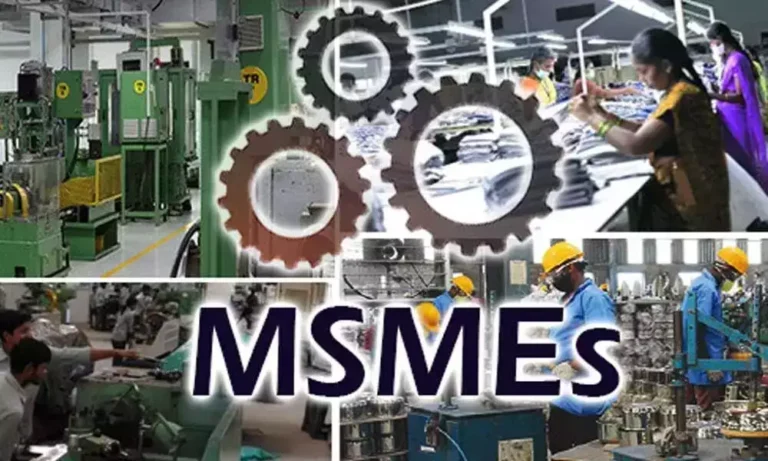
New Loans, Old Wounds: MSMEs Hit Hard as Big Scheme Unfolds

0

By: Staff Writer

December 09, Colombo (LNW): Sri Lanka’s decision to roll out a Rs. 80 billion loan scheme for new entrepreneurs in January comes at a time when micro, small, and medium enterprises (MSMEs) the bedrock of the national economy are suffering unprecedented losses after the recent cyclone disaster.

According to preliminary assessments by the Disaster Management Centre and provincial authorities, over 92,000 MSMEs have been directly affected nationwide, with nearly 28,000 reporting complete or near-total damage to machinery, production lines, or inventory. An estimated 350,000 workers face reduced income or temporary unemployment as a result of disrupted operations. These figures highlight the scale of economic pain at the grassroots level and fuel debate on whether the government’s new lending scheme addresses the country’s most urgent needs.

Industry and Entrepreneurship Development Minister Sunil Handunneththi told the Ministerial Consultative Committee that the Rs. 80 billion allocation in the 2026 Budget will be channelled through a joint programme involving the Finance Ministry and the banking sector.

The intention, he said, is to deliver “more effective and targeted lending” for new entrepreneurs. MPs will receive a full sector-eligibility briefing and access-mechanism guide in January.

However, MSME chambers argue that existing enterprises require immediate bridge financing, not long-term entrepreneurial stimulation. With tens of thousands of firms unable to restart operations and supply chains collapsing, business groups warn that without urgent recovery assistance, Sri Lanka risks permanent MSME attrition, undermining the economy’s productive capacity for years.

To strengthen policy coordination, the Ministry will also introduce a National Database for Industrialists, integrating all industrial and enterprise information into a unified platform. Officials say this will streamline service access and improve transparency in future support schemes. A nationwide promotional campaign will encourage entrepreneurs and MSMEs to register.

The Committee further explored a proposal to expand collateral-free lending to craftsmen registered with the National Crafts Council. Members highlighted its potential to revive micro-craft industries, especially in rural areas where cyclone damage has severely disrupted household economies. Yet, critics note that without widespread disaster-relief credit, such initiatives may be insufficient to counter the massive financial shock faced by MSMEs.

In a more positive development, National Paper Company Ltd. reported a production jump from 150–180 tons to 400 tons per month after recent operational reforms evidence, officials say, that targeted state support can deliver rapid results.

The meeting also reviewed a newly designed National Advisory Framework for excavation permits, aimed at replacing fragmented approval systems with a unified structure from January.

As Sri Lanka moves ahead with the Rs. 80 billion entrepreneur-loan programme, a pressing question hangs over the economy: Can the country afford to prioritise new enterprise creation while thousands of MSMEs the true backbone of economic activity, are fighting for survival? The government’s ability to balance long-term growth with urgent recovery will determine whether this initiative becomes a catalyst for economic revival or a strategic misstep.

Why Singapore Resists Paying Compensation for the MV X-Press Pearl Disaster

0

By: Staff Writer

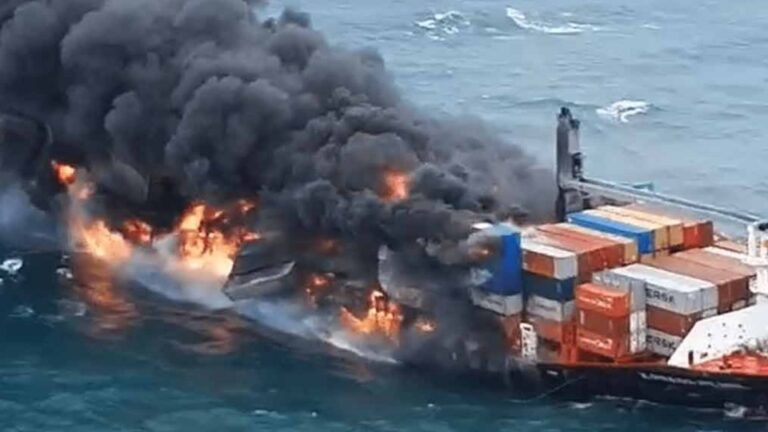
December 09, Colombo (LNW): The MV X-Press Pearl tragedy of May–June 2021 remains one of the most devastating maritime disasters Sri Lanka has faced in modern times. The Singapore-flagged vessel caught fire off the coast of Colombo, spilling hazardous chemicals, plastics and debris into the Indian Ocean, causing immense environmental and economic damage. Sri Lanka’s coastal communities, marine ecosystems and fisheries sector felt the effects almost immediately, while the global shipping industry watched closely as the situation unfolded.

More than four years later, the legal and financial consequences continue to reverberate. In 2025, the Supreme Court of Sri Lanka ruled that compensation should be paid in connection with the disaster. Yet Singaporean public relations and legal agencies, acting on behalf of the involved parties, have maintained that Singapore cannot comply with the compensation order. Their reasoning, as outlined in official communications, rests on a series of legal, jurisdictional and systemic arguments rather than an outright rejection of Sri Lanka’s environmental suffering.

1. Jurisdictional Complexity and the Limits of National Rulings

At the heart of Singapore’s refusal lies a fundamental jurisdictional issue. Singaporean authorities argue that Sri Lanka’s Supreme Court ruling, while binding within Sri Lankan legal territory, has no automatic force under Singaporean law. International maritime incidents typically fall under multi-layered legal frameworks that include flag-state responsibility, international conventions and contractual obligations between insurers and shipping companies.

Singapore’s position is that any enforcement outside Sri Lanka requires a recognised legal route—such as arbitration, treaty-based cooperation, or reciprocal enforcement mechanisms—which, in this case, they argue does not exist. From their standpoint, accepting the ruling would create a precedent allowing domestic courts elsewhere to impose liabilities unilaterally on foreign companies, a scenario Singapore considers incompatible with its own legal norms and the broader international maritime framework.

2. Concerns Over Legal Precedent and the Global Shipping Industry

Singapore is keenly aware of its status as one of the world’s most important maritime and logistics hubs. Its agencies—reflected indirectly in the PR documents—suggest that compliance could undermine the predictability of the global shipping environment. If shipping firms could be compelled to pay damages based on rulings from any jurisdiction, without internationally accepted adjudication processes, the resulting uncertainty would reverberate across global supply chains.

Furthermore, the Sri Lankan ruling orders compensation of unprecedented magnitude—around USD 1 billion. Singaporean agencies warn that accepting such unilateral liability could deter vessel operators from routing through or registering in Sri Lanka, creating ripple effects in regional shipping competitiveness, especially at a time when ports such as Colombo face strategic challenges from emerging hubs like Vizhinjam in India.

3. Contestation Over Responsibility and the Chain of Failures

The narrative emerging in Singapore emphasises a shared international responsibility rather than sole liability. As highlighted in the documents, the X-Press Pearl was turned away by ports in Hamad and Hazira when a dangerous, leaking chemical container was first identified.

These earlier refusals to allow the vessel refuge—prior even to entering Sri Lankan waters—form a key part of the argument that the disaster was not caused solely by corporate negligence but by cumulative failures across multiple jurisdictions.

In Singapore’s view, this diffused chain of events reduces the justification for a single, large-scale compensation demand placed solely upon the operator or its insurers, absent a broader international fact-finding and liability-sharing process.

4. The Need for Global Maritime Reform, Not Isolated Penalties

Singaporean agencies frame the issue as larger than the X-Press Pearl case, calling instead for systemic reform. They emphasise that the absence of a binding international obligation for ports to assist vessels in distress—highlighted also in Sri Lankan analyses—has allowed preventable disasters to occur.

Singapore’s refusal to pay, therefore, is positioned as an insistence on proper global procedures rather than a rejection of accountability.

Conclusion

Singapore’s position is rooted in legal jurisdiction, industry safeguarding and the complexities of shared international responsibility. While Sri Lanka seeks justice and restoration for its devastating losses, Singapore maintains that compensation of this scale must follow internationally recognised pathways. The impasse highlights the urgent need for global maritime reform—so that tragedies like the X-Press Pearl are met with clear, enforceable and cooperative mechanisms rather than fragmented national responses.

China’s Sinopec Refinery Deal Nears Crucial Decision amid Disaster Pressures

0

By: Staff Writer

December 09, Colombo (LNW): Sri Lanka’s long-awaited agreement with Chinese energy major Sinopec on a multibillion-dollar export-oriented oil refinery is moving toward a decisive phase, even as the country grapples with one of its worst natural disasters in recent history.

According to Board of Investment (BOI) Chairman Arjuna Herath, the Government has finalised its position and is now awaiting the Chinese company’s formal response expected within days before submitting the deal for Cabinet approval.

Speaking at the Sri Lanka Economic Summit organised by the Ceylon Chamber of Commerce, Herath stressed that the Sinopec refinery proposal stems from a tender issued well before the current administration, making adherence to original conditions non-negotiable.

The Government, he said, has engaged in multiple rounds of discussions since early 2024 to realign Sinopec’s updated proposal with the tender’s strict requirement for a fully export-oriented refinery.

In January 2025, Sinopec one of the world’s largest state-owned oil and gas conglomerates signed an agreement with Sri Lanka to expedite construction of a US$3.7 billion refinery complex in the industrial zone adjoining the Hambantota International Port (HIP).

If finalised, it would become the largest single FDI inflow in Sri Lanka’s history, surpassing all previous manufacturing-sector investments.

The January agreement also committed both sides to clearing bottlenecks that stalled the project in the past, including land demarcation, water supply infrastructure, environmental clearance, and tax clarifications.

Sinopec has reportedly requested limited access to Sri Lanka’s domestic petroleum market, arguing that global energy market shifts since 2019 have significantly altered project viability models. However, the Government maintains that the original tender was strictly for an export-driven operation, with no concessions for local market entry.

Herath emphasised that negotiations have now concluded and the “final offer” is already with Sinopec. Government officials expect confirmation before year-end, aligning with the administration’s goal of announcing major investment breakthroughs ahead of the 2026 budget cycle.

The refinery talks come at a politically sensitive moment. Sri Lanka is still reeling from the devastating cyclone and flooding that displaced hundreds of thousands, damaged critical agricultural output, and disrupted transport and energy infrastructure. Critics argue that the Government’s focus on a megaproject during a humanitarian crisis risks appearing misaligned with public priorities.

However, senior policymakers counter that securing long-term export-oriented projects is essential for rebuilding foreign reserves, widening non-traditional export earnings, and fulfilling IMF benchmarks in 2026–2027. China’s willingness to move forward despite the disaster-driven budget strain also signals Beijing’s continued strategic interest in Hambantota, a key node in its Belt and Road Initiative.

If concluded, the refinery could significantly reshape Sri Lanka’s industrial base while strengthening Sino-Sri Lankan economic ties. Herath remains confident: “We believe this project can be concluded before the end of the year.”

Sri Lanka Risks Deeper Dependence as Disaster Aid Turns Strategic

0

By: Staff Writer

December 09, Colombo (LNW): Cyclone Ditwah exposed not just the fragility of Sri Lanka’s infrastructure but the fragility of its foreign policy footing. As floodwaters rose, so did the visibility of India and China two rivals whose disaster assistance carries implications far beyond humanitarian goodwill.

India’s Operation Sagar Bandhu rolled out with unmistakable force: 53 tonnes of supplies, multiple military aircraft, naval ships, helicopter sorties, medical units, and National Disaster Response Force (India) NDRF rescue specialists operating on Sri Lankan soil.

The mission’s scale and speed far exceeded that of any other foreign partner, reinforcing New Delhi’s decades-long campaign to position itself as the Indian Ocean’s immediate responder. For India, the message was clear: depend on us when lives are at stake.

China’s involvement, though smaller during the emergency phase, followed its usual economic-first template. The US$100,000 Red Cross donation and local embassy-driven charity drives are only the opening act.

Beijing is expected to step in during the reconstruction phase where its influence is strongest through large-scale financing and project-led interventions. In other words: depend on us when rebuilding the future.

This creates a dangerous split in Sri Lanka’s vulnerability profile. India dominates emergency response; China dominates long-term finance. In between stands a struggling country trying not to mortgage its sovereignty to either.

The risk is that Sri Lanka, weakened by economic upheaval and climate shocks, becomes a site where disaster relief evolves into strategic leverage. Rescue missions build trust. Reconstruction loans build influence. If left unmanaged, both can quietly shape national decisions for years.
The government must now adopt a transparent, multi-source reconstruction strategy that limits exposure to single-country dependency. Projects must undergo resilience assessment, community consultation, and open tendering. Any bilateral financing whether from India, China, or elsewhere should be subject to parliamentary scrutiny and public reporting

IMF Rapid Financing Instrument Mobilized for Sri Lanka Cyclone Relief

0

By: Staff Writer

December 09, Colombo (LNW): The economic turmoil that struck Sri Lanka after Cyclone Ditwah calls for swift, focused relief, something the IMF’s Rapid Financing Instrument (RFI) is designed precisely for. Under recent announcements,

Sri Lanka has requested roughly US$ 200 million under the RFI: SDR 150.5 million (about 26 % of its IMF quota), with the intention of mobilizing immediate support for reconstruction, humanitarian aid, and balance-of-payments stabilization.

The RFI stands in sharp contrast to the island’s ongoing Extended Fund Facility (EFF) arrangement a long-term, structural reform programme approved in March 2023 that aims to restore macroeconomic stability, rebuild reserves, manage public debt, stabilize inflation, and implement fiscal and governance reforms.

Under the EFF, Sri Lanka has already drawn multiple tranches by early 2025, it had received over SDR 1.0 billion; by mid‑2025, support reached SDR 1.27 billion (about US$1.74 billion) after the fourth review.

The EFF’s objective is structural: it is meant for countries facing serious, medium-term balance-of-payments issues caused by deep-rooted fiscal, monetary, and institutional weaknesses.

Because these structural problems require time often several years the EFF features long repayment periods, periodic reviews, and strict conditionalities (such as fiscal consolidation, governance reforms, debt restructuring, energy pricing, social safety nets).

By contrast, the RFI is a rapid, low-access instrument intended for urgent, often short-lived crises such as natural disasters, sharp external shocks, or sudden liquidity shortfalls.

It offers single‑disbursement loans, with no program‑based conditionality or periodic reviews, and repayment typically within 3¼ to 5 years.

This makes it well-suited for a country like Sri Lanka now hit by a cyclone whose consequences are immediate and severe, but (hopefully) not structural in nature.

Given the circumstances, most analysts argue that tapping the RFI alone preserves the credibility and momentum of the existing EFF programme. Using the RFI does not interfere with structural reform commitments, debt‑sustainability efforts or external buffer rebuilding. In fact, IMF sources confirm that the RFI request is being processed separately, and that the next scheduled EFF review will resume only after the RFI decision.

In practical terms, this ensures that Sri Lanka receives immediate liquidity for reconstruction and relief while maintaining its longer-term reform trajectory. For an economy still emerging from years of crisis with progress on inflation, revenue‑collection, debt restructuring and more under the EFF the RFI represents a surgical, well‑timed intervention.

In conclusion: at this moment, what Sri Lanka needs is emergency support, not another bailout programme. The RFI is the right tool; issuing calls for a new multi‑year IMF programme would be counterproductive. If implemented and communicated clearly, this dual approach RFI for disaster relief + EFF for structural reform might just preserve both short-term stability and long-term recovery.

Dreamron Launches Initiative to Support Flood-Hit Beauty Salons

0

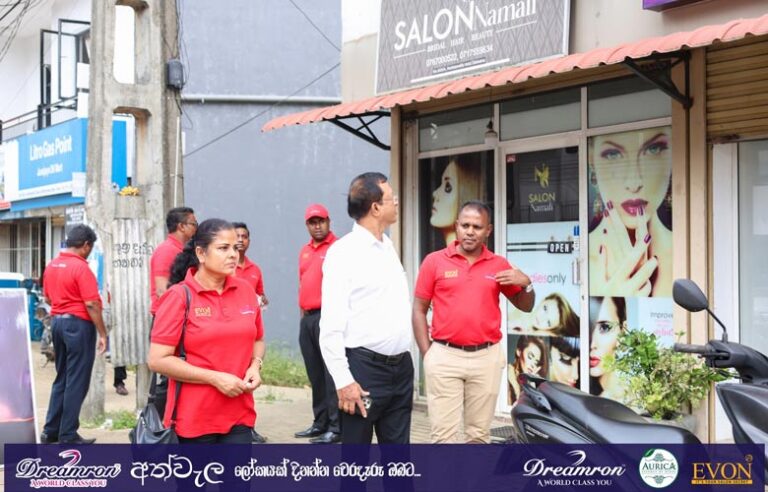
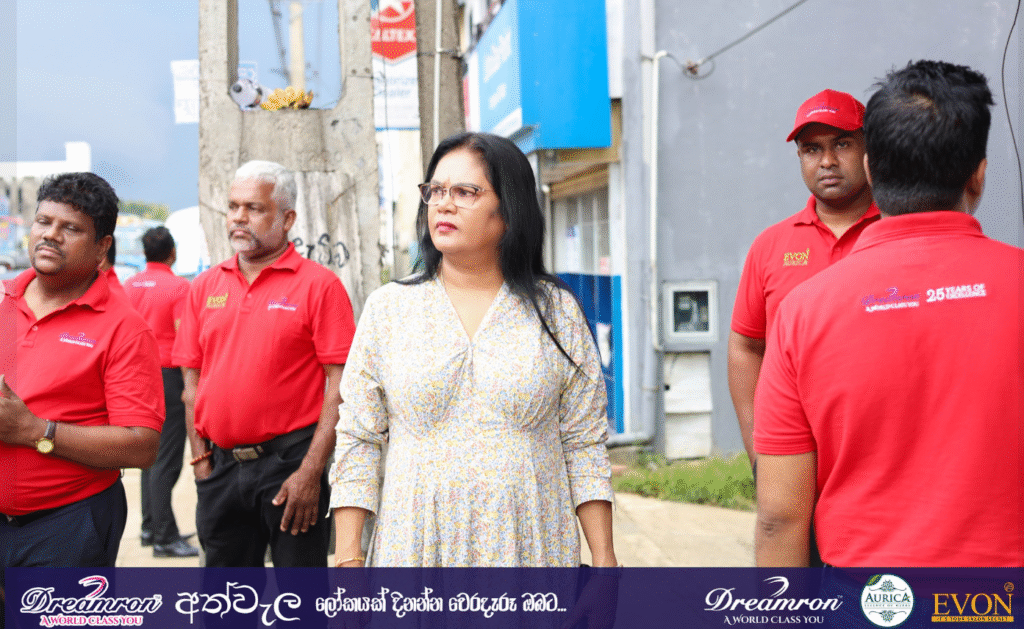
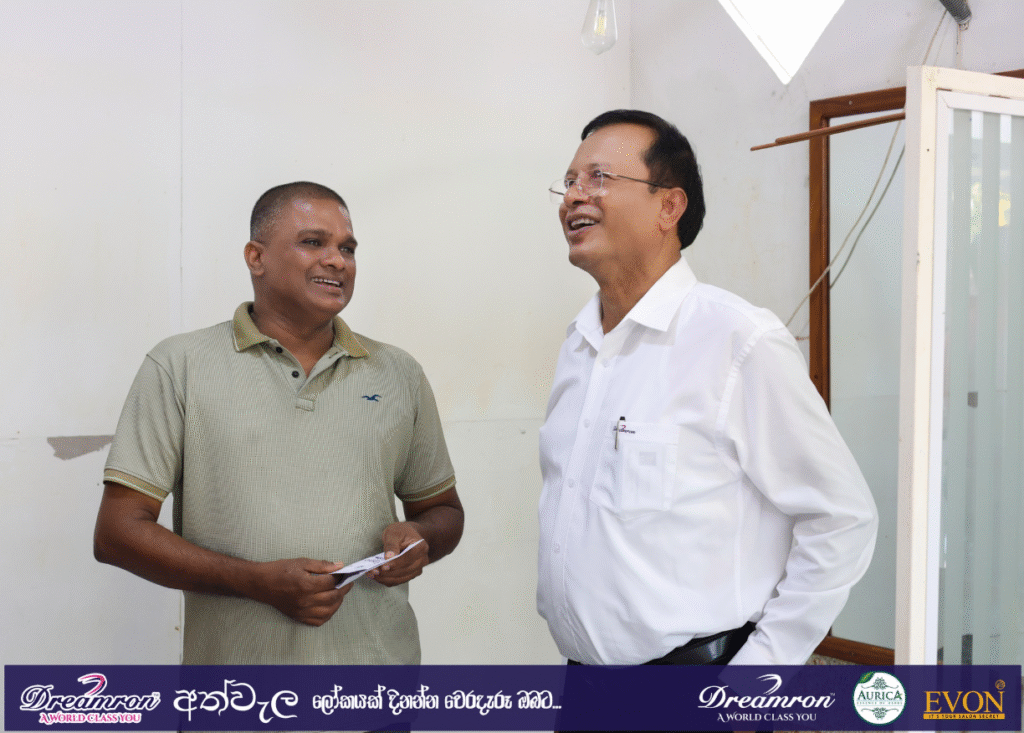
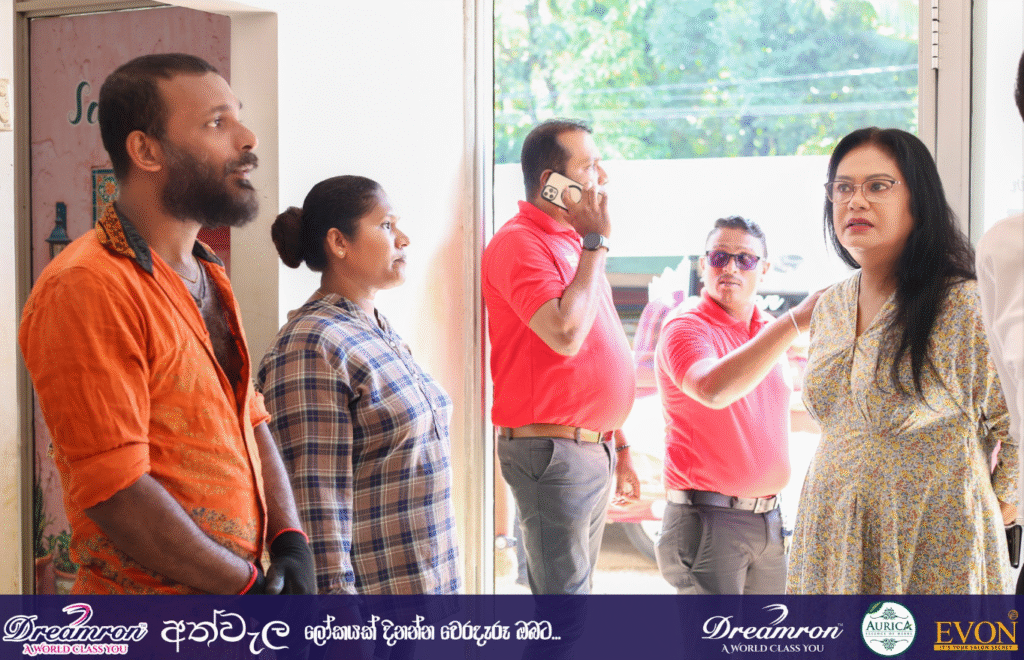
December 09, Colombo (LNW): Dreamron has unveiled a new social initiative, “Dreamron Athwela,” aimed at assisting beauty salons across Sri Lanka that suffered losses due to the recent widespread floods.

The programme seeks to help salon owners who have been unable to reopen and have faced significant income disruption.

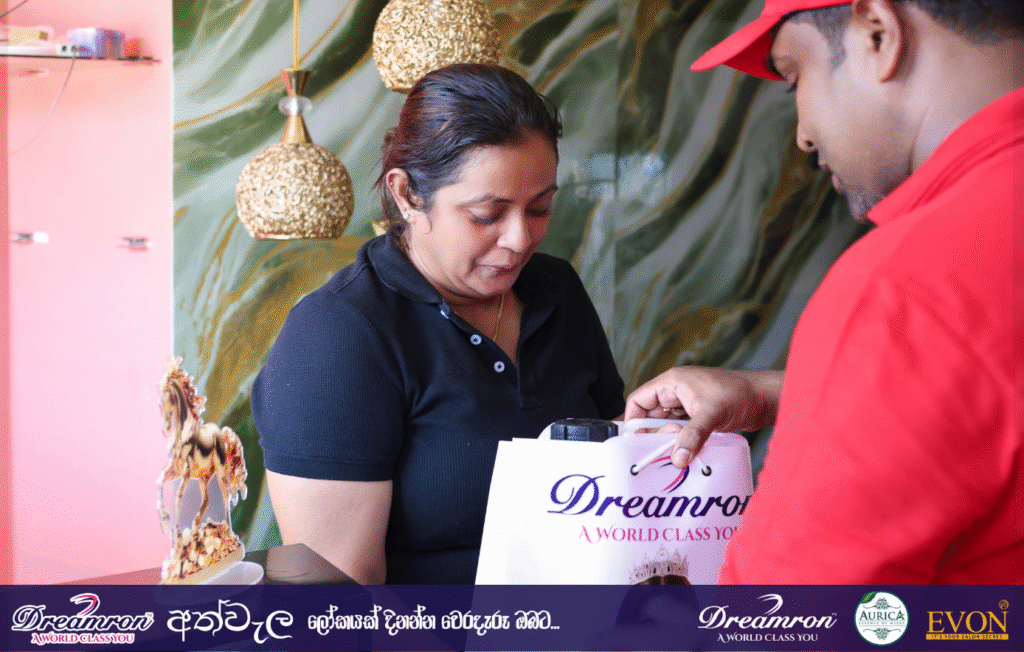
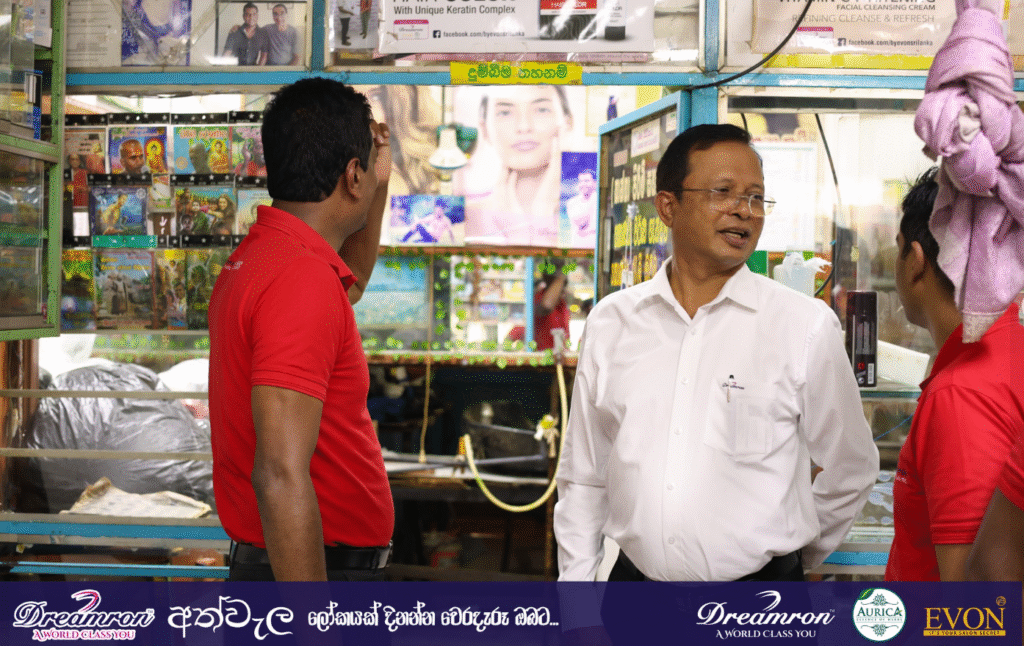
In the first phase of the initiative, emergency financial aid of Rs. 25,000 was distributed to 28 salons located in Kaduwela, Ambatale, and Biyagama, which were heavily affected by the floods on December 07. This support is intended to provide immediate relief to keep businesses afloat during the recovery period.

The programme will continue on Friday (12), when 30 additional beauty salons in Gampaha and Giriulla are set to receive the same financial assistance. Dreamron has also announced plans to extend the scheme to other regions in the coming weeks.

Beyond cash support, Dreamron will supply each affected salon with a specially curated Dreamron beauty kit to help owners restart their operations and serve clients once again.

Dr Priyanka Perera, Chairman of Dreamron Group of Companies, and Nisha Perera, Managing Director of Dreamron Beauty College, are spearheading the project, reflecting the company’s commitment to the local beauty sector and the wider Sri Lankan community.

Dreamron, which is widely recognised for its high-quality beauty products both domestically and internationally, emphasises that the “Dreamron Athwela” initiative is part of its broader mission to support beauty professionals and contribute positively to the nation’s recovery efforts.


A Tribute in Appreciation of Dhanuka Rananjaka Kahandagamage

0

By: Roger Srivasan

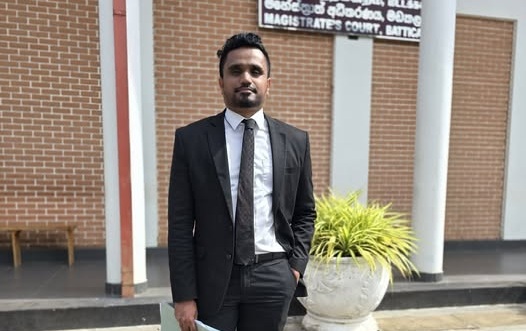
Sri Lanka owes a quiet but profound debt of gratitude to Dhanuka Rananjaka Kahandagamage, a young lawyer whose courage has rekindled faith in justice at a time when moral clarity is often in short supply. In taking legal action under the relatively untested ICCPR Act against a Buddhist monk long associated with vile, openly racist rhetoric, he demonstrated a rare blend of integrity, compassion, and civic duty.

What sets Dhanuka apart is not merely the legal case he initiated, but the spirit in which he chose to act. As a member of the majority Sinhala community, he could easily have remained silent — as so many have, for so long — while minorities endured taunts, humiliation, and threats from extremist elements hiding behind the robes of religion. Instead, he stepped forward, placing the dignity of every Sri Lankan above the false comfort of ethnic loyalty.

Such magnanimity is not common. It is the mark of a man who understands that true patriotism lies not in defending one’s tribe, but in defending what is right.

Had Sri Lanka been blessed with more men of his calibre forty years ago, men who would have confronted hatred early, curbed extremist ideologies, and refused to legitimise bigotry, perhaps this nation would have been spared the thirty-year tragedy that followed. But today, Dhanuka stands as a reminder that the moral arc of our nation can still be straightened — not by force, not by fear, but by the principled courage of individuals who choose justice over convenience.

In appreciating Dhanuka Rananjaka Kahandagamage, we honour more than a lawyer.
We honour the embodiment of the Sri Lanka we yearn for — a Sri Lanka where humanity triumphs over hatred, where decency supersedes division, and where the rule of law is upheld not selectively, but universally.

His act is a small flame.

But in a nation tired of darkness, even a small flame can become a beacon.

Twelve Sri Lankan Cricketers Set to Feature in IPL Auction in Abu Dhabi

0

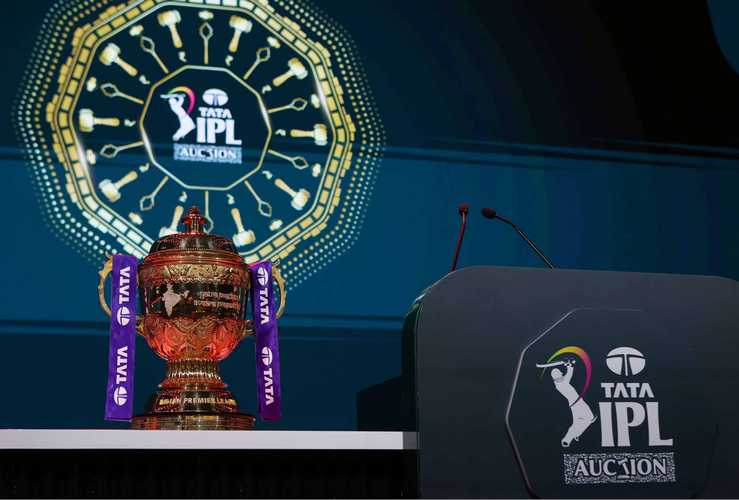
December 09, Colombo (LNW): Twelve players from Sri Lanka are set to enter the fray at the upcoming Indian Premier League auction, slated for 16 December at the Etihad Arena in Abu Dhabi, according to the final roster released by the Board of Control for Cricket in India.

Among the highest-profile entrants are Wanindu Hasaranga, Matheesha Pathirana and Maheesh Theekshana, each listed in the top-tier base-price category of ₹2 crore. The auction will also see seasoned internationals such as Pathum Nissanka, Kusal Mendis and former Sri Lankan skipper Dasun Shanaka vying for IPL contracts. Emerging talents Charith Asalanka, Dunith Wellalage and Viyaskanth Vijayakanth add youthful depth to the contingent.

Rounding off the squad are Kusal Perera, Traveen Mathew, and left-arm pacer Binura Fernando, ensuring a well-rounded Sri Lankan presence at the event.

The full list of Sri Lankan players in the auction includes:

– Wanindu Hasaranga
– Matheesha Pathirana
– Maheesh Theekshana
– Pathum Nissanka
– Dasun Shanaka
– Kusal Mendis
– Kusal Perera
– Viyaskanth Vijayakanth
– Charith Asalanka
– Dunith Wellalage
– Traveen Mathew
– Binura Fernando

The one-day auction will kick off at 1 p.m. local time (2:30 p.m. IST) and will be televised live on Star Sports, with streaming also available on JioHotstar. Across all franchises, 1,355 players have registered for the 77 available squad slots, making this year’s auction one of the most competitive in recent memory.

The way forward is not to step back but to step up: Bishop of Kandy Diocese

0


Bishop of Kandy Diocese Rt. Rev. Dr. Valence Mendis delivered a powerful message of solidarity and compassion at “Sounds of the Season,” an evening of harmony and reflection organised by Union Bank together with Port City and the Sri Lanka Institute of Directors (SLID), in support of communities affected by Cyclone Ditwah.

He said: “When the Organising Committee first met, there was serious debate about cancelling the event in light of the recent tragedy. After thoughtful reflection, the decision was unanimous: the right path forward was not to step back, but to step up. The concert was therefore transformed into a purposeful gathering of remembrance and compassion. The evening focused not on celebration, but on honouring those who lost their lives, supporting those who were injured, and standing in solidarity with children who have lost their parents and now face an uncertain future.”

He concluded by thanking those present for standing with the children and families affected by Cyclone Ditwah and for helping restore hope where it is needed most. The Soul Sounds Academy choirs, the Union Bank choir, and guest performers Alston Koch and the De Lanerolle Brothers created an atmosphere of hope and solidarity throughout the evening.

Source: DailyFT