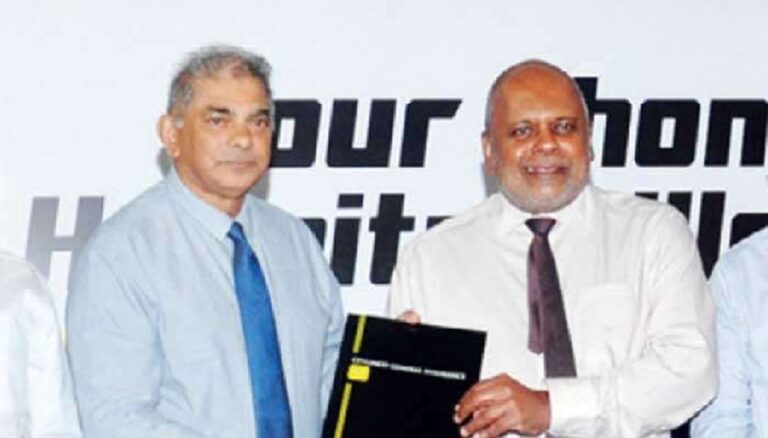
Ceylinco General Insurance and SLT-MOBITEL recently announced the launch of a unique insurance benefit offered to SLT-MOBITEL customers.
Under this new insurance cover, ‘Ceylinco SLT-Mobitel Ananthaya’, SLT-MOBITEL customers are entitled to a Serious Illness insurance of up to Rs 500,000 and a Personal Accident insurance of up to Rs 1,000,000 for death and total permanent disability due to an accident.
SLT-MOBITEL Fixed and Mobile users are entitled to these benefits and will receive an annual insurance cover equivalent to five times of their monthly bill value.
For example, if the bill value is Rs. 5,000/- during the month of January 2023, they will be entitled to a cover of Rs. 25,000/-. In February, if the bill value is Rs 6,000/- they will be entitled to a cover of Rs. 30,000/- and accumulated cover by end of February will be Rs 55,000/.
Likewise, this cover will accumulate as and when bills are paid. Each cover will be valid for a period of one year. Cover given for each bill will have a policy period of one year and will accumulate until it reaches a cap of Rs 1 Million.
A very nominal premium will be charged for each cover such that they do not feel any financial burden to pay the small amount. For example, for a cover of Rs. 25,000/- which will be valid for one year, the premium will be only Rs. 100/-.
Commenting on the Ceylinco SLT-Mobitel Ananthaya scheme, Ajith Gunawardena, Chairman of Ceylinco Insurance PLC (the holding company of Ceylinco General Insurance) said.
“Ceylinco General Insurance has served the people of our nation with the finest in innovative insurance products and services, which is an inbuilt component in the company’s DNA. Leveraging on this expertise, we have designed this unique product of high value thereby enabling SLT-MOBITEL customers to enjoy the benefits as long as they are covered under the scheme.
Also, this unique scheme addresses a compelling need of the people for affordable health insurance cover for serious illnesses at a premium that is negligible.
Considering ever-increasing medical costs, this benefit will undoubtedly ease the financial burden on our people to a great extent. We are more than happy to join hands with SLT-MOBITEL to launch the ‘Ceylinco SLT-Mobitel Ananthaya’ insurance scheme which will be expanded to other sectors as well.”
Ceylinco General Insurance has already obtained a patent for the ‘Ananthaya’ product and several corporates in the country have expressed their willingness to get on board with Ceylinco General Insurance as partners.
This product process won the ‘Innovation of the year’ award at the Asia Insurance Awards’ held in Singapore.
Ceylinco Insurance partners SLT-MOBITEL to offer a unique insurance cover
Major international project to tackle marine litter near Sri Lanka
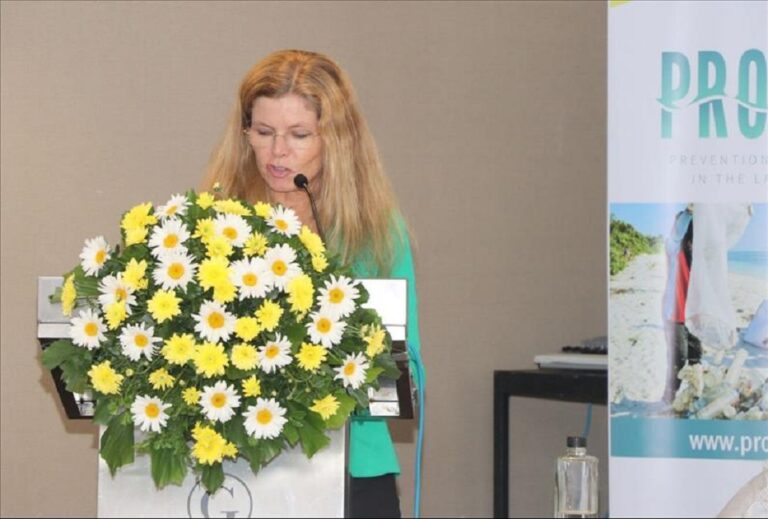
A major international project that will help reduce marine plastic litter from maritime transport and fishing sectors is up for a successful start, after getting 30 countries including Sri Lanka on board.
Sri Lanka has joined the Initiative as a partner country while India joined as a Lead partner country.
Solutions have been sought to tackle marine litter in the Lakshadweep Sea between Sri Lanka, Maldives and India.
As part of the ‘Prevention of Marine Litter in the Lakshadweep Sea’ (PROMISE) project, funded by the European Union (EU) through the SWITCH-Asia Programme. Government institutions, academia, NGOs, international development organizations and tourism industry associations gathered in Colombo for a policy roundtable discussion recently.
The PROMISE project has organized a series of policy roundtable meetings to look at solutions to tackle marine litter in the Lakshadweep Sea between Sri Lanka, Maldives and India.
This was a follow-up meeting to the first policy roundtable meeting held last year. The second policy roundtable meeting focused on policy benchmarking and discussion around adaptation to challenges and gaps in the Sri Lankan context, followed by the design and development of policy prototype solutions.
The Head of Cooperation from the Delegation of the European Union to Sri Lanka and the Maldives, Mrs. Jenny Correia Nunes, delivered the keynote speech emphasizing that “while marine pollution is a transboundary issue, we need also to look at national solutions, considering that the economy of Sri Lanka depends substantially on its marine and coastal environments.”
The EU has been a driving force globally to achieve climate neutrality, and the PROMISE project can help the economies of Sri Lanka, Maldives and India to make a green transition and keep our seas clean.”
PROMISE is a 4-year project (2020-2024) supported by the European Union (EU) under the SWITCH-Asia Programme.
It promotes sustainable consumption and production in small and medium enterprises (SMEs). The project activities target tourism clusters located along the Lakshadweep shorelines in the Maldives, Sri Lanka and India.
It aims to prevent the leakage of wastes from land-based sources into the Lakshadweep Sea. The project is implemented by the Maldives National University (MNU), in collaboration with Parley for the Oceans, the National Cleaner Production Centre, the Energy and Resources Institute, STENUM Asia, and adelphi research.
PM declares open KDU War Memorial
By: Isuru Parakrama
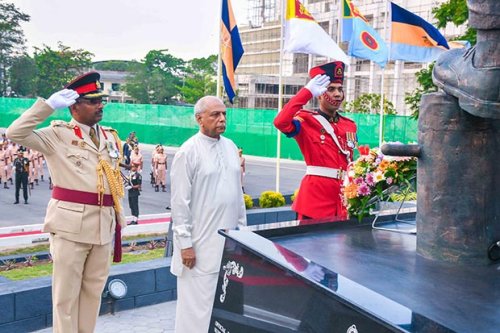
Colombo (LNW): Prime Minister Dinesh Gunawardena on Friday (17) declared open the newly-built War Memorial at the Kotelawala Defence University (KDU).
This memorial was built with contributions from the University’s Alumni Association and the KDU as a tribute to all war heroes who gave their lives to safeguard the motherland from the LTTE terrorists during the thirty-year war.
Defence Secretary General Kamal Gunaratne also graced the occasion with his presence.
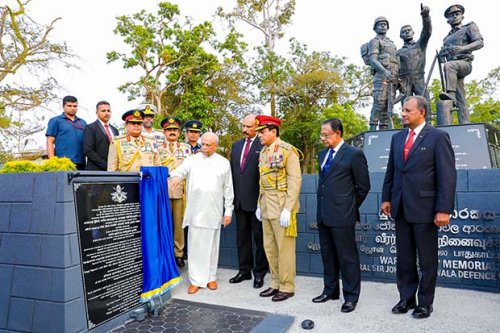
Chancellor of the KDU Gen. Shantha Kottegoda, Vice Chancellor Maj.Gen. Milinda Peiris, Chief of Defence Staff Gen. Shavendra Silva, Commanders of the Tri-forces, senior retired and serving Tri-forces and Police personnel, members of the KDU Alumni Association and academic and administrative staff members of the University also attended the occasion.
Several German firms in lanka warn of scaling down operations in import ban
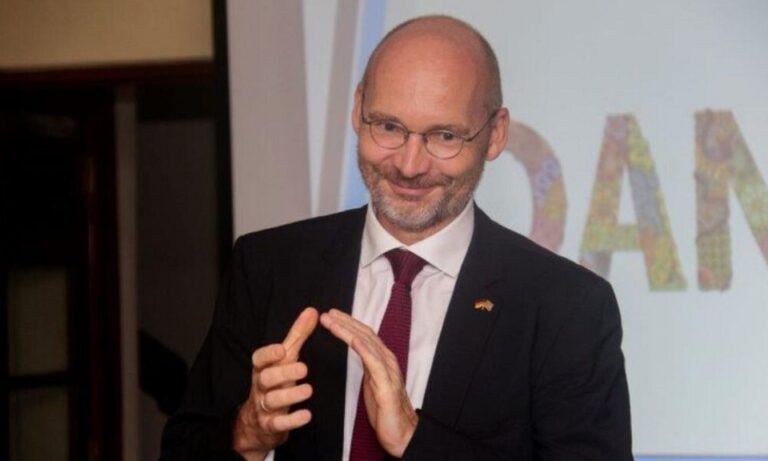
Sri Lanka is set to lose the massive economic contribution from around 18 German companies and affiliated firms operating in the dollar starved island nation if the government continues with import restrictions without easing it for the survival of international joint ventures.
German companies operating in Sri Lanka have raised the red flag with some warning they will be compelled to withdraw from the country if the import ban continues, informed sources with links to foreign firms disclosed.
Sri Lanka has slapped an import ban on several items owing to the shortage of US dollars, but Germany has urged the Government to relax the ban since 2021.
The German Ambassador to Sri Lanka Holger Seubert told a group of journalists in Colombo recently that some German companies have raised concerns over the import ban.
He said that if the import ban continues for another 2 years then some companies may withdraw from the country.
Even in November 2021 The German Ambassador has urged Sri Lanka to end import controls which have blocked vehicles and other goods since2020, as money printed to keep rates low created dollar shortages and depleted foreign exchange reserves.
Though total imports went up as credit recovered and funds went into areas not controlled by interventionist bureaucrats, items that brought high levels of taxes such as cars remained barred.
Amid Sri Lanka’s import controls the usual trade surplus with Sri Lanka has widened even further, Germany’s Ambassador to Sri Lanka Holger Seubert said on November 24,2021. He said Germany generally stood for free and fair trade
Just recently leading Japanese companies Mitsubishi and Taisei announced they will be scaling back operations in Sri Lanka owing to the economic crisis. Germany has also suspended issuing loans to Sri Lanka after the island declared bankruptcy.
However, the German Ambassador said that they hope the situation will improve once Sri Lanka’s deal with the International Monetary Fund (IMF) gets approved. Seubert said that there are also concerns over the overall business environment for German investors.
Discussions in this regard have been held with the Sri Lankan authorities, including the Board of Investment (BOI).
Germany is Sri Lanka’s second largest investor from the European Union. Many of the German companies operating in Sri Lanka are global leaders in their field of specialization.
The investment areas include apparels, hosiery knitwear, surf sails, textiles, electronic products, light/heavy engineering, rubber based products such as tires and automobile spare parts, coir products, wooden/soft toys, chemicals and dyes, gems and jewellery, tourism and recreational projects.
Leading German companies operating in Sri Lanka include:Kramski Lanka (Pvt) Ltd (Kramski GMBH Germany) – Steel/High precision moulds,Aqua Dynamics (Pvt) Ltd – Windsurfing sailsBASF Finlay (Pvt) Ltd – Chemicals,Bodyline (Pvt) Ltd (Triumph International) – Foundations garments,Eskimo Fashion Knitwear (Lanka) Ltd – Knitwear and Globe Knitting (Pvt) Ltd – Knitwear
Among the other German companies are Boehm & Leckner Multi Moulds (Pvt) Ltd – Tools/ injection moulds,Dial Textile Industries Ltd (Adolf Ahlers AG) ,Lanka Hiqu Ltd – Magnetic heads,Prestige Automobile (Pvt) Ltd (BMW) – Automobiles),
EC to file motion at SC on hindrances to hold LG Polls
By: Isuru Parakrama
Colombo (LNW): The Election Commission has decided to file a motion before the Supreme Court citing the hindrances to the holding of the upcoming Local Government (LG) Election.
Accordingly, Election Commission Chief Nimal Punchihewa emphasised that the Commission will inform the Supreme Court that the lack of funds, the Government Press’ inability to print the adequate amount of ballot papers, and the inadequate fuel supply for transport and etc. have contributed to creating a problematic situation making it impossible to hold the LG Polls.
This comment has been made in contradiction to the Election Commission’s previous pledge before the Supreme Court that the LG Polls would be held on March 09, 2023 as planned.
According to Punchihewa, the General Treasury has refused to issue funds required for the holding of the LG Polls. Gangani Liyanage, the Government’s Printer, earlier said that if the necessary facilities are provided, it may be possible to print and deliver postal ballots within five days.
The number of ballot papers required for the LG Polls is close to 18 million, and three per cent will be allocated for postal ballots.
BASL raises strong concerns over state authorities’ attempts to hinder LG Polls
By: Isuru Parakrama
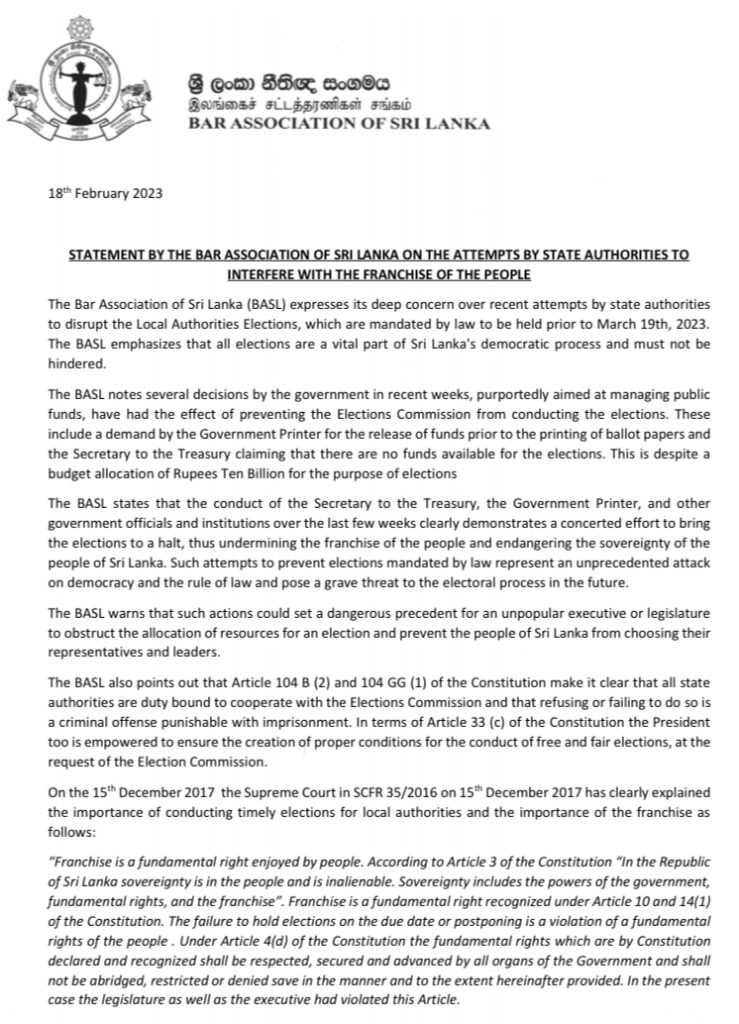
Colombo (LNW): The Bar Association of Sri Lanka (BASL) has raised deep concerns over the recent attempts by state authorities to disrupt the Local Government Election, in a statement issued yesterday (18).
The BASL pointed out that the LG Polls, which are mandated by law to be held prior to March 19, 2023, like any other election, is a vital part of Sri Lanka’s democratic process and must not be hindered.
The conduct of the Treasury Secretary, the Government Printer, and other state officials and bodies over the last few weeks clearly demonstrated a concerted effort to bring the LG Polls to a halt, the BASL emphasised, adding that such a commission undermines the franchise of the people and endangering the sovereignty of the people Sri Lanka.
It warned that hindering the holding of the Polls could set a dangerous precedent for an unpopular executive or legislature to obstruct the allocation of resources for an election, preventing the people of Sri Lanka from choosing their representatives and leaders, and reminded that Articles 104 B (2) and 104 GG (1) of the Constitution of Sri Lanka make it clear that all state authorities are duty-bound to cooperate with the Election Commission and any move of refusing or failing to do so is a criminal offense punishable with imprisonment.
Slight increase in rainy condition over the island expected

By: Isuru Parakrama
Colombo (LNW): A slight increase in rainy condition over the island is expected today, the Department of Meteorology said in a statement today (19).
Several spells of showers will occur in Eastern and Uva provinces and in Polonnaruwa and Matale districts.
Showers or thundershowers will occur at several places in Western, Sabaragamuwa, Southern and North-Western provinces and in Kandy and Nuwara-Eliya districts during the afternoon or night.
Fairly heavy showers above 50mm are likely at some places in Western, Sabaragamuwa, Central and Uva provinces and in Galle and Matara districts
General public is kindly requested to take adequate precautions to minimise damages caused by temporary localised strong winds and lightning during thundershowers.
Marine Weather:
| Condition of Rain: |
| Several spells of showers will occur in the sea area off the coast extending from Pottuvil to Mullaitivu via Batticaloa and Trincomalee. Showers or thundershowers will occur at a few places over the other sea areas around the Island during the evening or night. |
| Winds: |
| Winds will be north-easterly and wind speed will be (20-30) kmph. Wind speed may increase up to (40-50) kmph at times in the sea areas off the coast extending from Mannar to Colombo via Puttalam and from Galle to Pottuvil via Hambantota. |
| State of Sea: |
| The sea areas off the coast extending from Mannar to Colombo via Puttalam and from Galle to Pottuvil via Hambantota will be rough at times. Temporarily strong gusty winds and very rough seas can be expected during thundershowers. |
President pledges to prioritise economic recovery whilst ensuring law and order is maintained to prevent anarchy
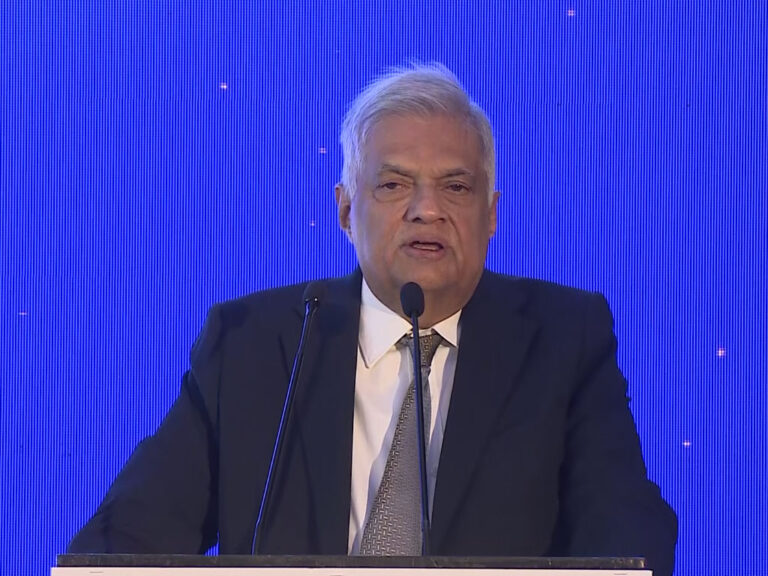
Colombo (LNW): President Ranil Wickremesinghe pledged to prioritise the country’s economic recovery while ensuring that law and order is maintained to prevent anarchy.
The President made a commitment to restore the country’s economy and establish a functioning democratic society before the end of this year.
Speaking at the ‘Imagine’ 32nd Rotary District Conference in Colombo, (18), the President emphasised the importance of economic recovery and improving citizens’ quality of life. He affirmed that all government decisions would be based on these priorities.
In his address, President Wickremesinghe stated that democracy depends on the maintenance of public order which requires law and order. He underscored that without these essential components, democracy would be replaced by anarchy. He assured the audience that he would do his utmost to prevent such a scenario from occurring.
The President lauded the Rotary District 3220 for its invaluable assistance during past crises, such as the anti-polio campaign, tsunami, and medicine shortages.
He also stated that following the country’s economic recovery, next year it would be in a position to decide on the future it wants, with the use of the ballot.
Several distinguished figures were in attendance at the ‘Imagine’ 32nd Rotary District Conference, including the Conference Chairman and Past President Anisha Dharmadasa, the District Governor of Sri Lanka and Maldives Pubudu de Zoysa, and the District Advisor on Public Image and Past President Pradeep Amirthanayagam.
All of these individuals provided their valuable perspectives on the conference’s theme and emphasised the importance of community service.
Additionally, the event was graced by the presence of Ms. Valarie Wafer, who represented Rotary International President Jennifer Jones.
Sri Lanka Original Narrative Summary: 19/02

- President Ranil Wickremesinghe says Sri Lanka expects to receive the USD 2.9 bn Extended Fund Facility from the IMF next month: previously, the facility was expected by September 2022.
- Speculation mounts of a strong possibility of the LG polls, originally scheduled for 9th March, being cancelled or postponed: Treasury Secretary Mahinda Siriwardene continues to refuse to release funds for the purpose, although Rs.10bn has been approved by Parliament in the Budget 2023.
- Chairman Elections Commission says that the Commission will file a motion before Supreme Court citing the difficulties of inadequate funds, inability to print required ballot papers by the Govt Press, inadequate fuel supply for transport etc. that hinder it from holding the LG elections on 9th March, as undertaken before the Supreme Court.
- SJB Deputy National Organiser and MP S M Marikkar says Treasury Secretary Mahinda Siriwardana and Govt Printer Gangani Liyanage will be the next to face legal action for their attempts to obstruct the upcoming LG elections: asserts the Constitution is the supreme law of the country and is above any circular issued by the Ministry.
- President Ranil Wickremesinghe promises to prioritise economic recovery and to maintain law & order to prevent anarchy: also says he aims to restore the economy and establish a democratic society by year-end.
- Asia’s leading polls monitoring outfit, Asian Network for Free Elections says it is deeply concerned by the numerous attempts to disrupt the long overdue local elections in Sri Lanka: alerts the local elections were supposed to be held on 20th March 2022, and has been postponed for almost a year.
- Agriculture Minister Mahinda Amaraweera says the Ministry has given permission to import eggs on a temporary basis from India for the needs of Sri Lanka’s struggling bakery industry, owing to the egg shortages: hopes this would be the last time Sri Lanka has to import eggs.
- Agriculture Minister Mahinda Amaraweera says permission has been granted to kill monkeys, peacocks, grizzled giant squirrels, porcupines, wild boars and toque macaques as those animals destroy crops: Minister’s order in response to farmers’ claims that the population of some wild animals has grown uncontrollably, after the killing of wild animals had been stopped in the country.
- Govt Medical Officers Assn spokesman Dr. Chamil Wijesinghe says between 50 to 60 doctors apply for leave each month for employment abroad: also says some doctors have left the country even without obtaining leave: estimates that more than 1,000 doctors have left the country last year.
- MEPA’s newly-appointed Chairman Asela B Rekawa appoints a 3-member Expert Advisory Panel to expedite the civil action on MV X-Press Pearl marine disaster on 19th May 2021: prescription period of 2 years for any claim, looms.
SL Navigates Tea Industry Recovery from the beginning this year
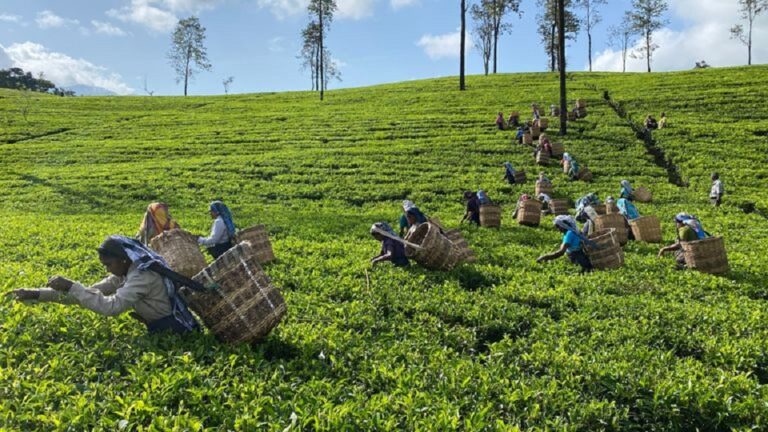
Sri Lanka tea industry began the year 2023 with mixed results which saw lower export volumes, but with marginal increase returns, brokers said yesterday.
The country’s tea exports in January fell by 3.26 million kg to 17.56 million kg compared to 20.82 million Kg a year earlier.
However, the earnings in January increased to $ 99.56 million up from $ 91.93 million in the corresponding period last year.
When analyzing the main categories of export Forbes and Walkers said bulk tea, packeted tea and tea bags had shown a decrease compared to the corresponding period a year earlier.
Sri Lanka expects tea production to recover in 2023 to 300 million kilograms after output fell to 260 million kilograms in 2022 with former President Gotabaya Rajapaksa foolishly banning fertilizer and agro-chemicals.
“With the current conditions and the crop lost due to fertilizer issue and everything we expect around 260 million kilograms of tea by the end of 2022 which will bring the total revenue through tea selling to around 1.4 billion US dollars,” Chairman of Sri Lanka’s Platers’ Association Senaka Alawattegama said.Fertilizer is now coming back to tea farms but at a sharply higher price, he said.
According to industry sources, based on the quantity of 17.56 million Kg shipped, the FOB value of Rs. 2,055.34 ($ 5.66) is a significant increase of Rs. 1,107.10 compared to Rs. 948.24 ($ 4.73) recorded in June 2020. In dollar terms, more or less static. FOB value of $ 5.66 records an increase of $ 0.93 companies to the corresponding period of 2022.
Türkiye with 2.35 million Kg emerged as the largest importer for January 2023, displacing Iraq to second place with 2.13 million Kg (last year 3.8 million Kg), whilst Russia came in third with 2.04 million Kg and UAE was fourth with 1.87 million Kg.
Other notable importers are Saudi Arabia, Iran, China, Libya and Jordan.Sri Lanka produced around 251 million Kg of tea in 2022 due to the lagged effect of a fertilizer ban.
As a result of the organic agricultural mandate’s failure, Sri Lanka already had insufficient supply. The issue grew worse as a result of a shortage of foreign finance to source this raw material.
Industry analysts are confident that Sri Lanka’s second largest export sector – tea could earn over $ 1.3 billion by the end of this year, despite its hardships.