Sri Lanka and India will sign a pact to link their power grids and start negotiations on an upgraded trade agreement within two months, a Sri Lankan High Commissioner in India Milinda Moragoda said on Wednesday.
The two countries resumed talks on linking their electricity grids last year, and Moragoda said a memorandum of understanding on the project would be signed within two months, which will be followed by a feasibility study.
First proposed more than a decade ago, the project has made little progress so far. But Moragoda said Sri Lanka hoped to get the transmission line in place within two to three years so that renewable power produced on the island can be sold to India.
Experts have welcomed the move of exploring the possibility of establishing an overhead electricity link with Sri Lanka as the island nation seeks a way out of its worst economic crisis in decades.
India has been supplying power to Bangladesh and Nepal, and has also been campaigning a global electricity grid that may initially aim to link countries, such as Myanmar, Thailand, Cambodia, Laos and Vietnam, with the sub-continent.
India’s energy diplomacy initiatives range from cross-border electricity trade to supplying petroleum products and setting up liquefied natural gas terminals.
India is pushing for the implementation of its first undersea power transmission project with Sri Lanka, amidst concerns from the Sri Lanka Power and Energy Ministry and Ceylon Electricity Board (CEB) engineers.
India’s power transmission company Power Grid Corporation of India Limited (PGCIL) has completed a feasibility study for the interconnection of the India-Sri Lanka Electricity Grids, which includes setting up of High Voltage Direct Current Transmission system between the two countries involving under sea transmission in 2011.
The feasibility study report observed that electricity could be supplied from India to Sri Lanka at concessionary rates through a submarine cable under the sea by 2014.
CEB officials have objected to the proposed project with India, saying Sri Lanka will have to adhere to conditions laid down by the Indians for the implementation of the power project.
This might also be a strategic measure to counter the growing Chinese presence in the Indian Ocean, they alleged.
According to the project proposal the 250-300 km power link, including submarine cables over a stretch of over 50 km, will be jointly implemented by Power Grid and the Ceylon Electricity Board.
The detailed feasibility report from the Lankan side is expected to be completed by the end of this year. The line is expected to take 1,000 MW. The power link, including submarine cables over a stretch of 50 km, will enable the two countries to trade surplus power.
Sri Lanka and India to enter into new pact to link their power grids soon
No power cuts from today onwards!
The Ministry of Power and Energy announces that there will be no power cuts from today (16) as the Public Utilities Commission of Sri Lanka has approved the 66% increase in electricity tariffs.
Sources in the Ministry of Power and Energy said that a decision will be taken in the near future regarding the people who are unable to pay their electricity bills.
The Chairman of the Public Utilities Commission, Janaka Ratnayake, did not want to increase the electricity bill, but this decision was reached based on the consensus of the three members of the Public Utilities Commission. It is reported that according to this proposal, the Ceylon Electricity Board is expected to earn an additional income of 287 billion rupees.
The Public Utilities Commission had approved the increase of electricity tariffs by 66 percent with effect from yesterday (15).
A delegation of 20 including a high-ranking American diplomat meets Ranil?
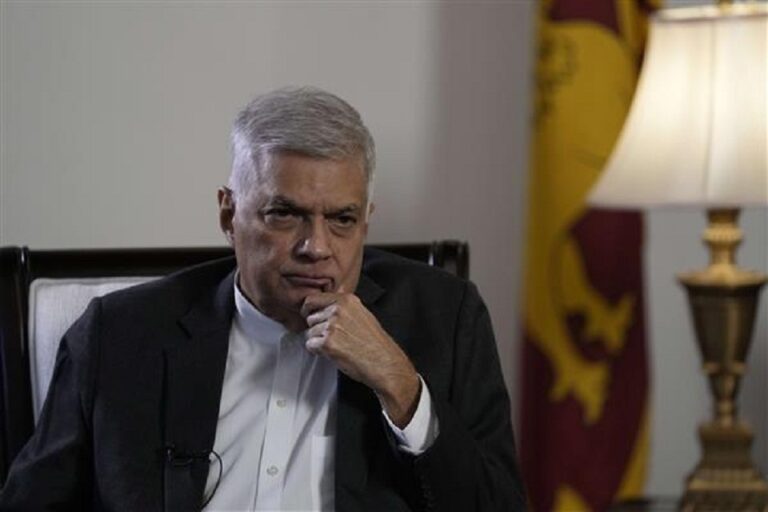
It is reported that a delegation consisting of 20 people, including a high-ranking American diplomat, arrived in Sri Lanka last night (14).
Sources say that the special delegation that came to Sri Lanka in two special planes belonging to the American Air Force stayed at the Colombo City Hotel and yesterday they had visited the American Embassy in Colombo and after that, they went to the State Intelligence Service office and held a discussion.
They went to the official residence of President Ranil Wickramasinghe and had a discussion with him, sources said.
After meeting and discussing with the President, they left the island and it was reported that a special security program had been prepared for this delegation.
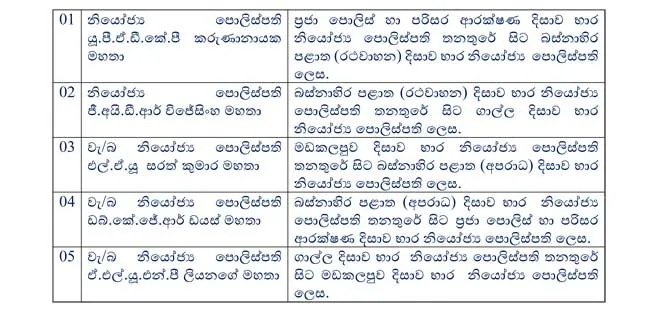
Five top Police officials transferred on emergency service requirements
By: Isuru Parakrama
Colombo (LNW): Five top Police officials have been transferred with immediate effect on emergency service requirements.
The transfers have been made under the coverage approval of the National Police Commission based on the instructions of the Secretary to the Ministry of Public Security.
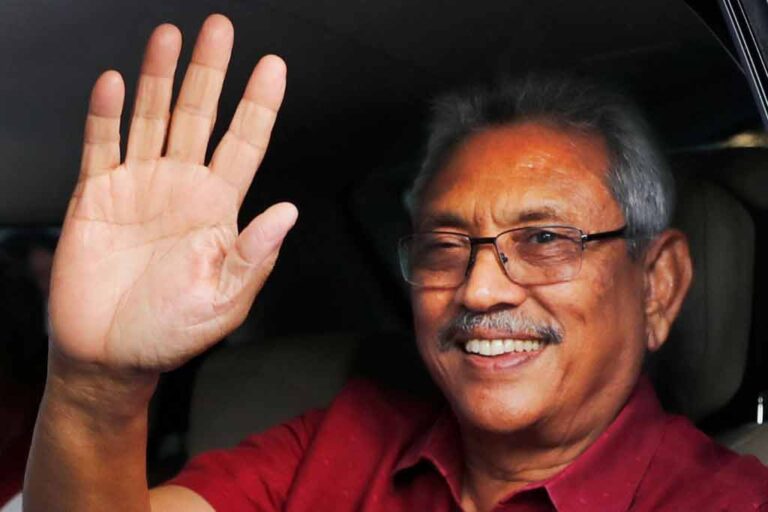
Ex President Gotabaya Rajapaksa leaves SL again
By: Isuru Parakrama
Colombo (LNW): Former Sri Lankan President Gotabaya Rajapaksa has reportedly left Sri Lanka at midnight yesterday (15).
His departure follows a 10-day private tour to Myanmar, accompanied by the ex President’s wife Anoma Rajapaksa and Private Secretary Sugeeshwara Bandara, based on an invitation by several social activist organisations in the Buddhist country, according to sources.
It is also known that the Sri Lankan Ambassador to Myanmar is Mr. Bandara’s sibling.
Discussions on utilizing the remaining funds of India’s debt relief to import essential medicines
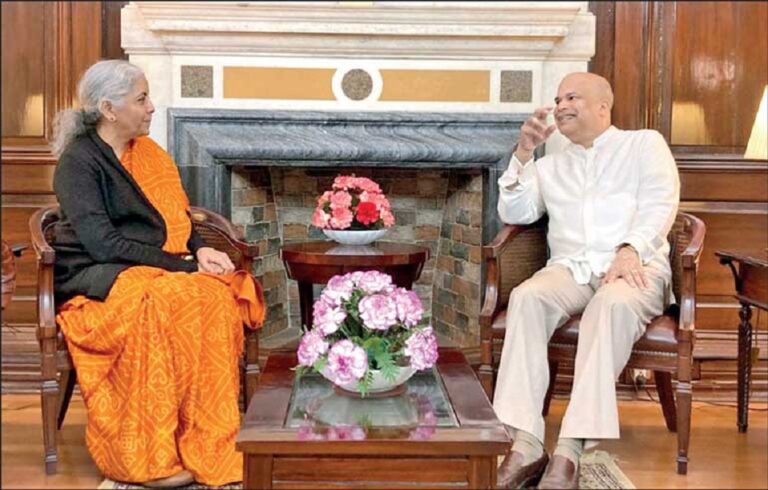
Attention has been focused on the possibility of using the remaining funds of the Indian debt relief of one billion US dollars for the import of urgently needed medicines, which has become a problem for Sri Lanka.
The High Commissioner of Sri Lanka to India, Milinda Moragoda, met the Minister of Finance and Corporate Affairs of India, Nirmala Sitharaman, at the Ministry of Finance in New Delhi on the afternoon of the 14th and discussed this issue.
The first meeting of the finance ministers of the G20 countries is scheduled to be held in Bangalore on February 24-25 under the chairmanship of Minister Sitharaman and the meeting between the Indian Finance Minister and the High Commissioner of Sri Lanka is special.
The High Commissioner thanked the Government of Sri Lanka for the initiation of Indian rupee transactions and the adoption of regulations and clauses to facilitate the transactions.
Moragoda also expressed his gratitude for the emergency aid given to Sri Lanka and the assurance given by the Indian government to the International Monetary Fund regarding the debt restructuring process of Sri Lanka.
The High Commissioner briefed Minister Sitharaman about Sri Lanka’s discussions with the International Monetary Fund and the current status of the country’s debt restructuring process, and the minister informed about the sharp impact the current economic contraction has had on the people of Sri Lanka.
China expresses support for Sri Lanka ahead of debt meeting
By Joe McDonald and Bharatha Mallawarachi | AP
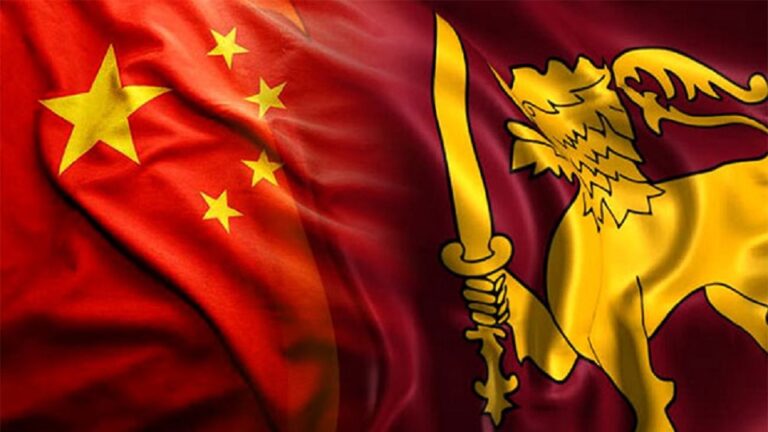
BEIJING — China expressed support for Sri Lanka ahead of a meeting Friday of government lenders to poor economies but did not say if it would help reduce a multibillion-dollar debt that has plunged the Indian Ocean nation into financial and political turmoil.
Beijing is one of Sri Lanka’s biggest creditors after extending it loans under President Xi Jinping’s Belt and Road Initiative, which expands trade by building ports and other facilities across Asia and Africa. China has offered a two-year suspension of repayments but balked at reducing the amount owed. That is an obstacle to obtaining an emergency loan from the International Monetary Fund, which wants creditors to agree to debt reductions.
Chinese officials are due to attend a meeting of lenders organized by the IMF and the Paris Club of government creditors. The IMF’s managing director, Kristalina Georgieva, said last month the agency was talking with Beijing about ways of “reducing the burden of debt.”
The Paris Club, after announcing last week its assurances on working with Sri Lanka, said, “The Paris Club members as well as Hungary and Saudi Arabia urged other official bilateral creditors, including China, to do the same in line with IMF program parameters as soon as possible.”
China accounts for about 10% of Sri Lanka’s $51 billion foreign debt. The island nation of 22 million people ran out of foreign currency last year. That triggered power cuts, food shortages and protests that forced a president and prime minister to resign.
China is “willing to work with relevant countries and international financial institutions to continue to play a positive role to help Sri Lanka get over current difficulties,” Foreign Ministry spokesperson Wang Wenbin said when asked whether Beijing would agree to a debt reduction.
Wang repeated an earlier official statement saying that China supports Sri Lanka’s application for an IMF loan and would help its government ask for help from commercial and other creditors.
The China Export-Import Bank last month offered Sri Lanka a two-year repayment suspension. An American official said that was too little and called on Beijing to offer more relief.
“We are in direct discussions with China,” Sri Lankan President Rani Wickremesinghe said last week in a speech to Parliament. “We are now working towards unifying the approaches of other countries and that of China.”
Sri Lanka’s situation reflects conditions across dozens of countries, from South Pacific islands to some of the poorest in Asia and Africa, that borrowed under the Belt and Road Initiative. The total debt of poor countries is rising, increasing the risk that others might also run into trouble.
Beijing has forgiven interest owed by some but has avoided writing down the amount borrowed.
Economists say Beijing probably is resisting cuts to Sri Lanka’s debt for fear that other borrowers will want similar relief. Last April, then-opposition leader Wickremesinghe told Republic TV that China offered an additional $1 billion loan instead of reducing Sri Lanka’s debt. That would allow the government to make payments, but the total amount owed would rise.
Georgieva said IMF officials who visited Beijing discussed with Chinese officials a “pathway for debt reduction” for Chad, Zambia, Sri Lanka and other struggling debtors.
A “very broadly shared” notion in China is that the country wants to help but “they expect to be paid back,” Georgieva said.
That makes a reduction in the amount borrowed “politically very difficult,” Georgieva said. But she said there “might be a way to reach the same objective” by changing interest rates or repayment terms.
Sri Lanka is trying to complete negotiations by the end of March, government spokesperson Bandula Gunawardena said Tuesday. Gunawardena said the IMF has concluded that China’s offer of relief “is not sufficient.”
“I hope the IMF will, by March, be able to ensure that the debt restructuring can begin,” Wickremesinghe said Wednesday.
Source: The Washington Post
President says Govt will not succumb to protests
By: Isuru Parakrama
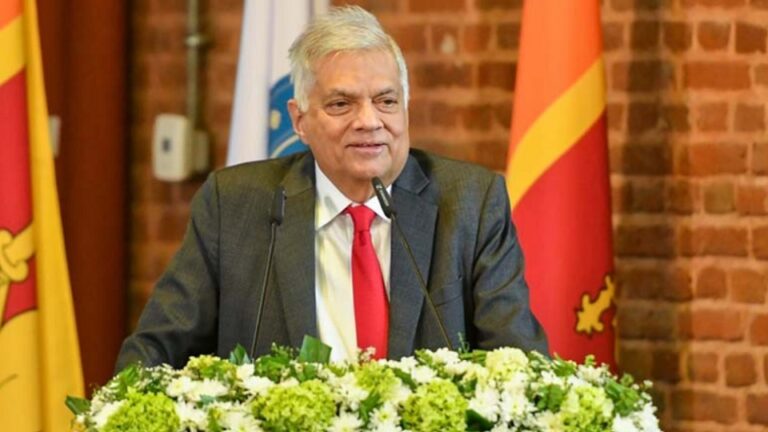
Colombo (LNW): President Ranil Wickremesinghe said the government of Sri Lanka will not give in to the demands of protesters, following two demonstrations recently staged demanding the dismissal of the Vice Chancellor of the University of Ruhuna and the General Manager of of a state Corporation.
Addressing the launching of the Centre for Governance and Public Policy (C-GaPP) at the Sri Lanka Technological Campus (SLTC) Research University at the Trace City in Colombo yesterday (15), the President noted that just because certain groups strike demanding the removal of certain officials, the government will not remove anyone arbitrarily as there is a procedure that has to be followed and the government will follow the rules and act accordingly.
President’s full speech:
It gives me great pleasure to be associated with you all because I believe universities need to change. This is one of the new models that we have here today. The SLTC is one of the newer entries into the universities of Sri Lanka. But it has had a record of being involved in the telecom sector. Now you are branching out, and the university became a research university this year. And now you’re opening, a School of Humanities, Arts and social Sciences, which is good. A balance education is needed in the technology sectors, and today you have the centre for Governance and Public Policy. I want to tell you that we need Research University in Sri Lanka and as far as the government is concerned, we will help research even in non-government universities. So if you come up with a plan, we will see that we can give you some funding. We are broke, but we are not that broke that we can give you some money. I don’t want to say much more of the university, because all of you are aware of it.
But I thought this was a good occasion also to say, I listened to Dr. Howard Nicholas, who says this crisis is an opportunity. It is not only for export economy, it’s also for higher education, research and technology. Because that’s the one that’s going to drive our export economy, a new economy, that we build a new economy that will be based on our capacity for renewable energy for green hydrogen, for logistics, for new tourism, for all the technology digitalization and the technologies that are involved, and for manufacturing. That manufacturing if we are to succeed has to be based on automation and semi automation. There’s no other way that we can beat the numbers of paid labour in South Asia whether it be in India or in Bangladesh or in Myanmar. So this is one area of the economy. But for the economy to take over and we are now at the moment at the stage of economic stabilization, I hope the I M F will by March be able to ensure that the debt restructuring can begin. But it also requires a political stability and a social innovation, and that innovation requires new thinking. New thinking requires new universities, so we have to think back how much have we spent in the universities since 1978?
As the Vice Chancellor said those days, he was a student protesting against the white paper and it’s reformed on universities. I think now he’s regretting it, but the reforms we have to bring another reforms of 1978. We have to think of all the changes in higher education today. I talk of my own university, Colombo University. When I was in Colombo University in the late sixties, the Medical College or the Medical Faculty of the Colombo University was well respected in the whole of Asia. Now there are more medical faculties in Asia that gets ranking higher than the medical faculty of the Colombo University. When I studied in the law, faculty, like, Dr. Hiran Jayawardhena here and the law faculty had high ranking in Asia. In fact, my professor T. Nadarajah was the World’s expert on Roman Dutch law. After R. W. Lee died of South Africa, we had a few lecturers who are well known, one of them, of course was Professor G.L. Pieris. Nevertheless we had A.F. Amarasinghe, A.R.B Amerasinghe, L.J.M. Cooray. But today do we have the same ranking we had at that time? What’s happened to our university? The Peradeniya University, University of Ceylon was very known for its science, for its archaeology for its social sciences.
The history of Ceylon by the University of Ceylon is an outstanding work. It’s not only in the field of education, but the University of Ceylon and it’s DRAMSOC and Professor Ediriweera Sarathchandra, actually changed, brought about a revolution in Sinhala literature. The first play Maname was from the DRAMSOC the second play Sinhabhahu was from DRAMSOC. I was able to see both those in 56 and the sixties. Where are we today? The drama is not in the DRAMSOC anymore. Drama is out on the streets, so we have to rethink. We have spent so much of money on a higher education institutes. What have we achieved? The country has to think. It’s your money that we have spent. Have we got our money’s worth for the universities? So we have to think of changes if the country provides the money, the people of this country have a right to know what is happening in the universities. Why can’t we send our Children into the university? What is happening inside? The affairs of the Universities are a matter for the whole country.
And that’s what we have to decide and the responsibility to a large extent also lies with the University. At the moment there are two strikes. I must say today while we start this new centre. We are also witnessing a strike in the Ruhuna University to remove the Vice Chancellor, actually I have two strikes. One of them wants me to remove the General Manager of cooperation and other one says to remove the Vice Chancellor of University. Now where do we end up? The trade unions are saying to remove the General Manager of one of our corporations and the FUTA says remove the Vice Chancellor of the university. Has FUTA come to that level where like the guys who want the General Manager removed? That’s the only question I have to ask.
Removal of the General Manager is a matter for the government. Just, because there is a strike we will not remove him. There’s a procedure that has to be followed if they think there are any shortcomings by him of serious nature. As far as vice chancellors are concerned also, there has to be a procedure. There is a procedure as Professor Perera knows, and that can be investigated. Without procedures, just because people go on strike whether it’s in a corporation or in a university, this government will not change. We will follow the rules and we’ll act accordingly because, if I go into this now, next time they want to remove the deans and next time the heads of department. And then we will be told that you can’t appoint a professor without our consent. I think we have to seriously look at what is going to happen in the universities. The country has a right to know what is happening. We are paying money to educate our people. So we want the universities function properly. And I am sad that this is taking place in Ruhuna.
But I am over joyed that we are starting a new centre today. So we are at an age of transformation we have to look at the good and the bad both together. But higher education has to change and it has to change after wide ranging discussions in the country. And we will be initiating those wide ranging discussions once the IMF and the debt restructuring is over. And, in regard to the centre you have opened now on Governance and Public Policy, That’s one area that’s lacking in Sri Lanka, and we are now taking steps to start the University of Government and Public Policy. That will be at the postgraduate level, so graduate degrees undergraduate degrees are required. And I hope this University, Sri Jayawardena University also has Similar departments and are welcomed, they plus other members, will then be able to get the benefit of the University for government and public policy. The Institute of Public Policy, which Howard started, Kadirgama Institute of International Relations, will be amongst them. The JR Jayawardhena Centre will be transformed into the J R Jayawardhena Centre for Parliamentary Politics. It will be a ranged for the education and information of parliamentarians and members of the provincial councils.
So there are a number of those institutes and two new institutes where we will start one of the Institutes of, economics and trade and other will be the Institute of Women and Gender. So they’ll all come in for the making of public policy and the research into public policy in Sri Lanka. Parallel to that will also start the climate Change University which, I hope will be a regional or international university with a number of foreign, stakeholders. So we ourselves are expanding the sector of non-government universities and non UGC universities in addition to state universities or state sponsored universities, which are outside the UGC, we hope to see that there will be also universities which are not government. Some would be not for profit that there would be for profit, but that’s how universities operate and we have to think of new laws to regulate these institutions.
So I don’t want to take any more of your time but just to thank you for this new initiative and wish you all success
President instructs electricity tariff revision safeguarding vulnerable communities
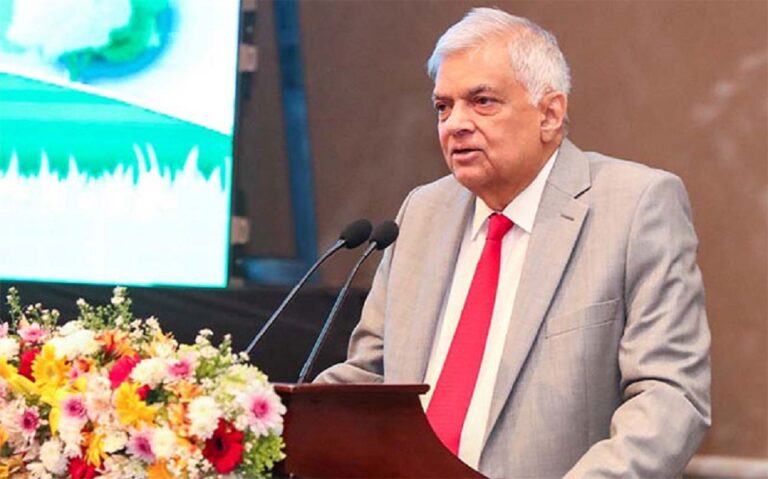
Colombo (LNW): The Ceylon electricity board as the licensee made a request for the revision of electricity tariff on the 05th of January under the provisions of the Sri Lanka Electricity Act 2009 which was approved by the Public Utilities Commission of Sri Lanka (PUCSL) yesterday (15).
However, President Ranil Wickremesinghe issued a directive to the Minister of Power and Energy and the relevant CEB officials this morning (16) to implement the tariff revision ensuring the uninterrupted power supply for the electricity customers, provide concessions for low-income families and provide solar rooftop systems for religious places and government education institutions.
Govt Printer says if money is paid, ballot papers will be printed
By: Isuru Parakrama
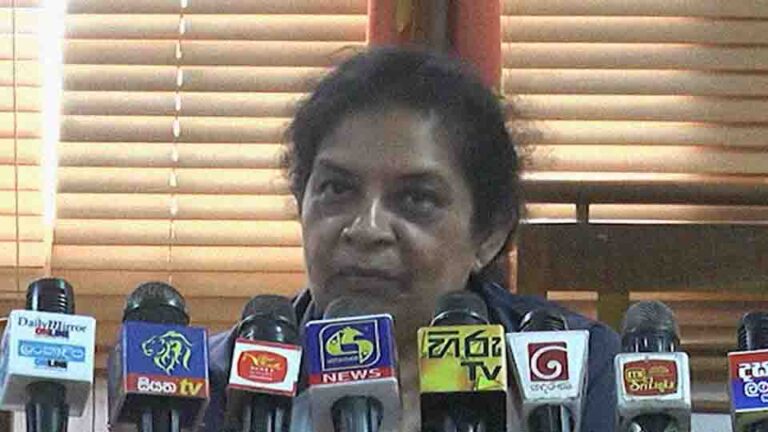
Colombo (LNW): Government’s Printer Ganga Liyanage said the ballot papers can be printed only in the event of the issuance of money.
Calling in a special briefing, the head of the Government Press emphasised that she did not request the full amount required for the printing process, but only an advance of Rs. 200 million from the Election Commission.
Stressing that she is not afraid of anyone, Mrs. Liyanage noted that due to a circular issued by the Ministry of Finance she was stuck on both sides, but has acted within legitimate boundaries in her duties.