Sri Lanka’s 60 -65% electricity tariff hike once in two months in accordance with IMF dictated power pricing formula is set to create another energy crisis with long hour power cuts as a result of the clash between the power and energy ministry and the public utilities commission headed by Janaka Ratnayake,official sources said.
Power and Energy Minister Kanchana Wijesekera is expected to issue a statement on electricity tariff revision which has to be introduced in January 2023 today following the deadlock at the end of discussions between the Ceylon Electricity Board (CEB) and the PUCSL yesterday.
The electricity tariff hike has become an urgent need to rescue the CEB from a possible bankruptcy due to its heavy borrowings from banks and billions of rupees due to fuel, and coal imports as well as to private power suppliers.
The Ceylon Electricity Board (CEB) is facing a severe financial crisis with no rupees or dollars to pay oil and coal shipments as its outstanding amounts to key organisations.
These dues include; Ceylon Petroleum Corporation Rs. 112 billion, renewable energy suppliers Rs. 40 billion, rooftop solar providers Rs. 4 billion, private power plants Rs. 80 billion, monthly bank loans interest Rs. 10 billion and Rs. 35 billion for coal payments for February
PUCSL Chairman Janaka Ratnayake who is still against the electricity tariff hike has not given approval for any new cost effective price formula pushing the country not only into another dark period once again but also jeopardizing the government’s commitments made to the IMF to secure US$2.9 bail out loan.
Janaka Ratnyake’s arrogant attitude of not bowing down to pressure of the country’s urgent need of tackling coal shortage and settling the economic crisis with the help of the IMF Extended Fund Facility.
PUCSL’’s blockade of IMF proposed electricity pricing formula will definitely disrupt the government’s plan to rescue the country from a severe economic crisis in the short run a at a time the government is about to settle the coal shortage to run the Norochcholai power plant and the ongoing economic program agreed with the IMF.
Lanka Coal Company says that six shipments must reach Sri Lanka monthly before April during the off-season, and as per the calculations around 12 shipments should have already reached Sri Lankan shores.
The cabinet has given approval for two companies recently to bring down these 12 shipments and the energy ministry is taking measures to expedite the procurement process averting the energy crisis.
A petition filed by the Public Utilities Commission of Sri Lanka (PUCSL) seeking an order on the Ceylon Electricity Board (CEB) to ensure uninterrupted electricity supply during the 2022 GCE Advanced Level examinations, has been rejected by the Court of Appeal.
PUCSL’s stance on electricity tariff revision pushes the country into dark abyss
Three minors arrested over assaulting man to death

By: Isuru Parakrama
Colombo (LNW): Three minors have been arrested by the Welipenna Police for allegedly assaulting a grown man in Galmantha, Aluthgama-Mathugama area.
The victim was a 34-year old resident of Kurudhippita, Walagedara, according to Police.
He had left the house last (14) evening to purchase household goods and had an altercation with the suspects, who are only 16 years old each. The suspects are accused of beating the man after an escalated argument.
The victim who was injured from the incident had succumbed to his injuries upon being admitted to the Seenawatte Hospital, and his death was pronounced thereafter.
The Police are conducting further investigations into the incident.
DMT says over 01 million women’s driving licence holders in SL
By: Isuru Parakrama
Colombo (LNW): According to the Department of Motor Traffic (DMT), more than one million (1,122,418) driver’s licence holders are women, considering the total of 12,700,000 holders in Sri Lanka.
DMT Commissioner Wasantha Ariyaratne revealed that among them are 2,082 women who have obtained heavy vehicle licences.
He added that there is a significant increase of women applicants for driver’s licences, adding that during the past 10 years, a total of 943,749 women have obtained their driver’s licences.
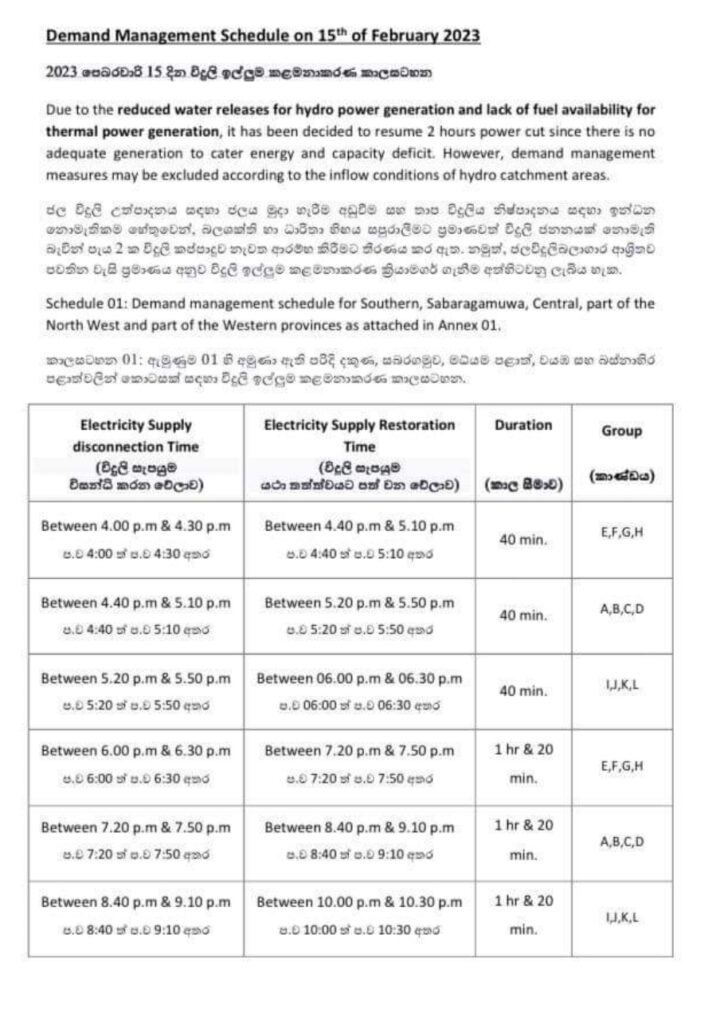
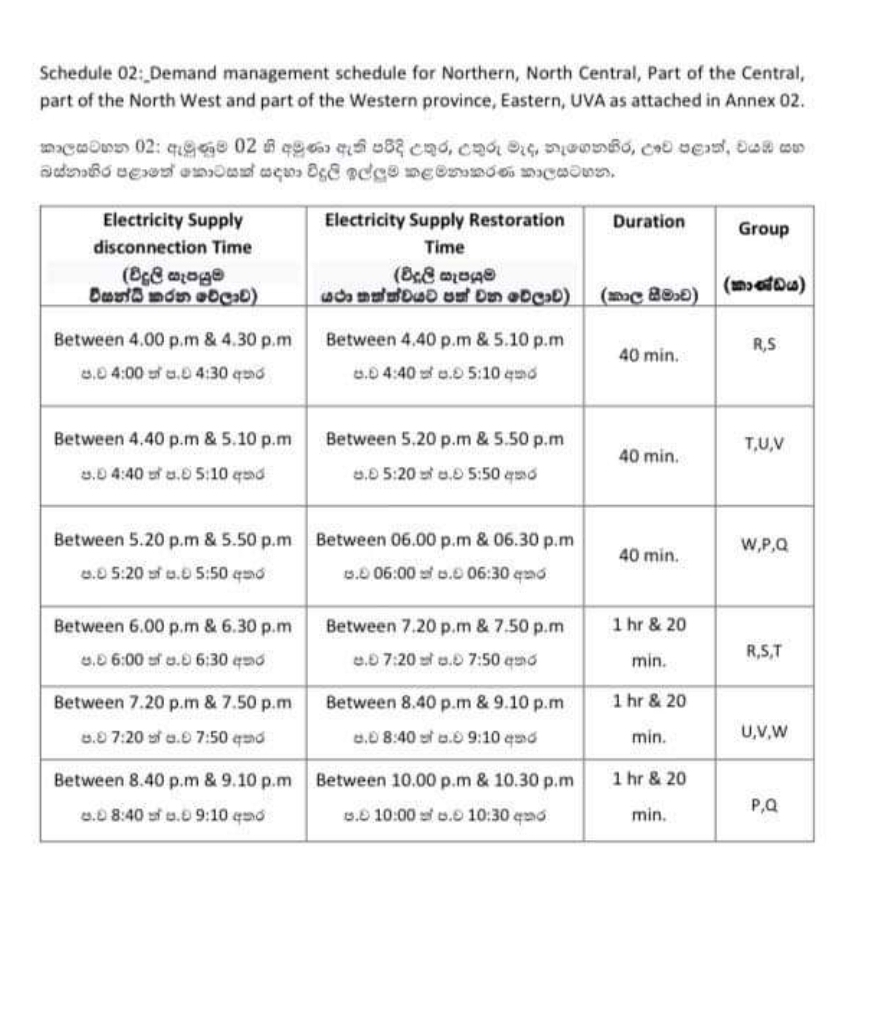
Today’s power cut schedule revealed
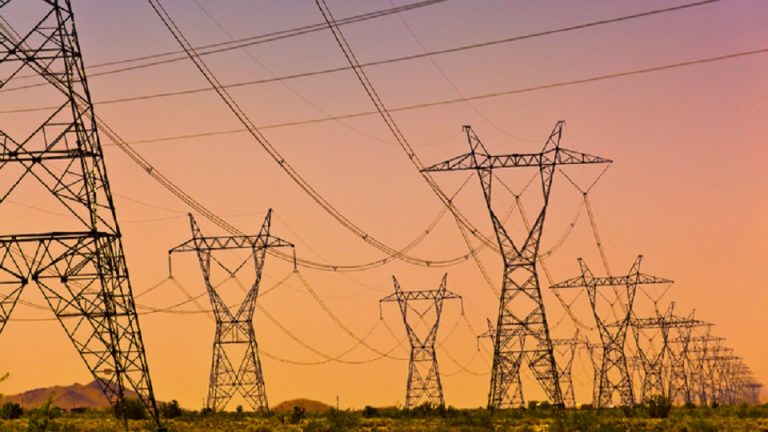
Colombo (LNW): Due to the reduced water releases for hydropower generation and lack of fuel availability for thermal power generation, it has been decided to resume two hour power cut since there is no adequate generation to cater energy and capacity deficit.
However, demand management measures may be excluded according to the inflow conditions of hydro catchment areas.
President instructs to provide relief to low-income families without leaving anyone behind
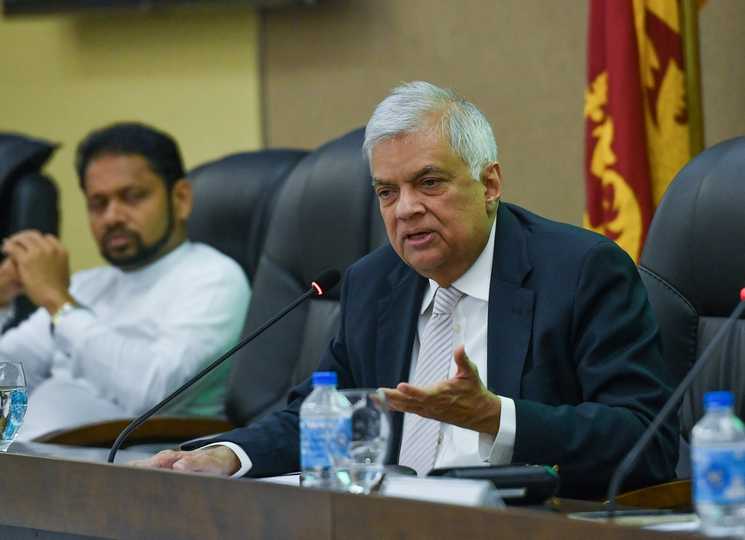
Colombo (LNW): President Ranil Wickremesinghe instructed officials to ensure no one in need is overlooked in providing rice to low-income families.
In addition, the President directed the officers to purchase adequate rice to feed 2.85 million (28,50,000) families subject to a maximum of Rs. 20 billion.
President Ranil Wickremesinghe made these remarks today (14) while attending a discussion related to the purchase of paddy at the Ministry of Defence.
The President further instructed that the paddy be purchased, milled and the rice be distributed among low-income earners through a transparent mechanism.
Previously, it was decided to allocate Rs. 10,000 million to purchase 61,600 metric tons of paddy under the program of providing 2 million low-income families with 10 kg of rice each per month over a period of two months, free of charge.
However, it was revealed during this discussion that 2.85 million families have been identified as being in need of this assistance.
Accordingly, President Ranil Wickremesinghe directed the officials to implement the program for all those people.
President Wickremesinghe further stated,
“The Government is set to purchase rice worth Rs. 20 billion to distribute to 2,850,000 low-income families as part of its food security program. The government will protect the rice price by providing a guaranteed price. District and Divisional Secretaries have been delegated the task of purchasing paddy stocks. The government will not sell rice, and a full-time team will be deployed to take this program forward.
A formal mechanism for distributing rice to eligible people in all 25 districts will be developed. The government is taking measures to prevent large-scale paddy mill owners from exerting unnecessary influence in purchasing paddy. The government aims to label the grant given to low-income families as “relief rice” to prevent its resale. Members of Parliament are being consulted, and discussions are on-going with the District Secretaries.
However, this necessitates the deployment of a full-time team. The agreement was expressed during the discussion with the security forces to release a group of officials from Ministry of Defence for this purpose.
Obtaining accurate data is crucial for the program’s progress. If government officials are uncooperative at the village level, a contracted team should be recruited to expedite data collection. They should receive priority for future vacancies, and retired officials may also provide assistance. All activities must be completed within a designated timeframe.”
Senior Advisor to the President on National Security and President’s Chief of Staff Mr. Sagala Ratnayake
“We are currently in the process of establishing a social welfare safety net with support from the International Monetary Fund and the World Bank. However, we are not satisfied with the progress of our data collection efforts thus far. As such, we plan to meet with the District Secretaries to discuss this matter and move forward with the necessary work.”
President’s Secretary Mr. Saman Ekanayake
“The establishment of the social welfare safety net must not be sabotaged. The completion of these activities should be achieved by March 31.”
Agriculture Minister Mahinda Amaraweera, Trade Minister Nalin Fernando, State Ministers Ranjith Siambalapitiya, Anupa Pasqual and Ashoka Priyantha, Prime Minister’s Secretary Anura Dissanayake, Defence Secretary General Kamal Gunaratne (Rtd), Senior Presidential Adviser on Food Security Dr. Suren Batagoda, Chief of Defence Staff General Shavendra Silva, and several others participated in this discussion while many District Secretaries joined in through zoom technology.
Treasury issues circular on purchase of paddy
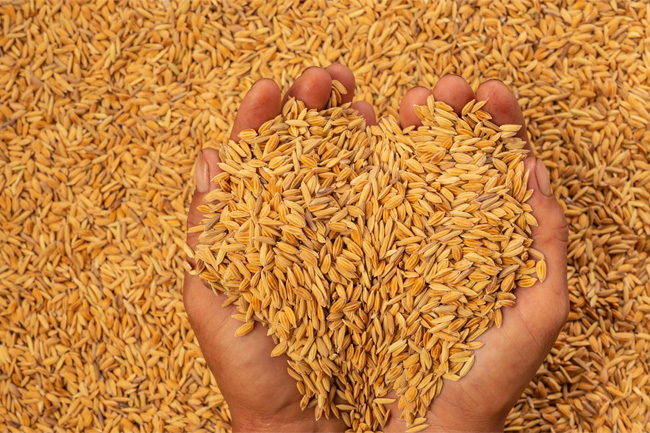
Colombo (LNW): The Treasury has released a circular on the government’s program for purchasing and distribution of paddy. The circular has been issued under the signature of the Treasury Secretary, K.M. Mahinda Siriwardena, on the direction of President Ranil Wickremesinghe, as the Minister of Finance, Economic Stabilization and National Policy.
The objective of the paddy purchase and disbursement program is to offer farmers a fair price for their paddy harvest in the 2022/2023 Maha season, procure any surplus paddy, and provide aid to low-income households affected by the ongoing economic challenges.
District Secretaries have been instructed to purchase only “Nadu” paddy from small and medium-scale paddy owners and cooperative societies through the 2022/2023 season paddy purchase program.
Under the program, the cost of one kilogram of good quality paddy with a maximum moisture content of 14% and a maximum spoil paddy content of 9% will be Rs. 100, while one kilogram of paddy with a moisture content over 14% and a maximum spoil paddy content of 22% or lower will cost Rs. 88.
District and Divisional Secretaries are in charge of inventory management, storage, upkeep, and documentation related to the paddy procurement process.
As the acquired paddy stock will be milled and distributed in March and April 2023, the program will consider the milling capacity of small and medium-scale rice mill owners and cooperative societies, and allocate funds accordingly. Mill owners and cooperative societies will be given preference.
Under the program, a maximum of 2,000 kg of paddy can be purchased from a single farmer with up to one acre of land, 4,000 kg for 1-2 acres, and 5,000 kg for over 2 acres.
District secretaries are required to inform the Development Finance Department of the General Treasury to obtain the necessary funds for the government’s paddy purchase program, which will be executed via small and medium-scale paddy mill owners and cooperative societies. Upon receiving notification, the Development Finance Department will direct district secretaries to the National Budget Department to assign treasury funds, and to the Treasury Operations Department to release the funds.
The National Budget Department will allocate budget funds directly to the respective District Secretaries, and the Treasury Operations Department will release liquid cash to them for the purchase of paddy.
Funds for the paddy purchase program will be released by the Treasury periodically as required.
All District Secretaries should ensure that paddy is purchased only from farmers in their district and that the Bank of Ceylon issues a payment certificate in the name of the concerned farmer. When submitted to the appropriate People’s Bank or Regional Development Bank branch, the required amount is immediately credited to the farmer’s bank account.
To provide relief to the identified low-income families, 10 kg of paddy per month per family will be distributed for a two-month period, and instructions regarding this will be issued by the Ministry of Women, Child Affairs and Social Empowerment.
The district secretaries have been instructed on the necessary steps to ensure the success of the paddy purchase program, including the deployment of Civil Security Department (CSD) officers to ensure the security of the paddy stocks in the warehouses, as well as the appointment of a staff officer in each district to oversee the implementation of the program. It is expected that the entire public service will be dedicated and work exemplarily during the harvest period, in order to reduce government expenses. Other operational costs of the paddy purchase program will be subject to financial regulations, circulars, and other necessary government approvals.
Sri Lanka Original Narrative Summary: 15/02

- Elections Commission informs all political parties that distribution of Postal Voting Documents for the LG election, which were due to be sent out today, cannot be done as the Government Printer has refused to print them until due payments are made: Postal Voting postponed indefinitely.
- MP Patali Champika Ranawaka calls on Treasury Secretary Mahinda Siriwardana to release the necessary funds for LG election: warns the Supreme Court judgement on the Easter Attack compensation case held that the Ministry Secretaries can be held personally liable for failure to fulfil the duties constitutionally assigned to them.
- Ratings agency S&P Global cuts its long-term issue rating on state-owned SriLankan Airlines’ foreign currency-denominated bond: says it lowered the rating on the SLA 2024 USD 175 mn Bond to ‘D’ from ‘CC’ because both the issuer and Govt of Sri Lanka (as guarantor), had missed a coupon payment of about USD 6.1 mn.
- Transport Minister Dr Bandula Gunawardena says around 7,000 road construction projects that were being implemented in various parts of the country, have been stopped: laments the Central Expressway has stopped due to not receiving funds from China’s Exim Bank after the bankruptcy announcement, and that the 40 km stretch from Kadawatha to Mirigama will now cost a lot more.
- Cabinet Spokesman says the Govt of Japan has agreed to provide a grant of USD 38 mn to carry out essential health services and purchase fuel.
- Agriculture Minister Mahinda Amaraweera says the Govt owes Rs.17 bn to the fertilizer companies for supplying fertilizer: the supplier companies ask for the arrears at a discussion with the Minister pertaining to import of fertilizer for the Yala Season this year: Minister says the arrears will be settled in “due course”.
- Special team of CID sleuths scheduled to go to Indonesia to investigate the mysterious death of billionaire businessman Onesh Subasinghe in an apartment complex in Jakarta, while vacationing with his Brazilian wife Rosa Silva, his daughter and his wife’s assistant.
- Police arrest 2 Army soldiers over the incident of a woman, 25, being fatally shot when a weapon misfired during a raid at Dematagoda when they were attempting to take a suspect into custody.
- Cabinet decides to introduce a new Excise Act to replace a 111-year old Excise Ordinance: advise the Legal Draftsman to formulate a draft Excise Bill.
- Sri Lanka Cricket increases the match fees of the National Women Cricketers for the year 2023, from USD 250 to USD 750 per match, per player: in addition, each player to get USD 250 as a winning bonus.
Death of a Sri Lankan in the aftermath of the earthquake ın Türkiye
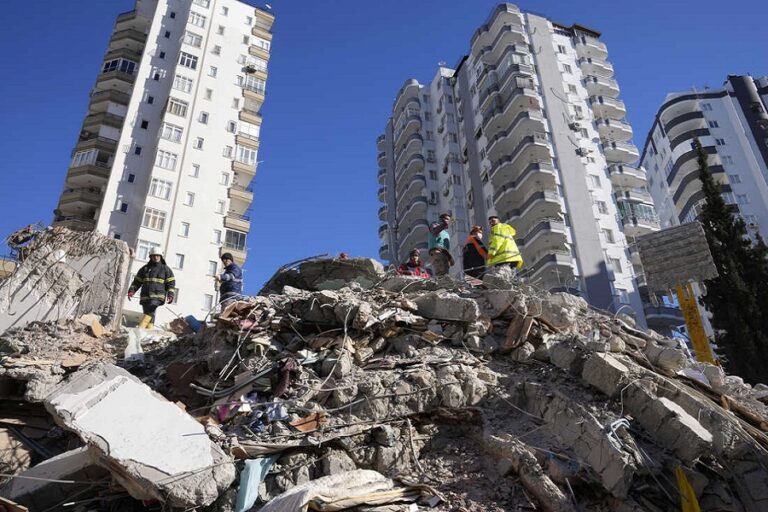
The massive earthquake that struck an area over 110,000 square kilometers of the Southern Türkiye on 6 February 2023, causing loss of life of many thousands of persons from many countries and a huge devastation of properties, also resulted in an unfortunate loss of life of a Sri Lankan.
The south eastern region of Türkiye, following the destructive earthquake, has been experiencing many aftershocks and tremors, numbering over 2000 and the death toll has risen to 29,605 and caused injuries to 80,278 persons. President Ranil Wickremesinghe spoke to President Recep Tayyip Erdoğan of Türkiye and informed that Sri Lanka has been ready to extend all possible assistance to the people of Türkiye at this hour of their insurmountable grief.
The Embassy of Sri Lanka in Ankara had been working to ascertain the welfare of the sixteen Sri Lankans who were living in the area affected by the earthquake and tremors, in coordination with the Türkiye authorities. It has been confirmed that 15 of them, contacted by the Embassy are safe, while a Sri Lankan female who was living in Hatay/Antakya Province in Türkiye, was reported missing. The Embassy was able to confirm the fate of the Sri Lankan concerned and regrets to inform of the unfortunate death of the missing Sri Lankan. The identity of the deceased Sri Lankan is withheld at the request of the family. Burial of the human remains of the deceased already took place in Hatay/Antakya, in line with regulations imposed by the health authorities.
The Ministry of Foreign Affairs extends its deepest condolences to the bereaved daughter and other family members of the deceased.
The Ministry of Foreign Affairs
Colombo
14 February 2023
State-owned SriLankan Airlines defaults on US $175m bond
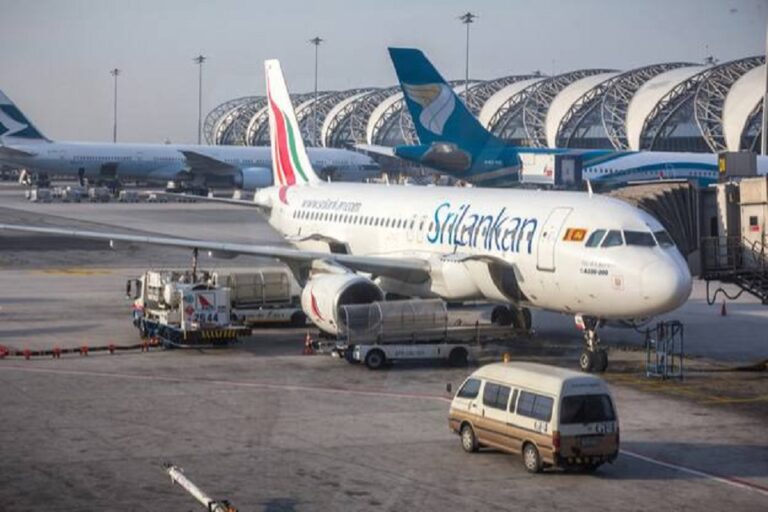
SriLankan Airlines has defaulted on its US $175 million bond, having failed to amend the terms of the debt amid the worst economic crisis to engulf the country in its independent history.
The airline failed to make a coupon payment due on Dec. 25 2022, the board said in a statement this week, adding this constituted a default event under the terms of the debt. Executives would be in touch with holders of the bonds, which are backed by the government.
For the carrier, the drop in business due to the pandemic has been compounded by the country’s economic woes. Bankrupt Sri Lanka is looking to secure an International Monetary Fund loan after massive street protests last year toppled the ruling Rajapaksa family and a drop in foreign-exchange reserves made it impossible to import goods ranging from medicine to coal.
The airline’s pile of debt totaled $826 million, including the US-currency bond and $352 million owed to state banks, according to a presentation dated Jan. 12. The amount of overdue and future payments owed to lessors and suppliers was $771 million.
The company had sought to amend the terms of the dollar bond, including deferring a total of $12.25 million worth interest payments due in December 2022 and June 2023 to Dec.25.2023.
As of the end of last year, liquidity equivalent to 3% of annual revenues was on hand, while interest charges were seen amounting to 9% of yearly revenue in 2023-2024, the presentation said.
The country of 22 million itself defaulted on loans last year and is seeking $2.9 billion urgently from the International Monetary Fund to tide over a severe shortage of dollars to buy essentials.
“We will follow treasury guidelines on this. We are also engaging with bondholders,” SriLankan Airlines Chairperson Ashok Pathirage said.
The government-guaranteed unsecured notes are due in 2024.President Ranil Wickremesinghe told parliament on Wednesday that Sri Lanka’s economy was expected to grow again from the end of this year and hoped the country would emerge from the economic crisis by 2024
Out of a total foreign debt of some $ 61 billion, the Government has been planning to restructure only the commercial debt of the central government and what had been borrowed from the bilateral sources.
There, China, a major lender, had been uncooperative with the rest of the creditors. After long negotiations, it had offered only a loan moratorium of two years which would indeed increase Sri Lanka’s foreign debt obligations.
Hence, the bailout is now notorious for getting postponed every month. Bangladesh which does not have this debt sustainability problem was able to secure the loan within two months.
With the non-delivery of the IMF bailout in time, Sri Lanka’s foreign exchange issue has now become more catastrophic.
ILO steps into assist vulnerable ble community in the North
The International Labour Organisation (ILO) has come forward in supporting 3,725 vulnerable women and men in the Mannar, Kilinochchi, Vavuniya and Mullaitivu districts to earn an income as well as sustain their livelihood through several short-term relief mechanisms.
These include temporary employment in infrastructure developments related to improving irrigation for farming, clearing farm access paths, and renovating fisheries landing sites, alongside providing agriculture inputs ranging from subsidized seeds to equipment, financial assistance towards labour and land preparation, as well as strengthening market access via private sector.
As Sri Lanka experiences its worst economic crisis, close to 30% of its population are facing food insecurity, while the rising poverty rate continues to push more families below the poverty line.
“People with existing vulnerabilities are among the most impacted in any crisis. The present situation has meant that vulnerable and marginalized groups in the Northern Province; a region already burdened with higher than national average unemployment and poverty, are forced to grapple with further exacerbated challenges in carrying on their day-to-day lives.
“Especially for those engaged in the agriculture and fisheries sector, their livelihoods have been severely disrupted from all fronts,” says ILO Sri Lanka Chief Technical Advisor Dr. Thomas Kring.
The interventions; a part of ILO’s Local Empowerment through Economic Development and Reconciliation (LEED+) Project, are being implemented in collaboration with the Department of Agrarian Development, Department of Agriculture, District Secretariats, and Cooperatives.
Vinayagapuram Farmers’ Co-Op General Manger Murugesapillai Muralitharan, remarks about its gains: “With reduced farming activities, farmers, farmhands, daily wage earners, we’ve all lost our income. From the earnings through this initiative, individuals are able to manage household expenses, send their children to school, take care of medical needs, start a home garden, and purchase seeds as well as other requirements to continue farming.
“The maintenance work we have completed in this area will benefit our fields for the next 4-5 years; collectively working on these has also created a strong sense of community and ownership.”
Through the infrastructure development intervention two-small scale tanks were repaired, in addition to irrigation channels being deepened and cleared. Accessibility of farm paths was improved for 2028 acres of paddy field. Furthermore, four fisheries landing sites and over 40 kms of sea access pathways were also cleared.
“The impact of this cash-for-work based approach by ILO is many fold – due to the restricted Government spending in 2022, the routine maintenance undertaken by the Department was stalled.
The intervention provided a direct means of income for the most in need, including persons with disabilities and women heads of households, and simultaneously created a mechanism to complete these necessary infrastructure developments.