Expenses on special presidential commissions appointed for various purposes for the last eight years have been estimated to be Rs. 504 million.
The highest amount was reportedly spent on the Special Presidential Commission appointed by ex President Gotabaya Rajapaksa in 2020, an allocation of Rs. 120 million.
During Maithripala Sirisena’s tenure as the President, five Commissions were appointed, namely the Presidential Commission of Inquiry on the Central Bank Bond Scam, the Presidential Commission of Inquiry to probe the Easter Sunday Attacks, the Commission to Investigate Serious Corruptions during the Mahinda Rajapaksa Regime, the Commission to Investigate Frauds and Corruptions of the Good Governance Regime and the Commission to Investigate the SriLankan Airlines Affair.
During Gotabaya Rajapaksa’s tenure as the President, the Commission to Investigate the ETI Affair, the Commission to Investigate the Role of the Presidential Commissions appointed to date, the Presidential Commission on International Cooperation and the Commission to Investigate Customs Affairs were appointed.
Despite many of these commissions concluding their investigations and having their reports handed over, none of the recommendations have been implemented to date, begging the question as to what was the point of appointing these bodies in the first place spending millions of rupees of public funds, had none of them ever served the country.
“Too many factual errors to count in this piece. I do not know who Mark Finlay is but he needs to do more research before publishing. Shame on #LNW for not fact checking,” Ratwatte wrote on his Twitter handle providing an article about ‘Air Ceylon.’
“The most comprehensive piece on Air Ceylon was written by my dear friend Roger Thiedeman in #Airways of August 1998 but I cannot find that on the web,” he added.
LNW wishes no ill-will to provide false information to our readers and we value the golden principle of ‘right-to-reply,’ and Mr. Ratwatte’s response is hence of importance.
Airlines of South Asia — Part 4
By Suren Ratwatte
Great expectations
As the 1940s drew to an end, there was a great feeling of expectation in Colombo. The Second World War had ground to an awful end with the use of the atomic bomb in August 1945. The human cost of the conflict had been high, with Ceylonese youth serving in Imperial British forces throughout the world. But, except for a brief scare in April 1942 when the Imperial Japanese Navy attacked the island, Ceylon had largely escaped unscathed from the terrible conflict.
Britain, depleted by the war effort, was preparing to withdraw from India. It was obvious that Ceylon would gain independence soon as well, though there was little local pressure to achieve this. The Government of Ceylon, looking to build a new nation, decided to set up its own airline as part of this effort.
Named Air Ceylon (IATA code: AE) and equipped with three war-surplus Douglas DC-3 Dakotas (see photo above taken at Ratmalana), operations formally began in December 1947. Given the many economic and cultural links between India and Ceylon, the first overseas destination was Madras (now Chennai), replicating the pioneering Tata Airline’s flights before the war.
Trials and tribulations
The trials and tribulations of Air Ceylon is a fascinating story in itself. Numerous writers, have approached the subject with varying degrees of success. The definitive work is probably the comprehensive piece by Roger Thiedeman, published in the August 1998 issue of Airways magazine.
Suffice it to say, that in common with most of the airlines of the era, Air Ceylon too was poorly conceived, under-capitalized, run by bureaucrats on a shoe-string budget and subject to constant political interference. Despite a number of alliances with multiple foreign airlines, including Australian National Airways (ANA; 1949–1953), KLM Royal Dutch Airlines (1956–1962), Britain’s overseas flag-carrier BOAC (1962–1972) and UTA French Airlines (1971–1976), AE was never to see even a brief period of consolidation and solid financial performance.
KLM Super Constellation in AE colors — courtesy ALK_VA
During this period the airline operated a modest network of international flights using, initially, the Douglas DC-4 Skymaster (supplied by ANA). Later the Lockheed 749 Constellation, a 1049 Super Constellation (above) and a Lockheed 188 Electra turboprop, all provided by KLM, were utilized. Later still, during the BOAC partnership, de Havilland Comet 4s and BAC (Vickers) VC10s were operated. During the UTA collaboration three different Boeing 707s, 720s and a Douglas DC-8 flew on behalf of Air Ceylon. Toward the end of its existence Lanka’s national carrier also leased two more DC-8s from airlines of questionable repute. In fact, Air Ceylon has the dubious distinction of operating more aircraft types in its short history than many much larger airlines.
AE Electra with KLM registration in Colombo — courtesy DP
Regional and domestic network
Air Ceylon also operated a regional network, initially using the DC-3s, but in one of the few sensible fleet choices, purchased a turboprop Hawker Siddeley (Avro) HS 748 in 1964. This proved to be a capable and rugged workhorse, particularly for domestic flights. The operation was reasonably successful and expansion was in order. Yet in a typically puzzling decision, the government then purchased a French-built Aérospatiale N (Nord) 262! This aircraft, especially its turboprop engines, proved unsuitable for tropical conditions and barely lasted two years in service, to be replaced later by a second HS 748: a good example of poor decision-making leading to a significant financial penalty. What prompted the government of Ceylon to purchase the French aircraft is best left unexplored.
HS 748 Avro — courtesy ImageEvent
The final major acquisition by Air Ceylon was a Hawker Siddeley HS 121 Trident, which was inducted in 1969. Pakistan’s PIA had introduced this tri-jet type only recently, as we saw in an earlier column, so the choice was not unreasonable. Arguably the acquisition of the Boeing 727 would have been a much better choice, but with British commercial interests still prevailing at the time, the Trident was an understandable choice. The Trident allowed Air Ceylon to expand regionally to Bangkok, Delhi, Bombay (now Mumbai) and finally Sharjah in the UAE by the late 1970s.
Air Ceylon Trident in flight — Twitter
One of AE’s milestones was the inauguration of scheduled services to the Maldives Islands in 1967. This was to service the growing tourist demand to these idyllic islands and was initially an ad-hoc service using the venerable DC-3s. The first airline to provide scheduled service to the Maldives, Air Ceylon missed an opportunity to consolidate and build on what was to become a tourist Mecca within a few years.
AE DC-8 — courtesy DP
The demise
By the late 1970s Air Ceylon was struggling to survive. The DC-8–43 pictured here (registration 4R-ACT; a relatively rare variant with Rolls-Royce Conway turbofan engines) had been leased from Templewood Aviation, which had earlier provided a Boeing 720. When the partnership with UTA was terminated, Air Ceylon purchased the DC-8–53 used by the French carrier. Several leased aircraft, including a Convair 880, a Boeing 720 and two VC-10s, were used at different times to bolster lift, but AE proved unable to capture its fair share of the rapidly growing tourism market to Sri Lanka and the Maldives, or the labor traffic to the Gulf via Sharjah.
Changes in government led to much speculation about corruption, financial mismanagement and a litany of other accusations. A Presidential Commission of Inquiry was tasked to investigate corruption and malpractice in Air Ceylon. The newly elected government of Sri Lanka decided to establish a separate airline, named Air Lanka, for international routes based out of Katunayake airport to the north of Colombo. Air Ceylon was to continue some limited flying, mainly domestic, out of the smaller Ratmalana airport.
The final blow came in September 1978, when a bomb destroyed one of the two remaining Avro 748s, which was parked at Ratmalana, shortly after it returned from a flight to Jaffna
Air Ceylon with its proud fatality-free flying record of 32 years, quietly went out of existence in 1979.
The exaggerated negative portrayal of the current situation in Sri Lanka is taxing the hard-hit tourism sector, making it increasingly difficult to move towards the path of revival.
Despite several attempts by the industry stakeholders to share the improved situation for tourists, where effective measures are taken to ensure they are cushioned against the prevailing challenges in the national economy.
Campaigns were being carried out by certain non-governmental organisations (NGOs) to assist the island nation in its time of need are proving to be counter-effective, a senior official of Tourism Ministry said.
The tourism industry stakeholders noted that due to the said campaigns, it is rather unfortunate that the key source markets are under the impression that Sri Lanka is not equipped to cater to the needs and wants of international travelers.
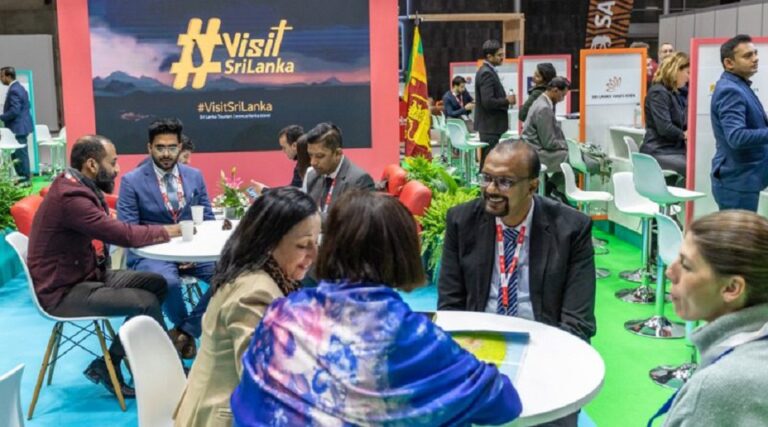
The participation at the IFTM in Paris was an eye-opener for the tourism sector, as it showcased the perception of destination Sri Lanka in the international platform.
“Having just attended the IFTM in Paris and having visited tour operators in France, Belgium, the Netherlands and other key source markets, it is disappointing to report that the one salient common question being asked is ‘does Sri Lanka have a food shortage?’
This question is then followed by ‘aren’t children facing malnutrition?’” said the Sri Lanka Association of Inbound Tour Operators (SLAITO) sharing an update on its participation in the travel show it attended in France this month
The campaigns carried out by the UNICEF, Lions Clubs International in Sri Lanka and various INGOs to collect funds to feed the children in Sri Lanka, using pictures of undernourished African children on their publicity material, have worsened the image of the island nation, the association said.
The SLAITO asserted that irresponsible statements from local government bodies together with images of street protests being quelled using force, the negative images going out into the world far outweigh any positive publicity efforts.
“All this is at a time when the need of the hour is earning foreign exchange for our basic requirements, for which tourism is the ideal industry.
We need the collective support of all Sri Lankans to help rebuild the tourism industry and in the process, to help to come out of this economic crisis, in a sustainable manner, by earning the required foreign exchange as opposed to depending only on handouts,” the SLAITO said.
Sri Lanka State Pharmaceutical Corporation has failed to maintain adequate pharmaceutical supplies to provide quality patient care and prevention services during the economic crisis period arising out of the exchange deficit and other factors as at 13 May 2022 , Auditor General Department’s special audit report revealed.
The main reason for the pharmaceutical shortage at hospitals was the failure of the corporation to carry out a medicinal drug procurement in accordance with a proper time table and its lack of constant monitoring process on the progress of pharmaceutical procurement orders and its activation for the past several years.
The State Pharmaceutical Corporation has to pay around Rs.4.28 billion to suppliers, Peoples’ Bank and Bank of Ceylon by April 2022 for medical supplies ordered by the Corporation from the local market, audit inspection detected .
The total amount payable was Rs 3.11 billion for suppliers, Rs 920 million for Peoples Bank and Rs.250 million for Bank of Ceylon for pharmaceutical supplies by 2022 April 20.
According to Corporation’s information provided to the Auditor General that there was a total financial requirement of Rs. 23,123 million as at 2022 May 25.
The State Pharmaceutical Corporation has disbursed Rs. 7,135 million for issuing letters of credit, payments to suppliers and imports and clearances for orders in the Medical Supplies Division and Rs. 15,988 million for settling bank overdraft facilities for medical supplies as at 2022 April 20.
The report recommended to avoid delays in the procurement process and that responsibility be delegated to the relevant officials by effectively executing the activities related to the files sent by the State Pharmaceutical Corporation of Sri Lanka.
It has to be submitted to the Ministry Procurement Committee and the Cabinet Procurement Committee according to a proper procurement plan and procurement schedule.
A safe stock of 03 months should be maintained for each medical supply for effective control, the report suggested adding that the procurement lead time is about 11 months and although it is necessary to maintain a safe stock of 06 months.
It is recommended that consideration be given to reducing the level of secured stock by minimizing procurement time due to the lack of adequate storage facilities and the high cost.
The Auditor General’s report has suggested that action be taken to implement a re-order stock level based ordering system to reduce the lead time required for medical supplies.
It has been directed to pay attention to maintaining stock levels for appropriate medical supplies items and properly update and use the computer system.
At least 129 people have been killed after a riot at a football match in Indonesia.
The violence broke out at a stadium in East Java during a game between Arema and Persebaya Surabaya.
Chaos broke out after Persebaya Surabaya won 3-2 – and according to local reports, thousands of Arema fans went on to the pitch after their team lost.
It is also claimed that several Arema players who were still on the field at the time were attacked.
A stampede began when the police fired tear gas into the crowd.
Images showed people who appeared to be unconscious being carried away by other fans.
In what appears to be one of the world’s worst stadium disasters, more than 300 people were rushed to nearby hospitals, but many died on the way or in treatment.
East Java Police Chief Nico Afinta said about 180 people are injured, but many of them are in a deteriorating condition.
Some of the victims have sustained brain injuries – and one doctor told local media that a five-year-old was among those who had died.
A local health official said many of the victims died of “chaos, overcrowding, trampling and suffocation”.
Two of those killed at the Kanjuruhan Stadium in Malang are reportedly police officers.
FIFA regulations state that no firearms or “crowd control gas” should be carried or used by the police.
Indonesia’s chief security minister, Mahfud MD, has said on social media that the stadium was filled beyond capacity.
While the sporting venue is only supposed to hold 38,000 people, he claimed 42,000 tickets had been issued.
President Joko Widodo has instructed the authorities to thoroughly evaluate security standards at football matches.
Indonesia’s football league had said games would be suspended for a week – but Mr Widodo has ordered all matches to be postponed until the investigation is concluded.
Arema has also been banned from hosting matches for the rest of the season. Further sanctions could follow.
A special audit report has recommended prosecuting officials who were responsible for the transaction of USD 6.9 million (Rs 1.38 billion) for an unsupplied fertilizer stock and directed to claim compensation from the Chinese company for attempting to unload a stock of unsterilized fertilizer that contained destructive bacteria.
The special audit report by the National Audit Office on the controversial procurement of 96,000 metric tons of organic fertilizer from a Chinese supplier reveals that the Sri Lankan government has incurred a loss to the tune of Rs. 1.38 billion in the process.
In 2021, then-government granted approval to import organic fertilizer from Qingdao Seawin Biotech Group Co., Ltd. in China as its attempts to transform the island’s agriculture into entirely organic were unsuccessful.
The audit report revealed that Sri Lanka’s National Plant Quarantine Services (NPQS) had observed the destructive bacteria Erwinia and Bacillus which causes diseases and that the fertilizer samples had not been sterilized.
Against the backdrop of such report, the special technical evaluation committee appointed by then-Secretary to the Ministry of Agriculture had given recommendations to import the relevant organic fertilizer shipment.
Based on these recommendations, Ceylon Fertilizer Company and the Colombo Commercial Fertilizer Company Limited had opened Letters of Credit (LOCs) to facilitate the importation of this fertilizer shipment, the report added.
The report also made many observations on the shortcomings in the procurement process and technical evaluation because not Technical Evaluation Committee members participated in the evaluation process and only the chairman of the committee had signed the documents related to pre-qualification evaluation from each bidder.
After that, the relevant supplier company had been informed by Shipping Advice on September 23, 2021 that the 20,550MT of fertiliser was sent from the Qingdao Port in China to the Colombo Port.
Last September, a controversial situation arose when Hippo Spirit, the ship that carried the fertiliser cargo was anchored off the Colombo port but could not unload the stock as it had not been sterilised in accordance with the Plant Quarantine Act and found to be consisting of harmful bacteria in the samples.
By refusing to accept and pay for the shipment, the importers, the two state-owned companies Ceylon Fertilizer Company Limited and Colombo Commercial Fertilizer Company Limited, filed cases at the Colombo Commercial Court to secure payment injunction orders against the People’s Bank.
After the issue was raised through diplomatic channels, a Cabinet Memorandum was submitted to resolve the issue through mediation on the advice of the Attorney General.
Accordingly, approval was granted to pay an advance of US$ 6.9 million for 75 percent of the cost of the fertilizer stock. Later, the two cases had been settled and withdrawn with the condition that the fertilizer should be resupplied with the desired composition and quality in accordance with the court settlement.
“Nonetheless the expected standard of stock of fertilizer has not been obtained until now. Although the period of the letter of credit and the performance bond should be extended and kept valid as per the settlement terms, those documents expired on March 12 and on March 24 respectively.
As a result, the ability to encash the money paid on settlement has been lost if the supplier will not provide standardized fertilizers. Resulting in all of the above, the entire amount paid for fertilizers has become a loss to the government,” the report said.
Aviation infrastructure facility Development of the Bandaranaike International Airport (BIA) is progressing well even amidst the economic crisis and that the enhanced facilities would be available for use by the end of 2024, Civil Aviation Minister Nimal Siripala De Silva disclosed.
He was speaking at the International Civil Aviation Organization (ICAO) meeting at Montreal – Canada on Saturday 01 2022.
,He said “Development of aviation infrastructure facilities, which include expansion and modernization of the main International Airport of Sri Lanka – the Bandaranaike International Airport (BIA) terminal building, apron, and access roads are progressing well even amidst the economic crisis.
He expressed the hope that the enhanced facilities would be available for use by the end of 2024 to serve the industry and our travel partners better”
Sri Lanka has published the National Civil Aviation Policy removing numerous legislative, administrative, and operational barriers easing active private sector participation in the establishment and operational of aviation infrastructure facilities and services.,” he said
The Government of Sri Lanka (GoSL) is to construct the second phase of the Bandaranaike International Airport (BIA); project costing around SLR 37bn, to be funded by the Japanese International Cooperation Agency (JICA).
The Cabinet approved the project and every effort would be made to expedite it within three years; the current terminal building designed to accommodate only 6.5 million passengers is handling at present 10.9 million passengers.
The new massive Terminal Building with both departures and arrivals facilities is expected to house departures facilities on the upper floor while the arrivals will be on the lower floor and the building is expected to include a rail facility linking it to the Colombo Fort Railway Station.
The BIA modernization programme is expected to enhance its passenger handling capacity significantly.
Under Phase II of the BIA expansion project, the passenger handling capacity will be doubled to 12 million passengers per annum.
Upon completion, BIA will be equipped with elevated roadways and roads, a new pier with 8 gates, a remote apron and taxiways.ri Lanka has the potential to emerge as an aviation hub in the region.
The second phase of the BIA modernization project would reinvigorate the aviation industry to serve the growing number of tourists visiting the country.
The growth in the air transportation is expected to create a demand for aircraft maintenance, repairs, re-building, bunkering and catering services which would provide an opportunity for development of an efficient aviation industry in the country.
Sri Lanka has been striving to meet the international standards of the aviation industry and adopt recommended practices with a view to emerge as an aviation hub in the region.
Furthermore, Sri Lanka has taken steps to develop domestic airports at Ampara, Koggala, China-Bay, Jaffna and Ratmalana. These will then be developed as “City Airports” aimed at developing the market for charter flights and private jet operations.
On completion of the second Terminal building, BIA will be able to handle total capacity of 20 million passengers per annum; with the number of Terminal Gates increasing twofold by 2023.
It would have modern baggage handling facilities; more space for passengers and new Immigration/ Emigration facilities with a bigger apron to accommodate 36 aircrafts.
Showers will occur at times in Western and Sabaragamuwa provinces and in Kandy, Nuwara-Eliya, Galle and Matara districts and fairly heavy rainfalls above 75 mm may occur at some places, said the Department of Meteorology today (02) in a statement.
Several spells of showers will occur in North-Western province and in Hambanthota district.
Showers or thundershowers will occur at a few places in Uva province and in Ampara district during the evening or night.
Strong winds about (50-55) kmph can be expected at times over the western slopes of the Central hills, Northern, North-Central and Southern provinces and in Trincomalee district.
General public is kindly requested to take adequate precautions to minimize damages caused by temporary localized strong winds and lightning during thundershowers.
Marine Weather
Condition of Rain:
Showers will occur at times in the sea area off the coast extending from Puttalam to Matara via Colombo.
Winds:
Winds will be south-westerly and wind speed will be (30-40) kmph. Wind speed may increase up to (50-60) kmph at timesin the sea areas off the coast extending from Galle to Trincomalee via Puttalam and Kankasanturai and up to (60-70) kmph from Galle to Pottuvil via Hambantota.
State of Sea:
The sea areas off the coast extending from Galle to Trincomalee via Puttalam and Kankasanturai will be rough and from Galle to Pottuvil via Hambantota will be very rough. There is a possibility to increase swell waves about (2.5 m – 3.0 m) in the sea areas off the coast extending from Galle to Pottuvil via Hambantota and about(2.0 m – 2.5 m) in the sea areas off the coast extending from Galle to Mannar via Colombo. Therefore, it is advised not to venture into fishing and naval activities in the sea areas off the coast extending from Galle to Pottuvil via Hambanthota and requested to be vigilant, in the sea areas off the coast extending from Galle to Mannar via Colombo during next 24 hours.
Despite the Unit 03 of the Norochcholai Coal Power Plant being restored after malfunction and its generation of power being added to the national grid, there will be no changes in the power cut schedule, said the Public Utilities Commission of Sri Lanka (PUCSL).
Accordingly, the daily power cut of two hours and twenty minutes (02hrs 20mins) will continue from thereon, said Commission Chief Janaka Ratnayake.
The PUCSL added that investigations related to filling stations over the increased number of complaints received on the quality of fuel will continue.
The Parliamentary Children’s Caucus intends to do a significant amount of work in the future for the betterment of the children of Sri Lanka, its Chairperson, Samagi Jana Balawegaya (SJB) MP Rohini Wijeratne said, in a message coincided with the World Children’s Day (Oct 01), a statement by the Department of Government Information said.
The MP noted that her association hopes to pay attention to health and nutrition, safety, education, rights of children in this country, as well as the quality of the professions operating in child-related institutions.
The Caucus is also expected to work more actively with the Ministries that have direct responsibility regarding children such as the Ministry of Women and Child Affairs, the Ministry of Education and the Ministry of Health and the institutions operating under them in the future, she added.