The Central Bank’s new move of restricting the licensed commercial banks from accessing the monetary authority’s standing facility windows which came into effect from this week is set to face obstacles due to foreign bank’s inability to abide by the directive, several GMs of banks said.
Although the Central Bank’s aim is to reactivate the interbank money market and thereby ease pressure on interest rates, foreign banks, which operate with excess liquidity, may not be willing to lend directly to domestic banks, given their strict counterparty limits, they claimed.
The Central Bank imposed certain limits on the access by the commercial banks of its standing facility window for overnight liquidity needs, effective from January 16.
But the expected downshift in short-term lending and deposit rates failed to materialize in the latter part of last year, compelling the Central Bank to intervene in the interbank market, banking and finance analysts said.
As a result, effective from this week, the commercial banks are only allowed to park their excess liquidity under the Standing Deposit Facility of the Central Bank only five times a month while the access to liquidity from the Standing Lending Facility is limited to 90 percent of a bank’s reserve requirement on a daily basis.
It was found that the banks operating with mostly excess liquidity are the local units of foreign commercial banks while the local banks operate with deficits.
Colombo-based stockbroker CT CLSA Securities recently estimated these local units of these foreign lenders have roughly Rs.200 billion worth of surplus funds.
CT CLSA Securities said any shortfall the local banks find in their overnight liquidity levels could be met by tapping into this Rs.200 billion by directly borrowing from these surplus units.
However, the analysts at Standard Chartered Bank (StanChart) last week said the local banks may be unable to do so, given the strict counterparty limits imposed on them as a result of sovereign-related risks.
“ foreign banks are parking their excess liquidity with the Central Bank, as stricter counterparty limits, due to sovereign-related risks, have made them reluctant to lend to liquidity-deficient domestic banks,” StanChart said in a recent Credit Alert, which analysed the risks faced by Sri Lanka’s financial sector.
“The increasing risk of domestic debt restructuring has reduced foreign investors’ appetite for sovereign debt (T-bills and T-bonds). This has increased the burden on domestic banks – especially the state-owned banks – to buy government paper, tightening their liquidity position,” it added.
The prospect of domestic debt restructuring has spooked the Sri Lankan banks, which sent their own representatives to the negotiation table to ensure that the parties won’t reach any agreement, which will put the sector into further peril.
Any form of debt restructuring, which will further weaken the local banking system, is not worth the effort or the cost, as that will not just make matters further difficult for the Sri Lankan economy but will prolong and undermine any prospect of recovery, according to local analysts.
CB’s move to limit banks’ access to standing facility windows backfires
Prince Bin Maktoum Bin Juma Al Maktoum meets with BOI members
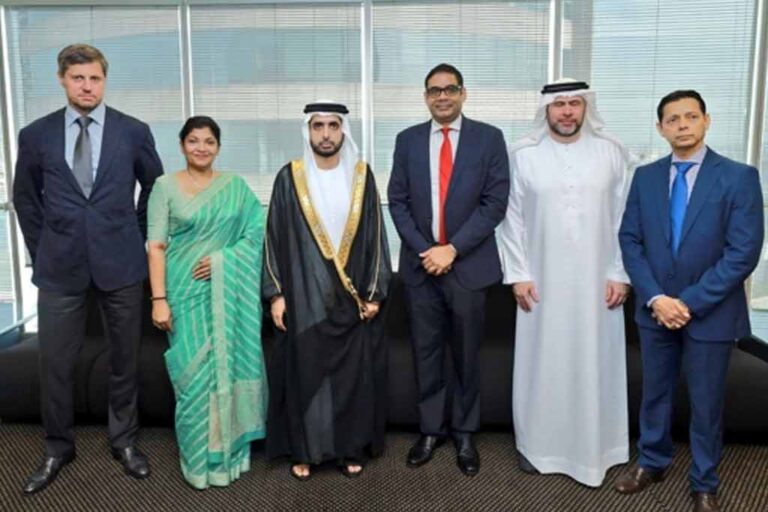
HRH Sheikh Mohammed Bin Maktoum Bin Juma Al Maktoum, Member of Ruling Family of Dubai, UAE, paid a visit to Sri Lanka on Friday (13) to express support for the recovery of Sri Lanka.
During his visit, Prince Al Maktoum and his team met with his Sri Lankan counterpart and discussed the bilateral ties between the two nations.
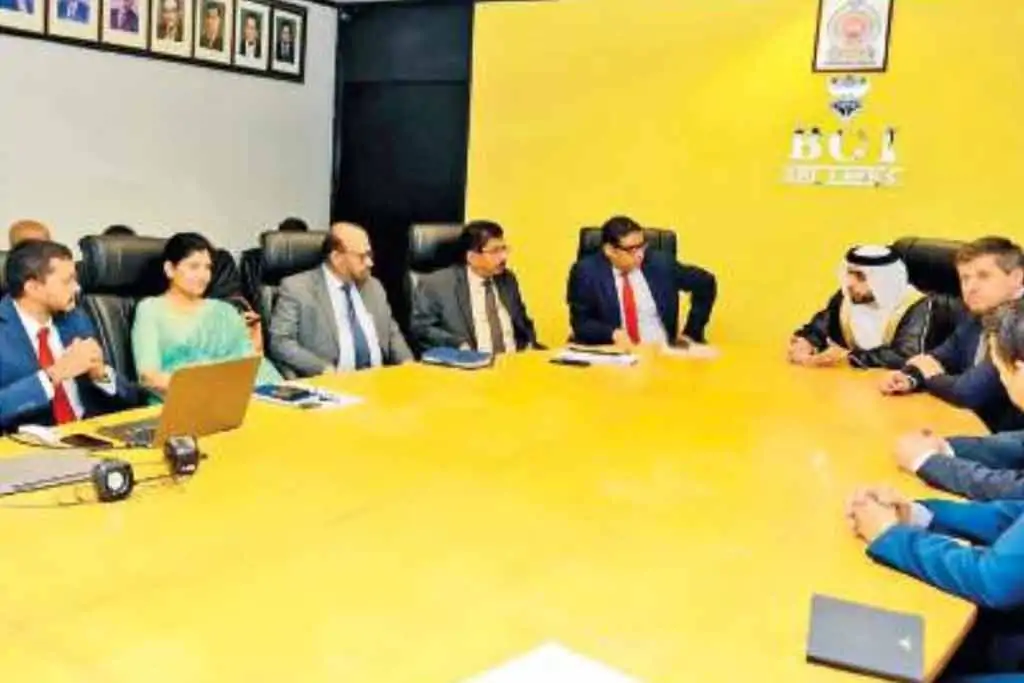
Meanwhile, the team also visited the Board of Investment (BOI) during their two-day visit, and the delegation extended their support for Sri Lanka business promotion in the UAE and digital transformation.
They also expressed their interest to invest in Sri Lanka using the UAE energy, mining and agriculture funds.
The BOI team led by Chairman Dinesh Weerakkody also attended the event.
MIAP
Sri Lanka Original Narrative Summary: 17/01

- SJB Working Committee decides to field MP Mujibur Rahman as its Mayoral candidate for Colombo.
- Acute liquidity crisis severely impacts Govt finances: Treasury to settle Government servants’ monthly salaries in 2 instalments.
- SLFP to contest the Local Govt Elections in Northern & Eastern Provinces and in the Polonnaruwa District under the “Hand” symbol: it will contest the Districts of Colombo, Kurunegala and Monaragala under the “Helicopter” symbol.
- Fort Magistrate’s Court issues order preventing IUSF protestors entering Galle Face: Bauddhaloka Mawatha closed due to IUSF protest: tear gas and water cannons used by Police to disperse protestors at St. Anthony’s Road in Colpetty.
- President Ranil Wickremesinghe says he is aware of the hardships the people are going through: assures USD 2.9 bn would be received from the IMF in 3 or 4 instalments: adds there’s the capacity to obtain USD 5 bn from the World Bank, ADB, etc.
- Central Bank data shows Workers’ Remittances in 2022 was at a 12-year low: down by 31% to USD 3.8 bn in comparison to USD 5.5 bn in 2021: previous low was USD 4.1 bn in 2010.
- Paddy Mill Owners Assn President Mudith Perera says around 10 Small and Medium sized Paddy Mills close operations every month: adds they are unable to service their loans due to the highly excessive interest rates.
- Chairman of the Public Utilities Commission informs the Cabinet Secretary that the Commission is not approving the proposed revision of electricity tariffs: gives reasons.
- Sri Lanka Cricket directs the Manager of the National Cricket Team to submit a report pertaining to Sri Lanka’s heavy defeat against India at the 3rd Cricket ODI: report to be submitted within 5 days.
- The Special Committee Report on Sri Lanka’s participation at the ICC T20 Cricket World Cup, submitted to the Attorney General by the Sports Ministry Secretary: seeks advice on future course of action.
Col. K.T.R.B. Kodippili, a man of a notorious history of misconduct, appointed as Defence attaché to China

Army Headquarters (AHQ) recommended the following senior officers for the final interview to be held at the Defence Ministry for the positions of Defence Adviser (DA) for the UK, China, Pakistan after a written examination and a viva voce examination on 25 November 2022.
- O/62010 Brig M P N A Muthumala USP psc
- O/62214 Brig K W Jayaweera USP psc
- O/62125 Brig W M N K D Bandara RWP RSP USP psc
- O/62418 Col K T R B Kodippili psc
- O/62440 Col K A Pushpakumara RWP RSP USP psc
- O/62466 Brig M A D S Munasinghe RWP RSP psc IG
- O/62561 Col R R M P N B Bambaradeniya RWP RSP USP psc
- O/62712 Col R M S P Rathnayake USP psc IG
- O/62715 Col D K R N Silva RSP USP psc
However, AHQ overlooked the recorded and repeated history of unofficer-like conduct of Col K T R B Kodippili psc O/62418 during the initial interviews and and was recommended to go for the interview held at the Defence Ministry.
Defence Ministry Interview was held on 05 December 2022 and the interview panel consisted of Defence Secretary, Assistant Secretary Defence, Army Commander. The Defence Secretary selected the following officers for below mentioned countries.
UK
Brig K W Jayaweera USP psc O/62214
China
Col K T R B Kodippili psc O/62418
Pakistan
Col D K R N Silva RSP USP psc O/62715 SLAC
Col K T R B Kodippili psc O/62418 bears a history of bad character not fit for a military officer let alone a diplomat to represent Sri Lanka. Following are few examples;
- Date : 26.11.1997
Incident : Assaulting a soldier
Place : 9 SLSR Puliyankulam Camp
- Date : 14.09.2002
Incident : Inhumane assault to a subordinate officer
Detained in Aralaganwila Police Station for 04 days
Place : Maduru Oya Camp , Maduru Oya
- Date : 19.04.2004
Incident : Assaulting a soldier
Place: 6/7 SLSR Camp Thilippalai
The AHQ has made this recommendation when Col K T R B Kodippili psc O/62418 had not been officially recommended to go on UN peace keeping missions as a result of his unofficer-like behaviour and was disqualified for the USP, the Eminent Service Medal.
“ It is ordained that the medal shall be granted to all ranks of the Regular Force of the Army, Navy and Air Force of the Republic of Sri Lanka for valuable service and devotion to duty marked by exceptional ability, merit and exemplary conduct provided they completed a period of not less than fifteen years reckonable service and possess an unblemished record of moral and military conduct as at the date of recommendation is made. Recipient of the medal will be entitled to use the symbol ‘USP’ after his/her name.” https://www.army.lk/medals
Hence, it is evident that USP, the Eminent Servcie medal is invariably a vital and indispensable qualification ruling that was laid out by the military for a military officer to go on peace keeping and diplomatic missions.
As a result, there is now a serious concern how the recorded and repeated history of violent and unofficer- like behaviour of Col K T R B Kodippili psc O/62418 and his ineligibility to the USP medal were overlooked during the AHQ selection process and included him for the final interview at the Defence Ministry with their recommendations for such a prestigious, responsible diplomatic post.
The officers in charge of the selection criteria at the AHQ and the commander of the Army must be held responsible for their favouritism towards Col K T R B Kodippili psc O/62418 deliberately disregarding his ineligibility.
Therefore , it is apparent that the selection criteria were flawed and had been influenced by the Defence Secretary himself from the beginning and throughout in order to favour his lapdog (it is rumourd that Col Kodippili was helping Maj Gen Kamal Gunaratne write his book ‘Nandikadal’ in the past. Moreover, when considered all above factors and comparing the relevant qualifications of the rest of the highly decorated officers who were in the list, Col K T R B Kodippili psc O/62418 seems no match even to compete for a diplomatic position.
It is also apparent that the Defence Secretary had been acting in a discriminatory and biased manner abusing his authority to nominate Col K T R B Kodippili psc O/62418 who is ineligible and has a history of behaving in a scandalous manner, unbecoming the character of an officer and a gentleman to hold a diplomatic position representing Sri Lanka.
Nominating Col K T R B Kodippili psc O/62418 for such a prestigious diplomatic position is unfair by the other officers who hold immaculate characters and have served the army with valour and dedication.
we also have once experienced how a DA for the UK brought discredit to the country and had been declared persona non grata and expelled from the UK in 2019.
What more could Sri Lanka expect from infamous Col K T R B Kodippili psc O/62418 who has a repeated and recorded history of wilful misconduct and violence against his own subordinate officers and his men, and once being in Police custody for assault?
Seram de Silva
Enforcement of Accountability must become a National Priority
The importance of accountability in governance has become manifest both nationally and internationally in the Supreme Court decision with regard to the Easter bombing and the Canadian government’s sanctions for human rights violations respectively. The Supreme Court has determined that former president Maithripala Sirisena and four senior members of the security hierarchy are liable for negligence in their responsibilities which led to loss of life and limb to more than five hundred innocent persons. This is a landmark decision in a context in which impunity and lack of accountability has been marked in the public life of the country.
Obtaining high positions in the state has for too long been viewed as a perk and privilege of those who have won elections or been closely associated with those who wield political power. Holding high office in Sri Lanka has come to be seen as an opportunity for self-gain and to dish out patronage rather than to serve the national interest. The National Peace Council welcomes the intervention by the highest national judicial authority to hold accountable some of those who held the highest executive positions in the country for the disastrous failure to protect the civilian population in the face of repeated warnings of an imminent attack.
We note that there are other cases filed before the courts of law in regard to the economic collapse that the country went through last year and in which it continues to be mired. This economic collapse has blighted the lives of the vast majority of people and thrown more than forty percent of the people below the poverty line. We hope that the justice obtained by the several hundreds of victims of the Easter bombing will be obtained by the several millions of victims of the economic collapse. Those who are guilty of economic crimes of deliberate mismanagement and fraud need to be similarly held accountable and made to pay for their crimes.
One of the consequences of the failure to deal with accountability issues in the past has been the opening of the door to international interventions in regard to human rights through both the UN Human Rights Council and action by individual foreign governments. The Canadian government last week noticed former presidents Mahinda and Gotabaya Rajapaksa and two military officers as subject to targeted sanctions on account for violation of international human rights. The Canadian government has justified its stance on the basis that Sri Lanka has failed to hold those guilty of such crimes accountable through national judicial processes.
The UN Human Rights Council has highlighted economic crimes in the country. Economic crimes are where political leaders and their associates have stolen the assets of the country and hidden them in the country or abroad. The UN has a Stolen Assets Recovery Program (STAR) to deal with this international menace. The present government needs to bring in a law to persist with stolen asset recovery, which is essential to ensure that ill-gotten gains are used to fill the near empty coffers of the country.
The momentous events of the past week would come as a shock to the Sri Lankan people who have already been subjected to heavy shocks over the past year. The salutary aspect of these cataclysmic events is that the principle of accountability is more likely to become institutionalized in Sri Lankan institutions and in the consciousness of the people. The activation of national accountability mechanisms as demonstrated by the Supreme Court will help to ward off international intervention and usher in national development. The National Peace Council is hopeful that as a result those who obtain positions of power and national leadership will act with a sense of responsibility to all the people of the country rather than with contempt for them and their human rights.
The National Peace Council of Sri Lanka
Sri Lanka: End Arbitrary Detention of Student Activist

Wasantha Mudalige Held 150 Days Under Draconian Prevention of Terrorism Act
(New York, January 16, 2023) – The Sri Lankan government should immediately end the arbitrary detention of Wasantha Mudalige, a student activist who was arrested on August 18, 2022, seven human rights organizations said today. Since August 21, Mudalige, 29, has been held on orders signed by President Ranil Wickremesinghe under the Prevention of Terrorism Act (PTA), a draconian law that the government has long promised to repeal.
A hearing on Mudalige’s bail application has been scheduled for Hulftsdorp Magistrates Court on January 17, 2023. Under the PTA, the court does not usually grant bail if the Attorney General’s Department, acting on the government’s behalf, opposes it.
The Sri Lankan government detained Mudalige as part of its crackdown since an economic crisis in 2022 sparked largely peaceful protests demanding governance reform and action against alleged official corruption. The government responded by giving sweeping powers to the police and military, which used unnecessary and excessive force to disperse demonstrations and arrest hundreds of people, including many students.
Many of those detained have since been released on bail. However, the authorities have used extraordinary powers under the PTA to keep Mudalige in detention despite having produced no evidence of any involvement in “terrorism.” As convenor of the Inter University Students’ Federation, he had taken a prominent part in the protests. Much of the time he has been held in solitary confinement and poor conditions, which can violate the prohibition on torture or other ill-treatment under international human rights law.
In December, Mudalige required hospital treatment for breathing difficulties. His family and his lawyer have expressed concern for his safety and his health in detention. On October 4, the Human Rights Commission of Sri Lanka issued a notice calling for the police to protect Mudalige’s safety in custody.
The PTA allows for up to a year of detention without charge on the orders of the defense minister, who is currently President Wickremesinghe. Since it was introduced as a “temporary” measure in 1979, the law has been used particularly to target members of the Tamil and Muslim communities, and to stifle dissenting voices including journalists and human rights defenders. The United Nations and human rights groups have repeatedly documented that the PTA has been used to enable prolonged arbitrary detention and torture or other ill-treatment.
Successive Sri Lankan governments, including the present administration, have repeatedly pledged to repeal the PTA and replace it with rights-respecting legislation, most recently to the European Union in October. Yet the government continues to use the law to violate human rights, in breach of its own domestic and international commitments.
On August 18, the authorities arrested Mudalige along with 19 other people during a protest in Colombo that the police violently disrupted using excessive force. Two others arrested that day were also detained under the PTA, but both have since been released without charge. Hundreds of people arrested under ordinary criminal legislation for offenses allegedly committed during the 2022 protests, such as damage to public property, have also been released on bail.
During the first three months of his detention, Mudalige was shuttled between two detention centers run by the police Terrorism Investigation Department. One is a dilapidated and abandoned prison unfit to hold prisoners. He and the other detainees were held in solitary confinement, in cramped cells without access to basic facilities including sanitation and sunlight. Holding people in such conditions violates the international legal prohibition on torture or other cruel, inhuman or degrading treatment. Prisoners suffered ill health, apparently as a result of the conditions in the jail and lack of treatment.
The abuse of counterterrorism legislation to arbitrarily detain a student activist involved in nonviolent protest has a chilling effect on the rights to freedom of expression, association and peaceful assembly, the groups said. President Wickremesinghe has called anti-government protesters “terrorists” and “fascists,” and threatened to renew a state of emergency and redeploy the military if fresh protests emerge amid the ongoing economic crisis. The authorities have continued to pursue other activists alleged to have participated in the 2022 protests.
On December 14, Mudalige was taken before a magistrate for the first time since he was detained. The magistrate ordered the attorney general to submit any evidence against Mudalige at the next hearing, on January 17, or to agree to bail. On January 5, the police took Mudalige before a magistrate and introduced new cases against him under ordinary criminal laws, related to other protests in which he purportedly participated in 2022.
The authorities have targeted Mudalige in the past for his activism. On August 3, 2021, he was arrested and jailed for more than three months after protesting for the right to free education. Thirteen human rights organizations issued an appeal against his detention.
The Sri Lankan authorities should immediately impose a moratorium on the use of the PTA, and promptly repeal it, the groups said. The authorities should immediately review the detention of anyone held under the PTA, ensuring adequate access to fair bail hearings. They should also release all protesters facing charges that do not meet international standards.
The government of Sri Lanka should fully respect the rights to freedom of expression and peaceful assembly.
Signed:
- Amnesty International
- Asian Forum for Human Rights and Development (FORUM-ASIA)
- CIVICUS
- Frontline Defenders
- Human Rights Watch
- International Working Group on Sri Lanka
- Sri Lanka Campaign for Peace and Justice
Human Rights Watch
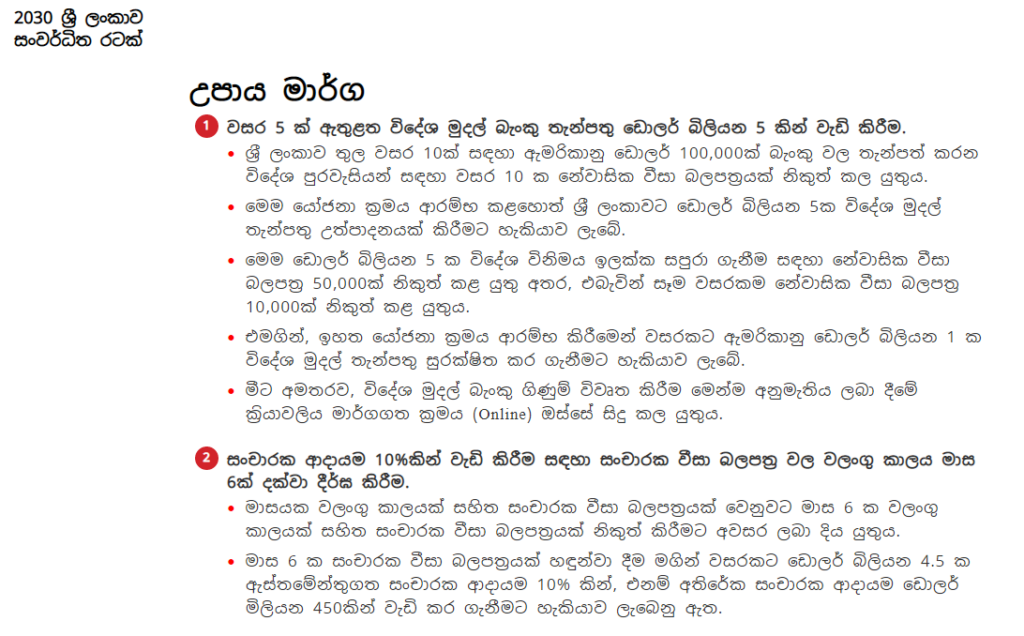
Cabinet-approved Six-Month Visa Scheme stalled due to unknown reasons!

The proposal to extend the visa period granted to foreign tourists arriving in Sri Lanka to six months from its typical 30-day period was approved by the Cabinet in July, 2022, but is reportedly stalled due to unknown reasons, sources said.
The proposal originally developed as part of the ‘2030 A Developed Sri Lanka’ Dialogue Policy Manifesto introduced by ex-business magnet now Ruling Party MP Dhammika Perera aiming the boosting of tourist earnings by 10 per cent was presented to the Cabinet during his short tenure as the Minister of Investment Promotion.
Sri Lanka is suffering from its worst economic crisis since independence and the pressure exerted on the people amplified by the ongoing and malignant forex crisis sees no depletion. In the backdrop, the non-implementation of this Cabinet-approved six-month visa scheme, which has potential to address the crisis, would be a question that needs immediate answers.
Would it be even remotely possible to walk out of this crisis without implementing such effortless but very effective steps?
MIAP
Sri Lanka to enhance economic activities with the state of Gujarat

Sri Lanka is exploring the possibility of increasing economic activities with the Indian state of Gujarat.
Sri Lanka’s High Commissioner to India Milinda Moragoda has discussed ways to enhance economic activities and tourism between Sri Lanka and the State of Gujarat, during discussions with the Gujarat Chief Minister Bhupendra Patel.
Gujarat, on the Western Coast of India is of considerable importance to Sri Lanka as India’s fifth largest state economy.
Sri Lanka’s High Commissioner said that Gujarat and Sri Lanka can be partners in promoting Agro-processing Industries, textile, petrochemicals, spices and tea.
He noted that deal Sri Lanka could establish bilateral ties on regular basis in sectors including refractories, pharmaceuticals, apparel, plastic packaging, starch, petroleum and petro products, tea and other Agro-products.
“Sri Lanka also has an FTA with Singapore and Singapore in return has FTAs across the Globe with major countries like the USA, Turkey, Japan and China to name a few, which Gujarati entrepreneurs have to take into consideration while investing in Sri Lanka.
During his three-day official visit to the State of Gujarat, Sri Lankan High Commissioner in India Milinda Moragoda has met with Gujarat Chief Minister Bhupendra Patel at his office in Gandhinagar.
The relevant discussions between Sri Lankan High Commissioner in India Milinda Moragoda and Gujarat Chief Minister Bhupendra Patel have been focused on enhancing economic activities and people to people contact between Sri Lanka and Gujarat, a statement said.
Talks between the Sri Lankan Envoy and the Gujarat Chief Minister have also focused on the interactions between the State of Gujarat and Sri Lanka in multiple spheres and particularly in the tourism sector.
The importance of promoting the Ramayana trail in Sri Lanka among Gujarati tourists and the Gujarat Buddhist Trail among Sri Lankan pilgrims was also discussed, it said.
Meanwhile, the Sri Lanka High Commissioner in India has met the Governor of the State of Gujarat Acharya Devvrat at the Raj Bhavan in Gandhinagar.
While discussions were mainly focusing on the relations between Sri Lanka and Gujarat, the Sri Lankan Envoy has sought cooperation of the Gujarati Governor in imparting technical know how to Sri Lanka on agricultural and farming practices.
Moragoda has further briefed the Governor about Sri Lanka’s decision to appoint an Honorary Consul in Ahmedabad to cover the State of Gujarat.
Welgama – Ranawaka enter new Alliance (VIDEO)
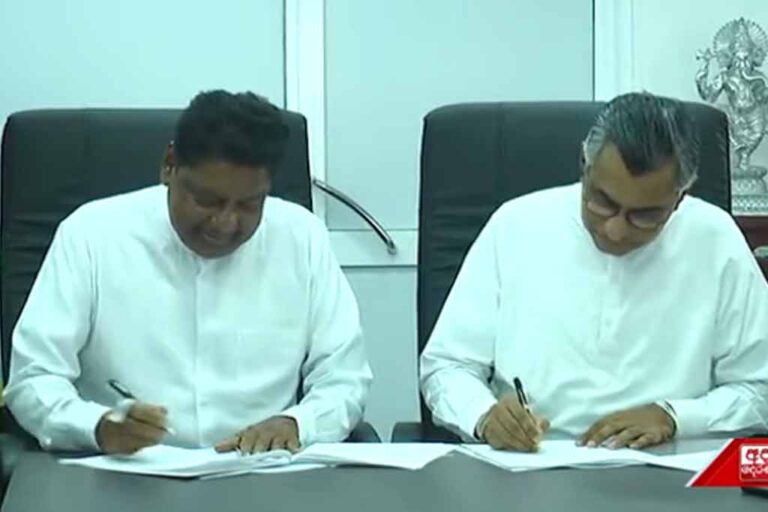
The ‘Nawa Lanka Nidahas Paksha’ and the ’43 Senankaya’ (43rd Brigade) today (16) have joined forces to contest the upcoming Local Government Election.
Accordingly, Leader of the Nawa Lanka Nidahas Paksha MP Kumara Welgama and Leader of the 43 Senankaya MP Patali Champika Ranawaka have entered an agreement in forming an alliance.
MIAP
Government accords priority to the agriculture sector modernization
The Government has accorded priority to the modernization of the agriculture sector in its bid to create it as an effective, sustainable and profitable livelihood and also serve the competitive international markets amidst the ill effects of previous regime’s organic farming countrywide.
The new agri crop cultivation modernization drive comes into effect where around 8000 acres of paddy fields are on the verge of destruction,
This was a result of using organic fertilizer during the past three seasons in accordance with the arrogance and stupid policy of the former President Gotabaya Rajapaksa.
Over the past three cultivation seasons, chemical fertilizers such as TSP (Mud fertilizer), Urea and MOP were not applied to the field.
Therefore, the amount of Nitrogen, Phosphorus and Potassium which should be available in the soil is presently at a very low level and lack of such required nutrients have caused yellowing of paddy plants, agriculture ministry disclosed.
Although Urea and MOP were provided during this Maha season some farmers have not yet applied MOP to their paddy fields.
The total amount of MOP sold by Commercial Fertilizer Company and Ceylon Fertilizer Company is only 1800 metric tons. This has also impacted on the growth of paddy plants.
Commenting on this, the Minister Mahinda Amarawera stated that due to the failure of the 2021 Maha season, the government had to spend USD 400 million on importing rice from abroad in 2022, but he said with confidence that he would not have to import a grain of rice from abroad this year..
The Ministry of Agriculture has planned to implement a program to encourage exporters of agricultural products in Sri Lanka from the year 2023.
Accordingly, Minister of Agriculture, Mahinda Amaraweera noted that the government has decided to provide maximum facilities for the production of agricultural products aimed at export.
Accordingly, the 2023 budget has allocated a large sum of money for the promotion of the export agriculture sector.
There is a huge demand in the international market for grains such as sesame, green grams, soya beans, as well as vegetables and fruits produced in our country. But still we have not been able to provide a supply that matches the demand.
The measures taken by the Ministry of Agriculture’s Agricultural Modernization Project to send sour bananas to the foreign market were evaluated here.
Although 12,500 kg are exported to Dubai every week, although it is a small amount, they appreciated the effort to introduce the process of producing sour bananas in export condition and processing them in a manner suitable for the foreign market, he said.