Home Blog Page 1897

Person killed by gunshot in Balapitiya!

0

A person was killed by gunshot near the Balapitiya Hospital last (31) night.

The victim was a 28 year-old man, according to Police.

The Police revealed that while he was travelling on a motorcycle, a group came by a three-wheeler shot him with a T-56.

It is believed that there is a connection between this shooting and the similar shooting that took place earlier near a hotel in Ambalangoda, Police added.

Investigations are currently underway.

MIAP

Govt imports adequate fuel stocks via few new suppliers

0

Sri Lanka is on track to receive enough petroleum supply to overcome the present fuel crisis till the end of this year as three international suppliers have been awarded contracts in accordance with proper procurement procedure, Energy Ministry sources confirmed.

Ministry of Energy is taking every possible step towards normalizing fuel distribution to country wide fuel filling stations with the importation of petrol and diesel stocks in proper procurement process amidst wild allegations of the opposition political parties,

Minister Kanchana Wijesekera noted that only three international suppliers UAE based Coral Energy, Vitol Singapore and IOC India have submitted expressions of interest to fulfill the fuel requirement of the country in the wake of unfounded allegations of paying high prices for their fuel shipments.

He noted that the purchasing price of fuel from the international market cannot be compared with prices prevailing before the country’s declaration of preemptive debt default as it led the country towards black listing by banks worldwide.

Several opposition parliamentarians are making unfounded allegations of high premium payments of US$ 20 -29 per barrel of fuel in July-August period compared to February and March.

These politicians should understand and verify their facts before making such allegations as the premium price has gone up following the country’s declaration of preemptive debt default on April12 while international rating agencies downgrade Sri Lanka afterwards.

These politicians should be grateful for these companies specially Coral Energy for arranging fuel shipments for the country under unfavourable international market conditions created by Central Bank Governor Nadalal Weerasinghe announcing the foreign debt default.

Under the present set up of the country risk of debt default, no prime bank in the world is confirming the LC’s of Sri Lankan banks anymore, he said adding that nota single registered supplier other than these three suppliers have stepped into supply fuel.

Sri Lanka’s state-run Ceylon Petroleum Corporation has said it has enough diesel, petrol and kerosene both imported and refined locally and assured the public there will be no shortage, after a few fuel queues formed for the first time since a QR-code fuel ration system was introduced.

“CPC has diesel, petrol and kerosene available to distribute without a shortage. The refinery has started operations and steps have been taken to produce all fuel,” a statement said.

“Imported fuel is also available in the Kolonnawa and Murthurajawela storage facilities CPC is in the process of distributing the fuel and advised the public not to get distressed unnecessarily”.

The Cabinet appointed standing procurement Committee has recommended awarding the relevant crude oil procurement contract for seven months to Coral Energy based in the United Arab Emirates , Vitol Singapore and IOC INDIA to bring down refined oil shipments of petrol, diesel. Kerosene, jet fuel and crude oil till the end of this year, he revealed.

In the past, CPC has borrowed dollars or used suppliers’ credit to import oil without making immediate payments.

Now suppliers are no longer giving credit to the CPC. As a result, the CPC has to find dollars upfront to pay suppliers when there are forex shortages.

Earlier CPC used to have stocks of 2 to 3 weeks. Now the stocks are down to 5 or 6 days.Though ships are coming on time as ordered, a delay in unloading triggers shortages across the distribution network leading to stock outs.

By the time Sri Lanka declared debt default , US$ 750 Million worth payments were due to long standing Petroleum suppliers of the CPC That money is still remaining unpaid with no signs of any settlement.

Because of this default and because of the country’s risk (No Prime bank in the world is confirming the LC’s of Sri Lankan banks anymore), these suppliers together decided NOT to supply to CPC and also started preventing ship owners from carrying cargoes to CPC unless/until they were paid.

This has resulted in CPC struggling to buy any products in the market. Sapugaskanda refinery was closed for months and people started waiting for days in queues without any products.

Due to the relentless search and hard work by CPC staff, they were able to bring new suppliers to rescue the nation and CPC. Coral Energy was one such company and the company started actively trading only in June/July.

All procurement was one upon checking with tens of suppliers. Never a case a supplier quoting a higher rate was selected when a lower one was available.

Over two hundred award letters were given to representatives of foreign firms who quoted low with fancy prices but none of them have supplied fuel up to now. .

Under the circumstances the only question before the CPC was whether to buy from the very few suppliers who obviously charge high to mitigate their risks or keep the nation suffering in fuel crisis without any procurement at all.

Coral Energy has not only proved itself as a reliable supplier, the company has been very cooperative with CPC to ensure seamless supply of products whenever an order was given.

It is mandatory that CPC opens an LC 10 days before loading. But Coral Energy has been treated so badly that sometimes even after the ship came to Colombo waiting for weeks, CPC was unable to open an LC or pay US Dollars.

Coral Energy also took the historic step of accepting Sri Lankan Rupees to unload its first crude oil shipment with CBSL promising to convert it to US$ within 30 days.

For the first time in the history of Sri Lanka, CPC was able to unload an oil shipment paying LKR. A thankless contribution made by CPC and Coral Energy to the people of Sri Lanka.

Sri Lankan refinery experts first said only Iranian light is good. Then they said only Murban Crude is good. But now they say Siberian Light is good while Ural is bad.

Everyone has forgotten that it was Coral Energy which unloaded Siberian Light to Sapugaskanda and that too by accepting LKR. So Coral trying to supply only Urals is a baseless argument.

India buys one million barrels of Russian Crude a day and out of that 88% is Urals Crude. Coral Energy gets most of the refined products (Diesel, Petrol, Super Diesel, Petrol 95 and even Jet A1) from India (Reliance Refinery) and these are produced using Urals Crude.

So there is no logic in saying Ural is bad and incompatible for Spaugaskanda oil refinery, several energy experts said.

Whether it is Urals, ESPO or Siberian Light, Coral Energy offers a price based on Brent Index since their insurance and credit risk is hedged against Brent and they buy their urals on that basis.

So it is upto CPC to buy or not to buy. CPC can even ask any other seller to supply at a lower price because no one stops CPC from negotiating with any one else.

Of course CPC is S negotiating with tens of suppliers every day. This is how over 270 award letters were given to suppliers. Mainly new ones and none of them ever supplied.

On all the orders given to Coral Energy the local agent’s commission Is ‘ZERO’. It is documented and practiced to save the little dollars which CPC can save at all times. The local agent of Coral Energy is ‘Eve Shipping (Pvt) Ltd’.

Coral Energy is a US$ 50 Billion company. Companies like this always worry about their reputation and international image.

If local politicians like Patalee Champika Ranawake are making baseless allegations suppliers like Coral Energy will stop importing fuel to Sri Lanka.

Education Ministry makes announcement on school holidays

0

The first school term of 2022 will end of September 07, the Education Ministry said in a statement.

Accordingly, the school term holiday will be given for five days from September 08 to 12, it added. The second term will commence on September 13.

The Ministry added that the vacation of the second school term will be given from December 03 to January 01, 2023 and during that period, the GCE Advanced Level Examination will be held.

MIAP

Inflation hits a record-breaking surge in August

0

The surface inflation calculated by the Colombo Consumer Price Index has hit a record-breaking surge marking 64.3 per cent in August, revealed the Department of Census and Statistics.

In July, the rate was at 60.8 per cent.

MIAP

India gifts Dornier aircraft to strengthen maritime security of Sri Lanka

0

India gifted a Dornier Maritime Reconnaissance aircraft on 15 August 2022 towards strengthening the maritime security of Sri Lanka at a special event held in Sri Lanka Air Force Base, Katunayake. Navy and Air Force personnel of Sri Lanka who received training in India for close to four months shall operate the aircraft. They will also receive operational support from their Indian counterparts.

2. H.E. Mr. Ranil Wickremesinghe, President of Democratic Socialist Republic of Sri Lanka, High Commissioner Gopal Baglay, Chief of Staff to the President Sagala Ratnayaka, Defence Secretary General Kamal Gunaratne, Vice Chief of Naval Staff of Indian Navy Vice Admiral S.N. Ghormade, Chief of Defence Staff General Shavendra Silva and Army, Navy and Air Force Chiefs of Sri Lanka graced the occasion. The landmark event coincided with the celebration of India’s 75th Anniversary of Independence.

3. The aircraft would act as a force multiplier, enabling Sri Lanka to tackle multiple challenges such as human and drug trafficking, smuggling and other organized forms of crime in its coastal waters more effectively. Induction of the aircraft is timely in view of the current challenges to Sri Lanka’s maritime security.

4. Capability of the aircraft to undertake Search and Rescue operations exemplifies its direct benefit to the people. The gift to the people of Sri Lanka will equip the country to contribute more towards the security of the Indian Ocean Region at large. It may be recalled that maritime security has been identified as a key pillar of the Colombo Security Conclave. Speaking on the occasion, High Commissioner Gopal Baglay emphasized that induction of the aircraft will help in creating a peaceful environment for progress and prosperity of the people of India and Sri Lanka.

5. Gifting of Dornier aircraft underscores the cooperation between the two maritime neighbours in the defence and security spheres. Such cooperation is envisaged to add further capability and capacity to Sri Lanka and is in line with the vision of Security and Growth for All in the Region (SAGAR).


(Contents have been taken from the Press Release issued by Ministry of External Affairs on 15 August 2022)


***


High Commission of India
Colombo

15 August 2022

Renowned SL business leader urges the Govt to leapfrog into  digital age

0

A renowned Sri lankan business leader and successful private sector professional Ajit Gunewardene says e-government is the need of the hour to successfully achieve people’s call for greater transparency, efficiency and productivity.

 He also stressed the urgency of leapfrogging into the digital age as an opportunity for Sri Lanka to overcome the present economic crisis. 

PickMe Chairman Ajit Gunewardene is urging the Government to prioritise an integrated digital backbone for the country if to successfully achieve the people’s call for greater transparency, efficiency and productivity.

“E-government is the need of the hour. Over the years these solutions have been tripped up due to various self-interests, corruption, and lack of knowledge,” Gunewardene said in the Chairman’s Review in PickMe’s Annual Report for FY22.

“From the ID card to the land registry to customs to vehicle registrations to driving licenses and IRD an integrated digital solution will create a level of transparency and productivity that will add percentage points to GDP for years to come,” he emphasised. 

“All of this linked to Right to Information will support the call to eliminate corruption in politics and business. It will bring more people into the tax net. It will provide the impetus required to boost the economy,” Gunewardene stressed. 

To illustrate this point, PickMe Chairman highlighted the need for a secure digital land registry system which will help to democratise property ownership and unlock land capital. The traditional land registration is a slow and laborious process, involves many intermediaries, and has maximum chances of fraudulent and fake land transfer. 

The land is also commonly used to store funds received through corrupt transactions. Once digitised, Gunewardene explains, Blockchain is a perfect domain for the land transfer process. The ability to securely transfer land ownership using blockchain technology, without involving any intermediaries significantly enhances efficiency and reduces costs. 

He argued that this releases what is now an underutilised capital asset to become an efficient financial asset. “Most importantly in the current context transparency of asset ownership is established,” he added. 

Gunewardene also stressed that leapfrogging into the digital age is an opportunity for Sri Lanka. 

“Employment generation, modernization, efficiency and productivity will be exponential. This in fact can be the panacea for all that ails Sri Lanka. This should be the call of the nation,” added top blue chip John Keells Holdings former Deputy Chairman Gunewardene.

Commenting on the performance of the company, Gunewardene said as the only Sri Lankan digital business of scale, PickMe now touches over four million customers. “We truly understand what digitisation means to the economy. Utilising our platform is cost-efficient and increases productivity manifold. We also provide an inflation-adjusted earnings stream to our partners,” he said.

Blunt policy tools of CB and Fin Min place SL in jeopardy  

0

Blunt policy tools, a far cry from the ‘ ‘social market economy’’ are now being used by the Central Bank on the directions of Governor Nandalal Weerasinghe and his colleague Treasury Secretary Mahinda Siriwardena.

Bilindly using these policy tools along with preemptive debt default announced by Governor Nandlal Weerasinghe is dragging the country into deep economic abyss where the government and the people cannot come out in their lifetime, economic analysts claimed.      

Professor Prema- chandra Anthukorala,  a renowned expert on trade policy said the following in a recent conference organized by Advocata “In an economy where anti-tradable bias has underpinned vulnerability to the crisis by building up a massive debt overhang

it is necessary to combine ‘expenditure reducing’ policies with policies aimed at ‘expenditure switching’  from non-tradeable to tradable production in the economy. Therefore banning imports will only aggravate the nontradable bias, preventing the transformation into an export-oriented economy. He said. 

Advocata institute suggested that Instead of depending on import bans and quantitative restrictions with a myriad of exemptions that only distorts the market, the government should move towards a more uniform tariff structure abolishing the ‘para-tariffs’ that have contributed to the anti-export bias in the economy. 

Implementing policies that support the reform process is essential to macroeconomic stability. Policies counter to this can worsen macroeconomic stabilisation

The Ministry of Finance temporarily suspends the importation of over 300 items on the recommendations of Governor Nandalal without considering its repercussions or looking before leep before pushing hundreds of thousands of small business men and women ,persons engaged in MSMES , industrialists and self-employed  into jeopardy.

This move tightens already existing import restrictions on imported goods while completely banning the importation of goods ranging from chocolates, and household appliances to raw materials such as aluminium bars and rods. 

This policy change comes into effect in a market that is already facing acute shortages of essential goods.  Imposing such a suspension of imports will have a significant negative impact on an economy which is already facing a severe crisis.

The import ban is presumably due to shortages of foreign exchange. These arise from macroeconomic imbalances and must be addressed through tight monetary and fiscal policy. 

To curb excess demand the government needs to close its deficit by reducing non-essential spending and capital expenditure and raising revenue, particularly focusing on new streams of revenue including asset disposals.  Better monetary policy is already showing results, fiscal policy must follow suit.

The proposed import ban will put a significant number of businesses that are dependent on imports in a difficult situation. The most crucial impact will be on Micro, Small and Medium Enterprises dependent on imported inputs for their production process.  

The livelihood of street vendors, businesses dependent on selling raw materials and the construction and apparel industries will face severe hardship as a result of these import bans. Also affected will be Sri Lanka’s tech industry as a result of the ban on the importation of electronic equipment.

Net economic losses in the wider economy will increase as this restricts competition. These economic inefficiencies will have to be borne by consumers through higher prices, fewer jobs and reduced economic activity. 

This will add to the country’s economic woes and lead to new black markets and corruption. This will also negatively affect exports as some important items needed to produce exports need to be imported.

Therefore the current policy is counterintuitive.  Investments will move away from exports to import substitutes and non-tradable goods sectors.

 Moving towards an export-oriented economy is the only plausible answer to the country’s severe woes. Import restrictions and similar bans will hamper such a transformation. 

In order to face the challenge of forex shortages, the tariffs can remain temporarily high in accordance with the WTO rules.  This will be a step toward the ‘social market economy model advocated by the President and the reformers in Opposition.  Current policy is a decisive step back from this model.

Sri Lanka export earnings record over US$1.12 billion in July

0

Earnings from the merchandise exports increased by 2.25 % y-o-y to US$ 1,128.7 Mn in July 2022 as per the data released by the Sri Lanka Customs. This was mainly due to the increase in earnings from export of Apparel & Textiles.

Major product sectors except Rubber based products, Coconut based Products and Spices & Concentrates; Apparel & Textiles, Tea, Electrical & Electronic components, Diamonds, Gems & Jewellery and Food & Beverages as shown in the table 1 below, recorded increased exports in July 2022.

Exports of Apparel & Textiles increased by 21.55% y-o-y to US$ 550.05 Mn in July 2022. The increase was driven by both Apparel and Textiles.

Export earnings from tea in July 2022 which made up 11% of merchandise exports, increased by 2.08% y-o-y to US$ 117.52 Mn. This was mainly due to the higher Export of tea packets (13.57%).

Export earnings from the Electrical & Electronics Components increased by 4.36 % y-o-y to US$ 41.18 Mn in July 2022 with strong performance in exports of Insulated Wires & Cables (8.26%) and Other Electrical & Electronic Products (15.5%).

However, export earnings from Rubber and Rubber Finished products have decreased by 7.67% y-o-y to $ 89.24 million in July 2022, with poor performance in exports of Industrial & Surgical Gloves of Rubber (-20.96%).

On monthly analysis, except shell products export earnings of kernel products and fiber products categorized under the Coconut based products decreased by 25.62% and 15.45% respectively in July 2022 compared to July 2021.

Export earnings from Seafood decreased by 48.99% to US$ 20.65 Mn in July 2022 compared to July 2021. Except shrimps, export earnings from Frozen fish and Fresh fish decreased by 59.5% and 61.36% respectively in July 2022.

Further, export earnings from Ornamental fish decreased by 72.47% to US$ 1.36 Mn in July 2022 compared to July 2021.

In addition, export earnings from Spices and Essential Oils decreased by 26.2% to US$ 33.91 Mn in the month of July 2022 compared to month of July 2021 due to the poor performance in export of Cinnamon (-17.45%), Pepper (-38.36%), Oleoresins (-4.78%) and cloves (-51.87%).

 For the period of January – July 2022, merchandise exports increased by 11.8% to US$ 7,604.12 Million compared to the corresponding period of 2021. Major product sectors except Tea, Rubber-based products and Spices & Concentrates; Apparel & Textiles, Coconut based products, Electronics & Electronic Components, Gems & Jewellery, Food & Beverages and Seafood as shown in the table 1 below, recorded increased exports

Deutsche Bank provides Rs. 16.5 million  Sri Lankan citizens relief 

0

In response to Sri Lanka’s economic and humanitarian crisis, Deutsche Bank has donated 40,000 euros (approximately Rs. 14.6 million) to provide medicines, storage equipment and 1,000 packets of food to the most vulnerable citizens of the country.  

The Bank’s staff also rallied their support to raise an additional 7,453 euros (Rs. 1.9 million) for this cause. Staff also participated in yoga sessions on World Meditation Day on 20 May, to raise awareness about the situation in Sri Lanka.

The bulk of the funds went to the purchasing of medication to support local hospitals. Deutsche Bank worked with the Red Cross Society, who assisted the Sri Lanka Ministry of Health with the distribution to hospitals.

 Medicines were provided to District General Hospital in Vavuniya, the National Hospital of Sri Lanka and Lady Ridgeway Hospital for Children, both in Colombo. The Bank also provided the Red Cross Society with tentage and equipment to store medicines.

In addition to the above, Deutsche Bank also supported feeding programs, providing rice to 150 families in need, as well as seeds and paddy grains to 1,350 farmer families to help with their agriculture sustainability.

“As a committed partner to the country for close to 42 years, we have been involved in Sri Lanka’s development and partnered with various social causes over the years. So, it was only natural for the bank and its employees to stand behind the citizens of our country in their time of need,” Deutsche Bank Sri Lanka Chief Country Officer Vikas Arora said.

Over the years, Deutsche Bank’s Corporate Social Responsibility program has actively engaged in addressing most relevant concerns of the local community in Sri Lanka. Supported by active staff volunteers, the program works in the areas of education, community development and women’s empowerment.

Deutsche Bank provides commercial and investment banking, retail banking, transaction banking and asset and wealth management products and services to corporations, governments, institutional investors, small- and medium-sized businesses, and private individuals. Deutsche Bank is Germany’s leading bank, with a strong position in Europe and a significant presence in the Americas and Asia Pacific.

Deutsche Bank has been operating in Sri Lanka since 1980, providing cash management, FX, trade finance, trust and securities services with strong support and capabilities of superior technology on the Autobahn app market.

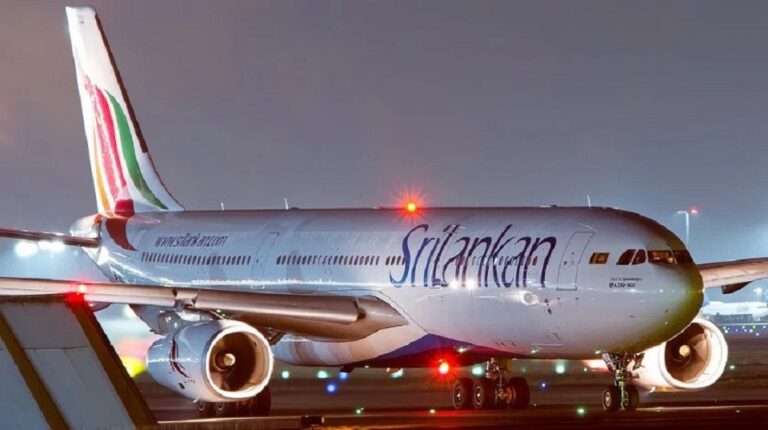
Sri Lanka To Push Ahead With National Airline Privatization

0
  • SriLankan Airlines
  • IATA/ICAO Code:UL/ALK
  • Airline Type:Full Service Carrier
  • Year Founded:1972
  • Alliance:oneworld
  • CEO:Richard Nuttall
  • Country:Sri Lanka

The Sri Lankan Government has announced plans to privatize part of the national carrier, SriLankan Airlines. The bid to restructure the debt-ridden airline comes as the government, faced with unprecedented economic turmoil on a national scale, can no longer afford to fund the carrier.

According to the country’s aviation minister, Nimal Siripala de Silva, the government is looking to sell a 49% stake in each of SriLankan Airline’s catering and ground handling operations. 51% of each will remain under state control.

alt="SriLankan Airbus A321neo Taking Off"

Earlier this year, the Sri Lankan Government toyed with the idea of privatizing SriLankan Airlines. The move gathered momentum after the country’s new president, Ranil Wickremesinghe, called for much-needed reforms at the airline, and the selling of its catering and ground handling operations shows that the government is still keen to push ahead with the privatization.

Sri Lanka’s struggling aviation industry

Sri Lanka’s ongoing economic crisis has left millions struggling to buy food, medicines, fuel, and other essential items. The shortage of fuel is also severely impacting the island’s aviation industry, with long-haul flights having to make a refueling stop in the Southern Indian cities of Trivandrum, Kochi, or Chennai.

Shorter flights have been carrying extra fuel for their next flight – a process known as tankering. Tankering fuel greatly increases the weight of an aircraft, limiting the amount of cargo it can carry. According to SriLankan Airlines’ chief commercial officer, this is costing around $7 million per month in lost revenue. That said, the airline did report a $1.2 million profit earlier this year – its first profit since 2006.

However, it will take significantly larger profits to pay off SriLankan Airlines’ debt, which currently totals over $1.2 billion. The sale of the airline’s catering option is estimated to raise around $80 million according to the aviation minister – a mere drop in the ocean compared to its mountain of debt.

alt="SriLankan-Airbus-Parked-Tail-and-Wingtip-Livery-1"

SriLankan Airlines – a brief history

Sri Lanka’s national carrier was founded in 1979 as Air Lanka. As part of its strategic partnership with Emirates, the airline was rebranded to SriLankan Airlines in 1998. The carrier was subsequently taken back under state control in 2007, and went on to join the oneworld alliance in May 2014.

From its base at Colombo Bandaranaike International Airport, the airline today operates an all-Airbus fleet of 24 aircraft, including four Airbus A321neos and seven Airbus A330-300s.

alt="A330-200 SRILANKAN on the ground"

Times remain extremely challenging for Sri Lanka and its national airline, and only time will tell what the next few months will bring. As other nations see a boom in post-pandemic travel, the country’s economic woes are keeping tourists away from Sri Lanka.

There are, however, glimmers of hope on the horizon – the country is on the cusp of finalizing a bailout deal from the International Monetary Fund (IMF), which may help to get its economy back on track, and despite massive debt, SriLankan Airlines has made its first operating profit in 16 years.

SIMPLE FLYING