SriLankan Airlines is to renew its commercial operations to China in the first week of April 2023, with a thrice weekly service each to Shanghai, Beijing and Guangzhou as China reopens its borders.
China was a leading source market for inbound tourism to Sri Lanka and one of SriLankan’s premier leisure traveler segments before the pandemic, and SriLankan is positioning for a strong comeback in China upon its return.
SriLankan Airlines Chairman Ashok Pathirage emphasizes that the global aviation industry is expected to make a full recovery from the pandemic downturn by next year.
As such, his airline’s plans align with the market forecasts. Along with China, the carrier is keen to boost its presence at the airports of another Asian counterpart, India, he said. .
There are high hopes for China-bound travel in 2023. Other East Asian regions, such as Japan, Hong Kong, and Taiwan, finally relaxed restrictions in recent months. However, mainland China is still largely cut-off.
In previous years, SriLankan Airlines flew to the likes of Chengdu, Chongqing, and Kunming. More recently, it has prioritized routes to Beijing, Guangzhou, and Shanghai. Regardless, activity has been limited due to the ongoing stringent travel restrictions within China.
SriLankan will launch passenger flights to Shanghai on 3 April 2023. Accordingly, flights will depart from Colombo to Shanghai every Monday, Thursday and Friday, and return from Shanghai to Colombo every Tuesday, Friday and Saturday, respectively, the Airlines said.
Flights from Colombo to Beijing will also commence on 3 April 2023, and are scheduled to depart for Beijing on Monday, Wednesday and Friday every week. The return flights to Colombo will depart on the respective subsequent days.
SriLankan Airlines currently operates a weekly flight between Colombo and Guangzhou, and a second flight will be introduced on 4 March 2023.
Furthermore, SriLankan’s services to Guangzhou will become a thrice-weekly operation exactly a month later on 4 April 2023, with flights taking off from Colombo to Guangzhou every Tuesday, Thursday and Saturday. The return flights from Guangzhou to Colombo will depart every Wednesday, Friday and Sunday.
With Chinese travelers eager to make up for lost time in globetrotting, SriLankan will be working closely with the local travel trade to reignite enthusiasm for Sri Lanka as a leisure destination in China.
In addition to specifically curated holiday packages and deals, SriLankan offers Chinese customers the convenience of paying via Alipay and WeChat Pay.
SriLankan Airlines has temporarily suspended its services between Sri Lanka and China from 10th March to 30th April 2020 due to market conditions driven by significant reduction in worldwide travel to and from China.
SriLankan Airlines continued to fly to China after many airlines suspended services or reduced frequencies, including four Chinese airlines that operate between Colombo and China.
The Government of China has also imposed restrictions on overseas travel of its own citizens.
SL Airlines banks on tourism to spread its wings to China again

Steps to establish a National Policy Commission in Sri Lanka
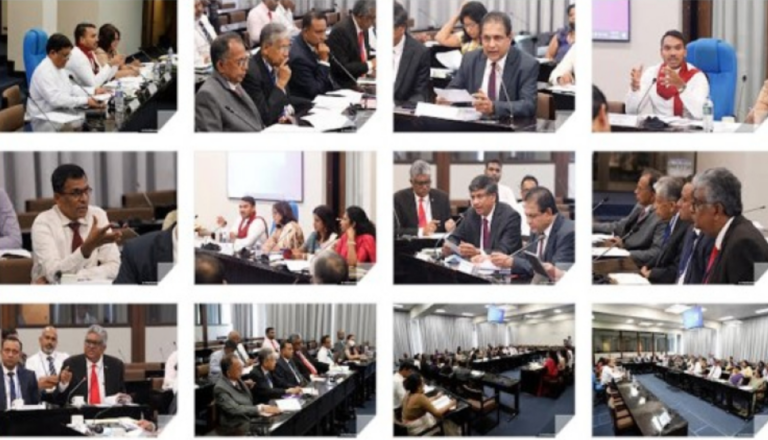
Proposals to establish the National Policy Commission by way of a constitutionally established mechanism.
A discussion pertaining to the concept paper related to the proposed establishment of the National Policy Commission for the purpose of planning, implementing, monitoring and reviewing national policies and strategies aimed at transforming Sri Lanka into a sustainably developed nation by 2048 was held recently (07).
This discussion was held at the Sub Committee on Identifying the Priorities in Formulation of Short-, Medium- & Long-Term National Policies of the National Council chaired by Hon. Namal Rajapaksa, Member of Parliament.
The working committee for the establishment of the National Policy Commission chaired by the Secretary to the President Mr. Saman Ekanayake has been established based on the recommendations of the National Council sub-committee. Secretary to the President Mr. Saman Ekanayake and Secretary to the Prime Minister Mr. Anura Dissanayake presented the concept paper related to the commission to the sub-committee.
According to the concept paper, it is proposed to be established through a constitutional amendment as the highest-level official mechanism established to determine the country’s public policies. The functions of the Commission include policy formulation and policy guidance along with proper analysis, formulation of the National Development Policy Framework 2023 – 2048 through short-term, medium-term and long-term development planning, facilitating development planning and efficient allocation of resources by identifying the capacities and potentials of the public and private sectors, implementation of projects by identifying development areas based on current national priorities, implementation of regular regulatory and evaluation processes along with implementation of development plans, strengthening the implementation of inter-coordination processes between the institutional systems implemented at the national and provincial levels were discussed at the committee in length.
Accordingly, it is proposed to establish a commission bureau to fulfill the functions of the commission, and a steering committee is also to be established to fulfill its objectives. Moreover, The National Policy Commission is to act as a constitutionally established mechanism to provide necessary technical guidance and facilities to parliamentarians to enable Parliament to exercise its powers under Articles 04, 27 and 148 of the Constitution.
Furthermore, the Commission’s long-term policy plans include national policy and national infrastructure provision from 2023 – 2048 and medium-term policy plans for the following years and
annual budget and annual provincial budget plans under state investment plans and sectoral development plans as well as short-term policy plans. Chairman of the Committee Hon. Namal Rajapaksa addressing the Committee said that he hopes to present this concept paper to the National Council very soon and take steps for the necessary future process.
Hon. Wajira Abeywardana, Secretary to the President Mr. Saman Ekanayake, Secretary to the Prime Minister Mr. Anura Dissanayake, Professor Sampath Amaratunge, Professor Shirantha Heenkenda, Dr. Sunil Jayantha Nawaratne were present at the Committee meeting held.
Train drivers call off the strike
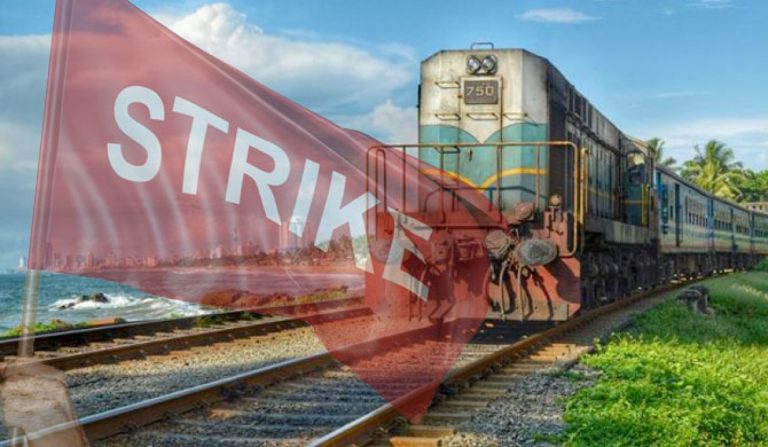
It is reported that the train drivers’ strike which was announced to be implemented from midnight yesterday (09) has been cancelled.
According to an agreement reached during a discussion with the Railway Authority, the respective trade unions have canceled the strike.
A group of MPs requests for a selection committee to look into the Election Commission
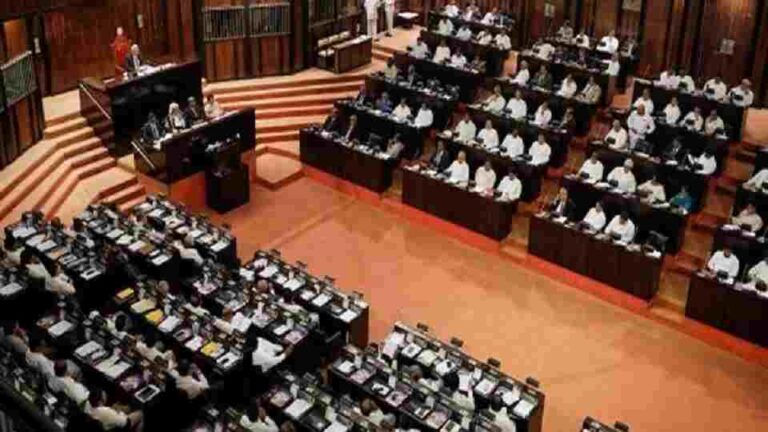
A letter signed by 14 MPs has been handed over to the speaker Mr. Mahinda Yapa Abeywardena asking him to immediately appoint a parliamentary selection committee to look into the role of the Sri Lanka Election Commission.
A group of back row MPs of the ruling party have forwarded this letter to the speaker requesting that the privileges of the members of parliament have been violated due to certain activities and that a selection committee should be appointed based on that fact.
It is stated that this letter has been addressed pointing out the appointment of the Election Commission consisting of five members on December 3, 2020 and their responsibility to Parliament under Article 1048 (3) of the Constitution.
Accordingly, it has been stated in the letter that the Election Commission has failed to report to the Parliament on the issues related to the local government polls, and that it is unable to satisfy itself with all the prerequisites for holding such an election.
It was reported in the letter that if the privileges of the members of Parliament have been violated due to the action of the Election Commission, the MPs have requested to look into the matter and make suitable recommendations.
The Embassy of Sri Lanka, Washington D.C. Commemorates 75th National Independence Day
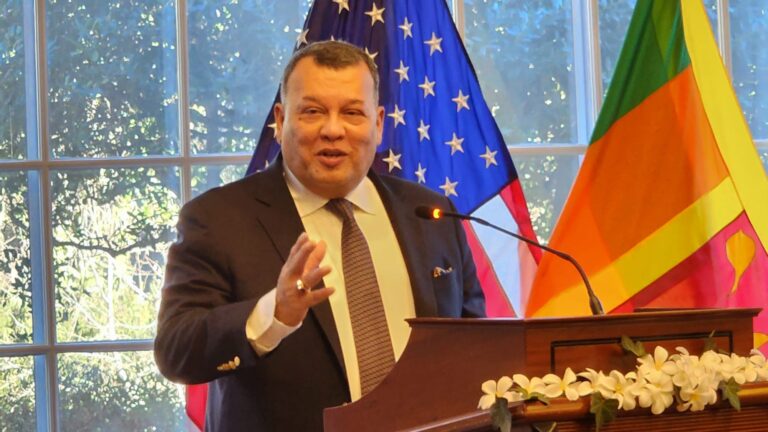
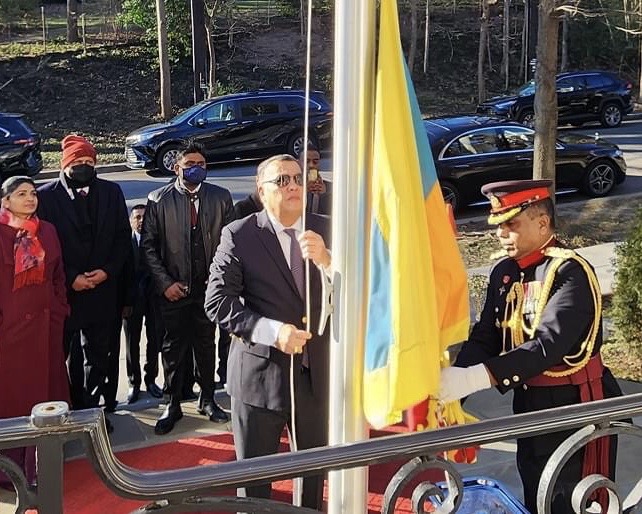
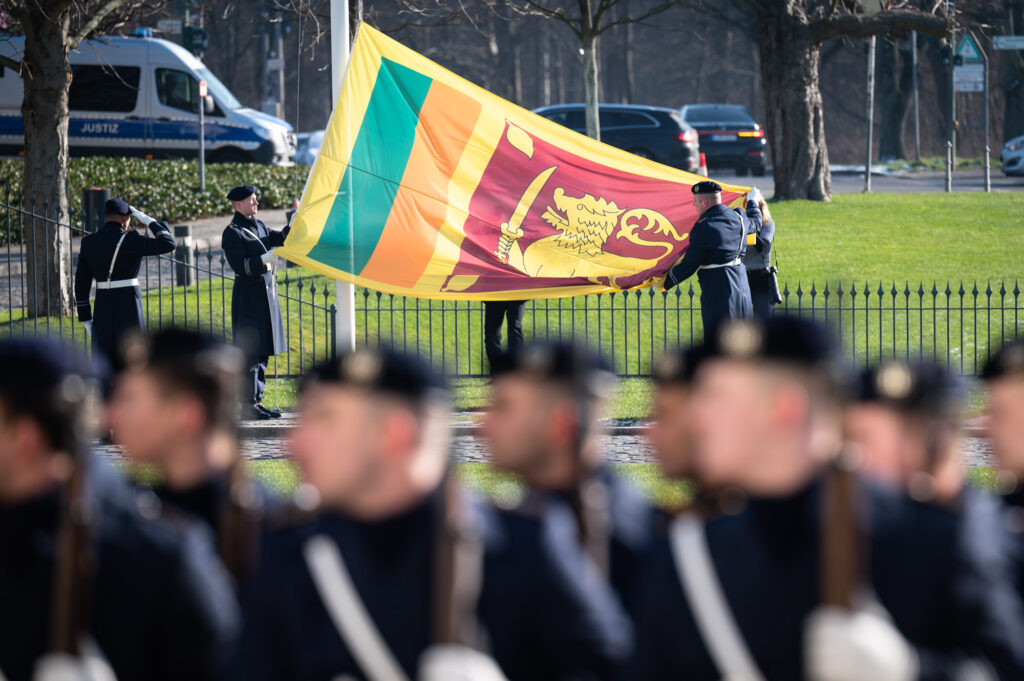
The Embassy of Sri Lanka in Washington D.C. commemorated the 75th Independence Day celebrations on the 04 of February 2023, under the patronage of Ambassador Mahinda Samarasinghe.
In keeping with tradition, the celebrations began with hoisting of the National Flag by the Ambassador, followed by the singing of the National Anthem in the Sinhala Language, lighting of the traditional lamp and the observance of two minutes silence for those who sacrificed their lives on behalf of the motherland. The ceremony proceeded with the conduct of Buddhist, Hindu, Islamic, and Christian religious observances.
The Buddhist religious observances were conducted by Ven. Maharagama Dhammasiri Nayaka Thero, Chief Incumbent of the Washington Buddhist Vihara, Washington D.C. and Chief Sangha Nayaka of North America, Ven. Katugastota Uparatana Nayaka Thero, Chief Incumbent of the Maryland Buddhist Vihara and Chief Judicial Sangha Nayaka of North America and Ven. Thalawe Damitha Bodhi Thero, Chief Incumbent of the Mahamevunawa Buddhist Meditation Centre, Washington D.C. Hindu observances were conducted by Swami Ragupathi Kurukkal, Islamic observances by Gaddafi Ismail and Christian observances by Reverend Monsignor John Paul Pedrera, First Secretary, Apostolic Nunciature, Washington D.C.
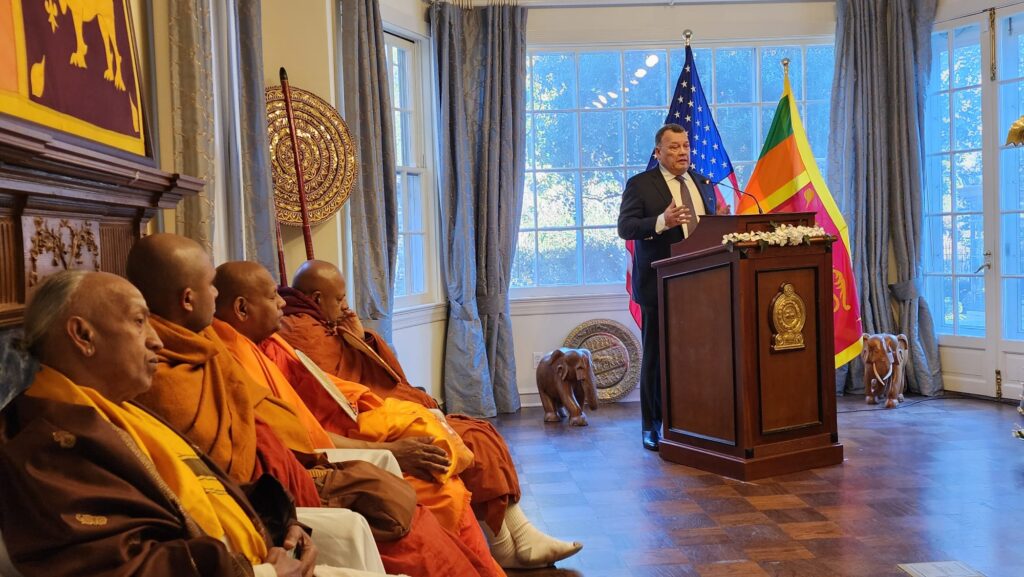
To mark the 75th Independence Day celebrations, messages from President Ranil Wickremesinghe, Prime Minister Dinesh Gunawardena and Foreign Minister M.U.M. Ali Sabry were readon the occasion, along with a message from Ambassador Donald Lu, Assistant Secretary of the Bureau of South and Central Asian Affairs, U.S. Department of State, who forwarded a video message congratulating the people of Sri Lanka on its Independence Day and for being resilient through all the hardships and turmoil that the people had to face over the years. He also recollected his first visit to Sri Lanka and how he will always remember the warmth of the people and the beauty and splendour of the country. Ambassador Lu, concluded by reiterating how the two nations share a special relationship and assured the support of the United States in Sri Lanka’s future and growth.
Ambassador Mahinda Samarasinghe, in his address, recalled that after 450 years of foreign domination and subjugation, Sri Lanka gained its independence in 1948. He said that the present is an opportunity for reflection of the 75 year journey since then. He added that we should focus on the positives as well as the negatives during this period. He recalled that for over 30 years of the 75-year period, Sri Lanka was combatting one of the worst forms of terrorism. In addition, he said, there were two youth insurrections that took place. There were many young lives lost and persons who disappeared or went missing. Sri Lanka has been called upon internationally to account for these persons.
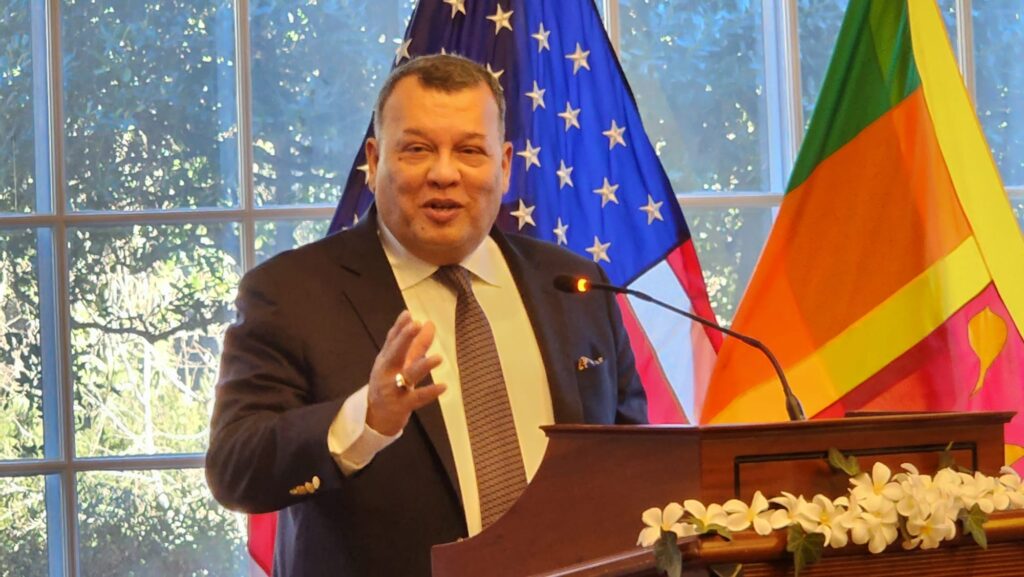
The Ambassador also highlighted some of the positives. Sri Lanka was the first nation in South Asia to adopt an open economic model, invest consistently in universal health coverage and free education. Sri Lanka was a pioneer in some of these policy initiatives. These investments in the people were reflected in high levels of human development in advance of other countries in the region. He referred to levels of international support for Sri Lanka after the end of the conflict in 2009 and said that the country had missed an opportunity to achieve comprehensive reconciliation, peace and a sense of togetherness between different segments of the population.
Referring to the youth led protests of 2022, he said that there was a clear message being conveyed that the Government was ready to pay heed to. What was commented on was that there was no political, ethnic or religious division amongst the youth who demonstrated in favour of a system change. He also stated that the Government of President Wickremesinghe would take steps to accommodate the views of the youth in its efforts to promote unity in an effort to move forward together toward a better future.
What is necessary, Ambassador Samarasinghe added, is the acceptance that Sri Lanka is a multi-cultural, multi-ethnic, multi-religious and multi-lingual nation and that all should strive to build a national identity free from prejudice and division. Recognition that our diversity is a source of strength that should be protected and nurtured is a prerequisite for advancement through achieving sustainable peace which will result in sustained development.
The Independence Day celebrations concluded with the playing of the National Anthem in the Tamil Language.
Embassy of Sri Lanka
Washington D.C.
09 February 2023
Foreign Minister Ali Sabry meets former UNSG Ban Ki-Moon
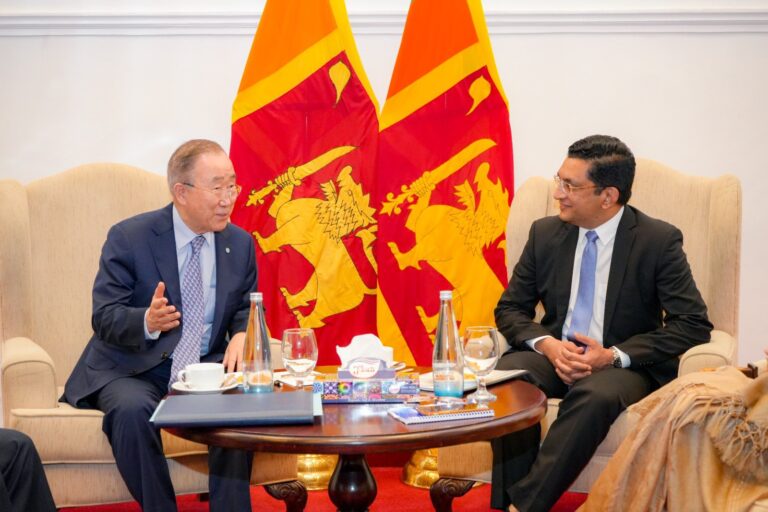
Minister of Foreign Affairs Ali Sabry met former Secretary General of the United Nations and President of the Assembly and Chair of the Council of the Global Green Growth Institute (GGGI) Ban Ki-moon at the Ministry of Foreign Affairs on Tuesday, 07 February 2023.
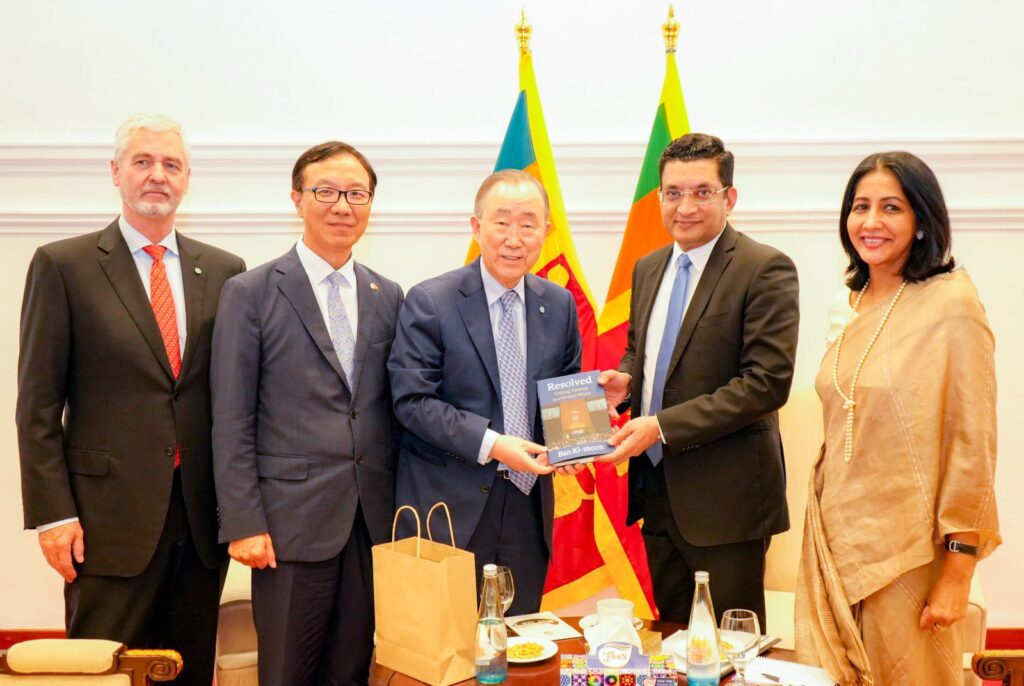
Foreign Minister Ali Sabry thanked Mr. Ban Ki-moon for his visit to Sri Lanka to strengthen cooperation between the Government of Sri Lanka and GGGI and to support Sri Lanka’s green growth aspirations. The Minister highlighted the importance of working together with the GGGI to gain expertise and enhance the capacity of stakeholders working towards the implementation of the government’s green initiatives related to environment and development. Minister Sabry invited the GGGI to organize a brainstorming session for officials of the stakeholder ministries engaged in reaching out to international green-blue financing and renewable energy projects.
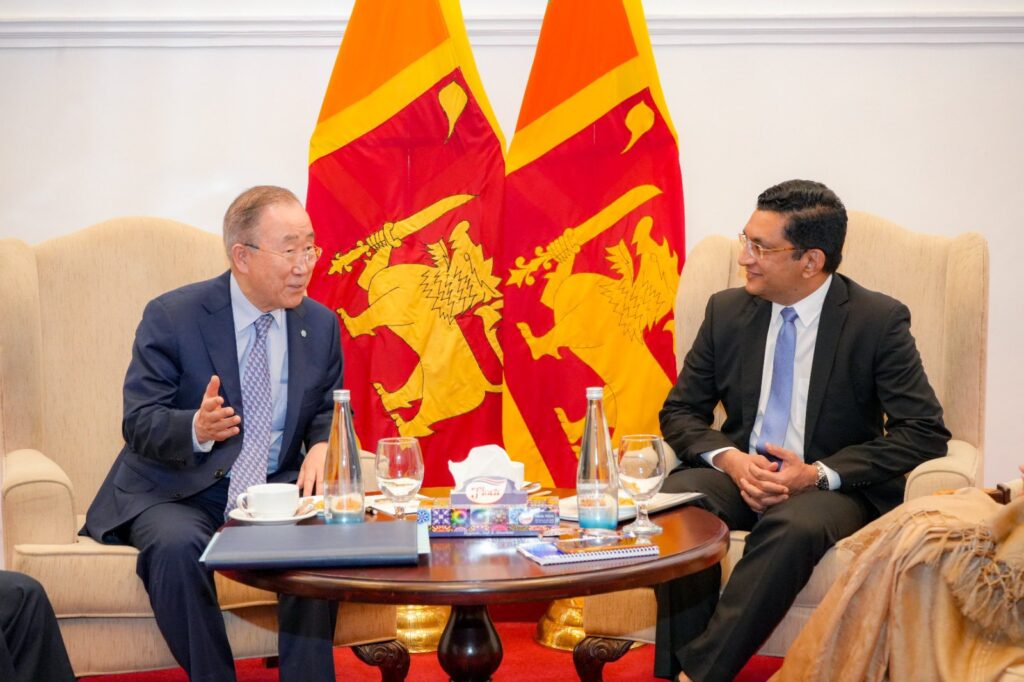
Elaborating on GGGI’s active engagement with Sri Lanka Mr. Ban Ki-moon expressed his commitment to continue his support for President Ranil Wickremesinghe and Sri Lanka’s efforts towards economic progress and environmental sustainability. He noted the current economic downturn and challenges faced by many countries including those in the developed world and the negative spillover on Sri Lanka. He expressed confidence that Sri Lanka will overcome the present economic challenges soon under the able leadership of the President and the government.
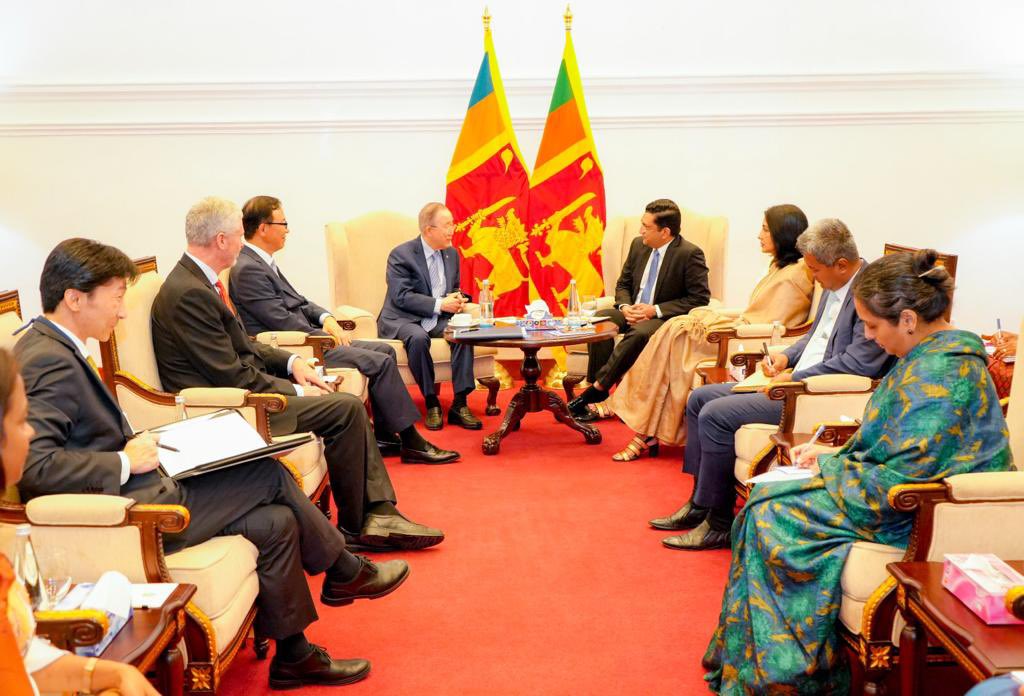
The former UNSG was accompanied by the Ambassador of the Republic of Korea Santhush Woonjin Jeong, CEO of GGGI Dr. Frank Rijsberman, and officials of the GGGI office in Sri Lanka. Foreign Secretary Aruni Wijewardane and senior officials of the Foreign Ministry were associated with the meeting.
Ministry of Foreign Affairs
Colombo
9 February 2023
Ban ki-Moon discusses cooperation with Sri Lanka’s Ambassador to Korea
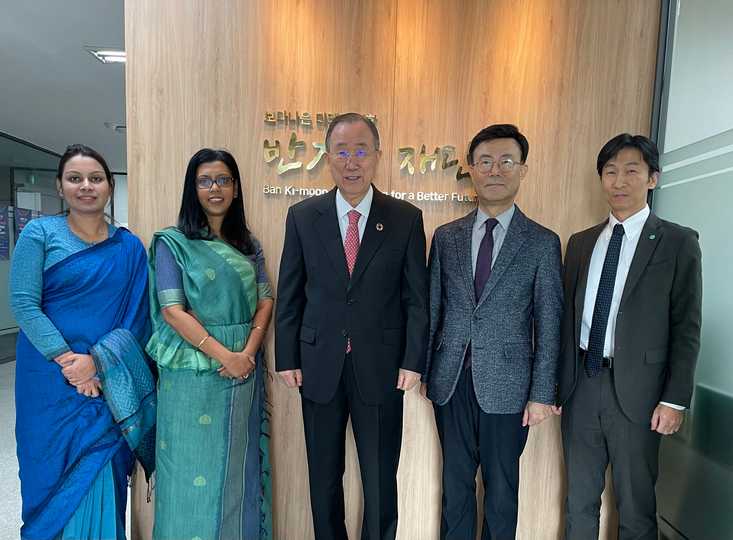
Ban ki–Moon, former UN Secretary General and Chair of the Global Green Growth Institute discusses cooperation with Sri Lanka’s Ambassador to Korea
Ambassador of Sri Lanka to the Republic of Korea Savitri Panabokke met with former UN Secretary General and President and Chair of the Global Green Growth Institute Ban Ki Moon on 1 February 2023 at the Ban Ki Moon Foundation in Seoul.
During the meeting, the President of the GGGI recalled his longstanding friendship and engagement with Sri Lanka over the years, as a diplomat and during his tenure as the UN Secretary General as well as in his present capacity in the GGGI. He also expressed his enthusiasm regarding his forthcoming official visit to Sri Lanka.
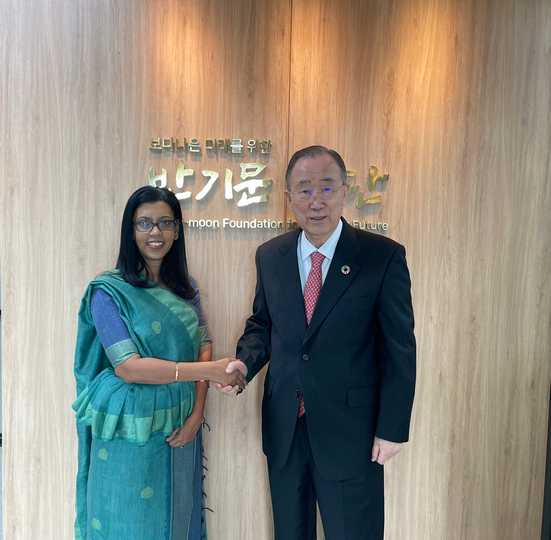
Ambassador Panabokke expressed appreciation for the GGGI’s initiatives in Sri Lanka and discussed future areas of co-operation relating to climate change and green growth.
Sri Lanka currently holds the Post of the Vice President of the GGGI Assembly and the Vice Chair of the Council of the GGGI.
Head of the International Cooperation Unit of the Ban Ki-moon Foundation, Choi Sung-joo, Mr. Dave Kim, Head of the Governance Unit of GGGI and Ms. Sachini Dias, Second Secretary of the Embassy of Sri Lanka also participated in the meeting.
Embassy of Sri Lanka
Seoul
03 February 2023
Ambassador of Sri Lanka Presents Credentials to the Federal President of Germany
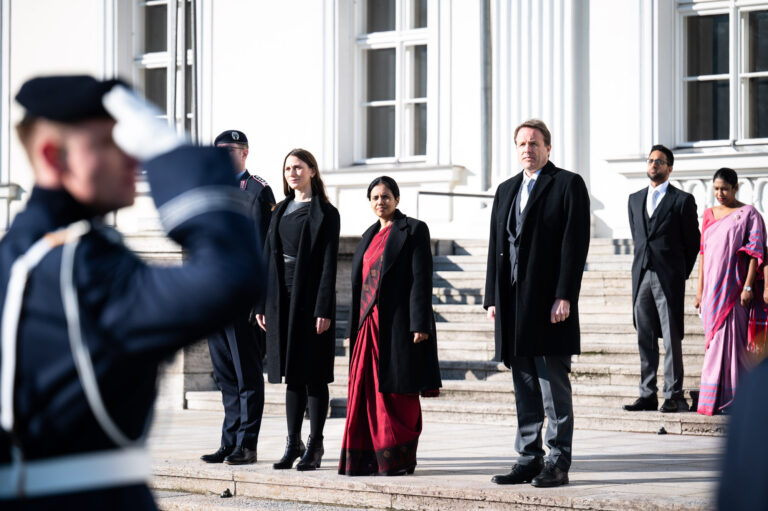
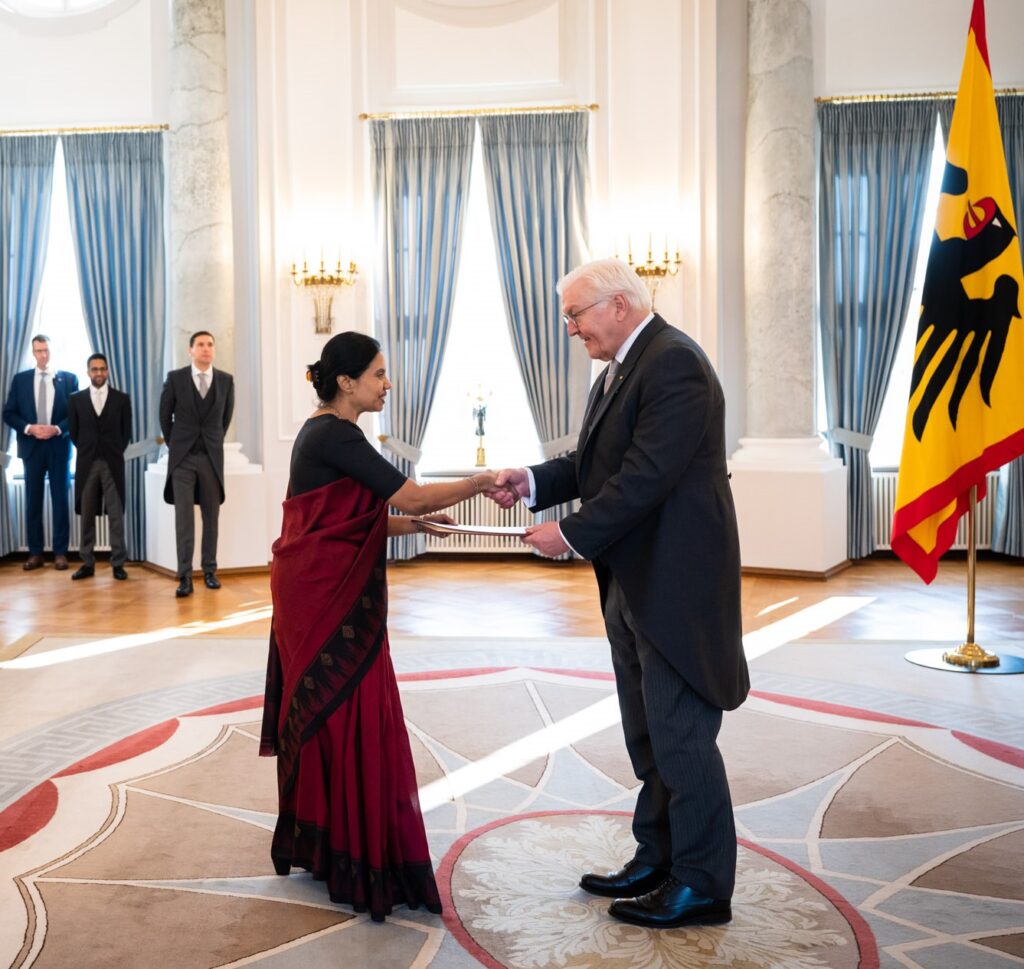
Ambassador of Sri Lanka to Germany Varuni Muthukumarana presented credentials to President Frank-Walter Steinmeier of the Federal Republic of Germany on Wednesday, 8 February 2023 at Bellevue Castle in Berlin, the official residence of the President.
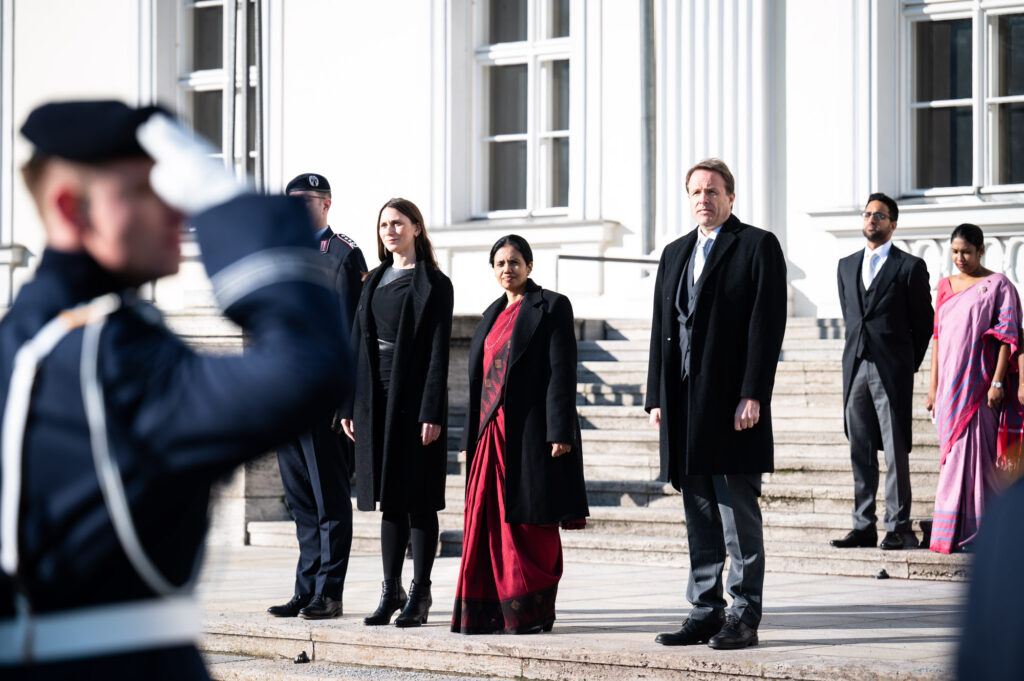
During a brief meeting that followed the presentation of credentials, Ambassador Muthukumarana conveyed the personal greetings of President Ranil Wickremesinghe to the German President which were reciprocated. The Ambassador highlighted the long-standing bilateral relationship encompassing political ties, trade, tourism, and development assistance, among others. She also remarked on the importance of tourists from Germany for the revival of Sri Lanka’s tourism industry and forging stronger people-to-people contact. The Ambassador referred to the 70th anniversary of the establishment of diplomatic relations between Sri Lanka and Germany in 2023 as an opportunity to explore new avenues of cooperation.
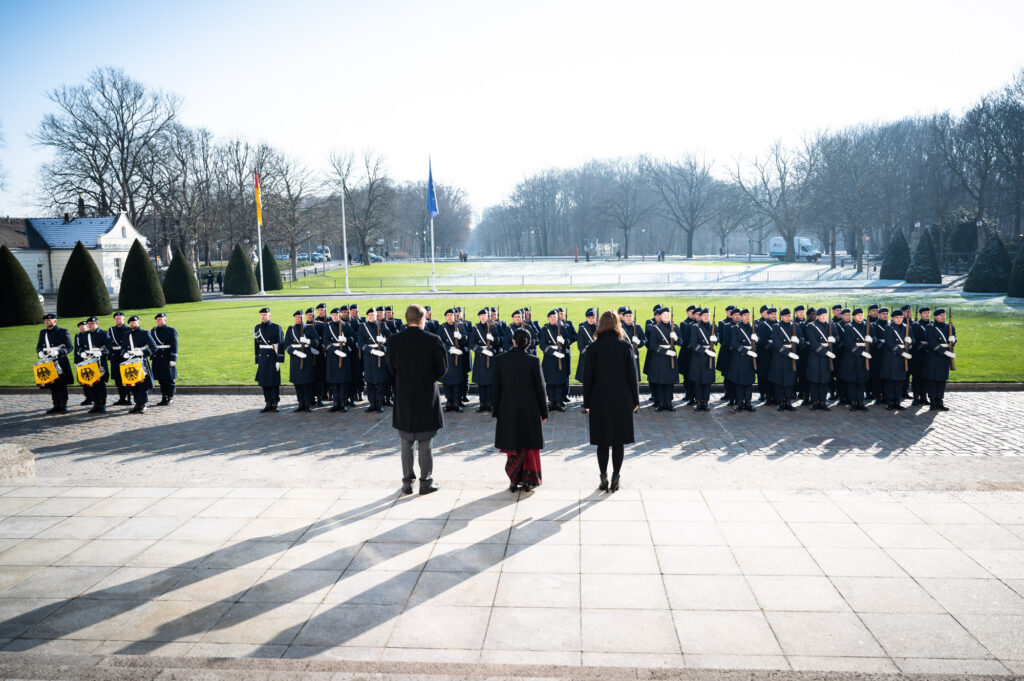
Ambassador Muthukumarana also briefed President Steinmeier on the current political and economic situation in Sri Lanka. President Steinmeier’s visit to Sri Lanka in September 2015 when he was the German Federal Minister for Foreign Affairs was also recalled during the discussion.
Ambassador Muthukumarana served as Director General of the Europe, Central Asia, EU and Commonwealth Division of the Foreign Ministry of Sri Lanka prior to her assignment as Ambassador of Sri Lanka to Germany.
Embassy of Sri Lanka
Berlin
09 February 2023
Japanese Mitsubishi Corp bids adieu to Sri Lanka next month
Sovereign debt default, abrupt cancellation of key new Japanese proposals such as LRT, LNG and bleak outlook among reasons for exit after nearly 60 years of presence in Sri Lanka.
Japanese giant Mitsubishi Corporation has decided to wind up operations in Sri Lanka next month after being an integral part of bilateral ties and some of the country’s key infrastructure projects for nearly 60 years.
The closure of Colombo Office by Mitsubishi by 31 March has come as a big shock to the private sector, both local and foreign which described the move as a big setback for Sri Lanka.
Sources said for Mitsubishi, Sri Lanka was one of its first overseas offices as it contributed immensely towards the businesses and many Sri Lankan companies. It also played a significant role in the bilateral relationship between Japan and Sri Lanka.
Japan is Sri Lanka’s second largest lender with US $ 2.46 billion outstanding as of September 2022.
At present, Mitsubishi Corp.’s Colombo office employs around 20 but its businesses and projects provided livelihoods to thousands in multiple sectors.
A key reason to close the office is Sri Lanka’s default of external debt, adverse international ratings and economic outlook.
Mitsubishi operations was a key partner in several of Japan International Cooperation Agency (JICA) funded projects.
Relations between Sri Lanka and Japan have strained in recent years due to abrupt cancellation of several key projects including those involving Light Rail Track (LRT) and Liquefied Natural Gas (LNG) proposed by Japan.
At present, Mitsubishi Corp.’s Colombo office employs around 20 but its businesses and projects provided livelihoods to thousands in multiple sectors.
Swiss Agency for Development to assist SL rural farming community
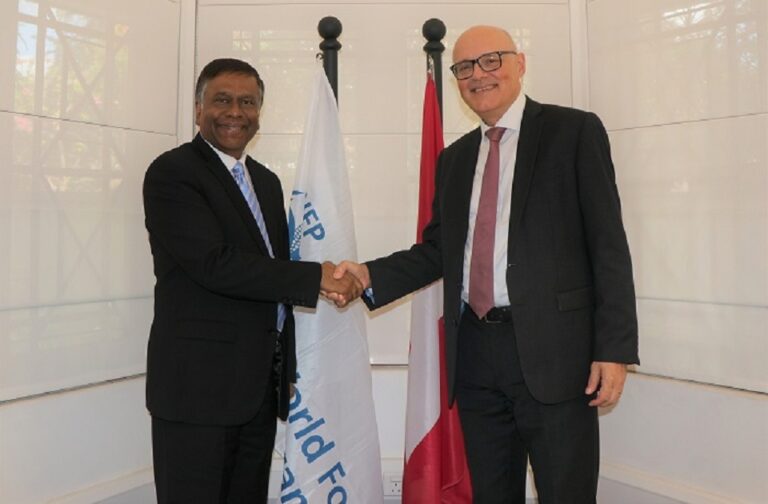
The Swiss Agency for Development and Cooperation (SDC) has now been involved in the funding of improving food security among Sri Lankan rural farming communities affected by the country’s economic crisis United Nations World Food Programme (WFP) divulged.
The United Nations World Food Programme (WFP) in Sri Lanka today acknowledged a recent contribution of CHF 800,000 (approximately US$802,000) from the Swiss Agency for Development and Cooperation (SDC) at a special event held at the Embassy of Switzerland to Sri Lanka and the Maldives.
The funding is being used to provide much-needed cash and other assistance to improve food security among rural farming communities affected by the country’s economic crisis.
Through this funding, over 1,000 smallholder farmers across five drought-prone districts are being provided with Rs 50,000 each (approximately US$140) to access essential items, including food.
It will also support recovery among communities grappling with the twin challenges of the economic and climate crises.
Through a suite of assistance, which includes diversified sources of income and enhanced access to markets, WFP aims to improve the livelihoods of those most vulnerable to the adverse effects of climate change.
“Switzerland is supporting Sri Lanka in many ways during this difficult time. Farmers, their families and many people associated with the agricultural sector are currently facing enormous difficulties This will ultimately benefit the entire population,” said Ambassador of Switzerland to Sri Lanka and the Maldives Dr. Dominik Furgler.
“Smallholder farmers form the backbone of our food systems but are among those hardest-hit by the economic crisis,” said Abdur Rahim Siddiqui, Representative and Country Director of WFP Sri Lanka.
“Their capacity to cope has been stretched to the limit, severely undermining their ability to withstand any future disasters such as floods and drought. This funding from Switzerland is timely and critical to assist these communities in meeting their immediate food needs, while helping to restore food security in the long term.”
Sri Lanka was ranked second among countries most affected by extreme weather events in the last 20 years, as per the Global Climate Risk Index 2019.
As part of its efforts to strengthen food security, WFP works towards making food systems more robust and resilient to the effects of the climate crisis.
The generous contribution from the Swiss Government enables WFP to sustain the positive outcomes of prior projects which strengthened resilience of climate-vulnerable communities and promotes self-reliance among smallholders even in times of crises.
The United Nations World Food Programme is the world’s largest humanitarian organization, saving lives in emergencies and using food assistance to build a pathway to peace, stability and prosperity for people recovering from conflict, disasters and the impact of climate change.