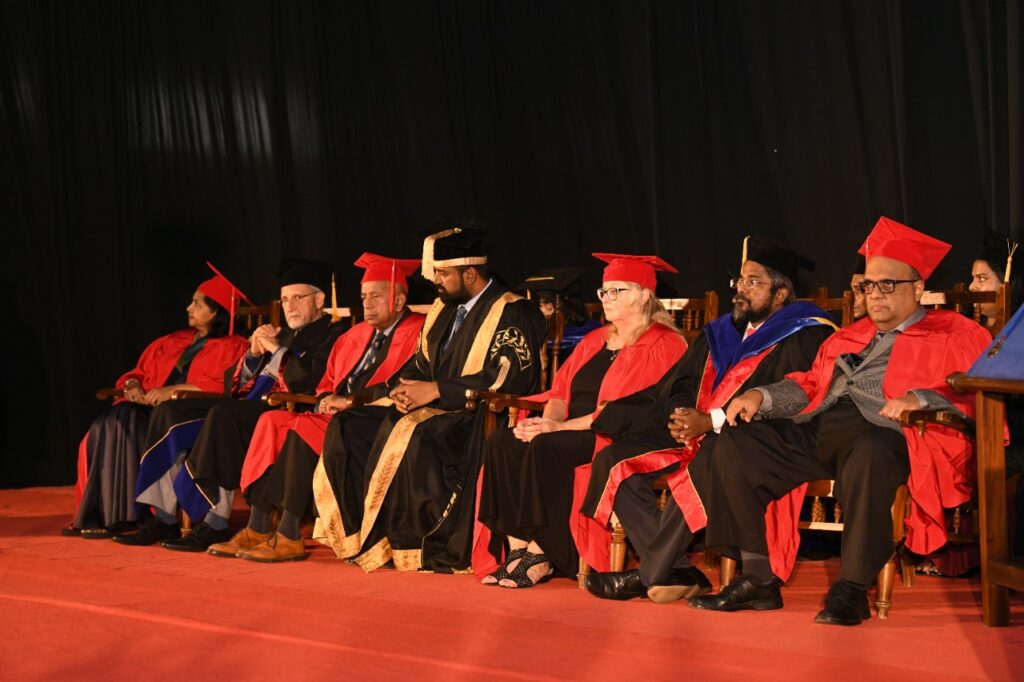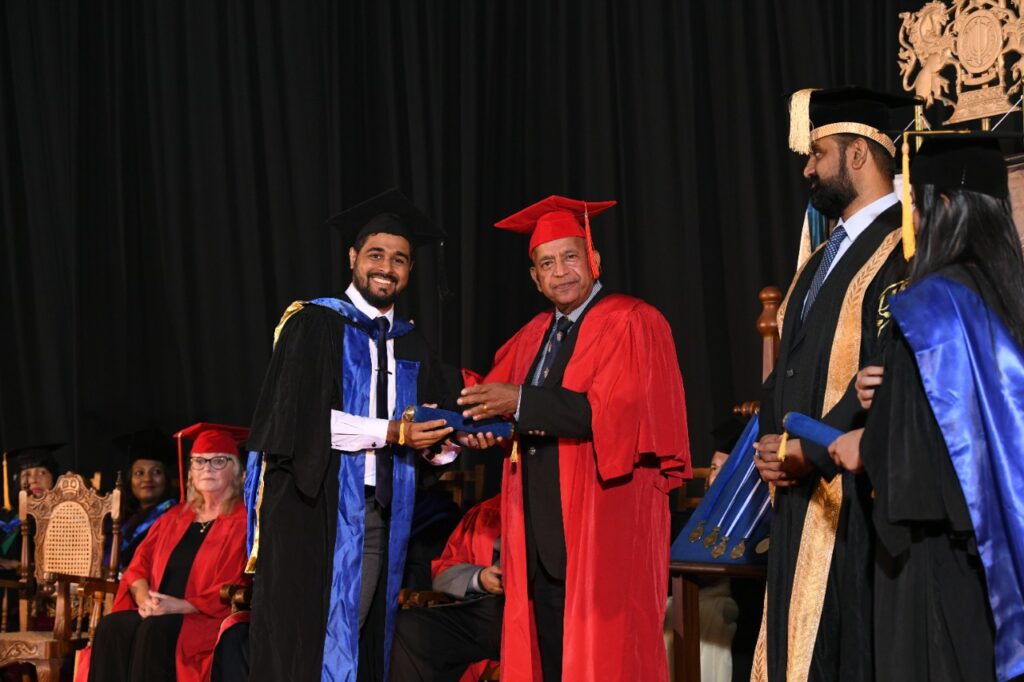
“DP Coding School,” the latest initiative by “DP Education” introduced by business magnet Dhammika Perera for free education for the children of Sri Lanka, was inaugurated at Delgoda Mahamevna Buddhist College on December 16, 2022.
The event was organised at the counsel of School Advisor Ven. Aludeniye Subodha Thera and the invitation of Principal C.C.D. Gamlath.
The awarding of certificates and prizes of the simultaneously held Information Technology contest and the opening of a new laboratory and a new Information Technology laboratory at the school have also taken place under the patronage of Mr. Dhammika Perera.
“What should be done for the country from my end, I am doing it. I made up my mind not to talk about politics, which is not out of disappointment. I have nothing to feel disappointment about. Because I came to serve what I was signed up for. As a Minister, I was given 16 days, out of which I was able to serve for only 10 days. During those 10 days I already fixed the institutions that should have been fixed. I do not see ministries, or responsibilities as a big deal. In my book, there is the way to fix all the ministries,” Perera told the reporters.
DP Education founded by Dhammika Perera and Priscilla Perera is an online free education platform dedicated to transforming learning and teaching experiences through free online education, best-in-class teachers, and the development of education infrastructure, and its latest initiative DP Coding School can be accessed Here : https://dpcode.lk/dashboard
The year 2022 was seen as a historic year of super-monetary tightening by central banks across the world to tame high inflation. This high inflation is commonly accepted as the result of global supply chain bottlenecks inclusive of the Russian invasion in Ukraine since February 2022. The dramatic increase in energy prices consequent to Russian-Ukraine war led inflation to be persistent and wide-spread across the world because of the energy-driven-world economy. Therefore, the present level of inflation is considered as 40-year high in the developed world.
However, despite primary causes of such a high inflation, the policy response by central banks across the world has been to raise interest rates faster to bring down inflation to their targets in the unknown future.
Therefore, this article is to highlight the present status of the world monetary policies as shown by last week’s monetary policy decisions of the US Fed (Fed), Bank of England (BOE) and European Central Bank (ECB) who are the world’s leading central banks because their currencies are the reserves of the world monetary system similar to the gold prior to the Breton Woods Agreement and establishment of the IMF.
Habit of central banks during inflationary times
Historically, inflation is bread and butter of central banks on the old hypothesis of inflation believed to be a result of monetary expansion that causes people to demand goods and services more than the existing supply. Therefore, the monetary policy rule followed by central banks during unhealthy inflationary periods has been to tighten monetary conditions by raising interest rates to reduce the bank credit expansion. Their present monetary model is to raise or change the overnight interest rate (known as policy rates) that central banks apply on transactions with banks.
Therefore, the inter-bank bank overnight interest rate is the conduit that passes the monetary policy effects across the economy. Although both the inflation hypothesis and monetary policy rule have not been empirically proved so far despite the present information era, central banks follow them as the God-given, despite broad mandates given to them under relevant public laws.
Therefore, irrespective of ground reasons for high inflation, central banks and old monetarists behind them interpret inflation as the situation of the imbalance of the economy arising from the demand for goods and services being greater than their supply. This causes central banks to use their monetary policy tools to reduce the growth of bank credit or money by hoping that such credit tightening would help slow the demand to match the supply in the economy over the time not specified. Therefore, central banks believe that the lower demand will drive down prices and inflation. This is the inflation control hypothesis that central banks are accustomed to in their comfort zones.
Last week’s decisions of the Fed, BOE and ECB
All three central banks commenced raising interest rates after inflation rose to significantly high levels above their targets of 2%. Their rate hikes of 50 bps in the last week are as follows. In response, many central banks raised their interest rates be consistent with.
Fed – 50 bps to 4.25%-4.50% on 14 December 2022. This is the seventh consecutive hike since March 2022.
BOE – 50 bps to 3.5% on 15 December 2022. This is the ninth consecutive hike since December 2021.
ECB – 50 bps to 2.5% (marginal lending rate) on 15 December 2022. This is the fourth consecutive hike since July 2021.
The rate hike history of the current cycle of the three centra banks is given below.
In addition, they have commenced a gradual balance sheet reduction as another tool to tighten financial conditions to be restrictive adequately with the inflation control phase.
Economic Conditions behind policy decisions
All three central banks focus on bringing down inflation back to 2% target and, therefore, side effects of policy tightening on the economy by way of reduced growth and increased unemployment are not considered. Some market analysists predict a recession in 2023/24 consequent to the high speed of the rate hikes in the current cycle.
The headline inflation numbers used by all three central banks have passed their peaks in recent months as follows.
Recent inflation Rate (%) – US, UK and EU
2022 Month
US
UK
EU
June
9.8*
9.4
8.6
July
8.5
10.1
8.9
August
8.3
9.9
9.1
September
8.2
10.1
9.9
October
7.7
11.1*
10.6*
November
7.1
10.7
10.1
*Peak so far
However, they raised interest rates by another 50 bps last week and announced that the rate hikes and policy tightening would continue in 2023 and beyond until they are confident that financial conditions are restrictive enough to bring down inflation back to 2% target in a sustained way.
They welcomed inflation reduction in monthly phase as at present and showed confidence in falling inflation. However, they declined to predict any rate cuts and policy loosening in the near future, given the present level of high inflation broad-based in the economy as compared to the long-term inflation target of 2%. Therefore, peaking inflation was not a factor considered by all three central banks. Therefore, all three announced to stay the course of further policy tightening.
Policy tightening to stay the course despite inflation falling from the peak
All three central banks are not complacent on the reduction in inflation from the peak based on the total consumer price index but assess the persistent price/inflation pressures by analyzing the major categories of the price index. Accordingly, the present ease of inflation has come from falling of food inflation attributable to improvements in supply chains towards pre-pandemic levels. However, energy, housing and services inflation are reported to be strong and rising further.
Energy inflation is a result of ongoing Russian-Ukraine war and not predictable. Housing (rent) inflation is to rise further due to fixed rate lease agreements to be renewed in 2023 with higher interest rates. Therefore, housing inflation cannot be expected to fall until rate cuts are implemented. Service inflation relates to the tight labour market conditions and rising wages. As there is a structural shortage of labor force after the pandemic impact, services inflation cannot be expected to ease until unemployment rises to high levels together with recessionary economic outcomes in next two years resulting wages to come down. A considerable reduction in the GDP growth and employment are predicted by all three central banks as well as markets.
Therefore, inflation passing the so-called peak or falling in last few months is not a factor to stop or ease the present tightening phase of the monetary policy. In fact, the Fed Chairman responding to a question on possible rate cuts in the near future stated that “our focus right now is really on moving our policy stance to one that is restrictive enough to ensure a return of inflation to our 2 percent goal over time. It’s not on rate cuts. And we think that we’ll have to maintain a restrictive stance of policy for some time. Historical experience cautions strongly against prematurely loosening policy.”
However, as inflation is seen to be easing on food after a high speed of rate hikes so far, their question now seems to be not about the speed of hikes but about how high to raise rates by looking at the progress on inflation and assessment of financial conditions whether policy is restrictive enough to bring down inflation back to 2% target in a sustained path.
Therefore, markets make forecasts of what should be the terminal policy interest rates and how long they will stay before the rate cutting cycle starts. According to the Fed FOMC members’ forecasts, the fed funds rate is 5.1% in 2023 and 4.1% in 2024. Currently, markets predict a terminal rate of 3.0%-3.75% for ECB and 4.25% for BOE. These predictions change in response to updated outlooks for inflation, growth and unemployment.
However, inflation is predicted to fall towards the 2% target only in 2025 or later. Lower inflation predictions are primarily driven by the base effect of high price index reported during the past two years.
Lower inflation is predicted at a significant macroeconomic cost in terms of the reduction in GDP growth and increase in unemployment rate. These central banks are free to raise interest rates as unemployment benefits to people loosing jobs are available through the fiscal front.
Sri Lankan near-term monetary policy outlook
Sri Lankan central bank Governor recently stated at ADA Derana HYDE PARK interview that inflation which could have been peaked at 100% was peaked at 70% and now it is in downward path due to the tight monetary policy and, therefore, interest rates also should be coming down with that as a relief to all. However, this view is questionable on following grounds.
Sri Lankan monetary policy is also designed on the inter-bank market-based policy models of the Fed, BOE and ECB. Only difference is that Sri Lankan central bank prints majority of money through primary purchases of government securities to fund the budget whereas others do it through the secondary market for the purpose of stabilizing market interest rates at their discretion within the monetary policy. All three central banks as highlighted above are to continue to raising rates despite inflation peaking and falling.
Sri Lankan inflation peak and marginal fall in last two months have mainly come from the food category consequent to improvement in supply conditions as a result of improvement in fuel and electricity distribution supported with fiscal actions. However, given the current levels of exchange rate, import controls and taxes, non-food prices cannot be expected to fall any time in the future. Further, prevailing high cost of living, increased energy prices and rising wages in the informal sector would keep services inflation persistent.
At present, policy interest rates in Sri Lanka are 14.5%-15.5% with 4%-6% inflation target in the monetary policy while the CCPI inflation is 61% in November 2022 and both annual average inflation and average core inflation continue to rise. The current phase of inflation is after a jump from 9.9% in November 2021 to the peak of 69.8% consecutively in September 2022. Therefore, the peaking and marginal fall of inflation in the last two months are not factors to be considered in monetary policy if it is geared purely for bringing down inflation back to 4%-6% in a sustained path.
Therefore, when monetary policy statements of the Fed, BOE and ECB on last 14th and 15th are considered, Sri Lankan central bank Governor’s statement of interest rates to come down with presently downward inflation from peak at 70% does not comply with the accepted rationale and principle underlying the present monetary policy model for the control of inflation.
In fact, it requires further rate hikes of high magnitudes in 2023 and 2024 until supply conditions are improved upon the stabilization of the foreign currency front, removal of import controls and a major rate of currency appreciation.
However, if the Governor is to respond that Sri Lankan economy is different from developed countries and now needs to lower interest rates to support the recovery of the economy from the current level of contraction (11.8% in the third quarter 2022) and to reduce the cost of budgetary financing (32% at present despite excessive monetary financing), the central bank must launch a new monetary policy model without delay to suit that view.
Further, two views expressed by the Governor at the above media interview relating to Sri Lankan monetary policy as stated below are factually incorrect in terms of the provisions of the Monetary Law Act (MLA) that governs the monetary policy.
The main objective of the central bank is the price stability or low and stable inflation at 4%-6%.
There is a provision in the MLA that if the government cannot finance the budget deficit by raising money through domestic market and external market, the central bank can monetize the balance or print money and finance the deficit. When the central bank does that when the government fiscal policy or Treasury asking to print money, it is inflationary and the central bank cannot maintain the objective of inflation target.
(This article is released in the interest of participating in the professional dialogue to find out solutions to present economic crisis confronted by the general public consequent to the global Corona pandemic, subsequent economic disruptions and shocks both local and global and policy failures.)
P Samarasiri
Former Deputy Governor, Central Bank of Sri Lanka
(Former Director of Bank Supervision, Assistant Governor, Secretary to the Monetary Board and Compliance Officer of the Central Bank, Former Chairman of the Sri Lanka Accounting and Auditing Standards Board and Credit Information Bureau, Former Chairman and Vice Chairman of the Institute of Bankers of Sri Lanka, Former Member of the Securities and Exchange Commission and Insurance Regulatory Commission and the Author of 10 Economics and Banking Books and a large number of articles publish.
The author holds BA Hons in Economics from University of Colombo, MA in Economics from University of Kansas, USA, and international training exposures in economic management and financial system regulation)
The India – Sri Lanka Foundation (ISLF) was established by a Memorandum of Understanding between the governments of India and Sri Lanka in 1998 in order to foster India – Sri Lanka relations through the enhancement of economic, scientific, technical and cultural cooperation and to promote greater understanding between the people of the two countries.
India- Sri Lanka Foundation invites project proposals, in the areas of Art & Culture, Education, Agriculture, Research, Science & Technology, Health, Social Works, Developmental Studies and Tourism.
Under the above thrust areas, proposals could be submitted for research projects and other educational activities at recognised institutions of learning located in India and in Sri Lanka, visits and exchanges involving students, scholars, academics, artists, professionals and performing artistes, to participate in conference/seminar, symposia, art exhibition, film festival, cultural events and training workshops etc, publication of research works on India-Sri Lanka relations in the specified fields and translating literary works in Indian languages to Sri Lankan languages and publishing them, and vice-versa.
Individuals, institutions and groups are invited to submit proposals which would be considered during the next meeting of the Board of Directors of ISLF scheduled in March 2023.
A duly filled application form which could be downloaded from the High Commission of India website (www.hcicolombo.gov.in) along with the proposal may be e-mailed or forwarded to our address given below to reach us before 26th January 2023.
One Law for All is organising a protest dance against executions and in solidarity with the women’s revolution in Iran on Saturday 17 December, 1:00-2:00pm at Piccadilly Circus.
The protest dance will be rehearsed from 11:30am-1:00pm. Everyone, including passers-by, will be invited to join in. Protestors, with nooses around their necks and as face painting, will dance to Shelley Segal’s cover of Baraye in English. Shervin Hajipour’s Baraye has become the anthem of the revolution. The dance will be led by Faranak Heidari.
Protestors will also have with them photos of those executed or at risk of execution for demanding freedom and an end to theocracy since the murder of Mahsa Amini on 16 September.
Speakers at the action include Comedian and Women’s Rights Activist Kate Smurthwaite, One Law for All Spokesperson Maryam Namazie, Body Artist Victoria Gugenheim and Faithless Hijabi Founder Zara Kay, amongst others. The Woman, Life, Freedom group will perform protest songs at the action too.
Sri Lanka government has taken prompt measures to control rubber imports for export industries in a bid to keep domestic rubber prices up, State Minister of Finance Ranjith Siyambalapitiya said.
Sri Lanka export industries approved by the Board of Investment are allowed to import rubber when required. Some tyre firm in particular need lower grade rubber which are not available in sufficient quantities.
Plantations Industries Minister Ramesh Pathirana had informed cabinet that authorities were looking to control rubber imports to keep domestic prices up.
Sri Lanka’s latex prices in particular had dropped reducing incomes for farmers, he said.
State Minister of Finance Ranjith Siyambalapitiya yesterday said measures taken to control rubber imports for export industries has successfully stabilized the domestic prices.
“The unlimited rubber imports were a major hindrance to stabilize the domestic rubber prices.
Following strict regulation, we now see a drastic drop in rubber imports,” he said at the second progress review meeting of the committee appointed to investigate the decline in domestic rubber prices and excess imports.
A Committee was appointed to look into the circumstances surrounding local small-scale rubber growers’ inability to sell their products comprising representatives from the Ministry of Plantation Industry, the Chamber of Commerce, and the representatives of institutions including the Rubber Development Department,
The import of rubber which was at 4,058 tons in October has dropped by 48% to 2,126 tons in November. Total import of rubber has decreased by 77% as of 10 December. Total imports of rubber till 10 December is at 162 tons, the Ministry stated.
During the Coronavirus crises demand for latex (liquid rubber sap) went up as demand for gloves went up.Global rubber prices in Malaysia and Thailand have also dropped in recent weeks.
Global rubber and other commodity prices went up steeply as US Federal Reserve chief Jerome Powell printed money to ‘create jobs’.
The commodity bubble is now easing with US monetary policy being tightened. Sri Lanka’s tea prices which went up in dollar terms as well as in rupee due to a currency collapse is still holding.
Tea prices tend fall in dollar terms with a delay compared to other commodities.
In the wake of energy crisis resulting in power cuts triggered by dollar scarcity, Sri Lanka government is now determined to under take power sector reforms as part of economic revival, official sources said.
The power sector’s restructuring, primarily geared toward encouraging more competition and improved regulation, and has brought about wider access to the grid, lower transmission and distribution losses, and a more efficient generation system.
But it was met with limited success in unbundling the power system and in making electricity tariffs cost-based and more efficient.
The Cabinet appointed Committee Report to suggest reforms in the power sector was considered at the subcommittee on identifying the priorities in formulation of short-, medium and long-term National Policies of the National Council.
It has been agreed to introduce power sector reforms as soon as possible considering the urgent need of eliminating bureaucratic bungling, trade union blockades, corruption and waste of the Ceylon electricity Board (CEB).
The need of getting rid of CEB official and trade union mafia which hindered the progress of Sri Lanka power generation has been emphasized at the sub committee meeting. The officials briefed the Committee on the proposed restructuring of the power sector.
A member of the committee appointed by the Cabinet informed the Committee that it has been proposed to establish five independent bodies to ensure and regulate the operation of the Sri Lanka Electricity Board. He said that there is no proposal for the privatization of the Electricity Board in this Committee’s report.
It has been observed that during the CEB restructuring, attention should be focused on simplifying the procedures to be followed by the parties involved in the tasks including electricity generation.
The Subcommittee mentioned that it is hoped to establish a separate body for policy formulation not only in the power sector but also in other sectors and for that purpose.
The relevant legislation required for the said will be proposed to the National Council through the Parliament.
Minister Kanchana Wijesekera emphasized the need for a Secretariat to operate until the restructuring of the power sector is completed.
Furthermore, the Committee pointed out that not only in the power sector, but in every sector, there should be provision to identify who the officers are and who are specifically responsible for the tasks and to remove them if they do not reach the required level of performance.
The Indian government has opened five special vostro accounts for trade in rupee with Sri Lankan banks with a view of facilitating trade with the island nation, official sources said.
SBI Mauritius Ltd and People’s Bank of Sri Lanka opened an SVRA with State Bank of India (SBI). In addition, Bank of Ceylon opened an account in its Indian subsidiary in Chennai recently.
Union Bank of India has opened spec opened special rupee account of Ros Bank Russia while Chennai-based Indian Bank has opened such accounts of three Sri Lankan banks, including Colombo-based NDB Bank and Seylan Bank.
These special vostro rupee accounts (SVRA) with banks of Sri Lanka rationalizing the rupee trade arrangement.
Under the rules, any surplus in these rupee accounts can be invested in treasury bills and government securities. Banks want to understand how these securities will be transferred to the buyers.
Under the arrangement announced by the RBI on July 11, an authorized bank in India can open special rupee vostro accounts of correspondent banks of any partner trading country.
Both private and public sector banks have been reluctant to open and operate these vostro accounts, worried about getting hit by the US-led sanctions on Russia.
In view of the increasing interest of the global trading community in the Indian Rupee (INR), Reserve Bank of India (RBI) allowed for a settlement mechanism to carry out transactions in the rupee, with immediate effect.
This system will pave the way for facilitating trade with countries currently unable to conduct transactions in US Dollars, Euro, or other dominant foreign exchange currencies.
The new system will facilitate invoicing, payment, and settlement of exports/imports in rupees through Special Rupee Vostro Accounts, i.e., an account of a partner country bank with an authorized Indian bank. Under this new system, the payer’s country/bank will make the payment, which shall be credited into the Special Vostro account of the payee.
The move to open the special vostro account clears the decks for settlement of payments in rupee for trade between India and Russia, enabling cross-border trade in the Indian currency, which the RBI is keen to promote Indian news agencies reported.
“Indian importers undertaking imports through this mechanism shall make payment in INR (Indian Rupee), which shall be credited into the special vostro account of the correspondent bank of the partner country, against the invoices for the supply of goods or services from the overseas seller/supplier,” reported PTI citing the RBI.
India’s rupee trade settlement mechanism, a means of using rupees instead of dollars and other big currencies for international transactions, is attracting interest from more countries.
It has already been used by Russia following the imposition of sanctions on Moscow over the Ukraine war.The Reserve Bank of India (RBI) set up the mechanism in July.
The Indian government is looking to bring countries that are short of dollars into the mechanism, said a government official and an industry source aware of the development. The sources declined to be named, as the matter is confidential.
Sri Lanka has recently proposed to set up a group of Eminent Persons with a view to helping galvanize greater political will and to create further international awareness among states on the importance of combating terrorist financing, at the recently concluded 3rd No Money For Terror (NMFT) Ministerial Conference in New Delhi.
Sri Lanka’s High Commissioner to India Milinda Moragoda, who led the delegation of Sri Lanka to the Ministerial Conference made this proposal in his statement to the Conference on Saturday (19).
The 3rd No Money For Terror Ministerial Conference on Counter-Terrorism Financing was held from 18-19 November 2022 in New Delhi, hosted by the Government of India.
The Conference, which was inaugurated by the Prime Minister of India Shri Narendra Modi saw the participation of delegations from ninety-three countries and multilateral organisations.
The Conference extensively discussed global trends in terrorism and terrorist financing, use of formal and informal channels of funds for terrorism, emerging technologies and terrorist financing and requisite international co-operation to address challenges in combating terrorist financing.
Delivering the country statement of Sri Lanka, High Commissioner Moragoda further stated that political will on the part of member states is the most significant component in international cooperation to address the multi-faceted challenges faced when combating terrorist financing.
He said that though the objective of the Conference on “No Money for Terror,” which is to sensitize the international community to the dangers of ignoring this issue, is commendable, there should be a mechanism to provide continuity to the work of the Conference.
In this context, High Commissioner Moragoda proposed that India, as the Chair of the present Conference, take the lead in creating a group of Eminent Persons selected from among the member states with a view to helping galvanize greater political will and to create further international awareness among states on the importance of combating terrorist financing.
President Ranil Wickremesinghe instructed the officials to take immediate steps to develop the Ella tourist area according to a grand comprehensive plan.
The President also informed the officials to prepare the relevant development plan within 4 months together with the Ministry of Tourism, the Ministry of Urban Development and the Ministry of Environment and submit it to him.
The President issued these instructions during the discussion held with the Ella Businessmen’s Association today (16)
The President pointed out the need to plan the Ella tourism zone formally and according to a proper plan and also pointed out the importance of carrying out its construction activities in an environmentally friendly manner to avoid disturbing the tourist attraction.
The President pointed out the need to plan the Ella tourism zone formally and according to a proper plan and also pointed out the importance of carrying out its construction activities in an environmentally friendly manner without obstructing the tourist attractions.
President Ranil Wickremesinghe further stated that under the first phase, the Ella tourism zone will be developed through a formal plan, and then steps will be taken to make the entire Uva Province a preferred destination for tourists.
Expressing his views, President Ranil Wickremesinghe said, Ella is a tourist area created by the people of this area. It now contributes widely to Sri Lanka’s economy. We hope to develop this tourist zone according to a new comprehensive development plan. I have instructed the officials to take steps to provide short-term solutions to the problems that have arisen in this area. Today, tourists visiting the Maldives spend about $500 a day. However, tourists who come to the Ella area spend twenty dollars a day. We must change this situation. Trained workers are needed for the promotion of the tourism industry. Experienced tourism workers left the country during the last Covid epidemic. They were very experienced workers. Tourists who spend $500, come expecting good service. We need trained employees to provide such a service. Steps should be taken to create a good tourism service under this massive development program. Those tourists who arrive in the Uva Province should spend at least 07 days there. We need to make new plans with that objective in mind. We have got to arrange to attract the tourists visiting the Eastern Province to Ella thereafter. This new development plan should include a program to develop the Mattala Airport and bring tourists directly from Mattala to Ella. These plans would be effective for the country’s development both in the short term and in the long term. We must work to maintain the banking sector in the country without letting it collapse while developing the tourism sector. If the banking system collapses, tourists will not come to our country. Therefore, the government has a program to protect both the tourism and banking sectors. As we would implement it, I request you all support it. President Ranil Wickremesinghe solved many of the issues raised by the Ella Businessmen during the meeting with them and the prompt action taken by the President to address their issues was highly appreciated by the Ella businessmen. Ministers Nimal Siripala de Silva, Harin Fernando, State Ministers Chamara Sampath Dasanayake, Governor of the Uva Province A.J.M. Musammil, Chief of Presidential Staff and President’s Senior Adviser on National Security Sagala Ratnayake, Badulla District Secretary Damayanthi Paranagama and several others were present at the event.
Vérité Research Executive Director Dr Nishan de Mel says the debt restructuring process will take about another one year: laments process is very slow: also says ability for the economy to be revived will be weakened as a result: questions competency of present economic management team to deal with the crisis.
Central Bank “money printing” (CB holdings of Treasury Bills) jumps by a staggering Rs.12.8 bn per day in week ending 16th December: “money printing” under Governor Nandalal Weerasinghe reaches astronomical high of Rs.873 bn in about 8-1/2 months at an average of around Rs.100 bn per month, even without paying forex debt: about 50% higher than under previous Governors Cabraal and Lakshman.
Supreme Court fixes 3 Fundamental Rights petitions challenging the legality of the Presidential Pardon granted to former MP Duminda Silva for argument on 7th February 2023: previously, former President Gotabaya Rajapaksa was also added as a respondent in the Petition
Brigadier Ravi Herath says over 15,000 military personnel have come forward to resign from their respective services following announcement of a general amnesty period by the Ministry of Defence to tri-forces absentees.
Several SLPP heads of local authorities inform President Wickremesinghe that they are ready for local polls: SLPP General Secretary Sagara Kariyawasam accompanies them for the meeting.
Print media organisations inform Economic Stabilisation Committee that many of their member organizations are unable to pay salaries to permanent staff and that the economic crisis had decreased newspaper printing by 60-70%: lament the amounts allocated for advertisements has also decreased by around 70%.
Reserve Bank of India approves 5 Sri Lankan banks to open ‘Vostro’ accounts for Indian trade with Sri Lanka through an Indian Rupee trade settlement mechanism: move necessitated due to Asian Clearing Union discontinuing Sri Lanka from list of participating countries after the debt default.
Initial investigation into the death of businessman Dinesh Schaffter reveals that he had been planning to meet former cricket presenter Brian Thomas: Police probe continuing.
Market price of eggs increases after suspension of the Consumer Affairs Authority’s maximum retail price order on eggs, by the Court of Appeal: previously, the CAA declared that a white egg be sold at Rs.43 and a brown egg at Rs.45.
Sports Act amended to prohibit dual citizens from contesting for any post of a sports body: maximum age limit to hold a position also fixed at 70.