In addition to the coloured gemstone industry, the diamond cutting and polishing industry is one of the island’s export success stories.
Having infused new technology into the industry, Sri Lanka now produces beautiful and contemporary polished diamonds that are recognized internationally.
The diamond cutting & polishing industry in Sri Lanka is highly organised and the diamond cutter companies have factories that are equipped with modern equipment.
Sri Lanka has earned a reputation for its high-quality cutting and polishing Diamonds, while country’s specialty is small diamonds of exceptional high- quality, which are imported sawn or cleaved rough.
In addition to the traditional brilliant cut, many cutting companies handle other specialized shapes and cuts, particularly tapers, baguettes and princes etc.
While most of the rough diamonds imported for processing are sawn or cleaved in Belgium; a few companies purchase rough diamonds in the open market, selling the cut and polished product through overseas affiliates.
The industry in Sri Lanka is highly organised and the factories are equipped with modern equipment.
Sri Lanka is a member of the International Diamond Agreement, Manufacturing Association and a signatory to the Kimberley Process.
Sri Lanka is a member of the international diamond community, having joined the International Diamond Manufacturers Association.
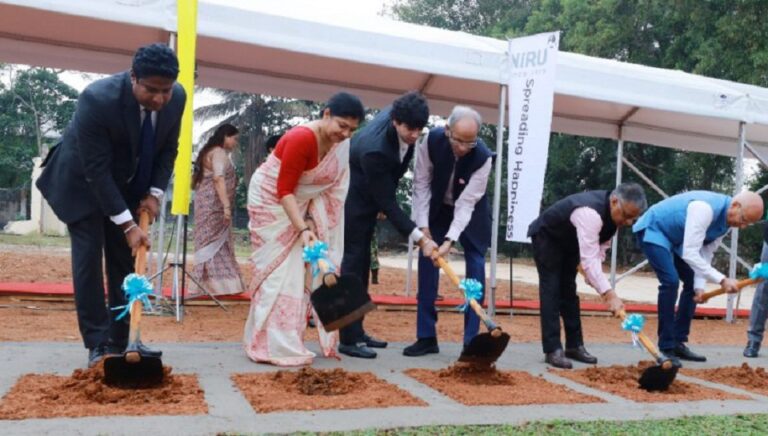
The latest BOI-approved expansion project worth $ 12.5 million of Diamond Cutters Ltd., recently launched its factory at the Modarawila Industrial Zone, Panadura.
Indian High Commissioner Gopal Baglay, BOI Director General Renuka M. Weerakone and other distinguished dignitaries attended the launch.
Diamond Cutters Ltd is Sri Lanka’s highest export earner in the gem and jewellery segment and a subsidiary of Niru Group of Companies.
The expansion project is a new factory, dedicated to cutting and polishing diamonds completely for the export market, which will create 1,500 new job opportunities.
From 3D diamond scanners to the world’s best diamond polishing benches will be used for polishing diamonds for leading brands enabling local workers to learn about new technology.
The new facility also demonstrates a clear motion of Diamond Cutters resilience and the growing confidence of the investors.
Established in 1987, Diamond Cutters, together with Niru Lanka Exports Ltd., solidifies Niru’s value chain with about 49,000 square feet of workspace and over 1,300 employees
BOI-approved Diamond Cutters Ltd launches US $ 12.5 m expansion project
Central bank promulgates regulations on Financial Consumer Protection
The Central Bank is to introduce Regulations on Financial Consumer Protection having recognized the need to institutionalize financial consumer protection in the delivery of services by regulated financial institutions.
The Central Bank’s Financial Consumer Relations Department (FCRD_ has devised a comprehensive set of new regulations aiming at introducing an integrated financial consumer protection framework for entities regulated by CBSL.
These regulations are expected to define specific regulatory powers for the supervisors to facilitate market conduct supervision while providing clarity to both the service providers and recipients on the areas to be considered in delivering/ obtaining financial services aiming at minimizing the need for financial consumers to make subsequent complaints.
In order to have wider stakeholder consultation, FCRD has invited the relevant industry associations and the general public to submit their observations/ comments/ suggestions on the draft Regulations.
The public can access the draft Regulations (English) available on the CBSL website (Web link for the draft Regulation. consultation_paper_20230120_regulations_on_financial_consumer_protection_e.pdf (cbsl.gov.lk))
With a view to safeguard financial consumers, FCRD shall carry out risk-based market conduct supervision, depending on the nature, scale and complexity of the matter under consideration and/ or the market.
A report on Market Conduct Supervision shall be furnished to the DFCRD after the examination(s) is/are completed.
In the opinion of the DFCRD, if the examination findings are adverse and contain any material violations of FCP regulations or any other directions, guidelines, or code of conduct, such report shall be submitted to the Monetary Board recommending one or more of the regulatory actions
According to these regulations all financial institutions should treat customers in an equitable and fair manner.
It should not not discriminate against financial consumers based on social status, physical ability,marital status, race, caste, gender, age or religion;
It should not discriminate against financial consumers such as elderly, physically disabled, low income, low financial literacy and shall have the right to receive special attention to facilitate fair access to financial products or services.
The FSP or its agent/ any other person involved in the business of such FSP shall not employ unfair business practices against its financial consumers at all times.
The FSP shall not engage in practices which may include but are not limited to threats, intimidation, humiliation, misrepresentation, deception, use of abusive/ offensive language, or unfair inducements.
At all times, in the conduct of its business, financial institutions should act in good faith and the best interest of its customers.
Foreign Employment Bureau issues special announcement on career opportunities in Japan
By: Isuru Parakrama
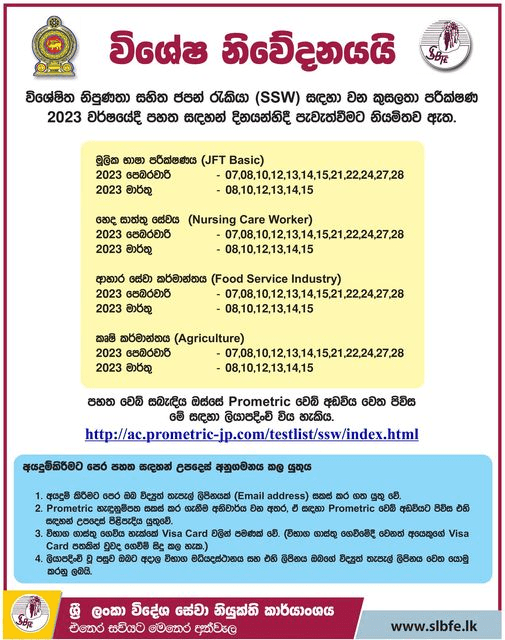
Colombo (LNW): The Foreign Employment Bureau of Sri Lanka has announced dates on aptitude tests for Specified Skilled Workers (SSW) expecting job opportunities in Japan.
Applicants can enter via the following link:
http://ac.prometric-jp.com/testlist/ssw/index.html
Initial instructions for applicants are below:
PSC focuses on digitise public and private institutions to promote investments
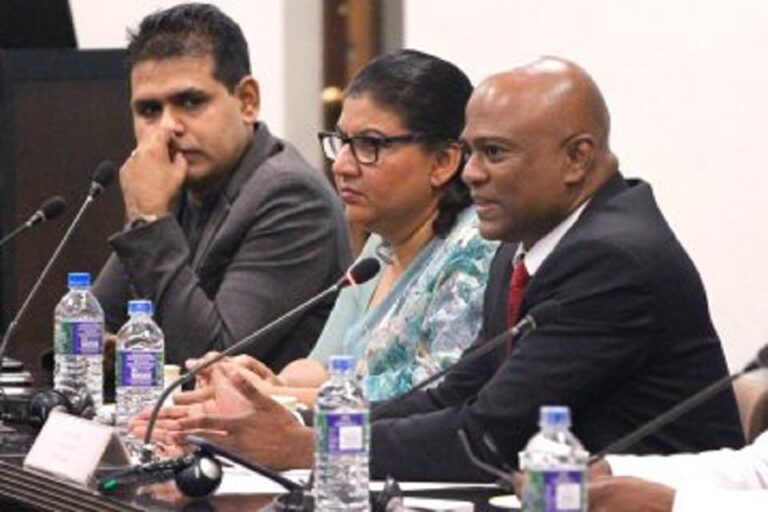
The need of the digitization of public and private institutions in promoting investments in Sri Lanka and establishing a single point for obtaining all necessary approvals for investment promptly has been emphasized.
This was taken into discussion at the Select Committee of Parliament to study the practical problems and difficulties that have arisen in relation to enhancing the rank in the Ease of Doing Business Index in Sri Lanka and make its proposals and recommendations.
The Select Committee of Parliament is to study the practical problems and difficulties that have arisen in relation to enhancing the rank in the Ease of Doing Business Index in Sri Lanka and make its proposals and recommendations which met in Parliament last week under the chairmanship of MP Madhura Withanage.
The government has already taken steps to set up a high regulatory powered investment promotion agency (authority) to take up the task of expediting the attraction of foreign direct investment (FDI) in to the country efficiently and expeditiously, State Minister of Finance Shehan Semasinghe disclosed
Special committee appointed by President Ranil Wickremasinghe has already made a recommendation to set up this new agency by bringing the Board of Investment (BOI), the Export Development Board (EDB) and the Sri Lanka Export Credit Insurance Corporation (SLECIC) together onto one platform, he said.
National Enterprise Development Authority (NEDA) and other entities that support exports and investments will also come under the purview of the new agency.
The budget 2023 has allocated Rs 100 million to implement the investment and export sector reforms expeditiously.
Officials representing a number of sectors such as the public and private sectors including the Ceylon Chamber of Commerce, the Colombo Stock Exchange, The National Chamber of Exporters and the Federation of Chambers of Commerce and Industry were present at this special committee held.
Each party informed the committee about their concerns and proposals for the promotion of investment in Sri Lanka and many of the parties present were of the opinion that it is important to digitise public and private institutions and establish one place to get all necessary approvals for investment.
Chair MP Withanage said that proposals have been presented on this regard to the committee previously as well and accordingly he will take measures to have the President and the House informed on this endevour.
The parties present also pointed out the need to restructure the Government institutions to which Withanage mentioned that the views presented by the parties related to each sector as professionals are important. Therefore, he pointed out the need to raise awareness regarding this through the media.
Furthermore, the parties present emphasized that the position of Sri Lanka in the ranking of countries also affects the promotion of investment and the need to come forward in those rankings. The need to develop the size and quality of the country’s market was also discussed here.
Power cut schedule for Feb 07 revealed

By: Isuru Parakrama
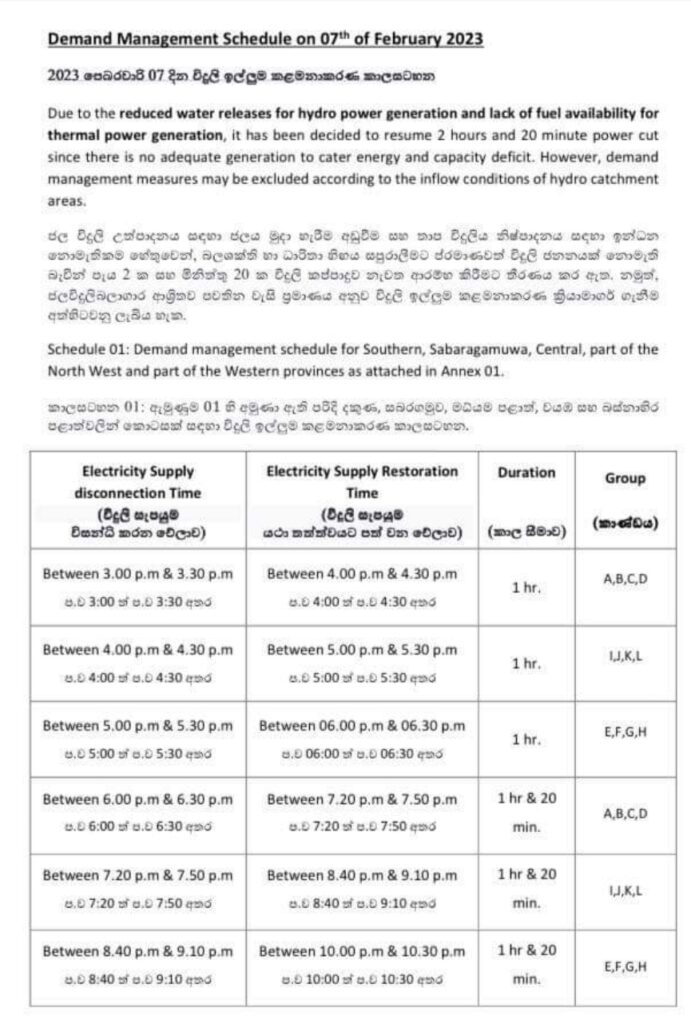
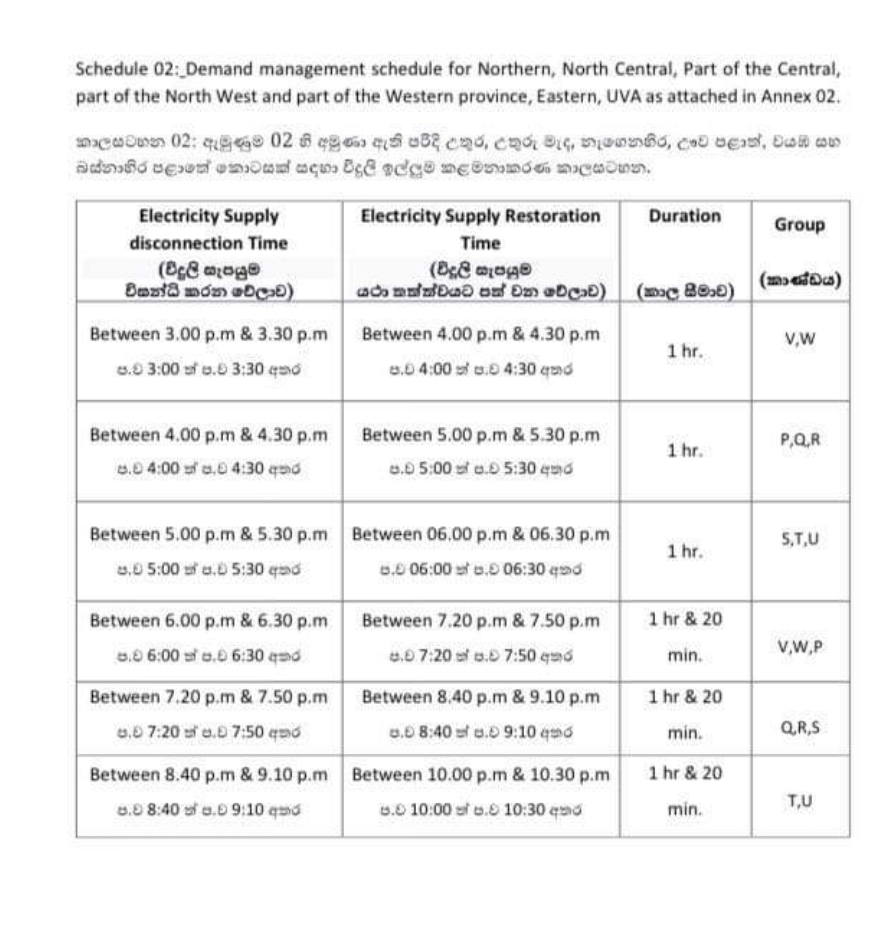
Colombo (LNW): A power cut of one hour and thirty minutes will occur today (07) due to the inadequate generation of power.
Due to the reduced water releases for hydro power generation and lack of fuel availability for thermal power generation, it has been decided to resume two hours and twenty minute power cut, but demand management measures may be excluded according to the inflow conditions of hydro catchment areas.
Showers to occur in several areas: Met Dept
By: Isuru Parakrama
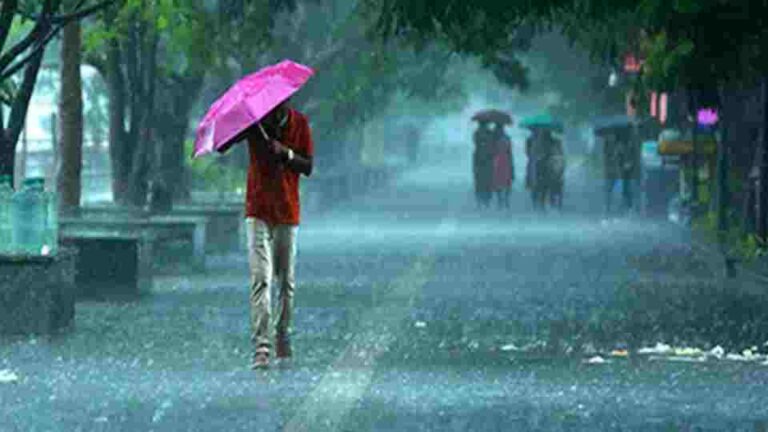
Colombo (LNW): Showers at times will occur in Eastern and Uva provinces, and several spells of showers will occur in North-Central province and in Matale and Mullaitivu districts, said the Department of Meteorology in a statement today (07).
Showers or thundershowers will occur at several places elsewhere during the afternoon or night.
Showers may occur in the Western, Sabaragamuwa and Southern provinces during the morning too.
General public is kindly requested to take adequate precautions to minimise damages caused by temporary localised strong winds and lightning during thundershowers.
Marine Weather:
| Condition of Rain: |
| Showers or thundershowers will occur at times in sea areas off the coast extending from to Colombo to Batticaloa via Galle, Matara and Hambantota. Showers or thundershowers may occur at several places in the other sea areas around the Island. |
| Winds: |
| Winds will be north-easterly and wind speed will be (20-30) kmph. Wind speed may increase up to (40-45) kmph at times in the sea areas off the coast extending from Hambantota to Pottuvil. |
| State of Sea: |
| The sea areas off the coast extending from Hambantota to Pottuvil will be fairly rough at times. The other sea areas around the Island will be moderate. Temporarily strong gusty winds and very rough seas can be expected during thundershowers. |
Sri Lanka initiates action plan to ensure Green Economy by 2050
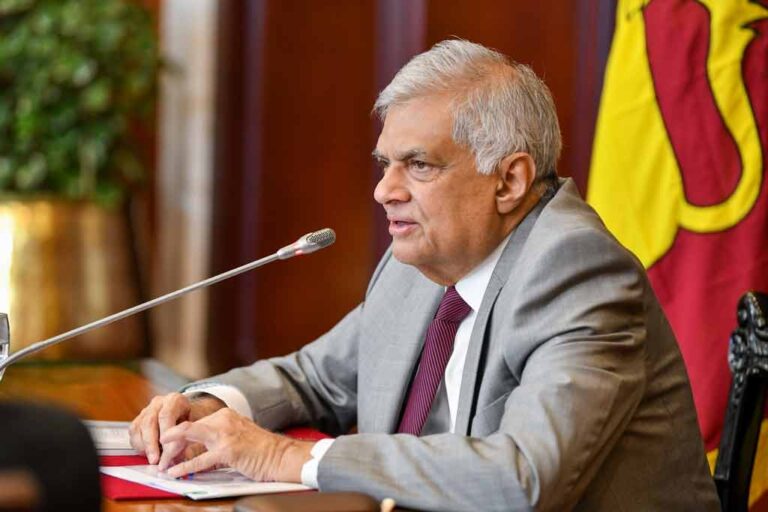
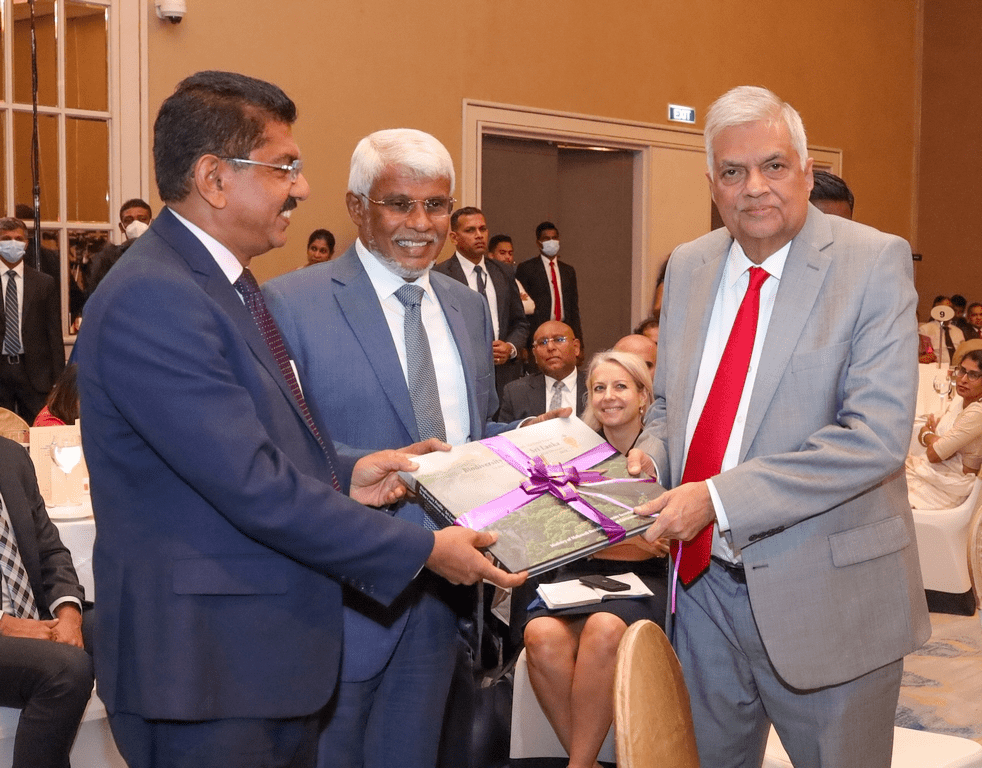
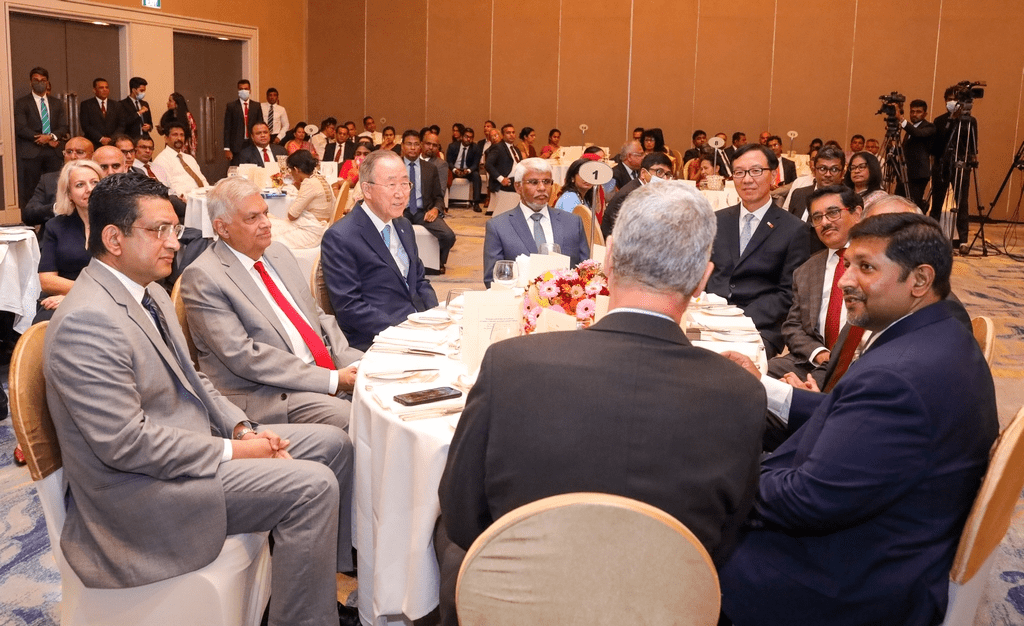
Colombo (LNW): Sri Lanka has the potential to establish the green economy, specially by way of renewable energy, said President Ranil Wickremesinghe addressing a High-Level event on Strategies and Actions to Accelerate Sri Lanka’s Transition to a Green Growth Pathway, held at the Grand Ballroom, Hilton Colombo yesterday morning (06).
He said further that the Sri Lankan Government prepared a Natural Adaption Plan and National Environment Action Plan to ensure a green economy and a better world by 2050.
The event was organized by the Ministry of Environment and the Global Green Growth Institute (GGGI).
A new Climate Change Act will be formulated while a new Environment Act will be drafted to replace the old one which will cover reforestation, forest cover and tree cover.
He also added that Sri Lanka is to be the first one in the region to recognize some of its assets as living entities. The Knuckles Range, Horton Plains, Peak Wilderness, the Sinharaja Forest, the Mahaweli River and Adams Bridge will be hence identified as living entities.
The statement made by President Ranil Wickremesinghe is as follows.
The signing of the Host Country Agreement with the Global Green Growth Initiative tomorrow, will be the first steps that we will be taking to establish a green economy and meet climate change goals.
I welcome the eighth Secretary General of the United Nations and the President of the Assembly and Chair of the Council of the Global Green Growth Institute (GGGI) Ban Ki-moon for the signing of the Host Country Agreement with the Global Green Growth Initiative. Hence, Ban Ki-Moon will be associated with two historic agreements signed in Sri Lanka in which the first paved the way for reconciliation.
We are seriously concerned of the situation on climate change and the actions taken. What has happened so far is insufficient and the last conference of parties did not achieve the results that we desired.
The low income countries and the middle income countries are striving for economic development while protecting living standards with insufficient funding. So these countries are committed to a call for action by the developed countries to deliver their funding pledges by doubling their funding which is essential.
I realize that some developed countries are experiencing a recession this year, but nevertheless the targets had not been met earlier. So there has to be a full commitment of how we are going to meet the targets and what assistance is required. The other issue is the need for compensation for the developing countries where the emissions so far were not the responsibility of our countries.
The third issue is how to address the loss and damages. This is not the issue of asking the developed countries to spend a lot of money for further development of the developing countries. Let us work out a sort of list, combine the money that is needed and then see how we are going to raise it. There has to be a contribution by them, as well as a contribution by us. But let’s agree on what we have to do.
The fact is that the achievements of the last COP26 meeting had not been fulfilled so far, worries us. Glasgow was a good turning point. The initiative taken by former Prime Minister of the UK Boris Johnson was important, but it was not followed up.
We must ensure that those targets are met. Therefore, the Government of Sri Lanka instructed the Minister of Foreign Affairs and the Minister for Environment to sound out other developing countries with whom they spoke last time on how a joint action plan could be made. Perhaps, a meeting of the heads of government, of the concerned countries could be convened in the UAE, prior to the next conference.
That is the only way that we can achieve results and we must go hard on it as there is no halfway house. We have to insist that these are goals and these are our minimal demands. It’s either the minimum demands or it is far better to call it a day if we are not going to achieve this result.
Sri Lanka is in the process to decrease carbon emissions by 14.5 percent by 2030 and more thereafter. We are creating the Climate Change Office operating under the Presidential Secretariat to coordinate all actions in regard to climate change. Then we have prepared our natural adaption plan and their national environment Action Plan.
All of this is being taken as the initiative by our government so that we ensure a green economy and a better world by 2050. We are developing the net zero 2050 plan that aims for carbon neutrality. We will not increase further energy capacity via coal power.
We will phase out the fossil fuel subsidies. We are already doing that and we have come under attack from the Opposition for phasing it out. And we will aim for 70 per cent of renewable energy for power generation by 2030.
There are many initiatives that we will be taking for this period. Firstly, a new Climate Change Act, which will incorporate the Climate Change Office, will be formulated. Then a new Environment Act will be formulated to replace the old one, which was enacted in the early 1980s, and one which will cover reforestation forest cover and tree cover.
The last one is to recognize some of our assets as living entities. The Knuckles Range, Horton plains, peak wilderness, the Sinharaja Forest, the Mahaweli river and Adams Bridge will be identified as living entities and that will be the first in the region to do so.
Final is the setting up of the International Climate Change University. We want to start it as a Postgraduate University and a university for training officials in all regions in the Indian Ocean, and in Africa to prepare the world for meeting the climate change goals and a new climate change and new green economy.
Now we are grappling with the issue of a green economy. That’s where we want to go. We find that we have the potential, especially on renewable energy, with the help of the Asian Development Bank we are assessing what our capacity for renewable energy and green hydrogen would be. Some say we will have an excess capacity of about 30 Giga-watts, but, some say 40, some say 50.
But we want to have the assessment made by the Asian Development Bank. So, we have already called for investment in this region. This is one area that we can prosper.
With regard to our economic base, we are looking at the new technologies, which certainly will not be involved with fossil fuel and to have new manufacturing and service industries based on industry for technology to modernize agriculture. Accordingly, we will be moving towards the green economy. But we are going to face difficulties. One is the lack of capacity.
And we also need great access to international financing. We will also be able to financially engineer the debt. By using the green financial instrument we could reduce the present debt load. Our domestic policy will be geared to our climate prosperity plan. So this is the path that Sri Lanka wishes to follow, and I have no doubt that the GGGI will help us to achieve this. The agreement we will sign tomorrow will be the first in the steps that we will take.
Former Secretary General of the UN and the President of the Assembly and Chair of the Council of the Global Green Growth Institute (GGGI) Ban Ki-moon addressing the gathering said that he learnt about those changes that took place during the last six and a half years since his last visit and added that he was confident that democracy and sustainable economic development in the country could be achieved under the wise leadership of President Ranil Wickremesinghe.
Environment Minister Naseer Ahamed addressing the occasion explained in detail the steps that the government is planning to take in regard to a green economy and meeting the climate change targets for 2050.
Secretary to the Ministry of Environment Dr Anil Jasinghe and Asia Regional Director and Head of Programs, GGGI Dr Achala Abeysinghe also addressed the event.
The Panel Discussion included panelists Director (Climate Change) Ministry of Environment Ms. Kumudini Vidyalankara, Chief Executive Officer Dilmah Tea and chair of Biodiversity Sri Lanka Dilhan Fernando, Chief Executive Officer of the National Development Bank Dimantha Seneviratne, Senior Research Professional of the Center for Poverty Analysis Ms. Karin Fernando and Senior Professor of the University of Peradeniya Prof. Buddhi Marambe.
Ambassador of Korea to Sri Lanka Santhush W. Jeong, Foreign Affairs Minister Ali Sabry, Senior Advisor to the President on National Security and Chief of Staff to the President Sagala Rathnayake and, Senior Advisor to the President on Climate Change Ruwan Wijewardena also participated in this event.
Sri Lanka Original Narrative Summary: 07/02

- Foreign Minister of Bangladesh Abdul Momen says Sri Lanka is expected to pay back the USD 200 mn it borrowed from Bangladesh in a currency swap agreement in May 2021 by September 2022.
- Former Secretary General of the United Nations Ban Ki-Moon arrives in Sri Lanka.
- Foreign Minister Ali Sabry offers assistance of rescue services to Turkey, following 2 major earthquakes that struck that country: Foreign Ministry also says no Sri
Lankan has been affected due to the earthquakes. - President Ranil Wickremasinghe swears in Justice K P Fernando as a Supreme Court Judge: Justice N B Karunaratne as the President of the Court of Appeal: High Court Judge M A R Marikkar as a Judge of the Court of Appeal.
- Supreme Court Judge and Chairman of the Presidential Commission of Inquiry to investigate the findings of preceding Commissions and Committees, Justice A H M D Nawaz submits synopsis of the recommendations in the draft final report of the Commission to President Ranil Wickremesinghe.
- Private Hospital Development Department’s Director Dr Dhammika Alahapperuma says all private hospitals and health institutes in the country should be registered with the Private Health Services Council before 28th February: also says about 10,000 private health institutions have not been registered yet.
- President Ranil Wickremasinghe says Sri Lanka has the potential to establish the green economy, specially via renewable energy, to ensure a green economy and a better world by 2050.
- National Anthem sung in Sinhala & Tamil at the Independence Day Celebrations at Galle Face Green on 4th February, after several years: the National Anthem was written in Sinhala by Ananda Samarakoon and translated into Tamil by Sinhala & Tamil expert M. Nallathambi.
- State Minister of Finance Shehan Semasinghe says losses of 52 strategically important SOEs amounts to over Rs.800 bn in 2022: also says the Govt is now concentrating on the SOEs that have caused the heaviest losses such as SriLankan Airlines, CPC and CEB, and restructuring those.
- Professionals’ Trade Unions Alliance declare trade union action on 8th February to protest against the Govt’s tax hike: GMOA Secretary Dr Haritha Aluthge says doctors of the GMOA will also not engage in private channelling practice and regular services, on that day.
A reflection on the similarities between 1971 and the current crisis
As the 75th anniversary of independence gathers steam, it will be important to reflect on the gradual erosion of checks and balances and the rule of law. No crisis, be it in 1953, 1971, 1983, the long civil war, or the current crisis, has seen a desire for accountability, good governance, commitment to social justice and economic competence from the three families that have ruled the country since independence. Instead, they have demanded more centralised and unaccountable power. Currently the Rajapaksa clan and several notable personalities from the UNP have combined to crush the demand for meaningful political change, using the draconian power enshrined in the Executive Presidential constitution, with such repressive legislation as the Prevention of Terrorism Act, whereby a person can be held without charge for up to two years.
This essay will look at the economic and structural reasons that lay behind to the 1971 JVP insurrection and led to the current economic crisis.
1971
Like the current crisis, the economy in the seventies was characterised by sinking export income, growing foreign debt and escalating unemployment. Throughout the 1960s the size of the industrial sector remained static and hovered between 12 and 13 per cent, with the majority of income derived from the service sector and agriculture. In the export sector there was a fundamental dependence on agricultural products. The country was caught in a classic economic pincer movement and still is – declining export prices and rising export costs.
The country’s debt rose from Rs 95 million in 1957 to Rs 349 million in 1966, and again to Rs 744 million in 1969. Then as now, the money to pay for the foreign debt came from foreign loans and the running down of the country’s foreign exchange reserves.
Like today, foodstuffs made up a large part of county’s imports around 53 per cent.
Unemployment continued to rise in 1971. Out of a labour force of 4.4 million, 585,000 were officially unemployed. The economic authority of the time, Dr N.M. Perera, estimated the figure to be around 700,000.
Out of the 585,000 who were unemployed, 460,000 were in the rural areas and 250,000 were aged between 19 to 24. 167,000 of these had received a secondary education or went on to tertiary level.
The children of the era which began in 1956, the “beneficiaries” of the Official Languages Act, were not given the economic fruits promised to them. As a result of government repression in 1971, though never acknowledged by the country’s rulers, around 10,000 to 15,000 young Sinhalese were killed and tens of thousands more were imprisoned and tortured without due process. In contrast, according to the government, 61 civilians and 63 members of the armed forces lost their lives. The security forces’ extra-judicial killings and torture escaped scrutiny and impunity became the norm.
To prosecute the leaders, of whom I was one, the rule of law was trampled on, habeas corpus was waived and confessions gained by torture were admissible. The murder of countless thousands of Sinhalese youth by the security forces has never been examined.
The repressive playbook was set: an unwillingness to examine and fix structural issues, be they economic, political and judicial, accompanied by ever more restrictive and unaccountable measures and a marked reluctance to investigate crimes committed by the state.
An economic snapshot before the second coming of the Rajapaksas.
By the 1980s the economic direction changed, neo-liberalism became the mantra, and welfare provisions were gradually dismantled. Lanka now relied on tourism, garments, remittances and tea. National debt continued to rise
Billions of dollars were spent on vanity projects by the ruling clan: airports, stadiums, freeways, convention centres and a seaport, with no thought of who would need or use them.
Debt by the 2000s had risen to 79 per cent of Gross Domestic Product (GDP). It continued to rise and rise, reaching 100 per cent just before Covid struck. The economic instability is exacerbated by the fact that the top 20 per cent of the population have 42 per cent of the Island’s income, whilst the lowest 40 per cent make do with 17.8 per cent.
Accession of Gotabaya and the latest Resurrection of Ranil
The economy contracted after the fall in tourism as a result of the 2019 Easter bombings, putting a strain on the country’s foreign currency reserves. Gotabaya Rajapaksa exacerbated the crisis by cutting taxes collected from a very small base, costing the country hundreds of billions of rupees. Next, he banned the import of fertilisers, partially due to the lack of foreign exchange to pay for them. Agricultural production declined at an alarming rate, in particular vital export earners like tea and rubber. The economy went into freefall, with a shortage of food, fuel, medicine, cooking gas and other essentials. Whilst the top 20 percent had the economic means to cope, for the vast majority the burden was catastrophic.
A spontaneous protest movement erupted which forced the resignation of the then president Gotabaya Rajapaksa and the installation of the veteran serial aspirant, Ranil Wickramasinghe. Instead of opening dialogue with the protestors and dealing with their legitimate demands, we got state repression and the scapegoating of the protestors. The same people who looted the public purse and were ineffectual economic managers are in charge of the recovery! Solutions on offer do not deal with the heart of the problem: the mismanagement, corruption and wastage prevalent in the economic and political system. Those least able to pay will be forced to shoulder the burden, and the structural issues, if not addressed, will lead to another economic and political crisis.
Conclusion
It is vital that celebrations to mark the anniversary of independence be tempered by reflection on how the country got to the current crisis and how it should be fixed. Otherwise, we will be forced to relive past disasters. As 1971 and 2020 remind us, the failure to change the system comes with enormous costs, both at a personal and economic level. It is the least we can do for those thousands of young people being detained on spurious grounds and those nameless 15,000 young people who lost their lives at the hands of the state in 1971.
Dr Lionel Bopage
25 January 2023
AFGHANISTAN: RSF and 14 media outlets call for the release of French-Afghan journalist Mortaza Behboudi, held in Kabul

Reporters Without Borders (RSF) and 14 French media outlets and production companies with which Mortaza Behboudi has worked are calling on the Taliban regime to release the French-Afghan reporter who has been imprisoned for a month in Kabul.
We remained silent for 30 days about the detention of Mortaza Behboudi, a journalist with French and Afghan dual nationality who is being held in a prison in Kabul, the Afghan capital. Today, we are letting the world know that he was arrested in Kabul one month ago, on 7 January, in the hope that he will be released as quickly as possible and will be able to return to France. For the past month, we have done everything possible, in various capacities, to obtain his release. His imprisonment is truly absurd.
Behboudi began his career as a photojournalist at the age of 16 in Afghanistan, the country of his birth. When he was 21, he fled to France because he had been threatened, and was given a refuge in the Maison des Journalistes (Journalists’ Home) in Paris. Along with other exiled journalists, he created a news website called Guiti News. He soon began freelancing for French and Francophone media outlets including France Télévisions, TV5 Monde, Arte, Radio France, Mediapart, Libération and La Croix. He co-authored a series of reports called Across Afghanistan under the Taliban that was published by Mediapart and was awarded the Bayeux Prize for War Correspondents and the French National Daily Varenne Prize. He contributed to a report entitled Young Afghan girls sold in order to survive that was broadcast by France 2 and was also awarded the Bayeux Prize in 2022.
Behboudi returned to Afghanistan for the purpose of reporting on 5 January and was arrested barely 48 hours later when was about to collect his press accreditation. On 15 January, his mobile phone called the assistance unit at Reporters Without Borders (RSF). As no message was left, it is impossible to know whether it was Behboudi who called or whether one of his jailers used his phone. Since then, no one has answered when his number is called. All we know is that after being held in a Kabul for 11 days for not showing his accreditation, he was transferred to another prison in Kabul and is said to be accused of spying.
We appeal to the Taliban government to end this senseless situation. Mortaza Behboudi is a well-known journalist, who is respected and appreciated by his media colleagues. We hope that our message will reach the Afghan capital and be heard in the offices of the authorities that took the decision to arrest him and who hold the key to his release. Messages have already been sent. RSF has opened a communication channel with the Taliban authorities.
We thank the French authorities for the efforts they have already made and we count on them to do everything possible in the future.
Signatories:
Stéphane Allies, Mediapart editorial co-director
Dov Aflon, Libération editorial director
Erik Berg, franceInfo TV director
Philippe Brachet, Arte Reportage editor-in-chief
Vanessa Burgraf, France 24 director
Jérôme Chapuis, La Croix editorial director
Sonia Delesalle-Stolper, Head of International Service at Libération
Christophe Deloire, secretary-general of Reporters Without Borders (RSF)
Grégoire Deniau, TV5MONDE editorial director
Carine Fouteau, Mediapart editorial co-director
Vincent Giret, director of news and sport at Radio France
Thomas Hofnung, Head of International Service at La Croix
Françoise Joly, TV5MONDE news director
Alexandre Kara, France Télévisions news director
Bernard de La Villardière, director of the production company Ligne de front
Elise Lucet, editor and presenter of the France 2 programme “Envoyé Spécial”
Elsa Margout, director of magazines at France Télévisions
Franck Mathevon, Radio France news director
Marco Nassivera, Arte TV news director
Philippe Pécoul, director of the TF1 evening news show “Sept à huit”
Edwy Plenel, Médiapart president
Muriel Pleynet, France Télévisions editorial director
Harry Roselmack, Managing Director of HTO productions
Martin Weill, “Les Reportages de Martin Weill”, TMC
Reporters Without Borders (RSF)