Sri Lanka’s rubber smallholders are to be provided necessary assistance from French experts to participate in the process of developing and strengthening their skills, instincts, abilities, and resources to survive, adapt, and thrive in a fast-changing world.
The Ministry of Plantation Industries of Sri Lanka has entered into a Memorandum of Understanding (MoU) with a French expert in the rubber industry, KSAPA, for capacity building of Rubber Smallholders in Sri Lanka.
Despite Secretary to the Ministry of Plantation, Janaka Dharamakeerthi having signed the said MoU on 16 December 2022, on behalf of the island nation, it was finalized on January 05, with KSAPA Managing Director Raphael HARA signing it at the Sri Lankan Embassy in Paris.
The focus of this MoU is to ensure the designing and execution of the “Rubber Improvement of Value Chain & Embedded Smallholders Resilience (RIVER) Project” to implement capacity-building activities in Monaragala, targeting farmer communities that are mainly oriented towards rubber production, the Ministry stated.
The RIVER project intends to harness digital technologies and hands-on technical training to improve rural rubber smallholder farmers’ knowledge, performance, livelihoods, social outlook and environmental impacts.
It is expected to strengthen the capacity of nearly 6,000 rubber smallholders within the Monaragala Rubber Development Project region.
The project would be mainly funded by the FASEP grant of the French Ministry of Economy, Finance and Recovery, while additional funds are to be provided by the Michelin Group of France as a foreign grant.
The project will be designed and implemented by KSAPA, a French public liability company possessing the relevant expertise. Camso Loadstar in Sri Lanka, which is a subsidiary of the Michelin Group, will also contribute to the operational activities of the project.
As part of the MoU, the French government will fund a €727,000 project to build capacity and strengthen the economy of the smallholders.
The River (rubber improvement of value chain & embedded smallholders resilience) will be supported by co-sponsors Michelin and French sustainability consulting group KSAPA.
SL’s rubber smallholders undergo capacity building with French aid

CB governor pleads China and India to reduce Sri Lanka’s debts
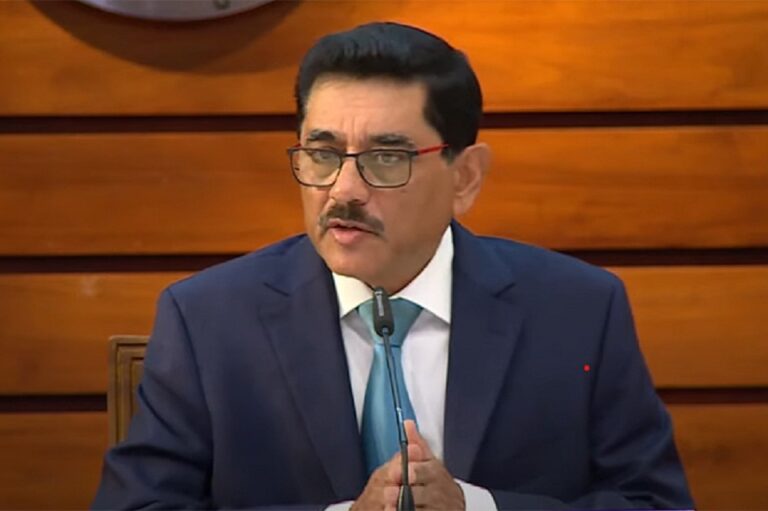
The Central Bank of Sri Lanka (CBSL) bank has urged China and India to agree to a write-down (haircut) of their loans as soon as possible.
Governor of the Bank Nandalal Weerasinghe is now in a haste to convince these two donor countries for debt restructuring process after his statements on receiving the imf board approval for US$.29 billion bail out loan on December 2022 or January 2023 became empty words and boomeranged on CB credibility.
Asked about Sri Lanka’s private bondholders, Weerasinghe said: “We engage with private creditors in good faith negotiations. And what we are seeing is that they are very positive and they are willing to engage with us.”
The governor said he expected that once agreement from bilateral creditors has been agreed the IMF funds could be distributed to Sri Lanka within “four to six weeks”.
Dollar-strapped Sri Lanka is racing against time to secure a diplomatic breakthrough with China, Japan and India, the bilateral lenders who have yet to come up with a debt restructuring blueprint to unlock IMF Extended Fund Facility.
But the International Monetary Fund will not release the cash until China and India first agree to reduce Sri Lanka’s billions of dollars of debt.
The governor of Sri Lanka’s central bank told BBC Newsnight it was in the interest of all parties to act quickly.
He said: “The sooner they give us finance assurances that would be better for both [sides], as a creditor, as a debto“That will help us to start repaying their obligations,” he added.”What a wonderful utterance, former deputy governor said in response.
.“We don’t want to be in this kind of situation, not meeting the obligations, for too long. That is not good for the country and for us. That’s not good for investor confidence in Sri Lanka,”Nandalal claimed.
Though inflation in the country has eased slightly since last year, food prices in Sri Lanka last month were still 65 percent higher than a year earlier.
The World Food Programme estimates that 8 million Sri Lankans – more than a third of the population – are “food insecure”, with hunger especially concentrated in rural areas.
The economic turmoil sparked mass protests last year, which resulted in the former president fleeing the country in July.
More such repetitions could be expected if the country’s monetary authority failed to sharpen it’s blunt tools introduced two years ago by the top Central Bank officials who were shivering during verbal attack levelled against them at a meetingby then President Gotabaya Rajapaksa.
Beijing’s lending to Sri Lanka stands at around $7bn while India is owed around $1bn.The Sri Lankan government had initially hoped to agree a new payment plan with China and India by the end of 2022.
Mr Weerasinghe said it was possible an agreement could come later in January but added “this all depends on the other parties – our creditors really have to make that decision”.
He added that Sri Lanka had now provided them with all the information on the country’s borrowings they needed.
Independent analysts say China is concerned about what a substantial Sri Lankan debt write down could mean for its extensive lending to other developing countries through its Belt and Road programme.
Meanwhile, India is said to be wary of getting inferior terms on debt restructuring to China, its regional rival.
The US ambassador to Sri Lanka, Julie Chung, said the greater onus to move was on China, as the biggest bilateral lender.
“We hope that they do not delay because Sri Lanka does not have time to delay. They need these assurances immediately,” Ambassador Chung told BBC Newsnight.
“For the sake of the Sri Lankan people, we certainly hope China is not a spoiler as they proceed to attain this IMF agreement.”
But if India and China do ultimately agree to write down their loans to Sri Lanka another potential problem looms in the form of private creditors, who account for 40% of the country’s external debt stock.
Sri Lanka’s GDP expected to contract again in 2023 – WB
Sri Lanka’s gross development product output is estimated to have fallen by 9.2 percent in 2022 as the government ran out of the foreign exchange needed to cover food and fuel imports while the rupee plummeted and imports contracted sharply, and to service external debt, the World Bank says.
Agriculture plunged 8.7 percent, industries 21.2 percent, and services 2.6 percent. Sri Lanka’s real GDP is expected to fall by 9.2 percent in 2022 and 4.2 percent in 2023, according to the World Bank.
The country’s central bank estimates the economy will contract by about 8 percent in 2022.
In its Global Economics Prospects in January 2023, the global financial institution raised concerns about the continuing shortages of food, energy and medical supplies facing the Sri Lanka nation while the authorities are implementing a stabilization program.
Stating that the crisis and its repercussions have increased poverty and reversed much of the country’s income gains over the past decade, the World Bank went on to note that tourist arrivals, an important source of foreign exchange, continue to be depressed with international arrivals last October about one-third of their 2019 level.
The World Bank expects Sri Lanka’s output to contract again this year by 4.2 percent. The forecast for 2023 growth has been revised down owing to the ongoing foreign currency shortages, the effects of higher inflation and policy measures designed to restore macroeconomic stability.
The global financial institution, in its outlook for South Asia, mentioned that the region continues to be adversely affected by spillovers from Russia’s invasion of Ukraine, rising global rates and weakening growth in key trading partners.
The regional growth is estimated to have slowed down to 6.1 percent in 2022 and is projected to slow further to 5.5 percent in 2023 – below the projections on global spillovers – before picking up to 5.8 percent in 2024.
According to the World Bank, in some economies in the region such as Sri Lanka and Pakistan, the deterioration in economic conditions has led to a substantial rise in poverty. Many households are consuming less nutritious food, and rolling electricity blackouts have become common as fuel has been rationed, it added.
With regard to the soaring food prices in the South Asian Region, especially in Pakistan and Sri Lanka, the World Bank said the situation has increased the incidence of food insecurity in the region. “In Sri Lanka, for example, more than one-third of the population are food insecure, from less than one-tenth in 2019.”
Easter Sunday Attack: The judgment of fundamental rights petitions against Maithri and others due today
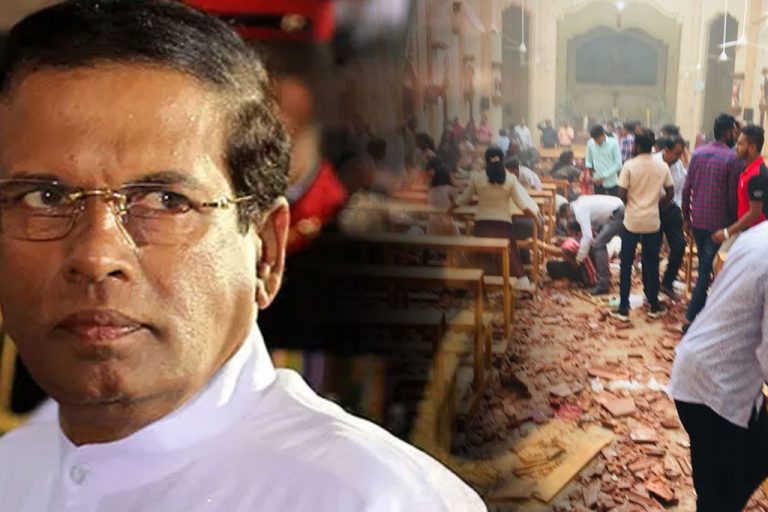
The judgment of the fundamental rights petitions filed before the Supreme Court regarding the failure to take action to prevent the bombing of Catholic Churches and star hotels in Colombo on Easter Sunday 2019 despite receiving sufficient intelligence information is scheduled to be announced today (12).
The petitions against former President Maithripala Sirisena, former Defense Ministry Secretary Hemasiri Fernando, former Inspector General of Police Pujith Jayasundara and others were filed by 12 parties including the victims of the Easter attack, the Catholic Fathers and the Sri Lanka Bar Association.
The verdict is scheduled to be announced by a seven-member Supreme Court panel including Chief Justice Jayantha Jayasuriya.
Sri Lanka Original Narrative Summary: 12/01

- World Bank says Sri Lanka’s output (GDP) is estimated to have fallen by 9.2% in 2022: highest decline since independence.
- Foreign Ministry summons Canadian High Commissioner to the Foreign Ministry and registers strong protest against the designation of the Former Presidents Gotabaya Rajapaksa and Mahinda Rajapaksa for sanctions by the Canadian Govt.
- Former President Maithripala Sirisena’s SLFP, SLPP MPs Dullas Alahapperuma, Wimal Weerawansa, Anura Yapa and several more political factions form a new coalition called “Nidahasa Janatha Sandhanaya”.
- Cabinet Spokesman Minister Dr Bandula Gunawardane says the IMF and other lending bodies have asked Sri Lanka not to print more money: laments the Govt is therefore finding it impossible to conduct most basic functions: in CB Governor Weerasinghe’s first 268 days in office upto 31st Dec’22, a staggering Rs.868 bn had been printed: such rate of printing has been 45% higher than under his predecessors, even while defaulting debt.
- CB Governor Dr Nandalal Weerasinghe tells BBC that China and India must agree to a write-down of their loans as soon as possible: US Ambassador to Sri Lanka Julie Chung asserts the greater onus is on China as the biggest bilateral lender: also says the US hopes that China does not delay because Sri Lanka needs these assurances immediately.
- President Ranil Wickremesinghe meets US Senior Director for South Asia, National Security Council Rear Admiral Eileen Laubacher who expresses the US appreciation for the economic recovery efforts being undertaken by the President.
- Police Computer Crimes Division arrests the woman Adarsha Karandana who accused President’s Parliamentary Secretary Professor Ashu Marasinghe of bestiality through a video made public: arrest based on a complaint lodged by Professor Marasinghe.
- Elections Commission Chairman Nimal Punchihewa says the date of the Local Govt Election will be fixed after receiving nominations.
- SCB Research report says IMF approval for the 4-year USD 2.9 bn facility could be as late as Q2 of 2023: expects negotiations with commercial creditors to be pushed back to H2 of 2023 and a restructuring deal to be reached only by end-2023: warns of severe risks of disruptions to the programme even after the first approval, as periodic disbursements will be contingent on meeting benchmarks.
- Supreme Court affirms conviction and sentence imposed by the Permanent
High Court against former President Maithripala Sirisena’s Chief of Staff Kusumdasa Mahanama and State Timber Corporation Chairman Piyadasa Dissanayaka in the “Kantale sugar factory bribery case” in 2018: Mahanama received 20-years RI and Dissanayaka 12-years.
Another step to reduce government spending…

The Ministry of Public Administration has informed that all government offices run in private buildings by paying exorbitant rents should be moved to government-owned places.
Neil Bandara Hapuhinna, Secretary of the Ministry of Public Administration, has informed the heads of the relevant institutions in writing that this decision has been taken to reduce the government’s expenses.
Also, government institutions have been advised to use water and electricity sparingly and especially to reduce the use of fans and air conditioners.
Also, the Secretary of the Ministry of Public Administration has informed that the officials working in all government institutions should complete their daily scheduled duties on the same day and will find out if they do so.
A suspect arrested in a drug incident dies

A suspect who was arrested with drugs has died after a struggle while trying to escape, police said.
The deceased was a 42-year-old father of two who was an employee of the Sri Lanka Vocational Training Authority.
According to information received regarding heroin trafficking, the concerned suspect was arrested yesterday afternoon (11) near the Sri Lanka Vocational Training Authority.
Police said that about 15 grams of heroin was found in the suspect’s possession and the suspect said that the drug was obtained from a person in Maradana area.
Later, when the suspect was brought to the Maradana area, he told him that he wanted to drink water near the Nelum Kuluna, where he broke the glass bottle that was given to him and tried to escape by hitting an officer of the police anti-narcotics department. The police said that during the struggle between the police officers and the suspect, he became unconscious and died while being admitted to the Colombo National Hospital.
The police allege that the suspect is a close relative of a drug dealer named “Podi Lassie”.
Govt. calls investors for export-oriented oil refinery in Hambantota
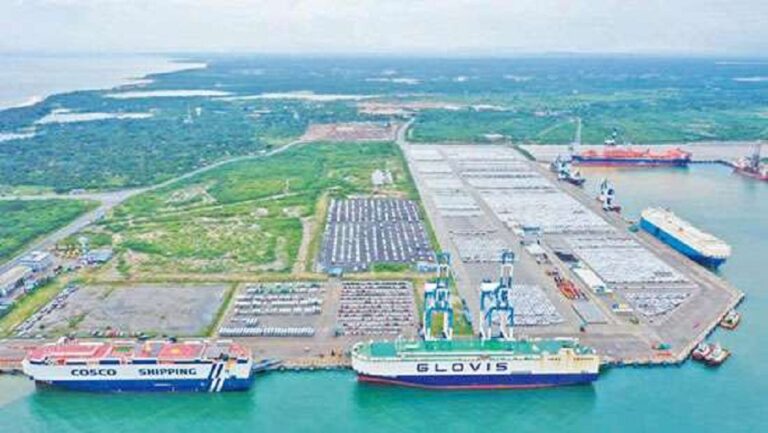
In a bid to boost foreign direct investments (FDIs), the Government has decided to call for an Expression of Interest to set up an export-oriented oil refinery in Hambantota.
“There is a possibility of establishing an export-oriented refinery in the Hambantota area, and it has been observed that many foreign investors are interested to invest in it,” Cabinet Co-Spokesman Bandula Gunawardena said yesterday.
The proposal to this effect submitted by Power and Energy Minister Kanchana Wijesekara was approved by the Cabinet of Ministers.
Given the foreign investor appetite for such projects, Gunawardena said Sri Lanka can have hopes for such projects to attract FDIs. He also said Power and Energy Minister will brief on the project in detail within the week.
In 20219 the the then Prime Minister Ranil Wickremesinghe laid the foundation stone to build an oil refinery in the Mirijjawila Export Processing Zone (EPZ).
The project is a joint venture between Singapore-registered Silver Park International and the Oman Oil Company. Soon after the project was announced by the Board of Investment (BOI) in Sri Lanka, it has been mired in controversies.
The paper examines these controversies and their impact. Introduction – The Proposed Oil Refinery On 24 March 2019, PM Wickremesinghe laid the foundation stone to build an oil refinery in the Mirijjawila Export Processing zone in Hambantota.
The oil refinery, which will span an area of 200 acres of land, will be completed in 44 months with the capacity to refine 200,000 barrels of crude oil per day.
It is ten times the capacity of the island’s only oil refinery situated in Sapugaskanda in Sri Lanka’s Western Province and is estimated to generate US$7 billion (S$ 9.4 billion) of exports by exporting 9 million metric tonnes of petroleum products per annum. The project expects to create 1,500 direct jobs and 3,000 indirect jobs.
The Cabinet of Ministers at its meeting on Monday approved to opening up of the lubricant oil market and the selection of entrants to offer competitive prices.
The proposal to market high-quality, innovative products and allow consumers to have the opportunity to buy lubricants at a more competitive price submitted by Power and Energy Minister Kanchana Wijesekera was approved by the Cabinet of Ministers.
At present, 26 licensed companies including Ceylon Petroleum Corporation are engaged in the lubricant industry in Sri Lanka.
The Ceylon Petroleum Corporation Act (No. 28 of 1961) and its accompanying amended provisions have empowered the Minister in charge of Petroleum Resources Development to select new applicants for entry into the lubricant industry and to grant licenses accordingly.
COPF takes to task Port City Economic Commission over some lapses
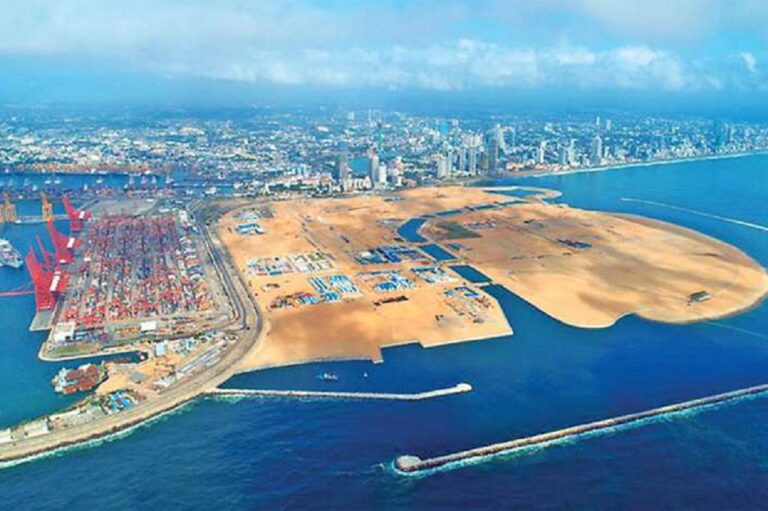
The Committee on Public Finance (COPF) has slammed the officials of the Colombo Port City Economic Commission for failing to launch a website for the commission although it has been more than a year since it was established.
COPF chairman MP Harsha de Silva stressed the need for a proper online presence for the Commission, especially in a context where its registrations and submission of applications are expected to be carried out online.
Further, the Port City Economic Commission’s senior officials were denounced for failing to appear before the COPF without providing a notice of absence beforehand.
While emphasizing on the importance of the Port City project for the purpose of generating investments and the work done thus far, the COPF unanimously expressed its dissatisfaction and advised the officials to exercise a better sense of responsibility as professionals handling such project of importance.
Accordingly, the Secretary to the Port City Economic Commission was instructed to submit a by way of writing a reasonable explanation as to why senior officials were not present before the COPF when they had been summoned before the committee on December 21, 2022.
The COPF also inquired into the delay in the submission of audit reports, directing the commission’s officials to ensure the expeditious submission of the annual audit reports.
Colombo Port City (CPC) is projected to have around US $ 4.6 billion positive impact on the country’s balance of payments (BOP) per annum when it reaches the normal operational level after 2041 with an overall US
$ 11.8 billion contribution to GDP per annum, according to a study conducted by PricewaterhouseCoopers (PwC).
PwC highlighted that the country could earn US $ 4.6 billion in net foreign exchange revenue from tourism-related industries and service exports such as IT, maritime, logistics and other professional services.
It projected that service exports would contribute US $ 4.1 billion, followed by US $ 300 million net foreign exchange earnings from the residential sector and US $ 275 million from the retail sector.
PwC noted that US $ 4.6 billion, in addition to the country’s external sector, could significantly reduce the pressure on the BOP.
Sri Lanka imports increased in November 2022 in second consecutive M-o-M
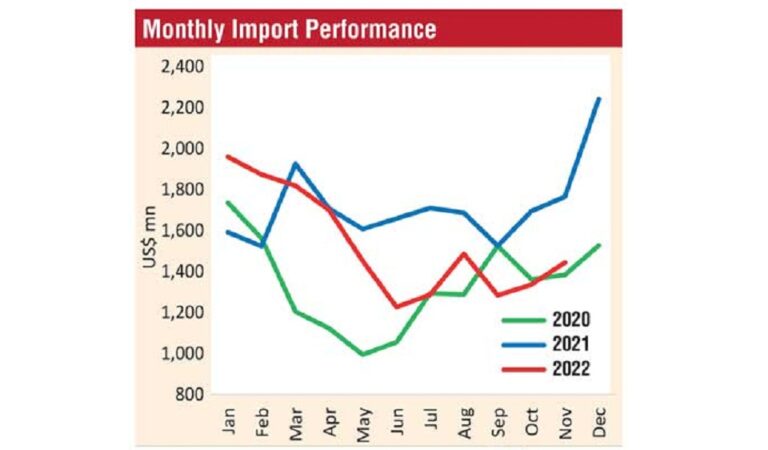
Sri Lanka imports increased in November 2022 marking second consecutive month-on-month (M-o-M) gain and rising to highest since August.
As per external trade data released by the Central Bank recently imports in November amounted to US $ 1.44 billion, up 8 percent from $ 1.33 billion in October and highest since $ 1.48 billion in August.
November data also proves the M-o-M decline seen since August was short lived. However, in comparison to a year earlier, imports were down by 18 percent. In the first 11 months of 2022, imports were down by 8.3 percent to $ 16.8 billion.
CB attributed the decline in expenditure on investment goods mainly contributed to the dip in import expenditure in November 2022. However, it said the M-o-M increase indicates the impact of recent measures to relax some import restriction measures and seasonal demand for imports.
The import volume index declined by 22.7% (y-o-y), while the import unit value index increased by 5.9%, in November 2022, implying that the decline in import expenditure in November 2022, compared to November 2021, was mainly driven by the volume effect.
Expenditure on the importation of consumer goods declined by 27.2% in November 2022, compared to November 2021, driven by lower expenditure on non-food consumer goods.
This decline in expenditure on non-food consumer goods was broad-based but the drop in imports of telecommunication devices (primarily, mobile telephones); medical and pharmaceuticals (base effect of higher expenditure on COVID vaccines in 2021); and home appliances (primarily, televisions) was notable.
Expenditure on food and beverages imports declined by 3.6 percent in November 2022 (y-o-y), mainly with a decline in expenditure on sugar and oils and fats, driven by lower volumes.
However, a significant increase was observed in cereals and milling industry products (primarily, wheat flour). Expenditure on the importation of dairy products (mainly, milk powder) also improved to some extent.
Expenditure on the importation of intermediate goods marginally declined by 0.5 percent in November 2022, compared to a year ago, with a decline in import expenditure on most of the categories of industrial inputs being offset by a substantial increase in import expenditure on fuel.
Categories of intermediate goods that recorded a large decline include, textiles and textile articles (mainly, fabrics); rubber and rubber articles (both natural and synthetic rubber in primary form); plastics and articles thereof (mainly, plastics in primary form); mineral products (mainly, cement clinkers); food preparations (mainly, palm oil); and chemical products.
Import expenditure on fuel, which consists of crude oil, refined petroleum, and coal, increased by 32.6% (y-o-y) to $ 422 million due to non-existent crude oil imports in November 2021. The average import price of crude oil was $ 98.77 per barrel in November 2022.
Import expenditure on coal increased notably in November 2022. In addition, import expenditure on fertilizer increased significantly in November 2022 due to higher import volumes over November 2021, while expenditure on wheat grain also recorded an increase.
Import expenditure on investment goods nearly halved in November 2022, compared to the same month in 2021, resulting from a decline in all subcategories. The decline in the expenditure on machinery and equipment imports was led by office machines and machinery and equipment parts, among others.
Expenditure on all types of goods listed under building materials declined, with a notable drop in imports of iron and steel, cement and articles of iron and steel. In addition, lower expenditure on railway equipment imports led to the decline of import expenditure in transport equipment.