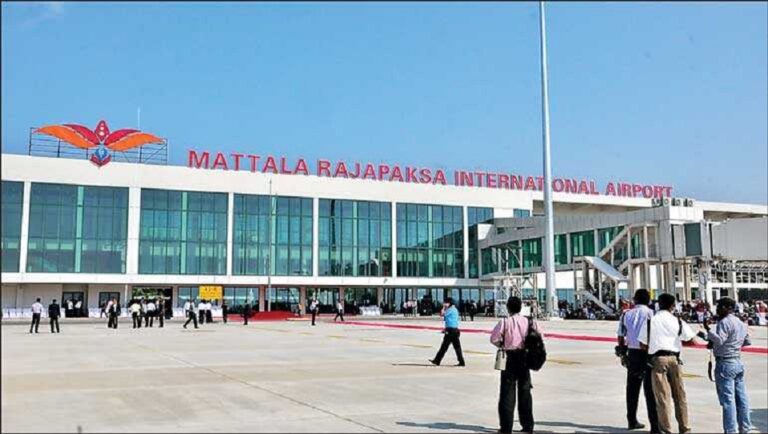
Mattala international airport on the southern coast is to transform into a multipurpose business center by implementing business opportunities related to air and non-air operations, official sources divulged.
This airport had the potential to be converted into a business center for foreign investors and therefore measures would be taken to effectively utilize the international airport facilities and assets to create private and public partnership investment opportunities, Government spokesman minister Bandula Gunawardena said.
A proposal by Minister of Ports, Shipping and Aviation Nimal Siripala de Silva to call for expressions of interest from investors in aviation-related enterprises was approved by the cabinet, he added.
The Sri Lankan government has offered a number of concessions for flights willing to land at Mattala and the airport resumed international flight operation last month after a lapse of two years.
The airport is built to carry out air cargo operations and is equipped with a store complex, special technological equipment, including two sophisticated scanners.
Thus, it has the ability to attract cargo companies by promoting these services and offering reduced tax.
Apart from that, establishing training centers related to the aircraft and aviation industry – flying schools, aviation services schools and aircraft maintenance and repair workshops – in the close vicinity can help attract more stakeholders in to the airport.
The focus is on taking measures to effectively utilize Mattala Rajapaksa International Airport facilities and assets by creating public-private-partnership (PPP) investment opportunities,” Minister Bandula Gunawardena said yesterday.
Following the post-war development agenda of making the country a hub in the Indian Ocean Region, Hambantota was planned as an air and marine exchange operation center.
The development of the MIA fitted into this plan. Given the preferable climatic and meteorological conditions, and basic facilities in conformity with international standards, it was expected to be a success with an increased cargo handling, passenger arrivals and air traffic operations, a feasibility study report revealed.
The MIA also expected to play a significant role in the development of the eastern and southern coastlines of the island with a plan of building an investment center in Hambantota.
It was also expected to facilitate the creation of economic and investment opportunities in the island.
The development of industries and businesses in the area is important to attract people who will use the airport as their transport link. In this regard, increasing the production of products to be exported through the MIA should be given adequate attention.
This requires additional investment to provide resources, consultation and training for small and medium enterprises.
According to the Tourism Board of Sri Lanka, every year, a significant number of tourists visit cultural sites and nature parks in close proximity to the Mattala Airport
Mattala international airport transforms into a multipurpose business center
The Supreme Court upholds the prison sentence of Maithrie’s former chief of staff
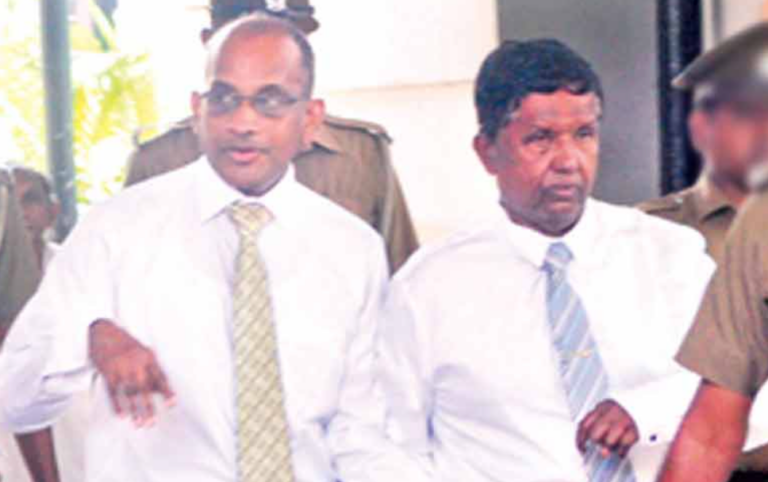
The Supreme Court today (11) upheld the prison sentences given by the three-judge High Court of Colombo to Kusumdasa Mahanama, the former chief of staff of former President Maithripala Sirisena, and Piyadasa Dissanayake, the former chairman of the State Timber Corporation.
That was after announcing the decision of the appeal they had filed.
In 2018, the two were arrested by Bribery or Corruption Investigation Commission officials while demanding a bribe of 54 million rupees from an Indian businessman and receiving 20 million rupees.
In relation to that, a case was filed against them under 24 charges before the three-judge High Court of Colombo, where Kusumdasa Mahanama was sentenced to 20 years imprisonment with hard labor and a fine of 65,000 rupees and Piyadasa Dissanayake was sentenced to 12 years imprisonment with hard labor and a fine of 50,000 rupees.
A program to raise awareness about parliamentary Procedures and Practices
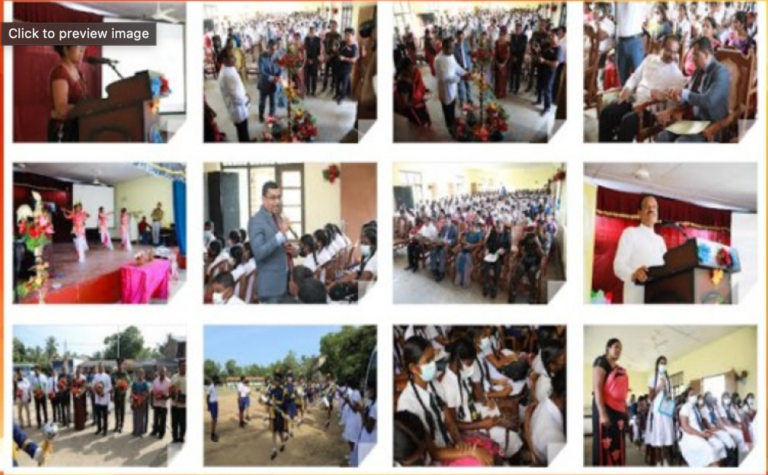
A program to raise awareness about parliamentary Procedures and Practices was held at Hungama Vijayaba College, under the patronage of the Deputy Speaker Hon. Ajith Rajapaksa, January (09).
The main objective of the said program was to develop the knowledge of the school students about Parliamentary procedures and practices and the Assistant Secretary General of Parliament Mr. Tikiri K. Jayathilaka and Director Legislative Services and Director Communications (Acting) Mr. H.E. Janakantha Silva contributed as resource persons in the program.
Delivering a speech on the role of a Deputy Speaker of the Parliament the Deputy Speaker Hon. Ajith Rajapaksa stated that Parliament plays a big role in securing the democracy but the media does not properly communicate it to the citizens. Because of this, the attitude of the citizens towards the parliament is not appropriate currently. Therefore, he pointed out the significance of conveying the role of Parliament to the people through the media.
Assistant Secretary General of the Parliament Mr. Tikiri K. Jayathilaka delivered his speech on the topic of our Parliament and the contribution of the future citizen at the occasion while Director (Legislative Services) and Director Communications (Acting) Mr. H.E. Janakantha Silva delivered his speech on Duties of Parliament and Legislative Process.
This special awareness program is another phase in a series of awareness programs carried out by the Department of Communication of the Parliament of Sri Lanka over the past few years.
The discussion between the President and the Tamil political parties ends without an agreement
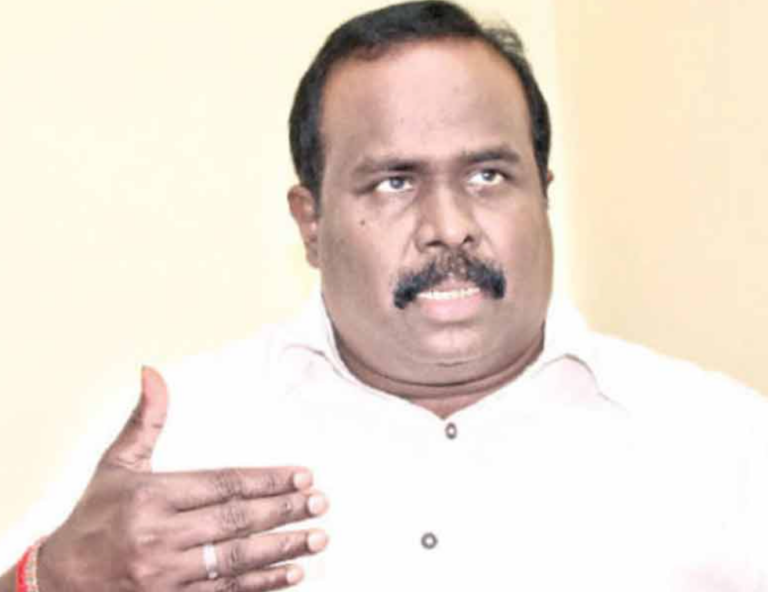
Selvam Adaikalanathan, leader of the Tamil Eelam Liberation Organization (TELO), says that the discussion held between President Ranil Wickramasinghe and representatives of Tamil political parties yesterday (10) ended without an agreement to find a solution to the national problem.
He mentioned that the government has asked for another week to reach an agreement on the three basic proposals presented by their side last month, including the return of acquired lands in the North East and the full enforcement of the 13th Amendment.
Accordingly, he said that the discussion round which was scheduled to be held on the three days of January 10, 11 and 12 ended yesterday.
Navy women cyclists win overall championship in cycling at 12th Defence Services Games
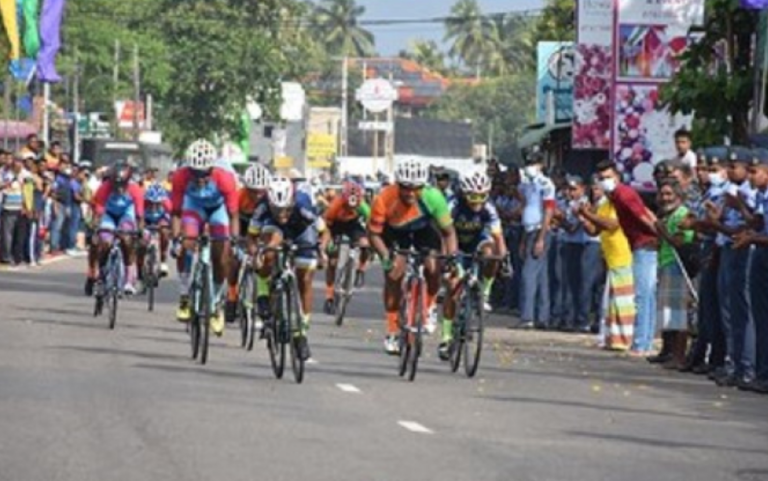
Sri Lanka Navy women cyclists won the overall team championship in cycling at the 12th Defence Services Games. The race started from the Air Force Base, Katunayake on 08th January 2023.
It covered 65km and 400m in distance, through Minuwangoda, Divulapitiya, Katana and Negombo before returning to the Air Force Base, Katunayake. The women’s cycling team of the Navy completed the race in 02h 02min 47sec winning the overall championship. The gold medal for the best woman cyclist was won by Woman Ordinary Seaman KASN Perera.
Director General Training, Rear Admiral Mahinda Mahawatte graced the event as the Chief Guest. A group of officers from tri-services were also present on this occasion.
Semasinghe says not to worry about the salaries of state employees
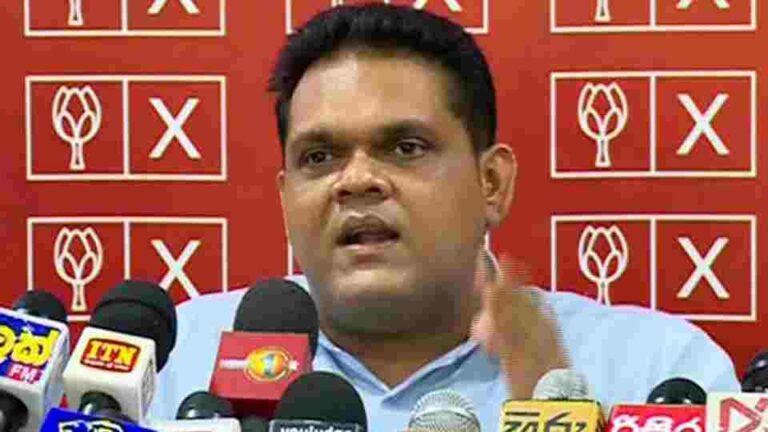
Minister of State for Finance Shehan Semasinghe says that priority has been given to welfare benefits including salaries, pensions and prosperity of public servants.
“It will take some time for the economy to fully stabilize and return to normal. The government is currently implementing the entire program for that. The Ministry of Finance has informed all the ministries to strictly limit the expenditure. Even when presenting the budget for 2023, money has not been allocated for other expenses except giving priority to essential expenses. We believe that with the approval of the IMF in the first quarter, the economic recovery will accelerate.
We are currently managing the allocation of money for the salaries of government employees, the payment of money for pensioners, the payment of money for Samurdhi and other subsidies. This is difficult management. We can convey the message that we are working to provide government employee salaries, pensions and welfare benefits without any cuts or delays. There should be no doubt about it. Arrangements will be made to receive them on those respective dates.
State Minister Shehan Semasinghe said this while issuing a statement to the media yesterday (10).
Sri Lanka Original Narrative Summary: 11/01

- Cabinet Spokesman and Govt’s Economic Guru Dr Bandula Gunawardena says the Treasury is short of funds: also says the economic crisis is worse than expected: admits tax income in the first 3 months of this year will be low: laments the Govt is unable to get loans as no one is giving and can’t print any more money: warns Govt has no choice but to take drastic steps until the situation improves.
- Canadian Govt imposes sanctions against former Presidents Gotabaya Rajapaksa, Mahinda Rajapaksa, Staff Sergeant Sunil Ratnayake, Lt Commander Chandana Prasad Hettiarachchi for alleged “gross and systematic violations of human rights”.
- Tamil Political Parties led by TNA give 7-day ultimatum to President Ranil Wickremesinghe to fulfil 3 demands: [a] full implementation of 13th Amendment to the Constitution: [b] release of all lands belonging to Tamils in the North and East occupied by Govt agencies: [c] release of all Tamil political prisoners.
- Foreign media reports that a Sri Lankan gemstone company that was key to sanctioned terrorist facilitator Ahmed Luqman Talib’s revenue generation in support of Al-Qaida has continued doing business after Talib was sanctioned and arrested.
- President Ranil Wickremasinghe informs Cabinet that 5% of the estimated expenditure under the Budget 2023 proposals from all Ministries will be curtailed.
- Cabinet Spokesman Dr Bandula Gunawardane says the payment of the ‘Samurdhi’ allowance may be delayed by 1 or 2 weeks: State Finance Minister Shehan Semasinghe contradicts by saying there shouldn’t be undue fears regarding payment of Govt employee salaries or welfare benefits, including Samurdhi.
- Ministry of Public Administration directs all District Secretaries to temporarily suspend accepting deposits from candidates for the upcoming Local Govt elections: recalls letter shortly afterwards.
- UNP General Secretary Palitha Range Bandara says the UNP and SLPP have arrived at a general consensus to contest the Colombo Municipal Council, Kandy Municipal Council and Puttalam Urban Council under the “Elephant” symbol during the upcoming Local Govt Elections.
- Committee to investigate Sri Lanka Men’s Cricket Team’s participation in the ICC T20 World Cup and relevant incidents, hand over report to the Sports Minister: report said to contain observations on financial misappropriation, influence of social media, influence of religious factions and several other matters.
- India wins the 1st Cricket ODI against Sri Lanka by 67 runs to take a 1-0 lead in the 3 match series: India – 373/7 (50): Sri Lanka – 306/8 (50), Dasun Shanaka – 108*.
Canada imposes sanctions on Sri Lankan state officials including Rajapaksa brothers for human rights violations
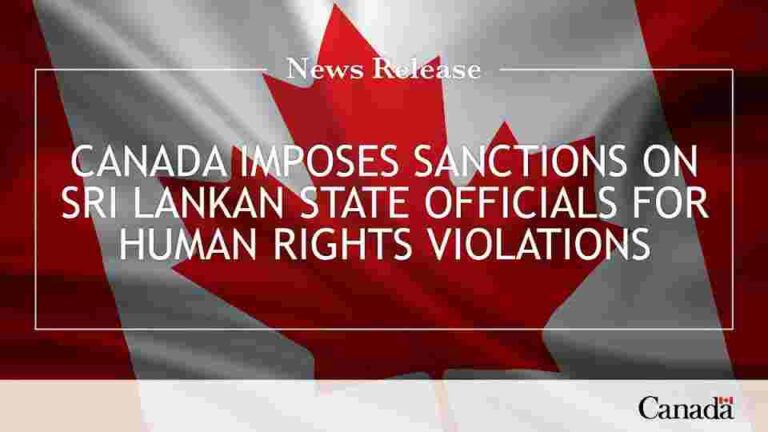
January 10, 2023 – Ottawa, Ontario – Global Affairs Canada: The Honourable Mélanie Joly, Minister of Foreign Affairs, today announced Canada imposes targeted sanctions under regulations pursuant to the Special Economic Measures Act against four Sri Lankan state officials responsible for gross and systematic violations of human rights during armed conflict in Sri Lanka, which occurred from 1983 to 2009.
The regulations pursuant to the Special Economic Measures Act impose on listed persons a dealings prohibition, which would effectively freeze any assets they may hold in Canada and render them inadmissible to Canada under the Immigration and Refugee Protection Act.
Despite continued calls from Canada and the international community to address accountability, the Government of Sri Lanka has taken limited meaningful and concrete action to uphold its human rights obligations. This jeopardizes progress on justice for affected populations, and prospects for peace and reconciliation.
Victims and survivors of gross human rights violations deserve justice. That is why Canada continues to call on Sri Lanka to fulfill its commitment to establish a meaningful accountability process.
These sanctions send a clear message that Canada will not accept continued impunity for those that have committed gross human rights violations in Sri Lanka.
Canada will continue to collaborate alongside international partners, including through relevant multilateral bodies to advocate for human rights and accountability in Sri Lanka, which is an important step toward securing a safe, peaceful and inclusive future for the country. Canada, as part of the Core Group on Sri Lanka at the United Nations Human Rights Council will continue to advocate for the full implementation of resolution 51/1 and support efforts towards attaining accountability and peace on the island.
Canada supports efforts towards urgent political and economic reforms to alleviate the hardships faced by the people in Sri Lanka. We strongly encourage the Sri Lankan government to promote democracy, human rights and maintain the rule of law as it works to address this crisis.
In addition to today’s announcement, and in response to the humanitarian crisis in Sri Lanka, Canada announced $3 million to the appeals launched by the United Nations and the International Federation of Red Cross and Red Crescent Societies to address immediate needs, including food security and livelihoods, shelter and non-food items, as well as nutritional assistance and primary healthcare services for vulnerable children and women. Canada has also readjusted ongoing international assistance projects to address pressing needs, providing support, for instance, to the World Health Organization for the procurement of essential medical equipment and supplies.
Quotes
“Over the past four decades, the people of Sri Lanka have suffered a great deal due to the armed conflict, economic and political instability, and gross violations of human rights. Canada is steadfast in its support to attain peace, reconciliation, justice and accountability on the island. Canada has taken decisive action today to end international impunity against violators of international law. Canada stands ready to support Sri Lanka’s path to peace, inclusion and prosperity through the advancement of accountability, reconciliation and human rights, including international assistance to address the domestic crisis.”
– Mélanie Joly, Minister of Foreign Affairs
Quick facts
- Canada regularly expresses concerns on issues related to accountability and the advancement of human rights with senior Sri Lankan officials.
- Through support provided to various non-governmental organizations, Canada continues to help advance human rights in Sri Lanka, including in such areas as language rights and the rights of women and girls, among others.
- Canada has been working closely with its like-minded partners, including as a member of the Core Group on Sri Lanka at the United Nations Human Rights Council since 2018, and will continue to do so. Canada is committed to continuing its collaboration and advocacy alongside our international partners.
- Together with core group members, Canada is pleased to have led the adoption of the resolution on Sri Lanka at HRC Session 51 in September/October 2022 underscoring the ongoing international commitment to the advancement of meaningful progress on reconciliation and accountability in Sri Lanka.
- Canada is closely monitoring the evolving humanitarian situation and has provided support to Sri Lanka to help address immediate food and medical needs.
- Canadian assistance in Sri Lanka is helping to procure emergency medical supplies and medicines, and to provide nutritious school meals for vulnerable primary school children.
Indo-SL ODI begins amidst attempts to cut SLTV audience/ Indian fans
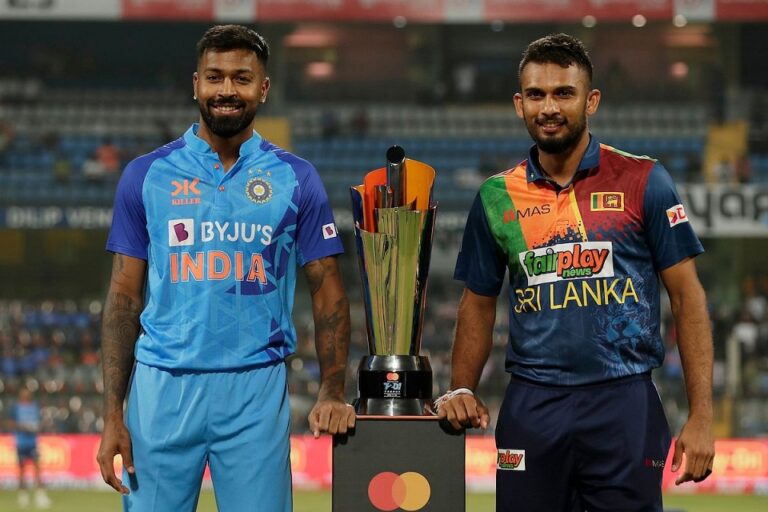
Majority Sri Lanka and Indian Cricket fans have been deprived of the opportunity to watch the Indo–Lanka T20 ODI cricket series by Television rights mafia in Sri Lanka and sudden increase in the price of ticket to enter stadiums in India by increasing entertainment tax.
Sri Lankan television viewers have already lost the opportunity to watch the first two T20 matches free of charge due to unexpected action of blocking the transmission of Supreme TV, which acquired the right to broadcast it.
Although this blockade has been removed for the televising of the third T20, the mafia behind the sports broadcasting/ television rights for several years is still at work as it involves millions of rupees in deals with private TV channels.
Sri Lankan cricket fans had to pay to watch cricket matches on Dialog and PEO TV for many years, Supreme TV, which acquired the right to broadcast India-Sri Lanka cricket match series, has stepped in to broadcast it free of charge to local cricket fans
A sum of Rs.173 has been levied from a Dialog TV subscriber to watch a cricket match and in previous occasions collecting around Rs.200 million or more from all Sri Lankan cricket fans to to watch a match on Dialog TV.
The cricket match series, which commenced on January 3, included three T20Is and three ODIs.
Now the T 20 series has ended with a 2-1win for India and all Sri Lankans will have the opportunity to watch the India-Sri Lanka ODI free on Dialog TV (Channel 20), PEO TV (Channel 140) and Freesat (Channel 17).
They have the opportunity to watch ‘Supreme TV’ by tuning the television to UHF 47 (Islandwide), UHF 49 (Western), UHF 28 (Southern), UHF 56 (Sabaragamuwa) and UHF 32 (Karagathanna) from today.
Meanwhile Indian cricket lovers are shocked after hearing that ticket rates for the upcoming India-Sri Lanka ODI to be played are exorbitant at Barsapara Cricket Stadium Guwahati, India, commencing from 2pm onwards (Sri Lanka time).
Kerala Sports Minister V Abdurahiman has sparked off a huge controversy by saying that those who cannot afford it need not go to watch the match, Indian media reported.
The minister made the controversial remarks on Sunday when reporters asked him whether the government would consider withdrawing the alleged decision to hike the entertainment tax to be levied on the spectators.
Indian team has been strengthened with the return of their two senior player’s skipper Rohit Sharma and Virat Kholi and with the presence of these two players Indians have a strong batting line up to compete with Sri Lanka.
The crowd support and home advantage is an advantage for the Indians but Sri Lanka cannot be underestimated at this ODI series. Winning against India in India is not an easy task but our team is in good shape to battle with them said Sri Lanka Skipper Dasun Shanaka.
Sri Lanka most probably will include young spinner and all rounder Dunith Wellalage replacing Maheesh Theekshana while they are looking to strengthen their fast bowling department by adding an extra paceman, said senior cricket official.
Govt alleviates difficulties of Leasing and Debt Instalment Payers
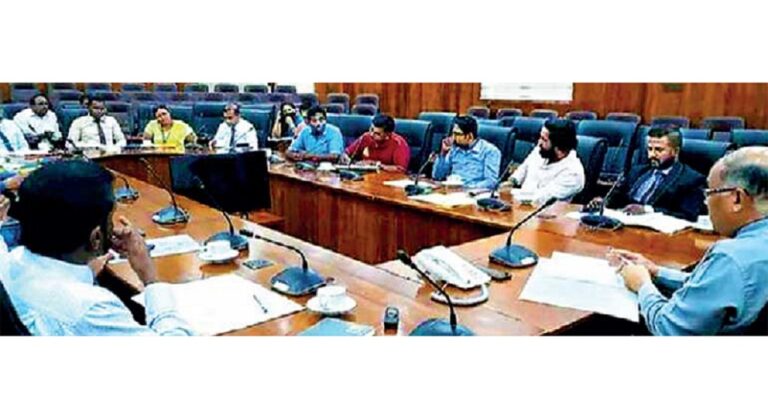
The Joint Association of Leasing and Debt Instalment Payers with over 200,000 members says the Government has agreed to extend the grace period to pay due instalments.
“The discussion held with the Central Bank and the Finance Ministry was successful. It was agreed by both parties to extend the grace period on 31 December 2022 to pay loan instalments.
The directive relevant to the decision will be issued by the Central Bank soon. The move will provide great relief to all members of the association,” Joint Association of Leasing and Debt Instalment Payers General Secretary Asanka Ruwan Pothupitiya said.
He also revealed that the negotiations with the Finance Ministry to intervene in the non-compliant methods of acquiring vehicles by force were also successful, adding that they believe all these negotiations have been successful and the leasing and loan instalment payers can breathe a sigh of relief now.
Pothupitiya said as per complaints made against leasing companies over the seizure of vehicles by force, the Police have arrested a group who were involved in such activities and produced them to the court.
The association expressed their appreciation to the Inspector General of Police for punishing the wrongdoers as per the law.
Joint Association Media Secretary Sumedha Amarasinghe said all information and suggestions were shared with the Finance Ministry, the Central Bank, all line ministries and all line agencies highlighting the importance of loans, leasing, and insurance to the SMEs.
“The most special factor is that a very special proposal lobbied by our association regarding loans and leasing has been considered by the authorities.
It will be announced and implemented shortly. This was something these private institutions have kept on their hold, but now the authorities are taking measures to give it back to the hands of the people. This is a great breakthrough we achieved as an association, SMEs and the general public,” he added.
In June last year, the association called on the Government not to destroy the 52% of SMEs who contribute to the national economy, by trying to protect the cronies of the ministers and large corporations.
“Today, people are in dire straits as a reflection of the worst economic crisis with the high debt burden, skyrocketing cost of living, and all income-generating avenues being blocked. Yet, the large corporations are thriving as they continue to make profits from the crisis by stripping the middle-income earners or the majority of the population,” they added.
One of the major proposals they requested the Government last year was requesting the relevant authorities to amend the unfavourable Recovery of Loans by banks (Special Provisions) Act No. 4 of 1990, Debt Recovery (Special Provisions) Act No. 2 of 1990 and Finance Leasing Act No. 56 of 2000.