The Indian government has opened five special vostro accounts for trade in rupee with Sri Lankan banks with a view of facilitating trade with the island nation, official sources said.
SBI Mauritius Ltd and People’s Bank of Sri Lanka opened an SVRA with State Bank of India (SBI). In addition, Bank of Ceylon opened an account in its Indian subsidiary in Chennai recently.
Union Bank of India has opened spec opened special rupee account of Ros Bank Russia while Chennai-based Indian Bank has opened such accounts of three Sri Lankan banks, including Colombo-based NDB Bank and Seylan Bank.
These special vostro rupee accounts (SVRA) with banks of Sri Lanka rationalizing the rupee trade arrangement.
Under the rules, any surplus in these rupee accounts can be invested in treasury bills and government securities. Banks want to understand how these securities will be transferred to the buyers.
Under the arrangement announced by the RBI on July 11, an authorized bank in India can open special rupee vostro accounts of correspondent banks of any partner trading country.
Both private and public sector banks have been reluctant to open and operate these vostro accounts, worried about getting hit by the US-led sanctions on Russia.
In view of the increasing interest of the global trading community in the Indian Rupee (INR), Reserve Bank of India (RBI) allowed for a settlement mechanism to carry out transactions in the rupee, with immediate effect.
This system will pave the way for facilitating trade with countries currently unable to conduct transactions in US Dollars, Euro, or other dominant foreign exchange currencies.
The new system will facilitate invoicing, payment, and settlement of exports/imports in rupees through Special Rupee Vostro Accounts, i.e., an account of a partner country bank with an authorized Indian bank. Under this new system, the payer’s country/bank will make the payment, which shall be credited into the Special Vostro account of the payee.
The move to open the special vostro account clears the decks for settlement of payments in rupee for trade between India and Russia, enabling cross-border trade in the Indian currency, which the RBI is keen to promote Indian news agencies reported.
“Indian importers undertaking imports through this mechanism shall make payment in INR (Indian Rupee), which shall be credited into the special vostro account of the correspondent bank of the partner country, against the invoices for the supply of goods or services from the overseas seller/supplier,” reported PTI citing the RBI.
India’s rupee trade settlement mechanism, a means of using rupees instead of dollars and other big currencies for international transactions, is attracting interest from more countries.
It has already been used by Russia following the imposition of sanctions on Moscow over the Ukraine war.The Reserve Bank of India (RBI) set up the mechanism in July.
The Indian government is looking to bring countries that are short of dollars into the mechanism, said a government official and an industry source aware of the development. The sources declined to be named, as the matter is confidential.
Sri Lanka to open five ‘vostro’ accounts with Indian Central Bank approval
SL suggests to form group of Eminent Persons to combat terrorist financing
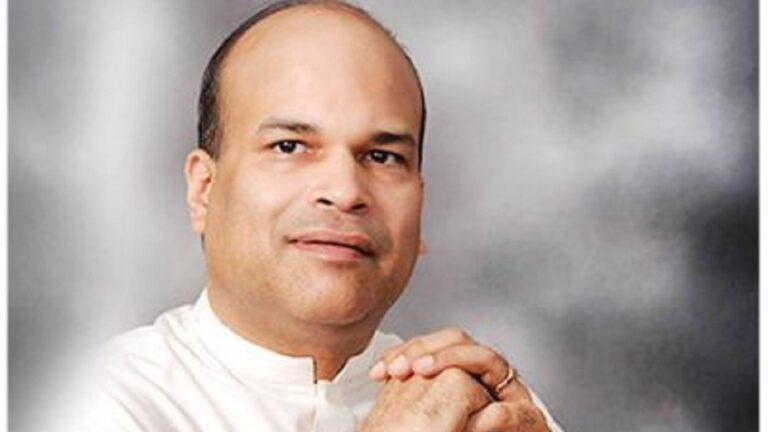
Sri Lanka has recently proposed to set up a group of Eminent Persons with a view to helping galvanize greater political will and to create further international awareness among states on the importance of combating terrorist financing, at the recently concluded 3rd No Money For Terror (NMFT) Ministerial Conference in New Delhi.
Sri Lanka’s High Commissioner to India Milinda Moragoda, who led the delegation of Sri Lanka to the Ministerial Conference made this proposal in his statement to the Conference on Saturday (19).
The 3rd No Money For Terror Ministerial Conference on Counter-Terrorism Financing was held from 18-19 November 2022 in New Delhi, hosted by the Government of India.
The Conference, which was inaugurated by the Prime Minister of India Shri Narendra Modi saw the participation of delegations from ninety-three countries and multilateral organisations.
The Conference extensively discussed global trends in terrorism and terrorist financing, use of formal and informal channels of funds for terrorism, emerging technologies and terrorist financing and requisite international co-operation to address challenges in combating terrorist financing.
Delivering the country statement of Sri Lanka, High Commissioner Moragoda further stated that political will on the part of member states is the most significant component in international cooperation to address the multi-faceted challenges faced when combating terrorist financing.
He said that though the objective of the Conference on “No Money for Terror,” which is to sensitize the international community to the dangers of ignoring this issue, is commendable, there should be a mechanism to provide continuity to the work of the Conference.
In this context, High Commissioner Moragoda proposed that India, as the Chair of the present Conference, take the lead in creating a group of Eminent Persons selected from among the member states with a view to helping galvanize greater political will and to create further international awareness among states on the importance of combating terrorist financing.
Ella Tourism Zone to be developed under a grand plan – Says, President
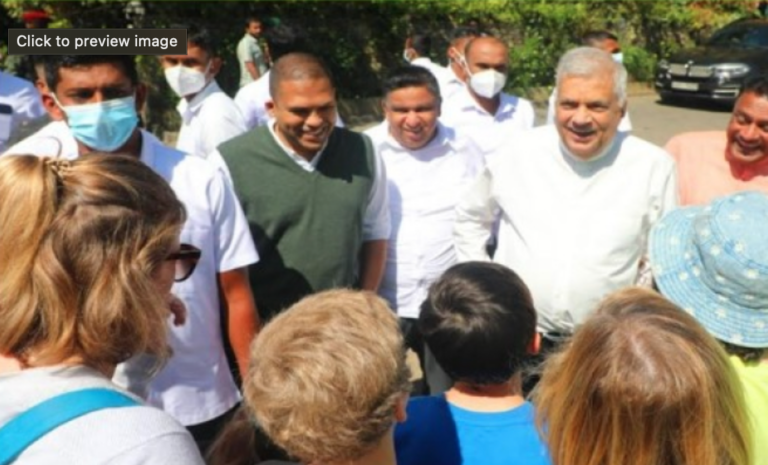
President Ranil Wickremesinghe instructed the officials to take immediate steps to develop the Ella tourist area according to a grand comprehensive plan.
The President also informed the officials to prepare the relevant development plan within 4 months together with the Ministry of Tourism, the Ministry of Urban Development and the Ministry of Environment and submit it to him.
The President issued these instructions during the discussion held with the Ella Businessmen’s Association today (16)
The President pointed out the need to plan the Ella tourism zone formally and according to a proper plan and also pointed out the importance of carrying out its construction activities in an environmentally friendly manner to avoid disturbing the tourist attraction.
The President pointed out the need to plan the Ella tourism zone formally and according to a proper plan and also pointed out the importance of carrying out its construction activities in an environmentally friendly manner to avoid disturbing the tourist attraction.
The President pointed out the need to plan the Ella tourism zone formally and according to a proper plan and also pointed out the importance of carrying out its construction activities in an environmentally friendly manner without obstructing the tourist attractions.
President Ranil Wickremesinghe further stated that under the first phase, the Ella tourism zone will be developed through a formal plan, and then steps will be taken to make the entire Uva Province a preferred destination for tourists.
Expressing his views, President Ranil Wickremesinghe said,
Ella is a tourist area created by the people of this area. It now contributes widely to Sri Lanka’s economy. We hope to develop this tourist zone according to a new comprehensive development plan. I have instructed the officials to take steps to provide short-term solutions to the problems that have arisen in this area.
Today, tourists visiting the Maldives spend about $500 a day. However, tourists who come to the Ella area spend twenty dollars a day. We must change this situation.
Trained workers are needed for the promotion of the tourism industry. Experienced tourism workers left the country during the last Covid epidemic. They were very experienced workers.
Tourists who spend $500, come expecting good service. We need trained employees to provide such a service.
Steps should be taken to create a good tourism service under this massive development program. Those tourists who arrive in the Uva Province should spend at least 07 days there. We need to make new plans with that objective in mind.
We have got to arrange to attract the tourists visiting the Eastern Province to Ella thereafter. This new development plan should include a program to develop the Mattala Airport and bring tourists directly from Mattala to Ella. These plans would be effective for the country’s development both in the short term and in the long term.
We must work to maintain the banking sector in the country without letting it collapse while developing the tourism sector. If the banking system collapses, tourists will not come to our country. Therefore, the government has a program to protect both the tourism and banking sectors. As we would implement it, I request you all support it.
President Ranil Wickremesinghe solved many of the issues raised by the Ella Businessmen during the meeting with them and the prompt action taken by the President to address their issues was highly appreciated by the Ella businessmen.
Ministers Nimal Siripala de Silva, Harin Fernando, State Ministers Chamara Sampath Dasanayake, Governor of the Uva Province A.J.M. Musammil, Chief of Presidential Staff and President’s Senior Adviser on National Security Sagala Ratnayake, Badulla District Secretary Damayanthi Paranagama and several others were present at the event.
President Media Division (PMD)
SRI LANKA ORIGINAL NARRATIVE SUMMARY: 17/12
- Vérité Research Executive Director Dr Nishan de Mel says the debt restructuring process will take about another one year: laments process is very slow: also says ability for the economy to be revived will be weakened as a result: questions competency of present economic management team to deal with the crisis.
- Central Bank “money printing” (CB holdings of Treasury Bills) jumps by a staggering Rs.12.8 bn per day in week ending 16th December: “money printing” under Governor Nandalal Weerasinghe reaches astronomical high of Rs.873 bn in about 8-1/2 months at an average of around Rs.100 bn per month, even without paying forex debt: about 50% higher than under previous Governors Cabraal and Lakshman.
- Supreme Court fixes 3 Fundamental Rights petitions challenging the legality of the Presidential Pardon granted to former MP Duminda Silva for argument on 7th February 2023: previously, former President Gotabaya Rajapaksa was also added as a respondent in the Petition
- Brigadier Ravi Herath says over 15,000 military personnel have come forward to resign from their respective services following announcement of a general amnesty period by the Ministry of Defence to tri-forces absentees.
- Several SLPP heads of local authorities inform President Wickremesinghe that they are ready for local polls: SLPP General Secretary Sagara Kariyawasam accompanies them for the meeting.
- Print media organisations inform Economic Stabilisation Committee that many of their member organizations are unable to pay salaries to permanent staff and that the economic crisis had decreased newspaper printing by 60-70%: lament the amounts allocated for advertisements has also decreased by around 70%.
- Reserve Bank of India approves 5 Sri Lankan banks to open ‘Vostro’ accounts for Indian trade with Sri Lanka through an Indian Rupee trade settlement mechanism: move necessitated due to Asian Clearing Union discontinuing Sri Lanka from list of participating countries after the debt default.
- Initial investigation into the death of businessman Dinesh Schaffter reveals that he had been planning to meet former cricket presenter Brian Thomas: Police probe continuing.
- Market price of eggs increases after suspension of the Consumer Affairs Authority’s maximum retail price order on eggs, by the Court of Appeal: previously, the CAA declared that a white egg be sold at Rs.43 and a brown egg at Rs.45.
- Sports Act amended to prohibit dual citizens from contesting for any post of a sports body: maximum age limit to hold a position also fixed at 70.
President invites Rotary Club to join with Government in its projects to restore Sri Lanka’s economy!
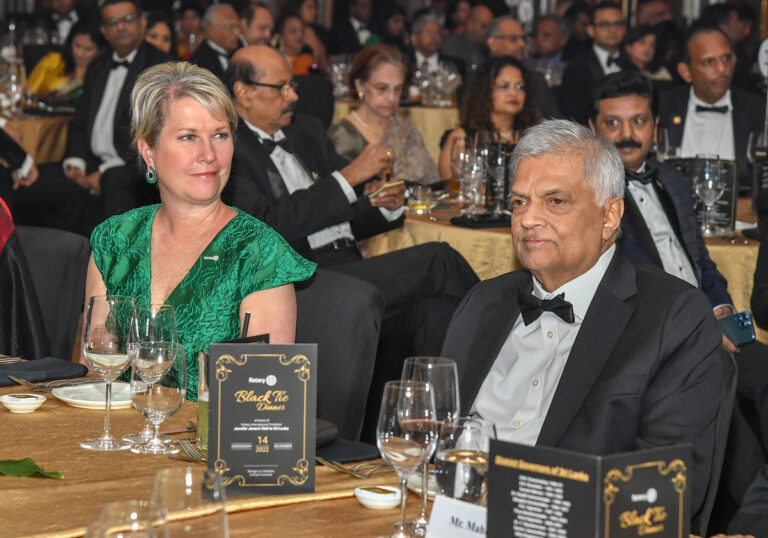
President Ranil Wickremesinghe invited the Rotary Club to join Sri Lanka’s National Food Security programme to ensure a self-sufficient country by next year. He said that Sri Lanka has established a combined mechanism which is working together with the government and the private sector to organize growing of food for the supply chain, storing and delivering of food into the cities. It is also concerned with malnutrition, people without food and how to feed them.
He also acknowledged the Rotary, for the effort that was taken at a time when Sri Lanka was in difficulty, and how the Rotary came along to provide medicine to Sri Lanka.
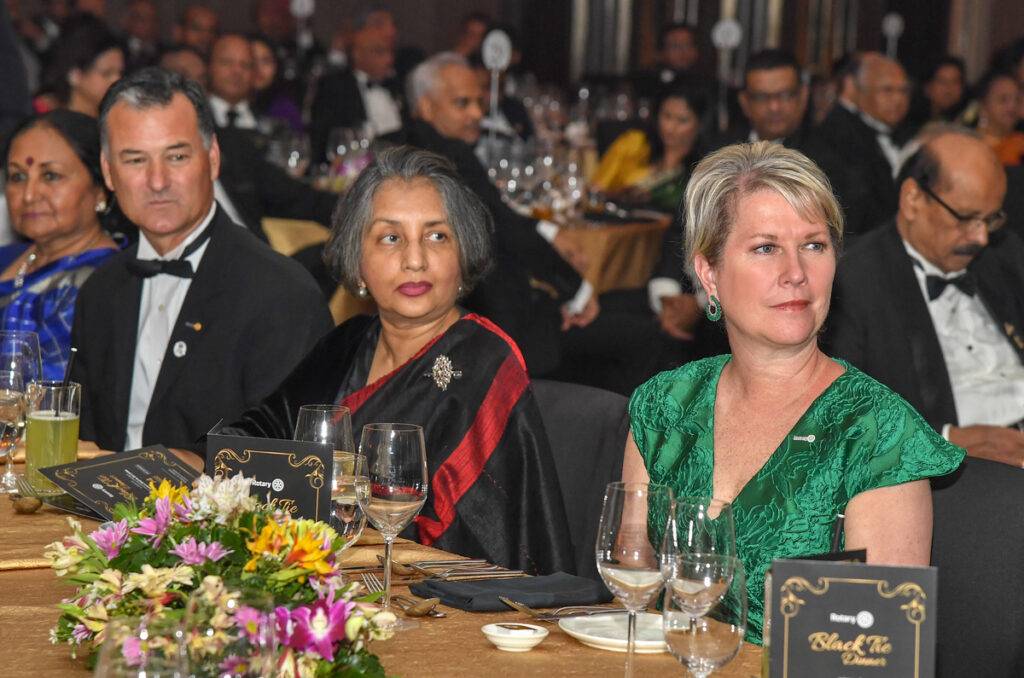
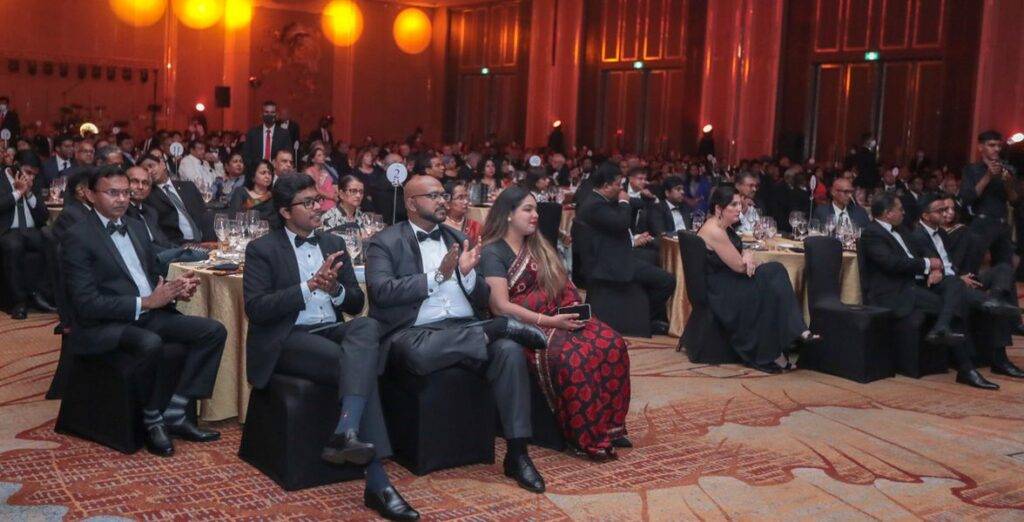
President Ranil Wickremesinghe made these remarks while addressing the gathering to mark the Rotary International President Jennifer Jones’s visit to Sri Lanka organized by the Rotary District 3220 at the Shangri La Hotel Colombo, yesterday evening (14).
The President also said, “I have seen your campaign to plant a million trees, well next year is also going to be the year when we go full out on mitigating climate change. A number of laws will be passed but we want to start urban forests and many other projects. I am sure you in the Rotary, will be taking part in some of the projects. So this is another area in which I feel I have to ask the Rotary to help me.”
He further said that a government has to be innovative in a crisis situation. The government has to restore the economy as well as be bold to see how it can also get the country on the top of the world, which he said is not a difficult and impossible task. He also pointed out that the government needs the commitment of the public for the next 25 years to make this country, a good beautiful country and a strong country.
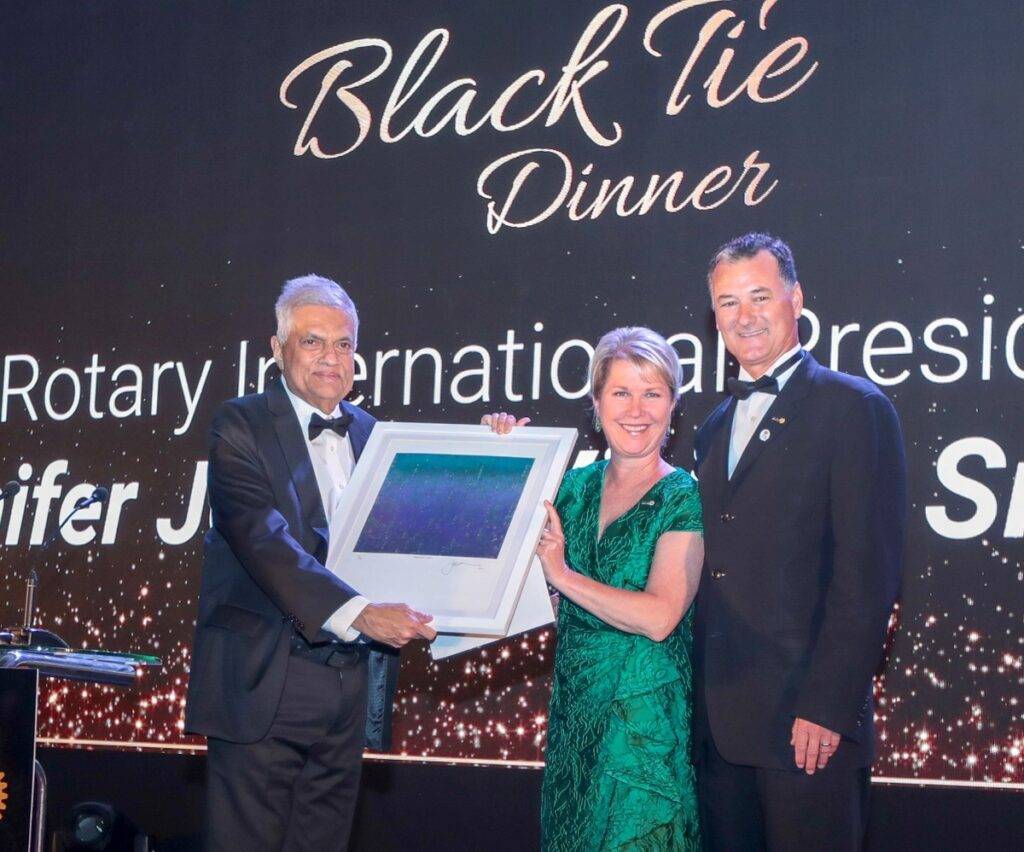
Rotary International President Mrs. Jennifer Jones, presented a memento, a painting, ‘Imagine one’s Dream’ especially designed and painted for President Wickremesinghe.
Prof. Maithree Wickramasinghe, Minister of Health Keheliya Rambukkwella, District Governor Pubudu De Zoysa, College of Governors Ajith Weerasinghe, Krish Rajendran, and other officials also participated in this occasion.
Following is the full speech made by the President;
I am here to repay a debt. When things were pretty bad when I became the Prime Minister and I was under fire, one of the biggest issues was the shortage of medicine. So Keheliya came along to me and said kindly find me some money to buy medicines. At that time we were dead broke. What do I do? I thought it best to turn to Ravi and the Rotary. So they came along and they started this lifeline. And as he said, work with FAO we got to get everyone together and we got the medicine too. So thank you Rotary, thank you, Ravi.
Now, why don’t you join us in the next programme, the National Food Security programme? To ensure we are self-sufficient next year, despite not having fertilizer and the consequences of the Ukrainian war. We have already taken over, we started the campaign to ensure that we have sufficient food in our country, indeed ourselves and we have got a combined mechanism which is working together with the government sector and the private sector. At the basic level of the Divisional Secretary’s Division, we are handing it over to people to give leadership.
Work with the Divisional Secretary’s combined mechanism, we are bringing together all the government departments, and provincial institutions in the divisions and we want them to work with the local organizations. There are different people who have come and taken over divisions, some have been members of Parliament, and some are government servants in that region. Many in the social service organizations and many in the private sector have also joined.
So I would like you all to take over a few divisions and organize the growing of food for the supply chain, storing of food and how we get the food here into the cities. On the other hand, we have other area divisions like in Colombo, we are just looking at malnutrition, people without food and how we can feed them.
Throughout the country, we are growing food, identifying the people without food, looking at malnutrition, and trying to certainly help them to get along. Community kitchens have been started and there are many more to be done.
If there are some of you who are willing I must say, this is the time and I have no doubt that you will all get together and join us in the food security campaign. We have to ensure that no one goes hungry.
Some of the people are going through a very tough time and if all of us get together I think we have sufficient resources to look after them.
So this is my request now, thank you for the lifeline, keep the lifeline going and then get into this campaign.
The Rotary is a force for the good. The Rotary brings together the humane aspects of society in a world whether it be political, social or economic, marked by divisions and more so by hate. The level of hate in the world is increasing. It is alarming. Nevertheless, there have to be forces of good and that is what the Rotary has turned out to be. You spread across the world, from Chicago now you are covering virtually every country other than North Korea. There may be some secret Rotarians there too. But you brought together people who are committed to helping in their society in their own community. People who are helping anonymously, as a community, as a group. Now, this is what we admire. One of the most successful campaigns has been the eradication of polio. I remembered the effort that Ravi and others took back in the days when the war was on and we went into the territory, which was under the control of LTTE. That was a difficult task. Firstly, you could have been attacked by the LTTE, secondly, you could have been attacked by those in the South who didn’t want anyone to go to the controlled areas, but the job was done. That was part of the greater programme of the Rotary to eradicate polio.
As seen in your campaign to plant a million trees, well next year is also going to be the year when we go full out on mitigating climate change. A number of laws will be passed but we want to start urban forests and many other projects. I am sure you in the Rotary, will be taking part in some of the projects. So this is another area in which I feel I have to ask Rotary to help me.
Because you asked me how I keep this ticking, I don’t know if you want to put some sticking plaster. It’s holding so far, and from time to time I reach out to people and organizations and say help us to keep this together. In a crisis, we have to be innovative. Which is what my friends from the other school have not learned. Nevertheless, we know the duty we have. We not only have to restore our economy, but we got to be bold and see how we can also get to the top of the world. It is not difficult. It is not impossible. Just commit ourselves for the next 25 years. Some of us won’t be there. The rest of you will be. But let us commit ourselves to making this country, a good country, a beautiful country and a strong country.
To do so, we need all your commitment and that is the spirit of the Rotary. I wish many other parts of our community would have that spirit. A sense of commitment, that sense of commitment has to be spread. A country in peril like Sri Lanka requires that and this is the work that you have to spread throughout the world. We have here Rotarians not only from Sri Lanka, from India, Maldives, and Canada, you forget your differences and get together. There is one goal and that is the goal which all of us have to achieve if this world is to be a better place. That is our commitment to humanity. Jennifer made her own personal commitment leaving aside the media business, I have been at both ends of the media, the hitting end and the receiving end. But, you made your commitment to the Rotary. You made your commitment to the community. And you come up and you are here as the first female President of the Rotary. And then you have the female District Governor in Sri Lanka. This is what my wife calls a Dream Team, all headed by women. Why not, after all 52% of Sri Lanka is women and you may say there are not enough females in the Rotary. So one of their jobs is to increase the number. In any case, I am happy that she came here and I am happy that she was able to spend two days here. But we hope Jennifer will have time to come here and spend a longer time in Sri Lanka working among the most disadvantaged in our country. So I must say thank you to the Rotary. Thank you for what you are doing throughout the world. So let me raise a toast both to the Rotary International and to its first female President Jennifer Jones.
PMD
PMD
WEATHER FORECAST FOR 17 DECEMBER 2022

A showery condition is expected to enhance in the Northern, North-central, Uva and Eastern provinces of the island today onwards.
Showers will occur at times in Eastern and Uva provinces and in Polonnaruwa, Matale and Hambantota districts.
Showers or thundershowers will occur at a few places in Western and Sabaragamuwa provinces and in Kandy, Nuwara-Eliya, Galle and Matara districts during the afternoon or night.
General public is kindly requested to take adequate precautions to minimize damages caused by temporary localized strong winds and lightning during thundershowers.
The first draft of the Bill on Gender Equality and Empowerment of Women completed
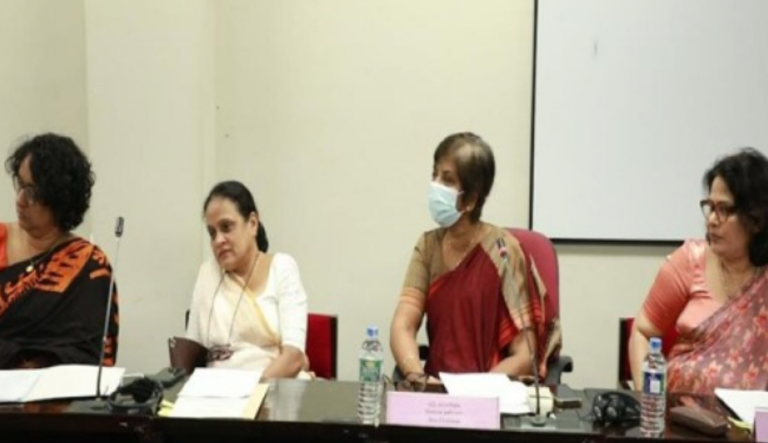
The Select Committee of Parliament to look into and report to Parliament its recommendations to ensure gender equity and equality with special emphasis on looking into gender-based discriminations and violations of women’s rights in Sri Lanka disclosed that the first draft of the Bill on Gender Equality and Empowerment of Women has been completed.
This was disclosed at the Select Committee chaired by Hon. (Dr.) Sudarshini Fernandopulle recently. The Bill is drafted to establish a National Commission for Women, to establish a mechanism including the appointment of an ombudsman for women’s rights and to protect the rights of women and to take legal action by the commission in case of violation of such rights.
Hon. (Dr.) Sudarshini Fernandopulle, chair of the Select Committee instructed the officials to seek public views, gender experts, civil society organizations and women's rights organizations on the said Bill.
Accordingly, it was decided to get comments pertaining to this Bill, having published it on the official websites of the Ministry of Women, Child Affairs and Social Empowerment and the Women Parliamentarians Caucus and publish newspaper advertisements.
Members of Parliament Hon. Eran Wickramaratne, Hon. Rohini Kumari Wijerathna, Hon. (Dr.) Harini Amarasuriya, Ms. Kushani Rohanadheera, Chief of Staff and Deputy Secretary General o and secretary to the Select committee were present at the committee meeting held.
Sri Lanka gets WFP support to tackle hunger by 2027
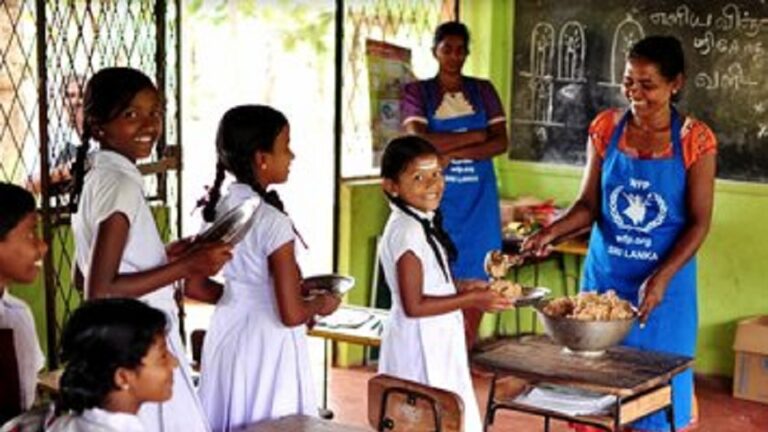
Sri Lanka will get 74.87 million US dollars from Rome-based World Food Program as part of efforts to eliminate hunger by 2023, the President’s media office said.
Sri Lanka is currently in the grip of the worst currency crisis in the history of its intermediate regime central bank and a collapse of the rupee from 200 to 360 to the US dollar has made food unaffordable to poorer sections of society and those in marginal brackets are thrown in to poverty.
In a program that is to run till 2027, Sri Lanka hopes to reach UN’s Sustainable Development Goal 2 of eliminating hunger, the statement revealed.
Other goals include It also seeks to contribute to the progress of poverty eradication, gender equality, reduced inequalities and climate action (SDGs 1, 5, 10 and 13).
“WFP Executive Board approved Sri Lanka’s CSP, at its second Regular Session to assist Sri Lanka’s national efforts through food assistance in the short term, while restoring and improving food security and nutrition by developing in-country capacity to reduce vulnerability levels,” Executive Director of the World Food Program (WFP) in Rome David M. Beasley said in a statement.
WFP will also provide technical assistance and policy advice to help maximize the return on the government’s investment in food security and nutrition
Amid skyrocketing food prices and inflation in Sri Lanka, the latest report by the UN’s World Food Programme (WFP) revealed that hunger levels were rising sharply as four out of of five households were limiting portion sizes and skipping meals to cope with the ongoing economic crisis.
Stepping up its emergency operations, the WFP has planned to provide assistance to 3.4 million people with food, cash or vouchers while supporting national programmes, including school meals and provide fortified food to pregnant and breastfeeding mothers, as well as children.
Earlier, the WFP’s Situation Report for August revealed that 6.3 million people were suffering from food insecurity and 6.7 million of around 22 million population were not consuming adequate portions.
The new report was prepared following a two-day visit by John Aylieff, the WFP’s Regional Director for Asia and the Pacific, to the island nation.
“As the island nation continues to grapple with its worst-ever economic crisis since its independence in 1948, the WFP warned that as “prices continue to skyrocket, there are serious concerns that the food security situation could deteriorate even further”.
Trapped in a debt crisis and poor handling of the economy by the previous government, including tax reduction to win votes and an overnight ban of chemical fertilizer by the regime led by former President Gotabaya Rajapaksa, people have been facing severe food, fuel, medicine and power shortages since early this year.
The country’s tourism sector, one of the main foreign income generator, has been badly affected due to the crisis after already reeling under the Covid-19 pandemic and the Russia-Ukraine war.
Sri Lanka discusses nuclear energy cooperation with Russia
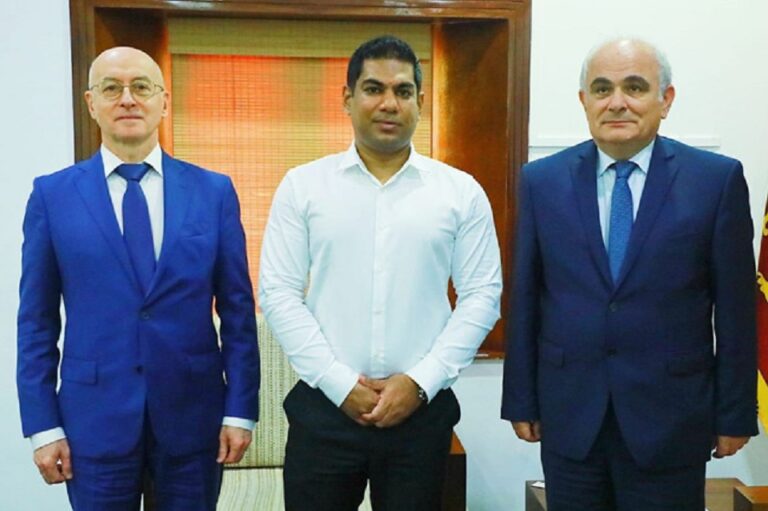
Sri Lanka and Russia have discussed ways and means to build nuclear energy cooperation between the two countries.
Sri Lankan Minister of Power and Energy Kanchana Wijesekera said on Thursday that the South Asian country is discussing nuclear energy cooperation with Russia.
The minister said he met with the Russian Ambassador to Sri Lanka Levan Dzhagaryan on Thursday and discussed the requirements of Sri Lanka’s energy sector.
“We discussed cooperation on fuel requirements, refinery operations, challenges in coal supply and the memorandum of understanding signed for nuclear energy cooperation with Rosatom,” he said.
Rosatom is a Russian state-owned corporation specializing in nuclear energy, nuclear non-energy goods and high-tech products, according to the minister.
He said Russia can help address many of Sri Lanka’s energy problems “Sri Lanka struggled with securing energy supplies earlier this year. We are actively looking for energy cooperation with other nations and Russia can play a big role,” the minister said.
Russia on Wednesday said it is ready to expand trade cooperation with Sri Lanka, and noted several discussions had already been met focusing on the spheres of energy, agriculture, hospitality and health.
Addressing a Roundtable Discussion on Sri Lanka-Russian Trade and Investment Opportunities at the Ceylon Chamber of Commerce, Russia Trade Commissioner Alexander Rybus revealed he already engaged with Sri Lanka’s ministry of energy on expanding trade between the two countries in the energy sector.
He noted discussions centred on the supply of oil and coal, but had also touched on potential for other projects. Touching on Russia’s competency on nuclear energy for power generation, Rybus said.
Russia could offer technical knowledge and investments in the sector. Pointing to people-linked difficulties in Sri Lanka concerning such developments, he said Russia could discuss different options including off-shore platforms.
The Russian Trade Commission falls directly under the purview of the country’s Prime Minister and Rybus said he is keen to invite a delegation of Russian businesses to come explore trade and investment opportunities in Sri Lanka.
He said Russia also manufactures “some of the cleanest” fertilizers and building materials based on chrysolite and that Sri Lanka could take better advantage of these solutions. He clarified there are toxic and harmless grades of chrysolite fibres and that Russia had commissioned further studies to pinpoint the safest substances. The report is due before the end of year.
The Russian Trade Delegation also expressed potential in developing Sri Lanka’s ship building capacity, digitalization of Government and transport sectors. With Russia offering more direct flights to Colombo than some major Indian cities, Rybus said it is important to consider developing tourism from Sri Lanka to Russia as well. The delegation had met with several Sri Lankan officials including the ministry of trade, energy, transport, education and others.
Economic downturn worsens in 3Q 2022 hitting the people down the belt
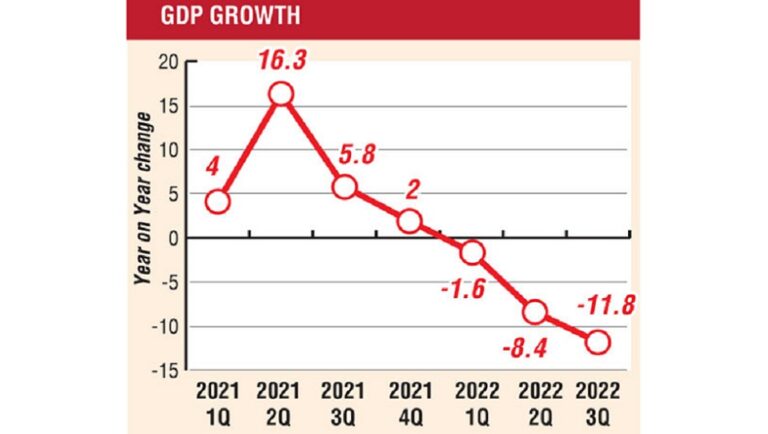
Amid a looming current fiscal crisis linked to cost of living crunch in the country’s vulnerable people wonder how much longer they can cope, as the Government battles the nation’s worst economic down turn since independence in 1948.
The downward spiral in the third quarter worsened with a contraction of 11.8% on the back of 8.4% negative growth in the preceding three months.
The overall Agriculture activities shrank by 8.4%, Industry by 21.2% and Services by 2.6%. In the 3Q of last year, the economy grew by 4.4% from a lower base of COVID-hit 2020.
The Department of Census and Statistics (DCS) said yesterday that the three major economic activities of the economy; ‘Agriculture’, ‘Industry’ and ‘Services’ contributed their share to the GDP at current prices by 8.7%, 34.5% and 54.1% respectively, while ‘Taxes less subsidies on products’ component has contributed 2.7% of share to the GDP in the third quarter of 2022.
Though the influence of the COVID-19 pandemic was comparatively low in the third quarter, DCS said several other factors highly affected the functioning of the economy of the country.
Factors such as high inflation, the energy crisis that prevailed during the early stages of this quarter, high-interest rates, and shortage of inputs required for manufacturing activities, high prices of inputs, shortage of cement, high prices of construction materials were among the repercussions exerted hardships for the people.
Other reasons were the issues with fertilizer usage and agrochemical sectors, increase of the transport cost, difficulties in distributing goods, decrease in the demand of essential and non-essential goods and services due to the reduction of the real income of the people
Due to the above effects, the major economic activities such as construction, mining and quarrying, manufacturing activities, financial services, insurance, reinsurance and pension funding, animal production, growing of rice, growing of cereals, growing of vegetables, and marine fishing and marine aquaculture have recorded huge drawbacks of production during this quarter when compared to the same period of the previous year.
The GDP at the current price in 3Q has increased up to Rs. 6.4 trillion from Rs. 4.4 trillion a year ago registering a 45.2% of positive change. This expansion of the GDP at current prices clearly indicates the influence of the high inflation that prevailed throughout this quarter.