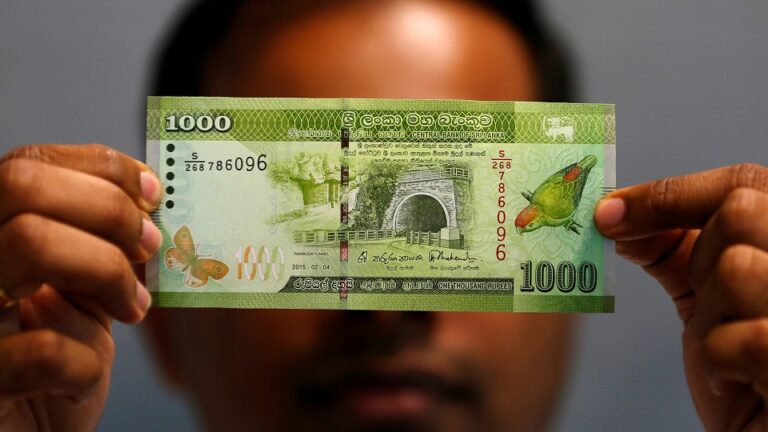
Sri Lankan worker remittances revenue continued its ascent in November for the third month in succession reflecting end of the poor run of the key foreign currency inflow, helping the dollar-starved country to fund its essential imports
Labour and Foreign Employment Minister Manusha Nanayakkara expressed his gratitude to every expatriate worker who has sent money through the banking system legally.
He said that all Sri Lankans need the support of expatriate workers at this time, with the country facing a foreign exchange shortage.
The foreign remittances are moving closer to a US$5bn in annual rate based on November monthly data. Sri Lanka remittances for the month of November totaled US$384mn, up about 10 percent from the prior months figure.
Before the economic crisis in Sri Lanka, the country used to receive over US$7bn per year in foreign remittance. This figure had dropped in half to an annualized rate of approximately US$3.5bn during the worst of the crisis.
Sri Lankans have been lining up in droves to migrate overseas for job opportunities that will allow them to earn foreign currency based salaries.
As record numbers of migrants of around 200,000 depart Sri Lanka raising expectations of rising foreign currency remittances in the medium term in future.
This, coupled with a tourism industry recovery and stable global oil price will be key to Sri Lanka’s economic recovery.
Sri Lanka’s workers’ remittance increased to US$ 384.4 million in November 2022, according to the Central Bank.
Accordingly, the cumulative figure for the first eleven months of the year (Jan – Nov) is reported as $ 3,313.9 million,
Sri Lanka had observed an increase of 12% in workers’ remittances in October 2022 compared to the inflows recorded in October 2021.
Figures released by the Central Bank (CBSL) showed that workers’ remittances had increased to $ 355.4 million in October 2022 from$317.4 million in September 2022
Sri Lanka’s officially calculated worker remittances grew 1.73 percent from a year earlier to$359.3 million in September 2022, official data showed. Official remittances were also up from $325.4 million in August.
Sri Lanka received around $446 million s in remittances in August 2021, when the central bank tightened rules on how much banks could pay for remittances.
Overseas workers send money through unofficial channels when central banks in the region print money creating pressure on outflows and then imposes exchange controls, triggering parallel exchange rates.
Sri Lankan workers overseas sends more money home in November
Sri Lanka Original Narrative Summary: 11/12
- Chief Negotiator of Free Trade Agreements at the International Trade Office set up under the Presidential Secretariat, K J Weerasinghe says, “we hope to commence negotiations on the ETCA with India later this month”.
- Around 3,000 workers from Sri Lanka Telecom, Sri Lanka Insurance Corp and the State Banks protest in Colombo, Matara, Kalutara, Badulla and Negombo, against “Privatisation”: they also protest against the Govt’s austerity measures.
- IMF Chief Kristlina Georgieva says she had a “fruitful exchange” with her Chinese counterparts this week on her repeated calls for accelerating debt treatments for countries like Zambia and Sri Lanka.
- President’s Senior Advisor Ruwan Wijewardene says the Japanese Govt has agreed to recommence the multi-billion dollar Light Rail Transit project funded by Japanese loans, after the conclusion of the IMF negotiations: the LRT project was abandoned in 2020 with the objective of reducing Sri Lanka’s Forex borrowings: Sri Lanka is currently facing a severe debt crisis and has defaulted on its external debt.
- Ministry of Agriculture says 1,092 heads of cattle and goats have died due to the shock of prevailing cold weather in the Northern and Eastern provinces: as a consequence, President orders the suspension of the transportation of beef and mutton at district and provincial levels with immediate effect.
- COPF Chairman and SJB’s Economic Guru MP Dr Harsha Silva says the COPF has approved the regulations under the Casino Business (Regulation) Act No.17 of 2010 which are expected to enable the establishment of a Casino Regulatory Authority by 30th September 2023.
- President Ranil Wickremesinghe pledges to assist the University of Colombo to improve its quality: participates at the “Back to the Faculty” alumni programme at the Law Faculty as the first alumnus of the Colombo Law Faculty who became the Executive President.
- Police Media Spokesman says the Police Mounted division has lost 7 horses due to feed shortage amid import bans: also says each horse is worth around USD 35,000 and there are around 50 horses that are being maintained currently.
- Former CB Governor Ajith Nivard Cabraal says the Rupee had been “fixed” at around Rs.365 per USD for the past 7 months: warns the Rupee is likely to depreciate rapidly and substantially when the IMF programme commences officially and the Monetary Board is precluded by the IMF from “fixing” the Rupee thereafter.
- Head of International Cricket Council’s Anti-Corruption Unit Alex Marshall to investigate allegations of match-fixing during the recent Test series between Sri Lanka and Pakistan: Sri Lanka Cricket had invited the ICC to undertake this investigation based on a claim by SJB MP Nalin Bandara in Parliament that the 2-match Test series played in July was “fixed”.
Showers to continue in several provinces during afternoon or night

Showers or thundershowers may occur at a few places in Northern, North-Central, Eastern and Uva provinces during the afternoon or night, and showers may occur in North-western province and in Mannar and Jaffna districts during the morning, said the Department of Meteorology in a statement today (11).
Several spells of showers are likely in Western, Sabaragamuwa and Central provinces and in Galle and Matara districts.
General public is kindly requested to take adequate precautions to minimise damages caused by temporary localised strong winds and lightning during thundershowers.
Marine Weather:
| Condition of Rain: |
| Showers or thundershowers will occur at several places in the sea areas off the coast extending from Mannar to Pottuvil via Colombo, Galle and Hambanthota. |
| Winds: |
| Winds will be Westerly to South-westerly. Wind speed will be (30-40) kmph and gusting up to 50 kmph at times over the sea area off coast extending from Kankasanthurai to Hambanthota via Mannar, Colombo and Galle. Wind speed will be (20-30) kmph in the other sea areas around the island. |
| State of Sea: |
| The sea area off the coast extending from Kankasanthurai to Hambanthota via Mannar, Colombo and Galle will be rough at times. Temporarily strong gusty winds and very rough seas can be expected during thundershowers. |
MIAP
IGP apologises to the LGBT community for historic injustices and promises to deliver a better police service
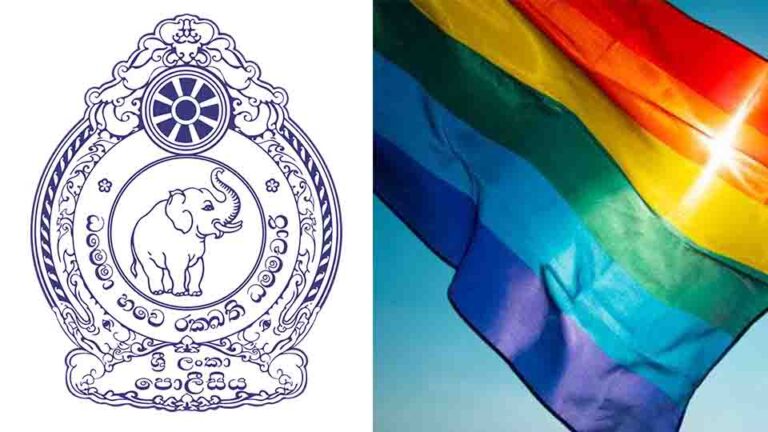
IGP C.D Wickramaratne, in a historic meeting between senior police officers and members of the LGBT community, tendered an apology to the LGBT community for historic violations and promised to address their key grievances.
The meeting, initiated by the Ministry of Women, Child Affairs and Social Empowerment and Sri Lanka Police, brought together several LGBT organisations, including Equal Ground, National Transgender Network, Venessa Transgender Network, Young Out Here and legal pro bono organisation, iProbono. Senior officers of Sri Lanka Police who were present included the DIGs for Women, Legal and Media, amongst several others.
LGBT organisation representatives highlighted key issues faced by the community including physical and sexual harassment against the community.
Legal pro bono organisation iProbono highlighted incidents of police torture against LGBT individuals including forced anal and vaginal examinations conducted against them by JMOs following police arrests. Police officers have also refused to take down complaints by LGBT individuals when they become victims of violence and abuse.
The National Transgender Network and Venasa shared the sexual and physical violence endured by the transgender community including by the police. Police regularly arrest transgender persons under “cheating by impersonation” laws although no cheating or impersonation has happened.
Gender recognition has been legal in Sri Lanka since 2016.
IGP Wickramaratne promised to look into grievances affecting the community and as confirmed in a press release directed the Women’s desk of the Police and DIG Legal Range to take responsibility for issues facing the LGBT community. The Police also confirmed that they are in the process of preparing a circular with assistance from the Attorney General’s Department on addressing grievances affecting the LGBT community and in accordance with Sri Lanka’s Constitutional guarantees.

Since 2014, Sri Lanka’s Attorney General has confirmed that discrimination against LGBT persons is unconstitutional and that LGBT persons are protected under the right to equality and freedom from discrimination provisions in the constitution. The Attorney General has also confirmed that no existing law can be used or applied against the LGBT community in a discriminatory manner including sections 365 and 365A of the Penal Code and to do so would be unconstitutional.
In 2021, the Attorney General intervened to dismiss a case filed by the Naharenpita Police against 3 gay men for homosexuality.
Early this year, the Welisara Magistrate dismissed an attempt by the Welisara Mahabage Police to prosecute a lesbian woman for homosexuality accepting the argument from defence counsel that homosexuality was neither an offence nor a mental illness.
Last year Equal Ground and several LGBT individuals filed a case against the Sri Lanka Police for hiring discredited counsellor Ama Dissanayake where she spread homophobia and accused LGBT people of being predators. The police has since confirmed that Ama Dissanayake has been blacklisted from providing similar training to the police.
Power-sharing won’t bring peace to SL
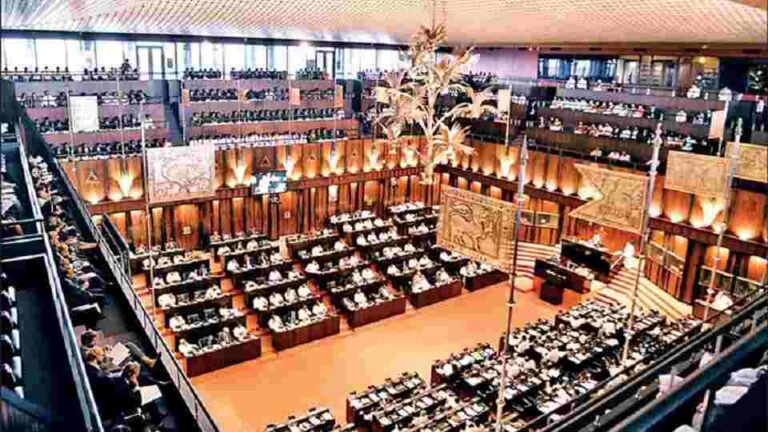
The power-sharing experience shows that even having a Grand Coalition or a second chamber could not sustain peace and democracy in power-sharing regimes
- Some thoughts on the Daily FT Guest Columnist of Wednesday, 30 November 2022, Raj Gonsalkorale’s article, ‘Resolving the ethnic issue’
By Dinesh Dodamgoda
Sharing power among the political representatives of Sinhalese, Tamils, and Muslims will solve the ethnic issue and guarantee a democratic, peaceful, plural society, Raj Gonsalkorale, the Guest Columnist of Wednesday, 30 November 2022, Daily FT, argues.
In his article, ‘Resolving the ethnic issue’, Raj believes that the power-sharing resolution will be long-lasting. However, as the power-sharing global experiences suggest, power-sharing institutions cannot find sustainable peace and democracy.
Power-sharing
According to the Oxford Dictionary, ‘power sharing’ entered the English language as a term in 1972 in conjunction with the short-lived settlement in Northern Ireland. Arend Lijphart, the foremost consociational power-sharing theorist, views power-sharing as a mechanism that secures the participation of representatives of all significant groups in political decision-making. Therefore, in an ethnically or religiously divided society, a power-sharing mechanism should ensure the involvement of elite political representatives of ethno-religious groups from all significant ethno-religious groups in making governmental decisions.
According to the proponents of the power-sharing strategy, under proper conditions, as suggested seven conditions, can favour the success of power-sharing institutions. Those conditions are: having an elite dominance over their groups to facilitate the successful implementation of the power-sharing agreement; the existence of a culture of accommodation similar to Switzerland, Netherlands and Belgium in which groups find negotiated settlements to their disagreements rather than resort to conflict; a sincere commitment from all stakeholders to honour the power-sharing agreement; having the state strength to secure an effective and legitimate government and administrative bureaucracy; having economic prosperity and equality that facilitates a proper redistributive justice system; maintaining a stable demographics among groups as any change may affect the proportional system agreed in the power-sharing agreement; and the existence of a constructive relationship with the international community.
It is easy to understand that Sri Lanka does not have many conditions that favour the success of a power-sharing agreement. As critiques of the power-sharing strategy view, in ethnically divided societies, few, if any, of these conditions are typically present at the end of conflicts – particularly after intense civil wars.
Contemporary realities
Raj proposes, ‘Rather than a debate on who came first and who lived where a solution based on contemporary realities would be more beneficial for the current and future generations.’ However, suppose Raj aims to find a solution based on contemporary realities. In that case, he will never suggest a resolution based on sharing power, as it is a counterproductive mechanism, as evident.
What happened in many of the power-sharing regimes is that power-sharing gives power to the ethno-religious elite from parties and groups that contributed to creating, maintaining, or ending ethno-religious conflicts. Therefore, the power they would be given enhances these elites’ capabilities to press for more radical demands, especially once the violent phase of the conflict is over and peace is in place. These capabilities give opportunity and power to these elites to escalate the conflict in ways that can threaten democracy and peace. This is evident in most of the conflict theatres, especially after severe conflicts such as civil wars.
Arend Lijphart, the foremost theorist of consociational power-sharing in 2002, listed 16 consociational power-sharing regimes in the 20th century. Yet, Philip G. Roeder shows that three of these cases mentioned by Lijphart (Suriname 1958-1973), Netherlands Antilles (1950-1985), and Northern Ireland (1999-1999) were not independent states, and four more (Austria 1945-1966, Netherlands 1917-1967, Luxemburg 1917-1967, and Colombia 1958-1974) were not ethnically divided societies, Czechoslovakia’s four-year experiment with power-sharing (1989-1993) ended in the partition of the country, Cyprus’s (1960-1963) and Lebanon’s (1945-1975) experiments ended in civil wars, Malaysia’s (1955-1969) experiment with power-sharing was particularly rocky: The Malaysia federation saw session (or expulsion) of one ethnically distinct region (Singapore) and only strong-arm tactics prevented the secession of the ethnically distinct Sabah state. Malaysia’s consociational government ended in widespread ethnic violence, Fiji’s one-year experiment (1999-2000) ended in a military coup, South Africa’s (1994-1996) ended in a peaceful slide into majoritarianism, and only three consociational regimes in ethnically divided societies have reportedly survived – Switzerland (1943 -), Belgium (1970 -), and India (1947 -).
Therefore, it is understandable that contemporary realities do not favour a power-sharing solution. Despite many attempts to portray power-sharing as a practical peace and democracy-building mechanism for Sri Lanka, the power-sharing strategy has been unsuccessful.
The perils of power-sharing
Researchers who evaluated the success of the power-sharing strategy, such as Donald Rothchild and Philip G. Roeder, observed seven conditions that threaten the consolidation of peace and democracy in power-sharing regimes: power-sharing mechanism limits democracy as it deviates from competitive practices of political decision-making – the accepted norm of Western democracies; power-sharing institutions empower the leaders of the ethnic groups with means to challenge the power-sharing agreement, weapons such as vetoes; as the power-sharing strategy focuses on the interethnic allocation of power and resources and only adopts the principle of proportionality in doing so, it was often debated whether the rules of proportionality disadvantage one or the other group unfairly; the ‘second generation problem’ which is even whether ethnic elites are initially sincere in their commitments to power-sharing, the emergence of more radical leaders in the same group tends to put the initial commitment away as it was evident in Serbian power-sharing experience; as the power-sharing institutions are designed to expand the representativeness of the state, this representativeness comes at the cost of more significant governmental inefficiency; as the power-sharing strategy freezes a status quo when entering the agreement, institutions tend to be inflexible and unable to adapt to rapidly changing social conditions during a period of transition; and it is extremely difficult to enforce the rules of a power-sharing agreement against opportunistic behaviour of the ethnic leaders of significant groups of the accord.
If this is the reality, the proponents who push for a power-sharing resolution for Sri Lanka are either unaware of the perils of power-sharing or lying, maybe with ulterior motives. Gajendrakumar Ponnambalam, on 22 November 2022, told President Ranil Wickremesinghe in Parliament, “Tell the truth to the Sinhala people that the federal path is the only solution to the ethnic question in Sri Lanka… He should not hesitate to tell the Sinhalese people. Federalism is not separation. Quite the contrary.” Was not Gajendrakumar either unaware of the perils of power-sharing, or was not he lying?
The myth of a plural society
Raj also holds a narrow perception of diversity, like the other proponents of power-sharing. He limits ‘diversity’ only to recognising cultural diversity and everything associated with that diversity. A society comprises people with many identities; some are cultural identities such as ethnicity, religion, or language. Some are non-cultural identities, such as the identity of professional groups, occupation-related identities, etc. A society has multiple identities. Yet, Raj proposes to uphold diversity by suppressing the rest of the identities to recognise the most vexatious identity, in the Sri Lankan case, ethnicity.
Can Raj or other proponents of power-sharing celebrate the diversity proposed by the power-sharing mechanism as genuine? In such a model, ethnic identity with a numerical majority dominates over any different identity in Sri Lankan society. It, therefore, does not recognise principles of equality and diversity or the fundamentals of a plural society. It is evident that Raj also believes the same myth that the proponents of power-sharing believe, “power-sharing brings a plural society”.
A second chamber
To find a fresh approach, Raj proposes, as an interim solution, to establish a second chamber comprised of representatives from Sinhalese, Tamils, and Muslims with the power to veto to block bills that impinge on the equal rights of ethnic groups. However, nothing is fresh in that approach as Raj proposes the same ‘Grand Coalition’ of a power-sharing regime that uses ethnicity to select representatives to the chamber. Does it secure the fundamentals of a plural society? Or does it suppress other cultural and non-cultural identities to give a dominant status to ethnicity?
Yet, Raj portrays a rosy picture of the proposed second chamber’s role: It could bring all communities together via ethnic representatives, according to Raj’s beliefs. This is instead a wish than a rationale expectation, as the power-sharing experience shows that even having a Grand Coalition or a second chamber could not sustain peace and democracy in power-sharing regimes.
So, what fresh evidence can Raj suggest convincing readers that a second chamber as an interim mechanism will not result in counterproductive effects? So far, nothing afresh has come, even in the global context.
SL tourism regains momentum to end the year with 750,000 tourist arrivals
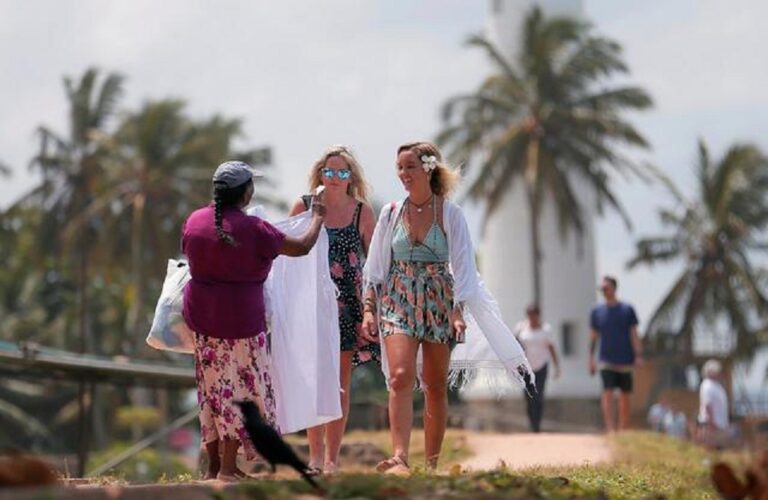
Sri Lanka hopes to double tourist arrivals to 1.5 million next year and bring in US$5 billion (about Rs22.1 billion) in vital foreign exchange with the regaining of tourism to end this calendar year with 750,000 tourist arrivals and about $2 billion in earnings, Tourism Minister Harin Fernnado said.
An estimated US$4 billion loss in tourism revenue over the past two years also contributed to tipping Sri Lanka into the financial crisis.
The tourist arrivals for the first seven days of December have already crossed the 15,000 mark, indicating the revival of the hard-hit sector is on track.
The provisional data from the Sri Lanka Tourism Development Authority (SLTDA) showed that for the December 1-7 period, the arrivals to the island nation totalled 16,169. This brings the total number of arrivals for the year, ending on December 7, 2022, to 644,186.
The daily arrival average for the first week of December is 2,302. In the recent weeks, with the start of the winter season, the daily arrival average for Sri Lanka tourism has been increasing.
The top three source markets for Sri Lanka tourism witnessed a slight change for the first week of December. The Russian Federation tops the list as the largest tourist traffic generator for Sri Lanka, accounting for 21 percent of the tourist arrivals for the month so far.
Ranking second is India, contributing to 18 percent of the total arrivals. Back on the third rank is the United Kingdom, which brought in 10 percent of the total number of tourists to the country.
In the month of October, the United Kingdom slipped to the fourth position. Taking over as the third largest tourist traffic generator last month was Germany, which in the first week of December ranked at the fifth position. Taking the fourth position is Australia, contributing to 6 percent of the total arrivals.
Contributing to the increased tourist arrival numbers is the arrival of the luxury cruise Azamara that called on the Colombo Port on December 4. The vessel brought in 600 passengers and 400 crew members who were on the island for three days.
Coming alive this month was also the FIFA Zone in Colombo, set up to lure football fans to Sri Lanka, between the ongoing matches at the World Cup in Qatar, Doha.
However, the Tourism Ministry and SLTDA have not shared the numbers and the success of the promotional packages that are being rolled out for the FIFA World Cup spectators.
China with WB, IMF to address issues of debt-stricken countries including SL
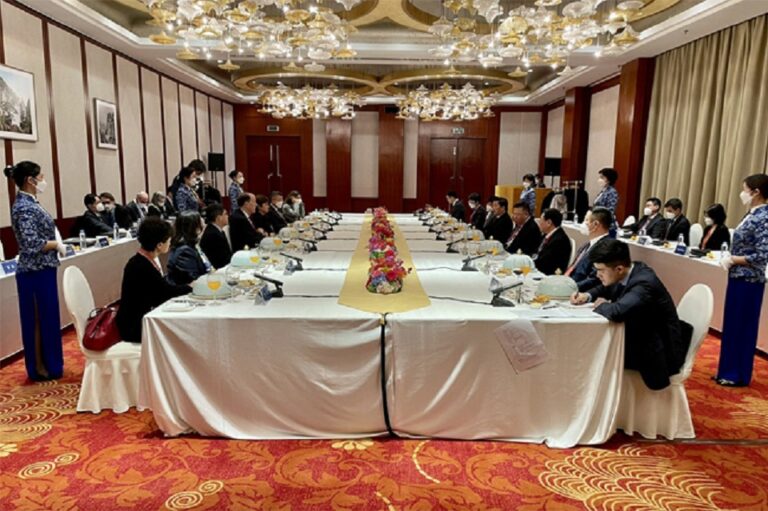
The presidents of Export-Import (EXIM) Bank of China and China Development Bank (CDB) have had a positive discussion with IMF and World Bank chiefs on the international economic situation and the debt of developing countries including Sri Lanka.
The discussion took place during a working dinner co-hosted by China EXIM Bank and CDB on Thursday (Dec 08) for the visiting World Bank President David Malpass and IMF Managing Director Kristalina Georgieva.
All parties have expressed willingness to give full play to their respective advantages in the future and continue to strengthen coordination and cooperation in related fields on international development and debt issues of developing countries.
China is working with other lenders on easing Sri Lanka’s debt burden, a Chinese diplomat said as country attempts to re-structure debt after the country defaulted on foreign debt after two years of money printing.
“China is actively working with relevant countries and international financial institutions to support Sri Lanka to ease the debt burden and realize sustainable development,” Li Guangjun, Economic and Commercial Counselor, Embassy of Peoples’s Republic said.
He was speaking at the 21st Annual General Meeting of Sri Lanka – China Business Council of the Ceylon Chamber of Commerce recently.
Meanwhile, Chinese Premier Li Keqiang on Thursday met with IMF chief Kristalina Georgieva, pledging to strengthen macro-policy coordination.
He assured that China would continue to strengthen macro-policy coordination with all parties, including the IMF, to tackle debt, climate change and other global challenges, and make greater contributions to promoting global economic recovery and sustainable development.
China will implement the G20’s Debt Service Suspension Initiative in all respects, Li said further, adding that China will work with relevant G20 members to formulate and participate in a fair and equitable debt-restructuring plan.
Chamath Palihapitiya says the Fed crushed the bubble in blank-check firms, and swears he’s not responsible for the poor performance of companies he took public

SPAC king Chamath Palihapitiya says the Fed crushed the bubble in blank-check firms, and swears he’s not responsible for the poor performance of companies he took public
- Chamath Palihapitiya said he isn’t responsible for the poor performance of so-called blank check companies.
- Instead, the venture capitalist blamed Fed policy for causing the market rout this year, according to his recent interview with the NYT.
- “That is not in the control of one human being except Jerome Powell,” he said at a conference in October.

The Fed crushed the bubble in special purpose acquisition companies, Chamath Palihapitiya said, deflecting blame for the poor performance of companies he took public in recent years.
“Nobody forced anybody to invest in anything,” the venture capitalist, who is also known as the “SPAC King,” told the New York Times, adding that Fed rate hikes ended the era of cheap money that allowed so-called blank check companies to thrive.
The comments doubled down on his previous attempts to pin the responsibility on the central bank and its chairman.
“The long-term regime in which we operate has changed,” he said at a conference in Manhattan in October. “That is not in the control of one human being except Jerome Powell.”
Palihapitiya was a prominent booster of SPACs – shell companies that raise capital to expedite the IPO of an existing company, often with less regulatory oversight. He used SPACs to bring 10 businesses public, including Virgin Galactic, Opendoor, and his own SPAC in 2017, Social Capital.
He amassed a large following as stock prices for those firms skyrocketed, with Virgin Galactic gaining 440% and Opendoor gaining 246% by February of last year. He would later sell off his own shares, months before a steep sell-off in the SPACs.
Most of Palihapitiya’s SPACs went public during the pandemic, when ultra-low interest rates and ample liquidity in the market caused the boom in meme stocks and other volatile assets. That was a “perverted” and “distorted” marketplace created by the Fed, he said earlier this year, criticizing the low interest rates that allowed speculation and SPAC companies to take hold of investors.
But the Fed has raised interest rates 375 basis points so far this year in a scramble to rein in inflation. That rapid pace of tightening has weighed heavily on markets this year, and amped up anxiety that the Fed could squeeze the economy into a recession.
74th anniversary of the UDHR and ‘Cyrus Charter’
S. V. Kirubaharan, France
The seventy-fourth (74) anniversary of the Universal Declaration of Human Rights – UDHR will be celebrated on 10th December 2022. Already, preparations are also being made by the United Nations, member states, Non-Governmental Organisations – NGOs, educational institutions, and others for the celebration of the seventy-fifth (75) anniversary next year.
Historians and scholars have revealed that the concept of human rights was not born in the West! Although origins have been traced to ancient Greece and Rome, the “Cyrus Charter of Human Rights” was discovered in 1878 during the excavation of the site of Babylon. Many around the world have considered this the first declaration of human rights.
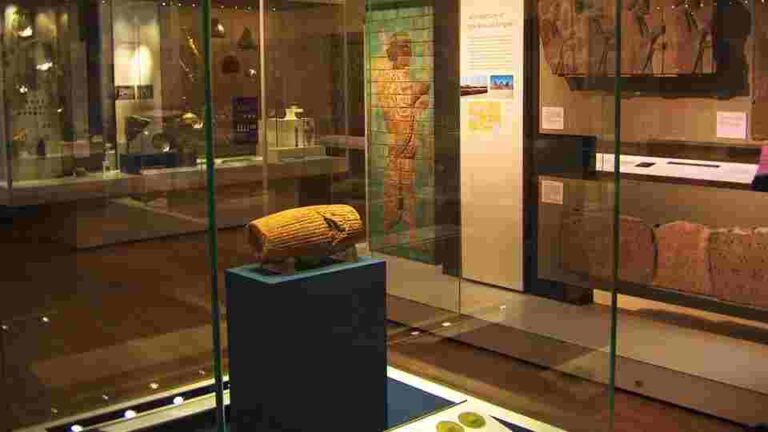
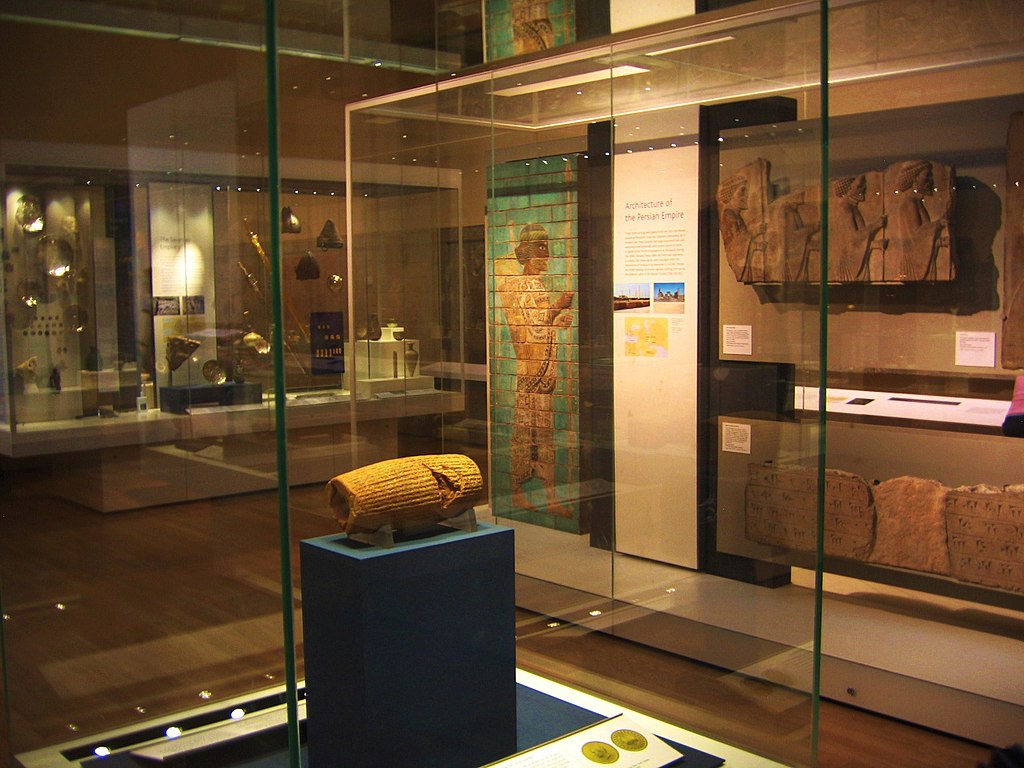
On 4 October 539 BC, Iranian (Persian) soldiers entered Babylon, the capital of Iraq (Babylonia). It was said that this bloodless war freed captives of all nationalities held as slaves for generations in Babylon. On 9 November, Cyrus of Iran (Persia) visited Babylon and issued a declaration, inscribed on a baked clay barrel (cylinder), known as the “Cyrus Charter of Human Rights”.
During the period of Mohammad Reza Pahlavi known as the Shah of Iran, the Cyrus Cylinder became very popular. The first United Nations Conference on Human Rights took place in Tehran in 1968. The then King of Iran, Shah declared that the “Cyrus Cylinder was the precursor to the modern Universal Declaration of Human Rights”.
Even today, one can see this in the British Museum in London, UK. (Photo attached) The Cyrus Cylinder was lent by the British Museum twice to Iran in 1971 and 2010 – Then in 2006 to Spain and in 2013 to the United States.
However, the concept and mechanisms of human rights were institutionalised and internationalised only after the birth of the United Nations. Human Rights are universal and interdependent.
Generally, Human Rights guarantee freedom, dignity, equality, and justice for everyone irrespective of age, gender, race, ethnicity, religion, sexual orientation, nationality, and any regional differences.
UN & UDHR
The United Nations Charter was signed on 26 June 1945 by 50 countries at a UN conference in San Francisco. But the UN officially came into existence only on 24 October 1945 when all five major powers – France, United Kingdom, USA, USSR (Today Russia) and China (Today Republic of China or Taiwan) ratified the Charter. The United Nations commemorates 24 October as UN Day.
The Universal Declaration of Human Rights was adopted on 10th December 1948 by the United Nations at the Palais de Chaillot in Paris. Since then this day has been celebrated all over the world as “International Human Rights Day”.
The UDHR contains thirty articles. Articles 1 and 2 outline the philosophical claim of the UDHR and emphasise that human beings are born free with equal dignity and are entitled to all rights and freedoms without any kind of discrimination. Articles 3 to 21 deal with civil and political rights and articles 22 to 27 deal with economic, social, and cultural rights. Concluding articles 28 and 29 stress the duties and responsibilities of the individual in a democratic society. Finally, article 30 gives cautionary notice that nothing in the UDHR may be interpreted as implying that a person or group has any right to do anything aimed at destroying the rights and freedoms set forth in the UDHR.
In Sri Lanka, Human Rights Day comes and goes every year – but has the UDHR made any impact? Limiting ourselves only to recent years, what has the government done in terms of investigation and accountability for those killed and disappeared during the last days of the war in May 2009? What is happening today in the war-torn North and East? In the South, what about the disappearances that took place during the JVP’s uprising in 1971 and the late 80s and the arbitrary killing of many including the JVP’s leader Rohana Wijeveera?
Thirteen years after the end of the war – land grabs, forced planting of religious monuments, colonisation and many other forms of destruction continue in the North and East today. As some claimed, if the people were saved from the clutches of terrorism, why should this conflict, discrimination and suffering continue even now? What happened to the promises given to the international community during the peak days of the war?
When leadership lacks vision and commitment to protect human rights, and does not promote them in the heart and minds of the people in Sri Lanka, citizens will raise their voices at any cost to uphold their birthrights, set out in the UDHR. Human Rights guarantee freedom, dignity, equality, and justice for everyone.
Nelson Mandela’s life
Some in Sri Lanka have never realised that the Lord Buddha was born a Hindu. The way a naval political figure portrayed himself as the custodian of Buddha Sasana is purely for political mileage. If someone eats beef, enjoys other non-veg and the taste of alcohol, dumps bodies in the sea, and is against equality, they are not fit to be even a fictional custodian of Buddha Sasana! Hypocrisy prevails in Sri Lanka in the name of Lord Buddha.
Nelson Mandela’s life was a shining example, showing the world, how people who are in a numerical majority can satisfy and cohabit with a numerical minority.
Such peaceful cohabitation is not at all imminent in Sri Lanka. Not only do the political leaders lack will-power to find a just and equitable solution, but also Buddhist supremacy in Sri Lanka categorically rejects any cohabitation.
During the UN World Conference Against Racism – WCAR in 2001, our organisation ‘Tamil Centre for Human Rights – TCHR’ had the opportunity to meet many Ministers of the South African cabinet and others. They visited our TCHR stall and expressed their solidarity with us. Not to forget, our stall was also visited by then Sri Lankan embassy staff in South Africa, including today’s Chief opposition Whip Lakshman Kiriella. They argued with me concerning the situation in the North and East. Kirielle told me that he was working on a solution to the Tamil Question. Now twenty-two years have passed, what has happened to that solution to the ethnic conflict?
Seventy-four years is not a short period for any serious person to reach a political solution! In other words, the rulers of Sri Lanka found ways to take the Tamils and the international community for a ride, rather than finding a political solution to the ethnic issue.
Right to self-determination
Oppression against struggles in exercise of the right to self-determination is one of the root causes of horrendous human rights violations around the world.
Article 1 (one) of both the International Covenant on Civil and Political rights – ICCPR and International Covenant on Economic and Social rights – ICESCR states that “all peoples have the right of self-determination. By virtue of that right they freely determine their political status and freely pursue their economic, social and cultural development”.
Gradually Article 1 lost its weight. It is no longer on the agenda of the Human Rights Council – HRC because all five permanent members of the Security Council – the United States, United Kingdom, France, Russia and China have their own problem concerning this Article.
In USA – the people of Alaska, Hawaii and Puerto Rico are struggling for self-determination; in the United Kingdom – the Northern Island crisis is still not resolved; Scotland and Wales are in the queue. In France – the people of Corsica and Bretagne are demanding their political rights, while in Russia and China – people of Chechnya, Tibet, Uyghur (East Turkestan) and many others are struggling for their self-determination. In such situations regarding the question of right to self-determination, International law appears to be powerless. However, a few years ago the UN gave birth to Eritrea, East-Timor and South Sudan. Of course, the birth of Kosovo was through clever diplomacy through a big power or powers.
With all these hurdles, the NGOs have been successful to a certain extent in their human rights advocacy, “Naming and shaming” the states which are violating human rights. Some states misuse the UN procedures and have their own NGOs who are known as GONGOs (Government NGOs) in UN circles. These GONGOs not only advocate government policy, they also counter the accusations made by the genuine NGOs against states. GONGOs are indirectly funded by the governments’ agencies and they are to some extent members of espionage. Since 2012, there have been many GONGOs working on Sri Lanka in the HRC in Geneva. We face this severe problem with plants of the Sri Lankan government.
When one analyses the human smuggling of Tamils from Sri Lanka, it is obvious that the real political agenda is to decrease the Tamil population in Sri Lanka. As a first step, the police and other government forces intimidate and harass Tamils on a daily basis without any valid reason. While they face harassment, another group of business people originally from the ruling or ex-ruling parties hunt for people for human smuggling opportunities, extorting huge sums of foreign or local money. Then big shots working indirectly with government people, arrange transport and the Tamils end up in the middle of the sea and some country saves them on humanitarian grounds. This has been proved in human smuggling in where Tamils were involved. The curious question is: Why has the Sri Lankan government not paid any attention to this issue, if they consider the Tamils to be their own citizens? (End)
Sri Lanka’s most beautiful train journey
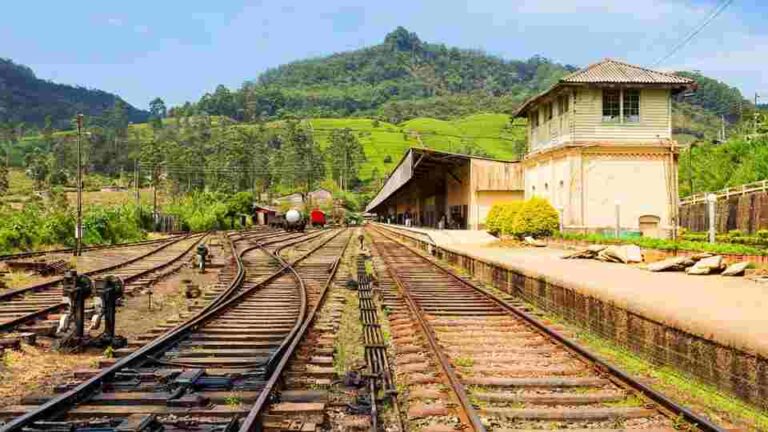
The Colombo to Badulla railway is so enchantingly beautiful that it’s become a bucket list adventure for many visitors.
I was woken by the long, forlorn sound of the siren. The brakes hissed and screeched as our train chugged up the hill and pulled into Radella, a station along one of the most beautiful train journeys in the world: the Colombo to Badulla railway.
“The journey is so enthralling that you don’t want to take your head out of the window,” said Dayawathie Ekanayake, who has travelled extensively by train across the island during her career as a finance consultant. “It makes you feel constantly in awe. You wonder about what comes next – is it a waterfall? A stupa-like tea garden? Or is it mist-clouded peaks? You never know. You just have to keep looking.”
Since my first journey along this route seven years ago, I have returned numerous times, eagerly jumping off the train to explore towns and hamlets flanked by tea estates. The 291km track takes in a mix of deep gorges, craggy cliffs, cascading falls, lakes and rivers from Sri Lanka’s west coast into its mountainous interior. It twists and turns through 46 tunnels, snaking past high montane canopy with bright red rhododendrons and wild ferns, a fragment of the native hill country forest cover left untouched by British colonisers. On a bright day, sun-drenched hills stretch down to the glistening southern coastline from the train window as far as the eye can see.The train journey has become an Instagram sensation in recent years (Credit: Mystockimages/Getty Images)The train journey has become an Instagram sensation in recent years (Credit: Mystockimages/Getty Images)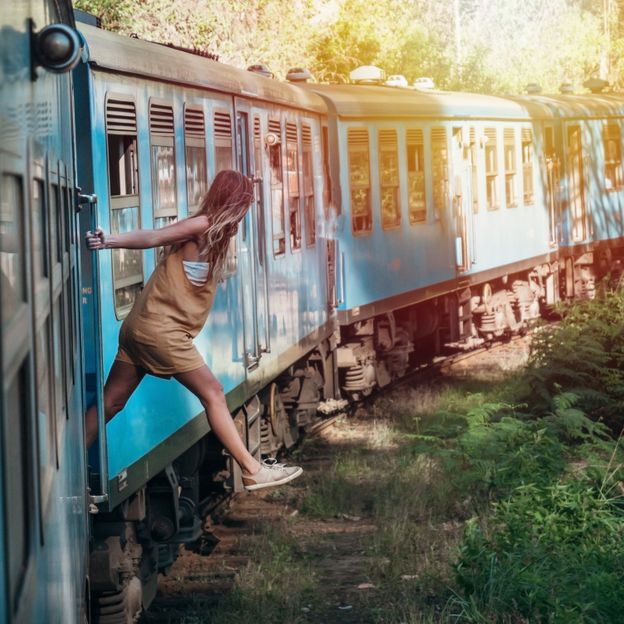
The train journey has become an Instagram sensation in recent years (Credit: Mystockimages/Getty Images)
This slow, 10-hour long journey might be inconvenient for the modern-day traveller, but it’s so enchantingly scenic that it’s become a bucket list adventure for many visitors.
It’s not just the views that has travellers in awe. The train journey itself has become an Instagram sensation in recent years, with travel bloggers risking their lives to take photos of themselves hanging off the door as the train rumbles past rickety bridges (some of them have been criticised for their dramatic poses). Yet, the journey is also tied to Sri Lanka’s colonial history and gives passengers a deeper understanding of the island-nation.
During British colonisation in the 19th Century, Sri Lanka was the third-largest coffee exporter in the world. As demand rose, it became expensive to ferry coffee on bullock carts from the central mountains to Colombo for shipment, especially with road conditions deteriorating during the monsoon months. Estates had to therefore store their coffee for long periods of time, causing the quality and value to deteriorate. So British estate owners pushed for a rail system to transport coffee. In 1867, the British completed a railway from the city of Kandy in central Sri Lanka to the coastal city of Colombo.
“The British didn’t build railways to help locals travel,” explained Sanka Abeysinghe, naturalist at the luxury boutique hotel chain Teardrop Hotels, who also conducts railway hikes for resort guests. “They designed railways to transport estate produce.”
I boarded the train in Colombo, leaving the muggy heat and low country farmlands to slowly ascend towards the rocky mountains surrounding Kandy. Cutting through rugged terrain, the train climbed 426m over a 21km stretch, passing through 12 tunnels, hugging treacherous curves along the mountains and soaring above thick tropical jungle.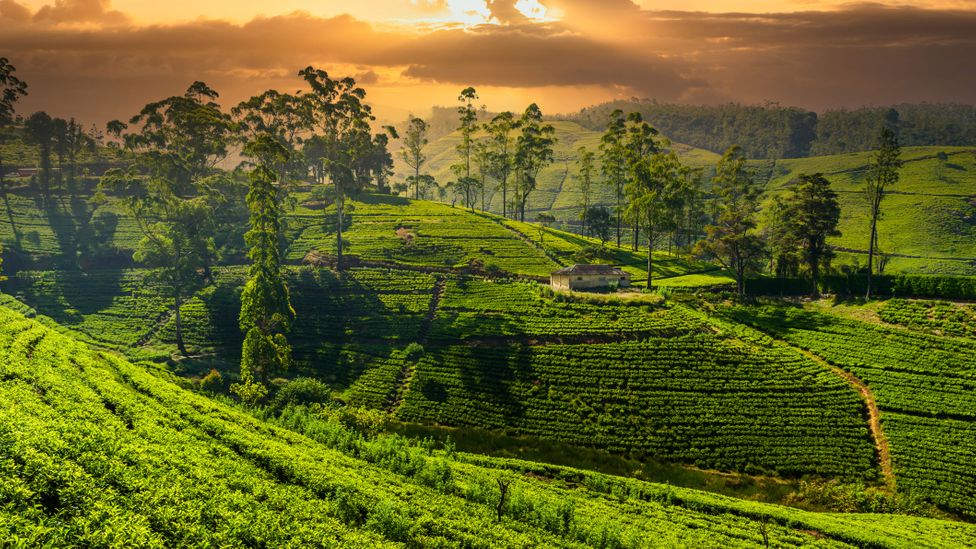
The cool, misty climate in Sri Lanka’s hill country creates the perfect conditions for growing tea (Credit: Anton Petrus/Getty Images)
After leaving Kandy, we passed fertile riverine valleys, and entered Sri Lanka’s hill country. Tea flourishes in these damp, wet highlands, so, “when tea became prominent, after the coffee rust epidemic – a fungi disease that hindered the coffee trade [in 1869] – the British wanted to extend the railways to transport tea from the mountains to Colombo,” Abeysinghe explained.
In the 1870s, the British began to expand the railway from Peradeniya, a railway junction near Kandy, extending the route to the terminal station Badulla in 1924. This 178km-long stretch involved navigating through rainy, forested mountains, steep ridges and a series of sharp twists and turns by building an impressive mix of bridges, viaducts, tunnels and embankments. It took 52 years to complete.
We pushed out of the mountains, and over the next three hours we passed small and well-kept British-era railway stations like Galboda and Watawala, which were built solely for the purpose of transporting tea from each estate. We sluggishly ascended past Hindu temples tucked in tea gardens, small housing settlements where the tea estate labourers live, and turpentine forests shrouded in swirling mist. Sometime after leaving Hatton – the gateway town to Adam’s Peak, a holy mountain for pilgrims of all faiths – we entered the Poolbank Tunnel, the longest of the 46 tunnels at more than half a kilometre in length.
“You cannot really see the light at the end of the tunnel here,” Abyesinghe said, chuckling.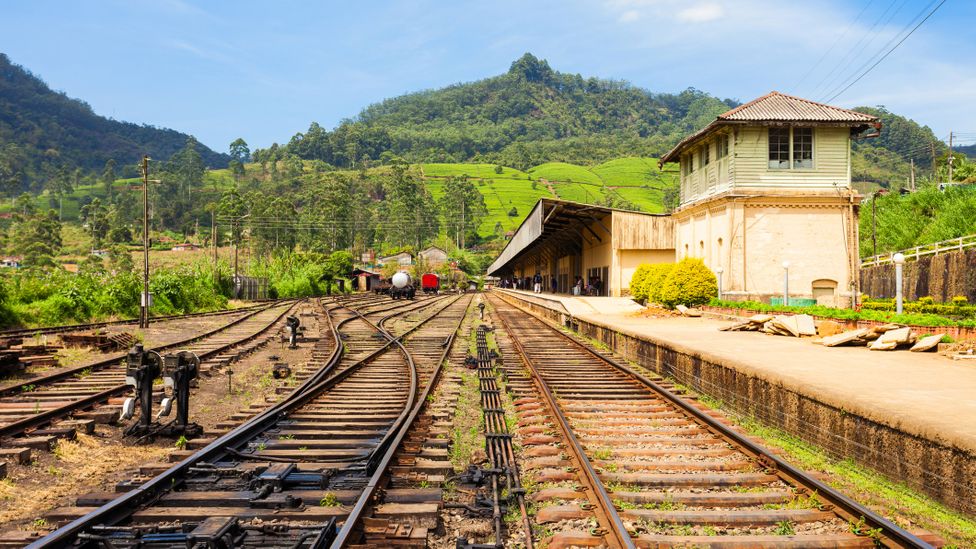
At Nanu Oya, visitors can tour the plantations and learn about the history of tea on the island (Credit: Saiko3p//Getty Images)
From here, young passengers eagerly hung from the door to see the gushing cascades of the spectacular St Clair’s Falls through tea bushes. Cold air drifted in from the open windows and rising mist cloaked the towering Great Western mountain range. Many passengers got off the train at Nanu Oya, a tea-country town where visitors can tour the plantations and learn about the history of tea on the island; but I stayed on board, climbing up to Pattipola, the highest broad gauge railway station in the world. From here, we finally left the cold central hills, travelling past dairy farms towards the sun-drenched south-eastern mountains.
After a couple of hours later, we pulled in at Ella. Over the last decade, this once-sleepy village has turned into a lively tourist hub with cafes and bars lining the streets and people posing for photos in front of the picturesque Nine Arch Bridge, a viaduct with nine arches that soars over tropical jungles of plantain trees and areca nut palms and has become one of the most photographed spots on the island.
Flanked by thick jungle and tea plantations, the bridge was designed by British engineer Harold Marwood, but according to folklore, it never would have been built were it not for local knowledge.
It’s said that during World War One, when it was difficult to source steel from Europe, British engineers had to rethink the bridge design. Since colonial rulers had little to no knowledge about local construction materials, a Sri Lankan builder chipped in to help. Locals completed the engineering marvel using only bricks, stone and cement.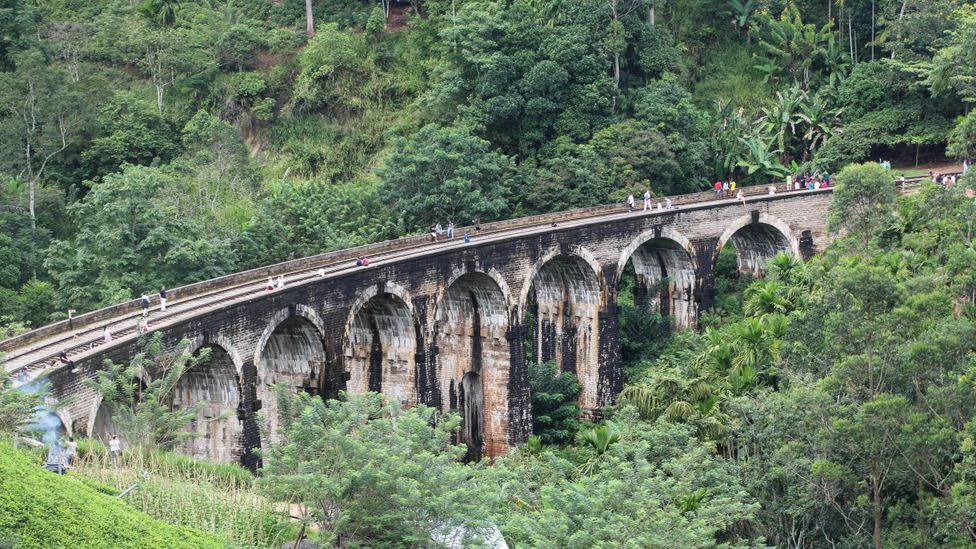
Nine Arch Bridge is one of the most photographed spots in Sri Lanka (Credit: Nathan Mahendra)
Looking out of the train window, I gazed at the 90m-long viaduct rising through the trees, connecting Ella to the highland town of Demodara. The British also needed a way to manage the steep incline of the terrain from here. “The climb was too abrupt to handle for the engines,” Abeysinghe said.
Again, folklore gives credit to locals who found a way to solve the problem by creating a spiralling track. As we reached Demodara Loop, the train halted at Demodara for passengers to deboard, snaked around a hillock and re-appeared from a 134m-long tunnel right beneath the station.
According to legend, local engineer DW Wimalasurendra worked at the site and thought of this spiral design after seeing a kankami (a tea estate worker who manages South Indian labourers) tying and re-tying his turban. The cutting-edge engineering allowed the train to avoid the steep climb.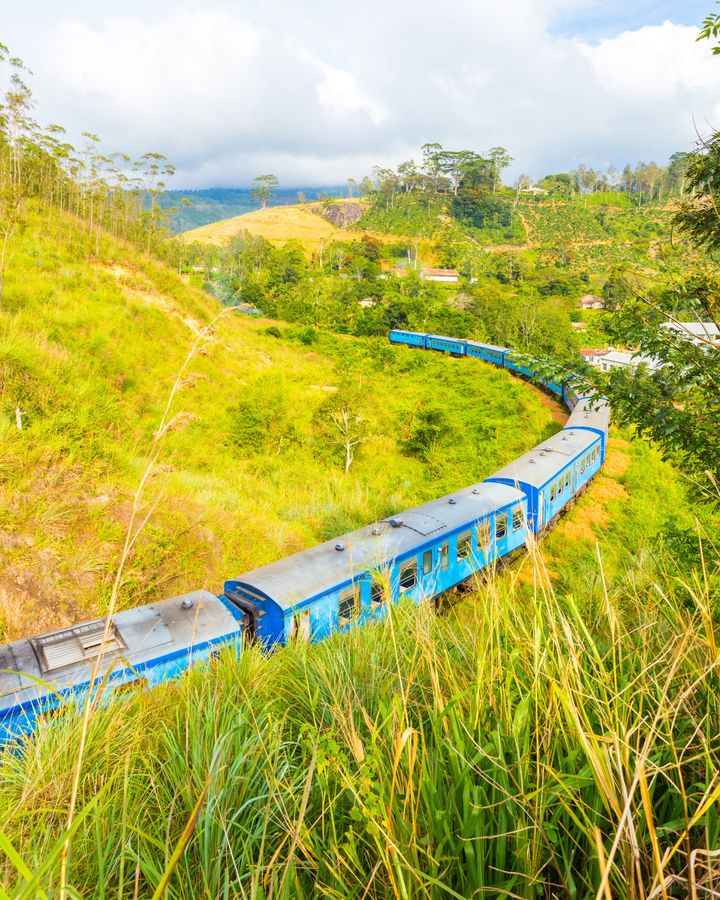
The spiral track at Demodara Loop is said to have been inspired by a worker tying and re-tying his turban (Credit: Pius99/Getty Images)
We were nearing the end of the journey, and the train slowly descended to the sleepy, terracotta-roofed town of Hali Ela to terminate at the city of Badulla in the lower central hills.
As we pulled into the station, I realised that despite having travelled extensively around the world, I’ve often felt happiest during this slow journey through my own country. In many ways, as the train snakes past the century-old tea bushes, British stations and settlements of tea-estate communities, it quietly reveals the story of an island to those willing to put down their phones and look for it.