The Ministry of Health has confirmed that a person infected with monkeypox has been found in Sri Lanka for the first time.
The infected person is a 20-year-old young man who came to this country from Dubai on November 1.

The Ministry of Health has confirmed that a person infected with monkeypox has been found in Sri Lanka for the first time.
The infected person is a 20-year-old young man who came to this country from Dubai on November 1.
A discussion with the Sri Lankan authorities and the official creditors of Sri Lanka was held yesterday (03) through online technology under the chairmanship of the Secretary of the Ministry of Treasury and Finance – Mahinda Siriwardena and the Governor of the Central Bank of Sri Lanka – Nandalal Weerasinghe.
Sri Lanka is fully committed to proceeding fairly and transparently with all creditors. The meeting is another important step in securing board approval for the IMF program.
“Sri Lanka is at a critical stage and we hope to get approval from the International Monetary Fund as soon as possible to restore macroeconomic stability. We are grateful to our bilateral partners for their continued support in this process. The IMF program and our targeted economic reforms will restore public debt sustainability and this will help protect the most vulnerable and restart our growth process.This government is focused on restoring social and economic prosperity. The focus is also on ensuring our citizens have access to critical public services.” Minister of State for Finance Shehan Semasinghe who commented on this discussion.
The Governor of the Central Bank of Sri Lanka, Dr. P. Nandalal Weerasinghe, who spoke here said that,
“The IMF program and economic reform agenda will restore Sri Lanka’s financial security. I would like to thank the Official Creditors for joining us in this productive meeting where we had the opportunity to discuss the current financial situation in Sri Lanka and the progress of reforms.
On September 1, 2022, Sri Lanka reached a staff-level agreement with the International Monetary Fund (IMF) for a four-year program supported by the Extended Fund Facility. The US$2.9 billion program aims to promote macroeconomic stability and credit recovery, while protecting the vulnerable and safeguarding the sustainability and financial system of Sri Lanka. This agreement is subject to the approval of the Executive Board of the International Monetary Fund.
The IMF program is centered around targeted reforms in Sri Lanka. The government’s reform agenda is based on four points:
The first issue is fiscal reform. The program envisages the implementation of targeted revenue-based fiscal consolidation measures, combined with revenue administration reforms, and the introduction of a fuel and electricity pricing mechanism to mitigate financial risks arising from state-owned enterprises. It also includes improving the existing social safety net to protect the most vulnerable community.
The second point is to restore public debt sustainability. Sri Lanka’s debt situation has been deemed unsustainable by the International Monetary Fund and has been addressed through an extended credit facility.
Third, the program aims to restore price stability and rebuild external security. An Act modernizing the policy framework to strengthen the independence of the Central Bank of Sri Lanka is to be passed soon.
A Central Bank Act that will strengthen independence and modernize its policy framework is expected to be approved by the Cabinet soon.
The fourth point of the program is to protect the stability of the financial system, which is a key condition for the revival of Sri Lanka’s economy. This will be achieved by ensuring that Sri Lanka’s banking system is adequately capitalized and by strengthening the resilience and governance of its state-owned banks.
In addition to these, the government will introduce a series of anti-corruption reforms that will bring Sri Lanka’s legal framework in line with international standards and implement comprehensive structural reforms to unlock Sri Lanka’s growth potential.”
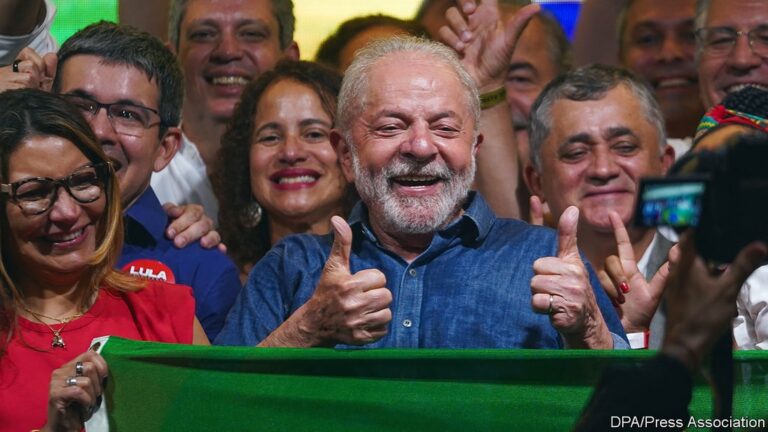
Editor’s note: On November 1st Jair Bolsonaro gave a brief speech in which he thanked the 58m Brazilians who had voted for him, and said he would comply with the constitution—in effect, conceding defeat. He alluded to his followers’ “sense of injustice about how the electoral process was carried out”. His chief of staff said that Mr Bolsonaro’s government would co-operate in the transfer of power.
When luiz inácio lula da silva was last in office, between 2003 and 2010, he used to quip that “God is Brazilian”. If so, the Almighty has a dark sense of humour. The presidential-election campaign that ended with a run-off on October 30th was one of the nastiest Brazil has ever endured, drenched in calumny and punctuated with violence. Lula, as the left-wing victor is known, won by a wafer-thin margin: 1.8 percentage points.Listen to this story.
After the election tensions mounted as Jair Bolsonaro, the right-wing populist incumbent, took two days to speak. He did not explicitly concede. However, it looks likely that the transfer of power will be relatively peaceful. Protests by bolsonarista lorry drivers spread across the country, but Mr Bolsonaro, who has previously encouraged violence, told his supporters not to block roads.
In many ways, the result is a triumph for Brazil’s democracy. The vote count was clean and Lula won fair and square. Mr Bolsonaro has for months suggested the opposite: that the polls would be rigged and the only way Lula could win was by cheating. He should admit that he was wrong, though he probably won’t.
Lula will find running Brazil much harder than last time he was in charge. The country is more divided than it was then, and its public finances are in worse shape. The campaign aggravated Brazil’s divisions with a torrent of falsehoods: that Lula is a satanic communist, and that Mr Bolsonaro is a cannibalistic paedophile. Tempers flared dangerously. Since August seven people have been killed for their political views.
As for the public finances, Brazil has racked up debts since Lula was last in power, because of a recession in 2014-16 and covid-19. So, although commodity prices have jumped since Vladimir Putin invaded Ukraine in February, boosting Brazil’s exports, the government has little room for fiscal manoeuvre.
Lula’s first task is to try to calm and unite the country. He made a good start in his victory speech, vowing to be the president for all Brazilians, not just those who voted for him. He may struggle, however, to reassure the legions of bolsonaristas who have been told, absurdly, that he will close their churches and impose Venezuelan-style far-left despotism. He has acknowledged that his victory was down to a broad coalition of democrats; he ought to govern in that spirit.
His next step should be to appoint a prudent economy minister. He should reiterate that he will not reverse privatisations, which he opposed at the time, and explain how he will pay for any big spending promises. If he is going to remove a cap on spending, introduced in 2016 after the recession, he needs to assure markets that there will be a sensible new fiscal rule to replace it. More clarity is needed over how he will pay for green policies. He is wisely seeking foreign help to curb deforestation in the Amazon, which has increased fast under Mr Bolsonaro.
Lula will have to find a way to work with Congress, which is dominated by conservatives. He should make clear that the graft that flourished under the rule of his Workers’ Party, seen most egregiously in the Lava Jato (Car Wash) scandal, will not occur again. (Lula was jailed for 19 months on charges of corruption; his conviction was annulled in 2021 and he maintains his innocence.) He should appoint an independent attorney-general from a list the public prosecutor’s office provides. Similarly, his cabinet should be chosen on the basis of merit, rather than loyalty.
The next few years will be tough. Whatever Lula does, bolsonarismo is likely to remain a disruptive force in Brazilian politics, just as Trumpery is in the United States. Lula should learn humility from the narrowness of his win, after coming to power with two landslides in the early 2000s. He needs to forge consensus among those he disagrees with. If he governs pragmatically and inclusively, he has a chance to restore order and progress to Brazil.
THE ECONOMIST
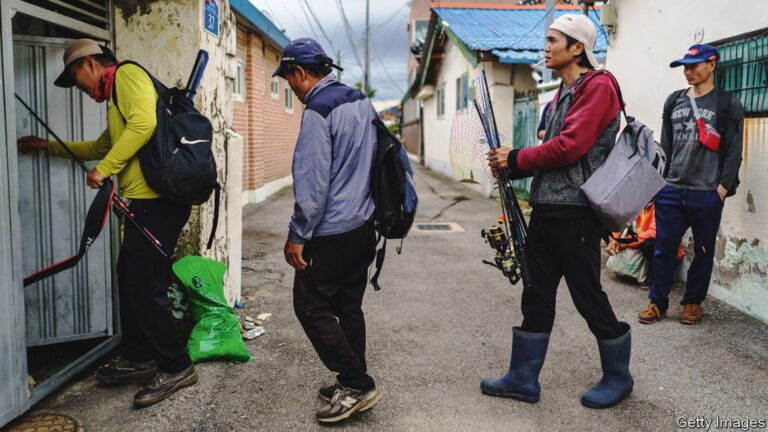
The ubiquitous rule-giving signs of the Icho Danchi district on the outskirts of Yokohama, near Tokyo, speak far more languages than any of its residents could. Motorcycle riding is restricted in Chinese, English, Japanese, Spanish and Vietnamese. Instructions for sorting rubbish, a particularly finicky part of Japanese daily life, are offered in 11, including Portuguese.Listen to this story.
With its Vietnamese cafés and Cambodian markets, the area is a microcosm of Japan’s growing but still small migrant community. In 2009 the country had 2.1m foreign residents. By 2019 that number was up to 2.9m. Just across the water, South Korea shares with Japan more than just byzantine waste-management rules. Its foreign population more than doubled from 1.1m to 2.5m over the same period.
The influx to both countries slowed during the pandemic, but it is set to pick up. The number of foreign residents in Japan grew by 200,000 in the first half of this year. Those on work visas made up more than half the increase. The South Korean government announced on October 27th that it would welcome some 110,000 foreign workers in 2023, twice as many as in each of the past eight years.

The new arrivals may help alleviate a short-term need for labourers. But they will do little to tackle the long-term problems both countries face. In the coming decades, Japan and South Korea will need ever more foreigners to till their fields, assemble their widgets and care for their old. And both will need more taxpayers, too. Japan’s population is expected to decline from over 125m now to 104m by 2050. South Korea’s is predicted to fall from 52m to 46m by 2050, and then to 36m by 2070. The ratio of over-64s to the working-age population in both countries is projected to shoot up (see chart).
Getting more women into the workforce, raising the retirement age and boosting productivity would help. But “we have to accept more foreigners, that is the reality,” says Takahashi Susumu of the Japan Research Institute, a think-tank in Tokyo. A recent study led by Japan’s aid agency concluded that, even assuming big investments in automation, at least 6.7m foreign workers will be needed in 2040 to achieve the government’s modest yearly gdp growth targets of 1-1.5%. A study last year by the Migration Research & Training Centre (mrtc), an institute in Seoul, found that South Korea would need some 4m foreign workers by 2030 to maintain its working-age population.
Drawing those numbers would require not only the political will—itself a tall order—but also efforts by Japan and South Korea to make themselves attractive. Migrants are still considered a temporary resource to plug gaps before being sent back. Mistreatment of guest workers is widespread. Options for staying on are limited. In South Korea temporary workers’ visas can be extended for a maximum of four years and ten months, two months short of the five years that would allow them to apply for permanent residence.
The chances of serious reform are low. Kishida Fumio, Japan’s prime minister, is flailing in the polls and focused on other priorities, such as defence and energy. His advisers reckon the country is not ready for an open debate on immigration. South Korea’s president, Yoon Suk-yeol, is also preoccupied. His government, too, hides behind a lack of public consensus.
Mr Kishida, for one, may be misreading the mood. “People are ready, they just need a go-ahead sign,” argues Menju Toshihiro of the Japan Centre for International Exchange, a non-profit organisation. Japanese have come to recognise the necessity of welcoming more foreign workers. A survey conducted in March 2020 by nhk, Japan’s national broadcaster, showed that 70% of Japanese support allowing in more imported labour.
The case in South Korea is less clear. A survey by the East Asia Institute, a think-tank in Seoul, suggests that South Koreans are becoming less enthusiastic about welcoming foreigners. In 2010 some 60% said they would like the country to become more multicultural. By 2020 that number had dropped to just below 50%, largely as a result of economic insecurity.
Business leaders have been asking both governments to boost the numbers that can come. Calls for change are also growing among some other groups. In Japan, local leaders in older, greyer regions have become more outspoken: the governors of Gunma and Miyagi, two central prefectures, went to Vietnam recently to recruit workers. Japan’s ministry of justice is expected to review its system for low-skilled workers. South Korea intends to form an immigration bureau responsible for migrant affairs—a role currently shared by 12 different ministries—which will make it easier to design unified policy. But its focus remains on high-skilled workers.
Both governments should be bolder. Public consensus should not be an excuse for inaction but rather the aim of governmental consultations. As Kang Dong-kwan of mrtc points out, the question of “what is the population goal?” must come before those of policy design.
Japan and South Korea will also have to try harder to attract migrants than they might expect. Though there will no doubt be plenty of takers for the lowest-paying jobs, both countries face competition for more skilled workers. South Korea, at least, has the pull of soft power: cultural exports, such as k-pop and k-dramas, have made the country familiar and attractive to foreigners, says Shin Gi-wook, a sociologist at Stanford University in California. But Japan’s relative economic draw is waning. Wages have been largely stagnant for decades, even as they rise in the developing countries that send the most labourers.
Moreover, both countries’ currencies are weak against the dollar, leaving migrants with less to send home. They also lack a major attraction that other rich countries have—big existing migrant communities. Integration is harder than in many other places. Learning Korean or Japanese takes more effort and offers fewer opportunities than learning English. Adding to such barriers is the sense among migrants that they are not wanted. As Mr Takahashi points out, “people might start to think ‘why would I bother?’”
THE ECONOMIST
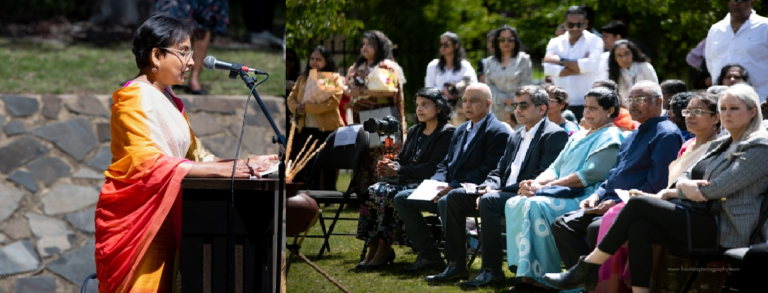
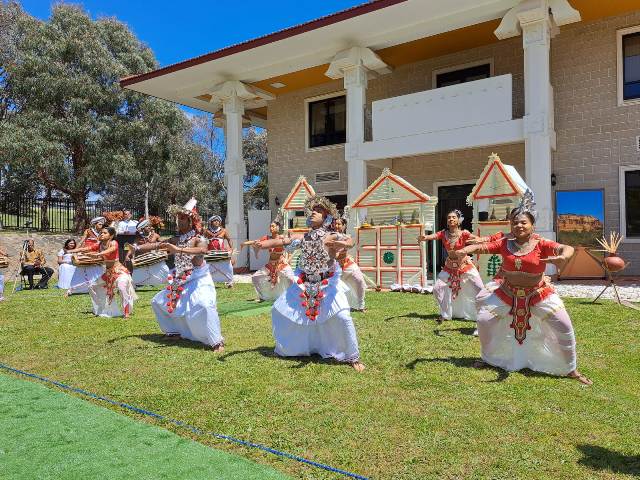
The Sri Lanka High Commission in Canberra hosted the first ‘Wes Mangallaya ceremony’ organised by the Bhagya School of Dance (BDS) on 15 October 2022 at the Sri Lanka High Commission Premises.
Ten students of the BDS who were qualified for the highest status of a Kandyan Dancer, adorned the sacred Wes attire and gave outstanding inaugural performances at the ‘Wes Mangallaya’ following the religious ceremony held at the Canberra Buddhist temple. Traditional drummers were flown in from Sri Lanka for this event.
Over 400 Australians and Sri Lankan expatriates gathered to witness this unique cultural ceremony which brought centuries old traditions and rituals of the Kandyan dancing form. Member of Parliament (Labour) Dr. Marisa Paterson and veteran Sri Lankan musician Dr. Rohana Weerasinghe were among the distinguished guests.
While thanking BDS for promoting Sri Lankan culture and traditions in the multicultural Australian society, the Acting High Commissioner stated that the first ‘Wes Mangallaya ceremony’ coincided with the 75th Anniversary of the establishment of diplomatic relations between Australia and Sri Lanka. She added that the Sri Lanka High Commission supports the initiatives of Sri Lankan expatriates in Australia to promote Sri Lankan culture and pointed out that the ‘Kandyan Wes Dancer is a cultural export symbol of Sri Lanka.
The High Commission continues to encourage and support community organizations to promote Sri Lankan culture and tourism through various events.
Sri Lanka High Commission
Canberra
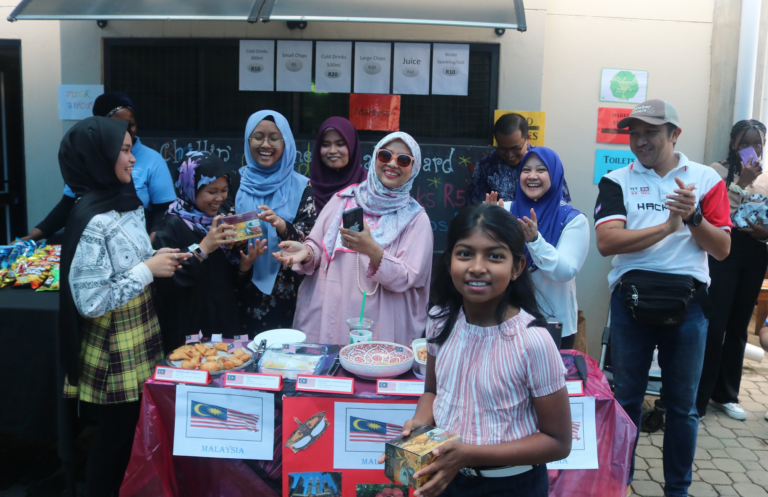
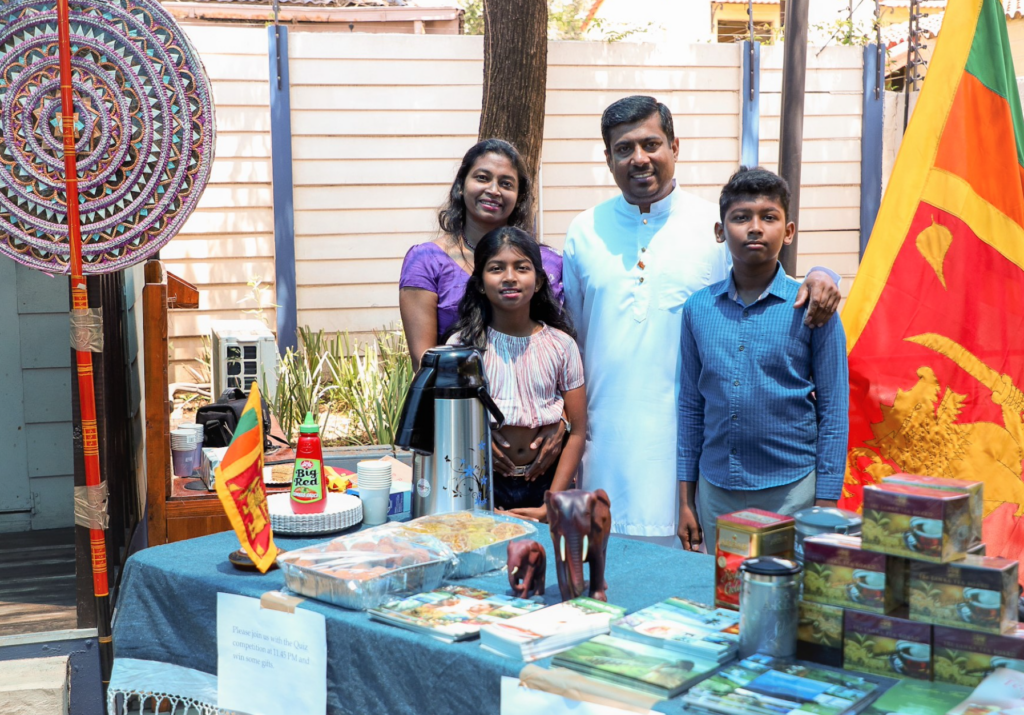
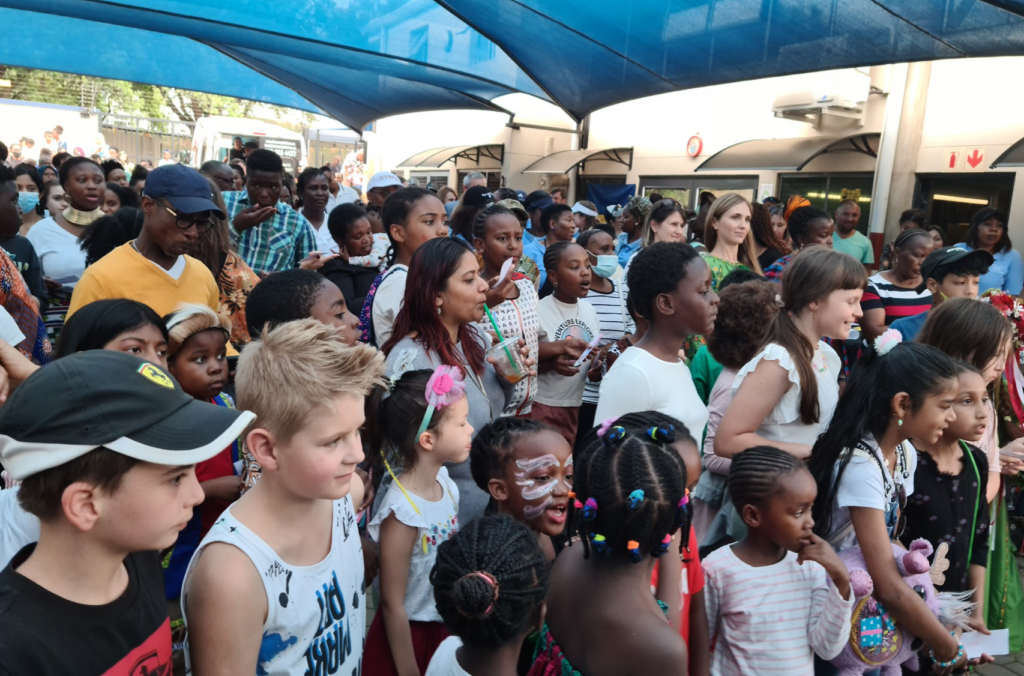
Sri Lanka High Commission in South Africa participated in the Courtney International Day held in Pretoria on 29 October 2022. International Organizations such as PEN Charity together with missions of other countries including New Zealand, Malaysia, Tunisia, South Africa, Argentina, Ukraine, Lesotho, Ethiopia and Malawi also participated in the event. Around 400 residents of Pretoria and Johannesburg and diplomats attended the event.
The Sri Lankan stall was a big attraction with its display of tea, tourist information, colorful flags, sesaths and handicraft. Complimentary tea packets were given away to winners of a trivia quiz on Sri Lanka conducted by High Commission staff. Tourism promotion brochures received from the Sri Lanka Tourism Board also were distributed among the visitors.
In keeping with research indicating that 30% of global tourism is attracted by the food culture of global destinations, the Sri Lankan stall served Sri Lankan snacks (Fish Cutlets and Kokis) and hot Ceylon tea to those visiting the Sri Lankan stall.
High Commission of Sri Lanka
Pretoria
03 November, 2022
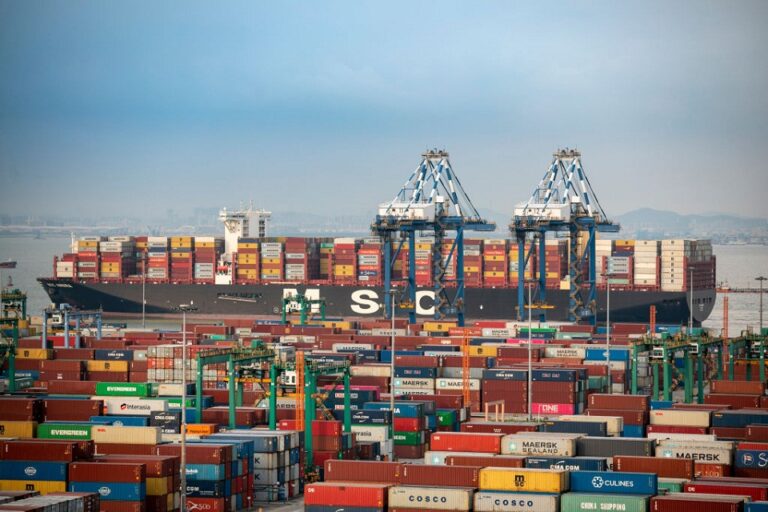
The shipping industry vehemently oppose the government’s action to increase fees for select services from this month a move justified by Shipping lines and their agents but strongly opposed by importers.
A collective of business chambers and associations have made a joint representation to the Minister of Ports, Shipping and Aviation Nimal Siripala De Silva stating that these newly introduced provisions under the Extraordinary Gazette Notification No. 2304/24 violate the principles of market forces.
“This adversely impacts the cost of living and competitiveness of industry overall in terms of both imports and exports,” it was stressed.
The chambers and associations include the Joint Apparel Association Forum (JAAF), National Chamber of Exporters, Sri Lanka Association of Manufacturers and Exporters of Rubber Products, Sri Lanka Shippers’ Council, Tea Exporters’ Association, Sugar Importers’ Association and Essential Food Commodities Importers and Traders Association
The main concerns detailed in the letter to the Minister of these anti-competitive and non-transparent regulations are: Increased costs due to intervention by the authorities in price fixing; Removal of the negotiation capability of private parties as service providers and service receivers and Misinterpretation relating to freight and other costs.
The Cabinet Ministers approved to publish the amended Licensing of Shipping Agents Bill in the Government Gazette and to submit the same to Parliament for approval.
The tanker operators’ regulations were issued in the year 2005 subject to the provisions in Sections 8 to 10 of the Licensing of Shipping Agents Act No. 10 of 1972.
However, following the Judiciary’s decision to revise the 10th regulation of that Act, on 4 July, the Cabinet Ministers approved to introduce amendments required to the Licensing of Shipping Agents Act No. 10 of 1972 including the relevant revisions.
As per the Extraordinary Gazette dated 20 October 2022, the revisions are concerning the regulations in the Licensing of Shipping Agents, Freight Forwarders, Non-Vessel Operating Common Carriers and Container Operators Act No. 10 of 1972. Washing charges, De-stuffing charges and Transport cost have been included among cost recovery fees.
It has specified a new maximum Delivery Order (DO) fee for import shipments. For FCL import shipments – maximum DO fee that should be paid by an ultimate consignee/importer (except Freight Forwarder/Consolidator) is Rs. 18,000.
Accordingly, from Shipping Lines to freight forwarders and Shipping Lines to Consolidator, the maximum Liner DO Fee should be Rs. 14,800.
For LCL import shipments the maximum DO fee that should be paid by an ultimate consignee/importer is Rs. 20,500.
Accordingly, from Consolidators to freight forwarders – the maximum DO fee should be Rs. 16,500. The service provider shall charge from ultimate consignee equalling rupees per maximum of $ 8 per 1 CBM (cubic metre) as a cost recovery fee destination as applicable for the carriage of goods.
Shipping agents said service providers had asked for an increase along with soaring inflation and other cost increases and accordingly representations were made to Minister Nimal Siripala de Silva.
It was pointed out that the legislative changes were necessary to properly recover the actual cost.
However, shippers alleged the move is anti-competitive “price fixing” and manipulative and non-transparent. “Consumer will have to bear the additional cost when it comes to imports whilst exporters’ input cost will increase,” they said.
Sri Lanka’s Micro ,Small and Medium Scale Entrepreneurs are being given a sigh of relief following the selection of one of the leading private sector banks HNB PLC as a partner financial institution by the Asian Development Bank (ADB) to disburse a component of the US$ 13.5 million in funds allocated to the SME-Line of Credit (SMELoC) Emergency Response Scheme.
The ADB scheme aims to support and strengthen Sri Lankan MSMEs affected by the ongoing economic crisis with working capital credit facilities, with a special emphasis on agriculture, tourism and export sectors.
In working towards this goal, HNB looks to disburse funds to select businesses across its extensive MSME network.
HNB Head of Refinance and Special Lending Products, Bandara Rekogama said. “they are delighted to be a part of this powerful initiative from the ADB.
Given the unique strength and scale of HNB’s network of SME clients across the island, and our long-standing relationship with ADB, we believe that HNB is uniquely positioned to help uplift this sector, which even through our current challenges, continues to serve as the backbone of the Sri Lankan economy.
The Bank urged all eligible SME clients that are facing challenges in their working capital requirements to make use of this invaluable opportunity,”
SMEs that meet the eligibility criteria of a Rs. 750 million annual turnover will be offered a maximum facility of Rs. 10 million, with a repayment period of three years.
All loans under the scheme must be utilized exclusively for working capital requirements, including recurring expenses such as salaries, overheads and raw material purchasing. Moreover, HNB will provide the attractive interest rates of 11.77% for the facility, significantly lower than the current market rates.
Notably, the bank has supported over 650 MSME customers with working capital and Capex facilities accounting for over Rs. 6.5 Bn through the ADB – SME LoC schemes. Established to support businesses affected by the COVID—19 pandemic, the Emergency Response Scheme initially disbursed USD 10 million to 280 local businesses as emergency working capital loans over the past two years.
Furthermore, HNB disbursed loans to the value of Rs. 600 million for approximately 132 women entrepreneurs with a grant of Rs. 100 million under the SME LoC – Wefi component.
With 254 customer centres across the country, HNB is one of Sri Lanka’s largest, most technologically-innovative banks, having won local and global recognition for its efforts to drive forward a new paradigm in digital banking. HNB has a national rating of AA- (lka) by Fitch Ratings (Lanka) Ltd.
The bank was also ranked among the World Top 1,000 Banks list compiled by the prestigious UK-based Banker Magazine for six consecutive years, and was also ranked as Sri Lanka’s Best Retail Bank for the 12th year at the prestigious International Excellence in Retail Financial Services Awards 2022 hosted by the Asian Banker Magazine.
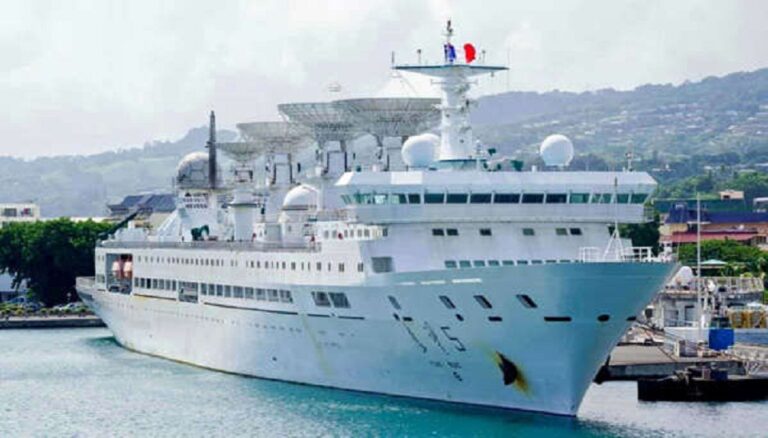
India has expressed serious concerns to Colombo for allowing surreptitious refueling of Chinese military vessels on high seas with Sri Lankan tankers picking up fuel from Chinese leased Hambantota seaport, Indian media reported.
According to diplomats based in Colombo, New Delhi has asked Sri Lanka to come up with transparent standard operation procedures (SOPs) for refueling and docking of ships and not allow Chinese military vessels to either dock or refueled at Hambantota or Colombo ports.
It was noticed that Sri Lankan vessels were loading fuel from Hambantota port and refueling Chinese warships on high seas to bypass Indian and the larger US concerns.
It is understood that currently there are no Chinese ships in the Indian Ocean Region except for those plying in the name of anti-piracy task force off the coast of East Africa. “
The Chinese warships continue to ply off the coast of East Africa and the Gulf of Aden while there is hardly any pirate activity in the region. It was the anti-piracy pretext that China used to secure a base in Djibouti,” said a Beijing watcher.
Both US and India had clearly told Colombo not to allow docking of Chinese military vessels and strategic surveillance ships on its ports after the Ranil Wickremesinghe government allowed Chinese ballistic missile tracking ship Wang Yuan 5 to dock at Hambantota despite India red-flagging the move.
The ship stayed at Hambantota port for six days last August and then turned back to its home port in Shanghai after surveillance of Indian Ocean south of the Island nation.
The Biden administration raised strong objections to the docking of Wang Yuan 5 at Hambantota port, which was leased for 99 years by Wickremesinghe in 2017 to Beijing under the Rajapaksa regime. China has also been given tax incentives in the Colombo area for 40 years.
While Sri Lanka did not accede to Pakistani request to dock Chinese built frigate PNS Taimur at Trincomalee port, it gave permission to the warship to pay “goodwill” visit to Colombo port last August despite Indian objections.
It is understood that a senior Pakistan Navy official is visiting Colombo mid-November much to chagrin of India.
While a cash strapped Sri Lanka looks toward India for fuel, food and medicine supply to overcome ongoing economic crisis, it continues to play around with India’s main adversaries with impunity as the political leadership has accumulated IOUs from Beijing in the past.
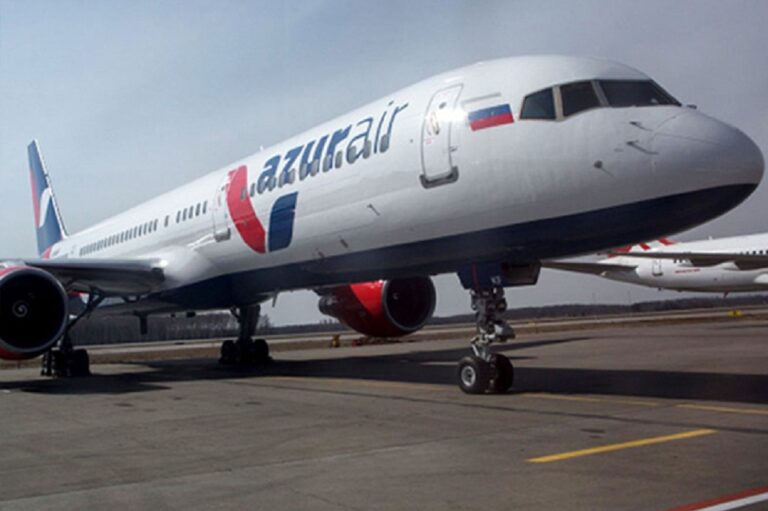
Three leading airlines of Russia, Switzerland and France have resumed their flights from Bandaranaike International Airport at Katunayake in Colombo suburbs as the island nation is gearing up to be part of the highly anticipated FIFA World Cup.
Sri Lanka yesterday officially launched FIFA Fan Zone 2022. FIFA Fan Zone 2022 is being set up in Negombo, Lewis Lane, where all hotels, restaurants and boutiques are currently receiving a facelift to give Qatar’s FIFA World Cup vibe.
Sri Lanka’s fan zone for the world cup spectators is endorsed by the FIFA management, the Sri Lanka Conventions Bureau (SLCB) said.
In the eve of this event ,Russia’s largest charter airline — Azur Air and the flag carrier of France -Air France, will resume flights to Sri Lanka starting from today , according to Sri Lanka’s Tourism Ministry.
Azur Air will commence flights to Sri Lanka from today (November 03) while Air France is scheduled to resume flights from Friday (November 04).
It is scheduled to operate four flights per week initially with plans to operate additional flights from several cities depending on the demand.
Last month, the Russian flag carrier, Aeroflot also resumed flight operations to Sri Lanka.Aeroflot resumed flights after it suspended operations in June.
Meanwhile in a twitter message, Tourism Minister Harin Fernando announced that Switzerland’s national airline, Swiss International Air Lines, is now starting operations in Sri Lanka once again with weekly flights starting from November 10 to May2023.
He said this will further strengthen the European arrivals for the season. Russian airlines have not been flying to Sri Lanka since early June, when an A330-300 operated by Aeroflot was briefly detained due to a dispute with lessor AerCap‘s special purpose vehicle Celestial Aviation Trading Limited.
Even though the court quickly released the aircraft and the Sri Lankan government guaranteed that no further seizures would be made in the country, Russian airlines had been reluctant to return to the island.
However, Russia’s flagship carrier Aeroflot last month resumed flights between Moscow and Colombo after a lapse of 4 months.
Meanwhile Minister Fernando disclosed recently that French flag carrier Air France and Netherlands flag carrier KLM Royal Dutch Airlines will resume flights to Colombo from tomorrow, and the said airlines will operate four flights a week to Sri Lanka.
The increase in the number of flights operating to Colombo comes at a time when the government is hoping to attract more tourists from Europe during winter months.
Tourism Minister Fernando who has been staging road shows and events in recent weeks to encourage more people to visit Sri Lanka is expected to leave for Europe.
The Minister is of the view that Sri Lanka can attract more tourists due to the stable situation in Sri Lanka at present.
He is also hoping to open doors to football fans who will be traveling to Qatar for next month’s World Cup.
Meanwhile, the Sri Lanka Tourism Development Authority has announced that more than 42,000 tourists arrived in Sri Lanka in October. Accordingly, a total of 568,000 tourists have entered Sri Lanka thus far this year.
The SLTDA said, Sri Lanka which vastly depends on tourism as one of the main foreign exchange-generating avenues, hopes to attract at least one million tourists by the end of 2022.
The SLTDA said if the expected number of tourists arrives in the island, the government will generate revenue of USD 1.8 billion through the tourism sector.