Home Blog Page 2039

The Fed stays the tightening course. Does the CBSL have another option?

0

The objective of this short article is to express a firm opinion that the CBSL has no option but to raise its policy rates further at the next policy meetings to suit the US Fed’s interest rate policy in view of the Fed’s policy decision and communication announced yesterday. The reason is because the CBSL also follows principles of the Fed’s monetary policy model and language for Sri Lankan economy.

However, the author’s view on the monetary policy model that should be adopted in terms of the Monetary Law Act to rescue the economy and general public from the present economic crisis that has been caused by the present monetary policy model is completely different as already has been highlighted in several articles released in this blog.

The Fed’s Policy Direction

As mostly predicted by market participants, the Fed yesterday raised its policy interest rates target corridor by another 75 bps to 3.75%-4.00% level although the US inflation peaked in July at 8.53%. The Fed’s key monetary policy tool is the policy interest rate that sets the target for overnight inter-bank interest rates for the purpose of driving inflation around a target of 2% in the long-term.

The rate hike announced yesterday is the 5th consecutive hike implemented from 4th April this year with a total hike so far being 3.50%.

The Fed’s Policy Communication Yesterday

The highlights of the monetary policy press release and Fed Chair’s press conference are given below. The market response immediately after the press release (before the press conference) was a slight increase in stock market prices and Treasury yields and a fall of the Dollar value. However, immediately after the Chair’s press conference, stock prices fell while the yields and Dollar value rose in response to further tightening course assured by the Fed Chair.

  • Ongoing increases in policy rates will be appropriate for a stance of monetary policy sufficiently restrictive to return inflation to 2% over time.
  • The Fed does not have a scientific way to decide whether inflation is entrenched.
  • In determining the pace of future increases in policy rates, the cumulative tightening of monetary policy, the lagged impacts on economic activity and inflation and economic and financial developments would be considered (However, there are no benchmarks to assess these).
  • Policy overtightening can be corrected easily by loosening. However, if the policy is too dovish, inflation will be embedded. Therefore, it is important to move expeditiously.
  • The discussion on smaller rate hikes will come at the December meeting. The Fed thinks of positive real interest rates across the yield curve.
  • The terminal policy rate will be higher than initially envisaged (Market forecasts have increased from 3.0%-3.5% in April to 5.0%-6.0% immediately after yesterday’s policy communication)
  • The economy has slowed significantly from last year’s rapid pace. Real GDP rose at 2.6% last quarter while modest growth of spending and production is seen this quarter. 
  • Growth in consumer spending has slowed from last year’s rapid pace due to lower real disposable income and tighter financial conditions. However, demand remains strong due to job gains and household savings.
  • Despite the slowdown in growth of the economy, the labor market remains extremely tight, with the unemployment rate at a 50-year low (3.5% in September), job vacancies still very high and wage growth elevated. It is necessary to raise unemployment to get the demand down (In fact unemployment has fallen from 4% in January to 3.5% at present, despite the faster monetary tightening).
  • Financial conditions have tightened significantly and the effects on demand in the most interest-rate-sensitive sectors of the economy such as housing are observed.
  • The Fed does not have tools to directly affect prices such as energy prices but it tools will affect interest-rate sensitive demand sectors and help resolve demand and supply imbalances.
  • Soft landing is still possible, but the window has narrowed.

Overall, given the persistence of high inflationary pressures envisaged across the world and strong economy, strong demand and tight labour market with unemployment at a 50-year low in the US, markets are observed to be pricing another rate hike of 75 bps in the Fed’s December meeting, despite inflation seems to have peaked.

The Policy Direction of the Bank of England and European Central Bank

The present policy direction of the Bank of England and European Central Bank whose currencies are reserve currencies next to the US Dollar is similar. The policy rates increase has been 1.15% to 1.25% by the Bank of England since December 2021 (six consecutive hikes) and 2.00% to 2.25% (Marginal lending rate) by the European Central Bank since July 2022 (three consecutive hikes). Further, their policy communications also are to stay the course of rates hiking as inflation does not show any sign of pivot.

The CBSL has no option but to follow the Fed

As interest rates of global reserve currencies led by US Dollar are being raised expeditiously with entrenched inflationary pressures (risen to 8% to 11%) amidst the effects of Russian-Ukraine war and China’s supply chain disruptions continued with the zero Corvid tolerance policy, central banks except in Japan and China are compelled to stay the continued tightening course. Central banks in emerging market economies generally follow suit primarily to keep their interest differentials in order to fight foreign capital outflow to developed market economies and to prevent currency crises.

The CBSL has raised policy rates so far by 9% to the corridor of 14.5%-15.5% and caused government securities yield rates rising to 30%-33%. However, inflation remains to be at hyper-levels around Y-o-Y 70% as compared to the CBSL monetary policy target of 4%-6%. Further, money printed to finance government budgetary operations has been fast rising without any sign of peaking, i.e., Treasury bill holding of the CBSL has risen from Rs. 725 bn at the end of December 2020 to Rs. 2,440 bn to-date (an increase of 237%).

Therefore, the CBSL which strictly follows principles of the Fed-styled monetary policy model with policy rate-based open market operations to control inflation as recommended by the IMF has no option but to stay the rate hiking course expeditiously and aggressively, given the exorbitant disparity between the inflation target of 4%-6%, continuously rising inflation around Y-o-Y 70% and IMF financial policy package being awaited.

Otherwise, the monetary policy rationale and consistency adopted by the CBSL as communicated in recent media reports and interviews will be questioned where concerns will be raised over possible policy irregularities and policy independence loss detrimental to the inflation control and price stability objective of the CBSL.

Therefore, if the CBSL announces a wait and see policy at the next policy meeting, it has to provide strong reasons for the policy deviation.

(This article is released in the interest of participating in the professional dialogue to find out solutions to present economic crisis confronted by the general public consequent to the global Corona pandemic, subsequent economic disruptions and shocks both local and global and policy failures.)

P Samarasiri

Former Deputy Governor, Central Bank of Sri Lanka

(Former Director of Bank Supervision, Assistant Governor, Secretary to the Monetary Board and Compliance Officer of the Central Bank, Former Chairman of the Sri Lanka Accounting and Auditing Standards Board and Credit Information Bureau, Former Chairman and Vice Chairman of the Institute of Bankers of Sri Lanka, Former Member of the Securities and Exchange Commission and Insurance Regulatory Commission and the Author of 10 Economics and Banking Books and a large number of articles published)

Economy Forward

How a Lincolnshire oil refinery boosted couple’s secret $10bn oil empire

0

By Ellis Karran Local News Reporter 

  • An oil refinery in Lincolnshire, among the largest and most valuable in the whole country, has been a key fortune maker for a couple who have quietly amassed a $10 billion crude oil empire.

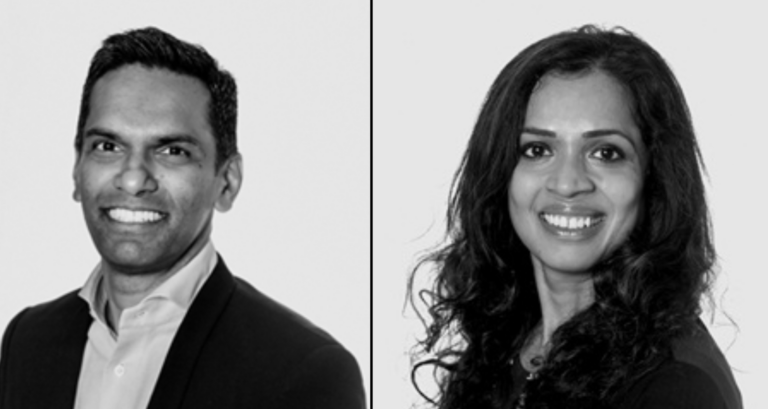
Winston and Arani Soosaipillai are among the wealthiest couples in the UK, having grown their company Prax from a flat in Surrey to a global juggernaut in the crude oil market.

The couple’s public image is almost blank, with the only trace of their presence being a brief bio of them both on the board of directors section on Prax’s website.

According to that directory, Winston, who goes by his middle names of Sanjeev Kumar, is down as chairman and chief executive officer at the company – while Arani serves as the chief of human resources and a corporate officer.

A report by The Times on Sunday looked into the limited public information on the history of the Soosaipillai’s, and how the acquisition of a Lincolnshire oil refinery grew their oil empire to almost immeasurable scales.

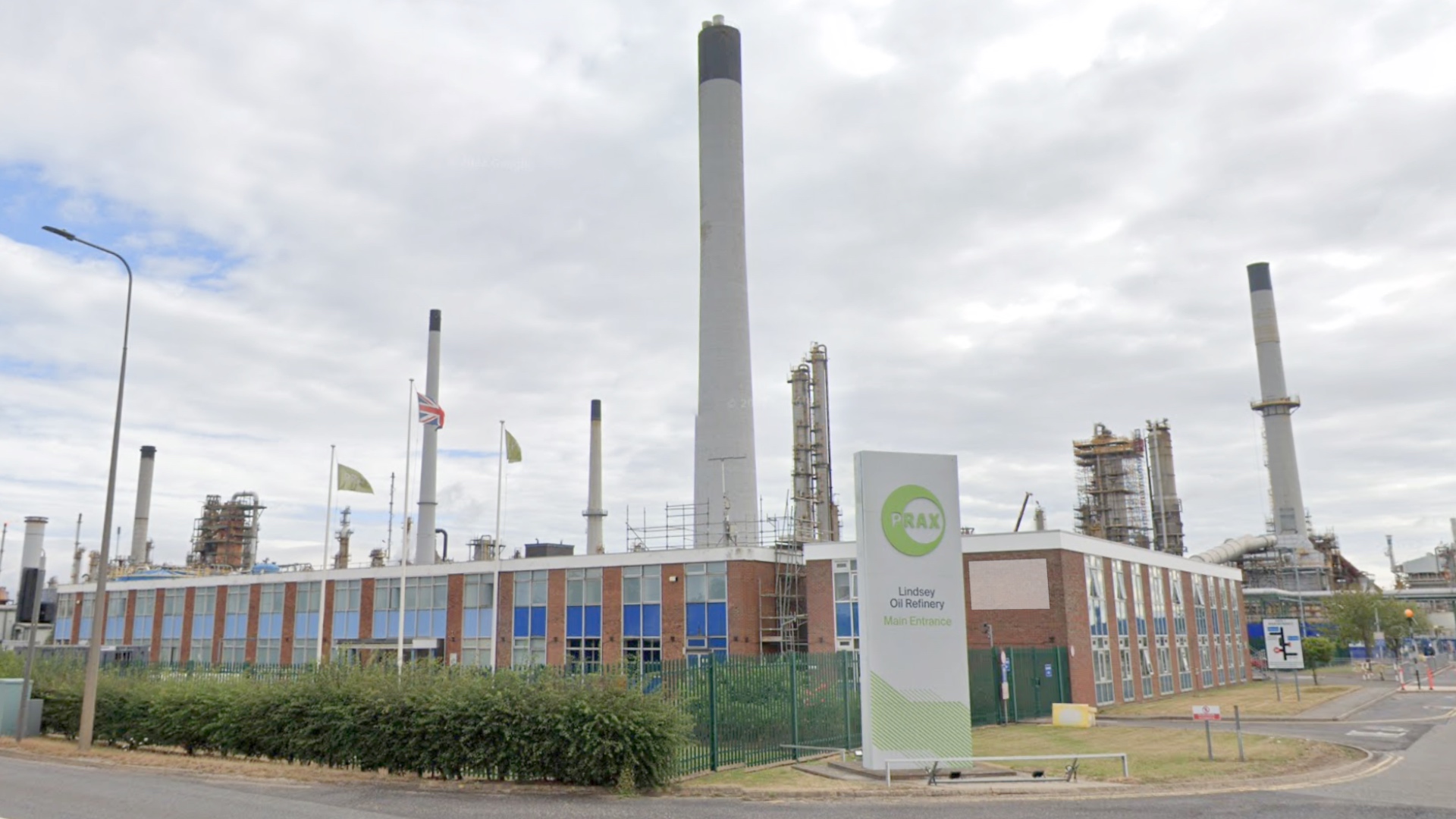
The Prax Lindsey Oil Refinery in Killingholme, North Lincolnshire. Photo: Google Street View

Prax employs 1,250 workers, has 11 offices across the world and a turnover of around $10 billion, which is the same as FTSE 100 giant JD Sports.

Initially specialising in blending diesel and then growing into gas oil, kerosene and petrol for jet engines, the company managed service stations for Shell and Total after acquiring an oil storage site in East London in 2005.

After Total looked to sell its stake in the Lindsey Oil Refinery in North Killingholme, Prax saw this as an opportunity to expand business at a pinnacle moment in the markets – with the coronavirus pandemic tanking margins.

Lindsey Oil Refinery processes up to 113,000 barrels of oil every single day, and spreads across 500 acres to supply oil for services across the world.

A deal was reached in 2021 for the Soosaipillais to buy the site, which is one of just six facilities in the UK that turns crude oil into petrol and diesel.

It has been reported that Prax paid some $167 million for the refinery in March 2021, and after a rebound of oil price following the relaxing of COVID-19 pandemic restrictions, the company logged a $500 million gain in a matter of months.

Earlier this year, The Guardian reported that the company’s profits have soared almost tenfold between 2010 and 2020, with a further astronomical boost from the acquiring of Lindsey.

The UK’s competition watchdog launched an investigation into profit margins within the largest oil refiners in the country, of which Prax Lindsey was mentioned.

In August 2022, the company revealed that its Lindsey refinery was one of 20 government-selected projects to develop carbon-capture technology, with the aid of taxpayer funds.

The firm now operates 183 service stations, owning half of them, and supplies crude oil and fuel across the planet, buying its first two tanker ships this year.

It is alleged that with large profits have come at a borrowing cost, however. The Times says Prax’s borrowing facility has expanded to £739 million as a buffer against high oil and gas prices in an uncertain market.

Information on how this flat-based business grew into the colossus it is today is somewhat sparse, prompting questions over whether a closer scrutiny is required for sales of large and important national infrastructure assets.

Lincolnshire

The President decides to appoint the cabinet before the 14th!

0

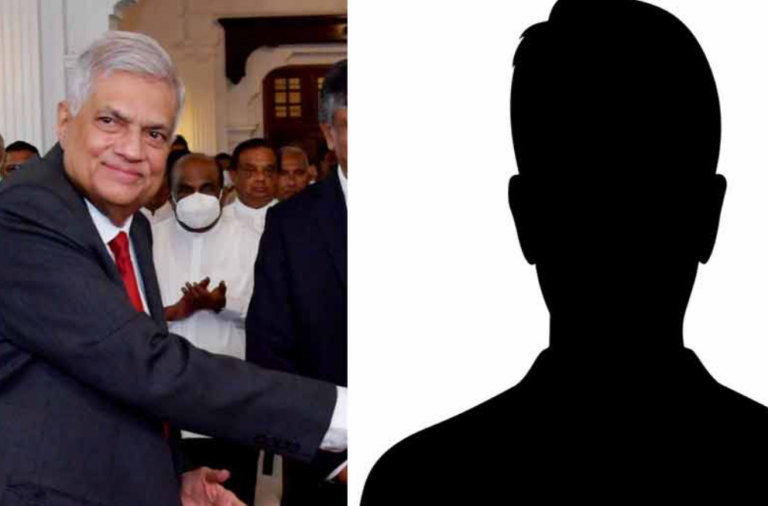
It is reported that President Ranil Wickremesinghe has decided to appoint the new cabinet before November 14.

After Ranil Wickramasinghe assumed the presidency, the last cabinet under Mr. Gotabaya Rajapaksa was reappointed with minor changes on a temporary basis. Dates were fixed on several occasions for the appointment of a permanent cabinet, but it could not be achieved due to the inability to reach an agreement with the Sri Lanka Podujana Peramuna.

In particular, in the list of names given by Pohottuwa, MPs Johnston Fernando, Rohitha Abeygunawardena, Mahindananda Aluthgamage and Namal Rajapaksa were also proposed for cabinet ministerial positions, but the president had flatly refused to give them ministerial positions.

Requests were repeatedly made to the President about this on several occasions, but the President had not changed his decision.

Accordingly, it is stated that the national organizer of Pohottuwa Basil Rajapaksa has also agreed with the President’s decision.

Sources further stated that President Ranil Wickremesinghe is scheduled to leave for Egypt this weekend to attend the World Conference on Climate Change and the new cabinet will be appointed soon after the visit.

Sajith’s response at protest yesterday the most suitable for his position!

0

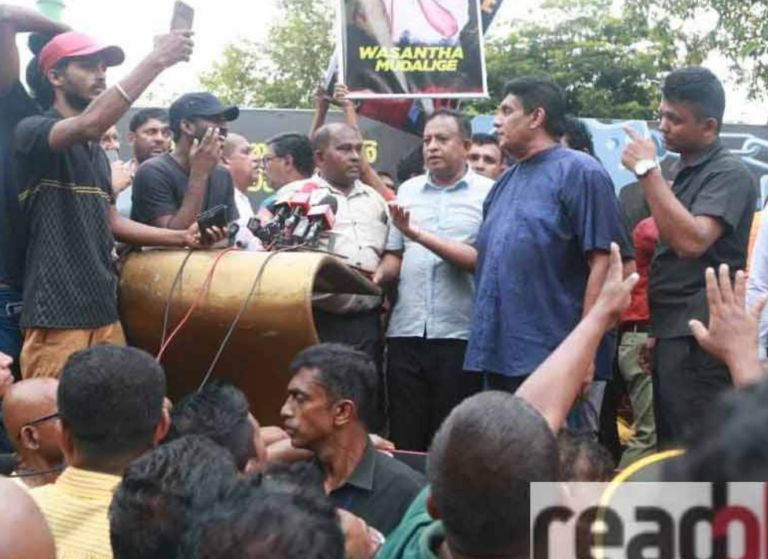
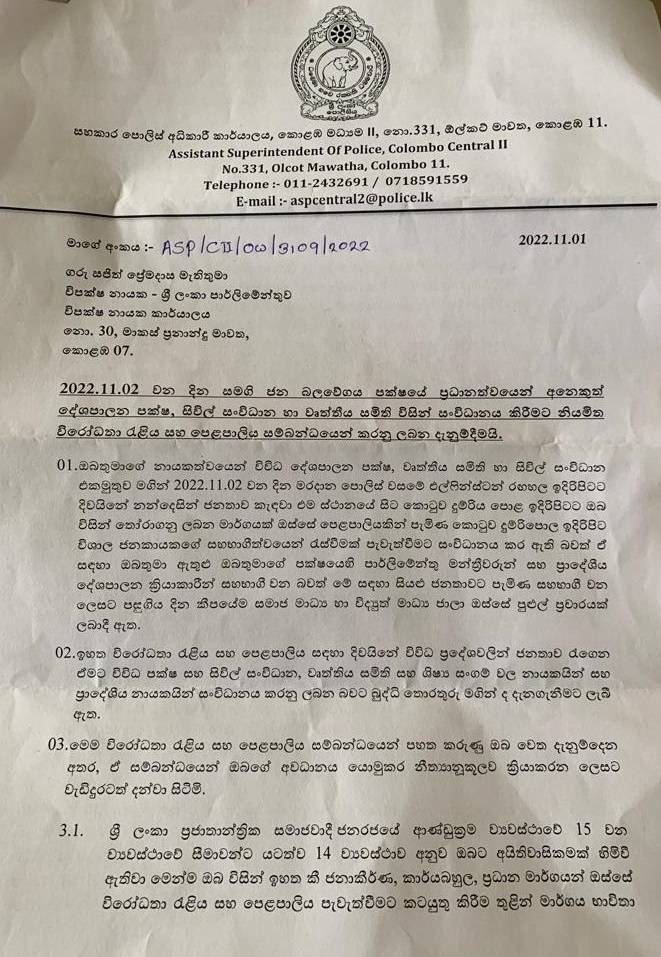
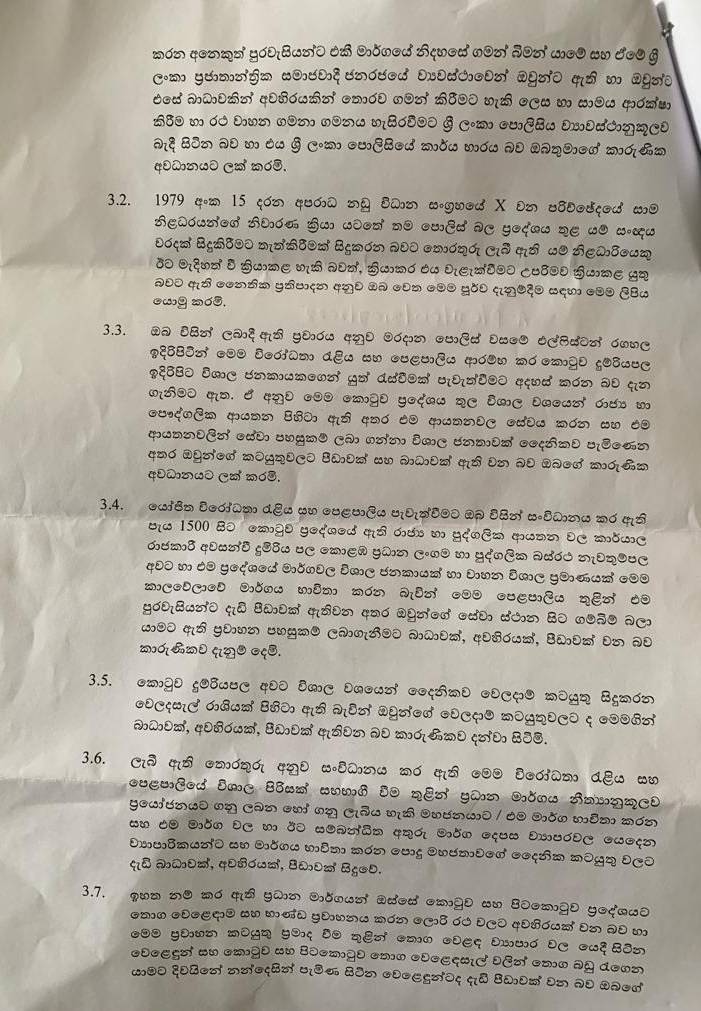
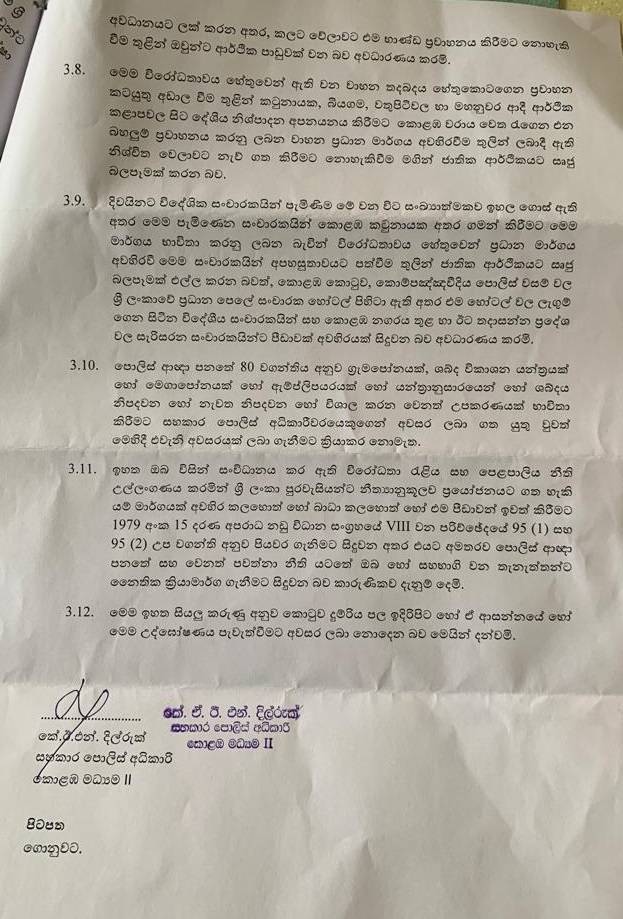
Yesterday (02) the protest march held jointly by the opposition political parties, trade unions and mass organizations was interrupted by the Police in the Pettah area and the Police stopped the protest by not allowing the march to go in front of the Fort railway station as it had been organized.

There, the Opposition Leader Sajith Premadasa had decided to leave the place after being unable to reach a solution after discussing with the police officers about not allowing the peaceful march.

At that time, there was some opposition to Premadasa from a small group of people present at that place and media organizations backing the current regime published the news about it. Supporters of the Sri Lanka Podujana Peramuna (SLPP), the United National Party (UNP) and even the Janata Vimukthi Peramuna (JVP) shared the story and videos with great enthusiasm on Social Media.

The Leader of the Opposition in a country is the leader of the entire Opposition representing political mainstream and is the alternate head of state of any democratic establishment. The Police had also sent a letter to the Opposition Leader saying that the protest would not be allowed, and he had participated in the protest despite it.

Also, when the Police prevented the protest, it was the right step taken by Sajith Premadasa as the country’s Leader of the Opposition to move out from the place peacefully without putting on a show.

The country’s Opposition Leader is not there to fight with the Police on streets. If he had done such a thing, it would have set a very wrong precedent for the people. Accordingly, the Leader of the Opposition did a very wise thing by not going to such a situation and leaving the place to save the protesters from making any unwise action and to avoid the anger of the people.

Saving a country from an economic crisis is not a task that can be done by acting like some cape crusader in a Hollywood movie. Accordingly, Premadasa’s response yesterday is the most suitable for his position and personal image.

Young Professionals’ Organization of the SJB inaugurated

0

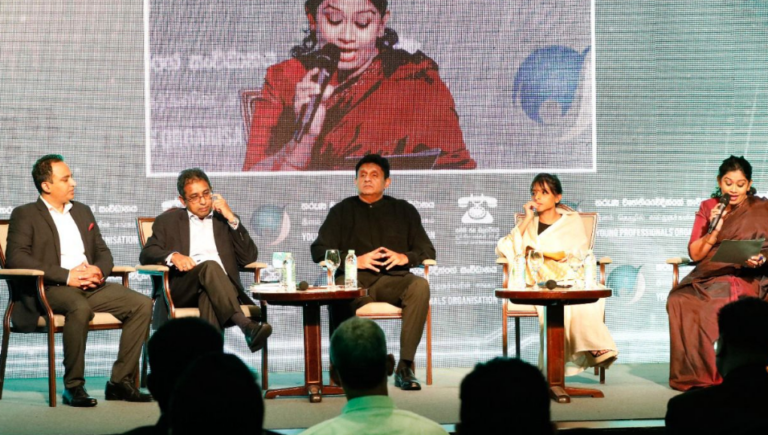
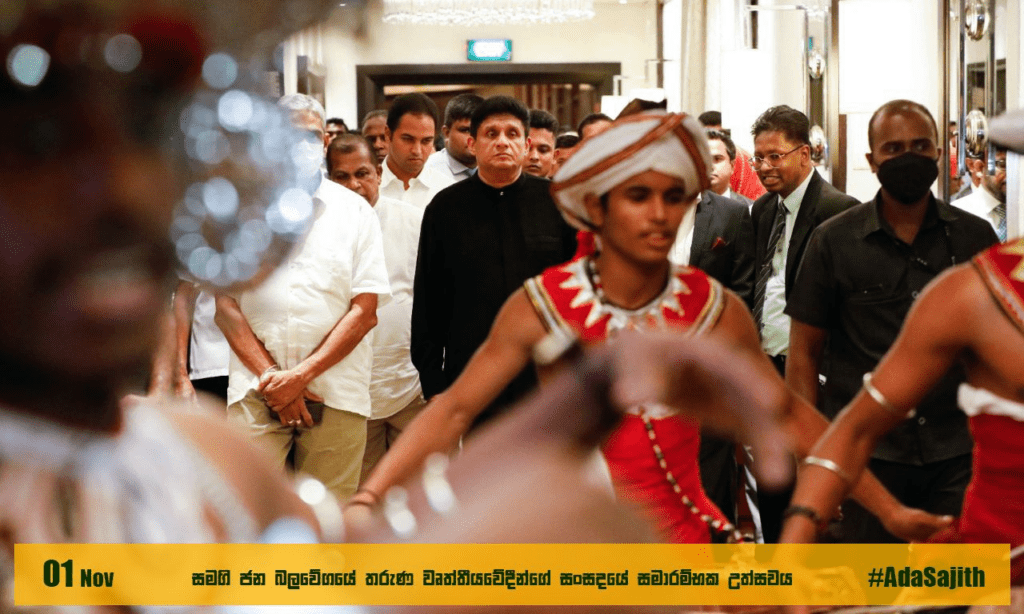
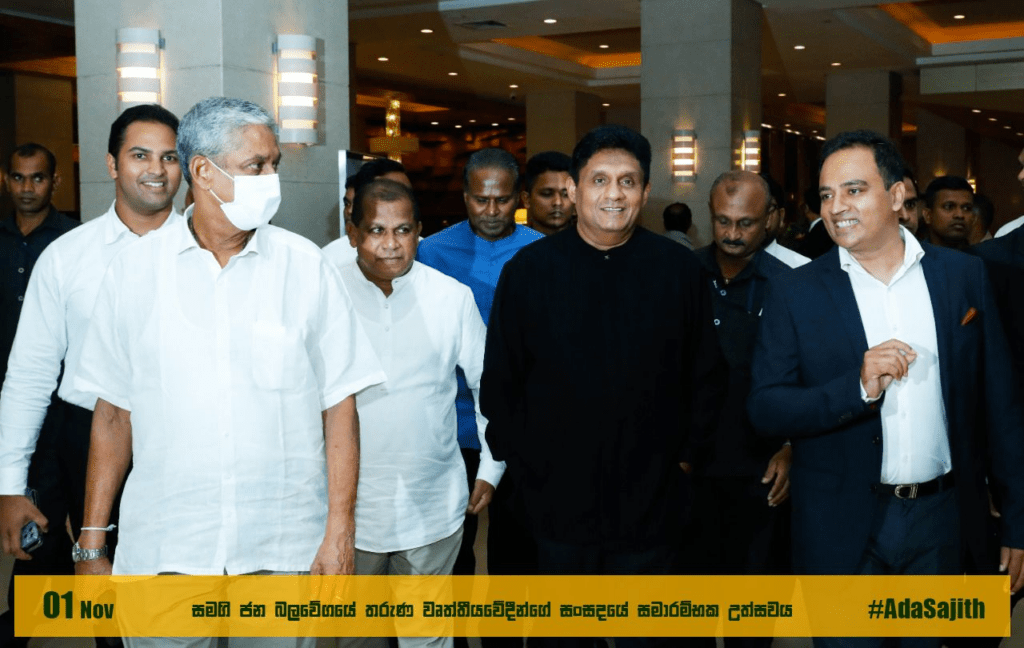
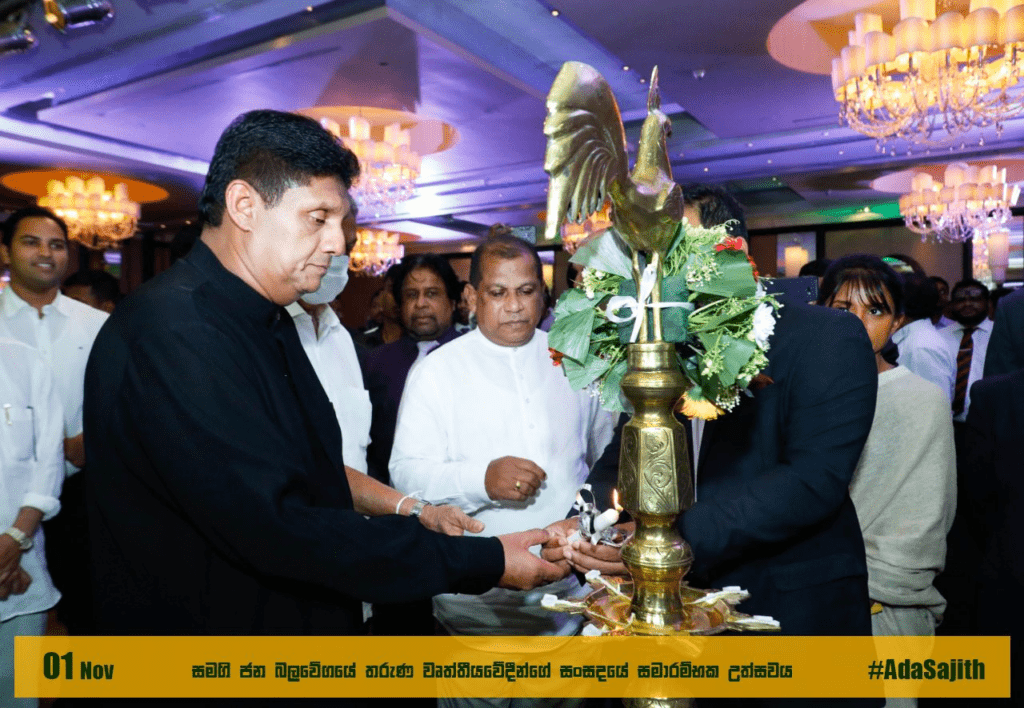
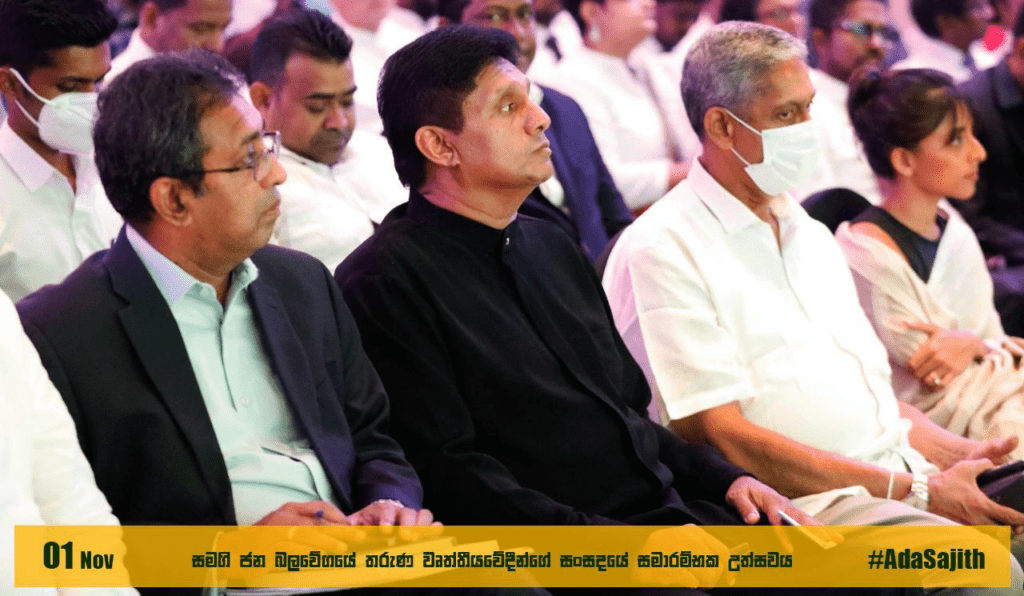
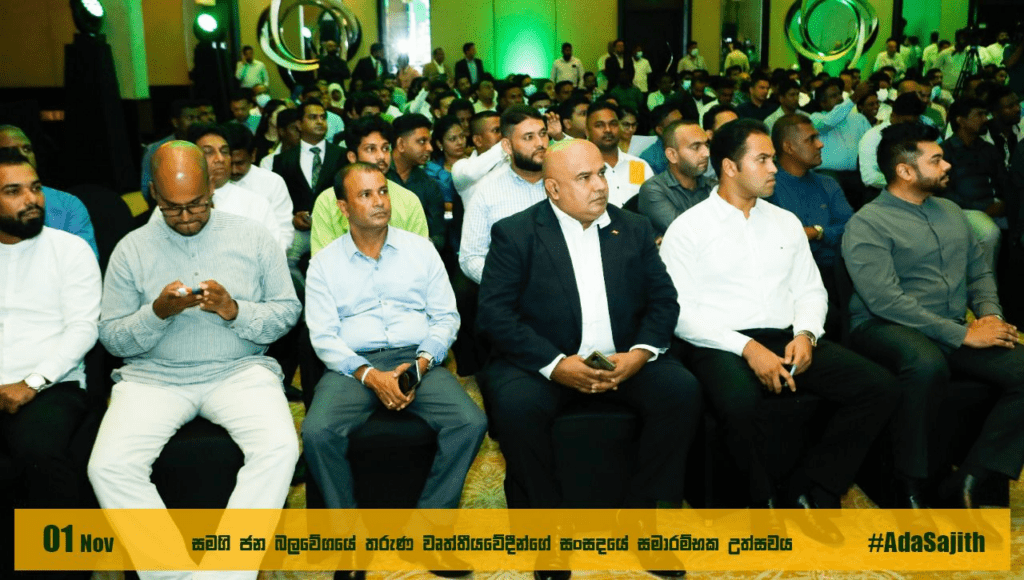
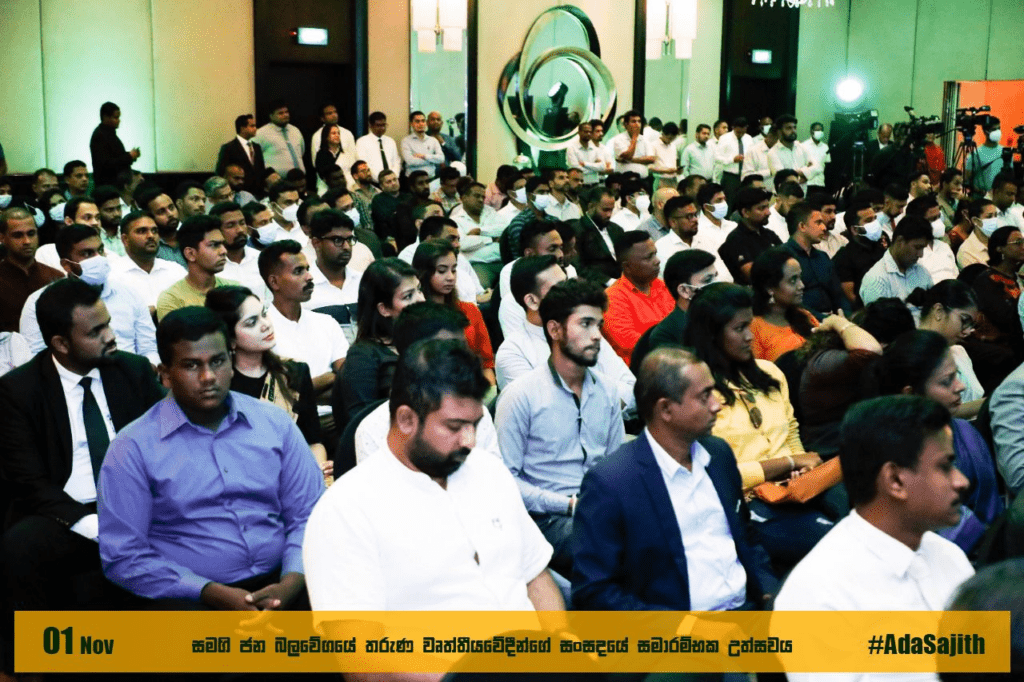
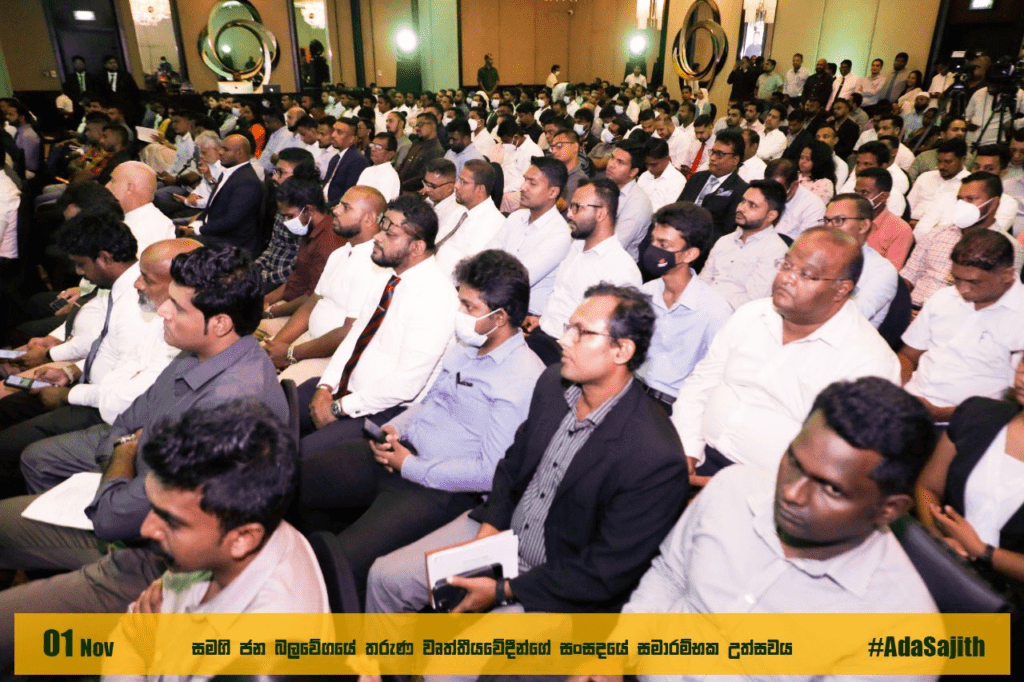
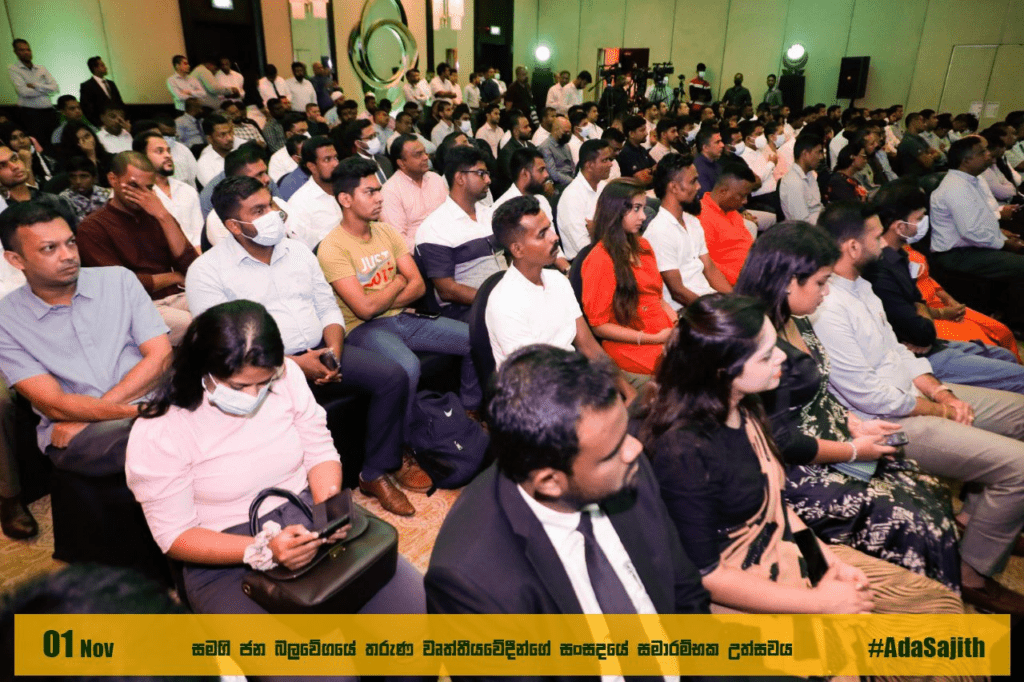
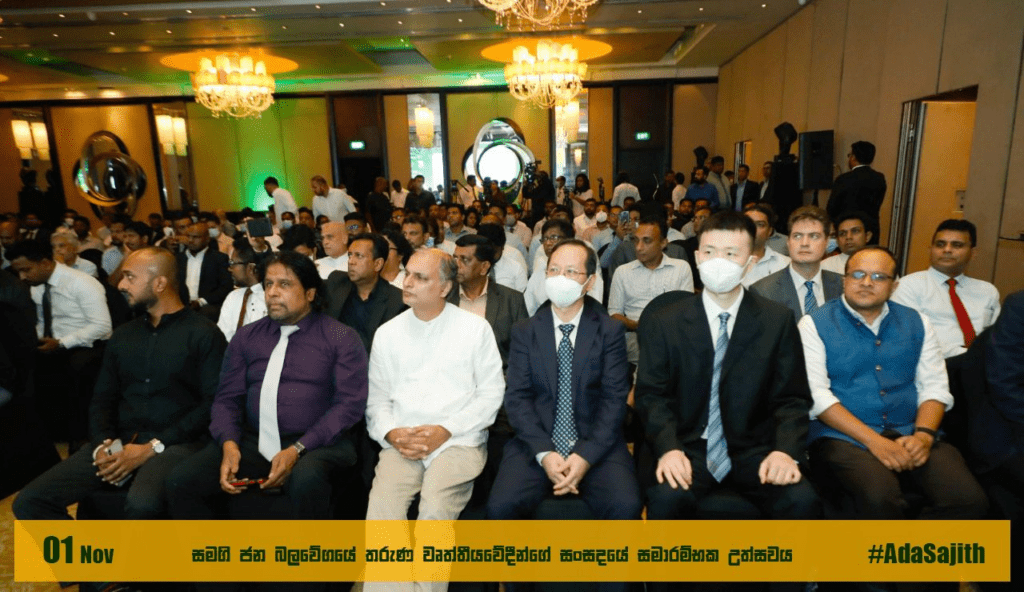
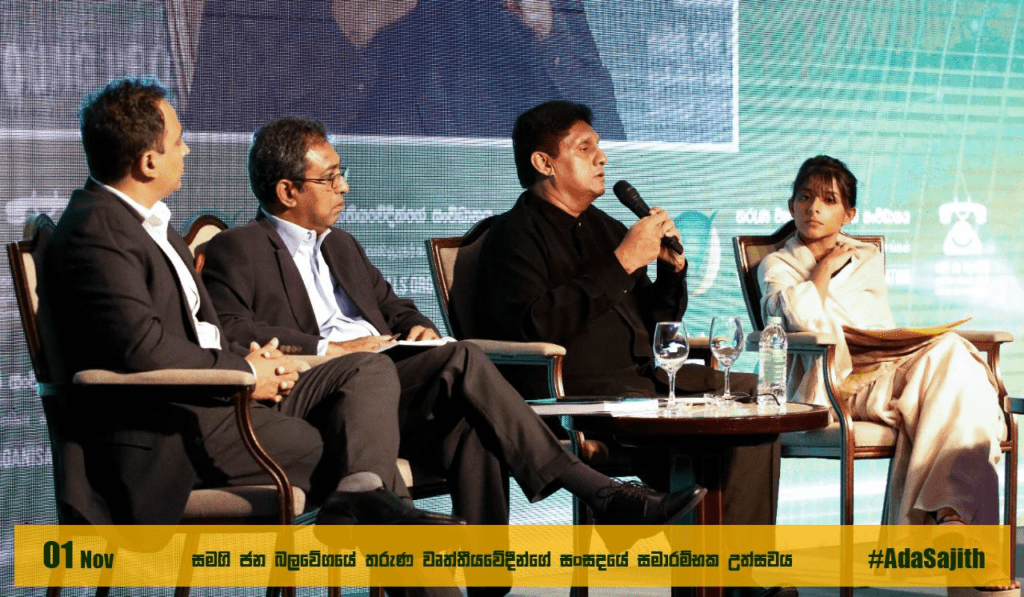
The inauguration of Young Professionals’ Organization took place yesterday (01st November) in Colombo headed by Hon. Sajith Premadasa M.P. the leader of the Samagi Jana Balawegaye and the leader of the opposition.

The event was organized by the Chairperson of the Young Professionals’ Organization Hon. Harshana Rajakaruna M.P. which was followed by a panel discussion with Leader of the opposition Hon. Sajith Premadasa M.P., Hon. Dr. Harsha de Silva M.P. and researcher and author Ms. Sarah Kabir.

Instructions to solve the problems of Samurdhi Development Officers

0

A discussion on the problems of Samurdhi Development Officers and possible solutions was held yesterday (02) at the President’s Office under the chairmanship of President’s Secretary Saman Ekanayake.

The problems faced by the Samurdhi Development Officers including their salary, pension, promotion procedure and permanent appointments were discussed at length and many related proposals were also presented.

The President’s Secretary has given instructions to the officials to pay priority attention to these problems and take immediate measures to solve them.

Minister of State for Social Empowerment Anupa Paskuval, Member of Parliament Jagath Kumara and a group of senior officials from line agencies including the Ministry of Social Empowerment and the Samurdhi Department attended the discussion.

Prof Capt.Nalaka Jayakody brings glory to Sri Lanka 

0

Press Release

01st November 2022 

Photo Caption:

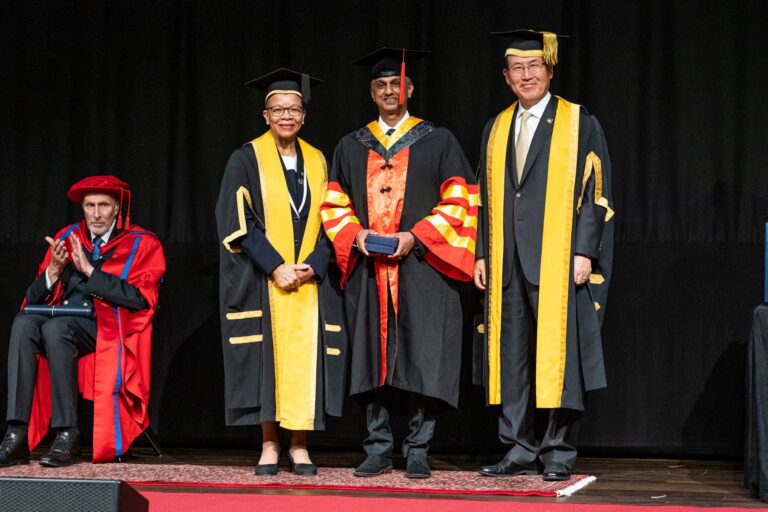
  1. Professor (Dr) Capt. Nalaka Jayakody at the ceremony with President of WMU Dr Cleopatra Duombia-Henry and Chancellor/Secretary General IMO Mr H E Kitack Lim 

Professor (Dr) Capt. Nalaka Jayakody, a renowned intellect in the academic and marine disciplines both nationally and internationally, was recently acknowledged with the Outstanding Alumnus award by the World Maritime University (WMU) at the 2022 Graduation Ceremony held on in Malmö, Sweden on 31st October.

The decision to award this title comes from its Board of Governors, made up of 30 members from various countries and having a range of expertise, ex officio members who represent the International Maritime Organization (IMO), the Government of Sweden, and the City of Malmö.

The ceremony was attended by the Chancellor/Secretary General IMO Mr H E Kitack Lim, President of WMU Dr Cleopatra Duombia-Henry, Board of Governors, WMU staff, and many special invitees and dignitaries. 

Prof Jayakody is the first and only recipient of this prestigious recognition from South Asia. In his speech at the President’s dinner, Prof Jayakody said ‘This remarkable acknowledgement certainly marks an important milestone in both my career and life, and to also make my country [Sri Lanka] proud in the midst of the nation’s difficult and challenging times.’ To date, Prof Jayakody is also the first and only Sri Lankan Master Mariner to obtain a Doctorate and become a professor. 

Dr Cleopatra Doumbia-Henry, President, World Maritime University said ‘We are proud to recognise such an eminent graduate, and one who has made such an impact in the field of maritime and education. Professor Jayakody is an example of how, if we work together, we can transform our world and ensure sustainable development for everyone in it.’

Prof Jayakody graduated with a MSc in Maritime Education and Training (MET) from WMU in 2001, prior to pursuing his Doctorate in Maritime Affairs from Dalian Maritime University in China. During his study at the WMU, Prof Jayakody was the VP of the Student Council and represented WMU at the Malmo Dragon Boat Race for two consecutive years including being awarded the Sportsman of the Year in 2001.

Some of his key appointments include Advisor – National Task Force, IMO implementation of Ballast Water Convention including being heavily involved in the implementation of STCW 2010, Board Director – Maritime Training Academy Seychelles and Fiji Maritime Academy, Chairman – Nautical Institute (NI-UK) Sri Lanka Branch – Vice President of Chartered Institute of Logistics and Transportation (CILT-UK) Sri Lanka Branch.

Prof Jayakody was also the Vice President at CINEC, President – Sri Lanka Association of Non -State Higher Education Institutes, Advisor to Sri Lanka Export Development Board (EDB) on Higher Education, Advisor to Ministry of Higher Education including World Bank projects. Prof Jayakody is currently the Vice Chancellor/CEO of Saegis Campus, a leading higher education institution in the country.

He was also awarded the International Leadership Innovation Excellence Award in 2019 by IES India and ‘Award of Academic Excellence’ 2014 by the then President of Sri Lanka. Prior to his stint in academia, Prof Jayakody is a well experienced seafarer, having sailed with various types of vessels and travelled to over 90 countries working with diverse cultures and people. He received his maritime training from the Australian Maritime College (AMC) including a Master Mariner qualification from RMIT, Australia in 1994.  

Prof Jayakody is also a speaker at various national and international maritime forums, and have significantly assisted and contributed to Sri Lanka’s maritime and higher education sectors through diverse involvements. He is a Fellow and Life Member of numerous professional bodies including Company of Master Mariners of Sri Lanka.

The World Maritime University (WMU) was founded in 1983 by the International Maritime Organization (IMO), a specialized agency of the United Nations, as its premier centre of excellence for maritime postgraduate education, research, and capacity building. The University offers unique postgraduate educational programmes, undertakes wide-ranging research in maritime and ocean-related studies, and continues maritime capacity building in line with the UN Sustainable Development Goals.

With 5634 alumni from 171 countries and territories, WMU has created a global network of leaders in the maritime and oceans sectors. WMU alumni hold positions of prominence around the world. They serve as senior maritime officials in ministries, as directors of shipping companies and ports, as heads of maritime academies and naval organizations, and many represent their home countries at the IMO and international forums and organizations.

SRI LANKA ORIGINAL NARRATIVE SUMMARY: 03/11

0
  1. Opposition Leader Sajith Premadasa and other SJB leaders leave the anti-govt protest site after failing to move past the human barricade set up by police: some protestors jeer when they leave.
  2. Former CB Governor Ajith Nivard Cabraal states inflows of USD 3.8 bn materialised during his tenure of just over 6-1/2 months: also says not a single dollar used to “defend” rupee, USD 1.8 bn provided for essential imports, USD 2.0 bn provided to ensure state banks’ solvency, USD 3.1 bn in debt settled in time, and USD 10.7 bn pipe-line of inflows arranged.
  3. NFF leader Wimal Weerawansa says the government has no plan to address the root causes of the current economic crisis: asserts IMF had no intention of providing meaningful solutions to the economic problems.
  4. SJB MP Harsha de Silva expresses dismay over the
    joint statement issued by business chambers requesting citizens to call-off protests: says they should not pontificate to people on their rights: previously, many business chambers had been supportive of the protests.
  5. French flag carrier Air France set to resume flights to Sri Lanka from November 4: Russia’s largest charter AzurAir to commence weekly flights from today: Swiss Int’l Air Lines to operate from November 2022 to May 2023.
  6. Women teachers in the State administration to be included in the group to be eligible for the more “relaxed” dress code of the State-sector.
  7. Committee on Public
    Finance orders suspension of bathware imports, such as squatting pans and wash basins: declares the gazette must be subjected to
    further consideration.
  8. Former CB Deputy Governor W A Wijewardene says Bangladesh may have stopped ACU transactions with Sri Lanka to protect Bangladeshi customers: also says if similar steps are taken by other countries within the ACU, Sri Lanka’s ability to trade with 10 countries within the ACU will be completely cut off.
  9. Sri Lanka Squash Vice President Eranda Geeganage says SLS is compelled to terminate contract of their Pakistani coach Rehmen Gul: also says financial provision for his fee has not been forthcoming from the Ministry of Sports.
  10. Top Sri Lankan all-rounder Wanindu Hasaranga climbs to 2nd place in the ICC T20 bowling rankings.

Sri Lanka Telecom Group, the success story of a once state owned enterprise

0

Here below is the speech made by Rohan Fernando – the Chairman SLT Group -addressing the CMA forum comprising of a gathering of professionals from South Asia.

Good Afternoon,

Professor Lakshman Watawala, President, Institute of Certified Management Accountants of Sri Lanka and Mr. Hennayaka Bandara, Vice President of CMA, Delegates from the SAARC region Management Accounting bodies,
Distinguished guests,  Ladies and Gentlemen.

When Professor Watawala invited me to address the CMA forum comprising of a gathering of professionals not only from Sri Lanka but also from South Asia, I was perplexed. 

But when I understood the subject, the transformation of SOE’s, it gave me courage to discuss and share the experience of Sri Lanka Telecom Group’s transformation from an SOE to a public private partnership and one of the best performing Companies in the Colombo Stock Exchange. 

As the Chairman of the SLT Group I am proud to stand before you to affirm that our company is a role model for nation building maintaining its primary role as the national telecommunication provider whilst, contributing handsomely to the exchequer in direct and indirect taxes as well as dividends on profits. 

We are gathered at an extremely crucial time, to discuss how Sri Lanka as a nation can build back better by adapting to changes, however drastic they may be in transforming or restructuring and depoliticizing the loss making government owned businesses and transform them into self-sustaining profitable institutions to ease the burden on the state coffers which could help ease the financial crisis we are currently experiencing.

I stand before you proudly acclaiming that our 160-year old company continues to make revenue for the country without being a burden to the government or the citizens of the nation. In 2021 alone we contributed 19.3 billion Rupees of direct and indirect taxes. Additionally, our shareholders including the Government Treasury reaped rich dividends of Rs 3.5 billion.

We have instilled good governance and utmost discipline in our activities with sustainable goals through the ESG protocols. These are now widely practiced globally for Integrating Environmental, Social, and Governance Frameworks giving a true meaning to Corporate Social Responsibility or CSR by the way we treat our planet, integrating with society for social justice and adhering to a strict code of Governance on accountability and transparency. 

SLT or Sri Lanka Telecom began its operations as Ceylon Telegraph Company in 1858, over 160 years ago as a state-owned national communications service provider with a monopoly on telephone connectivity. it’s transformation from a state owned entity to a public listed company happened in the 1980’s with the opening of the telco industry to the private sector and today there are four other major telco companies with foreign control operating with SLTMOBITEL on a level playing field. 

Looking at Sri Lanka and the opportunities before us – the demand for connectivity has never been more important to keep life moving forward. 

We have the best potential to transform our country to a Smart Nation, making innovative technology the backbone of every sphere of activity. Future-focused technology and digitally empowered citizens can change and grow the nation to not just survive but thrive in the future.  

However, before we chart our course towards rebuilding and transformation, we must overhaul our archaic legacy systems, reduce inefficiency, and eliminate corruption and heavy operational costs. We also need to reduce waste in critical sectors and services which continue to pose immense challenges for the nation’s sustenance.

Crises are generally associated with danger and destruction with a heavy cost attached to it. But when we look back, history has shown us that crises can be useful for re-directing people, to think differently to unearth new ways of doing things by challenging the norm. In an institution, this can only be achieved by building trust amongst the staff to get them on board to accept and be partners in the process of transformation. This is exactly what we did at the SLT Group during the last three years to prime our business with new strategies and cost effective solutions.

The brand unification initiative of SLT-MOBITEL in 2021 brought together the best services of fixed and mobile technology. As a result, we are now a formidable leader offering a single source service platform of superior products and services benefitting the entire nation. This, in a company steeped in archaic beliefs was possible only by getting all staff to believe in the change. This was the first stage of unification of two different corporate styles and saving several billion rupees in the process, within a short period of two years, whilst achieving the set goals.

Our unification and organizational transformation could not have come at a better time, as the same year saw a dramatic increase in the need for technology and connectivity solutions due to the COVID-19 pandemic. Seeing this surge and understanding the demand of the future, we extended our fibre network to 65,000km across Sri Lanka, offering fast and accessible broadband services to boost the digital capacity in the country. We also understood that with our experienced and talented workforce we were no longer a simple telephone company but shifting fast into the technology field through the empowerment of digital platforms.

We take pride in connecting the nation linking over 850 Government offices, covering all cities, including smaller divisions and rural areas also providing connectivity to other operators including our competitor telcos, institutions and the public.   

SLT Group possess the largest data centres in the country, and our longstanding partnerships with global tech giants like Microsoft, Oracle and VMware mean we are fully equipped to provide the most secure hosting services for public and state institutions, as well as large corporates and foreign investors. Our link to the world is accessed through undersea cables owned by a regional consortium of which SLT is a shareholder. SLT operates the only cable depot in South Asia out of the Galle Harbor for installations and repairs of sea cables. 

Not stopping at that we will soon reactivate the largest earth satellite station in Padukka established by SLT on the vision of Late Sir Arthur C Clarke to bring in the latest satellite technology and to serve as a backup to the under sea cable systems. SLTMOBITEL invests over 18 billion rupees annually to improve and keep abreast with the most modern technology in the world.

We see that out of crises, emerge new and incredible opportunities, particularly if we are able to change or challenge traditional approaches and effect paradigm shifts. Importantly, measures taken to survive and end a crisis are often seen to make an organization or even a country stronger and more resilient for future events.

For example, the Asian debt crisis of 1997-1998, plunged the affected countries into deep recession, rapidly increasing unemployment, poverty, and social unrest. Although devastating for these countries and people, especially Indonesia and Thailand, the Asian debt crisis provided valuable financial lessons that would stand Asia in good stead for the global crisis two and half decades later. The crisis helped Asian economies build up their foreign exchange reserves as a buffer; maintain current account surpluses; and allowed their exchange rates to float. Unfortunately, Sri Lanka did not learn the lessons from this and continued to borrow heavily without a proper business case and in the process allowed large scale leakages in the form of waste and corruption.      

In the past four years Sri Lanka has seen and faced unprecedented challenges. In 2019 April we experienced the Easter Day terrorist attacks, which had a tremendous impact on the country’s tourism sector, one of the largest forex earners for us. The failure of the government in power to foresee the danger of ISIS infiltrations in Sri Lanka despite many warnings must be recorded for posterity as no nation can drop its guard on national security in an environment of geo-politics plaguing the world and more so the greater Asian region.

Then the Covid-19 pandemic devastated the country’s economy further. Although we as a nation was able to contain and control the pandemic the cost the country had to bear was unprecedented. As you are aware, the toll the pandemic has exacted on the global economy has been significant, many countries worldwide are still facing the repercussions.

During the pandemic and prolonged lockdowns, that restrained mobilization of workforces, our economy was crippled and what we face today are the results we have reaped from prolonged mismanagement of our economy and the multiple effects of global meltdown and disruptions in the supply chains, leading to political unrest and regime change. 

In this void, Sri Lanka’s need for data and connectivity skyrocketed, with demands from the ordinary citizens on the streets, to schools and businesses. The need for revolution came sooner and more urgently and SLT Mobitel unified to serve the nation and fulfill our duty to Society. As it is, the Telecom sector is enabling other industries to reduce their CO2 emissions through digitalization. These sectors include transport, agriculture, construction and energy by reduction in commuting through the shift to communication.  

The broadest presence possessed by SLT Mobitel across the value chain offers unparalleled capacity to meet the needs of tech companies, large corporates, public and state institutions. With our capabilities and strong infrastructure across the country, we are geared to undertake this challenge and bring about the change the people of this country want to see. 

Our efforts are now focused on developing technological solutions for the challenges the country is facing whilst we continue investment in infrastructure development. 

Our effort will be further supported by our Research & Development unit, “The Embryo” developing new devices and applications in-house by harnessing the skills of young IT engineers. 

Our country faces key issues in several sectors. Currently privatizing state institutions that are running losses of up to billions of dollars is a key topic of conversation among the government, economists, think tanks and donors looking to reform the country’s economy. 

But you and I know we are a resilient nation and as hard as it may be to accept, this national crisis does hold opportunities for much needed reforms and transformation in Sri Lanka. Selling assets may look the easiest as the economic pundits some who have never ever run a business but preach from text books believe in their buzz term “Picking the low hanging fruit”. If you take our Company as an example we did what we did by gaining confidence of the trade unions and the staff on our fundamental principles Zero Corruption, Maximize efficiency, Minimize waste and inclusiveness in Management. Yes just these four principles to the fore which kept our staff content and at peace with no industrial disputes. 

Similarly the asset rich but loss making SOE’s if brought under a clean management of experienced corporate executives with absolutely no political interference will turn around to profitability attracting credible investors.    

Take our overburdened transport sector for instance, the railways holding multi billion rupees worth of assets in fixed infrastructure and rolling stock but how often do we see trains running on these rails and at what speed. Do we need to sell or restructure with the participation of staff and credible investments? Food for thought. The shortage of public transport during peak hours, over-crowding, congestion, lack of planning and coordination, fuel wastage are dilemmas that need urgent attention. If we convert the problems to opportunities of demand we have a good model to reform. This is just one worrisome institution which can be transformed from a national burden to a crown jewel. 

Sri Lanka’s judicial process can be improved by digital platforms to deliver justice without delay. Our citizens do not have access to appropriate legal redress and equitable relief due to the higher number of cases and overly extended time taken for resolution, the system is overburdened with physical documents and lack of integration between relevant institutions. A large number of people waste days in court and still come away with limited information relating to their cases.

Our Agri-value chain faces issues, so do our overly burdened healthcare sector. We need to understand the challenges and address these issues. Critical sectors and services must be transformed into efficient, transparent, and profitable entities so in turn they can transform people’s lives – this is the true system change the country needs. Currently, state welfare is offered to all citizens rich or poor which the government coffers cannot afford. Whereas the welfare offered should only be to the deserving at the bottom of the social strata through a digital platform identifying the poorest. 

Yes, we are beset with issue and challenges – when crises are in motion, turning them into opportunities often requires the courage of seeing new ways, thinking, and responding. SLT epitomizes how it can be done.  SLT is a prime example of seizing opportunities and being able to bring impactful change for the nation.  

In our transformation journey, we even looked to other inspiring models in modern society that served us as examples of how technology can further improve the economic standing of the country. 

Take Singapore – By overhauling the city through technology, permeating every sphere of activity, Singapore became an Intelligent Island in 2000. Singapore’s Smart Nation goals was aligned to the theme of increasing connectivity as a basic prerequisite. The island nation embraced the ‘E3A’ vision: “Connecting Everyone, Everything, Everywhere, All the time.” An all-encompassing Infocom Development Authority of Singapore was created, and they launched a series of innovative technology initiatives that formed the infrastructural foundation of the Smart Nation.

I believe Singapore can be treated as a testbed for smart city models that may become widespread several years from now when technology will rest at the heart of urban systems.

Look at Telangana in India, part of the country’s vision to develop smart cities. In 8 years, Telangana has attracted investments worth Rs 2.34 trillion. To accelerate industrial growth in the state and to make Telangana a favoured destination for investment, the state government had enacted the TS-iPASS act for granting approvals to the entrepreneurs at a single point within set time limits based on a self-certification furnished by themselves, similar to what Sri Lanka had many years back under the GCEC and later BOI but abandoned for reasons known only to the political hierarchy.

What is important today is not just providing access to devices and networks which may lead to digital inclusion, but instead ensure digital empowerment with aspirations to transform our nation into a digitally empowered society and a knowledge economy. This is where we figure as the transformer of the nation through tested digital platforms if only the state realizes and believe that true governance is in keeping politics and administration clearly separated as done in the past through the appointment of permeant secretaries and not ones who migrate with the minister for political reasons.

Despite SLT being transformed into a listed entity in the Colombo Stock Exchange political interference continued to plague the company in the formative years of privatization due to its unique composition of a major minority stake under the Ministry of Finance. However, even with political interference the company did not stagnate but operated as a profitable publicly listed conglomerate, offering technology and connectivity solutions, ready-to-go technology platforms, advanced network backbone services and digital infrastructure. This was primarily due to its enormous asset base and the experience staff who continued to defy the odds and protected the Company. 

I do believe, Sri Lanka Telecom’s journey, especially in the past 3 years is a case study of an organization’s adaptation and evolving despite being in the midst of challenging environments. The company’s journey throughout the Covid-19 pandemic and the economic crisis and the opportunities it present for potential investors in Sri Lanka is a remarkable story. 

During this period the Company did not allow any form of politics to enter or influence its business and maintained its stature as an apolitical corporate giant.

Sri Lanka Telecom serves as a benchmark model for government institutions and law makers in the country – how to transform and grow state institutions into successful organizations under a public private partnership.        

SLT’s evolution is one of the biggest success stories for the country. Our state-of-the-art infrastructure has been the fundamental backbone for the growth of the telecom services and has played a pivotal role in bridging the digital divide, connecting the unconnected and facilitating widespread mobile connectivity. It has helped the country’s visibility in global markets together with the company’s enterprise service solutions, provides foreign investors with ready-to-move operations in the market and a robust technological foundation.  

Our mission is to move the country towards E-Governance and Digital Commerce. Our propositions for critical services and sectors such as healthcare, education, transportation, agriculture, tourism, judiciary and banking and finance will ensure the nation and its people would thrive.    

A key achievement of SLT was its ability to facilitate the unpredicted transition to digital learning. Children, or rather Education one of the most affected, we offered special education platforms and channels enabling our education system in the country during the periods of shutdowns. Our platforms are also used by essential services catering to the needs of our citizens. Our Special Government Business Division together with The “Embryo” are committed to help many institutions adopt technology to build their efficiencies and capabilities. Moving forward our Group will further consolidate the service platforms with a target of unified operations under one roof when our most modern high tech and green concept headquarter building is commissioned in a sprawling tech park in Colombo next year. 

We are expanding our fibre network coverage and aim to reduce the carbon footprint. Solar, wind, hydro and other renewable energy options are being pursued to migrate from fossil fuels to low carbon renewable sources of energy. 

Our training centers with accreditation from the University of Hertfordshire will be empowered and upgraded to institutions of technology to accommodate IT students for the local and global markets to enhance the digital landscape, our country badly needs. 

With our island wide vast network and the ownership in land and buildings, asset monetization with investors has already begun to improve the wealth and the business turnover of the group as opposed to asset stripping in desperation. 

In short we are proud to be labeled as the cash cow for the government treasury and our model could be adopted to transform the loss making state institutions into profitable entities without resorting to desperate moves of exit by one time sale of assets. We at SLT are ready to assist the government in formulating strategy in the restructuring of such SOE’s with the involvement and corporation of staff. This I believe is the real system change the people of this country hope for and the IMF and World Bank suggest. Business Sans politics in management.

World over, politics can enormously impact businesses, especially in our region. However, SLT leads the way in showcasing how corporates and institutions can thrive with the least political influence. 

To become tomorrow’s innovators, entrepreneurs and leaders, our citizens need to be empowered with the digital skills and access to technology and markets that are essential to thrive in an increasingly digitized global economy. Governments need to find more nimble and effective means of delivering services and interacting with citizens. Businesses need to utilize digitally-centered business models to connect with the millions of customers previously out of reach due to geography or low income. 

I am reminded of a quote made by John F. Kennedy during a speech in 1959 famously said: “When written in Chinese, the word ‘crisis’ is composed of two characters – one represents danger and one represents opportunity.” President Kennedy’s wisdom about a crisis yielding unique opportunities may be more important than ever for us all today.

I sincerely hope that this conference will seize the moment, deliberate on various issues that need to be addressed, understand the opportunities before us and come up with recommendations to recover and rebuild better. Especially in rebuilding Sri Lanka, recognizing the need for adequate finance, significant investments in infrastructure and full utilization of technology and innovation. SLT-Mobitel will remain steadfast as the nation’s long-term partner on this journey.

My best wishes for a successful and fruitful conference.

Thank you!

Rohan Fernando

Chairman SLT Group 

Oct 2022
55 million worth of medical equipment donated from Qatar

0

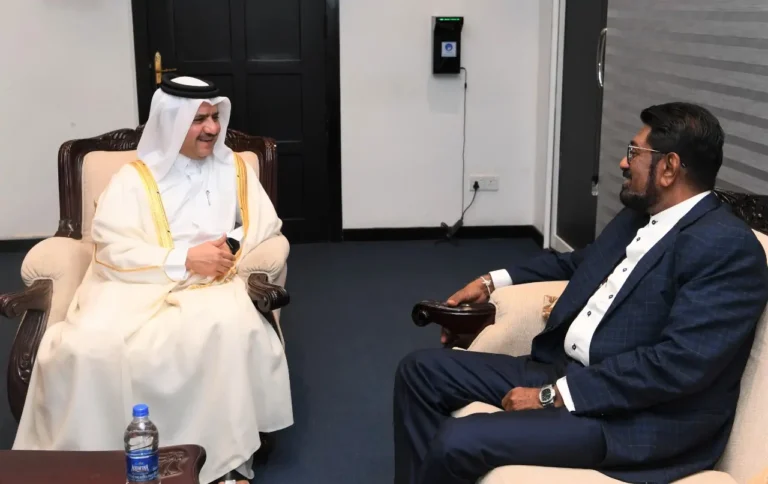
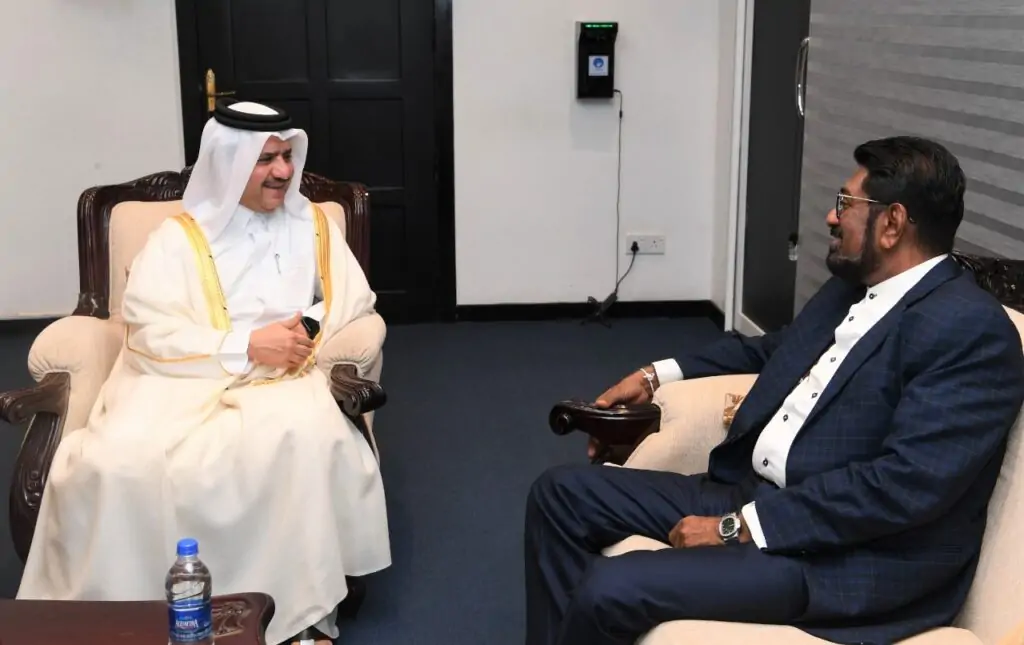
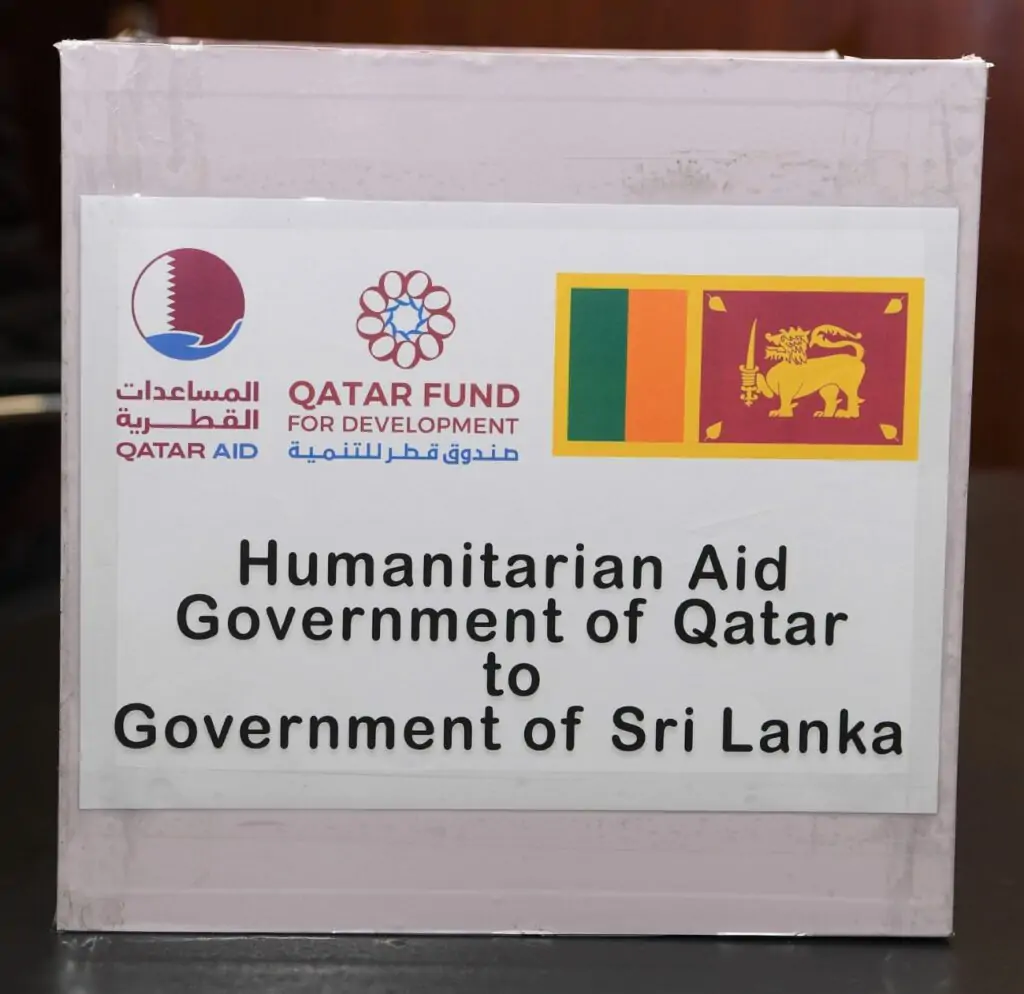
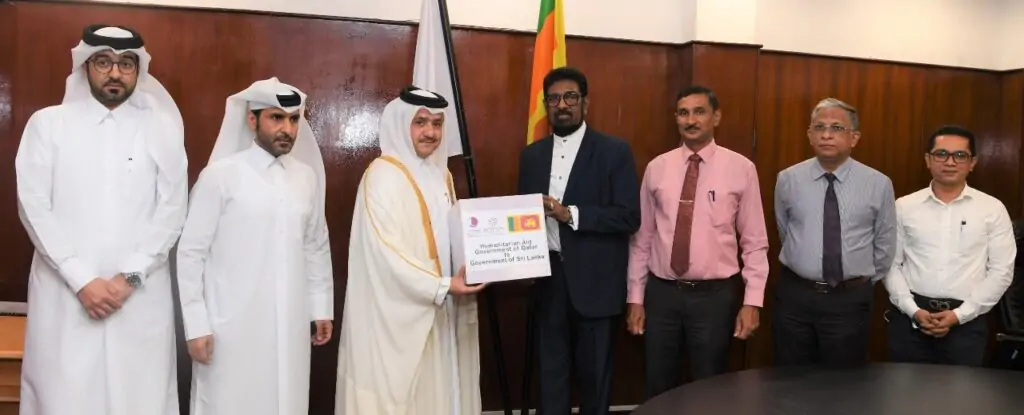
Yesterday (01) a stock of medical equipment worth 55 million rupees was donated by the State of Qatar to the health sector of Sri Lanka. The grant was officially handed over by the Qatari Ambassador to Sri Lanka Jassim Jaber Al Sorour to the Minister of Health Dr. Keheliya Rambukwella at the Ministry of Health.

Emergency care unit beds, operating tables, portable x-ray, ventilators, Liner Flovac 1 L, infusion pumps, blood fluid warmer, male connector for flovac line, hand held doppler portable fire, bed side cabinet etc were among the pieces of equipment that were donated.