Home Blog Page 2040

Joint Press Release: Sixth Meeting of the European Union – Sri Lanka Working Group on Governance, Rule of Law and Human Rights

0

The Sixth Working Group on Governance, Rule of Law and Human Rights met in Colombo on 28 October 2022.

1. The Working Group meeting took place in the context of regular bilateral interactions between Sri Lanka and the European Union (EU). The full-day proceedings provided for a cordial exchange of views and experiences, in a spirit of cooperation and mutual respect. The two sides discussed the recent developments in Sri Lanka and the EU, and the implementation of relevant action and legislative initiatives regarding the promotion and protection of human rights. Sri Lanka briefed the EU on progress in reconciliation.

2. The EU re-affirmed its commitment to support Sri Lanka’s efforts to successfully overcome the current unprecedented economic crisis, including the necessary reforms and social protection measures, which would mitigate the adverse impact of the crisis and lead the country towards sustainable growth and prosperity. Sri Lanka and the EU reiterated the importance of social, economic and political inclusion through justice and reconciliation in the advancement of human rights.

3. Sri Lanka apprised the EU of the 21stAmendment to the Constitution, which is aimed at strengthening democratic governance and independent oversight of key institutions, public scrutiny, as well as anti-corruption measures, with the re-establishment of the Constitutional Council and Independent Commissions. In this context, the two sides discussed the importance of the separation of powers and checks and balances, and the ongoing work of independent institutions. The Working Group was also updated on the electoral reform process. In this context, the EU recalled the work of the 2019 EU election observer mission. The two sides reiterated the importance of the democratic freedoms of opinion and expression, and the rights to freedom of peaceful assembly and association. 

4. The EU welcomed progress in the Justice Sector Reform Programme, which is funded by the EU, and will further improve access to justice and enhance human rights. Sri Lanka appreciated the support extended by the EU in this regard.

5. The EU acknowledged the steps taken by Sri Lanka in March 2022to reform the Prevention of Terrorism Act (PTA), and pointed to the need for further action in line with its commitments. The EU expressed concern on the recent use of the PTA. Sri Lanka assured that the PTA has been invoked only in instances of extreme necessity. The EU noted Sri Lanka’s update on the release of detainees under the PTA in 2021-2022, and encouraged the release of long-term detainees under the PTA who have not been charged. Sri Lanka expressed its strong commitment to prepare a comprehensive legislative proposal to replace the PTA in accordance with the Constitution, and in line with international norms and best practices, with a view to its finalisation in 2023.

6. Sri Lanka and the EU reaffirmed the importance of engaging civil society and giving it the necessary space to function in all its diversity. The EU expressed its readiness to continue supporting Sri Lanka in this process.

7. The two sides discussed the situation of minorities and the respective measures taken to address hate speech. They also exchanged views on the legislative and other measures taken to protect the rights of women and children, and action taken to advance labour rights including the elimination of child labour. The EU reiterated its call to de-criminalise same sex relations, and noted the Private Member’s Bill in this regard.

8. The two sides discussed cooperation in the UN Human Rights Council, including treaty bodies, special procedures and the universal periodic review process. The EU encouraged Sri Lanka to continue its engagement with the Human Rights Council and its mechanisms. The two sides also agreed to continue their cooperation in the framework of the 2030 Agenda for Sustainable Development.

9. The Working Group was updated on the GSP+ monitoring process and its requirements. The EU encouraged tangible progress by Sri Lanka on its GSP+ commitment.

The Working Group was co-chaired by Ms Varuni Muthukumarana, Director General Europe, Central Asia, EU and Commonwealth, Ministry of Foreign Affairs of Sri Lanka and Ms Rensje Teerink, Deputy Director and Head of South Asia Division, European External Action Service.
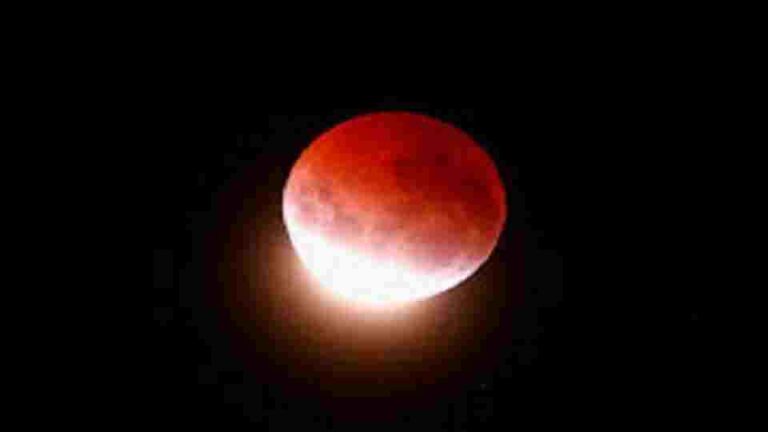
Beaver Blood Moon lunar eclipse on November 8th at moonrise

0

(A lunar eclipse on the 8th full moon day)

On November 8, 2022 full moon day, there will be a total lunar eclipse that will be visible in Asia, Australia, America and part of Europe. However, this eclipse is visible to Sri Lanka as a partial lunar eclipse at the moon’s rise. 

The total eclipse begins at  1.32 p.m., the maximum occurs at 4.29 p.m. and the eclipse ends up at 7.26 p. m.,  Sri Lanka Standard time.  Sri Lankans can view only the latter part of this safe naked-eye event as a partial eclipse with the moon rise at 5.48 p.m. from the eastern horizon. The partial phase of the eclipse ends up at 6.19 p.m.  said Prof. Chandana Jayaratne, the Director of the Astronomy and Space Science Unit, Department of Physics, Colombo University.  

This is the second and final total lunar eclipse of 2022 and is famously known as the Beaver Blood Moon lunar eclipse. The true maximum point of this eclipse cannot be seen in Sri Lanka because the Moon is below the horizon at that time. Since the Moon is near the horizon at this time, it is better to select a high point or find an unobstructed area with free sight to the east-northeast for the best view of the eclipse, said Prof. Chandana Jayaratne.

The next total lunar eclipse won’t take place until March 14, 2025.

Why do we call it a Beaver Blood Moon Eclipse?

All the full moons have popular nicknames. If the full moon in November falls before November 7, it is called the Hunter’s Moon. Otherwise, like this year, it is called the full Beaver Moon. The name Beaver is given due to the time of year when beavers available in many countries in the northern parts of the world prepare their dens for the coming cold months and stock up on food.

Despite its nickname “blood moon”, at the totally, eclipsed moon looks an orangey-copper reddish color and not a blood-red color.

During a total lunar eclipse, a full moon passes first into the penumbra or less dark outer shadow of the Earth and then enters into the Earth’s umbra or deep central shadow. At the totality, the only sunlight reaching the moon is light that passes through Earth’s atmosphere. Instead of expected black, it turns the lunar surface red because of Rayleigh scattering.   The more the environmental pollution, dust or clouds in Earth’s atmosphere during the eclipse, the redder the Moon will appear.

Prof. Chandana Jayaratne

Director, Astronomy and Space Science Unit, University of Colombo

Head of the Department of Physics, University of Colombo

Immediate Past General President-Sri Lanka Association for the Advancement of Science

Chairman, Arthur C Clarke Institute for Modern Technologies and

National Coordinator and  Board Member-International Olympiad on Astronomy and Astrophysics

India to further fast track flagship grant projects in Sri Lanka

0

India is fully committed to bring about a palpable impact to the daily lives of the Sri Lankans through the implementation of people-centric grant projects.

These projects are guided by the demands and needs of all sections of Sri Lankan society and the priorities of the Government of Sri Lanka.

Till date, India has been associated with the implementation of more than 85 grant projects in Sri Lanka and the latest endeavors include the Sri Lanka Unique Digital Identity Project.

India has focused on the establishment of an enabling joint-framework to make the state-of-the-art facility available for regular use by common public.

This glowing example of India-Sri Lanka development partnership, which has been constructed under a Government of India grant of more than US$ 11 million, consists of multiple facilities such as a museum of two floors, a latest theatre style auditorium for more than 600 people, a 11-storeyed learning tower, and a public square which could also act as an amphitheater, among others.

This was revealed by Indian High Commission in Colombo in a media communique highlighting two meetings held bet ween High Commissioner Gopal Baglay and Minister of Buddhasasana, Religious and Cultural Affairs Vidura Wickramanayaka, on the implementation of US$ 15 million grant by Government of India for the promotion of Buddhist ties and functioning of Jaffna Cultural Center (JCC) on 1 November 2022 in Colombo.

The Indian High Commission said “It may be recalled that Prime Minister Narendra Modi announced a special grant of $15 million for the promotion of bilateral Buddhist ties at the Virtual Bilateral Summit on 26 September 2020 and the MOU governing the grant was signed on 28 March 2022, during the visit of External Affairs Minister Dr. S. Jaishankar to Colombo.

The Indian High Commissioner and Minister Wickramanayaka agreed to immediately undertake steps for the quick implementation of jointly-identified priority projects under the grant in numerous areas pertaining to Buddhism.

Specific action points regarding installation of solar power facilities in places of worship and Pirivenas, spread across different parts of Sri Lanka were also identified.

SL tourism industry begins recovery despite public protests against the Govt

0

Sri Lanka tourism industry has begun its recovery from the setback suffered due to economic crisis and youth up rising along with protest campaigns against the ousted President Gotabaya Rajapaksa.

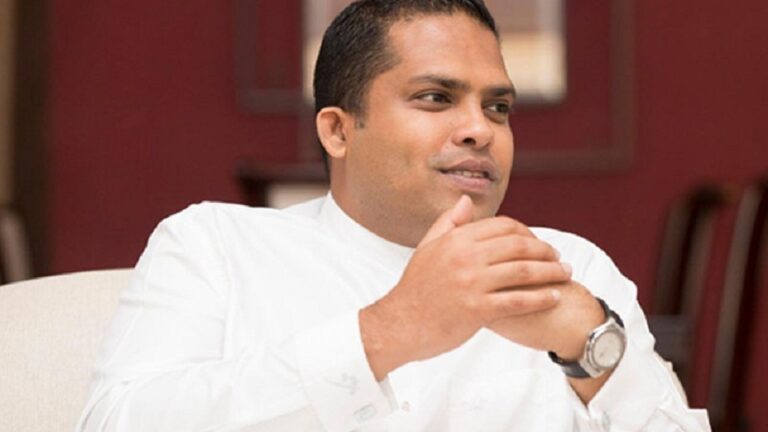
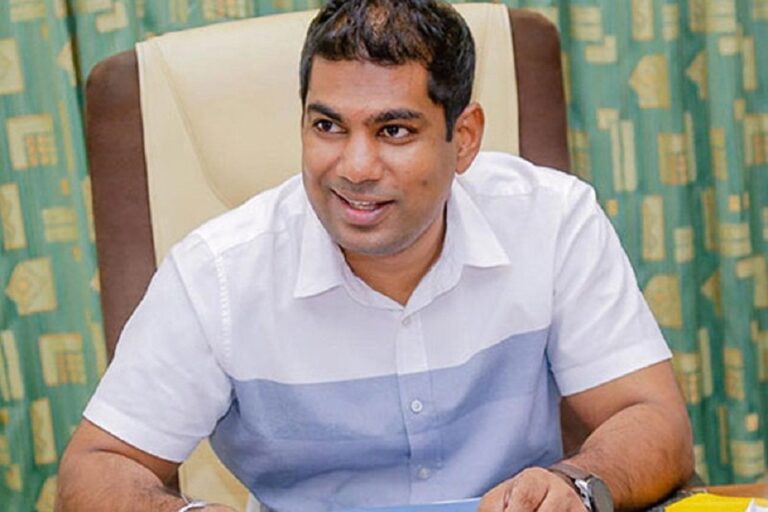
The current regime has already earned revenue in the excess of US$ 1 billion from tourism receipts so far and will end the year 2022 with $1.7 billion Minister of Tourism and lands Harin Fernando said.

He said that Sri Lanka is fielding the largest team of nearly 90 local travel sector stakeholders for the World Tourism market (WTM) in London starting next week after a lapse of three years and these protests will have negative sentiments on Sri Lankan destination promotions.

Russian tourists have boosted October arrivals sharply, enabling Sri Lanka to bounce back by 41% to 42,026 from the lowest 29,802 in September and surpassing the 550,000 mark in the first 10 months.

He disclosed that Sri Lanka also has accounted for around 600,000 arrivals so far and hoped to attract 200,000 more arrivals in November and December this year.

“However this number of tourists definitely lower than the anticipated target of one million arrivals and $2 billion revenue the government anticipated, he said adding that during the political crisis before new President Ranil Wickremesinghe was appointed Sri Lanka saw over 30 flights being pulled out on a weekly basis”.

He attributed this to the country’s situation, negative travel advisories by European countries and other similar factors.

“However we can all see that the country is now moving in the right direction and I predict that Sri Lanka would be able to net in revenue in the excess of $2 billion and over 2 million arrivals in 2023,”he added.

Russia will resume daily flights to Sri Lanka and several new airlines too would be once again flying to Colombo with high load factors. In addition Emirates, Qatar Airways and flydubai have also increased frequency to Sri Lanka.

Minister Fernando lashed out at the political participants of the protest march scheduled for today (2) and said that it’s solely aimed at disrupting the Sri Lankan economy and tourism sector which is now limping back to normalcy.

He said that JVP recently organized a calm protest in Hyde Park adhering to all norms of the society and such protests are welcome in democracy.

The boost in arrivals was largely influenced by the resumption of Russian flag carrier – Aeroflot as well as the successful series of roadshows conducted in select cities of India last month.

Russia also emerged as the second biggest source market in October after India and relegated the UK to number three.

Arrivals in the first 10 months amounted to 568,258 (as against 22,771 in COVID-hit 2021) – a welcome development for the triple-hit tourism industry, but performance is still down by 73% compared to the same period in pre-COVID 2018.

Govt allows foreign suppliers to enter as fuel retail operators

0

Sri Lanka is looking at India, China and the Middle East mainly in the importation of fuel to meet the local demand opening the procurement for international firms and local agents of foreign oil companies while offering bonded ware house facilities, Energy Ministry sources divulged.

At least three suppliers affiliated with reputed international petroleum companies of oil producing countries have stepped in to import fuel; he said adding that they have been selected after the evaluation of their Expression of Interests (EOIs).

The country is expecting a diesel cargo from China to arrive by the end of November, which will help meet its needs for several months.

China has donated 10.6 million litres of diesel to farmers and fishermen in remote areas of Sri Lanka, to upgrade livelihood in the most affected sectors of agriculture and fishery.

The shipment is scheduled to arrive between November and December, according to the Chinese Embassy in Colombo.

Sinopec, the biggest petrochemical company in China, is likely to enter Sri Lankan market for fuel importing, distribution and selling petroleum products, senior energy ministry official said.

Sinopec is already present at the Port of Hambantota where it operates an oil depot. The Hambantota tank farm was issued the FSS certification (Fitness for Service) by Lloyd’s Register in April 2020 .

Petroleum Products Special Provision Amendment Bill which was passed in parliament last week will allow foreign suppliers to enter as retail operators, eliminate the monopoly of the CPC and liberalise energy sector, he pointed out.

At present, 90 percent of Sri Lanka’s fuel supply is through the State-owned Ceylon Petroleum Corporation, and the remaining 10 percent by Lanka IOC.

.The cash-strapped country is still seeking financial assistance from oil-producing countries, but has yet to secure any aid apart from an existing deal with India, Energy Ministry Kanchan Wijesekera said Tuesday on the sidelines of the ADIPEC conference in Abu Dhabi.

Sri Lanka is seeking to privatize its oil industry, but has yet to make a deal, he added. It earlier implemented a national fuel management program that helped reduce consumption by 40%, and is also still in discussions with the International Monetary Fund for financial aid, he said.

Imports of Russian oil and fuel are also still under consideration. “It doesn’t matter where it’s coming from, as long its affordable for Sri Lanka,” he added.

Energy Ministry has devised a new system to import fuel opening the importation procedure with state owned shore based storage facilities to other international oil companies or joint ventures of foreign affiliation.

The aim is to prevent the delay in clearing oil shipments at the port for several weeks due to the inability of making the payments for spot purchase owing to dollar scarcity as well as to avoid incurring massive demurrage costs from such tankers, Senior Ministry official divulged.

The selected suppliers will be given permission to use some of the storage tanks as bonded ware houses maintain fuel stocks and they will have to release it as and when CPC required it after making the payments for them

Meetings to further fast track flagship grant projects

0

    High Commissioner Gopal Baglay held two separate meetings with Hon’ble Vidura Wickramanayaka, Minister of Buddhasasana, Religious and Cultural Affairs on the implementation of USD 15 million grant by Government of India for the promotion of Buddhist ties and functioning of Jaffna Cultural Center (JCC) on 1 November 2022 in Colombo. Secretary, Ministry of Buddhasasana, Religious and Cultural Affairs Mr. Somarathna Vidanapathirana, First Secretary (Development Cooperation), Mr. Eldos Mathew Punnoose and other officials representing the Governments of India and Sri Lanka attended these meetings.

2.      It may be recalled that Prime Minister Narendra Modi announced a special grant of USD 15 million for the promotion of bilateral Buddhist ties at the Virtual Bilateral Summit on 26 September 2020 and the MOU governing the grant was signed on 28 March 2022, during the visit of External Affairs Minister Dr. S. Jaishankar to Colombo. 

3.     High Commissioner and Hon’ble Minister Wickramanayaka agreed to immediately undertake steps for the quick implementation of jointly-identified priority projects under the grant in numerous areas pertaining to Buddhism.  Specific action points regarding installation of solar power facilities in places of worship and Pirivenas, spread across different parts of Sri Lanka were also identified. 

4.      The meeting on JCC focused on the establishment of an enabling joint-framework to make the state-of-the-art facility available for regular use by common public. This glowing example of India-Sri Lanka development partnership, which has been constructed under a Government of India grant of more than USD 11 million, consists of multiple facilities such as a museum of two floors, a latest theatre style auditorium for more than 600 people, a 11-storeyed learning tower, and a public square which could also act as an amphitheater, among others. 

5.     The two meetings underscore Government of India’s abiding commitment to bring about a palpable impact to the daily lives of the people of Sri Lanka through the implementation of people-centric grant projects. These projects are guided by the demands and needs of all sections of Sri Lankan society and the priorities of the Government of Sri Lanka. Till date, India has been associated with the implementation of more than 85 grant projects in Sri Lanka and the latest endeavours include the Sri Lanka Unique Digital Identity Project.

The protest starts amidst the police restrictions

0

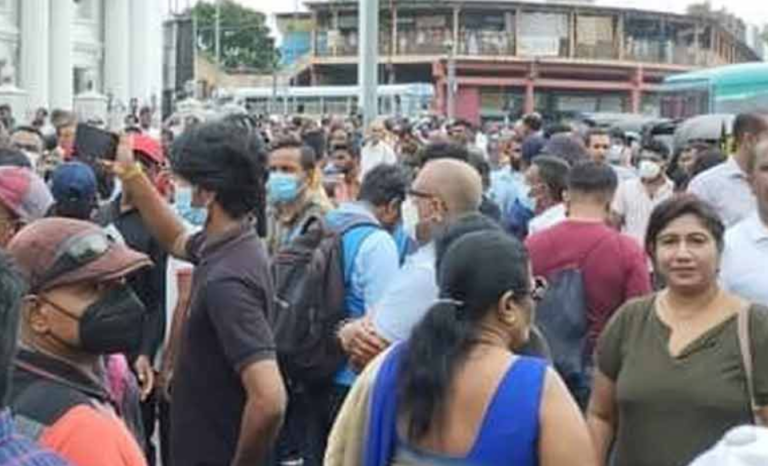
The protest organized by the opposition political parties, trade unions and civil organizations against the state repression has now started near the Elphinstone Theater in Maradana.

The protestors are now peacefully marching towards the Technical junction.

The police had informed the organizers that they could not allow this march to take place as it would block foreign tourists, peddlers and passengers and legal action would be taken if the roads were blocked.

Borelle Sirisumana Thero Remanded!

0

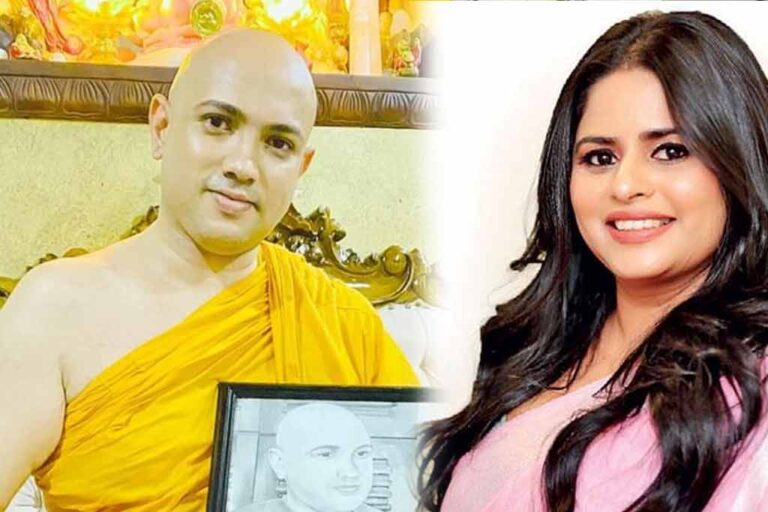
Borelle Sirisumana Thero, who has been arrested, has been remanded until November 16.

This is after Ehimian was presented to the Fort Magistrate Court today (02).

The thero was arrested yesterday by the Criminal Investigation Department based on the facts revealed during the investigation of Tilini Priyamali, who was arrested in connection with a large-scale financial fraud.

FUTA stands in solidarity with the protest on November 02

0

Federation of University Teachers Associations (FUTA) stands in solidarity with the protest on November 02

The Federation of University Teachers Associations (FUTA) stands in solidarity with the political parties, student organizations, trade unions, and civil society organizations that are staging a unified protest in Colombo tomorrow (November 02nd) against state repression and the arbitrary use of the Prevention of Terrorism Act. Earlier this year, Sri Lanka witnessed one of the most significant social and political uprisings in the history of this country when hundreds of thousands of people supported the aragalaya, demanding a substantive change in the political and governance culture in the country. While the aragalaya succeeded in forcing the resignations of the Prime Minister, Cabinet of Ministers, and the President, instead of the anticipated political change, a government led by current President Ranil Wickramasinghe, which succeeded the government of President Gotabhaya Rajapaksa, has unleashed a wave of repression. Hundreds of people have been arbitrarily arrested; the police have attempted to indiscriminately block any form of protest in Colombo, and the draconian Prevention of Terrorism Act has been used to arbitrarily detain student activists.

We would like to remind this government that the constitution of Sri Lanka guarantees fundamental freedoms for the citizens of this country. One of these cardinal freedoms is the right to dissent and peaceful protest. However, the government is attempting to use a narrow argument about economic rationality to stifle dissent and denounce legitimate public protests as attempts to destabilize the country and the economy. However, the government seems to have forgotten that it is due to governance failures by the government that Sri Lanka is facing the worst economic crisis in its post-independence history and that this current government and President are in power because people came to the streets and demanded political change.

While the government wants people to believe that it is effectively managing the economy and that the country is on the road to recovery, the facts and opinions of experts tell a different story. The government is currently engaged in a systematic attempt to suppress the truth, protect corrupt officials and politicians, and grant favors to a select cabal of crony capitalists that it favors. People do not want this corrupt political culture to continue. They are demanding change, and the protest taking place on November 02 is an indication that the aragalaya is emerging again. All over the country, we see micro-level spontaneous protests over issues ranging from lack of fertilizer to loss of livelihoods. These are all indications that the government is deeply unpopular and is failing at governance. The increasing repression the government has had to unleash is also an indicator of this failed governance. Therefore, FUTA demands that the government listen to the people and allow the people to exercise their right to peaceful protest. We urge the government not to interfere in any way with the protest organized for November 02 and would like to reiterate that, as FUTA, we stand resolutely in solidarity with all those agitating for substantive political change in Sri Lanka.

SL government to preserve wildlife sanctuaries in the Northern Province

0

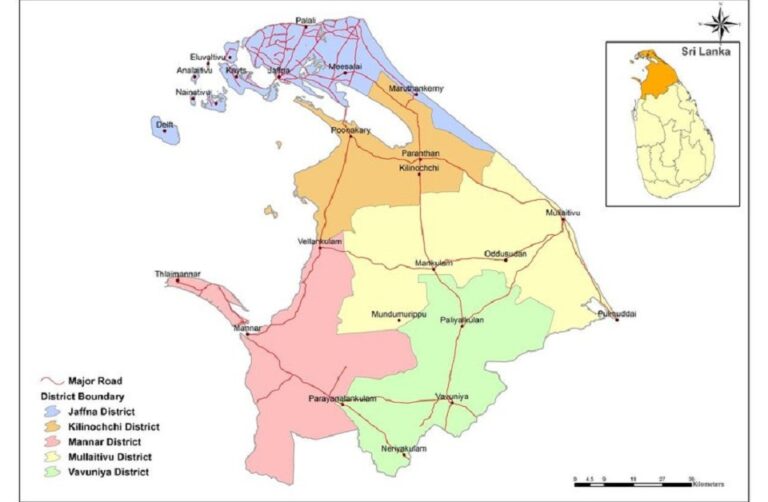
The present government is to take prompt action to set up a safari sanctuary in the Northern Province soon while focusing attention on five national parks, nine wildlife sanctuaries (four existing and five new) and five jungle corridors.

This will be Sri Lanka’s largest wildlife destination, promising sea and land experience. Declaring these proposed wildlife sanctuaries in the North will bring about, not only conservation, but many other socio-cultural, political, economic and environmental benefits, official sources said.

It is believed that some important archeological sites are also located in the proposed areas. Some wetlands Chundikulam and Jaffna lagoon can be declared wetlands of international importance under the Ramsar Convention.

After the war’s end, the Department of Wildlife Conservation (DWC) with the support of United Nations Development Project (UNDP) and United Nations Environment Project (UNEP) did an ‘Integrated Strategic Environmental Assessment’ (ISEA) for the districts of Jaffna, Mullaitivu, Kilinochchi and Mannar.

The report suggested that three wildlife sanctuaries be upgraded to national park status. It also recommended two new national parks, five jungle corridors and five wildlife sanctuaries. It said the Vavunikulam wildlife sanctuary needed to be expanded by adding adjoining forest areas and removing human settlements.

President Ranil Wickremesinghe has instructed the Agriculture, Wildlife and Forest Resources Conservation, Minister Mahinda Amaraweera to look for suitable land for setting up a 1000-acre safari sanctuary in the Northern Province.

At present, no separate safari sanctuary has been established in the Northern Province .Most of the sanctuaries and zoos are located in other parts of the country. So the people of the 05 districts of the Northern Province have to come to visit the zoos in the south.

Minister Amaraweera in turn has directed the Ministry Secretary as well as the Wildlife Director General and the Forest Resources Department Director General to look into suitable land for the new safari sanctuary to be established in the Northern Province.

The Minister also informed that the possibility of introducing certain species of animals that are present in the national zoos as well as the species that are currently spread in urban areas and are harmful to people’s gardens to this park should also be investigated.

The Northern Province of Sri Lanka has a rich biodiversity of fauna and flora. Its various fauna species include elephant, leopard, bear and crocodile. Some varieties of flora are exclusive to the Province. Famous for birds, the region is the main entry point for migratory species.

The Province has a number of coastal and offshore habitats such as mangroves, sea grass beds, lagoons and estuaries, salt marshes, sand dunes and beaches, coral reefs, mud flats and isolated islands that function as critical habitats for marine mammals, birds and sea birds.

In the Northern seas, whales, including blue whales, turtles, dolphins, dugongs, sharks and other sea species can be found.

However, the region is yet to be fully explored in terms of conservation or tourism. The Government must declare its proposed wildlife reserves soon before these get exploited for commercial gain by unscrupulous business interests or other human interventions.

Since the Fauna and Flora Protection Ordinance No. 2 of 1937 was enacted, the Department of Wildlife Conservation (DWC) has been declaring wildlife reserves (as national parks, wildlife sanctuaries, jungle corridors) under its mandatory power. This Ordinance was amended several times, lastly in 2009.

The only seven wildlife sanctuaries declared in the Northern Province are the Madhu Road (1968), Chundikulam (1938), Giant Tank (1954), Vankalai (2008), Vavunikulam Tank (in 1963), Paraithivu (1973), and Kokkilai (1951) wildlife sanctuaries