Sri Lanka’s economic crisis is deepening with unsustainable debt and a severe balance of payment crisis on top of lingering scars of the COVID-19 pandemic. Debt restructuring and the implementation of a deep reform program are critical for Sri Lanka’s economic stabilization, says the World Bank in its twice-a-year update, underscoring the need for Sri Lanka to build resilience.
Released today, the latest South Asia Economic Focus,Coping with Shocks:Migration and the Road to Resilience, projects regional growth to average 5.8 percent this year – a downward revision of 1 percentage point from the forecast made in June.
This follows growth of 7.8 percent in 2021, when most countries were rebounding from the pandemic slump.
While economic distress is weighing down all South Asian countries, some are coping better than others. Exports and the services sector in India, the region’s largest economy, have recovered more strongly than the world average while its ample foreign reserves served as a buffer to external shocks.
The return of tourism is helping to drive growth in Maldives, and to a lesser extent in Nepal—both of which have dynamic services sectors.
The combined effects of COVID-19 and the record-high commodity prices due to the war in Ukraine took a heavier toll on Sri Lanka, exacerbating its debt woes and depleting foreign reserves
Plunged into its worst-ever economic crisis, Sri Lanka’s real GDP is expected to fall by 9.2 percent this year and a further 4.2 percent in 2023.
High commodity prices also worsened Pakistan’s external imbalances, bringing down its reserves. After devastating climate-change-fueled floods submerged one-third of the country this year, its outlook remains subject to significant uncertainty.
Also released today as a companion piece is the latest Sri Lanka Development which highlights the poverty and welfare impacts of the crisis and the role of social protection in protecting the vulnerable populations.
“Protecting the vulnerable is critical as Sri Lanka fast tracks deep reforms to navigate the deepening economic crisis.
The crisis calls for immediate action to protect the poorest and most in need while also focusing on strengthening the social protection system,” said Faris H. Hadad-Zervos, World Bank Country Director for Maldives, Nepal and Sri Lanka.
“In the face of the economic crisis, poverty estimates doubled to 25.6 percent between 2021 and 2022, increasing the number of people living in poverty by 2.7 million. Sri Lanka will need to expand employment in industry and services and recover real value of incomes to mitigate the impacts of the crisis, and build long-term resilience of its people. ” added Hadad-Zervos
He underscored the need for a coordinated approach to support the poor and vulnerable. The South Asia Economic Focus also put a spotlight on Sri Lanka’s economic crisis, drawing lessons from the Asian Financial Crisis of 1997.
World Bank says economic reforms and debt restructure vital for Sri Lanka
New Direct taxes to collect more revenue from the rich to benefit poor
Sri Lanka’s cash-strapped government has announced a taxation overhaul to boost revenue amid the country’s crippling economic crisis, hiking value added taxes and corporate income tax, and slashing the relief given to individual taxpayers.
Cash starved government now strives to introduce more direct taxes on par with international practices with the aim of increasing tax revenue at least by 15 percent , Minister of State for Finance Ranjith Siyambalapitiya disclosed.
He added that the percentage of direct tax should be increased by 15 percent to 35 percent from the percent rate of 20 percent in the short term.
The Finance Ministry is working on this subject at present to introduce some direct taxes soon before or at the presentation of the upcoming 2023 budget, he revealed.
Minister Siymabalapitiya was of the view that at present rich or poor is paying the same amount of tax for goods and services and this should be changed even to some extent.
The short term solution would be the introduction of more direct taxes catching the rich into the tax net, he pointed out.
Finance Ministry’s budget department is exploring the possibility of introducing Wealth tax which was in the pipeline for several years, new super gain tax, new capital gain tax, modified surcharge tax and several other novel direct taxes.
Considering complaints and appeals of Small and Medium scale Enterprises and entrepreneurs, the State Minister for Finance Ranjith Siyambalapitiya has appealed to heads of state banks to provide some relief when recovering their loans or granting new loans under the present high interest rate regime while protecting the banks liquidity positions.
He made this request at a recent meeting of heads of state banks, senior treasury and other officials.
In an initial step towards the increasing of direct taxation , Sri Lanka’s budget for 2022 has proposed new taxes after a value added tax cut in 2019 for ‘fiscal stimulus’ devastated state revenues, triggering money printing which has resulted in a balance of payments crisis.
An increase in the standard corporate income tax rate to 30% (from 24%) has come into effect from 1 October 2022 and a hike in the concessionary income tax rate to 15% (from 14%)—effective has also imposed from that date.
Action has been taken to do away with of various tax holidays granted under the Inland Revenue (Amendment) Act No.10 of 2021 aqnd remove additional 100% deduction applicable for 2022/23 tax year granted for marketing and communication expenses effective 1 April 2023
Imposition of income tax on dividend payment by a resident company to a non-resident person was among the new proposals effective 1 April 2023.
Idalgashinna – Thotupola Kanda area temporarily prohibited for tourists
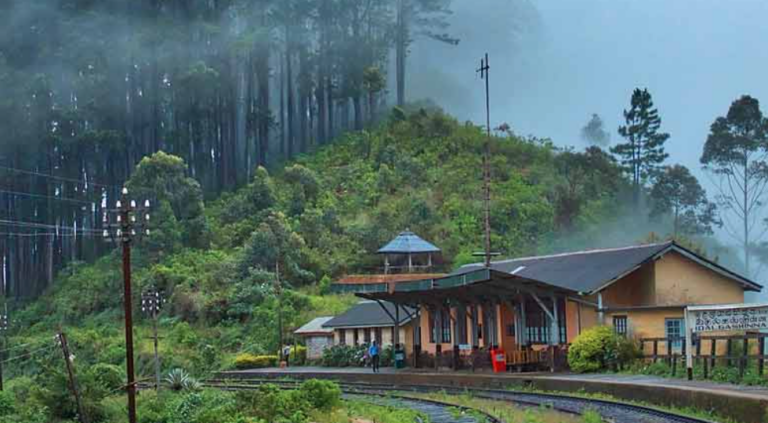
The Idalgashinna – Thotupola Kanda area, which has attracted a lot of local and foreign tourists, has been designated as a risk zone and it has been temporarily prohibited to visit it and pitch tents at night.
Sri Lanka Podujana Peramuna Member of Parliament Sudarshan Denipitiya stated that this decision was taken due to the continuous occurrence of illegal activities, fatal accidents, safe fires and environmental pollution by leaving non-biodegradable waste in the area.
All banks and the CSE closed on Monday

All banks & the Colombo Stock Exchange will be closed on Monday (10) in lieu of the bank holiday falling on Sunday (09)
SRI LANKA ORIGINAL NARRATIVE SUMMARY: 08/10
- World Bank says SL faces unsustainable debt and severe balance of payment crisis: also says it will have a negative impact on growth and poverty: warns implementation of a structural reform program is critical for economic stabilisation.
- Supreme Court grants “leave to proceed” in FR petitions filed by Transparency International and others regarding economic crisis: orders Auditor General to submit report on Monetary Board’s decisions regarding Rupee value, seeking IMF assistance, and settlement of ISBs: also directs Auditor General to submit Reports on Financial and Debt management.
- Colombo Lotus Tower and “Singapore Go Bungy” sign contract to start “bungee jumping” for the first time in Sri Lanka: jump from the Lotus Tower to be the world’s highest bungee jump.
- Government denies that notorious drug kingpin Nadun Chinthaka Wickramarathna alias “Harak Kata”, who was in the custody of Dubai Police was released due to the Defence Ministry’s delay in submitting file from Colombo to Dubai.
- CPC oil refinery to close from today: crude oil shipment delayed because of Forex shortage: order placed for 3 shipments but payments made only for 2: Energy Minister Kanchana Wijesekera says there’s no reason to panic as there are sufficient stocks.
- CB Governor Dr Nandalal Weerasinghe says business community is not affected by high interest
rates: asserts finance cost of a business is at most 10% only: 3 month T-Bill rates are now over 32% per annum. - Parliament debate on the 2nd reading of the 22nd Amendment Bill to Constitution to be on 20th and 21st October: dates agreed at the Consultative Committee on Parliamentary Affairs.
- Colombo Stock Exchange marks 3rd consecutive week of losses and highest in recent times: investor sentiment tumbles on macro issues: ASPI down 8.9%: daily turnover averages Rs.2.9 bn.
- August imports at USD 1.48 bn hit 4-month high: marks 4th consecutive monthly gain despite restrictions and forex crisis: however, YoY, imports down by 12%.
- CB Governor Dr Nandalal Weerasinghe refuses to give dates or particulars regarding IMF staff level agreement: says he is maintaining ‘radio silence’: also says discussions are going on with creditors.
A presidential election to be held next year?
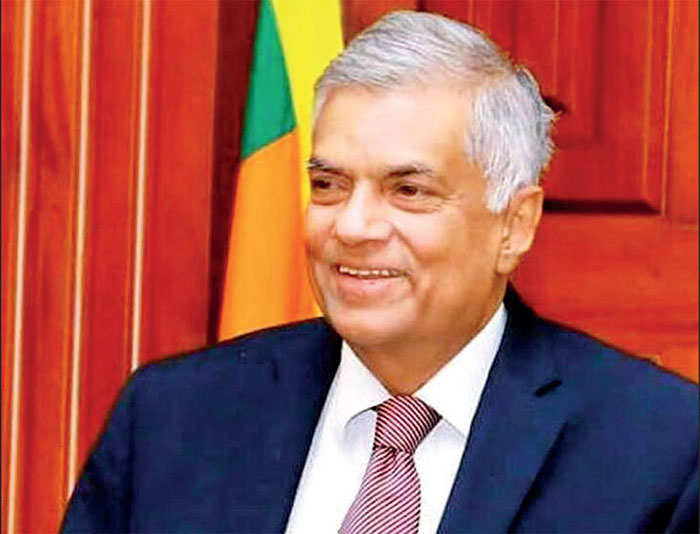
Sources say that President Ranil Wickramasinghe is focused on holding a presidential election next year (2023).
Political sources stated that several rounds of discussions have already been held regarding the legal conditions and other related requirements.
It was also reported that the Sri Lanka Podujana Peramuna will not field a candidate for that presidential election.
Accordingly, it is said that President Ranil Wickramasinghe and Opposition Leader Sajith Premadasa will compete as the two main candidates.
Sources also said that Janatha Vimukthi Peramuna leader Mr. Anura Kumara Dissanayake and 43rd division leader Mr. Patali Champika Ranawaka will also appear as other main candidates for the presidential election.
An Acting Chief Justice to be appointed
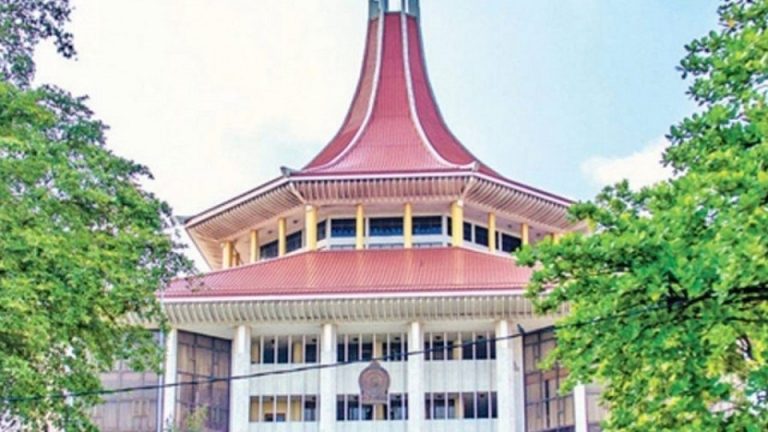
The Parliamentary Assembly has agreed to the recommendation made by the President to appoint Supreme Court Judge President’s Advocate BP Aluvihare to oversee the work of the Chief Justice.
This appointment is made as the Chief Justice, President’s Advocate Mr. Jayantha Jayasuriya is scheduled to go abroad from 08.10.2022 to 13.10.2022.
Namal appointed to a committee on the formulation of policies
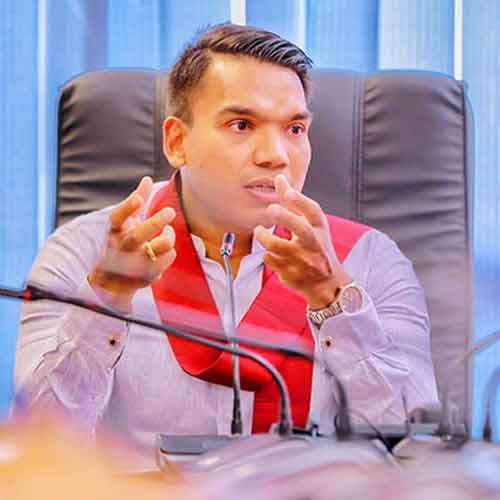
Sri Lanka Podujana Peramuna Member of Parliament Namal Rajapaksa has been appointed as the chairman of the National Assembly sub-committee on identifying priorities in the formulation of short, medium and long-term policies.
That was when the sub-committee met yesterday (07) at the Parliament complex.
Namal Rajapaksa’s name has been proposed by Sagara Kariyawasam for the post of Chairman and it has been confirmed by Ali Sabry Rahim.
All the members have agreed to call the experts in the fields related to public administration, health policies, education policies, fisheries and food policies, electricity and energy policies, climate change policies and entrepreneurship policies to get ideas and proposals for the modernization of the sub-committee.
It is stated that the members have agreed to submit short term proposals within one month, medium term proposals within two months and long term proposals within three months.
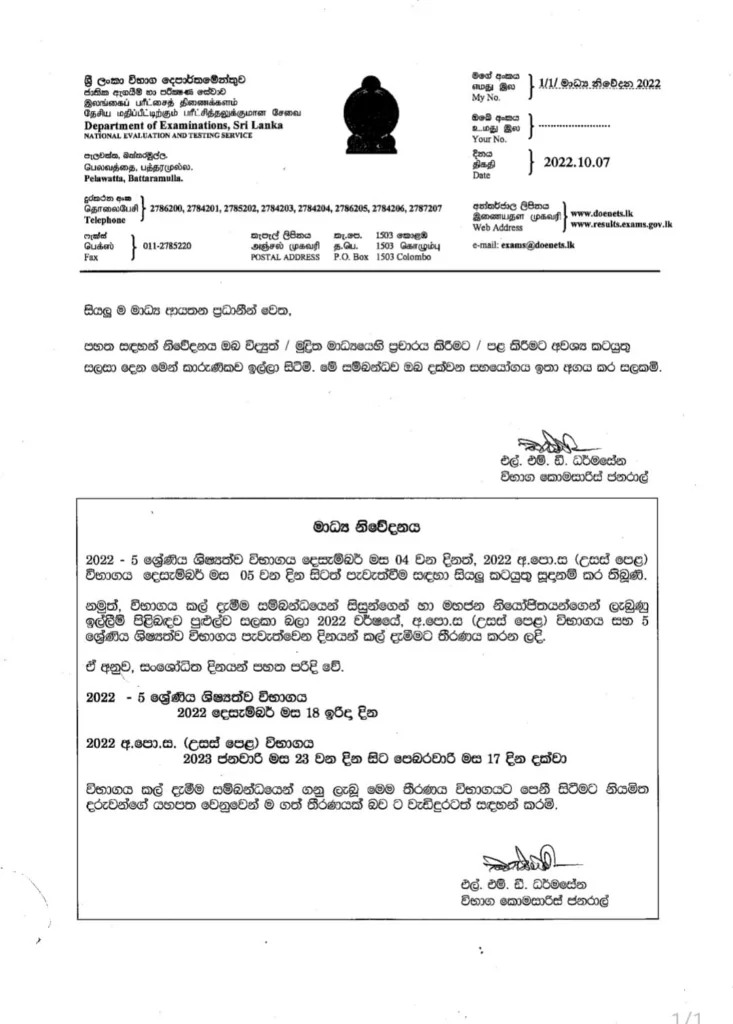
A/L and scholarship exams postponed
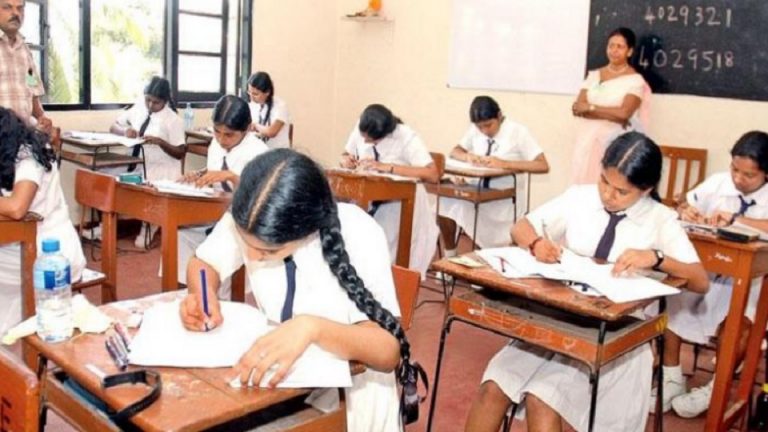
In the year 2022, the government has decided to postpone the dates of the GCE A/L examination and Grade 5 scholarship examination.
All arrangements were made to hold the Grade 5 scholarship examination on 04th December and GCE A/L examination from 05th December.
However, after extensive consideration of the requests received from students and public representatives regarding the postponement of the examination, it was decided to postpone the dates of the GCE A/L examination and Grade 5 scholarship examination in the year 2022.
Accordingly, the revised dates are as follows.
2022 Grade 5 Scholarship Examination on Sunday 18 December 2022
2022 GCE A/L Examination from 23rd January to 17th February 2023
OPEC+ production cuts could scuttle SL’s hopes for further reduction in fuel prices
Sri Lanka’s hopes for lower oil prices at the pump could face hurdles, as the members of the Organisation of the Petroleum Exporting Countries and its Russia-led allies, a group collectively known as OPEC+, decided on what analysts called “a monster cut” to oil production to stabilize the global oil prices, which have been falling for months.
The OPEC+ finance ministers gathered in person for the first time in more than two years at its headquarters in Vienna, Austria, yesterday and decided to slash oil production by two million barrels a day, the biggest cut since the start of the pandemic.
The global oil prices have fallen 32 percent in the last four months, after going above US $ 100 a barrel in the first half of the year, most of which was caused by Russia’s invasion of Ukraine on February 24.
However, the prices made an about turn since June, on worries over the health of the global economy after global central banks, with the exception of China and Japan, quickened their pace of rate increases to tame decades-high inflation, which could tip most world economies either into recessions or significant slowdowns.
The Organisation for Economic Cooperation and Development last week trimmed its global economic growth outlook to 2.2 percent in 2023, from an earlier projection of 2.8 percent, on concerns of tightening monetary policy by the advanced economies to fight inflation.
These worries sent the international benchmark Brent crude prices below US $ 83 a barrel last week for the first time since January, causing concerns for the major oil producers, specially Saudi Arabia.
However, Brent has been rising since October 3 to trade above US $ 91.00 a barrel, before the OPEC+ meeting got underway on expectations of a production cut.
After a bumper hike delivered in June for oil at the pump, when the country was facing acute shortages of fuel, Sri Lanka a few days ago reduced the prices by Rs.40.0 and Rs.70.0 each for a litre of Octane 92 and Octane 95 petrol, respectively for the second time, under a cost-reflective price formula put in place
in June.
Energy Minister Kanchana Wijesekara speaking in Parliament expressed hope for further reduction in retail prices by at least another Rs.40.00 a litre on petrol in the next two weeks, on the easing of global crude and refined oil prices.
However, since last week, the global prices have increased substantially and the production cuts could further push the prices higher, scuttling such plans to reduce the retail prices.
Nevertheless, there are some tensions within the oil cartel on the move to cut production as some members such as the United Arab Emirates (UAE) and Kuwait are worried that the long-term curbs would damage their plans to increase production, as the UAE had already invested tens of billions of dollars in expanding its capacity.
In any case, the rising oil prices could inflict further pain on Sri Lanka, which is facing severe balance of payment troubles, due to the severe shortage of foreign currency, as it has been barely managing the situation through rationing fuel at the pump since late July.