Home Blog Page 2078

Relevant legal procedures should be followed when holding protests – Tiran(VIDEO)

0

Minister of Public Security Tiran Alas says that relevant legal procedures should be followed when holding protests or demonstrations.

Accordingly, he said that the police will not interfere with the demonstrations, demonstrations or protests that are held legally after obtaining such permission.

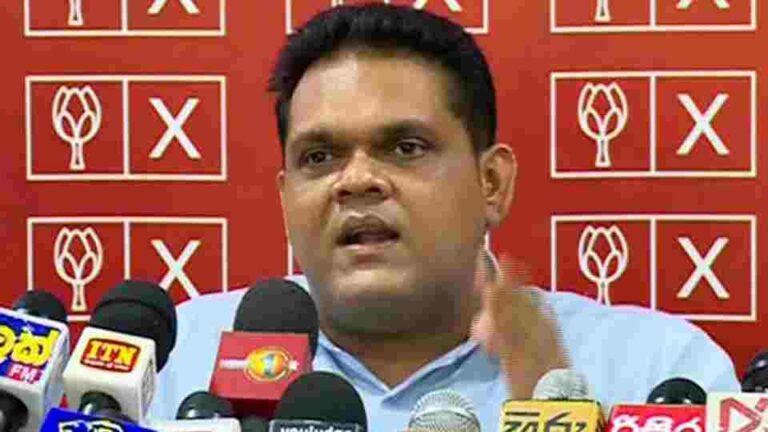
Minister Tiran Alas said this while replying to a question raised by Samagi Jana Balavegaya Member of Parliament Hesha Withanage yesterday (06).

Also, regarding the fight against the underworld and the fight against drug trafficking, the minister said that necessary steps have been taken to prevent crimes in the country and if necessary, he can submit a report to the parliament about the crimes that have occurred in the past three months and the measures taken in relation to them.

SRI LANKA ORIGINAL NARRATIVE SUMMARY: 07/10

0
  1. Resolution said to be promoting reconciliation, accountability, and human rights in Sri Lanka adopted at the 51st session of the UNHRC: Votes for 20, against 7: absentations 20.
  2. Real economy contracts by 4.8% in the 1H2022: expected to contract in the 2H2022 as well: interest rates have already resulted in additional expenditure of a staggering Rs.540 bn to the government from 1st April to 30th September.
  3. President Ranil Wickremesinghe makes special statement in Parliament: says Sri Lanka expects to come into an agreement with creditor nations India, China & Japan as soon as possible in order to facilitate debt restructuring.
  4. Japanese Government official in Tokyo says Japan has not yet reached an agreement to co-chair a debt summit with Sri Lanka’s creditors.
  5. CB Deputy Governor Yvette Fernando says Sri Lanka’s banks will be re-capitalized if ongoing study shows need: banks face multiple shocks from Covid crisis, rate spikes, bond losses, and bad loans from slowing economy.
  6. President Ranil Wickremasinghe says USD 2 to 3 bn is expected from restructuring State Owned Enterprises and compensation for the Express Pearl ship disaster; also says 14% of GDP was earned through taxes in 2019, and intends to increase taxes once again to the same level.
  7. IMF Mission Chief Peter Breuer says IMF is waiting for Sri Lanka to comply with all the applicable IMF policies before taking further steps: confirms IMF reached a staff-level agreement on a 48-month arrangement under the Extended Fund Facility of about USD 2.9 bn.
  8. SLPP MP Professor Ranjith Bandara elected as Chairman of COPE: receives 15 votes while SJB MP Eran Wickremaratne receives 7.
  9. Colombo Stock Market reverts to negative territory despite reassurances from the President and Central Bank Governor on the recovery of the economy: ASPI down 1.5%: CSE loses over Rs.300 bn in value in the first 2 market days of October.
  10. Minister of Public Security Tiran Alles says he has no influence when it comes to appointments of Police officers: asserts all appointments and transfers follow proper procedure.

Price of a cup of milk-tea and plain-tea reduced

0

The All Ceylon Restaurant Owners Association said that it was decided to reduce the price of a cup of milk tea and plain tea.

Accordingly, the price of a cup of milk tea has been reduced to 100 rupees and the price of a cup of plain tea has been reduced to 30 rupees, said the president of the association Asela Sampath.

He also said that this step was taken to provide the people with relief from the reduction in gas prices.

President invites all parties to get togther to build the country again

0

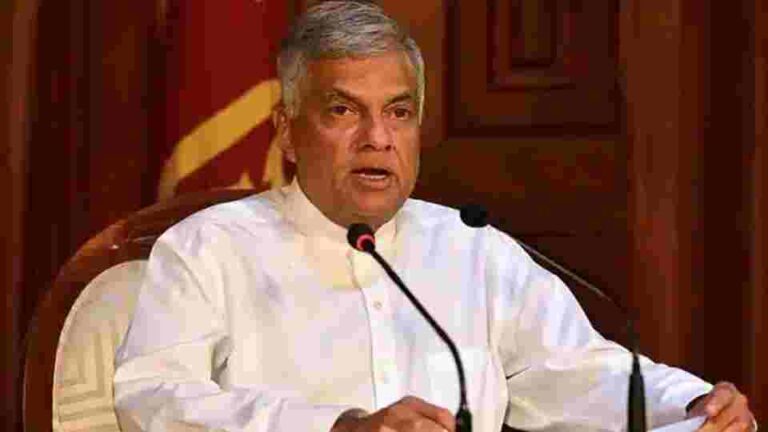
President Ranil Wickramasinghe once again made a special request to forget the old conflicts and join a common program in order to overcome the most serious economic crisis faced by the country in recent history.

The President, who introduced a four-step strategic plan to recover from the crisis, said that the first step has been successful and the foundation for the second step is being prepared.

President Ranil Wickramasinghe expressed these views by making a special statement yesterday (06) in Parliament regarding the current economic situation.

The President informed the parliament about the Japan-Philippines visit and said that Japan’s agreement to play a leading role as a mediator in the debt restructuring work is a good sign and he hopes to request Japan to hold the position of co-chairman of the conference held with the countries that have given loans.

Mr. Ranil Wickramasinghe also pointed out that the progress of the negotiations with the major lenders such as India, China, and Japan, as well as the other lenders, is expected to reach a multilateral agreement with them as soon as possible.

Also, the President, who briefed the parliament on the talks held with the Prime Minister of Singapore Lee Shenlong, stated that the Singapore-Sri Lanka Free Trade Agreement, which had been abandoned last season, should be revived.

Through that, the President pointed out the possibility of establishing a stable economic approach with Singapore as well as the possibility of strengthening the country’s economic relations with Southeast Asia.

Ranil Wickramasinghe further said that due to the quick measures taken in the agriculture sector, it was possible to get a higher than expected yield in the yala season, and that the seeds and fertilizers needed to make the next season successful without any hindrance have been prepared sufficiently.

Although an urgent food production program has been prepared to ensure food security, the President emphasized the need to prevent the contraction of the economy and inflation and informed the Parliament about the measures to be taken to prevent the situation.

The President mentioned that the Buddha has shown the points followed by King Maha Vijita in rebuilding a fallen country through the Kutadanta Sutra and added that he is following the method shown by the Buddha.

UN Human Rights Council 51: UK welcomes resolution on Sri Lanka

0

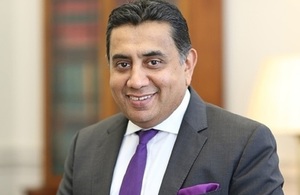
Responding to the UN resolution, Foreign Commonwealth and Development Office Minister of State for the Middle East, South Asia and the United Nations Lord (Tariq) Ahmad of Wimbledon said:

We welcome the result of today’s vote on Sri Lanka at the UN Human Rights Council (UNHCR). This resolution will support progress on human rights, justice, and accountability. It has renewed the mandate of the Office for the High Commissioner for Human Rights (OHCHR) to report on Sri Lanka and to protect and preserve evidence of past human rights abuses to use in future accountability processes. This is integral to establish truth and achieve lasting justice and reconciliation, as well as to improve human rights in the country.

Our focus should now turn to our collective and renewed ability to work with the new Government of Sri Lanka to take forward their commitments to the Council. We call on UNHRC members to support this effort, and to work together to address the economic challenges faced by the people of Sri Lanka.

https://www.gov.uk/

Sri Lanka agriculture revival initiative to improve farmer productivity.

0

Sri Lanka has embarked on an ambitious agriculture revival initiative waking up to reality after failed organic farming dream, Agriculture Ministry sources said

The implementation of this initiative has been expedited following the pledge given by United States Permanent Representative to the UN Food and Agriculture Agencies in Rome, Ambassador Cindy McCain to support the country’s agriculture-led economic growth and revitalize vital agricultural production.

However conventional agricultural extension approaches are insufficient to assist farmers in dealing with increasingly complex challenges in the agriculture sector, the agriculture ministry study revealed.

The economic contribution of paddy farmers numbering over 600000 or 9 percent of the total work force was 0.9 percent of GDP and the main issue is to prevent the wastage of their labour while identifying challenges among farmers.

According to this study paddy farmer is working 31 man days per year wasting 334 days without engaging in any productive work or activity.

The gross national income from agriculture was around Rs 698 billion per annum and the revenue from paddy cultivation was Rs 70 billion.

Of the country’s approximately 2.3 million hectares of agricultural land, 80 percent is used for non-plantation food crops, comprising rice, maize, fruits, vegetables and other crops primarily grown on smallholder farms.

About 1.65 million smallholder farmers operate on average less than 2 hectares and contribute 80 percent of the total annual food production.

Under this set up, it is essential to support farmers by developing high-quality technologies and mechanisms through the community development process, the short term plan of the ministry disclosed.

Agriculture Ministry’s current initiative contains short-term, medium-term and long-term remedies based on long-term research data on measures to be taken in relation to main food crop production

Further the Ministry is ready to establish a Dollar Account for the development of the agriculture sector on Sri Lanka’s food security.

Chairman of the Presidential Committee on National Food Security Dr. Suren Batagoda noted that if Sri Lanka’s food security is not established, the people will have to face severe food shortages next year.

This agriculture modernization initiative is aimed at achieving food security, ensure higher and sustainable incomes for farmers, improve production and productivity, and sustainably manage the environment, he added.

Within this policy framework, agricultural programmes and projects will promote deep involvement of the private sector, related to the agriculture, Minister Mahinda Amaraweera said.

He noted that it will help farmers increase their productivity sustainably by reducing degradation of natural resources (mainly land), improving agricultural technologies and creating off-farm opportunities, while recognizing the growing links between urban and rural growth and employment creation.

The World Bank funded Agriculture Sector Modernization Project is also aligned with the new initiative of improving agricultural productivity and competitiveness to strengthen the links between rural and urban areas and facilitate Sri Lanka’s structural transformation.

However the major issue in the agriculture sector which should be addressed at present was the providing and strengthening rural livelihood sources, employment opportunities in agriculture and along agriculture value chains, as well as market access for the poor, bottom 40 percent, and vulnerable people, thereby improving income sources and livelihood security in lagging rural areas.

No pact with SL on debt restructure talks yet: Japan

0

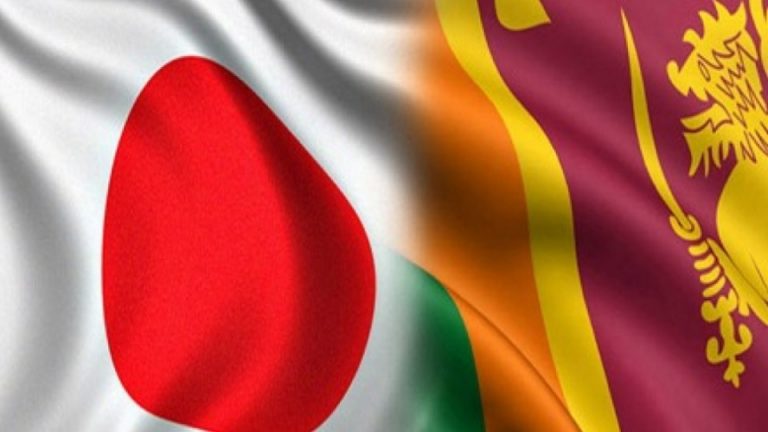
TOKYO, Oct 6 (Reuters) – Japan has not yet reached an agreement to co-chair a debt summit with Sri Lanka’s creditors, a government official in Tokyo said on Thursday, as the island nation struggles to find a way out of a crippling economic crisis.

Sri Lanka has to renegotiate around $30 billion of foreign debt, including with bilateral creditors such as China, Japan and India, with one of them likely to co-chair the talks.

“We have not reached such an agreement. It might be their wishful thinking but the situation remains unchanged,” a senior Japanese government official with knowledge of the matter told Reuters on condition of anonymity.

The denial from Tokyo came after less than an hour after Sri Lankan President Ranil Wickremesinghe’s office said on Thursday that Japan had agreed to co-chair the meeting with negotiators.

Wickremesinghe’s office later issued a clarification saying Sri Lanka had requested Japan to co-chair the summit. Japan would also help Sri Lanka in its credit restructuring process, Wickremesinghe’s office said.

“Japan will stand ready to provide full support for Sri Lanka’s debt restructuring providing that necessary conditions are met,” the Japanese government official said.

Sri Lanka is facing its worst economic crisis in decades, with severely depleted foreign exchanges reserves leading to prolonged shortages of essentials, including fuel and food.

Out of Sri Lanka’s total bilateral debt of $10 billion, Japan holds around $3.5 billion worth, amounting to 4.4% of Sri Lanka’s GDP, according to government and IMF data.

REUTERS

The program of providing welfare benefits to over 3 million families, expedites

0

President Ranil Wickremesinghe has instructed to expedite the programme to provide welfare benefits to 3.1 million low-income families in Sri Lanka.

This program has been planned to cover all the districts of the country under the theme ‘Don’t Leave Anyone Behind’. State Minister of Finance Shehan Semasinghe revealed this while attending a media briefing held this afternoon (06) at the Government Information Department Auditorium.

Under this programme the benefits will be available for the families or individuals receiving benefits under Samurdhi, Elderly Person, Disabled Person and Kidney Disease Assistance Program. Also, people who are on the waiting list expecting subsidies as well as people who are affected by the current economic crisis and who are expecting government welfare benefits will also receive this benefit, the Minister revealed.

Minister also said that calling for applications have already started and the closing date has been extended to October 15.

The relevant application form can be downloaded via the www.wbb.gov.lk

By calling for new applications, the government hope to include all eligible beneficiaries and to provide benefits to all those who deserve benefits through the Social Welfare Benefit Board, the Minister further said.

Denying on the rumour that been circulating among the public regarding the cut-down of the allowances according to the agreements with the International Monetary Fund (IMF), he said the government needs organise the data in a correct system. It needs to include the group who are currently receiving welfare benefits as well as the group who are not receiving welfare benefits but are expecting. It is our expectation to gather all the information and give the allowance to the necessary, appropriate and correct individual.

We are united in the national responsibility that no one should be left behind. Currently there is a group receiving public assistance, welfare allowances and disability allowances. It is mandatory for them to be registered at the Divisional Secretariat. At present, only a small group of beneficiaries have been registered. Therefore, we have extended the registration. Extending this date further means that the date of receiving the benefits will also be delayed. This should be done quickly.

For that, we need a data system. By receiving these applications, the data system is prepared. It is mandatory for the people who are currently receiving benefits to register for this. We have prepared a data system to do this transparently. The young people of the village have a great responsibility in this regard.

It is also possible to find out about the needy people of the rural level and educate them about them. Elderly people, people with disabilities, kidney patients, and destitute families are in some rural areas. All those people are included in this data system and taken care of by the welfare benefit board.

After the application is submitted, the officers of the Divisional Secretariat will go and investigate the families and take further action. There is a scoring system. Accordingly, they are included in the data system. In this process, if they are not selected, they can file an appeal, and if an ineligible person has entered the system, they can file an objection. This process is done to provide benefits in a transparent manner and not to cut down the allowances.

Chairman of the Welfare Benefit Board B. Wijayaratne, Director of the General Secretariat for the Disabled, Anuradha Herath, Director of the Elderly Secretariat, KG Lanarole and other officials were present at this occasion.

President Media Division
06.10.2022
Sri Lanka Customs crackdown on smugglers of import banned items

0

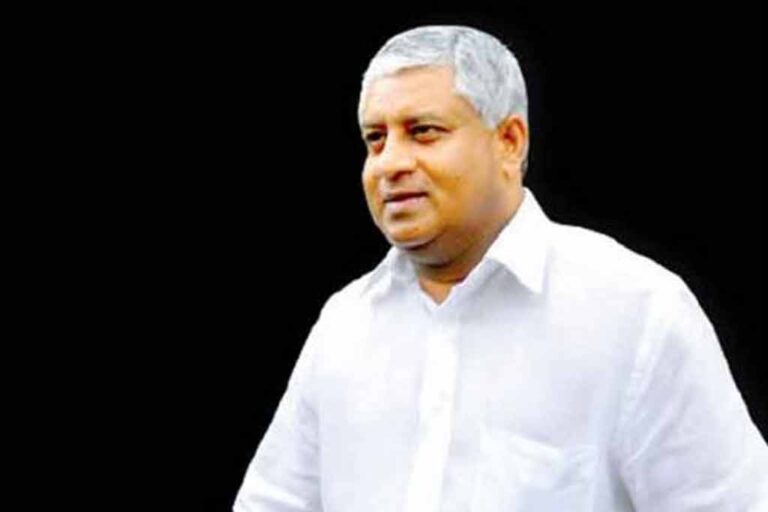
Sri Lanka Customs collects over 50 percent of state tax revenue mainly from international trade although trade inflows plunged during the country’s lock down in Covid -19 and current economic crisis, new Director General customs P.B.S.C.Nonis said.

On a daily average, Customs used to clear over 1000 full container loads (FCLs) at import and around 500 FCLs at export and there was no delay in clearance purposely by custom officers, he pointed out.

He noted that the cargo clearance process has now been streamlined with automation and there was no delay in the container clearance except a few suspicious cases.

Most of the custom officers are working diligently with a commitment to collect tax revenue for state coffers; he said adding that the complaints of corruption allegations and irregularity charges in imported goods clearance of migrant workers were baseless.

However he noted that Verifications of the authenticity of licenses, standards, and permits were coordinated via electronic means to ensure expedited release, and final clearance of some of the suspicious importations requiring such documents was put on hold and will be subject to post clearance inspection and audits.

According to Finance Ministry data, Sri Lanka Customs (SLC) is expected to reach the revenue target of Rs.715 billion set for the year in the budget 2022, which is in line with the mid-term goal to increase state revenue to 15 percent of GDP from the current 8 percent.

SLC has been able to reach 60 percent of this target of Rs 715 billion as of 31st of August; a senior treasury official said adding that it can reach the target of Rs.715 billion by the end of this year.

Customs Media Spokesman, Deputy Director of Customs (Legal Affairs) Sudaththa Silva disclosed that the importation of some of the import restricted valuable non essential items via illegal channels and hiding in containers of packages of goods of migrant workers in the Middle East has been increased during the past couples of years and at present as well.

The unscrupulous businessmen who were affected by import restrictions were in the practice of smuggling banned non essential items along with packages of migrant workers in shipments had to be detained by the customs for inspection and necessary action to confiscate such items, he revealed.

This procedure will take some time and custom officers involved in inspections have no other option other than keeping the containers in warehouses for several days he said adding that it will inconvenience genuine persons sending goods to their loved ones here in Sri Lanka alike.

Routine cargo selectivity criteria were tailored to release medium and low risk cargo with minimum or no Customs intervention.

As a result, around 70 percent of importations selected for examination through non-intrusive cargo scanning equipment were released without inspection, he disclosed.

However several affected persons complained that the Revenue Task Force of the Customs was in the practice of detaining 95 percent of containers being arrived at warehouses for clearance for several days on suspicion of smuggled goods tip offs of nonexistent informants.

They claimed that they had to pay US$ 50 per day as delayed payments including informants’ share of 30 percent, penalty charge of 30 percent and customs fund 10 percent. And only 30 percent goes to state coffers.

Responding to these allegations, the Customs Department noted that action will be taken to confiscate or re-export non-essential goods smuggled into the country.

Earlier, the Customs took steps to release goods brought to the country by charging fines and this practice has been suspended at present, Customs department sources said.

Penalties on late reporting of manifests or other documentation were waved as well as port/airport demurrage charges at the request of traders, it added.

AI says Human rights compliance is critical to tackle SL poverty

0

The Sri Lankan authorities and the international community must fully incorporate human rights into their responses to the country’s economic crisis, Amnesty International said in a new report.

It added that people in the country face serious concerns around access to healthcare while being driven to the brink of starvation, widespread malnutrition, and deep poverty.

The report,noted that the country is near total breakdown”: Protecting the peoples rights to health, food and social security in Sri Lanka’s economic crisis, explores the catastrophic impact of the crisis on the economic and social rights for the people of Sri Lanka.

“For months now, the people of Sri Lanka have been suffering from severe shortages of food and have struggled to access healthcare, while sky-high inflation has exacerbated already existing patterns of inequality.

The Amnesty International says life-threatening shortages of medicine and essential equipment are major concerns in Sri Lanka as the economic crisis deepens.

Fuel shortages have also rendered transport either unavailable or extremely expensive, making it difficult or impossible for people to access healthcare services.

Rising prices driven by inflation and reduced household income mean people are increasingly unable to meet their basic food needs, the Amnesty International added.

The Sri Lankan authorities and the international community must act quickly to mitigate the widespread human rights cost of the crisis, which has cruelly stripped away people’s access to their rights,” said Sanhita Ambast, Amnesty International’s Researcher on Economic, Social and Cultural Rights.

The report details the recovery measures that Sri Lanka’s leaders and the international community must put in place to safeguard human rights in their responses to the situation, such as increasing the amount of international assistance, ensuring comprehensive social protection, and considering all options for debt relief, including debt cancellation.

From shortages of gauze, intravenous antibiotics and insulin to requests to re-use catheters or endotracheal tubes, the last few months have brought shocking challenges to Sri Lanka’s healthcare system, the organization said further.

Fuel shortages have also rendered transport either unavailable or extremely expensive, making it difficult or impossible for people to access healthcare services, particularly those from the Malaiyaha Tamil community who live and work in plantations that are historically poorly served by essential services.

Rising prices driven by inflation and reduced household income mean people are increasingly unable to meet their basic food needs, the Amnesty International added.

The Government of Sri Lanka, donor States, and international financial institutions are putting in place programs and economic reforms to address the economic crisis.

The Sri Lankan authorities and donor States must ensure that they meet their obligations under international human rights law by safeguarding the rights to health and adequate food in all aid agreements.

The government of Sri Lanka and international financial institutions must also conduct human rights impact assessments before implementing economic reforms; it remains unclear as to whether these have been or will be conducted.