Many discussions were held on the election of the President in an all-party government upon the resignation of the current President and the Prime Minister and the Samagi Jana Balawegaya (SJB), the Sri Lanka Freedom Party (SLFP), several ex government members grown together as an independent group consisting of Wimal Weerawansa, Udaya Gammanpila and Vasudewa Nanayakkara, and other political groups held many discussions in this regard yesterday (10).
One discussion was held at SJB member Thalatha Athukorala’s residence in Nugegoda and another at the Sri Lanka Communist Party Headquarters.
A common ground was reached that the President and the Prime Minister should be elected by all together without catering to problems in Parliament.
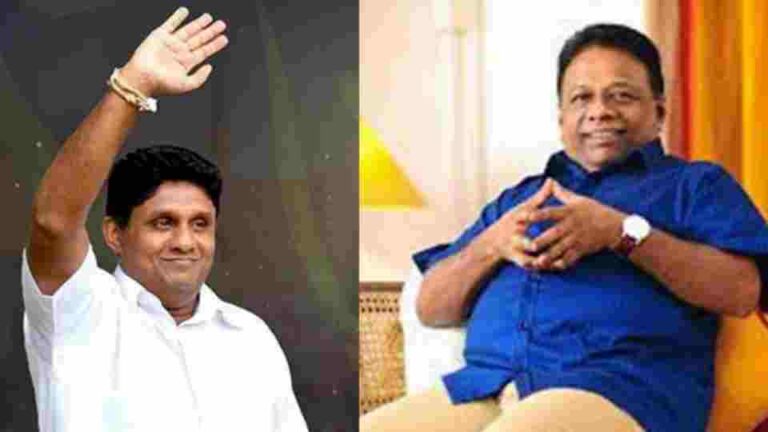
Accordingly, Leader of the SJB Sajith Premadasa and Sri Lanka Podujana Peramuna (SLPP) MP Dallas Alahapperuma were nominated to the post of President. It has also been suggested that one of these two MPs should become the President and the other the Prime Minister in an all-party government in a move to resolve the crisis peacefully.
It was also noteworthy that the National People’s Power (NPP) led by the Janatha Vimukthi Peramuna (JVP) and front line members of the SLPP did not attend the discussions.
The European Union (EU) and the US urged Sri Lanka’s political fraternity to cooperate, focus and work quickly’ to achieve a peaceful, democratic and orderly transition amid the island nation’s worst economic and political crisis in decades while India expressed solidarity towards this end.
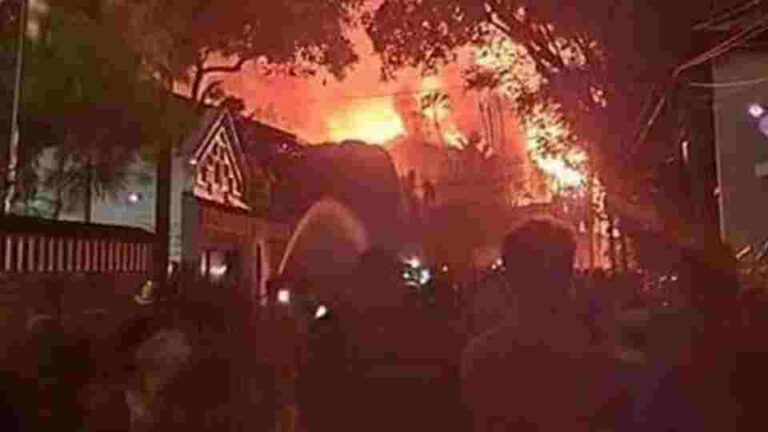
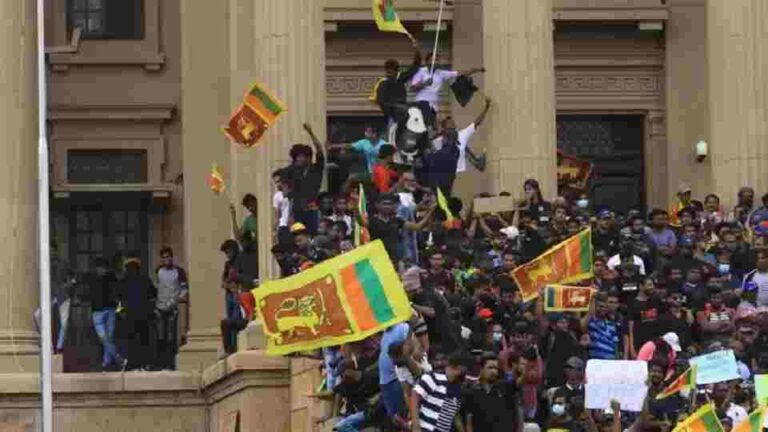
On July 9, thousands of irate anti-government protesters stormed the official residence of embattled President Gotabaya Rajapaksa and forced him to offer his resignation on July 13. A mob also torched the private house of Prime Minister Ranil Wickremesinghe.
Rajapaksa would resign on July 13, Parliament Speaker Mahinda Yapa Abeywardena said on Saturday night, while Prime Minister Wickremesinghe has already expressed his willingness to step down. In Washington, a State Department spokesperson said the US calls on the Sri Lankan parliament to approach this juncture with a commitment to the betterment of the nation not any one political party.
“The US urged the government or any new, constitutionally selected government to work quickly to identify and implement solutions that will achieve long-term economic stability and address the Sri Lankan people’s discontent over the worsening economic conditions, including power, food and fuel shortages”, the spokesperson said. The spokesman also warned against attacks on protesters or journalists, but also criticised Saturday’s violence.
“The Sri Lankan people have the right to peacefully raise their voices, and we call for the full investigation, arrest and prosecution of anyone involved in any protest-related violent incidents”, the spokesperson added. In Brussels, the European Union said it was closely following the evolving situation in Sri Lanka.
“EU member countries are closely following developments in Sri Lanka, and call on all parties to cooperate and focus on a peaceful, democratic and orderly transition”, said a statement released by the European Union. It is the responsibility of all party leaders to pave the way to a solution to the current crisis and return back to normalcy, it said.
The EU said it is assessing the available options to further step up its support to Sri Lanka’s population.
President Gotabaya Rajapaksa has historically endured a thorny relationship with the US over the dismissal of allegations of war crimes during Sri Lanka’s decades-long civil war.
Nevertheless, Washington has over the past two months offered USD 120 million in new financing for Sri Lankan small and medium-sized businesses, a USD 27 million contribution to Sri Lanka’s dairy industry and USD 5.75 million in humanitarian assistance to help those hit the hardest by the economic crisis.
The US has also committed USD 6 million in new grants to provide livelihood assistance to vulnerable populations, and technical assistance on financial reform that will help stabilise the economy.
Meanwhile the Indian government on Sunday showing its support to the crisis-hit neighbouring island nation said that India is continuously following the recent developments in Sri Lanka.
In a statement, India’s Ministry of External Affairs spokesperson Arindam Bagchi said, “We are aware of the many challenges that Sri Lanka and its people have been facing, and we have stood with the Sri Lankan people as they have tried to overcome this difficult period.”
Maintaining that India is Sri Lanka’s closest neighbour, the MEA said India has extended ‘unprecedented’ support of over $3.8 billion for ameliorating the serious economic situation in Sri Lanka.
India stands with the people of Sri Lanka as they seek to realize their aspirations for prosperity and progress through democratic means and values, established institutions and constitutional framework,” the MEA spokesperson said.
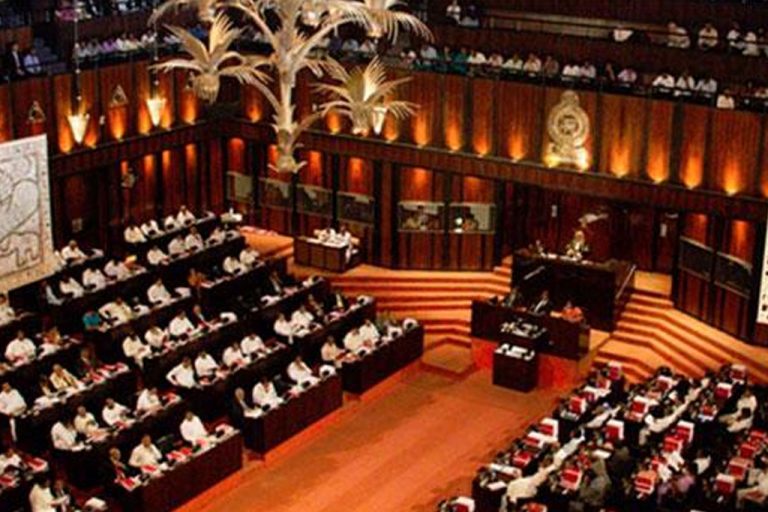
A party leaders’ meeting is set to be held today (11) in view of the current crisis in the country. The meeting will be held at 02 pm under the patronage of Speaker Mahinda Yapa Abeywardena.
President Gotabaya Rajapaksa has informed the Speaker in writing that he will resign on July 13 and accordingly, the party leaders’ meeting is expected to make final conclusions on the actions to be taken through Parliament.
In any event has the President resigned, a temporary president to be elected would be the Speaker and within a month of his appointment, a new president should be elected by Parliament. As of now, several MPs representing both the ruling party and the opposition have been proposed.
On July 9, thousands of protestors demanding Sri Lankan President Gotabaya Rajapaksa’s resignation entered his official residence breaching security barricades. The leader is said to have left the compound and his secretary Gamini Senarath said he is unaware of Rajapaksa’s whereabouts.
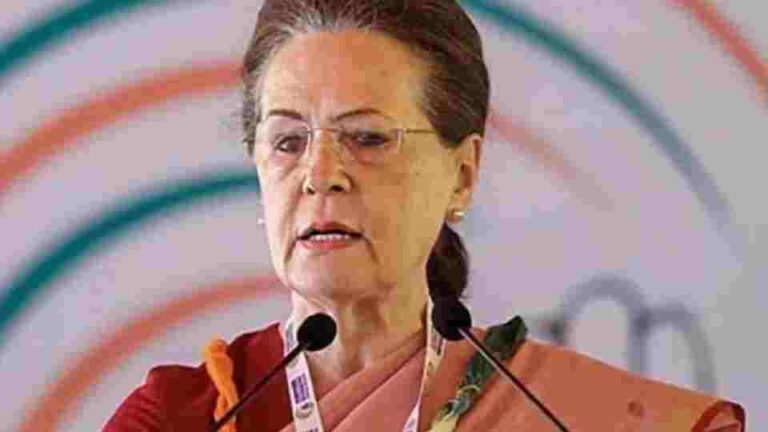
Congress president Sonia Gandhi on Sunday expressed concern over the evolving political situation in Sri Lanka. She said that the inflation, shortage of food, fuel and essential commodities were among the economic challenges that have caused distress among the island nation’s citizens and forced them to take to the streets.
“The Indian National Congress has been following with concern the evolving political situation in Sri Lanka. The economic challenges, rising prices and shortage of food, fuel and essential commodities have caused enormous hardships and distress among the people there,” the Congress chief said in a statement.
Over 22 million people in Sri Lanka are struggling under a severe foreign exchange shortage that has limited essential imports of fuel, food and medicine. The country’s inflation rate was recorded at 54.6% in June and it is expected to hit 70% in the coming months.
On July 9, thousands of protestors demanding Sri Lankan President Gotabaya Rajapaksa’s resignation entered his official residence breaching security barricades. The leader is said to have left the compound and his secretary Gamini Senarath said he is unaware of Rajapaksa’s whereabouts. Sri Lankan Prime Minister Ranil Wickremesinghe announced he will step down once a new government is elected.
The Congress chief hoped the Indian government will continue to assist the people and government of Sri Lanka. “The Congress party expresses its solidarity with Sri Lanka and its people in this moment of grave crisis and hopes they will be able to overcome it,” the statement added.
Sonia Gandhi urged the international community to extend all assistance and support to Sri Lanka.
The investigations into the arson attack on Prime Minister Ranil Wickremesinghe’s private residence have been taken over by the Criminal Investigation Department (CID). The initial probe was carried out by the Kollupitiya Police.
Accordingly, further investigations will be carried out by the CID on the order of the Inspector General of Police (IGP) and a group of investigative officers have been to the Prime Minister’s private residence today (10) to commence the operations.
Meanwhile, the suspects arrested in connection with the attack have been remanded till July 20 as per the order of the Fort Magistrate Thilina Gamage.
The Kollupitiya Police reported to the Court that the suspects were arrested based on CCTV footage collected and eyewitness accounts.
An ID parade will also be held on July 20 as per the order of the Magistrate.
In terms of the Constitution of Sri Lanka, the President must address to the Speaker of Parliament a letter signed by him of his decision to step down, leading to the Prime Minister to take over the vacant position as the acting President, said the Bar Association of Sri Lanka (BASL), calling in a special briefing today (10) to elaborate on the process that should be followed by the President and the Prime Minister in vacating their posts.
Addressing the briefing, BASL President Saliya Peiris PC emphasised that if the Prime Minister is not able to act as President, then it would be the Speaker who would, adding that the post will only be available for a period of one month.
Within the month, Parliament should be electing a successor for the remaining period for the remaining period of the tenure of the President who vacated his post, Peiris noted.
He added that only the members of Parliament can vote to appoint a successor for the post of President and should more than one candidate be nominated to the post, the Candidate who wins the consent of 113 MPs will be suitable for the post.
Should any candidate fail to secure more than 50 per cent majority of votes, the preferences will have to be taken into consideration, Peiris PC went on, adding that the MPs, who are the voters, will have the opportunity to cast their preferences for four other candidates in addition to the candidate they are voting for.
Saturday the 9th of July was a moment of truth for our people. In coming together to Colombo in an unmistakable show of force, Sri Lankans brought to life the words of Albert Einstein that “in the midst of every crisis lies great opportunity.”
Sri Lanka has never faced a crisis of this magnitude, but I have no doubt that if our people can unite and remain singularly focused on the goal of saving our country, together, we will prevail. The whole country just came together to make clear that enough is enough. We have spoken with one voice against nepotism, graft, political witch hunts, ethnonationalism and brazen administrative incompetence.
Now it is time for professionals, policy makers and political leaders to do their part. This is not a time for vengeance or more violence. There should have been none in the first place. It is a time for the opposition to unite and do its duty, to send a message to the world that the Sri Lanka of tomorrow is a new Sri Lanka, one that is united, and ready to regroup and rebuild.
The image of a corrupt, ethnically divided, bankrupt nation at the mercy of strongmen and militarized rule must give way to a new brand for a pluralist, united nation on the path to recovery and prosperity. From now on, the institutions that form the pillars of order and justice must know that they cannot get away with blindly following illegal orders.
The vast majority of our people have not taken to the streets looking for perks, political patronage or other personal benefits. They are fighting to save our country and are doing that duty to give future generations of Sri Lankans a chance at a better life. The government has failed to protect its people and has failed to honour their oath to the people and the Constitution. The public service, especially the military, prosecutors and police, must not be the next to fail.
Never again can we tolerate an IGP, an Attorney General, military commanders or any of their subordinates who justify illegality by saying they were “just following orders.” This is the only way that they can restore their credibility and win back the faith of our people that has been squandered over a generation of cronyism.
It was chilling last night, to watch police officers outside Ranil Wickremasinghe’s private residence targeting and brutally assaulting journalists, including a young woman, on live television. They thrashed reporters for simply doing their job under extremely difficult circumstances. As outrageous and barbaric as this attack was, it tragically and inexcusably gave way to one of the most disgusting acts of vandalism in our lifetimes. I was not alone in being shocked, devastated and enraged to see the historic home of one of our most senior political leaders set ablaze.
No matter how much anyone agrees with or opposes the policies of individual politicians, there is no justification for violence or arson. It is barbaric and unbecoming of anyone who claims to be fighting against what the Rajapaksas stood for. For better or worse, places like Medamulana and 55 5th Lane are iconic symbols of our democratic history and home to some of the most consequential decisions that charted the course of our nation.
They are home to politicians who at different times were elected by large majorities of our people. In a democracy, when such popularity weans, we speak with our votes and our voices on the street. You only need to look anywhere in the world to see that when regimes are dislodged through bloodshed, generations of bloodshed will follow. It is time that we stopped letting violence dictate the course of events.
The Rajapaksas were the capstone of a political culture in which far too often, Sri Lankans resorted to enacting political ends through violence and destruction. They bombed and burned buildings and left several journalists dead and ended the careers of many others through thuggery and brutality. At least now that the Rajapaksas are almost gone, it is imperative that we condemn all violence, especially attacks against people’s homes and against media personnel, in the strongest possible terms.
Never again should anyone in Sri Lanka have to fear taking a political position or expressing an opinion, whether right or wrong, for fear of being abducted, assaulted, tortured, killed, or have their home or office bombed or burned. As the Rajapaksas go, their signature culture of violence must go with them and play no part in the next chapter of our country’s journey.
Now that the government has collapsed, we must move swiftly to show the world that Sri Lanka will not descend into the kind of anarchy that plagued the countries who threw out strongmen during the Arab Spring. We have a proud tradition of constitutional rule and lawful transfer of power dating back to independence. Just as we had never defaulted on our debt before the Rajapaksas, we had never had a successful change of government or leadership that was not dictated by law. We must ensure that there is no question that the present regime lawfully ceases to hold power, and lawfully makes way for a democratically credible caretaker regime consisting of leaders with the necessary integrity and competence to stop the bleeding in the economy and to enact meaningful constitutional reform and put the country on the path to recovery.
This will be a long, arduous struggle. No sooner our political leaders make it possible, the people must get a chance to vote on who we want to be led by, and how we should be governed. It is essential that the new constitution doesn’t leave room for another executive president who can overstay his welcome through fear or force. Under such a system, we will all have to rely on a dwindling number of talented professionals and courageous leaders to try and right the ship and mitigate the suffering of our people.
Rebuilding the credibility of our nation, demonstrating our stability to the world, ending the poverty and famine that has struck the poorest Sri Lankans must be the number one priorities of the next government, but these things will take time. We will have to think very carefully about who we elect and what policies they put forward. We must respect the decision of our people and give our new leaders time to deliver. The entire world believes that it will take generations to repair the damage done by the Rajapaksas to the fabric of our society and to rebuild Sri Lanka into a functional state.
But the entire world also thought that the Mahaweli project would take decades. Sri Lanka did it in five years. No one thought that a country could win the cricket world cup less than a decade after building its national cricket infrastructure. In 2015, no one thought the Rajapaksas could be defeated. And in 2018 during the 52-day coup, no one believed that the people of our country could take the reins of government back from the Rajapaksas. And as recently as a few months ago, no one could have predicted that the Sri Lankan people would have the courage to rise up against a regime that commanded a two-thirds majority in Parliament with an iron fist and send them packing in less than two and a half years. On each of these occasions, the Sri Lankan people stunned the world by doing the impossible.
Each one of us too can play a role by showing each other and the world that we stand united in times of need and crisis. The immediate task before us is to work together to stop our people from dying on the street, desperate for food, fuel and medicine. Even today, while some are desperate for these things, many live in abundance. Now we must realize that our country cannot be saved without hard work, courage and most importantly, personal sacrifice.
If you see someone in desperate need of the essential items that our government has turned into luxuries, do what you can to share. Today, every ounce of fuel or handful of food makes a difference and can mean the difference between life and death for so many ordinary people.
For all the misfortune Sri Lanka has suffered at the hands of a few, our country and our people have a habit of surprising the world by outperforming expectations. We need to do so now more than ever. If we succeed in turning a new leaf and starting a new chapter, we can manifest the reality we want to see for our children.
The President has instructed the authorities to make arrangements to immediately distribute gas stocks which are due on arrival, a statement by the President’s Media Unit revealed.
A ship carrying 3,700 metric tonnes of LP gas are due to arrive in Sri Lanka today.
The statement by the President’s Media Unit further revealed that another ship carrying 3,740 metric tonnes of LP gas will arrive in the island tomorrow, as part of the LP gas stock of 33,000 metric tonnes allocated for Sri Lanka.
The President, accordingly, believes that the current gas crisis in the country may end within the next few days, it added.
Gotabaya Rajapaksa secretly fled the President’s House during the protests held yesterday and is currently residing in a secret place. He has decided to resign from his post in response to the growing public objections and has confirmed that his resignation will be officially announced on July 13.
The arson attack on Prime Minister Ranil Wickremesinghe’s residence is a very disgraceful act under the guise of the people’s struggle and a private media body and a political party are behind the attack, said Secretary General of the United National Party (UNP) former MP Palitha Range Bandara, speaking to reporters today (10).
Accordingly, all the facts related to the arson attack and the political background to it will be disclosed in the future, the former MP added.