Home Blog Page 2204

Many agreements made during PM’s special party leaders’ meeting on 21A (VIDEO)

0

Many agreements were reportedly made during the special party leaders’ meeting convened by Prime Minister Ranil Wickremesinghe yesterday (03) on the 21st Amendment to the Constitution.

Leaders of all political parties representing Parliament were invited to this meeting.

Attendees stated that a number of a important agreements were reached on a number of key issues, including the ​proscription of the opportunity for dual citizens to represent Parliament.

The meeting also understood the agreement to abolish the President’s right to hold a number of ministerial posts, to obtain the consent of the Prime Minister in appointing ministers, and to allow the President to remove the Prime Minister only with a majority-vote of Parliament.

Accordingly, the new constitutional amendment will be presented to the Cabinet by the Justice Minister next Monday.

Sakwala Phase 21: Opposition Leader donates computers to Sri Ratanasara Maha Vidyalaya (PHOTOS)

0

Computer equipment and digital computer screens worth Rs. 846,000 were donated to the Sri Rathanasara Maha Vidyalaya, Waga, Avissawella in the Western Province by the Samagi Jana Balawegaya (SJB) yesterday (03) as the 21st phase of the ‘Sakwala’ initiative implemented to donate computer technology boards and state-of-the-art computers to skillful classrooms to help children of the country raise their skills, based on a concept by Leader of the Opposition Sajith Premadasa.

MIAP

Court order against agitation organised by GalleFace protesters

0

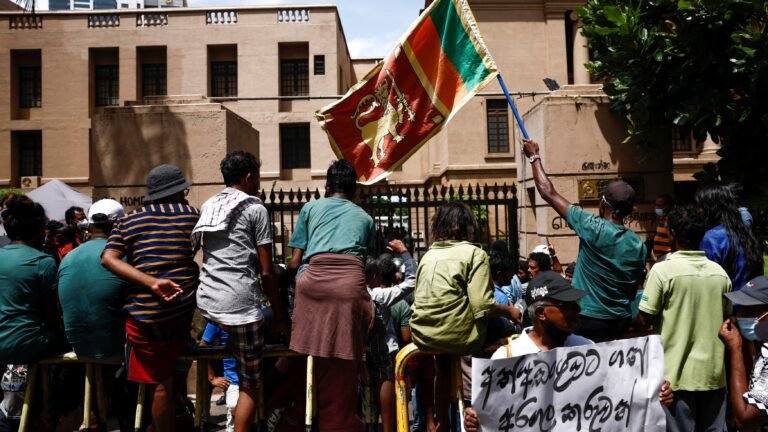
The Fort Magistrate Court issued an order barring an agitation organised by the protesters of the GalleFace Ground today (04), based on a request made by the Officer in Charge of the Fort Police Station.

Accordingly, the order was issued against Rathindu Senaratne (RATTA), Nimesha Devmini, Dinomi Devsindu, Sheshani Jayawardena, Malcolm Nicholas, Dinesh Fernando and a number of other activists.

The order bars the protesters from entering or blocking from the NSA Roundabout to the Temple Road and the Janadhipathi Mawatha, from the Ceramic Junction to the York Street and the Lady Bastian Mawatha, and the Mudalige Mawatha, the Hospital Street, the Banku Mawatha, the Barron Jayathilake Mawatha, the Chatham Street and the Canal Road.

The order also bars the holding of agitations interrupting the above roads, the people walking on them, the vehicles driving on them and the pavements.

MIAP

Handing over of medical supplies to Suwaseriya Foundation

0

High Commissioner Gopal Baglay handed over 3.3 tons of essential medical supplies donated by Government of India for the 1990 Suwaseriya Ambulance Service to the Chairman of Suwaseriya Foundation Mr. Duminda Rathnayaka in the gracious presence of Dr. Harsha de Silva, Member of Parliament and Sohan de Silva, CEO of Suwaseriya Foundation in Colombo on 3 June 2022.

  1. External Affairs Minister Dr. S. Jaishankar was apprised of the looming shortage of medical supplies faced by the Foundation during his visit to the Suwaseriya Headquarters in Colombo in March 2022. Responding to the urgent requirement, Indian Naval Ship (INS) Gharial was specially deployed for ensuring expeditious delivery of medical supplies to Sri Lanka. In addition to Suwaseriya Foundation, medical supplies for General Hospital Hambantota, Teaching Hospital, Peradeniya and Teaching Hospital, Jaffna were also carried onboard INS Gharial.
  2. It may be recalled that 1990 emergency ambulance service, spread across all the 25 Districts of Sri Lanka, is a shining example of India’s people-centric and demand-driven development cooperation partnership with Sri Lanka. The ambulance service was realized through a grant assistance of around USD 22 million by Government of India. The service proves to be immense value to the people of Sri Lanka and plays an instrumental role in saving precious lives.
  3. More than 25 tons of drugs and medical supplies which were donated by the Government and people of India during the last two months are valued at close to SLR 370 million. This is in addition to economic assistance of around USD 3.5 billion and supply of other humanitarian supplies such as rice, milk powder, kerosene etc.

Browns to invest Rs. 15.3 b to set up country’s most modern, largest textiles plant

0

The Fabric Park in Punnakuda, Batticaloa will strengthen import substitutes for the apparel industry and save US$ 500 million annually for Sri Lanka, Board of Investment announced adding that, Browns Group is investing Rs. 15.3 billion to put up the country’s most modern and the largest textiles plant in the Kurunegala District.

The Board of Investment (BOI) agreement to this effect was signed recently between Brown and Company PLC Group CEO T. Sanakan and BOI Director General Renuka Weerakone.

Sanakan, along with new Project Division Heads Dulip Samaraweera and Charitha Jayasingha has taken the initiative to save extensive outflow foreign exchange on the import of much needed fabrics for the apparel manufacturing industry for exports.

The Project is driven with the expertise of Prithiv Dorai and Kenneth Wijesuriya, who have a vast knowledge in textile manufacturing industry.

Currently Sri Lanka’s apparel and textile industry is the leading income generator in foreign exchange amounting to $ 5 billion dollars of which almost $ 3 billion is spent annually on import of raw materials.

Brown and Company said the project will be established in Mahakandura, bringing in employment to approximately 800 persons in the Kurunegala District.

The plant will embrace the green concept in textile manufacturing with modern state of art machinery with very latest in technology.

Sanakan, along with new Project Division Heads Dulip Samaraweera and Charitha Jayasingha has taken the initiative to save extensive outflow foreign exchange on the import of much needed fabrics for the apparel manufacturing industry for exports.

The Project is driven with the expertise of Prithiv Dorai and Kenneth Wijesuriya, who have a vast knowledge in textile manufacturing industry.

Currently Sri Lanka’s apparel and textile industry is the leading income generator in foreign exchange amounting to $ 5 billion dollars of which almost $ 3 billion is spent annually on import of raw materials.

Brown and Company said the project will be established in Mahakandura, bringing in employment to approximately 800 persons in the Kurunegala District. The plant will embrace the green concept in textile manufacturing with modern state of art machinery with very latest in technology.

Sri Lanka, which is a county that has garnered immense acclaim and a strong reputation worldwide for manufacturing high-quality apparel trusted by the iconic global fashion brands, annually imports textile raw materials used in the apparel industry worth US $6 billion from different countries around the globe.

Taking this into account, the attention of the Board of Investment (BOI) was drawn to set up the Textile Park in Punnakuda, Batticaloa with the intention of manufacturing textile raw materials locally.

The Park spread over a 255-acre land is equipped with all facilities and the potential to establish eight to ten large-scale factory complexes. Furthermore, the Textile Park can be named the largest development project being undertaken in the Eastern Province and will provide 5,000 job opportunities.

In addition, the Government is to spend a sum of Rs. 5.5 billion on the development of infrastructure facilities in the project which will eventually boost infrastructure facilities in the area, the BOI said.

Colombo Port gets WB/S&P rank as most efficient port in South Asia

0

The Port of Colombo has been ranked as the most efficient port in South Asia and the Indian Sub-Continent, third in the Indian Ocean rim and 22nd among 370 ports globally.

It has gained this rank in the second edition of the Global Container Port Performance Index (CPPI) 2021, ranking developed by the World Bank and S&P Global Market Intelligence and Financial Services.

The Port of Colombo recorded an all-time high throughput of 7.25 million TEUs in 2021 and continues its growth story, recording a year-on-year growth of 2% for the first five months of 2022 ending in May.

The present terminals in the Port offer almost 4,500 m of quay with depths ranging from 12-18 m, are served by 47 Ship-To-Shore Cranes and over 130Ha of yard space. The SLPA, in addition to its role as Regulator and Landlord, also holds a 15% equity stake in the two private terminals, CICT and SAGT.

The authors of the report said that “despite the centrality of the port to global value chains, one of the major challenges to stimulating improvement has been the lack of a reliable, consistent and comparable basis on which to compare operational performance across different port.

This technical report, which represents the second edition of the Container Port Performance Index (CPPI), has been produced by the Transport Global Practice of the World Bank in collaboration with the Maritime, Trade and Supply Chain division of S&P Global Market Intelligence”.

Sri Lanka Ports Authority (SLPA) Chairman Dr. Prasantha Jayamanna, “The World Bank/S&P Administrative (subjective/expert) and Statistical rankings of Colombo among the top 7% of the ports in the world and the best in South Asia, is a testament to the Port’s position as the primary transhipment hub in South Asia.”

H said “In addition to the valuable contribution made by JCT, the ranking acknowledges the significant role played by our partner terminals, Colombo International Container Terminal (CICT) and South Asia Gateway Terminals (SAGT), who together have made the port what it is today.”

Dr. Jayamanna went on to say that: “Given SLPA’s role as Regulator and Facilitator of port development of Sri Lanka, it is important to record that the Port of Colombo will continue to develop ahead of projected demand.

The , construction has already begun on two new deep water terminals, the East Container Terminal (ECT) by the SLPA and the West Container Terminal (WCT), by a consortium led by Adani Ports and including John Keells Holdings. These developments will progressively add over 7 million TEU of throughput capacity over the next 2-5 years.”

Also commenting on the CPPI ranking, CICT Chief Executive Officer Jack Huang, a member of the China Merchant Port Holdings Group, said: “As the first and currently only deep-water terminal in South Asia capable of handling the largest container ships in service, we are extremely pleased to have played a major role in achieving this ranking by the Port of Colombo.”

“Romesh David, the Chief Executive Officer of SAGT, a consortium led by John Keells Holdings and the AP Moller Maersk Group said: “SAGT has played a catalysing role in launching and contributing to maintain Colombo’s global standing as the preeminent transhipment hub in the region.”

India’s Adani Group wind power projects in Sri Lanka 

0

Indian companies have bagged multiple renewable energy projects in economically battered Sri Lanka at favourable terms ignoring local developers pushing the island nation on the wall taking advantage of man made economic crisis, several energy experts claimed. . 

The government  of India has offered US$ 3.5 billion worth of credit lines to Sri Lanka to help the island country navigate through the economic peril it faces.

In the wake of the present social political and economic crisis  Indian power sector giant Adani Group is  looking to expand its  footprint in Sri Lanka, either through  Indian government intervention or direct negotiations with the Sri Lankan government,energy experts alleged.  

Adani Group, one of the largest renewable energy generators in India, recently signed a memorandum of understanding to develop 500 megawatts of renewable energy projects  in Mannar and Pooneryn provinces. The group is expected to invest $500 million to set up these projects.

There was  no official announcement or statement yet on the agreement to jointly execute renewable power projects in Mannar, on Sri Lanka’s north-western coast, and Pooneryn, located just south of Jaffna Peninsula.

 Both projects are in the Northern Province, where New Delhi objected to a Chinese energy project last year, citing proximity to the Tamil Nadu coast.  

The agreement was inked on Friday, the same day that the National Thermal Power Corporation (NTPC) of India and the Ceylon Electricity Board (CEB) agreed to set up a 100 MW solar power project in Sampur, in the eastern Trincomalee district.

The development comes months after Adani Group chairman Gautam Adani visited Sri Lanka and held talks with President Gotabaya Rajapaksa, on possible investments in the island nation. 

Sri Lanka has a daily peak demand of over 2000 MW, and is currently experiencing a severe fuel and power shortage, resulting in right hour-long power cuts across the country that citizens’ groups have bee Kanchana Wijesekera s n protesting.

 Front line opposition politicians and energy experts accused New Delhi of resorting to “diplomatic blackmail” by tying emergency financial support extended to Colombo, to strategic projects and “several maritime security arrangements”, to counter China’s “naval expansion”.

“The Reserve Bank of India has USD 631 billion in reserves. Sri Lanka is asking for one billion. It was press-ganged to sign Sampur and other projectsThis was diplomatic blackmail. India has 74 days of oil reserves in stock, but is finding it so difficult to help a “friend and neighbour” in difficulty without making it cringe, crawl, and concede its national security interests and neutrality in the name of India’s own “strategic calculations”,they added

Undoing marketing: Why we need to embrace responsible marketing

0

By Thanzyl Thajudeen

Marketing – directly or indirectly – is undoubtedly responsible for creating both favorable and unfavorable conditions we face today either at a macro or micro level, and unfortunately, it’s more towards the latter part. It has certainly aided or contributed to creating various unnecessary needs and wants, disruptive behaviors and habits, and a diminishing concern or care for self and those around including the environment. Marketers have often failed to take responsibility towards societal and humane values when developing their strategy or activity, and have simply surrendered to their own ego, pride and master. 

The ‘undoing’ of all these is yet another whole different market, under the umbrella of a new sustainable economy, and this too is done not because of the guilt feeling but rather another approach to sustain or get a piece of the pie, or feel good in fulfilling that void, or to show others that they really mean it by dressing it up with terms like sustainability, inclusivity, and value creation. This great concern in industry, societies and economies are similar to that of the climate change and its challenges we are facing. Doing less harm or mitigating them simply isn’t enough. It’s just not about sustainable business practices or minimizing the limited resources the planet holds, it’s more about unpolluting the mindsets of the people who have long been victims of irresponsible marketing tactics. 

For those narrow-minded who say that marketing cannot be blamed for, really doesn’t know the meaning of what marketing is. It’s the entire process of stakeholder value creation and undoubtedly, marketers are in a better position than any others in an organization to gauge and evaluate such, as they interact with numerous internal and external stakeholders day in and day out. 

Marketing has long been criticized for provoking and creating disruptions, delusions and deceptions just so that they could exploit and make immoral profits, and the aftermath and consequences of such is seen widespread. On the contrary however there are those brands that are more humane in nature, and their idea of making sustainable and meaningful profits whilst taking responsible marketing as a necessity have paid off with stronger and deeper relationships not just with their customers who they put at the center of everything they do, but with all stakeholders. It all begins with the conscience within the marketing mind and understanding that every plan or action will either have a positive or negative impact, of which the latter is often unseen or ignored. Marketers should adhere to responsible practices.

Responsible innovation has a great role to play in doing such too. Let’s forget about the comfort zones that many marketers are in, lost into their own paradigm and a know-it-all attitude that often suppress ideas and being aversive to change. This is not just for marketers but for all entrepreneurs as well. The world needs responsible innovation as opposed to disruptive innovation which though it has its ups, has resulted in taking away our abilities, knowledge and the very nature of our being. Don’t pursue innovations that makes humans more reliant and dependent on the technology. These are creating empty minds today, and worse it’s also altering our attitudes and behaviors of the human values we’ve been sustaining for generations.

Spending a great amount of time and effort in hearing out to your stakeholders, not just consumers, is something any marketer cannot ignore. Empathy and emotional intelligence have never been more important. They should mindfully engage in deeper conversations and establish platforms to exchange ideas, feedback and suggestions with a mindset of goodness which is well reflected in one’s character and conduct. It’s also important to surround yourself, both immediate and distance, with those who share a similar passion and belief of having a moral obligation to undo the damages caused to the mindsets and perceptions of people, whether through the products and services you offer, the media and messaging you use, and the entire business infrastructure and value chain you’ve built. Whether you’re in a B2B or B2C setting, it’s all about human-to-human communication today where technology is simply the enabler.

Stress is a major phenomenon among today’s generation, fueled by the various complex issues that are only rising further and further – and yes, marketing, media, technology and entertainment has contributed to this greatly. Numerous research has found that Generation Z has the highest stress and anxiety than any other groups, followed by Millennials and marketers need to understand what this means when it comes to their customers and employees and be able to connect the dots with their behavior and emotions. Unfortunately, this crucial aspect is often ignored or not given much attention to. 

Marketers are also often lost into the competition mindset and this type of thinking is so outdated today. This has only resulted in increased ego. It’s a shared economy everywhere, and marketers should find the ways and means in how best to share their resources and capabilities with others in their ecosystem and achieve a more sustainable value driven proposition in their pursuit to realize the results of their responsible marketing activities. 

Marketers can, or should, play a key role in undoing and restoring all that is lost or stolen from our inner-human and societal values and not turn a deaf ear to everything that’s happening today. Acquire more self-awareness on being responsible, instill such values in your mind and all those who you lead, pursue on initiatives and decisions that will only improve people’s hearts and minds, and leave behind a legacy of goodness. With many hopes, I conclude this message to all my fellow marketers and entrepreneurs. 

(By Thanzyl Thajudeen MCIM Chartered Marketer MSLIM MCPM, a professional marketing and design consultant)

Sapugaskanda refinery faces greater risk in restarting without crude oil  

0

After 70 days of closure, Sapugaskanda Oil Refinery was brought back online on Friday (27), the Energy Ministry announced. 

The refinery was closed on March 20th due to the crude oil import crisis, and the Minister of Energy, Kanchana Wijesekara stated that the refinery will resume operations in six days.

Workers at the Sapugaskanda refinery say that there is a greater risk in restarting the refinery if crude oil cannot be ensured throughout.

The crude oil refinery in Sapugaskanda was reactivated after three months, with special crude oil being imported from Siberia for that purpose. However, workers at the refinery held a protest today (2) demanding for continuous crude oil supply to keep the refinery running.

Rangana Wijesinghe, President of the Collective to Protect the Sapugaskanda Refinery said that the Sapugaskanda refinery currently has  refined furnace oil and kerosene in storage tanks, which can be supplied to the Kolonnawa petroleum terminal, while  diesel and petrol can also be supplied in the coming days.

However, he said that the refinery will have to be closed down again if we new crude oil stocks are not received within 20 days.

Therefore, Wijesinghe pointed out that there is a greater risk when restarting the refinery, as hundreds of thousands of rupees are spent on closing the refinery and reopening it.

Nissos Delos, a Russian Tanker carrying 89,000 metric tons of crude oil which was ordered for emergency purchases on April 25th, has already reached Colombo. 

Refinery workers said that the shipment would allow them to produce 1,000 MT of Kerosene daily, for two weeks.

The Trade Union Confederation for the Protection of Petroleum Resources also engaged in an agitation today (27) demanding that the operations of the refinery be continued without interruptions.

Chandana Prabath Ambavita, the Convener of the Trade Union Confederation for the Protection of Petroleum Resources demanded for the work on the refinery to run continuously, as no refinery anywhere in the world is designed to run intermittently.

“If the refinery operations are halted from time to time, it will not work. That will cause a lot of damage to our refinery. It does more invisible damage than we can see,” he stated.

Meanwhile, Russian media Ria Novosti reported citing the Russian Foreign Ministry that Russia has received an appeal from Sri Lanka for help to overcome the energy crisis, and issues of its provision are under consideration.

Commenting on the appeals to RIA Novosti, the Russian Foreign Ministry indicated that “we can confirm that such appeals were indeed received by the Government of the Russian Federation and the Russian Embassy in Sri Lanka.”

Answering a question about how Colombo will be provided with assistance, the Russian Foreign Ministry noted that “these issues are under consideration, and it is premature to talk about the results of it now.”

SL Palm oil Industrialists urge the govt to lift the ban on palm cultivation

0

Palm Oil Industry Association (POIASL) has urged the Government to repeal the bans and other negative policies in place against industry and to do its part to support the Sri Lankan economy, and the Government of Sri Lanka in its medium to long-term economic objectives. 

In a statement POISAL called for liberalisation of the palm oil industry which it emphasised will help to strengthen smallholder investment in oil palm cultivation, which will create massive opportunities for economic emancipation and rural development through oil palm cultivation by smallholders. 

“Allowing our local industry to flourish will help us reduce our dependence on foreign exchange for the import edible oils, while also helping to strengthen Sri Lanka’s food security,” it said. 

It also said Sri Lanka’s palm oil industry is a relatively small one, but it is in a position to have a larger positive impact on the economic future.

 Palm oil is one of the most productive and lucrative cash crops available anywhere in the world, and the industry has helped uplift millions of people out of poverty worldwide.

 In fact, palm oil is the most produced, consumed and traded edible oil in the world, accounting for over 33% of the global edible oil market, with other popular varieties such as sunflower oil, soybean oil and coconut oil all accounting for a significantly smaller portion of the market.

Palm Oil typically supports an economy in two primary ways: by reducing dependence on imported edible oils and by creating new economic opportunities for people. 

Given the unexplored potential of the industry, it may even be possible to make Sri Lanka a net exporter of edible oils in the future. This arises from the high productivity of the palm oil, which is four times as productive as other vegetable oils on a per acre basis.

Furthermore, due to the high levels of productivity and heavy demand for palm oil, plantation workers on oil pam estates presently earn up to twice the amount that workers on tea, coconut and rubber plantations do. 

The industry is also generally eco-friendly and entirely sustainable, particularly in Sri Lanka, where the cultivation occurs only on existing plantation land and not on virgin land.

Palm oil industry has attracted years of negative propaganda and misinformation, particularly in Sri Lanka. Much of it is based on the experiences of certain countries where uncontrolled cultivation has impacted ecosystems. 

However, in Sri Lanka there is no such risk of that happening and furthermore, it has never been experienced during 50 years of oil palm cultivation in Sri Lanka.

The total extent of oil palm cultivation in Sri Lanka is less than 12,000 hectares, entirely on large estates. Compare this with a major producer such as Malaysia with 6,000,000 hectares cultivated, where 40% or more is produced by smallholders. 

This has helped to drive a boom in rural economies across countries like Malaysia and Indonesia, helping to lift countless millions out of poverty and create a bright and prosperous future. 

The POIASL has also established ties with other leading producers of palm oil in the world, and these friendly countries are ready and willing to extend support to Sri Lanka in terms of expertise and technical knowledge to further the industry.

 However, with the present short-sighted and ill-advised bans on palm oil and the cultivation of oil palms, the Association is left unable to maximally contribute towards supporting Sri Lanka at this crucial juncture in its economic history, it added.