Home Blog Page 2282

Government pushes commercial plantations into ruin

0

The Planters’ Association of Ceylon (PA), is demanding authorities take immediate action to prioritise Sri Lanka’s plantation industry which contributes over $ 1.5 billion to Sri Lanka’s export revenue. 

“The Government’s failure to allocate fuel quotas to the Regional Plantation Companies (RPCs), together with continuous power disruptions and uninformed policymaking, is bringing Sri Lanka’s commercial plantations to a standstill.

 Due to the lack of fuel, all leaf and latex transport operations have been severely impacted and there is insufficient fuel to operate standby generators,” the PA said. 

Commenting on the dire situation, PA media spokesperson Dr. Roshan Rajadurai cautioned that the Government’s continuing failure to give any priority whatsoever to the needs of RPCs and the broader industry, together with a series of catastrophic policy blunders had resulted in severe disruptions to production and transport and rapid escalation of production cost of tea by around 30% from the beginning of 2022.

“RPCs will no longer be able to continue operations as usual if real and meaningful solutions are not provided immediately,” emphasised Dr. Rajadurai. 

“Despite our critical contribution to the industry and the Sri Lankan economy, the authorities have failed to understand our value. Instead they have continuously discriminated the RPCs even in the past, as compared with other export industry stakeholders and the rest of the plantation sector.”

“Our sector was severely disrupted even before the current domestic economic crisis by uninformed policy making decisions, including the completely irrational ban on import of essential agriculture inputs. The issues we are seeing now across the economy are directly connected to this unplanned, unscientific, and short-sighted approach to policy,” Rajadurai added. 

“While at long last, the Government has publicly accepted the failure of this policy, the once vocal proponents of such unsound claims are nowhere to be seen although the industry continues to pay the price, despite our repeated warnings and admonitions about the ill effects of such policy.”

While the Government retracted its decision to ban imports of agricultural inputs such as fertiliser, recommended weedicides, fungicides and pesticides, these have not been available since April 2021.  The bureaucratic processes required for the bans to be lifted takes a long time, and have obstructed imports, creating severe shortages. 

Compounding these challenges, the depreciation of the rupee and the global increase in commodity prices have resulted in the price of these essential inputs skyrocketing. For instance, the price of fertiliser used for tea has increased 25-fold from before the ban; from approximately Rs. 30,000 per metric tonne (MT) of urea to Rs. 750,000 per MT and prices are still increasing.

As a result, the cost of production of 1 kg of tea has now risen to nearly Rs. 800. However, at the Colombo Tea Auction, the Net Sale Average (NSA) of high-grown tea was only around Rs. 717, up to end-March.

In addition, the unavailability of inputs will reduce yields and quality in the long run. Despite better weather compared to last year, the industry has seen a decline in tea and rubber crops this year, compared with the corresponding period of last year, as the lack of agricultural inputs such as fertiliser, weedicides and fungicides begin to take effect. 

With tea and rubber being perennial/long-term crops, such adverse effects on yield could be felt throughout the productive life of the plant. Rubber cultivations too have been impacted by fast-spreading diseases such as pesta. In the absence of necessary inputs to arrest their spread the disease has already resulted in a 30-40% crop loss. 

Tea estates operate throughout the 24 hours of the day and require uninterrupted electricity to do so. If, for instance, the withering operation is disrupted/interrupted for a few hours, bacterial contamination takes place, drastically reducing the quality of the tea produced. 

Sri Lanka collaborates with Blue Planet Fund

0

The first Blue Planet Fund (BPF) – Ocean Country Partnership Programme (OCPP) Biodiversity Stakeholder Session was held on 14 March, at the Ministry of Environment introducing the Defra led BPF visit to Sri Lanka while the second meeting of the BPF – OCPP took place on the same day with the Fisheries and Seafood Sector related agencies. The £500 million Blue Planet Fund, financed by the UK Official Development Assistance (ODA) budget, supports developing countries to protect the marine environment and reduce poverty and was developed by the UK government to protect the ocean from plastic pollution, warming sea temperatures and overfishing. This includes UK’s call to protect at least 30% of the global ocean by 2030 and UK’s existing commitments to stopping plastic pollution entering the ocean through the joint UK and Vanuatu-led Commonwealth Clean Ocean Alliance.

One of the Fund’s programmes is the newly designed bilateral technical assistance programme which is based on scoping and needs assessments, ocean partnerships and emergency marine pollution responses. The OCPP aims to deliver marine science technical assistance and the three core themes of marine pollution, biodiversity loss and supporting sustainable seafood and supports countries in strengthening marine science expertise, developing science-based policy and management tools, and educating coastal communities. The OCPP has the ultimate aim of delivering tangible and positive impacts on the livelihoods of coastal communities that depend on healthy marine ecosystems. The OCPPs current partners are Belize, Bangladesh, India, Maldives and the Pacific.

In this regard, the close and active collaboration between the Ministry of Foreign Affairs and the British High Commission in Colombo on several other climate and environment related initiatives resulted in Sri Lanka receiving support under the BPF-OCPP. As part of the OCPP collaboration with Sri Lanka, a delegation comprising of officials from the UK government’s Department for Environment, Food and Rural Affairs (Defra), Centre for Environment, Fisheries and Aquaculture Science (Cefas), Joint Nation Conservation Committee (JNC) and Marine Management Organization (MMO) visited Sri Lanka from 14 – 18 March 2022 and held several meetings, field visits and discussions with local stakeholders. This visit was preceded by a technical visit of Cefas from 28th February to 11th March 2022.

During the first session, the Deputy High Commissioner for the British High Commission in Sri Lanka, Lisa Whanstall thanked those present for their collaboration and stated that she looks forward to future partnerships. She further commended the Government of Sri Lanka for the wide-ranging cooperation and commitments at UNFCCC COP-26. She stated that “…Moving forward the UK is eager to continue supporting Sri Lanka to achieve these targets and to build on our exiting platform of environmental engagements.”The UK government hadspent close to £1million under the Commonwealth Litter Programme (CLiP) to provide assistance in combating marine pollution in 2021.Assistance via CLiP provided laboratory facilities to analyze micro plastics to MEPA, NARA, ITI and the CEA, development of educational packs for primary and secondary schools and developing media packs for mainstream and social media all in local languages, research collaboration, assessment of ghost fishing gear and accumulated waste in ports, providing garbage trapping nets for rivers, etc. The UK delegation expressed their willingness to continue supporting Sri Lanka to help drive transformative action and shift the relationship between people, science and the planet.

The Secretary to the Ministry of Environment, Dr. Anil Jasinghe in his presentation on the OCPP grant and the priorities in the marine biodiversity and marine protected area domain, highlighted  key management issues such as the absence of a wholistic plan for marine spatial planning, identification and designation for EEZ; absence of a clear pathway for 30×30 and commitments related to marine sector in National Biodiversity Strategic Action Plan (NBSAP)/draft National Environment Action Plan (NEAP); offshore spatial planning still very rudimentary; multi use- Multi-stakeholder nature within existing MPAs and the absence of SEA for the use of coastal resources. He further explained that based on the National Environment Policy, the National Environment Action Plan (NEAP) has been developed recently and Conservation and Sustainable Use of Coastal and Marine Resources is one of the main thematic areas identified under the NEAP.

He further stated that among economic activities, tourism and fisheries are the most dependent on the natural resources of the coast and that according to the statistics, coastal and marine fisheries, tourism, industry, maritime transport (ports and shipping), are some of the major economic activities associated with the coastal and marine resources and environment that generate 10 percent of Sri Lanka’s foreign exchange earnings and account for 6.7% of employment.

The second meeting focused on ‘Why sustainable seafood is important’ and how developing nations, such as Sri Lanka are particularly dependent on the ocean while the ocean is facing serious and increasing threats from over-exploitation, pollution, biodiversity loss and climate change.

The Blue Planet fund will aim to provide support that would ensure seafood in Sri Lanka is produced and distributed in ways which support healthy ecosystems, does not over-exploit marine stocks, provides sustainable inclusive and equitable livelihoods and enhance resilience to climate and socioeconomic shocks. The OCPP Programmes will also incorporate cross-cutting themes such as gender and vulnerable groups, climate change, economic shocks, etc.

Deputy British High Commissioner Whanstall stated that the UK is focused on environmental and wildlife conservation as well and that collaborative work is of paramount importance. The Deputy High Commissioner further emphasized that the Glasgow Climate Pact commitments are significant and need to be initiated.

State Minister for Ornamental Fish, Freshwater Fish and Shrimp Farming, Fisheries Harbour Development, Multi-Day Fishing and Fish Exports Kanchana Wijesekara thanked the UK government, the Blue Planet Fund and the UK-High Commission for their offer to collaborate. The State Minister stated that over 80% of Sri Lanka’s fish stocks have depleted with a significant effect on tourism. He emphasized on post-harvest losses(40%);insufficient availability of technical advice, need for a stronger legal framework and monitoring/management of marine resources are the main areas of concern. The State Minister further requested for assistance to develop aquaculture and sustainable fishing and added that the State Ministry will give its fullest support to the relevant agencies for the collaboration under BPF – OCPP.

During the Wrap Up session organized with the participation of all relevant stakeholders, the UK team offered to continue building on existing marine pollution, marine biodiversity and sustainable seafood related activities focusing on Outreach and Education, Science, and Governance and Policy under each theme. Other key highlights on potential areas for collaboration included assistance for Marine Spatial Planning, assessing marine natural capital, support for effective management of Marine Protected Areas in line with 30 x 30 initiative that Sri Lanka is already a part of, support for enhancing capabilities of Sri Lanka for maritime disaster preparedness, support to strengthen sustainable seafood production and trade and support to reduce IUU fishing in national waters.

Ministry of Foreign Affairs

Colombo

22 April, 2022  

IMF supports Sri Lanka’s efforts to overcome current economic crisis

0

IMF Team Statement on Sri Lanka

Washington, DC: During the 2022 IMF and World Bank Spring Meetings in Washington, D.C., IMF Managing Director Kristalina Georgieva and other senior members of IMF management met with a Sri Lankan delegation, led by Finance Minister Ali Sabry and Central Bank of Sri Lanka Governor Nandalal Weerasinghe, and discussed policy actions to address economic challenges. The IMF team for Sri Lanka held initial technical discussions on an IMF-supported program with the delegation. Masahiro Nozaki, mission chief for Sri Lanka, issued the following statement today:

“During April 18–22, the Sri Lankan delegation and the IMF team had fruitful technical discussions on the authorities’ request for an IMF-supported program. The discussions covered recent economic and financial developments in Sri Lanka, the need for implementing a credible and coherent strategy to restore macroeconomic stability, and the importance of stronger social safety nets to mitigate the adverse impact of the current economic crisis on the poor and vulnerable. The IMF team welcomed the authorities’ plan to engage in a collaborative dialogue with their creditors.

“Going forward, the IMF team will support Sri Lanka’s efforts to overcome the current economic crisis by working closely with the authorities on their economic program, and by engaging with all other stakeholders in support of a timely resolution of the crisis.”

White flags raised in front of Temple Trees in remembrance of Rambukkana shooting victim (VIDEO)

0

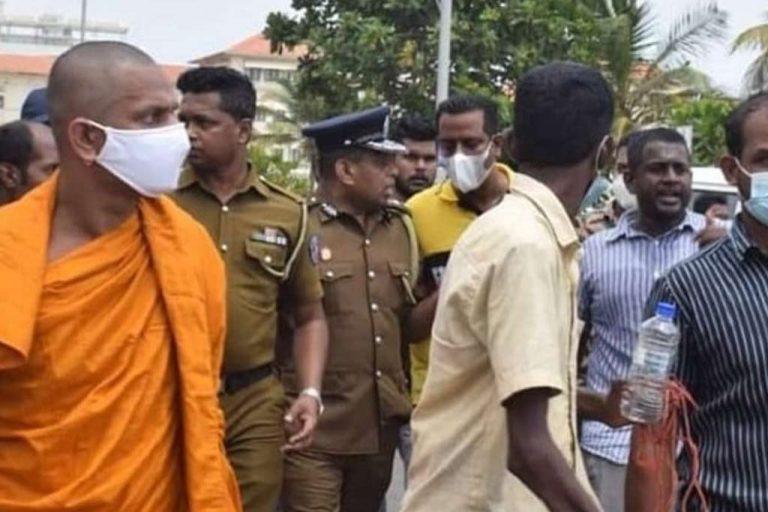
A march in commemoration of Chaminda Lakshan, the victim of Police shooting at Rambukkana two days ago, was organised from the Galleface Ground to to Kollupitiya Temple Trees premises today (23).

Protest banners, wreaths and white flags carrying red blots resembling blood were exhibited in front of Temple Trees and there was no hindrance to the arrangements from either the Police or anyone else.

MIAP

A march commemorating victim of Rambukkana shooting (PHOTOS)

0

The final rites of Chaminda Lakshan, the person killed in the shooting at a protest in Rambukkana, was held in Karangasthenna, Hiriwadunna today (23).

Meanwhile, a march commemorating the victim of the shooting and protesting against state-sponsored murder has been organised from the Galleface Ground to Kollupitiya.

MIAP

Click Here to view full photos

Wayamba University students join protest at Galleface (PHOTOS)

0

Students of the Wayamba University of Sri Lanka today (23) joined the public protest at the Galleface.

These students also staged a protest.

Click Here to view full photos.

Government already ridiculed before international eye (VIDEO)

0

The country has driven itself into a situation where there is no government and the government has been divided into two factions where one group wants the President to stay in power and the other wants the Prime Minister to stay in power, said Samagi Jana Balawegaya (SJB) MP Lakshman Kiriella said speaking to a briefing held in the Opposition Leader’s Office today (23).

Accordingly, the government, despite its attempts to convince otherwise, has already been ridiculed before the international eye, the MP pointed out, questioning which international organisation would help a regime that is not politically stable.

Parliament has no fiscal power either, he added.

MIAP

Tea exports decline. 2.64 million kg drop in March

0

Sri Lanka’s tea exports in March 2022 were 23.17 million kilograms, indicating a decline of 2.64 million kilograms compared to March 2021, brokerage firms revealed.

Sri Lanka exported 63.7 million kilograms of tea during the first quarter of 2022 and it indicates a drop of a 6.19 million kilograms compared to the first quarter last year, they pointed out.

The government’s move to ban the import of chemical feriliser also struck hard on the Tea Industry last year.

MIAP

Terror at Rambukkana: SSP Keerthiratne to be arrested next week..

0

Chances are very high that SSP in charge of the Kegalle Police Division K.B. Keerthiratne will be arrested over the shooting at a protest held in Rambukkana on April 19 killing one, sources said.

Probe by the Criminal Investigation Department (CID) reveals that the heat of the Rambukkana protest could have been tamed down in a matter of another half an hour had SSP Keerthiratne not intervened in the matter, sources added.

Below is the summary of the probe to date:

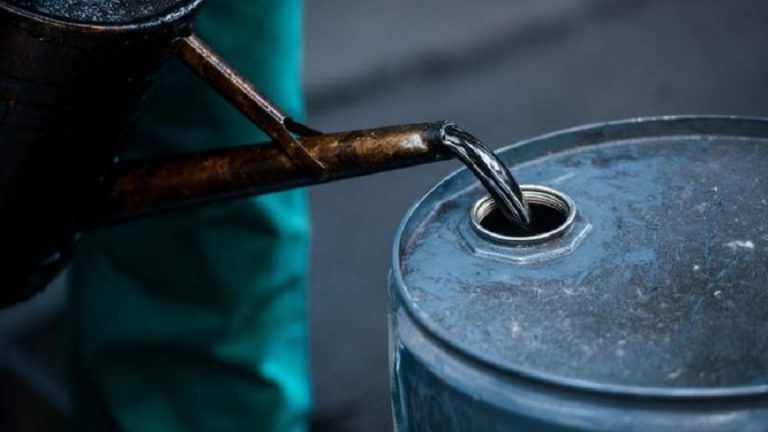
People have been queuing themselves at the fuel station in Rambukkana since April 17 to purchase fuel but have not received it. A day after, fuel prices soared to be in effect from the midnight of April 18 and rumours had been spreading across the area that a fuel bowser that was set to arrive at the station on April 19 had been dispatched prior to the fuel price surge and hidden.

Following the rumour, the residents had staged a protest demanding that the fuel should be issued at the old price instead of the revised price. The Assistant Superintendent of Police (ASP) in charge of the area had arrived at the scene and discussed the matter with the protesters saying that the issue regarding fuel prices should be resolved with the Ceylon Petroleum Corporation (CEYPETCO) and that an action can be taken upon the CEYPETCO’s response to the matter.

The ASP had briefed the matter to SSP Keethiratne on the spot and informed him that the situation can be controlled without his presence.

However, Keerthiratne had arrived at the scene in a motorcycle with a helmet on and his actions had stemmed an intensification at the scene, as the SSP had ordered the Police to launch a tear gas attack on the protesters and assault them with batons.

The protesters, furious, had retaliated by pelting stones at the Police. Being hit in a hand, SSP Keerthiratne had gone on a rampage and ordered the Police to open fire, according to sources.

The investigative unit had informed the Inspector General of Police (IGP) and the President of all this and both of them, who did not approve of the event at all, had stated that legal actions should be taken against the SSP.

Accordingly, these information will be informed to the Court and chances are very high that SSP Keethiratne will be arrested next week, the sources further claimed.

Previous reports:

http://128.199.126.103/archives/9547/rambukkana-ssp-keerthiratne-admits-in-court-that-he-ordered-to-open-fire/
http://128.199.126.103/archives/9488/there-is-sufficient-evidence-to-arrest-ssp-keerthiratne-cid/
http://128.199.126.103/archives/9313/terror-at-rambukkana-ssp-keerthiratne-ordered-to-open-fire-following-dilum-amunugamas-approval/

MIAP

Chinese Ambassador Qi Zhenhong meets with Independent MP group

0

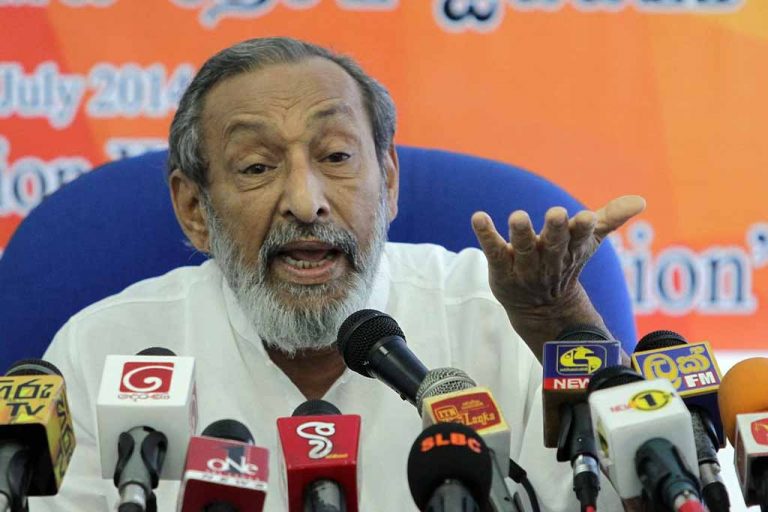
The Sri Lankan MP group led by former Ministers Wimal Weerawansa, Udaya Gammanpila and Vasudewa Nanayakkara who claimed themselves to have left the government to act independently in Parliament have met with Chinese Ambassador to Sri Lanka Qi Zhenhong yesterday (22).

The group has exchanged opinions on the current situation in the country while seeking China’s continuous support to the island nation, the Embassy of China said in a statement.

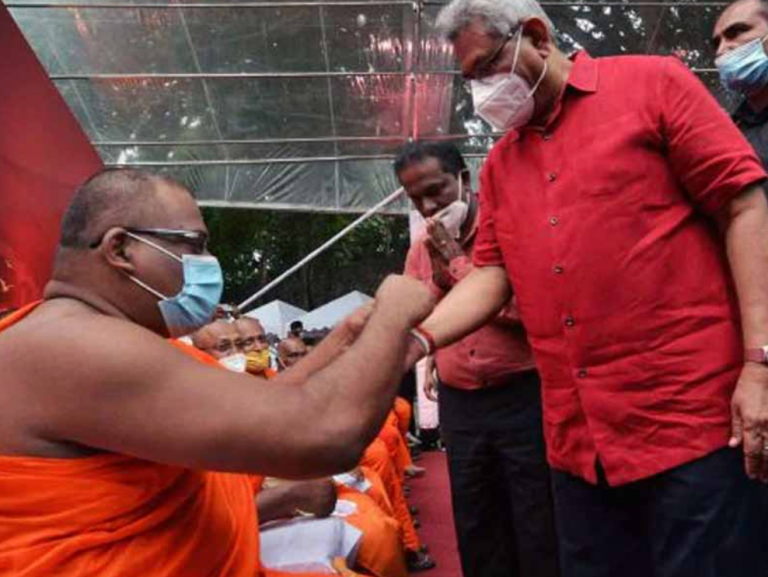
MPs Anura Priyadarshana Yapa, Udaya Gammanpila, Vasudewa Nanayakkara, Athuraliye Rathana Thero, Dayasiri Jayasekara and several others joined the event.

MIAP