
March 30, Colombo (LNW): Sri Lanka has expressed appreciation for India’s assistance in stabilising its fuel supplies during a period marked by global uncertainty and supply chain disruptions.
Speaking in a recent interview, Deputy Minister of Foreign Affairs Arun Hemachandra noted that the support arrived at a crucial juncture, as ongoing tensions in West Asia continue to disrupt international energy markets. He emphasised that the swift response helped ease mounting pressure on the country’s essential fuel requirements.
According to the Deputy Minister, the episode highlights the close relationship between the two nations and their ability to act decisively when challenges arise. He pointed out that such cooperation goes beyond immediate relief, reflecting a broader commitment to regional stability and mutual support.
President Anura Kumara Dissanayake also acknowledged the assistance, noting that recent discussions with Indian Prime Minister Narendra Modi helped facilitate urgent fuel deliveries to Sri Lanka. The arrival of a significant consignment in Colombo was described as a critical step in maintaining continuity in energy distribution at a time of heightened uncertainty.
Officials further underlined that India’s role carries wider significance for the region, particularly as countries grapple with external shocks affecting key sectors. The government views this cooperation as an example of how neighbouring states can work together to address shared challenges effectively.
Hemachandra added that the situation has reinforced the importance of trust, responsiveness, and coordinated action among regional partners. He stressed that frameworks promoting collective responsibility are increasingly vital in navigating volatile global conditions.
Looking ahead, Sri Lanka aims to strengthen its long-term energy security while continuing to engage constructively with international partners. Authorities maintain that ensuring a stable and reliable energy supply remains a top priority, especially as global market conditions remain unpredictable.
Sri Lanka Praises India’s Timely Fuel Support Amid Global Supply Strain
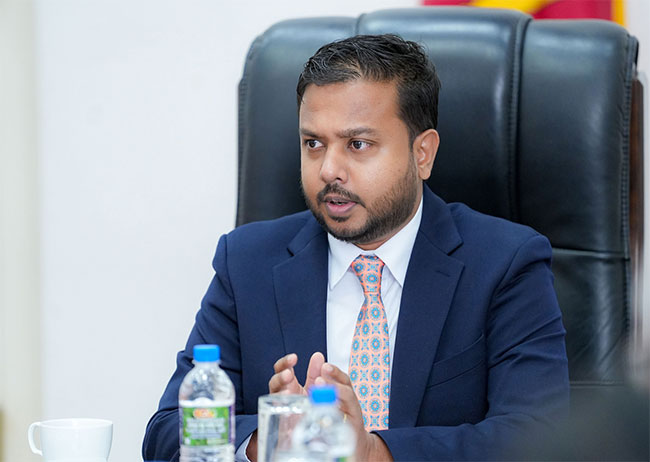
Alleged Crime Figure ‘Midigama Chuti’ to Be Repatriated from Oman

March 30, Colombo (LNW): Sri Lankan authorities are set to bring back Prabhath Madusanka, widely known by the alias ‘Midigama Chuti’, following his arrest overseas in connection with a string of serious criminal allegations.
Madusanka, believed to have links to an organised underworld network, was detained in Oman last year after international law enforcement agencies flagged him under a red notice. His arrest was seen as a significant breakthrough in efforts to track down suspects who have fled the country to evade justice.
Officials confirmed that a team of officers from the Criminal Investigation Department (CID) travelled to Oman to take custody of the suspect and oversee his return. He is expected to arrive in Sri Lanka later today under tight security.
Investigators say Madusanka is wanted in connection with several high-profile offences, and his return is likely to accelerate ongoing probes into organised criminal activity. Authorities have indicated that further arrests could follow as inquiries expand based on information obtained during questioning.
Law enforcement agencies have increasingly relied on international cooperation in recent years to apprehend fugitives operating beyond Sri Lanka’s borders, signalling a more coordinated approach to tackling transnational crime.
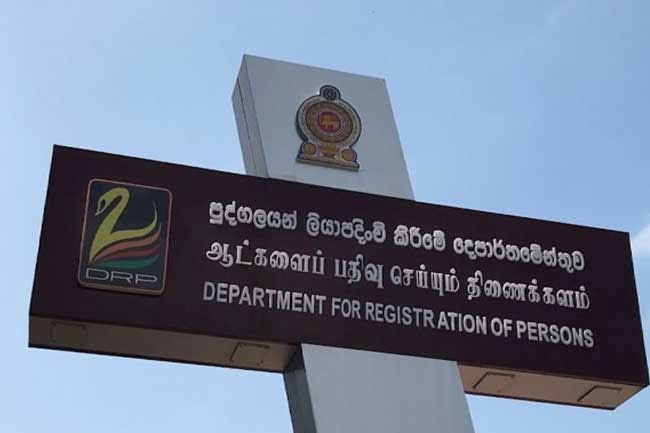
NIC Services Gradually Resume as System Restoration Continues
By: Isuru Parakrama
March 30, Colombo (LNW): Efforts are still underway to restore the computer network at the Department for Registration of Persons, with officials working to bring services back to full capacity in the coming days.
In the interim, the department has arranged a special one-day service on 30 March at its head office in Battaramulla as well as at provincial branches. This provision is specifically aimed at applicants who were unable to collect their National Identity Cards during earlier one-day service dates affected by the technical disruption.
Applicants attending the special session have been advised to carry all required documentation to avoid further delays, as authorities seek to clear the backlog that has built up over the past week.
The department confirmed that its standard one-day NIC issuance service will recommence from 31 March at both the main office and regional centres. However, some functions—such as identity verification for institutions and document translation into English—will continue on a restricted basis until systems are fully stabilised.
Officials added that while limited services are being maintained, certain সরকারি and private sector organisations may need to rely on temporary alternatives during this period.
Full operations across all offices are expected to resume from 6 April, once technical repairs and system checks have been completed. Authorities expressed confidence that services will return to normal without further interruption once the restoration process is finalised.
Colonial Legacy Meets Modern Demand: Colombo Fort’s Rail Transformation

By: Staff Writer
March 30, Colombo (LNW): The historic Colombo Fort Railway Station inspired by Manchester Victoria station is undergoing its most ambitious transformation since its construction in 1917 under British colonial rule. More than a century later, the station stands at the center of a long-overdue debate: can Sri Lanka modernize its railway system without erasing its colonial heritage?
Sri Lanka’s railway network itself is a legacy of the British Empire, initially developed in the 19th century to transport tea, rubber, and coffee from plantations to ports. While the system laid the foundation for national connectivity, critics argue that its design prioritized colonial economic extraction rather than long-term domestic mobility. Today, much of that infrastructure remains in use aged, strained, and increasingly inadequate.
The current redevelopment of Colombo Fort Station, funded by the Asian Development Bank, represents a significant shift. With an investment exceeding Rs 2.16 billion, the project aims to blend preservation with progress—retaining colonial architectural elements while introducing modern amenities and technologies.
Transport authorities describe the project as the first comprehensive modernization effort since the station’s inception. Plans include improved passenger facilities, digital ticketing systems, and LTE-based communication networks to enhance operational efficiency. However, these upgrades come amid persistent concerns about delays, transparency, and accountability.
The construction contract—awarded to MAGA Engineering (Pvt) Ltd covers new passenger bridges, ticket counters, and a multi-storey service building. While the company has a strong track record in infrastructure projects, its repeated selection for major railway contracts has raised questions among industry observers about competitive fairness.
Further complicating matters, some urgent track repairs in late 2025 were carried out internally by the Railway Department, bypassing external contractors. This has sparked debate about whether institutional capacity is being underutilized or whether procurement processes are being selectively applied.
In January 2026, Transport Minister Bimal Rathnayake publicly warned that corruption linked to the project would not go unpunished. His statement reflects growing public scrutiny over large-scale infrastructure spending, especially in a country grappling with economic recovery.
Despite these concerns, the redevelopment underscores an undeniable reality: Sri Lanka’s railway system must evolve. With increasing urban congestion and rising commuter demand, the need for efficient, accessible rail transport has never been greater.
The challenge lies in striking a balance honoring a colonial past while building a system fit for the future.
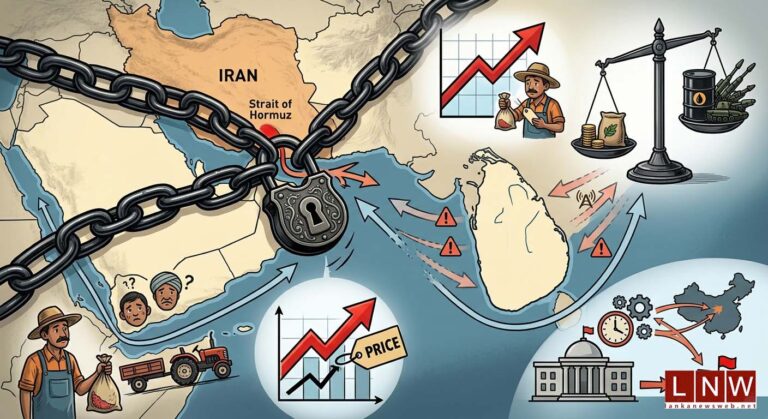
Hormuz Blockade Sparks Sri Lanka Fertilizer Supply Emergency
By: Staff Writer
March 30, Colombo (LNW): Sri Lanka is confronting a rapidly escalating agricultural crisis as global geopolitical tensions disrupt vital fertilizer supply chains. The fallout from the US–Israeli conflict with Iran, coupled with the effective closure of the Strait of Hormuz, has triggered severe logistical bottlenecks and price shocks that threaten the country’s food production stability.
According to UN Trade and Development, Sri Lanka ranks among the most vulnerable nations to fertilizer supply disruptions caused by the crisis. Approximately 36 percent of its fertilizer imports transit through the Strait of Hormuz, placing it behind only Sudan and ahead of Australia in exposure risk. With shipping routes destabilized, access to essential inputs like urea has become increasingly uncertain.
The government has attempted to cushion the blow through emergency planning. The Ministry of Agriculture is exploring alternative sourcing, including importing urea from China to bypass Middle Eastern shipping lanes. Historically, Sri Lanka has resorted to similar measures, importing around 25,000 metric tonnes of urea during supply crunches. However, current global conditions are far more volatile.
Prices have surged dramatically. Global urea rates climbed from approximately $470 per tonne to over $584 in early March 2026, with spikes reaching as high as $720 in some markets. Locally, this translates into a steep increase in retail costs. A standard 50kg bag of urea, once priced at Rs. 9,200, could now rise to between Rs. 15,000 and Rs. 20,000, placing immense strain on farmers.
Despite official assurances that fertilizer stocks are sufficient for the ongoing Yala season, skepticism is growing. The National Agrarian Union has challenged government claims, citing deteriorating storage conditions and delays in procurement for the crucial Maha season. Union President Anuradha Tennakoon has openly questioned the credibility of statements made by Deputy Agriculture Minister Namal Karunarathne, who insisted that supplies would remain stable.
The concerns extend beyond mere availability. Storage inefficiencies and unreliable procurement systems are compounding the crisis. The Ceylon Chamber of Commerce has urged authorities to prioritize fertilizer imports urgently, warning against a repeat of the 2021 agricultural collapse that devastated domestic production.
Complicating matters further, shipping insurance premiums in the region have skyrocketed by over 1,000 percent, significantly inflating import costs. As highlighted by geopolitical analyst A.D. Magedaragamage, these additional expenses could add millions to each shipment, intensifying pressure on already strained national finances.
International organizations, including the Food and Agriculture Organization and World Food Programme, are closely monitoring developments. The FAO has already called for substantial financial assistance to support vulnerable farming communities facing renewed shocks.
Sri Lanka’s near-total dependence on imported fertilizers leaves it acutely exposed to global disruptions. Without swift and coordinated intervention, the current crisis risks cascading into a broader agricultural downturn with long-term implications for national food security.
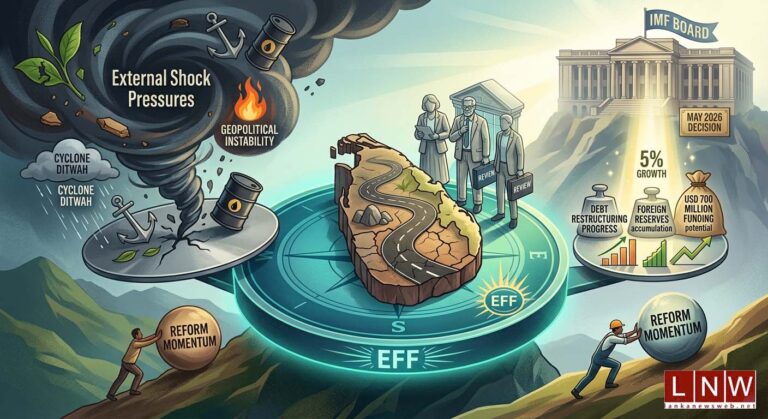
IMF Review Tests Sri Lanka Stability amid External Shock Pressures
By: Staff Writer
March 30, Colombo (LNW): Sri Lanka’s fragile economic recovery is under renewed scrutiny as a mission from the International Monetary Fund (IMF) conducts a crucial review of the country’s Extended Fund Facility (EFF) program between March 26 and April 9, 2026. The outcome could determine whether the island nation secures approximately US$700 million in much-needed funding, even as external and domestic pressures intensify.
The IMF delegation, led by Evan Papageorgiou, is combining the fifth and sixth program reviews, focusing on fiscal policy, monetary stability, and financial sector resilience. A key concern is the government’s response to Cyclone Ditwah, which has placed unexpected strain on public finances, alongside the broader economic fallout from the ongoing Middle East conflict.
The geopolitical crisis is already affecting Sri Lanka’s core economic lifelines tourism, trade, and remittances. With a significant portion of remittance inflows originating from Gulf countries, prolonged instability in the region could weaken foreign exchange earnings and undermine reserve accumulation.
Despite these challenges, the IMF has acknowledged notable progress. According to Julie Kozack, Sri Lanka achieved around 5 percent economic growth in 2025, while inflation fell sharply to 1.6 percent in early 2026. Debt restructuring is also described as “nearly complete,” and foreign reserves have been gradually rebuilt.
Program performance has largely been rated “strong,” with key benchmarks met in 2025. These include cost-recovery energy pricing, automatic tariff adjustments, and most quantitative fiscal targets, with only minor deviations such as expenditure arrears. The government is also expected to achieve a primary surplus of 2.3 percent of GDP by mid-2026 and raise revenue-to-GDP above 15 percent.
However, the IMF continues to classify the economy as “fragile.” The dual shocks of a natural disaster and geopolitical uncertainty have complicated projections, prompting discussions about recalibrating program targets. Officials indicate the IMF is open to flexibility, but such adjustments will depend on credible policy responses.
The broader question is whether Sri Lanka can maintain reform momentum. While macroeconomic indicators suggest stabilization, structural vulnerabilities persist, including high debt levels and exposure to external shocks. The success of the IMF program hinges not only on meeting technical benchmarks but also on sustaining policy consistency.
Critically, the review comes at a time when political dynamics could influence economic governance. Any perception of policy drift or weakened reform commitment may raise concerns among international lenders.
The anticipated IMF Board decision in May 2026 will therefore be pivotal. Approval would signal continued confidence in Sri Lanka’s recovery trajectory, unlocking vital financing. Conversely, delays or conditions could expose lingering doubts about the country’s ability to navigate a complex mix of domestic and global challenges.
Ambitious Push to Turn Colombo into Regional Entertainment Powerhouse
By: Staff Writer
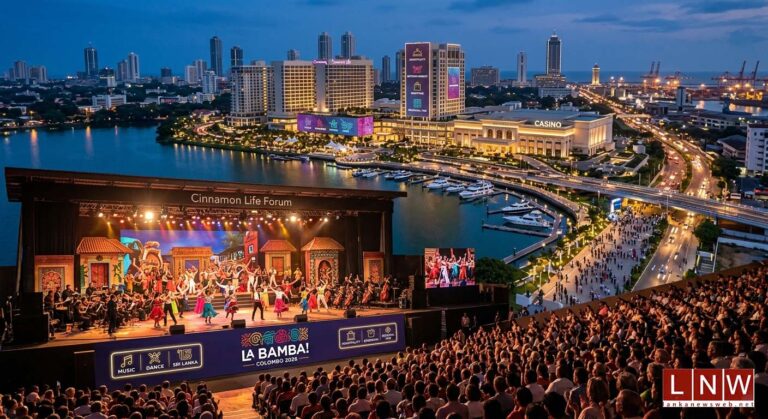
March 30, Colombo (LNW): Colombo is taking a calculated step toward redefining itself as a South Asian entertainment hub, with the staging of La Bamba! – The Song of Veracruz at the City of Dreams Sri Lanka this April. The initiative, driven by John Keells Holdings through its Cinnamon Life project, reflects a broader strategy to reposition the city as a destination for high-end tourism, entertainment, and integrated resort living.
Running from April 24 to 28, 2026, the West End–licensed production marks the first international musical of its scale to be hosted at the purpose-built 900-seat Cinnamon Life Forum. Featuring 19 performers from the UK, Europe, and North America alongside Sri Lankan talent selected through auditions, the show is supported by six live musicians and a technical and creative crew exceeding 40 members.
Directed by London-based producer Paul Morrissey and produced with the John Keells Foundation, the performance blends Latin music, storytelling, and high-energy choreography.
Organizers describe the production as more than entertainment it is a “strategic step” toward building Colombo’s global cultural credentials. The effort aligns with a $1.2 billion integrated resort vision under City of Dreams, combining casino gaming, hospitality, residential developments, and large-scale entertainment.
The potential benefits are significant. First, capacity building: collaboration between international and local artists is expected to raise performance standards and transfer expertise, enabling Sri Lanka to host more world-class productions. Second, tourism development:
Colombo is targeting “soft-value” tourism high-spending visitors drawn by theatre, arts, and cultural experiences, particularly from India’s expanding middle and upper classes. Third, infrastructure validation: successfully hosting a technically demanding production demonstrates the city’s readiness for complex international events.
Economically, such initiatives could boost foreign exchange earnings and generate employment across sectors, from hospitality to creative industries. If sustained, this model could diversify Sri Lanka’s tourism offering beyond traditional beach and heritage attractions.
However, challenges remain. Critics question whether a single production or even a handful can sustain long-term transformation without a consistent calendar of international events and festivals.
There are also concerns about over-reliance on casino-driven tourism, which may bring social and regulatory complexities. Additionally, high-end developments risk catering primarily to affluent visitors, potentially limiting broader local economic inclusion.
Ultimately, La Bamba! represents both a milestone and a test case. Its success will depend not just on ticket sales, but on whether it sparks a continuous pipeline of global performances. Without that momentum, Colombo’s ambition to rival established entertainment hubs in Asia may remain aspirational rather than achievable.
Gulf Crisis Casts Shadow over Sri Lanka Tea Exports

By: Staff Writer
March 29, Colombo (LNW): Sri Lanka’s tea industry, one of its most vital foreign exchange earners, is entering a period of uncertainty as geopolitical tensions in the Middle East threaten to disrupt key export markets and reshape global demand patterns.
Recent data from Forbes & Walker Research shows that tea export volumes in February 2026 dipped slightly to 19.92 million kilograms, down from 20.40 million kilograms a year earlier. The decline was largely driven by weaker performance in bulk tea, tea bags, and green tea, although value-added segments such as tea packets and instant tea posted modest gains.
Despite the drop in volumes, the sector recorded improved rupee earnings, with the average Free on Board (FOB) value rising year-on-year. However, in dollar terms, earnings weakened highlighting the growing impact of currency fluctuations and global pricing pressures.
At first glance, the broader trend appears stable. Cumulative exports for the first two months of 2026 show a modest increase, indicating underlying resilience. Yet, beneath this surface stability lies a more fragile reality: Sri Lanka’s heavy dependence on Middle Eastern markets.
Countries such as Iraq, the United Arab Emirates, and Saudi Arabia remain among the largest buyers of Ceylon Tea. Any escalation in the Gulf crisis could disrupt trade flows, weaken consumer demand, and complicate payment and logistics channels. Rising oil prices and regional instability may also affect purchasing power in these markets, directly impacting tea imports.
Encouragingly, some diversification is underway. Türkiye and Azerbaijan have emerged as fast-growing markets, with Türkiye recording a dramatic surge in imports. These gains have helped offset declining demand from traditional buyers such as Russia and the UAE, signalling a gradual shift in trade dynamics.
However, analysts warn that short-term risks remain elevated. The Gulf crisis could lead to shipping disruptions, higher freight costs, and currency volatility all of which would pressure export margins. For an industry already grappling with declining dollar returns, this could prove challenging.
The immediate future will likely depend on how effectively exporters can pivot. Strengthening footholds in emerging markets, maintaining price competitiveness, and expanding value-added product lines will be critical strategies.
In this uncertain environment, resilience alone may not be enough. The tea sector must adapt quickly to changing global conditions while safeguarding its core markets. As geopolitical tensions continue to evolve, Sri Lanka’s tea exports face a decisive moment one that could define the industry’s trajectory in the months ahead.
Global Demand Slump Hits Sri Lanka Apparel Exports Hard
By: Staff Writer
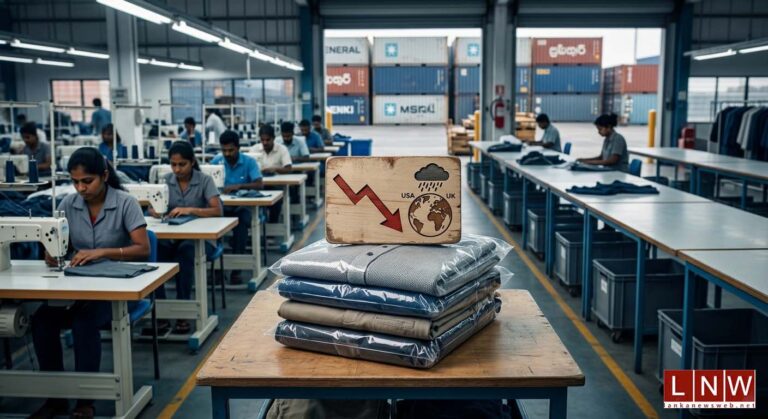
March 29, Colombo (LNW): Sri Lanka’s apparel industry is facing a sharp downturn, with February 2026 export earnings dropping by over 11% year-on-year, exposing the sector’s vulnerability to weakening global demand and shifting market dynamics.
Data released by the Joint Apparel Association Forum (JAAF) shows exports fell to $361.2 million, with declines recorded across all major markets. The steepest contraction came from the European Union, where exports plunged by nearly 20%, while shipments to the United States and United Kingdom also declined, albeit at a slower pace.
This broad-based slowdown signals more than a temporary dip. Cumulative exports for the first two months of 2026 are down nearly 7%, indicating that the sector is entering a sustained period of demand compression. Europe, a key destination for Sri Lankan garments, appears to be at the centre of this decline, reflecting weaker consumer spending and economic uncertainty in the region.
However, industry analysts stress that the issue is not unique to Sri Lanka. Competing exporters such as Bangladesh have reported even sharper drops in shipments to Europe, suggesting a wider correction in global apparel demand rather than a loss of competitiveness for any single country.
Despite this, Sri Lanka’s structural challenges are becoming more visible. High operating costs, logistical inefficiencies, and longer lead times are placing local manufacturers at a disadvantage in an increasingly competitive global sourcing environment. As buyers tighten margins and demand faster delivery, these domestic constraints risk eroding Sri Lanka’s position in global supply chains.
The current situation highlights a deeper issue: while external demand shocks affect all exporting nations, the ability to adapt varies significantly. Countries with lower costs and more efficient production systems are better positioned to weather downturns, leaving higher-cost producers like Sri Lanka under greater pressure.
Industry stakeholders argue that improving logistics, reducing production costs, and enhancing trade facilitation are now urgent priorities. Without these reforms, the sector could struggle not only to recover lost ground but also to retain existing market share.
In the short term, the outlook remains uncertain. With global demand still subdued, particularly in Europe, export performance is likely to remain under pressure in the coming months.
Ultimately, the current downturn serves as a stress test for Sri Lanka’s apparel industry. While the global slowdown provides context, it also underscores the need for structural reforms at home. The sector’s resilience will depend not just on external recovery, but on how quickly and effectively it can address its internal weaknesses and reposition itself in an increasingly competitive global market.
From Laws to Enforcement: Sri Lanka’s Anti- Money Laundering Test Intensifies

By: Staff Writer
March 29, Colombo (LNW): Sri Lanka’s anti-money laundering drive is shifting from legislative reform to real-world enforcement, as global evaluators prepare to assess whether the country’s systems are delivering results beyond policy commitments.
The ongoing review, conducted by the Asia/Pacific Group on Money Laundering (APG) under the umbrella of the Financial Action Task Force (FATF), places Sri Lanka under intense international scrutiny. While early stages of the process have focused on legal compliance, the next phase will test effectiveness often the most difficult hurdle for developing economies.
Financial Intelligence Unit Director Subhani Keerthiratne confirmed that Sri Lanka has so far met all key submission deadlines, including its Technical Compliance Report. This document outlines how domestic laws align with FATF’s 40 recommendations, a necessary but insufficient condition for a favourable rating.
The real challenge lies in proving that these laws are actively enforced. Authorities must now demonstrate performance across 11 “immediate outcomes,” ranging from financial intelligence gathering to successful prosecution of money laundering and terrorism financing cases.
Central Bank Governor Nandalal Weerasinghe has acknowledged that legal reforms alone will not suffice. While amendments to critical legislation are progressing, he emphasised the need for measurable results such as increased investigations, stronger regulatory oversight, and effective coordination between institutions.
This shift reflects a broader global trend. International bodies are no longer satisfied with legal frameworks that exist only on paper; they demand evidence that systems are functioning in practice.
Sri Lanka’s upcoming on-site evaluation in October will be a decisive moment. APG assessors will engage directly with banks, regulators, and law enforcement agencies to evaluate how effectively the system detects and disrupts illicit financial activity.
Progress has been noted in institutional coordination and stakeholder engagement, with both public and private sectors increasingly aligned on compliance requirements. However, gaps remain, particularly in demonstrating consistent enforcement and achieving successful legal outcomes.
The implications extend beyond compliance. Strong AML/CFT performance is essential for maintaining correspondent banking ties, which underpin international trade and financial flows. Any weaknesses could raise red flags among global partners, increasing transaction costs and limiting access to foreign markets.
Moreover, the risk of grey-listing looms as a significant concern. Such a development would signal deficiencies in Sri Lanka’s financial safeguards, potentially undermining investor confidence at a critical juncture in the country’s economic recovery.
With the final evaluation set for 2027, Sri Lanka’s AML journey is entering its most demanding stage. The focus is no longer on promises or policies, but on proof whether the system can deliver real, measurable results in combating financial crime.