By: Staff Writer
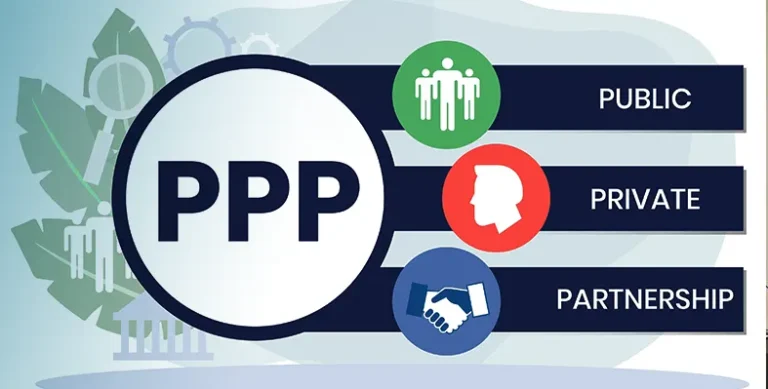
September 14, Colombo (LNW): Sri Lanka is preparing to usher in a landmark Public-Private Partnership (PPP) law, a move that could redefine the country’s development model by shifting more responsibility for infrastructure and public services to private investors.
With fiscal constraints limiting the state’s capacity to fund large projects, the new PPP Act drafted by the Finance Ministry seeks to provide a uniform legal and institutional framework to attract private capital while ensuring accountability and transparency.
At the heart of the legislation is the creation of a National Agency for Public Private Partnerships, mandated to oversee the full lifecycle of PPP projects.
This agency will handle everything from project identification and feasibility assessments to procurement and contract monitoringareas that have historically been fragmented across multiple state institutions, leading to duplication, inefficiency, and political interference.
Proponents argue that the new law marks a decisive break from Sri Lanka’s ad hoc approach to PPPs, which has often left projects exposed to inflated costs, poor management, and unfavorable terms for the state.
The draft Act introduces rigorous value-for-money and feasibility assessments, alignment with the Public Finance Management Act No. 44 of 2024, and integration with national procurement standards.
This principle-based approach is expected to curb politically motivated or financially unsustainable projects, a recurring criticism of past PPP initiatives.
The law also emphasizes capacity-building within the public sector. Officials will undergo systematic training in negotiating and managing complex PPP contracts an area where Sri Lanka has previously suffered, with inadequate expertise resulting in lopsided agreements that favored private players.
If properly implemented, this training component could help level the playing field and safeguard public interests in future contracts.
However, the reform is not without risks. Analysts caution that the effectiveness of the PPP Act hinges on the independence of the new National Agency.
Without robust safeguards against political interference, even the strongest legal framework could be undermined. Critics also point to Sri Lanka’s uneven track record in governance, warning that transparency promises must be matched with enforcement mechanisms.
For investors, the Act signals greater policy stability, potentially boosting foreign and domestic confidence at a time when the country urgently needs capital inflows. Yet the ultimate test will be in execution: whether projects are selected on merit, contracts remain transparent, and the government resists the temptation to use PPPs as a quick fix for short-term political gains.
If successful, the PPP Act could emerge as a cornerstone of Sri Lanka’s economic recovery, balancing scarce state resources with private sector efficiency. But if implementation falters, it risks becoming another layer of bureaucracy that fails to deliver the transformative impact the country urgently needs.
Sri Lanka’s New PPP Law Promises Reform, But Risks Remain
Sri Lanka’s Fiscal Gains Mask Fragile Foundations Amid Debt Strain

By: Staff Writer
September 14, Colombo (LNW): Sri Lanka’s public finances showed a marked turnaround in the first half of 2025, with higher revenues and a sharply reduced deficit boosting hopes of meeting year-end fiscal targets.
Yet, analysts warn that the recovery rests on a fragile base, heavily dependent on volatile import duties and overshadowed by steep debt servicing costs.
According to the Finance Ministry’s Fiscal Review Report for January–June, government revenue rose 24.7 percent year-on-year to Rs. 2.3 trillion, while the budget deficit narrowed by 32.3 percent to Rs. 405.6 billion, compared with Rs. 598.9 billion during the same period in 2024.
Officials expressed confidence that the government is on course to limit the deficit to 6.5 percent of GDP by year-end, a key target under fiscal consolidation.
Much of the revenue surge, however, stemmed from a one-off boost in excise duty on motor vehicles, which climbed to Rs. 129.1 billion following the relaxation of import restrictions earlier this year.
Economists cautioned that such windfalls make fiscal performance vulnerable to swings in import demand, exchange rate volatility, and policy changes.
The International Monetary Fund (IMF) has also stressed the need for broader, more sustainable tax reforms to reduce reliance on unpredictable revenue streams.
Beyond vehicle duties, other tax categories performed relatively well. Income tax collections increased by 9.2 percent to Rs. 489 billion, while VAT receipts jumped 27.6 percent to Rs. 876 billion, including Rs. 354 billion from imports.
The Special Commodity Levy soared 70.5 percent to Rs. 77.6 billion. Both the Inland Revenue Department and Customs reported stronger compliance and enforcement, helping them achieve a large share of their half-year targets.
Yet the structure of revenue growth remains skewed towards trade-related duties, keeping the country’s tax base narrow and highly sensitive to external conditions.
On the expenditure side, pressures remain persistent. Government spending expanded by 10.9 percent to Rs. 2.7 trillion, driven by a 13 percent rise in recurrent expenditure to Rs. 2.5 trillion. Debt servicing continues to weigh heavily, with interest payments alone consuming Rs. 1.2 trillion in the six-month period.
Meanwhile, capital expenditure and net lending contracted by 8.6 percent to Rs. 224 billion—a reduction that helps contain the deficit in the short term but risks undermining long-term economic growth by cutting back on infrastructure and development projects.
Sri Lanka’s mid-year fiscal performance highlights tangible progress in deficit reduction, but it also underscores the delicate balance policymakers face.
While headline numbers point to recovery, the country’s dependence on volatile import-related taxes, coupled with soaring debt obligations and underfunded investment, threatens to erode the foundations of fiscal stability.
Central Bank charts reforms to safeguard Sri Lanka’s recovery
By: Staff Writer
September 14, Colombo (LNW): The Central Bank of Sri Lanka (CBSL) has stepped up efforts to safeguard macroeconomic stability and strengthen public confidence, with Governor Dr. Nandalal Weerasinghe underscoring that preserving the Bank’s independence is fundamental to the country’s recovery and long-term growth. The Governor outlined key reforms undertaken to reinforce monetary discipline, financial stability, and institutional credibility.
Dr. Weerasinghe cautioned that political interference in monetary policy has historically undermined Sri Lanka’s economic stability. Before the enactment of the new Central Bank Act (CBA), governments had financed budget deficits through direct borrowing from the Bank, triggering monetary expansion and inflationary pressures.
“Such practices undermined our mandate of price stability. Under the CBA, this is no longer possible,” he stated, stressing that the law now prevents monetary financing and anchors credibility.
While safeguarding independence, the Governor noted that the Bank does not operate in isolation. The Act ensures coordination with the Ministry of Finance through the Monetary Board to align fiscal and monetary policies, particularly in times of crisis.
On accountability, Dr. Weerasinghe highlighted that the CBSL is legally required to report to Parliament if inflation targets are breached for two consecutive quarters. Public reporting provisions, including the publication of annual Financial Stability Reviews, enhance transparency and enable businesses and households to make informed decisions.
Another major step has been the designation of the CBSL as Sri Lanka’s Macroprudential Authority, tasked with managing systemic risks and protecting financial stability.
Complementary reforms, including the 2023 Banking (Special Provisions) Act and the 2024 amendment to the Banking Act, have strengthened governance, expanded safety nets, and empowered the CBSL to resolve troubled banks while safeguarding depositors.
Addressing misconceptions, Dr. Weerasinghe stressed that the CBSL remains accountable to Parliament and the people, with senior appointments subject to Constitutional Council oversight. He rejected claims that the Bank acts beyond sovereignty, clarifying that while it works with the IMF under the Extended Fund Facility, programme ownership rests firmly with Sri Lankan authorities.
He also clarified the Bank’s role, explaining that its mandate is to maintain price and financial stability rather than directly drive growth. On exchange rates, he reiterated that the rupee is market-determined, with CBSL interventions limited to smoothing volatility and building reserves.
Looking ahead, the Bank will gradually phase out non-core functions such as debt management and concessional loan administration, redirecting resources towards its core mandate. Dr. Weerasinghe concluded with a warning that undermining Central Bank independence would jeopardize recovery, resilience, and prosperity.
Sri Lanka Welcomes Over 52,000 Visitors in First Half of September Amid Steady Tourism Growth

September 14, Colombo (LNW): Sri Lanka’s tourism sector continues to show signs of sustained recovery, with over 52,000 international visitors recorded in the first two weeks of September alone, according to the latest data released by the Sri Lanka Tourism Development Authority (SLTDA).
The figures indicate that a total of 52,246 tourists entered the country so far this month, contributing to an encouraging trend that has been building throughout the year. India remains the leading source market, with 14,300 Indian nationals visiting during this period—accounting for 27.4 per cent of the overall arrivals for the month.
Other key markets for September include the United Kingdom, with 4,092 travellers, followed by Germany (3,488), China (2,796), and Australia (2,603). These numbers reflect a continued interest in Sri Lanka as a leisure destination, despite a challenging global travel climate marked by fluctuating airfares and regional uncertainties.
With the inclusion of the latest September figures, the cumulative number of international arrivals in 2025 has now reached 1,618,769. Of this total, India has contributed 339,895 visitors, followed by 155,233 from the UK and 119,132 from Russia—underscoring the strategic importance of these markets for Sri Lanka’s tourism revival.
Industry observers note that the increase in arrivals can be attributed to a combination of improved marketing campaigns, greater flight connectivity, and a renewed focus on promoting Sri Lanka as a safe, diverse, and culturally rich destination. The government has also introduced several streamlined visa measures and incentives for tour operators, which are believed to be supporting the uptick in foreign interest.
Excavation of Kurukkalmadam Mass Grave Site Set to Begin

September 14, Colombo (LNW): A long-awaited archaeological and forensic excavation is expected to commence next week at a suspected mass grave site in Kurukkalmadam, located in the Batticaloa district.
The operation comes following a directive issued by the Kaluwanchikudy Magistrate’s Court, and forms part of broader efforts to investigate unresolved cases linked to Sri Lanka’s conflict-era past.
Deputy Minister of National Integration, Muneer Mulaffer, confirmed that a sum of Rs. 2.9 million has been allocated to facilitate the initial phase of the excavation.
The site, long regarded by local communities and human rights advocates as potentially holding critical evidence related to enforced disappearances or extrajudicial killings, has remained largely undisturbed until now.
Election Commission Refers Non-Compliant Candidates to Attorney General for Possible Legal Action
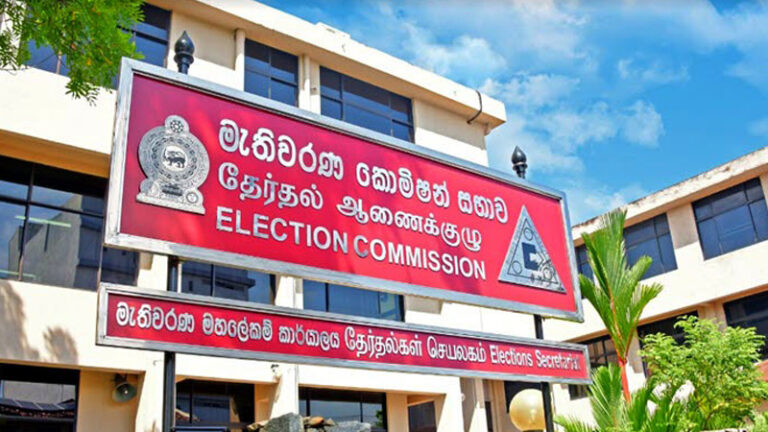
September 14, Colombo (LNW): The Election Commission has escalated proceedings against several candidates from the 2024 Presidential Election who failed to comply with mandatory financial disclosure requirements, forwarding relevant case files to the Attorney General’s Department for further consideration.
According to officials, five individuals who contested the presidential race did not submit their legally required statements detailing income and campaign-related expenses, as stipulated under the Election Expenditure Regulation Act No. 3 of 2023. The Commission is now seeking legal advice from the Attorney General on how to proceed with potential prosecutions.
The legislation, enacted to ensure greater financial transparency in electoral processes, obliges all candidates to declare their campaign funding sources and expenditures within a specified timeframe. Failure to comply is considered a punishable offence under the Act.
In addition to the five presidential candidates, the Commission revealed that 13 other individuals, linked to various election activities, also failed to meet the reporting requirements. Law enforcement authorities have been directed to take appropriate action against those parties, with investigations currently underway.
Statements have already been obtained from the defaulting candidates, and the matter has been formally referred to court for further legal proceedings.
President to Resume Major Expressway Project After Hiatus Amid Fresh Funding Boost
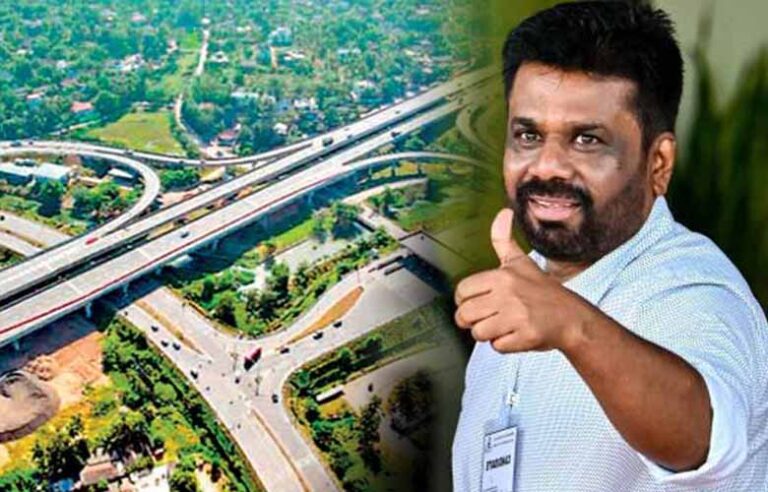
September 14, Colombo (LNW): After more than two years of inactivity, construction on a key segment of the Central Expressway is set to recommence this month, marking a renewed push in the country’s long-delayed infrastructure development efforts.
The section between Kadawatha and Mirigama, which had been stalled since mid-2022 due to severe financial constraints, is scheduled to resume on September 17 with President Anura Kumara Dissanayake expected to officiate the relaunch ceremony.
The revival of this major project is being seen as both a symbolic and practical milestone in the government’s attempts to reinvigorate national transport networks in the wake of the economic downturn.
Alongside the relaunch, work will begin on the Kadawatha Interchange Hub—a critical access point linking the expressway to multiple transport corridors—as well as the first 500-metre stretch extending from Kadawatha itself.
This initial segment is being prioritised to lay the groundwork for the larger expressway build, which spans 37 kilometres in total.
The government has earmarked Rs. 8.6 billion for this phase of the development, signalling a significant capital commitment to a project many had feared would remain dormant indefinitely.
According to Dr Prasanna Gunasena, Deputy Minister of Transport and Highways, the expressway’s recommencement has been made possible through a substantial financial facility secured from the Export-Import Bank of China, amounting to USD 500 million.
This loan is expected to cover core construction, engineering consultations, and associated infrastructure development over the next several years.
The Kadawatha–Mirigama section is projected to be completed by mid-2028, and once operational, it is anticipated to ease traffic congestion along major national routes whilst significantly reducing travel time between the Western and North-Western provinces.
It also forms a crucial link in the broader expressway network designed to improve commercial connectivity across the island.
Transport officials have underscored the expressway’s long-term benefits for logistics, tourism, and investment, with particular emphasis on job creation and regional development during the construction phase.
Whilst some challenges remain—including the coordination of land acquisitions, environmental assessments, and contractor mobilisation—the resumption of work signals a shift in momentum for large-scale infrastructure delivery, which had been severely affected by the nation’s fiscal crisis.
Probe Confirms Chemical Cache Discovered in Middeniya Used for Methamphetamine
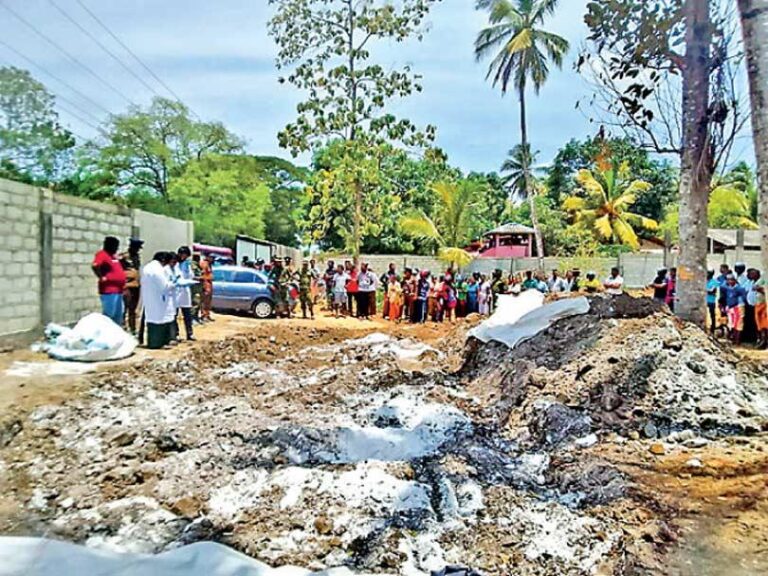
September 14, Colombo (LNW): Authorities have confirmed that a significant stockpile of chemicals recently uncovered in a remote area of Middeniya has been identified as precursor material commonly used in the illicit production of methamphetamine, a powerful and highly addictive synthetic drug.
The confirmation follows laboratory analysis conducted by the National Dangerous Drugs Control Board (NDDCB), which submitted its detailed findings to the Crimes Division of the Western Province North late last week. The discovery is being treated as a major breakthrough in the ongoing effort to dismantle organised drug networks operating across the island.
The cache came to light on 5 September during questioning of a suspected underworld figure known by the alias “Backhoe Saman,” currently in custody. Acting on information extracted during interrogation, law enforcement officials were able to locate the concealed stock in a discreetly chosen plot of land in the Middeniya area—raising concerns about the scale and sophistication of the operation.
Subsequent searches, prompted by further intelligence, led authorities to additional suspected chemical stashes in Netolpitiya and Kandana. These materials are currently undergoing forensic examination, with detailed reports expected in the coming week. Investigators believe the three locations may have been part of a coordinated distribution network aimed at supporting large-scale drug manufacturing.
Former Local Council Chairman Arrested in Alleged Vehicle Fraud Scheme

September 14, Colombo (LNW): Police have taken into custody Ravindra Bandara, the former chairman of the Wattegama Urban Council, along with businessman Lakshitha Manoj Weerabahu, in connection with a suspected vehicle import and registration scam, authorities confirmed on Saturday.
The arrests come amid an ongoing investigation into what officials describe as a fraudulent scheme involving the illegal importation of high-end vehicles.
Two Jeep SUVs believed to have been brought into the country unlawfully—and subsequently registered with falsified documentation at the Department of Motor Traffic—have also been seized as part of the operation.
According to investigators, both individuals are suspected of playing key roles in manipulating official records to legitimise the imported vehicles.
Evidence uncovered so far points to the deliberate use of forged data entries and fraudulent registration details to circumvent standard import procedures and regulatory checks.
Rising Heat Index Further Prompts Public Health Advisory Across Several Districts

September 14, Colombo (LNW): The Department of Meteorology has issued a public advisory warning that the Heat Index—representing the temperature as experienced by the human body—is expected to climb to ‘Caution level’ thresholds in several regions of the country, particularly across parts of the Northern, North-Central, and Eastern provinces, as well as the Monaragala district.
This elevated Heat Index indicates conditions that may lead to fatigue and heat-related discomfort if appropriate precautions are not taken, especially during peak daytime hours.
In light of the forecast, health and safety officials are urging residents in the affected areas to adopt measures to protect themselves and vulnerable members of their communities. Employers, particularly those operating in outdoor environments such as construction or agriculture, are being advised to ensure workers remain hydrated, take regular breaks in shaded or cool areas, and avoid excessive exertion during the hottest parts of the day.
Within households, special attention is being called to the elderly, the sick, and young children, who are most susceptible to heat-related illnesses. The public is encouraged to regularly check on at-risk individuals and ensure they are staying cool and adequately hydrated.
Authorities also stress the critical danger of leaving children or pets unattended in parked vehicles—even for short periods—as cabin temperatures can rise rapidly to life-threatening levels.
Those planning to be outdoors are recommended to wear light, loose-fitting clothing in white or pale colours to reduce heat absorption. Activities under direct sunlight should be minimised, with priority given to frequent hydration and access to cooler environments whenever possible.