Home Blog Page 4

Bandaranaike Foundation Pledges Major Donation to Support Flood-Hit Nation’s Recovery

0

December 09, Colombo (LNW): The Bandaranaike Memorial National Foundation has announced a substantial contribution of Rs. 250 million to assist with the country’s ongoing recovery efforts in the wake of the recent calamity.

The cheque was formally presented to Prime Minister Dr Harini Amarasuriya at her office on Monday (08), marking what officials described as a significant gesture of solidarity during a challenging period for many communities.

Former President Chandrika Bandaranaike Kumaratunga, who currently chairs the Foundation, personally handed over the donation alongside several members of the organisation’s Board of Directors. The Prime Minister’s Office reported that the meeting evolved into a warm exchange of views on how civil society and state institutions might continue to collaborate in rebuilding essential services and strengthening support for affected families.

Also in attendance were Pradeep Saputhanthri, Secretary to the Prime Minister, the Minister of Buddhasasana, Religious and Cultural Affairs Dr Hiniduma Sunil Senevi, and representatives from the Foundation’s board.

Showers, thundershowers to occur across Island: Heavy falls above 100 mm expected (Dec 09)

0

December 09, Colombo (LNW): The Northeast monsoon conditions are gradually establishing over the island, the Department of Meteorology said in its daily weather forecast today (09).

Showers or thundershowers will occur at times in Northern, North-Central, Eastern, Central and Uva provinces. Heavy falls above 100 mm are likely at some places in Northern and Eastern provinces and in Polonnaruwa district.

Showers or thundershowers may occur at several places in the other areas of the island after 1.00 p.m. Fairly heavy falls about 75 mm are likely at some places in these areas.

Fairly strong winds of about (30-40) kmph can be expected at times over Northern, North-central and North-western provinces and in Trincomalee district.

Misty conditions can be expected at some places in Sabaragamuwa and Southern provinces during the early hours of the morning.

The general public is kindly requested to take adequate precautions to minimise damages caused by temporary localised strong winds and lightning during thundershowers.


Marine Weather:

Showers will occur at times in the sea areas off the coast extending from to Hambantota to Mannar via Batticaloa, Trincomalee and Kankasanthurai. Showers or thundershowers may occur at several places in the other sea areas around the island during the evening or night.

Winds:
Winds will be north-easterly. Wind speed will be (25-35) kmph. Wind speed can increase up to 50 kmph at times in the sea areas off the coast extending from Kalutara to Trincomalee via Puttalam and Kankasanthurai.

State of Sea:
The sea areas off the coast extending from Kalutara to Trincomalee via Puttalam and Kankasanthurai will be fairly rough at times. The other sea areas around the island will be Slight to moderate.

Lower VAT Threshold Sparks Fears of Higher Consumer Prices

0

By: Staff Writer

December 08, Colombo (LNW): Sri Lanka’s move to slash the VAT and Social Security Contribution Levy (SSCL) registration threshold from Rs. 60 million to Rs. 36 million marks one of the most sweeping tax adjustments since the country’s fiscal breakdown in 2022.

Announced in the 2026 Budget, the change aims to widen the tax net, curb avoidance practices, and rebuild state revenue that eroded under earlier tax cuts. But the reform has triggered unease among the small-business community, which remains weakened by years of economic distress.

The government argues the rationale is straightforward. When the VAT threshold was dramatically raised in 2019 from Rs. 12 million to Rs. 300 million the number of VAT-registered taxpayers plunged by 71 percent, dropping from 29,151 to just 8,391. Tax authorities say the new reduction is necessary to reverse this collapse and re-formalise businesses that exited the tax system.

But for many small and medium enterprises, VAT registration represents far more than administrative paperwork. Small traders, shopkeepers, and service providers warn that registering for VAT brings additional compliance costs, accounting expenses, and working-capital strain.

Many fear they will be forced to pass on the full 18 percent VAT and additional SSCL charges directly to customers raising retail prices across essential items. A senior tax official admitted that although the law does not require businesses to pass VAT to consumers, “it is inevitable” that many will do so.

This puts small retailers in a difficult position. In sectors such as groceries, household essentials, and low-margin services where competition is intense businesses must choose between absorbing the tax burden and risking losses, or raising prices and risking customer attrition. Given the dominance of small retailers in Sri Lanka’s supply chain, even minor price increases could push up the overall cost of basic goods.

Some economists warn the reform could create broad-based, short-term price pressures. Because SMEs supply a significant share of daily consumer goods and services, widespread VAT pass-through could temporarily lift the cost of living.

However, others argue fears may be overstated. Previous reductions of the VAT threshold from Rs. 300 million to Rs. 80 million, and later to Rs. 60 million did not trigger a jump in inflation, as reflected in national indices. Analysts note that other cost factors such as declining electricity and fuel tariffs helped offset price pressures.

A key reason behind the reform is to curb tax avoidance. Over recent years, many businesses legally split operations into multiple entities to remain below the threshold. Lowering it to Rs. 36 million is designed to shut this avenue and ensure a more equitable tax system.

The Treasury expects a sizeable increase in tax revenue, particularly from retail trade, food and beverages, distribution networks, and professional services.

A business earning roughly Rs. 100,000 a day will now fall into the VAT net, expanding the taxpayer base significantly. Although the Budget offered no precise estimate, Treasury numbers later showed a Rs. 60 billion upward revision—signalling strong expectations for revenue gains.

Government officials also point to international evidence. IMF studies covering 35 countries show that in nearly two-thirds of cases, VAT changes had little lasting impact on inflation suggesting that while prices may adjust initially, sustained inflationary pressure is unlikely.

Sri Lanka Moves to Overhaul Troubled Non-Bank Finance Sector

0

By: Staff Writer

December 08, Colombo (LNW): Sri Lanka’s non-banking financial sector is on the verge of its most significant overhaul in more than a decade, as the Central Bank of Sri Lanka (CBSL) pushes forward sweeping amendments to the Finance Business Act (FBA) No. 42 of 2011, the core legal framework governing finance companies and deposit-taking non-bank institutions.

The draft amendments now open for public comments until 30 November 2025—seek to seal long-standing regulatory gaps, strengthen supervision, and prevent a repeat of the high-profile collapses that have battered confidence in the sector in recent years.

The FBA, introduced in 2011 to replace the outdated Finance Companies Act, was designed to regulate licensing, governance, and operational conduct of finance companies.

However, persistent governance lapses, most visibly the failures of institutions such as The Finance Company and Bimputh Finance, exposed weaknesses in enforcement and supervision, undermining depositor trust and destabilising the wider financial system.

The Central Bank says the new reforms are intended to “modernise the law to match evolving market realities and align with global regulatory standards.” Under the proposed changes, the regulator will gain expanded investigative and enforcement powers enabling faster action against illegal deposit-taking and unlicensed financial operations issues that have repeatedly endangered vulnerable depositors.

A major feature of the amendment package is the introduction of pre-emptive resolution tools. These will allow the CBSL to restructure, merge, or wind down financially distressed companies before they threaten systemic stability. The move mirrors international post-crisis best practices aimed at preventing disorderly institutional collapses.

Governance reforms form another central pillar. Stricter “fit-and-proper” criteria will determine who can serve as directors and major shareholders, in an effort to ensure that only experienced and reputable individuals are allowed to manage regulated entities.

Furthermore, higher capital adequacy requirements, enhanced financial disclosure rules, and tighter controls over financial advertising are expected to improve transparency and reduce misleading deposit solicitation.

While the reforms have been broadly welcomed by analysts and consumer-protection groups, concerns are mounting within the industry—particularly among smaller finance companies. Senior officials warn that steep compliance costs and higher capital thresholds may push smaller NBFIs towards forced consolidation, potentially shrinking credit availability for small and medium-sized enterprises (SMEs), which remain central to post-crisis economic recovery.

Industry associations, including the Finance Houses Association, have requested more time to review the proposed amendments. Its chairman, Arjuna Gunaratne, stressed the need for detailed consultation before submitting formal responses.

Financial analyst Anuruddha Jayawardena echoed these concerns, noting that policymakers must strike a balance between safeguarding depositors and preserving access to legitimate credit, especially in underserved regions.

Experts argue that if introduced with careful sequencing, the reforms could help rebuild investor confidence, attract foreign capital, and significantly reduce systemic risk in the non-bank financial system. The public consultation period, they say, is a crucial opportunity to refine the framework and ensure that the restructuring of the sector is inclusive, stable, and resilient.

US Disaster Airlift Marks Sharp Shift from Past Secrecy

0

By: Staff Writer

December 08, Colombo (LNW): The arrival of two U.S. Air Force C-130J Super Hercules aircraft in Sri Lanka with full media visibility and an unusually high-profile diplomatic presence marks a striking departure from Washington’s historically discreet approach to military disaster assistance on the island.

While past U.S. military deployments for emergency relief have often been conducted with minimal publicity due to geopolitical sensitivities, this week’s response to Cyclone Ditwah has been accompanied by extensive public messaging, embassy-issued photographs, and top-level diplomatic commentary.

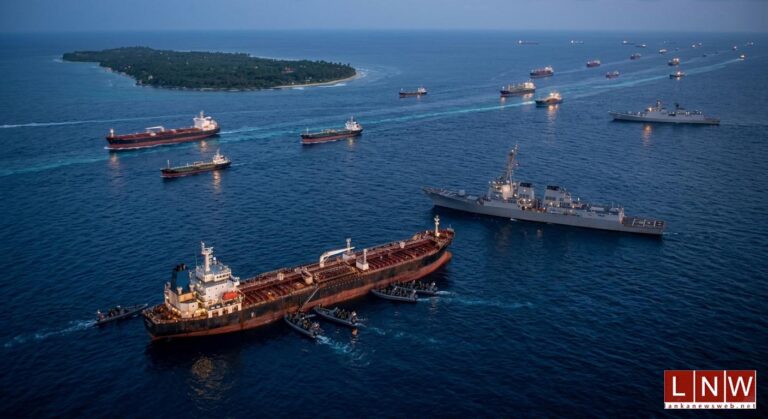
The aircraft, deployed under U.S. Indo-Pacific Command, were welcomed at Katunayake Air Base by Ambassador Julie Chung and senior Sri Lankan officials. The Embassy’s announcement highlighted America’s “airlift and logistics muscle,” presenting the operation as a visible symbol of U.S. commitment to Sri Lanka.

The messaging stood in contrast to earlier instances such as disaster operations following floods or landslides over the past decade when U.S. air assets were deployed more quietly, sometimes without advance public disclosure.

Diplomatic observers note that the sudden emphasis on visibility comes at a time when major powers are intensifying humanitarian diplomacy across the Indian Ocean.

Sri Lanka’s strategic location makes disaster-relief optics a valuable tool for influence. Several analysts argue that the U.S. may be signalling greater operational transparency or strategic presence amid heightened competition with other regional actors.

The official narrative frames the deployment squarely as humanitarian. According to the U.S. Embassy, the C-130Js and personnel from the 36th Contingency

Response Group will provide rapid airlift to deliver shelter materials, sanitation supplies, medical aid, and food to cyclone-affected regions.

Additional support from the 374th Airlift Wing and the U.S. Marine Corps reinforces what officials call a “multinational, inter-service humanitarian partnership.”

Ambassador Chung praised Sri Lankan responders and underscored the urgency of logistics following severe damage to road infrastructure.

“The United States is here to take on some heavy lifting,” she said. Defense Attaché Matthew House emphasized that the mission builds on long-running military cooperation, noting that joint exercises have strengthened coordination for crises like Cyclone Ditwah.

However beneath the humanitarian partnership lies a broader geopolitical context. The public roll-out of this operation raises questions about why previous U.S. military-supported relief missions some involving aerial surveillance, airlift support, or operational planners received little or no publicity.

Officials who follow defense cooperation note that the U.S. typically keeps deployments low-profile to avoid triggering regional sensitivities,

But the robust public messaging in this instance suggests a shift: either an effort to demonstrate commitment to Sri Lanka, or an intention to maintain visibility in a crowded strategic theatre.

The United States has also recently provided SLAF with $2.1 million worth of airlift-support equipment, fuel trucks, loading platforms, and ground-power units now deployed in the cyclone response. This accompanies the $2 million in humanitarian aid announced within 72 hours of landfall.

As relief operations continue, the high-visibility American deployment raises a new question: Is this transparency a one-off gesture for Cyclone Ditwah, or the beginning of a more assertive U.S. humanitarian footprint in Sri Lanka?

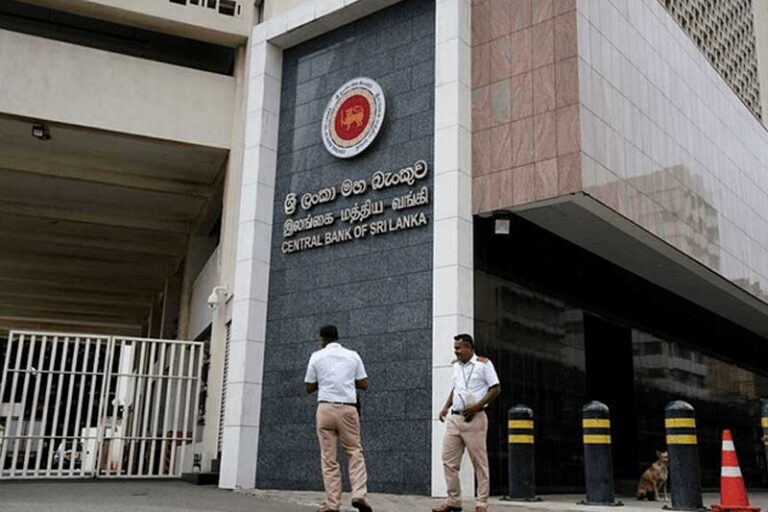
COPF Flags Central Bank’s Opaque FX Swaps as NIR Distortion

0

By: Staff Writer

December 08, Colombo (LNW): Sri Lanka’s Parliament Committee on Public Finance (COPF) has sharply criticised the Central Bank of Sri Lanka (CBSL) over its rapidly expanding domestic foreign exchange swaps, warning that the practice resembles a “hot money operation” and risks distorting the country’s true reserve strength as it attempts to rebuild credibility ahead of 2025.

The issue came under intense scrutiny when COPF discovered that domestic FX swaps short-term dollar borrowing from local banks—are not deducted from Sri Lanka’s official Net International Reserves (NIR) calculation.

COPF Chairman Dr. Harsha de Silva called the omission “deeply problematic,” saying it provides an incomplete and potentially misleading picture of the nation’s reserve buffer.

What the COPF Found Explained Simply

The Central Bank’s NIR figure is calculated by subtracting foreign liabilities—such as IMF loans, the Reserve Bank of India swap, and the People’s Bank of China (PBoC) swapfrom gross reserves.

CBSL Director of Economic Research Sujatha Jegajeevan told COPF that with gross reserves at US$ 6.2 billion, the Bank deducts:

US$ 1.36 billion PBoC swap

US$ 880 million RBI swap

US$ 580 million IMF liability

This results in an NIR of US$ 3.4 billion.

However, domestic swaps with private banks such as HSBC or Standard Chartered are excluded, despite being foreign currency liabilities that must eventually be settled in dollars.

“But these are still forex obligations, aren’t they?” Dr. de Silva pressed.Jegajeevan responded: “They are domestic liabilities… only external liabilities are taken out.”

De Silva countered that “a domestic liability in forex still requires forex to settle,” raising concerns that leaving them out artificially boosts the NIR.

“Hot Money Operation” Accusations

COPF member MP Ravi Karunanayake went further, calling the swaps “a hot money type of operation.”

De Silva agreed, saying such swaps had previously been used to “window dress reserves” under earlier administrations.

Governor Dr. Nandalal Weerasinghe, however, defended the practice, saying the swaps are short-term (less than one year) and are primarily used to provide temporary rupee liquidity to banks.

“This is an instrument banks use for short-term liquidity. If there is an opportunity, we should use it,” he said, adding that swaps help boost gross reserves temporarily while genuine inflows are accumulated.

Why Analysts Are Concerned

Independent analysts warn that buy–sell swaps inject fresh rupee liquidity, increasing credit and imports. This can:

Reduce CBSL’s ability to purchase dollars later.

Force the Bank to sell reserves to defend the rupee.

Trigger forex losses regardless of whether swap dollars are officially labelled as “liabilities.”

The central bank recorded a Rs. 788 billion forex loss in 2022 on reserve-related debt, illustrating the high risk of such operations.

If banks use newly created liquidity for import payments, dollars flow out, weakening the rupee. CBSL must then buy back liquidity or sell its reserves a cycle that can repeat until interest rates rise sharply.

Deeper Structural Issue

The founding Governor John Exter warned that purchasing dollars by printing rupees “monetizing the balance of payments surplus” is inherently inflationary unless sterilised.

COPF members argue that domestic swaps worsen this risk by:creating artificial reserve build-ups,masking short-term liabilities,increasing import-driven pressure, and placing future burdens on taxpayers when losses materialise.

A Call for Transparency

Dr. de Silva urged CBSL to disclose all swap-related obligations—external and domestic separately and clearly, arguing that only transparent reserve accounting will protect Sri Lanka from repeating past crises.

“Stable, long-term reserves must be distinguishable from temporary swaps,” he warned.

Karunanayake added: “If these are hot money flows that is even worse.”

With Sri Lanka attempting to rebuild its reserve credibility after the 2022 collapse, the COPF’s intervention highlights the urgent need to prevent temporary liquidity manoeuvres from being mistaken for permanent financial strength.

Accountability Begins with Us: A Call for National Renewal and Global Gratitude

0

By: Nalinda Indatissa (President Counsel)

My dear fellow Sri Lankans,

A tragedy is not only something we endure—it is something we learn from. As a nation and as individuals, this moment calls us to ask ourselves: What must we do differently? How can we grow from this experience?

As a nation, we must accept that preparedness, honesty, and responsibility are not optional—they are essential. We must rebuild institutions that are transparent and strong. We must ensure that disaster management, relief distribution, and long-term recovery are guided by science, professionalism, and compassion.

As individuals, each of us must look inward.
Are we acting responsibly?
Are we avoiding waste, corruption, and negligence?
Are we supporting our neighbours?
Are we treating public resources as sacred and not as something to be misused?

Accountability begins with the citizen. It grows through the community. And finally, it becomes a national character.

As citizens, our conduct matters. We must be honest when we receive aid—take only what we need, avoid hoarding, avoid exploiting the system. We must respect public officers, volunteer where we can, and raise our voices peacefully when we see wrongdoing. Accountability is not only the duty of the government; it is the duty of the people.

As a government, our accountability must be to the world. Nations have helped us out of trust and kindness. It is our responsibility to show them that their trust is not misplaced. Every rupee, every donation, every box of supplies must be recorded, published, audited, and tracked. Let the world see that Sri Lanka is not only asking for help, but honouring it with integrity.

This global support is not something we take for granted. It is a blessing. And a blessing must be respected.

How do we say thank you?
Not merely through words, but through actions.

We must show gratitude through clean administration, through responsible leadership, through maintaining strong diplomatic relationships. We must tell the world that Sri Lanka remembers every ship, every aircraft, every doctor, every dollar, every act of compassion.

And beyond that, we must open our doors.
We must invite the citizens of these nations to visit our beautiful island, not just as tourists, but as partners. Let them come and see the relief programmes their generosity has made possible. Let them witness with their own eyes the houses rebuilt, the schools repaired, the lives restored. This openness is the greatest form of respect we can offer.

When people see transparency, they build trust.
When trust is built, friendships grow.
When friendships grow, nations rise together.

This is how we learn.
This is how we change.
This is how we honour those who stood with us.

President Urges Swift Infrastructure Restoration and Strengthened Laws on Unauthorised Construction

0

December 08, Colombo (LNW): President Anura Kumara Dissanayake has warned that the country will adopt a zero-tolerance approach towards unauthorised constructions, pledging stronger legislation to prevent future violations. He stressed that failing to address this issue could expose the nation to even greater disasters.

Speaking at a Special District Coordination Committee meeting at the Kurunegala District Secretariat this afternoon, the President announced plans to establish a dedicated unit within the upcoming Reconstruction Presidential Task Force to develop legal policies aimed at providing long-term solutions to construction-related challenges.

The President instructed authorities to restore all damaged provincial and local council roads in Kurunegala District to full working order within the next fortnight, utilising the funds already allocated. Any projects that cannot be completed before 31 December should be reported, with additional funding earmarked in the 2026 budget. The district has suffered damage to 1,181 ‘A’ and ‘B’ grade provincial roads, 35 bridges, 162 culverts, and one embankment.

Mr Dissanayake also reviewed the restoration of essential services, including electricity, water supply, and communications, emphasising the responsibility of service providers to ensure uninterrupted delivery to residents and highlighting the importance of strong inter-agency coordination.

Agriculture was a key focus of the meeting. Officials reported that 12,729 hectares of paddy land had been affected by the disaster, with 5,514 hectares rendered uncultivable. The President directed the Water Supply Board to provide temporary irrigation solutions and instructed authorities to take all possible measures to salvage cultivable land. Plans for supplying paddy seeds and fertilisers were also reviewed. The impact on maize, vegetables, and other crops, alongside compensation measures for farmers, was discussed.

The President reminded local council Chairpersons that temple wells and other community water sources must be cleaned promptly, with support from the Tri-Forces and voluntary organisations. He further highlighted the need for accurate livestock data, noting that existing laws are insufficient for proper registration and compensation processes. Officials were instructed to consolidate livestock information into a central system to guide policy decisions.

Other issues covered included reviving the inland fisheries sector, healthcare needs, reopening schools, identifying land for resettlement, and disbursing compensation for damaged homes. Divisional Secretaries were urged to play a full role in these processes.

As part of the resettlement efforts, Venerable Aluthgama Mangala Thero of Maddeketiya Gokarella Sangamu Raja Maha Viharaya has donated 20 acres of temple land for affected families, with documentation formally handed over to the President. Financial contributions of Rs. 10 million from North Western Provincial Cooperative Societies and a donation from Gokarella Rice Mill owner S.M. Wasantha Samarakoon were also presented.

The meeting was attended by Minister of Public Security and Parliamentary Affairs Ananda Wijepala, Deputy Ministers Namal Karunaratne and Namal Sudarshana, North Western Province Governor Tissa Warnasuriya, district MPs from government and opposition, local council Chairpersons, the Secretary to the Treasury Dr Harshana Suriyapperuma, Ministry Secretaries, Kurunegala District Secretary Chandana Dissanayake, senior government officials, and security forces leaders.

EDB Launches Rapid Recovery Plan to Safeguard Sri Lanka’s Disaster-Hit Export Sector

0

December 08, Colombo (LNW): The Export Development Board (EDB) has initiated a swift relief and recovery programme in response to the severe disruption caused by recent extreme weather events on Sri Lanka’s export industry.

As part of this effort, the EDB has begun detailed assessments to identify exporters most affected by the adverse conditions. These evaluations will form the basis for targeted support measures designed to stabilise operations and protect the country’s export capacity.

A high-level meeting was recently held at the EDB headquarters, bringing together Secretary to the Ministry of Industry and Entrepreneurship Development Tilaka Jayasundara, EDB Chairman and CEO Mangala Wijesinghe, Acting Director General Erandika Dissanayake, Acting Additional Director General Kumudinie Mudalige, Director of Trade Facilitation and Trade Information Sanjeewa Rathnasekara, alongside senior officials and representatives from the export community.

Wijesinghe stressed that immediate interventions are being rolled out to minimise disruptions and ensure a continuous flow of goods to international markets. Measures include restoring production capabilities, reactivating supply chains, and coordinating closely with customs, port authorities, and logistics providers to overcome delays caused by the weather.

Special attention is being given to Small and Medium Enterprises (SMEs), with the government focusing on swiftly re-establishing their operational capacity and safeguarding employment within the sector.

The meeting also highlighted the increasing frequency of climate-related challenges, emphasising the urgent need for sustainable and forward-looking strategies. The EDB intends to integrate green technologies and eco-friendly practices into export operations, aiming to enhance resilience, maintain competitiveness, and support Sri Lanka’s alignment with global environmental standards.

Through these concerted efforts, the EDB seeks not only to mitigate immediate losses but also to build a stronger, more climate-resilient export sector capable of withstanding future challenges.

Seventh UAE Aid Flight Lands in Sri Lanka to Assist Flood Victims

0

December 08, Colombo (LNW): Sri Lanka has received its seventh humanitarian aid flight from the United Arab Emirates, aimed at supporting communities devastated by floods triggered by Cyclone Ditwah.

The UAE Embassy in Colombo reiterated that the country remains steadfast in its assistance to Sri Lanka through both airlifted supplies and on-the-ground operations, pledging continued support to help the nation recover from the disaster.

This latest shipment includes essential food and shelter items, bringing the cumulative relief provided by the UAE to around 89 tonnes.

The UAE has deployed a comprehensive relief team, featuring members from the Joint Operations Command, the UAE International Aid Agency, the Emirates Red Crescent, and the UAE Search and Rescue Unit under the Abu Dhabi Civil Defence Authority.

Reports indicate that the UAE rescue team has so far recovered 18 victims within its operational areas and delivered emergency medical aid to eight individuals directly affected by the floods. Officials praised the coordinated effort as a vital contribution to ongoing relief operations.