Home Blog Page 449

Sri Lanka becomes a laughing stock before international media over ‘Monkey Blackout’

0

February 10, Colombo (LNW): Sri Lanka has driven itself into being an amusement show before the international eye over the recent islandwide blackout to which the interference of a monkey was attributed.

The outage, which struck at approximately 11:30 AM local time (0600 GMT) yesterday (09), was triggered when the mischievous primate entered an electrical grid substation and caused a disruption in the power system, according to reports.

Initially believed to be the result of a technical failure, Energy Minister confirmed later that the outage was in fact the result of the monkey’s interference with the infrastructure.

Efforts to restore power began immediately, and authorities worked tirelessly for nearly 5 to 6 hours to bring electricity back online.

As the power supply was gradually restored, regions across Sri Lanka began to regain electricity, bringing relief to millions of affected residents.

Despite the chaos, the peculiar nature of the incident quickly gained international media attention, transforming the Sri Lankan monkey into an unlikely global sensation.

The unusual cause of the blackout has sparked widespread curiosity, with many across the world now looking to Sri Lanka as the site of one of the most bizarre power failures in recent memory.

Bollywood megastar Salman Khan shares thrilling account of near-death experience during flight from Sri Lanka

0

February 10, Colombo (LNW): Bollywood superstar Salman Khan recently took to the podcast world, marking his debut on his nephew Arhaan Khan’s YouTube channel, Dumb Biryani.

During the episode, the actor recounted a terrifying, life-threatening experience he endured while travelling overseas with actress Sonakshi Sinha and his younger brother, Sohail Khan.

The harrowing incident took place on their return flight from the International Indian Film Academy (IIFA) Awards in Sri Lanka.

Salman, known for his fearless persona both on and off-screen, recalled the moment that had him second-guessing his own safety. The routine flight back from the awards show quickly turned into a nightmare as the aircraft experienced extreme turbulence for an agonising 45 minutes.

While typical turbulence on a flight is often brief and manageable, this particular episode was both prolonged and intense, causing widespread panic among the passengers.

“We were all in high spirits, laughing and chatting, when suddenly the plane began to shake. At first, it seemed like regular turbulence, but then the shaking intensified and the sounds grew more ominous. There was a growing sense of unease in the cabin,” Salman shared. “Sohail and I were seated together, and when I glanced over to check on him, I was stunned to find that he was completely asleep, oblivious to the chaos around us. Meanwhile, the turbulence showed no signs of stopping—it dragged on for what seemed like forever.”

Salman’s tone turned serious as he described how the situation escalated. “I could see the pilot’s concern when I briefly glanced at the cockpit. That’s when I noticed the flight attendants—they were visibly shaken. One of them had her eyes closed, softly muttering a prayer. That was the moment it hit me—this wasn’t just ordinary turbulence. It felt different. And then, the oxygen masks dropped from above. It was like something out of a movie! That’s when panic really set in.”

Just as the passengers began to calm down after what felt like an eternity, the nightmare resumed. “After what seemed like forever, the turbulence finally stopped. People slowly started to relax, and conversations resumed. Sonakshi and her mother were also on board, and they seemed relieved. But then, as if on cue, the plane began shaking again. This time, it was even more intense, lasting another ten minutes. The entire cabin went eerily silent. No one dared to speak, and you could almost hear a pin drop,” Salman recalled.

As the plane finally descended to safety, the passengers’ mood shifted dramatically. “When we finally landed, it was like nothing had happened. People who had been white-knuckling their seats just moments ago were now walking off the plane like they’d just stepped out of a Sunday stroll. It was surreal to watch how quickly everyone went from terrified to completely composed,” Salman chuckled, reflecting on the situation with a sense of disbelief.

Prime Minister launches ‘Clean Sri Lanka’ initiative with focus on environmental and social transformation

0

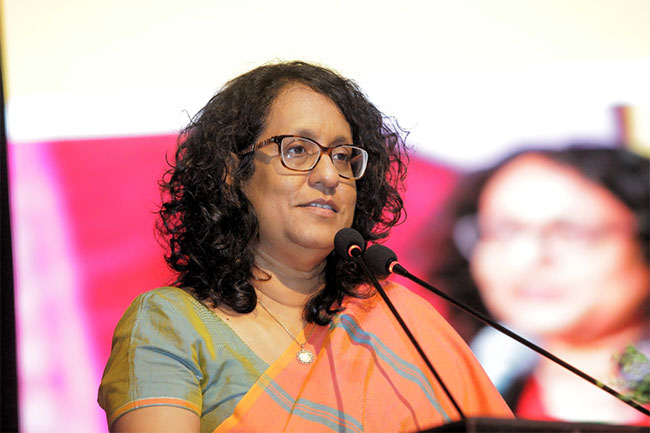
February 10, Colombo (LNW): Prime Minister Dr. Harini Amarasuriya has unveiled the “Clean Sri Lanka” programme, a comprehensive national initiative aimed at clearing the nation’s environment of litter and creating a more hospitable, civilised living space for all Sri Lankans.

During her speech at the inaugural event, titled “A Beautiful Beach, an Attractive Tourist Destination,” which took place this morning at Mattakkuliya Beach Park, Dr. Amarasuriya underscored the deeper purpose of the programme.

This ambitious initiative involves large-scale beach cleaning efforts, with simultaneous activities taking place at 124 locations across the Western and Southern Provinces.

The cleaning efforts will span a remarkable 1,740 kilometres of coastline, with volunteers working from 8:00 AM to 11:00 AM to help restore the pristine beauty of Sri Lanka’s beaches.

Speaking passionately about the programme, Prime Minister Amarasuriya said, “Today, we are undertaking a collective action to clean not just the physical spaces but to foster a cleaner mindset. The ‘Clean Sri Lanka’ programme is not merely about tidying up; it’s about removing barriers to leading a civilised life and advancing a fundamental social transformation.

Dr. Amarasuriya went on to highlight the broader, more meaningful aim of this initiative: to create a positive shift in the country’s social and political fabric. “The transformation we seek must start within our homes, communities, and the spaces we inhabit daily. It is not a task that the government can tackle alone—everyone’s participation is vital for the success of this initiative. Today, we stand together, not in our official roles, but as fellow citizens committed to making a tangible difference,” she remarked.

The Prime Minister further emphasised the importance of creating a society built on the pillars of security, education, cleanliness, and social justice. She noted that these factors are integral to building a sustainable and livable environment for the people, especially in urban areas like Colombo.

“Through the Clean Sri Lanka programme, we aim to unite people from all walks of life in our collective goal of transforming the island into a cleaner, more beautiful place. This is the transformation our citizens expect and deserve,” she concluded.

The event saw the attendance of several key figures, including Deputy Minister of Public Security and Parliamentary Affairs, Attorney-at-Law Sunil Watagala, Western Province Governor Hanif Yusuf, Chairman of the Colombo District Development Committee Lakshman Nipunarachchi, as well as local community leaders and representatives from various organisations.

The presence of officers from the Sri Lanka Police and the Tri-Forces further underscored the broad support for the initiative, while the active participation of the local community demonstrated the shared commitment to restoring the nation’s natural beauty.

Energy Minister criticises previous regimes for lack of long-term planning, leading to power outage

0

February 10, Colombo (LNW): Energy Minister Eng. Kumara Jayakody has made a statement blaming the lack of foresight and planning by past administrations for the ongoing instability in Sri Lanka’s national power grid, which led to the nationwide power outage experienced earlier today.

According to the Minister, no strategic plans were put in place by previous governments to ensure the stability and reliability of the country’s electricity supply system.

In his remarks, Minister Jayakody revealed that an emergency situation at the Panadura grid substation this morning had caused a significant imbalance, which subsequently resulted in the widespread power cut.

Early investigations into the incident have suggested that the power outage was, in part, the consequence of long-standing issues with the management and oversight of the national grid.

“The failure of past governments to prioritise the national power grid’s stability, combined with poor decision-making and a lack of technological understanding, has led us to this point,” Jayakody commented.

He added that the short-sighted approach of previous leaders, who did not address key infrastructure and technological concerns, contributed heavily to the current crisis.

Minister Jayakody assured the public that the current government was taking immediate steps to rectify the situation. A comprehensive investigation will be launched to fully understand the causes behind the power disruption, and corrective measures will be implemented to prevent similar occurrences in the future.

He also expressed his sincere apologies to the citizens who were affected by the outage and thanked the dedicated teams who worked tirelessly to restore power to the nation.

The Minister reiterated the government’s commitment to ensuring that the country’s energy infrastructure is modernised, sustainable, and capable of meeting future demands, stating that the current incident would serve as a wake-up call for much-needed reforms in the sector.

Businessman duped of Rs. 25 crore in fake casino investment scheme in Sri Lanka

0

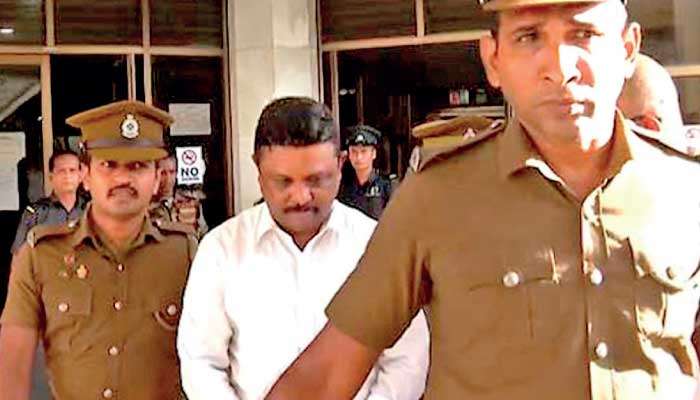
February 10, Colombo (LNW): In a major scam uncovered in Bengaluru, the Basaveshwara Nagar police have arrested Ramakrishna Rao, a man accused of defrauding a local businessman out of Rs 25 crore under the guise of a lucrative casino investment opportunity in Sri Lanka.

The accused, a resident of Banashankari, is the father of Rahul Thonse, who had previously been implicated in a notorious sandalwood drug case.

Ramakrishna Rao, identified as the primary suspect in the First Information Report (FIR), was taken into custody by the police, while his son Rahul remains at large.

Authorities suspect Rahul may have fled to Sri Lanka, where he is believed to be hiding.

The investigation has also brought in Rao’s wife, Rajeshwari, their daughter Raksha Thonse, and son-in-law Chetan Narayan, who are all named as co-accused in the case.

The charges against them include criminal breach of trust and cheating, with violations of the Banning of Unregulated Deposit Schemes Act also being applied.

The scam began in February 2023, according to the complaint filed by Vivek P Hegde, a businessman and resident of Basaveshwara Nagar. Hegde claims that he was manipulated into investing Rs 25.5 crore in a fictitious casino venture.

The accused allegedly convinced Hegde and his business associates that Raksha and Chetan owned casino tables at a prestigious location in Colombo, Sri Lanka, with Rahul overseeing operations.

During an initial meeting on 7th February 2023, Ramakrishna Rao reportedly provided details about the business opportunity, further adding to the allure of the scheme.

Hegde, following several discussions with Chetan, transferred Rs 30 lakh to Rahul on 18th March 2023 as part of the supposed investment.

However, it soon became apparent that no such casino business existed, and the funds had been misappropriated.

The police are continuing their investigation, with the authorities focusing on tracking down Rahul and the remaining suspects involved in the fraudulent scheme. Investigators believe that this elaborate scam involved meticulous planning, as the accused worked together to create a network of deceit aimed at exploiting the victim’s trust and financial resources.

14 Indian fishermen detained for poaching in Sri Lankan waters

0

February 10, Colombo (LNW): In a recent operation conducted by the Sri Lankan Navy off the coast of Mannar, 14 Indian fishermen were arrested for engaging in illegal fishing activities within Sri Lankan waters.

The Navy, which has been actively monitoring the region for unlawful fishing, also confiscated two vessels used by the suspects during the operation.

The fishermen, who are believed to have been operating without proper authorisation, were detained and are now in the custody of the authorities.

The vessels they were using have been seized for further inspection and investigation.

Following the arrests, the suspects will be handed over to the Department of Fisheries and Aquatic Resources in Kilinochchi, where legal proceedings will be initiated.

The department will determine the appropriate course of action based on Sri Lankan fisheries laws, which have been put in place to protect the country’s maritime resources.

TISL Challenges Procurement Guidelines citing Accountability and clarity at Risk

0

By: Staff Writer

February 09, Colombo (LNW): Transparency International Sri Lanka (TISL) has taken a significant step in its fight against corruption by filing a Fundamental Rights Petition (SCFR/22/2025) in the Supreme Court.

The petition challenges the Procurement Guidelines and Procurement Manual (2024) issued by the National Procurement Commission (NPC), citing serious concerns about transparency, accountability, and fairness in public procurement.

Given the critical role procurement plays in national governance, TISL emphasizes the need for a robust, transparent framework that upholds international best practices and protects public funds from misuse.

The petition raises alarms about the lack of openness in the new guidelines, which do not sufficiently promote transparency in procurement processes. It highlights the unregulated nature of unsolicited proposals, which could result in contracts being unfairly awarded.

 Additionally, it points out significant deviations from internationally accepted procurement standards, increasing the risk of mismanagement and corruption.

TISL argues that the NPC has failed to implement strong safeguards against unsolicited proposals, leaving room for potential misuse. This failure, according to the petition, violates fundamental rights under Articles 12(1) and 14(1)(g) of the Constitution.

Weak procurement guidelines can lead to corruption, misallocation of public funds, and favoritism in state contracts. The allowance of unsolicited proposals without proper oversight undermines fair competition by bypassing competitive bidding.

Furthermore, permitting deviations from standard procedures in urgent situations without clear definitions and oversight creates opportunities for abuse.

Another major concern is the absence of a centralized electronic system, which diminishes transparency and accountability in government spending. The decision to raise the threshold for mandatory publication of contract awards from Rs. 250 million to Rs. 750 million significantly limits public oversight of state procurement.

Granting broad decision-making powers to procuring entities without adequate checks and balances further weakens transparency. The guidelines also fail to mandate written instructions from Ministers, allowing for verbal directives that can lead to misuse of power and lack of accountability.

Additionally, the lack of provisions ensuring public involvement and oversight restricts citizens’ ability to hold the government accountable and access timely information.

TISL urges the Supreme Court to direct the NPC or the State to establish effective safeguards concerning unsolicited proposals. As the constitutionally mandated body responsible for ensuring accountability in public procurement, the NPC must strengthen these guidelines to prevent corruption.

Weaknesses in the procurement process can be exploited, undermining fairness and good governance, leading to an abuse of power and misallocation of public resources.

As a staunch advocate for good governance and anti-corruption, TISL calls on the government to move away from closed-door policy formulation. It insists on an open and participatory process in developing and implementing procurement guidelines to safeguard public interest, trust, and democratic governance.

Without transparency and accountability in procurement, the risk of corruption and mismanagement remains high, threatening the integrity of the country’s governance framework.

New Era of Leadership begins at Melstacorp and Aitken Spence

0

By: Staff Writer

February 09, Colombo (LNW): The recent passing of business magnate Harry Jayawardena has ushered in a new chapter in the leadership of two of Sri Lanka’s most prominent conglomerates.

His children, Hasitha Jayawardena and Stasshani Jayawardena, have been appointed to key leadership roles, ensuring continuity and stability in their father’s vast business empire.

Their appointments mark a significant transition, reflecting both their individual expertise and the legacy of strategic vision fostered by their late father.

This generational shift in leadership is expected to drive the continued expansion and innovation of the Melstacorp and Aitken Spence Groups.

 With extensive experience in their respective fields and a strong foundation in corporate governance, Hasitha and Stasshani are poised to strengthen the businesses while adapting to the evolving economic landscape in Sri Lanka and beyond.

Following the demise of business tycoon Harry Jayawardena, his son Hasitha has been appointed Chairman of investment holding company Melstacorp PLC, while his younger daughter Stasshani has assumed the role of Chairperson at the diversified blue-chip Aitken Spence PLC.

D. Hasitha S. Jayawardena was also appointed Chairman of the Distilleries Company of Sri Lanka PLC, as well as Balangoda and Madulsima Plantations companies.

With extensive expertise in the tea trade, Hasitha has played a pivotal role in the agriculture, production, trading, and export sectors. His leadership is expected to bring further strategic direction to these industries under the Melstacorp umbrella.

A graduate of the University of Kent in the United Kingdom with a Bachelor’s Degree in Business Administration (Hons), Hasitha possesses over 12 years of management experience.

Having worked closely with his late father, he has been instrumental in overseeing the plantation and leisure sectors of the Melstacorp Group, ensuring operational efficiency and long-term sustainability.

Stasshani Jayawardena, who previously served as Joint Deputy Chairperson and Joint Managing Director at Aitken Spence, has now taken the helm as Chairperson of Aitken Spence PLC.

She has the distinction of being the first female and youngest Board member of the company. Additionally, she has been appointed Chairperson of Aitken Spence Hotel Holdings PLC and Browns Beach Hotels PLC and serves as Deputy Chairperson of Lanka Milk Foods (CWE) PLC. She also continues in her roles as Director of Melstacorp PLC and the Distilleries Company of Sri Lanka PLC.

An accomplished academic, Stasshani is a graduate of St. James’ and Lucie Clayton College and Keele University in the United Kingdom, as well as the Emeritus Institute of Management in Singapore. She is also an Associate Alumni of the University of Cambridge’s Judge Business School.

Her early career exposure includes an internship under US Senator Hillary Rodham Clinton and former US President Bill Clinton in 2003, making her the youngest intern to work with them at the time.

With over 15 years of managerial experience, Stasshani has been at the forefront of Aitken Spence Group’s strategic development, particularly in the leisure sector. Her leadership continues to align with the long-term vision set by her late father, ensuring that the company remains a key player in the industry while embracing innovation and expansion.

The appointments of Hasitha and Stasshani Jayawardena mark a transformative phase for both Melstacorp and Aitken Spence. As they step into their leadership roles, their collective experience and commitment to excellence will be crucial in shaping the future trajectory of their respective organizations, reinforcing their father’s legacy while fostering sustainable growth.

Bandaranaike International Airport to Undergo Major Redesign and Expansion

0

By: Staff Writer

February 09, Colombo (LNW): Bandaranaike International Airport (BIA) is poised for a major transformation, with a focus on enhancing the Arrival Lobby to improve the experience of the growing number of travelers, particularly tourists visiting Sri Lanka. The planned renovation aims to address congestion and create a more welcoming environment for passengers.

As part of the upgrade, additional ATM machines will be installed and strategically relocated to reduce crowding. The Arrival Lobby itself will be expanded to provide a more spacious and comfortable atmosphere for travelers.

A centralized travel information counter will also be introduced to better assist tourists, ensuring they receive the necessary guidance and support. These improvements are being carried out by Airport and Aviation Services (Sri Lanka) Limited (AASL) in response to the rising influx of visitors.

Air Chief Marshal (Retd.) Harsha Abeywickrema, Chairman of AASL, emphasized the recent surge in tourism, noting that daily arrivals in January 2025 averaged 8,150, marking a 23% increase from the previous year.

The current layout of the Arrival Lobby has led to congestion, particularly due to the limited number of ATMs and inadequate space. Following an inspection by Hon. Bimal Rathnayake, Minister of Transport, Highways, Ports, and Civil Aviation, a decision was made to revamp and expand the Arrival Lobby to accommodate the increasing number of passengers.

The renovation is expected to improve passenger flow and serve as an interim solution until the completion of Terminal 2 in March 2028.

In addition to the Arrival Lobby enhancements, progress is being made on the broader expansion of BIA. The Ministry of Transport, Highways, Ports, and Civil Aviation has confirmed that three companies have submitted bids for an international tender to advance Phase II of the airport’s expansion.

This phase, under contract number 105/T/2024, includes extensive construction work under Package ‘A1.’ The project scope covers the completion of the Main Terminal Building, construction of Pier No. 2 and Pier No. 3, development of an elevated roadway, and the installation of essential infrastructure, including power supply, sewage disposal, and water systems.

The deadline for bid submissions is set for December, with evaluations expected to conclude within three months. The selected contractor will oversee the expansion, which is designed to accommodate six million passengers annually.

 However, given that last year’s passenger volume reached 7.2 million and projections for 2025 estimate 8.5 million travelers, the expansion is crucial for meeting increasing demand.

To support the expansion efforts, the Japan International Cooperation Agency (JICA) is financing the Terminal 2 development through a concessionary loan of Rs. 170 billion. Once completed, BIA’s overall capacity will increase to 16 million passengers annually, significantly reducing congestion.

The construction timeline for the new phase is set at 30 months, targeting completion by 2027. Although the project initially commenced in December 2020 with an estimated budget of Rs. 145 billion, Sri Lanka’s economic crisis in 2022 caused significant delays, with only 6% of Phase II completed by that time.

The current tender process follows Japanese Official Development Assistance (ODA) guidelines, allowing eligible international bidders to participate. A pre-bid meeting is scheduled for November 12, with the final bid submission deadline set for December 23.

 Since its inception in 2007, BIA’s expansion has faced multiple challenges, including economic setbacks and design modifications. However, the latest phase of development aims to modernize Sri Lanka’s primary international airport and enhance its capacity to accommodate the growing demands of regional air travel.

Ceylon Petroleum Corporation Takes Over United Petroleum Fuel Stations amid Exit

0

By: Staff Writer

February 09, Colombo (LNW): The State-run Ceylon Petroleum Corporation (CPC) has assumed control of 64 fuel stations that were previously managed by Australia-based United Petroleum (UP). This transition follows UP’s decision to cease its Sri Lankan operations in December 2024, despite entering the market in August of the same year.

United Petroleum had initially signed agreements on June 8, 2023, as part of the previous government’s strategy to attract international fuel retailers to the country. However, it took over a year for UP to commence operations. The fuel stations had been granted to UP under a 20-year contract, but with the company’s withdrawal, they are being handed back to CPC.

CPC Managing Director Mayura Neththikumarage confirmed that UP’s dealer network is being transferred to CPC, although no formal announcement has been made regarding UP’s departure. Reports from local media have highlighted operational challenges, with a United Petroleum dealer recently complaining about a malfunctioning fuel pump that was not repaired despite repeated requests. The dealer expressed a preference for returning to CPC management.

In response to the country’s foreign exchange crisis, the former administration allowed international companies such as China’s Sinopec, RM Parks (in collaboration with Shell), and UP to take over 450 fuel stations previously run by CPC. However, UP struggled to secure the 150 private dealerships allocated to it before the government changed. Sinopec was the first to formalize an agreement in May 2023, followed by RM Parks in June, with both focusing on fuel importation, storage, distribution, and sales.

UP had initially committed to a $27.5 million investment under its agreement and was granted operations at 150 existing fuel stations, with rights to construct 50 additional outlets. CPC Chairman D.J.A.S. De S. Rajakaruna confirmed that CPC took over the 64 fuel stations managed by UP to ensure an uninterrupted fuel supply. However, the legal ownership transition remains unresolved, with discussions still ongoing. He clarified that while all 150 stations were allocated to UP, only 64 transferred operations, as the remaining private owners opted to stay with CPC.

The Ministry of Energy is currently handling legal matters related to the takeover. When asked if another international retailer would replace UP, Rajakaruna dismissed the necessity, stating that Sri Lanka’s fuel market is small and stable. He noted that foreign firms were brought in to mitigate fuel shortages caused by the foreign exchange crisis, which has now been resolved.

A senior UP official, speaking anonymously, cited tension with the government, policy changes, and the preference for a state-controlled fuel distribution model as primary reasons for UP’s exit. The company claimed that bureaucratic delays hindered the signing of dealership agreements, making its operations unsustainable. Additionally, UP alleged that a fuel shipment intended for Sri Lanka was forced to return due to logistical challenges, further straining its supply chain.

UP officially ceased operations on December 19, 2024, and CPC assumed deliveries. However, former UP dealers have raised concerns over the lack of financial benefits, such as credit facilities, that CPC provides its own dealers. Reports indicate that the government is negotiating to prevent UP from pursuing legal action at the Singapore International Arbitration Centre (SIAC). Allegations also suggest that the government submitted a Cabinet paper to override a clause in UP’s agreement that restricted profit repatriation for the first 12 months, allowing the company to exit quietly.

At the time of withdrawal, UP still had three million liters of fuel in storage, which it claims the government is attempting to integrate into CPC’s supply. On January 8, UP issued termination notices to employees, with their last working day being January 7. UP CEO Nigel Simonsz cited “unforeseen circumstances beyond the company’s control” as the reason for layoffs in an official letter to employees.

Former UP employees have since filed complaints with the Ministry of Energy, arguing that the company violated Sri Lankan labor laws by failing to provide severance packages. Their letter demands urgent government intervention, accusing UP of “taking its profits and running away to Australia.”

The situation continues to unfold as CPC works to stabilize fuel distribution while the Ministry of Energy engages in discussions regarding UP’s departure and its legal implications.