July 22, Colombo (LNW): Malaysia Airlines has unveiled plans to increase its connectivity to South Asia by introducing a new series of wide-body flights between Kuala Lumpur and Colombo.
Beginning August 22, the airline will operate three weekly services to the Sri Lankan capital, marking a significant step in expanding its regional footprint.
The carrier will utilise its Airbus A330 aircraft for the route, with flights scheduled every Tuesday, Friday, and Sunday. These aircraft offer a premium travel experience, featuring 27 fully reclining Business Class seats and 261 seats in Economy, aimed at delivering both comfort and capacity for a growing customer base.
This latest expansion comes as the airline responds to a noticeable surge in demand for air travel across the region, particularly between Malaysia and Sri Lanka. Colombo has emerged as a strategic hub in South Asia, and Malaysia Airlines’ move signals a renewed focus on catering to both leisure and business travellers seeking direct, high-capacity options.
The addition of these flights is also expected to support broader economic and cultural ties between the two nations, including tourism, trade, and educational exchange. With improved scheduling and larger aircraft, the airline aims to meet the evolving expectations of today’s traveller while reinforcing its role as a key connector in the Asia-Pacific region.
July 22, Colombo (LNW): A senior officer from the Inland Revenue Department, previously taken into custody over bribery allegations, has been released on bail by the Colombo Magistrate’s Court under strict conditions.
The official, holding the position of Deputy Commissioner, had been remanded in connection with claims that he solicited a bribe from a businessman in exchange for writing off substantial tax liabilities.
The court approved the release on two surety bonds of Rs. 1 million each. Colombo Additional Magistrate Harshana Kekunawala issued the ruling after reviewing arguments presented by the defence, which included personal circumstances surrounding the accused.
Defence counsel Darshana Kuruppu told the court that the suspect’s teenage son was undergoing acute psychological distress due to his father’s remand status. The 14-year-old, according to the lawyer, had ceased attending school and was refusing to eat, prompting medical intervention.
Citing these circumstances as extraordinary and compassionate grounds, the legal team requested that the court consider bail.
After deliberation, the Magistrate agreed to the request while instructing the accused to cooperate fully with the ongoing investigations. The next court appearance has been scheduled for December 05.
The arrest stemmed from a covert operation launched by the Commission to Investigate Allegations of Bribery or Corruption (CIABOC), following a complaint from a businessman based in Piliyandala.
The complainant had approached the Inland Revenue Department seeking a tax clearance certificate for the 2025 financial year, relating to his business activities in Dematagoda.
During discussions, it is alleged that the Deputy Commissioner informed the businessman of an outstanding tax amount exceeding Rs. 1.1 million, but offered to dismiss the liability in exchange for an unofficial payment.
Initial demands reportedly totalled Rs. 100,000, though this figure was later reduced to Rs. 50,000 during further interactions.
CIABOC officers apprehended the suspect while he was allegedly attempting to receive the payment at his office.
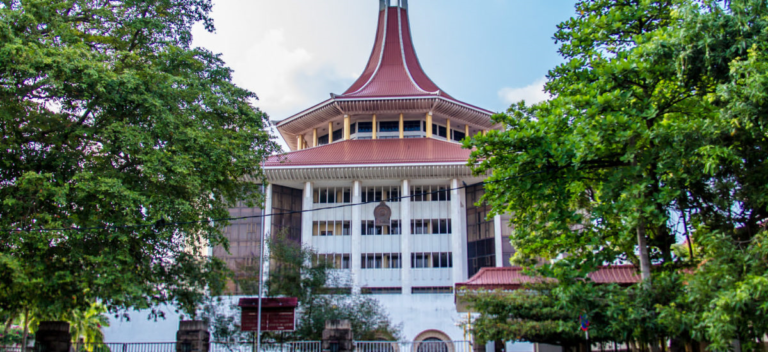
July 22, Colombo (LNW): President Anura Kumara Dissanayake has put forward the name of Supreme Court Justice Preethi Padman Surasena as his choice to assume the role of Chief Justice, signalling a significant transition at the helm of the country’s judiciary.
The nomination has now been submitted to the Constitutional Council for its consideration, with the Council expected to deliberate on the proposal during its upcoming session scheduled for Wednesday (23), according to sources.
The impending vacancy follows the retirement of current Chief Justice Jayantha Jayasuriya, who is due to step down on July 27 upon reaching the compulsory retirement age.
Justice Surasena, widely respected within legal circles, is among the most senior members of the current bench. Over the course of his career, he has played a central role in shaping legal discourse in Sri Lanka, having presided over a wide array of sensitive and high-stakes cases. His previous service on the Judicial Service Commission further underscores his extensive experience in matters of judicial governance and institutional reform.
July 22, Colombo (LNW): Sri Lanka has recorded a notable uptick in foreign investment approvals during the first half of 2025, signalling increased investor confidence and renewed economic momentum.
According to Deputy Minister of Industry and Entrepreneurship Development Chaturanga Abeysingha, the Board of Investment (BOI) has given the green light to 57 new projects this year, representing a combined value of US$ 569 million.
Of the total pledged investment, approximately US$ 507 million has already materialised in the country, marking a substantial inflow of foreign capital. The Deputy Minister noted that these figures reflect a more than twofold increase compared to the same period in 2024, a promising sign of Sri Lanka’s shifting economic trajectory.
Describing the current phase as a transition “from stability to growth,” Abeysingha highlighted that the government is actively removing bureaucratic hurdles and streamlining regulatory procedures in order to make the country more investor-friendly.
He underscored the administration’s ongoing commitment to enhancing the ease of doing business, which he credited as a key driver behind the uptick in foreign direct investment.
Looking ahead, the Deputy Minister pointed to several initiatives that are expected to further bolster economic activity. These include the establishment of new Export Processing Zones (EPZs), the allocation of specially designated land for tourism-related ventures, and expanding opportunities linked to the ambitious Port City development project.
“These measures are not merely short-term boosts—they are part of a broader, strategic realignment of our economic framework aimed at long-term, sustainable growth,” Abeysingha said.
In parallel with these positive investment trends, Sri Lanka has also witnessed a marginal decline in inflation, providing some relief to households and businesses alike.
The Department of Census and Statistics reported that overall inflation dropped from 0.6 per cent in May to 0.3 per cent in June. Food inflation also eased significantly, falling from 5.9 per cent in May to 4.2 per cent the following month.
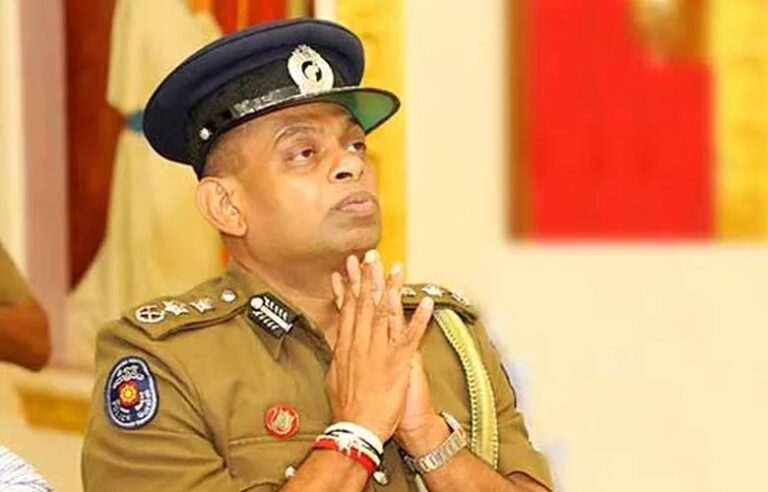
July 22, Colombo (LNW): Inspector General of Police (IGP) Deshabandhu Tennakoon is facing imminent dismissal after an independent Committee of Inquiry concluded he was guilty of all charges relating to serious misconduct and the misuse of his authority.
The damning verdict marks an unprecedented moment in Sri Lanka’s legal and political history.
The announcement came at the opening of Parliament today (22), with Speaker Dr Jagath Wickramaratne formally confirming receipt of the full findings from the inquiry panel.
The committee’s report recommended the immediate removal of Tennakoon from his role as head of the Sri Lanka Police, citing multiple acts of gross abuse of power, according to the Speaker.
The inquiry, which was convened under Section 5 of the Removal of Officers (Procedure) Act, No. 5 of 2002, was chaired by Supreme Court Justice P.P. Surasena. The panel also included Justice W.M.N.P. Iddawala and E.W.M. Lalith Ekanayake, who currently serves as Chairman of the National Police Commission in an ex-officio capacity.
This marks the first time in Sri Lanka’s constitutional framework that a sitting Inspector General of Police has been found liable by a parliamentary-sanctioned committee and recommended for removal. The Speaker described the occasion as “historic” and noted that the parliamentary process now requires placing the committee’s findings in the form of a formal resolution, to be debated and voted on by Members of Parliament in the near future.
Wickramaratne also directed that the full report be tabled before Parliament and pledged to make the document accessible to the general public, citing a strong public interest and Parliament’s duty to transparency.
The committee’s recommendations follow a resolution passed by Parliament on April 04, 2025, which authorised the investigation into Tennakoon’s conduct under Sections 3(d) and 3(e) of the Removal of Officers Act. The charges levelled against him relate to serious breaches of duty, undermining the public trust in the nation’s police force.
July 22, Colombo (LNW): Lanka Ashok Leyland Plc, a long-standing collaboration between Sri Lanka and Indian automotive giant Ashok Leyland, is preparing to roll out a comprehensive fleet of electric buses in the near future.
The company is aligning this move with shifting governmental priorities that increasingly favour the adoption of cleaner, more sustainable modes of transport.
Speaking on the upcoming developments, Chief Executive Officer Umesh Gautam revealed that preparations are actively underway to introduce an entire series of electric buses under the ‘SWITCH’ marque.
However, he noted that the launch timeline would be influenced by both market conditions and the regulatory landscape.
In a notable step forward, an electric edition of the company’s well-known DOST light commercial vehicle has already been launched, marking Lanka Ashok Leyland’s entry into the electric vehicle segment.
This model is expected to serve as a blueprint for the firm’s broader electrification strategy.
“With the government placing increasing emphasis on electrifying the public transport system, the environment is becoming more conducive for initiatives such as ours,” Gautam added, pointing to a supportive policy framework and growing public awareness about environmental sustainability.
July 22, Colombo (LNW): Showers will occur at times in the Western, Sabaragamuwa and Central provinces and in Galle and Matara districts, with fairly heavy falls about 75 mm likely at some places in the Sabaragamuwa province and in Nuwara-Eliya, Kandy, Galle, Matara and Kaluthara districts, the Department of Meteorology said in its daily weather forecast today (22).
Several spells of showers may occur in the North-western and Northern provinces and in Hambantota district.
Strong winds of about (55-60) kmph can be expected at times over Western slopes of the central hills and in Northern, North-central, North-western, Central, Southern and Sabaragamuwa provinces and Trincomalee district.
Fairly strong winds about (40-50) kmph can be expected at times elsewhere.
The general public is kindly requested to take adequate precautions to minimise damages caused by strong winds.
Marine Weather:
Condition of Rain: Showers will occur at times in the sea areas off the coast extending from Puttalam to Matara via Colombo and Galle.
Winds: Winds will be Westerly to South-westerly and wind speed will be (35-45) kmph.
Wind speed can increase up to (60-70) kmph at times in the sea areas off the coast extending from Chilaw to Mannar via Puttalam and from Galle to Pottuvil via Hambantota.
Wind speed can increase up to (50-60) kmph at times in the sea areas off the coast extending Chilaw to Galle via Colombo and from Mannar to Vakarai via Kankasanthurai and Trincomalee.
State of Sea: The sea areas off the coast extending from Chilaw to Mannar via Puttalam and from Galle to Pottuvil via Hambantota will be rough or very rough at times. Naval and fishing communities are advised not to venture into these sea areas for next 24 hours.
The sea areas off the coast extending from Chilaw to Galle via Colombo and from Mannar to Vakarai via Kankasanthurai and Trincomalee may be fairly rough to rough at times.
The wave height (about 2.5 – 3.0 m) may increase in the sea areas off the coast extending from Puttalam to Pottuvil via Colombo, Galle and Hambantota. Therefore, there is a possibility that nearshore sea areas extending from Puttalam to Pottuvil via Colombo, Galle and Hambantota may experience surges due to sea waves.
Naval and fishing communities are requested to be attentive to future forecasts issued by the Department of Meteorology in this regard.
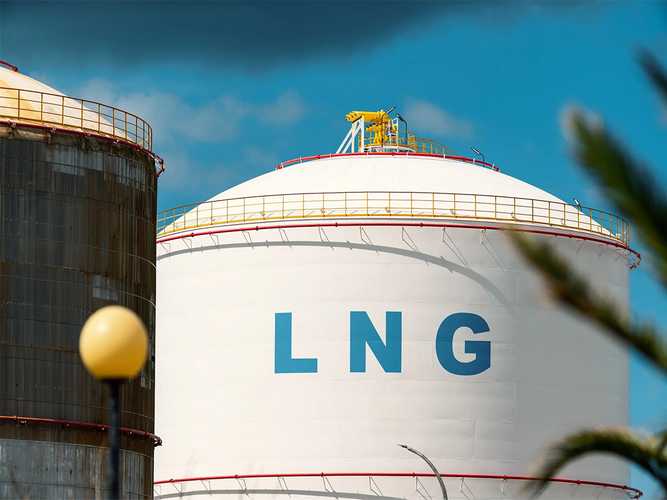
July 21, Colombo (LNW): In a move that has sparked concerns in New Delhi, Sri Lanka is preparing to terminate a key energy agreement with India’s Petronet LNG Ltd. (PLL), citing misalignment with national priorities and mounting geopolitical pressures. The decision, influenced by growing Chinese inroads into Sri Lanka’s energy sector and earlier U.S.-brokered involvement, has raised eyebrows across South Asia.
The controversial decision targets the Memorandum of Understanding (MoU) signed between Petronet LNG and Sri Lanka’s LTL Holdings on August 20, 2024, for the development of Liquefied Natural Gas (LNG) supply infrastructure.
The agreement was part of a broader Indian initiative, announced by Prime Minister Narendra Modi, to support Sri Lanka with LNG supplies, interconnect the two countries’ power grids, and construct a petroleum pipeline — part of New Delhi’s strategic energy diplomacy in the Indian Ocean region.
However, Sri Lanka’s Ministry of Energy has formally sought Cabinet approval to cancel the MoU. Officials say the Indian proposal — involving the transport of LNG via ISO tank containers from PLL’s Kochi terminal to power plants in Kerawalapitiya — does not align with immediate energy needs due to issues of scalability and timing.
The ministry contends that the Indian LNG plan overlaps with a parallel and already-awarded Chinese-led LNG infrastructure project. The Chinese venture includes the development of an LNG terminal and pipeline network, intensifying the regional competition between Beijing and New Delhi for strategic influence in Sri Lanka’s critical infrastructure.
Energy Secretary Udayanga Hemapala confirmed that Cabinet approval for the Petronet deal’s cancellation is expected soon. He also assured that Indian firms, including Petronet, will still be allowed to bid for future LNG supply tenders under a competitive and transparent process once the necessary infrastructure is in place.
This isn’t the first time foreign involvement in Sri Lanka’s LNG sector has raised eyebrows. In 2021, U.S.-based New Fortress Energy (NFE) struck a deal with the former Sri Lankan government to develop an offshore LNG terminal near Colombo.
Despite local opposition and legal challenges — notably from CEB engineers concerned about the lack of a competitive bidding process — the project was greenlit after the court dismissed all petitions in March 2022.
NFE was granted rights to supply gas to both the existing Yugadanavi Power Plant and the planned Sobadhanavi facility, with expectations to deliver over 1.2 million gallons of LNG daily. Former U.S. Ambassador Alaina B. Teplitz had played a key role in facilitating the deal, describing it as a private investment bringing cleaner, more affordable energy — and distancing it from debt-driven models.
Critics argue that the Sri Lankan government’s LNG decisions have become a geopolitical chessboard for the U.S., China, and India. What was initially seen as India’s opportunity to balance China’s dominance is now unraveling, with Colombo caught in a strategic tug-of-war.
As Sri Lanka grapples with chronic energy shortages and its fragile post-crisis economy, decisions over critical infrastructure are increasingly dictated not just by domestic necessity, but by external power plays — leaving India to recalibrate its next move in the region.
July 21, Colombo (LNW): Government’s bid to increase revenue through taxing digital payments may clash with IMF policies and risk stifling innovation and digital entrepreneurship.
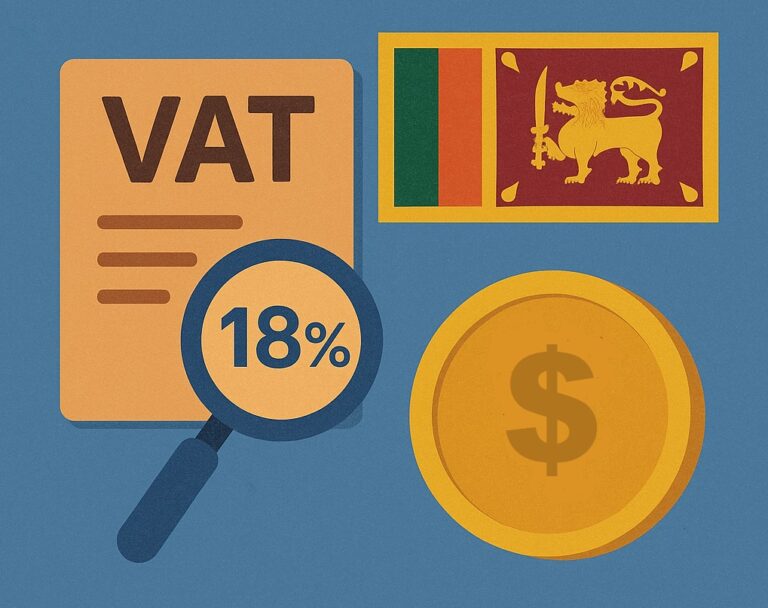
In a move that could have wide-reaching implications for Sri Lanka’s digital economy and international financial commitments, the government has announced plans to impose an 18% Value Added Tax (VAT) on foreign digital payment platforms such as PayPal, Stripe, and cryptocurrency exchanges, starting October 1.
The decision, unveiled through a Gazette notification, aims to expand the country’s tax net under the International Monetary Fund (IMF)-backed revenue reform agenda. However, the move has raised serious concerns over its economic impact, legality under IMF agreements, and implications for digital innovation and entrepreneurship.
Taxing the Digital Economy
The newly gazetted rules categorize financial technology platforms—including PayPal, Stripe, and crypto exchanges—as liable for VAT on services provided in Sri Lanka. The list also includes a broad range of foreign-supplied digital services such as cloud hosting, software-as-a-service (SaaS), digital advertising, e-commerce platforms, and streaming services.
While such taxation may seem like a progressive attempt to bring digital giants into the national tax framework, Sri Lanka’s move to tax financial services, particularly those that are exempt in well-regulated economies like the UK, EU, and Singapore, appears to be both abrupt and potentially counterproductive.
In many mature economies, financial services like PayPal are exempt from VAT due to the technical challenges in calculating value addition and to avoid cascading tax effects. For example, Singapore recognizes digital payment tokens as a medium of exchange and removed VAT (or GST) on them in 2020 to prevent double taxation and encourage innovation.
IMF Conflict & Risk of Multiple Currency Practices
Critically, this new tax regime may conflict with Sri Lanka’s commitments to the IMF. Under the ongoing Extended Fund Facility (EFF), Sri Lanka has agreed not to introduce or intensify Multiple Currency Practices (MCPs) or other exchange restrictions. The IMF has already flagged a 2.5% surcharge on foreign credit card transactions as a violation, albeit with a temporary waiver.
Analysts caution that layering an additional 18% VAT on PayPal and similar platforms—especially when these services are used to purchase VAT-liable goods or services—could result in total tax burdens of over 36%, due to cascading effects. If this taxation is processed through credit cards, the combined burden could violate Sri Lanka’s IMF performance criteria and affect future disbursements of IMF funding.
Cabinet Spokesman Dr. Nalinda Jayatissa responded to concerns by stating that a special committee has been appointed to review taxes on e-commerce platforms, and possible conflicts with international obligations will be evaluated.
Strangling Startups and Freelancers?
Beyond policy clashes, the 18% VAT could deal a blow to Sri Lanka’s burgeoning digital economy, especially freelancers, startups, and small online businesses. Many tech entrepreneurs rely on PayPal and Stripe to receive international payments, and taxing these platforms could reduce their competitiveness, increase operational costs, and even force some businesses to shut down.
Furthermore, these tax moves may discourage foreign clients from engaging with Sri Lankan service providers due to increased costs and tax complexity—undermining the government’s own digital economy goals.
A Pattern of Crisis-driven Taxation
Sri Lanka’s approach to taxation—especially during economic crises—has often been reactive rather than strategic. The country’s financial system has long operated under outdated frameworks and control-based policies such as forced forex conversions and surrender rules, imposed each time the Central Bank prints money and creates a balance of payments crisis. This pattern has historically led to forex shortages, rate hikes, and IMF bailouts.
Instead of pursuing long-term regulatory reform and economic stability, the government’s repeated reliance on patchwork tax policies erodes public confidence, investor trust, and institutional integrity.
Way Forward: Reform Over Reaction
Experts suggest that instead of hastily expanding VAT to new sectors, Sri Lanka should focus on modernizing its tax collection framework, ensuring consistency with global practices, and incentivizing digital growth. This includes aligning tax policies with IMF commitments, avoiding multiple currency practices, and ensuring that taxation does not penalize innovation or small entrepreneurs.
As global economies increasingly embrace fintech and digital assets, Sri Lanka risks falling further behind if taxation is used as a blunt instrument to patch budget deficits rather than build sustainable, forward-thinking policy.
Bottom Line:
The 18% VAT on PayPal, Stripe, and cryptocurrencies reflects the government’s urgency to expand revenue. However, unless handled with transparency, fairness, and strategic foresight, this tax could backfire—jeopardizing IMF support, choking digital entrepreneurship, and deepening economic uncertainty.
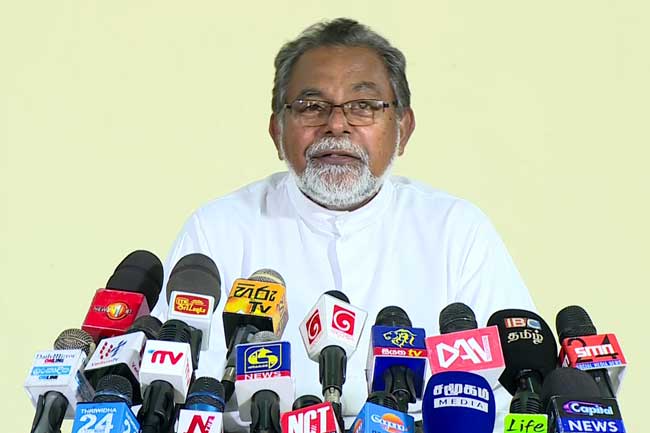
July 21, Colombo (LNW): The Catholic Church in Sri Lanka has formally distanced itself from a recent statement made by one of its clergy members calling for the death penalty to be imposed on a former senior police officer linked to failures surrounding the 2019 Easter Sunday bombings.
Fr. Cyril Gamini Fernando, Director of Communications for the Archdiocese of Colombo, addressed the matter publicly, stating that the comment in question—made by Fr. Jude Krishantha during a recent appearance—did not reflect the official stance of either the local Church or the global Catholic community.
“Fr. Jude has since clarified that he was speaking in a personal capacity, not on behalf of the Church. He has expressed regret over the misunderstanding, and we consider the matter resolved,” Fr. Fernando noted.
Fr. Krishantha’s comment had referred to the recently dismissed Deputy Inspector General of Police, Nilantha Jayawardene, whose removal was prompted by a Supreme Court decision and findings issued by the Presidential Commission of Inquiry into the Easter attacks.
Jayawardene had faced heavy criticism for alleged lapses in intelligence handling prior to the coordinated bombings that left over 250 people dead and hundreds injured.
While reaffirming the Church’s deep concern over the tragedy and its aftermath, Fr. Fernando was clear in reiterating the Church’s doctrinal opposition to capital punishment.
“The Catholic Church stands firmly against the death penalty, both here in Sri Lanka and globally. We believe in justice and accountability, but not through the taking of life,” he said.
He went on to emphasise the importance of fully implementing the recommendations made by the Presidential Commission.
“We hope that all recommendations are acted upon transparently and without delay, and that any further investigations bring clarity and closure to the affected families,” Fr. Fernando stated.
Addressing recent speculation in the media, Fr. Fernando also clarified that the Archbishop of Colombo had not requested the reinstatement of any specific officers, such as former CID Director Shani Abeysekera or former Public Security Secretary Ravi Seneviratne.
“What the Cardinal has called for is the restoration of all police officials who were removed in 2020, without singling out individuals by name,” he added.