Home Blog Page 477

DOES THE NEED FOR PUNISHMENT FADE AS MISTAKES BECOME OLD?

0


January 25, 2025


The above is a letter received this year regarding a fine
imposed on Sri Lanka under International Rugby Union
Regulation 8.1(c) for several years now, which has not yet
been paid. The reason for imposing this fine is that under
Regulation 8.1(c), foreign players who do not meet the
qualifications required to be used by another country for
another country must be allowed to play for Sri Lanka.
The Director General of Sports, who managed the
administration of rugby, is fully aware of this matter. If this
is the government’s policy, it suggests that the government
can absolve itself of any wrongdoings highlighted during
election campaigns without investigation, as those too
would be considered unrelated to their tenure and the harm
caused to the country.
According to the Director General of Sports, the fine,
which has added a black mark to the country’s sports and
affected the development of rugby in the country, does not
concern him.
However, the impact of deducting the penalty for this
offence from the funds allocated for rugby development in
the country continues to be felt even today. The
accompanying photograph highlights the order issued on
January 1st of this year, directing the payment of £5,000
from the total fine of £50,000.
Due to the non-implementation of these penalties, both the
president and secretary of the administration at the time
who committed the offence are now involved in the Asia
Rugby Administration. Although the Sri Lanka Rugby
administration was dissolved at the last moment, the
current Director of Sports appointed the second individual
to lead that administration. He claims this decision was
made at the request of Harin Fernando and World Rugby.
Instead of obeying and fulfilling it as soon as he was told,
the Director General of Sports should have told the
Minister at that moment that it was inappropriate to
reinstate the president who was removed because the
Minister was not fulfilling his responsibilities properly.
But he did not say so, and the appointment made without
saying so would allow him to win a responsibility in Asia.
After that, the Director General of Sports, not
understanding the court’s decision, is trying to amend the
existing rugby constitution, claiming that Asia and World
influence is being exerted. Meanwhile, he is trying to
prepare a constitution that will pave the way for those who
find it difficult to gain power under the current constitution
to return to power, while stalling the elections that the court
has ordered to be held.
It is evident that Priyantha Ekanayake, an official who
frequently advises government politicians on managing the
sport and serves on the National Sports Council, is also
aware of this. Neither World Rugby nor Asia Rugby has
regulations specifying how elections must be conducted
according to a country’s rugby constitution. These
regulations have been violated in the issues highlighted in
this letter.
As a result, the fines are still being paid. Shouldn’t the
Sports Director General and Priyantha Ekanayake
highlight to the ministers and the newly appointed
Secretary that a grave injustice has been done to the
country’s sports by violating the regulations?
They should emphasize that those responsible must be held
accountable and point out that the group behind these
wrongdoings, whose actions were politically influenced to
appease certain individuals, can be clearly identified by
examining the relevant time period of that decision.
Also, if there is an election system that has harmed the
clubs playing in the ‘A’ devision in the World Rugby and
Asia, it should be clarified how the people who came from
those clubs created the problems that rugby is currently
facing. Even though Priyantha Ekanayake came from those
clubs, the Director General of Sports, who is a free and
independent person, should be able to understand that
without bias.
The simplest thing is to work under the pressures imposed
by the international community without regard to the
punishment of those who have violated international
regulations. The Minister of Sports has already practically
understood how to solve all of them and has achieved
success. When the law is lifted or sanctions are imposed
after taking advice from the Attorney General of that
country, it is impossible to influence Sri Lanka by using the
international community as a manipulating hand, and those
who have been punished or sanctioned under the law of
their own country are not held accountable by international
organizations.
The decision to amend the constitution should be
entrusted to the administration elected through a process
conducted in accordance with the current constitution.
Any potential injustices caused to the sports clubs in that
category can be evaluated by reviewing the clubs
represented by the officials who have held office thus far.
Allegations against these officials include imposing fines
on rugby, depleting the rugby account, and accumulating
a significant amount of debt. At least there is no morality
in bringing such people to office through their sports
clubs. The Minister must act prudently to safeguard sports
from those who, instead of offering genuine advice,
enable and support individuals who misuse their
influential social connections to act with impunity.
The only question that needs to be asked of everyone is:
Under what regulation does the international community
have the power to suggest that this should be the official
election system, regardless of the country’s sports policies
and other unique factors? Why don’t the officials and
consultants who encourage the government to work under
a different regulation be prosecuted for those who have
committed violations under the regulations? The
government’s misleading actions present us with the image
of someone giving a speech in the middle of a large
gathering, naked , but the question is why the government
cannot see this nakedness.

Awareness Programme Held on Implementation of Electronic National Identity Card (e-NIC)

0

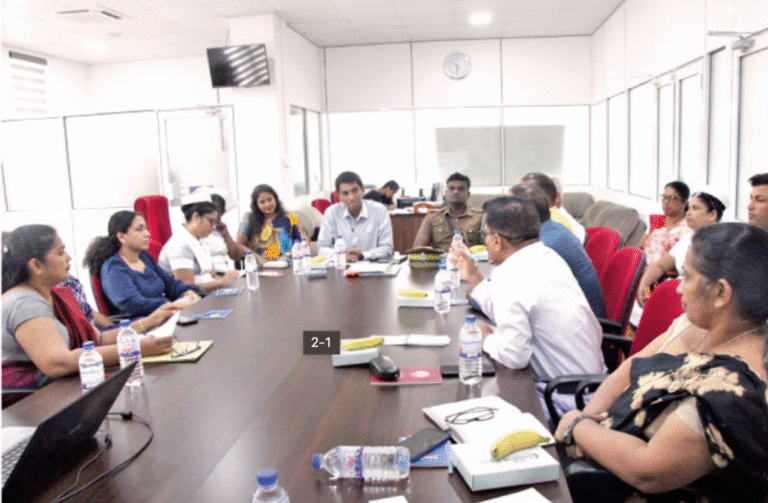
An awareness programme on the Electronic National Identity Card (e-NIC) project was held today (24) at the Information and Communication Technology Agency of Sri Lanka (ICTA) in Colombo. The event, organized under the patronage of Deputy Minister of Digital Economy Eranga Weeraratne, sought to address operational challenges and discuss the rollout of the e-NIC initiative.

The session provided a platform for stakeholders to share ideas and develop solutions to ensure the effective implementation of e-NICs, which are central to the government’s vision of a digitally empowered economy.

Dr. Hans Wijayasuriya, Chief Advisor to the President on Digital Economy and Chairman of ICTA, and ICTA Director Sanjaya Karunasena contributed valuable insights during the discussion.

The President’s Media Division (PMD) highlighted that the programme is a significant step towards streamlining the e-NIC process, ensuring a seamless transition for citizens. The initiative aligns with the government’s broader digital transformation agenda aimed at modernizing public services and boosting efficiency.

The e-NIC project is expected to enhance the digital identity infrastructure in Sri Lanka, supporting secure and efficient access to services for citizens across various sectors.

AKD Government Reviews Adani’s Wind Power Projects amid Controversy

0

India’s Adani Group’s proposed wind power projects in Sri Lanka, located in the northern regions of Mannar and Pooneryn, are under review by the new government.

This decision stems from President Anura Kumara Dissanayake’s campaign promise to reassess the terms of the projects, particularly the tariffs, which his administration views as excessive.

The National People’s Power (NPP), led by Dissanayake, has expressed concerns about the high price set for the electricity generated by the projects.

In early January 2025, the Sri Lankan Cabinet rescinded a prior decision made in May 2024 under former President Ranil Wickremesinghe’s administration, which had approved the wind power deal.

At that time, a tariff of 8.26 cents per kilowatt-hour was set for the 484 MW wind power project, sparking public outcry over the inflated cost compared to local bids that were as low as 4.88 cents.

Legal challenges from activists and environmental groups further complicated the situation, with concerns raised about the environmental impact of the wind farms, particularly their effect on local wildlife and migratory birds in the region.

The new government has since appointed a Project Committee and a Cabinet Appointed Negotiating Committee to reassess the Adani proposal and ensure alignment with current energy policies.

 An Adani spokesperson stated that the decision to re-evaluate the tariff was part of a standard process under a new government, ensuring that project terms align with its priorities. 

Adani remains committed to investing in Sri Lanka’s green energy sector, particularly the $1 billion earmarked for renewable energy.

The projects have faced significant opposition from environmental organizations such as the Wildlife and Nature Protection Society and Environmental Foundation Ltd. 

These groups criticized the project’s Environmental Impact Assessment and the location’s ecological significance.

 Furthermore, the local community, including the Bishop of Mannar, strongly opposed the project, citing concerns over its potential harm to local industries and livelihoods.

Amid these challenges, President Dissanayake pledged to cancel the deal and call for international tenders to develop wind power in Sri Lanka.

This pledge was fulfilled on December 30, 2024, when the Cabinet officially revoked the previous government’s decision to award the project to Adani Green Energy SL Ltd.

The President’s commitment to transparency and financial integrity was lauded by environmentalists, with figures such as biodiversity scientist Rohan Pethiyagoda celebrating the Cabinet’s decision.

Pethiyagoda, a vocal opponent of the Adani project, highlighted the corruption and lack of transparency in the previous administration’s dealings. 

He called for an investigation into the significant price markup that would have seen Sri Lanka pay 70% more for electricity compared to local bids, potentially resulting in billions of dollars in excess costs. 

He expressed optimism for a more transparent and accountable process under the NPP government, noting that the new Project Committee would be tasked with inviting international bids for the wind power development.This shift in policy marks a significant change in Sri Lanka’s approach to renewable energy projects, signaling a move toward more competitive and transparent bidding processes. It remains to be seen whether Adani, along with other international companies, will be able to compete fairly under the new framework

Sri Lanka’s Tea Export Success in 2024: Key Insights and future Outlook  “

0

Sri Lanka’s tea export industry witnessed modest progress in 2024, with total exports reaching 245.7 million kilograms, valued at $1.4 billion.

While the volume was only marginally higher than 2023’s 241.9 million kilograms, the export value hit a record high of Rs. 437 billion ($1.435 billion).

 This achievement, despite challenges such as fluctuating production levels and currency appreciation, highlights the resilience of Sri Lanka’s tea sector.

The increased Free on Board (FOB) value of $5.83 per kilogram, compared to $5.35 in 2023, underscores the rising global demand for premium Ceylon Tea.

However, declining earnings for farmers and estates due to the appreciating Sri Lankan Rupee (LKR) pose a concern. As Sri Lanka seeks to regain its earlier export peaks, addressing production constraints and navigating global market dynamics will be key.

Performance Overview

The 2024 export figures reflect underperformance compared to historical standards. The country’s peak export volume was 327 million kilograms in 2014, generating $1.6 billion in revenue.

 In contrast, the 2024 production stood at 262 million kilograms, with domestic consumption absorbing the remainder. Asia Siyaka Commodities PLC highlighted this low production as a significant factor limiting export growth.

Packaged tea exports declined by 6%, falling to 101 million kilograms from 108 million in 2023. Conversely, tea bag shipments rose by 10% to 25.5 million kilograms, marking a positive trend.

Green tea exports also grew by 4%, reaching 4.6 million kilograms, though instant tea shipments saw a slight decrease.

Key Export Markets

Iraq retained its position as the largest importer of Sri Lankan tea in 2024, with shipments increasing by 5% to 34.2 million kilograms.

However, this market remains low-value, with an average FOB of $4.41 per kilogram. Russia followed with a 10% increase, importing 24.9 million kilograms at an FOB of $5.81. The UAE demonstrated strong growth, with exports rising by 14% to 21.1 million kilograms.

Conversely, exports to Turkey dropped sharply from 30.4 million kilograms in 2023 to 17.7 million kilograms, reflecting market instability.

China recorded a slight decline of 6%, importing 11.5 million kilograms. Iran’s imports surged by 60% to 10.4 million kilograms, driven by the ongoing tea-for-oil debt agreement.

 Other significant markets included Saudi Arabia, which increased imports by 30% to 9 million kilograms at a high FOB of $7.83, and Chile, which imported 8.3 million kilograms, up from 7.3 million in 2023.

Outlook for 2025

Asia Siyaka Commodities expressed optimism for 2025, citing improved geopolitical conditions in key markets.

The Middle East and North Africa, which accounted for 50% of exports, are expected to recover as political and economic stability improves. Syria, for example, imported 7.4 million kilograms in 2024 but has historically absorbed up to 30 million kilograms annually. Peace and stability could help this market rebound.

Libya’s economic prospects are tied to resolving political disputes and ensuring stable oil production. The country imported 10 million kilograms in 2024 at a low FOB of $3.96, but there is potential for both volume and value growth.

Similarly, Russia’s ongoing challenges could shift if the conflict with Ukraine ends, unlocking opportunities for increased exports to both Russia and Ukraine.

Overall, Sri Lanka’s tea industry faces both opportunities and challenges in 2025. Enhanced production, strategic market diversification, and effective responses to geopolitical developments will be critical for sustaining growth and maximizing export revenue.

Colombo’s Port Expansion Drives Regional Trade Growth amid Challenges

0

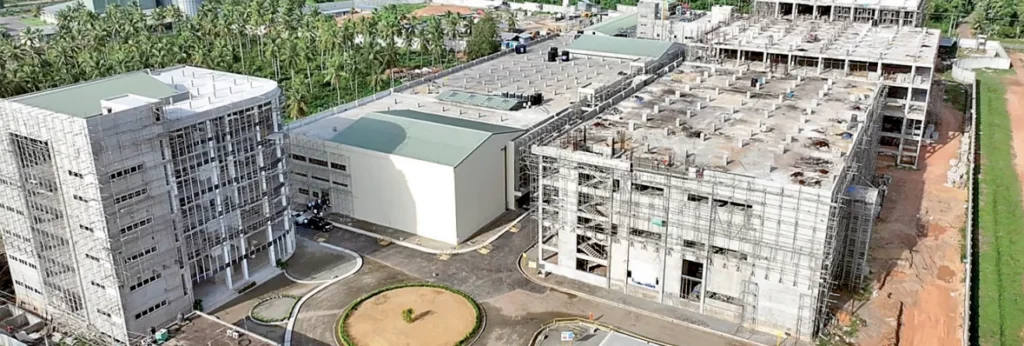
The Colombo East Container Terminal (CECT) has recently boosted its efficiency with the installation of three new Ship-to-Shore (STS) cranes, raising its total to nine.

This upgrade allows the terminal to accommodate a wider variety of vessels, regardless of size, reinforcing Sri Lanka Ports Authority’s (SLPA) goal of establishing the country as a key maritime hub in the Indian Ocean.

Once fully operational by mid-2025, the CECT is expected to handle up to 3.5 million Twenty-Foot Equivalent Units (TEUs) annually, with specifications including a 1,320-meter berth and water depths of 18–20 meters to support larger vessels.

In 2024, SLPA terminals achieved a record throughput of 2.41 million TEUs, contributing to the Port of Colombo’s total of 7.78 million TEUs.

This milestone positions Colombo as a leading gateway for international trade in the region. Key contributors include the South Asia Gateway Terminals (SAGT) with 2.02 million TEUs and the Colombo International Container Terminal (CICT), which led with 3.35 million TEUs due to its deep-water facilities.

Meanwhile, the delayed expansion of the Jaya Container Terminal (JCT) has significantly overrun costs, doubling from an initial estimate of Rs. 5 billion to Rs. 10 billion.

The upgrade includes extending the terminal’s anchorage by 120 meters, increasing its length to 1,400 meters, installing three new gantry cranes, and expanding the container yard by 13 acres to meet growing demand.

With its existing 14 gantry cranes, these enhancements aim to address the current 600-meter berth limitation, which restricts the terminal from handling two large vessels simultaneously, impacting SLPA’s profitability.

Although the JCT expansion was approved in July 2017 and contracted in November 2018 at Rs. 5.04 billion, delays caused by political instability and procedural inefficiencies have hindered progress.

 Originally scheduled for completion by July 2020, only 82.6% of the project was finished by the end of 2023. Despite this, renovations are nearing completion, with an official launch planned for June 2024.

 These developments signify a crucial step in strengthening Sri Lanka’s maritime infrastructure. Improved governance and timely project execution are essential to capitalize on the country’s strategic location, enhancing its role in global trade networks.

Alcohol, Tobacco, and Cannabis Abuse Threaten Sri Lankan Wellbeing

0

Sri Lanka faces a rising threat from the nexus of alcohol, tobacco, and cannabis, posing significant risks to public health and societal wellbeing. Experts warn that these industries, driven by profit motives, continue to evolve their strategies, targeting vulnerable populations such as youth and women.

 The Center for Combatting Tobacco (CCT), Alcohol and Drug Information Centre (ADIC), and National Authority on Tobacco and Alcohol (NATA) urge policymakers to adopt a stricter stance to mitigate the long-term consequences of substance abuse in the country.

At a forum held recently , these organizations highlighted the concerning trends in substance use and abuse.

They criticized the tobacco industry’s recent windfall following a cigarette price hike, which, despite reducing consumption to two billion sticks, is expected to boost profits by over Rs. 7 billion.

Alarmingly, global tobacco manufacturers are reportedly aligning with cannabis producers to promote products under the guise of innovation, threatening public health under the pretext of business growth.

CCT Director Dr. Mahesh Rajasuriya explained that the cannabis industry complements the cigarette market.

He expressed concern about the promotion of electronic products containing cannabis and other flavored additives designed to attract women and children.

He also warned against the involvement of tobacco and cannabis companies in research, education, and health initiatives to legitimize their products.

The forum included experts from the National Dangerous Drugs Control Board, Sri Lanka Medical Association (SLMA), and other professional bodies.

They unanimously condemned any attempts to reduce alcohol prices, arguing that it would not deter consumers from illicit products but might instead lower the price of illegal alternatives.

SLMA President Dr. Anula Wijesundera discussed the ongoing efforts to introduce draft regulations restricting access to tobacco for individuals born after 2010.

 She also emphasized the World Health Organization’s (WHO) declaration in 2023 that no amount of alcohol consumption is safe, urging the Government to reconsider any measures that could encourage its use.

NATA Chairman Dr. Alan Ludowyke highlighted the alarming rise in oral tobacco consumption, which is a leading cause of oral cancers and related diseases. He reiterated that tobacco remains the world’s largest preventable killer, with no safe level of usage.

Further, A.T. Darshana from the Dangerous Drugs Control Board presented data revealing a staggering 200% increase in drug abuse, including methamphetamine, with worrying levels of involvement among women and children.

 While alcohol and tobacco sales contribute over 15% of Sri Lanka’s tax revenue, experts at the forum contested the notion that these industries are indispensable for the Treasury. Instead, they called for urgent policy changes to prioritize health over profits and curb the devastating effects of substance abuse.

Sri Lanka Reiterates Support for China’s Sovereignty and Territorial Integrity

0

Foreign Minister Vijitha Herath affirmed that Sri Lanka will not permit its territory to be used for activities that promote separatism, including any actions related to China’s internal matters. Addressing a media briefing on January 22, the minister emphasized Sri Lanka’s commitment to upholding the “One China” policy and ensuring the country’s territorial integrity.

“Sri Lanka will not allow its land to be used for China’s separatist activities,” Minister Herath stated, adding that China has pledged to support Sri Lanka in preserving its sovereignty and territorial unity. He underscored that previous Sri Lankan governments had upheld the “One China” policy, and the current administration remains committed to it.

The minister highlighted that Sri Lanka stands by China as a unified nation, recognizing its contributions to safeguarding Sri Lanka’s own territorial integrity against separatist movements. “If there are any attempts to promote separatism within China, the Sri Lankan Government will intervene, as this aligns with our principles,” he stated.

Additionally, the two nations have agreed to implement joint defense training programs, further strengthening their collaboration. Minister Herath assured that Chinese projects in Sri Lanka will be managed in a way that does not pose any threats to the country’s interests, with adjustments made where necessary through mutual agreement.

“These agreements are not based on policies within China but are aligned with Sri Lanka’s Constitution. Our support for China as a unified nation will continue on the international stage,” the minister concluded.

Roshan Sithara Khan Azard Becomes Sri Lanka’s First Woman Ambassador to Qatar

0

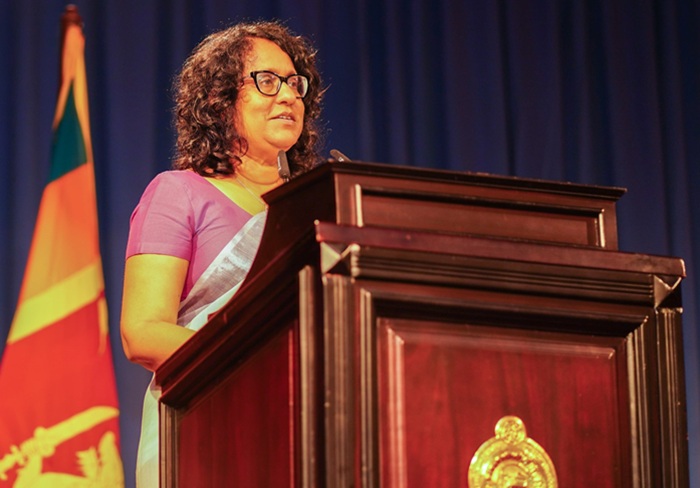
Roshan Sithara Khan Azard has officially assumed duties as Sri Lanka’s Ambassador-designate to Qatar at the Sri Lankan Embassy in Doha on January 23, making history as the first woman to hold this position.

Ambassador-designate Azard emphasized her commitment to strengthening bilateral ties between Sri Lanka and Qatar, particularly in areas such as trade, investment, and cultural exchange. She also highlighted the importance of fostering stronger people-to-people connections between the two nations.

A seasoned diplomat with over 25 years of experience, Ambassador-designate Azard joined the Sri Lanka Foreign Service in 1998. She has served in various roles within the Ministry of Foreign Affairs, Foreign Employment, and Tourism, most recently as the Additional Secretary for SAARC and Latin America and the Caribbean.

Her extensive diplomatic career includes postings in London, Chennai, Doha, and Ottawa, where she served as Deputy High Commissioner and Acting High Commissioner. Her latest appointment marks a significant milestone for Sri Lankan diplomacy in Qatar.

Consultant Psychiatrist Emphasizes Supporting Students with Low Exam Results

0

Consultant Psychiatrist Dr. Rumy Ruban has stressed the importance of providing emotional support to students who do not achieve high marks in school examinations. Speaking in light of the recently released Grade Five Scholarship Examination results, Dr. Ruban highlighted the critical role parents and teachers play in shaping children’s mental well-being during such times.

Dr. Ruban urged parents to avoid repeatedly criticizing or highlighting their children’s lower performance, as this could lead to psychological distress. He also cautioned against comparing their children’s results with those of peers, as such comparisons can undermine their self-esteem and worsen mental stress.

Instead, Dr. Ruban encouraged parents to motivate their children to engage in education, extracurricular activities, and sports, which can foster resilience and alleviate mental strain. Activities like family picnics or pleasure trips were also recommended as effective ways to help children recover from stress and anxiety.

For children exhibiting signs of mental health issues, Dr. Ruban advised parents to consult professionals for appropriate guidance and treatment. He reiterated the importance of creating a nurturing and encouraging environment for all children, irrespective of their academic performance.

Switzerland Pledges Support to Recover Sri Lanka’s Assets and Boost Anti-Corruption Efforts

0

Ambassador of Switzerland to Sri Lanka, Dr. Siri Walt, has reaffirmed Switzerland’s commitment to supporting Sri Lanka in recovering assets that have been moved out of the country.

During a meeting held at the Presidential Secretariat with the Secretary to the President, Dr. Nandika Sanath Kumanayake, Ambassador Walt outlined the international measures required for asset recovery and assured Switzerland’s readiness to provide the necessary resources and assistance.

The discussions also delved into leveraging Switzerland’s expertise and technical knowledge to bolster Sri Lanka’s ongoing anti-corruption initiatives. The Swiss government reiterated its support for priority programs, including the “Clean Sri Lanka” initiative, through technical and financial assistance.

Moreover, Ambassador Walt expressed Switzerland’s dedication to addressing Sri Lanka’s social challenges, promoting national reconciliation, and aiding the development of the Northern region by offering essential aid and resources.

Senior Additional Secretary to the President Roshan Gamage also attended the meeting, which marked a significant step toward enhanced collaboration between the two nations.