Home Blog Page 478

Solar Sector Reels from Tariff Cuts as Clean Energy Future at Risk

0

Sri Lanka’s renewable energy industry is sounding alarm bells over a government decision to slash solar power purchase tariffs, a move developers say could undermine years of progress toward clean energy. The Federation of Renewable Energy Developers (FRED) warns that the drastic reduction in feed-in tariffs will disrupt investor confidence, halt growth in rooftop solar, and jeopardize the nation’s long-term renewable energy ambitions.

In a strongly worded press briefing held at the Ceylon Chamber of Commerce on Friday, FRED President Thusitha Peiris accused the government of mismanaging the country’s energy transition at a critical time. “The recent actions risk dismantling years of progress and plunging our sector into an uncertain future, with severe economic and social repercussions,” Peiris declared.

Central to FRED’s concern is a recent Cabinet decision that slashes feed-in tariffs — the rates paid to private producers of renewable energy — by over 30% in some instances. The federation argues these cuts are unjustified and financially devastating, especially when macroeconomic conditions such as exchange and interest rates remain largely unchanged since the last tariff review in 2024.

“There is no economic rationale to justify such steep cuts. This is a deliberate signal to discourage investment in solar and other renewables,” Peiris said, warning that the decision has already triggered fear among developers, threatened hundreds of jobs, and eroded investor trust.

Rooftop solar power, supported by feed-in tariffs, has contributed around 1,700 MW to the national grid, vastly outperforming the 200 MW generated through ground-mounted solar via state-run tenders in the past decade. FRED maintains that replacing tariffs with a tender-based system would be a “national policy blunder,” noting that tenders have consistently failed to deliver results.

“The evidence is clear: predictable tariffs drive growth. Tenders have not,” Peiris asserted.The situation is further complicated by the government’s lack of integration of Battery Energy Storage Systems (BESS), which are critical for managing excess solar power. Despite FRED’s long-standing call for at least 1,000 MWh of BESS to be added to the grid, progress has been negligible.

Peiris also criticized the recently introduced tariff for BESS projects as “confusing and directionless,” saying it lacks clear implementation guidelines and is rendered ineffective by nearly 50% import duties, which make such projects financially nonviable. He urged the government to urgently remove these tax burdens and allow developers greater flexibility to expand existing projects.

Without urgent course correction, FRED warns Sri Lanka could fall far short of its renewable energy targets — with consequences that extend far beyond the power sector.

Banks Allay Fears Over Parate Law as SMEs Urged to Cooperate

0

Sri Lanka’s licensed commercial banks have moved to calm rising anxiety among small and medium enterprises (SMEs) over the potential enforcement of parate laws, assuring that widespread asset seizures are not on the horizon. The Sri Lanka Banks’ Association (SLBA) in a statement on Monday urged borrowers not to panic and encouraged troubled businesses to proactively engage with lenders to restructure outstanding loans.

The response comes amid renewed agitation by a small group of borrowers, following the end of an extended moratorium on parate executions—a legal mechanism that allows banks to seize mortgaged assets from loan defaulters without court intervention.

“There is no intention by banks to rush into parate action,” the SLBA emphasized, pointing out that only a tiny fraction of borrowers fall into severe default, and even among them, most are given support to reschedule their loans rather than face asset seizures.

The government earlier this year extended the moratorium on parate execution until the end of 2025 for SMEs with loans up to Rs. 25 million, provided they had contacted their banks before 31 March 2025. Borrowers with loans between Rs. 25 million and Rs. 50 million have a grace period until 30 September 2025, while those with loans above Rs. 50 million had until 30 June 2025 to engage with banks. In addition, several banks voluntarily granted extensions up to December 2025 to assist struggling businesses.

Now that the moratorium has officially ended, SLBA warned that certain groups are trying to spark fear of mass auctions and asset seizures, portraying parate laws as the default response by banks.

“This narrative is not only misleading but harmful,” SLBA stated. “Parate laws are designed to safeguard depositors’ money and are used only as a last resort.” According to data from 2019 to 2023, less than 1% of non-performing loans resulted in parate action—even during some of the most challenging economic years.

The association also cautioned that spreading fear could damage public confidence in the financial system, which plays a vital role in supporting economic recovery and investment.

SLBA urged SMEs in financial distress to engage with their banks early and transparently to explore restructuring options. “The stability of the banking sector and wider economy depends on constructive dialogue, not misplaced fear,” the association stressed.

Colombo Dockyard Eyes Lifeline as Indian Shipbuilder Set to Take Control

0

Colombo Dockyard PLC (CDP), one of Sri Lanka’s largest shipbuilding and repair facilities, is poised for a major turnaround with Indian state-owned shipbuilding giant Mazagon Dock Shipbuilders Ltd. selected to acquire a controlling stake in the company. The move, CDP says, is part of an open and competitive process aimed at reviving the financially strained shipyard, which is currently on the Colombo Stock Exchange’s watch list.

In a disclosure to the Colombo Stock Exchange yesterday, CDP confirmed that it has entered into an agreement with Mazagon Dock Shipbuilders and its current controlling shareholder, Japan’s Onomichi Dockyard Co. Ltd., for a strategic investment. The deal, referred to as the “Proposed Transaction,” is structured to take place through a capital infusion into CDP via a Rights Issue.

The company addressed growing speculation in the market following Mazagon’s public mention of a potential $52.96 million investment, which triggered confusion about the valuation of CDP shares. Clarifying the matter, the Board of Directors explained that this figure represents the full investment potential, including all shares acquired through the Rights Issue and any additional shares obtained via a mandatory offer to remaining shareholders.

CDP acknowledged that it is currently grappling with serious financial difficulties, as previously disclosed in its audited financial statements. The company has been flagged under the CSE’s watch list due to concerns over its status as a going concern. Onomichi, the Japanese shareholder that has held a majority stake in CDP for years, has reportedly declined to inject any further capital and has expressed interest in exiting its investment.

In response, CDP actively sought a new investor capable of revitalizing the company through both capital and technical expertise. After a competitive selection process, Mazagon emerged as the preferred partner. The plan involves Mazagon subscribing to the Rights Issue by taking over the rights renounced by Onomichi and potentially buying any unsubscribed shares, thereby gaining control.

Following this capital infusion, Mazagon will be required under the Takeovers and Mergers Code to make a mandatory offer to remaining shareholders, including Onomichi. CDP stressed that the investment is intended to rescue the company from potential collapse and urged investors to seek professional financial advice instead of speculating based on rumours.

The proposed Rights Issue and share pricing are still subject to Board and shareholder approvals, along with regulatory clearance. Full pricing details will be disclosed once these approvals are obtained.

Sri Lanka Aims for Debt Repayment Capability by 2028, Says Minister Lalkantha

0

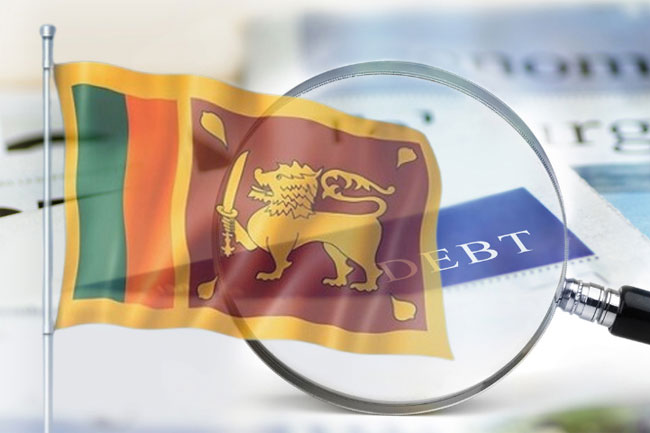
Agriculture, Land, Irrigation and Livestock Minister K. D. Lalkantha stated that the Government is committed to achieving debt repayment capability by 2028, while staying on course with the reform programme agreed upon with the International Monetary Fund (IMF).

Addressing the media yesterday (July 3) following a special District Development Committee meeting held at the Kandy District Secretariat, the Minister emphasised that the current economic stability is the result of strict adherence to the IMF-backed recovery programme, and reaffirmed the Government’s determination to continue along this path.

“We are operating within the IMF framework proposed for Sri Lanka, and we have no intention of disrupting that. The present stability is due to our cooperation with the IMF. Once we complete the remaining targets, we expect to reach a position to repay our debt after 2028,” Lalkantha said.

He dismissed criticisms from the Opposition, stating that national policy decisions will not be reversed due to external pressure such as protests or strikes. “We will adjust prices according to the approved pricing formulas—whether they rise or fall. Policy will be guided by sound economics, not emotional outbursts or political noise,” he added.

Lalkantha warned that reversing essential reforms for short-term political gain would jeopardize the country’s hard-earned progress. “This country collapsed before. Now, it is recovering due to disciplined internal management. We won’t let that unravel because of populist pressure.”

Commenting on ongoing fiscal planning, the Minister revealed that discussions on the upcoming national budget are already underway. He said the Government’s intention is to offer more relief than in the previous budget while staying within the bounds of fiscal responsibility.

“The Leader of the Opposition can shout as much as he wants. We will not abandon the country’s long-term recovery path to appease short-term politics,” the Minister concluded.

Sri Lanka Customs Surpasses Rs. 1 Trillion in Revenue in First Half of 2025

0

Sri Lanka Customs has generated over Rs. 1 trillion in revenue during the first six months of 2025, according to Media Spokesperson and Additional Director General of Customs Seevali Arukgoda.

Speaking at a media briefing held today (July 3) in Colombo, Arukgoda expressed confidence that the annual revenue target of Rs. 2.115 trillion set by the government for this year is well within reach, given the current progress.

He attributed this strong performance to the restructuring of revenue collection mechanisms within Sri Lanka Customs, which has significantly improved efficiency and compliance.

“This achievement is a direct result of our internal reforms and operational improvements. We are optimistic that the momentum will continue through the second half of the year, enabling us to exceed the government’s expectations,” Arukgoda said.

The Customs Department plays a critical role in national revenue generation, with collections largely derived from import duties, excise, and other trade-related levies.

Government to Crack Down on Harmful Plastic Products Endangering Children’s Health

0

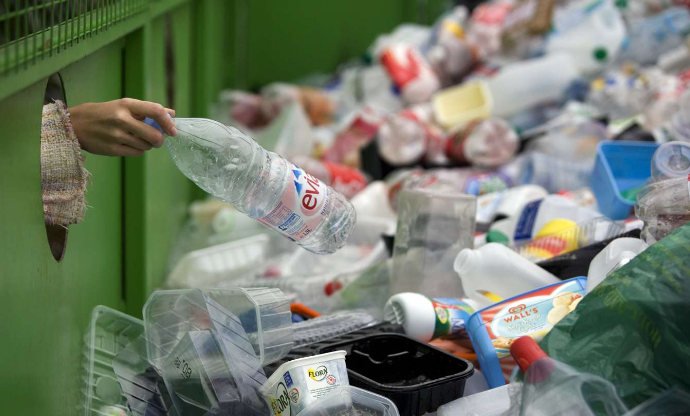
The Ministry of Trade, Commerce, Food Security and Cooperative Development has announced plans to appoint a special expert committee to investigate and report on plastic-based products in the market that pose health risks to children.

Addressing a media briefing in Colombo yesterday, the Minister stated that decisive action will be taken within the next two months to prevent the circulation of such hazardous plastic items, particularly those used by children, based on the committee’s findings.

He specifically warned against plastic bottles used by children to store hot water, stating that laboratory tests have shown these products may release harmful substances when exposed to heat. “Some of these materials have been found to pose serious health risks, including the potential to release carcinogens during production and use,” he said.

The Minister emphasized that global attention has been drawn to the dangers of plastic products, especially those containing cancer-causing chemicals. He confirmed that local investigations have also revealed high-risk levels in several plastic items currently available in the market.

“We will summon importers and manufacturers and present the findings to them. The committee will be comprised of health and industry experts, and all stakeholders will be invited to raise their concerns. Based on the recommendations we receive, we will take the strongest possible regulatory and enforcement actions to protect children,” he added.

The Government’s upcoming measures are expected to include regulatory restrictions, stricter import controls, and potential bans on certain plastic products deemed unsafe for children.

HRCSL Raises Alarm Over Deaths in Police Custody and Human Rights Violations in Schools

0

Chairman of the Human Rights Commission of Sri Lanka (HRCSL), Nimal Punchihewa, has revealed that 49 individuals have died in police custody between 2020 and March 2025, with an additional 30 deaths occurring during confrontations involving the Police. He described these figures as deeply concerning, especially as the Police are entrusted with the duty of upholding law and order—not violating it.

Punchihewa made these remarks at a human rights awareness programme held at the Kandy District Secretariat, organised by the HRCSL’s Kandy District Coordination Office to strengthen human rights protection mechanisms and reinforce the rule of law among public officials.

Highlighting emerging trends, Punchihewa stated that more complaints of human rights violations are now being reported from within the school system than from law enforcement agencies. “We receive numerous reports of teachers physically punishing students, along with incidents of ragging and other abusive behaviour,” he said. He stressed that teachers have no legal authority to inflict physical or mental harm on children under the guise of discipline, and that ragging constitutes a violation of human rights and fundamental freedoms under Sri Lankan law.

Addressing misconduct by law enforcement, Punchihewa clarified that while only a small number of officers are responsible for such abuses, their actions severely damage the credibility of the entire Police Department. “The erosion of public trust and respect toward the Police is alarming. Only by working closely with the people can the Police truly serve the nation,” he added.

Punchihewa also spoke against the unlawful arrests of women alleged to be involved in prostitution, stating that police officers cannot arrest women merely for being present at massage parlours. “The law allows action only against brothel operators. Women cannot be arrested unless proper investigations are conducted and judicial authorization is obtained,” he explained. He noted that while there is no legal restriction on detaining individuals for social health screenings, arrests must follow due legal process, unless carried out under specific provisions like the Quarantine and Prevention of Diseases Ordinance.

The event was also addressed by Kandy District Secretary Indika Udawatta and HRCSL Kandy District Coordinator Wiranjan Dias Sumanasekara, who emphasized the importance of safeguarding human rights at all levels of governance and public service.

President Launches ‘Praja Shakthi’ Programme to Eradicate Rural Poverty Through Community Empowerment

0

The Government today officially launched the ‘Praja Shakthi’ National Programme, a comprehensive initiative aimed at eradicating rural poverty through community empowerment and targeted development interventions. The launch ceremony took place at Temple Trees under the patronage of President Anura Kumara Dissanayake.

The ‘Praja Shakthi’ programme is designed to operate under an integrated and inclusive organizational structure, aligning with the Government’s vision of “A Prosperous Country – A Secured Life.” The initiative aims to address multidimensional poverty through a multi-pronged approach that combines social security, economic inclusion, and institutional reform.

Speaking at a media briefing held yesterday at the Government Information Department, Rural Development, Social Security and Community Empowerment Minister Upali Pannilage explained that Praja Shakthi Councils will be established in each village, comprising both public officials and community members. These councils will be responsible for developing customized village development plans and strengthening local governance structures to ensure effective service delivery and inclusive growth.

The programme will also bolster Sri Lanka’s national social welfare system, improving its ability to support vulnerable groups while unlocking the country’s untapped economic potential.

Oversight for the initiative will be provided by the Praja Shakthi National Operations Committee, which includes nine Ministry Secretaries and Chief Secretaries of Provincial Councils. The committee will be convened by Senior Additional Secretary (Development Administration) to the President, Kapila Janaka Bandara.

Among the Government’s three flagship national development programmes, Praja Shakthi specifically targets rural and estate sectors, where 95.3% of those affected by multidimensional poverty currently live. The programme seeks to reverse this trend by strategically directing resources and building institutional capacity for sustainable, people-centric development.

Secretary to the President Dr. Nandika Sanath Kumanayake and Senior Additional Secretary Kapila Janaka Bandara were also present at today’s launch event.

Several spells of light showers will occur in the Western Province

0

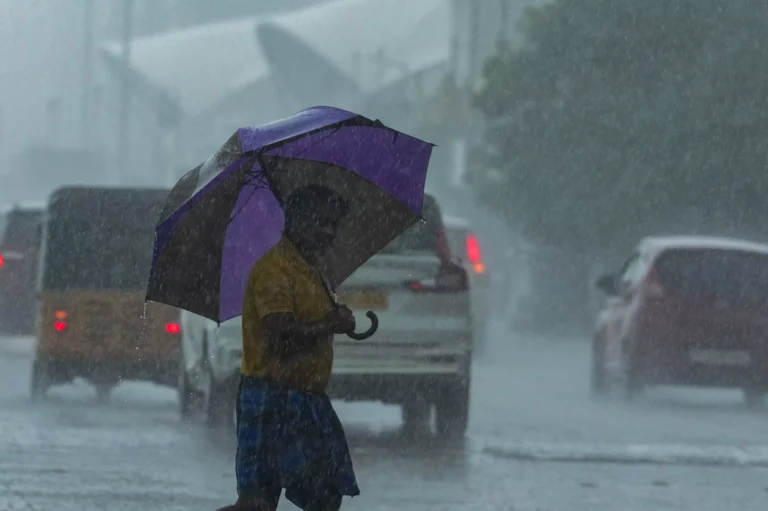
Several spells of light showers will occur in the Western, Sabaragamuwa and North-western provinces and in Nuwara-Eliya, Kandy, Galle and Matara districts.

Showers or thundershowers may occur at a few places in the Uva province and in Ampara and Batticaloa districts during the afternoon or night.

Fairly strong winds of about (30-40) kmph can be expected at times over Western slopes of the central hills and in Northern, North-central and North-western provinces and in Trincomalee and Hambantota districts.

The general public is kindly requested to take adequate precautions to minimize damages caused by temporary localized strong winds and lightning during thundershowers.

Hope for Sri Lankan Job Seekers as Korea E-8 Visa Program Gets Green Light

0

By: Staff Writer

July 03, Colombo (LNW): Sri Lankan job seekers hoping to work in South Korea have faced months of uncertainty and frustration due to delays in implementing the much-anticipated Korean E-8 seasonal employment visa program.

 Thousands of potential migrant workers, particularly from rural areas, have pinned their hopes on this opportunity as local job prospects remain limited. However, the lack of a finalized agreement and slow administrative processes have heightened anxiety among applicants, raising concerns over missed opportunities and growing financial burdens.

With rising living costs and unemployment levels in Sri Lanka, foreign employment has become an essential income source — making the delay in launching the E-8 visa system a critical issue for many families.

In a significant development, the Sri Lankan Cabinet has now approved a pilot project aimed at deploying local workers to the Republic of Korea under the E-8 visa category for seasonal employment.

The move follows a proposal submitted by Minister of Foreign Affairs, Foreign Employment and Tourism, Vijitha Herath, who sought authorization to enter into a Memorandum of Understanding (MoU) with Yongvol, a local government institution in Korea.

This MoU will enable Sri Lankans to secure short-term employment — typically between 5 to 8 months — in Korea’s agriculture and fisheries sectors. These jobs are based in the rural provinces of Yongvol, offering workers not only an opportunity to earn but also to contribute significantly to Sri Lanka’s foreign exchange earnings during a time of economic recovery.

Negotiations leading to this agreement were conducted through diplomatic channels with various Korean local authorities, culminating in a consensus with Yongvol. The Attorney General’s Department has granted clearance for the MoU, clearing the final legal hurdle for implementation.

The Sri Lanka Bureau of Foreign Employment (SLBFE) will handle the recruitment process and facilitate worker deployment. Its Chairman, Kosala Wickramasinghe, confirmed that once the agreement is formalized, efforts will be accelerated to recruit eligible candidates and commence placements without further delay.

Wickramasinghe also issued a strong warning to job seekers not to fall prey to fraudulent agents or intermediaries, emphasizing that recruitment under this pilot program will be managed solely by the Sri Lankan government. “No one should hand over money or their passports to any outside party,” he stressed.

The long-awaited pilot program is expected to restore hope among many Sri Lankan job seekers while strengthening labor ties between Sri Lanka and Korea in the coming months.