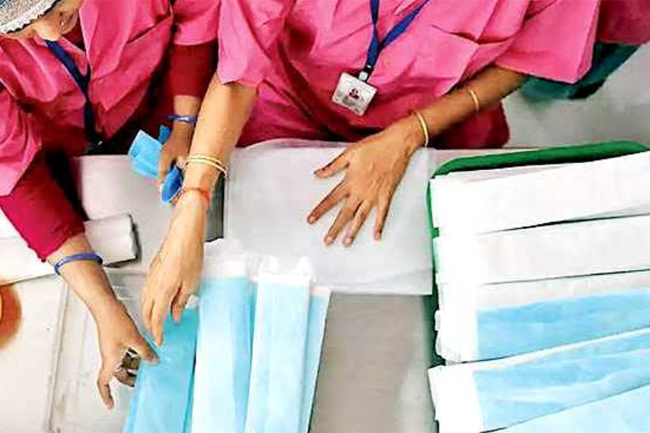
July 03, Colombo (LNW): The Ministry of Education has announced that the 2025 distribution of sanitary napkins to schoolgirls will be managed exclusively by four trading organisations that have received official certification.
This revised approach seeks to enhance the efficiency and reliability of the national programme while maintaining stringent standards for product quality and student welfare.
These selected institutions have been vetted and approved by the Sri Lanka Standards Institution (SLSI) and hold certification under the SLS 1732:2022 standard, which covers health, hygiene, and safety requirements.
Only these authorised entities will be permitted to access school premises and deliver sanitary napkin packs directly to students, according to the Ministry.
The decision to limit distribution to certified suppliers follows growing concerns over the consistency and safety of products delivered through previous channels. Officials stated that the move is expected to protect the dignity, health, and comfort of school-aged girls, particularly in underserved communities where access to proper menstrual hygiene products remains a challenge.
By introducing a streamlined model anchored in regulatory oversight, the Ministry aims to eliminate substandard or unregulated supplies and ensure that every student benefits from reliable, high-quality menstrual hygiene support.
The involvement of certified distributors also introduces a layer of accountability, making it easier to monitor distribution efforts and address any deficiencies.
July 03, Colombo (LNW): The government has reaffirmed its commitment to implementing a structured fuel pricing system, citing it as the most equitable and practical solution available under the current economic climate.
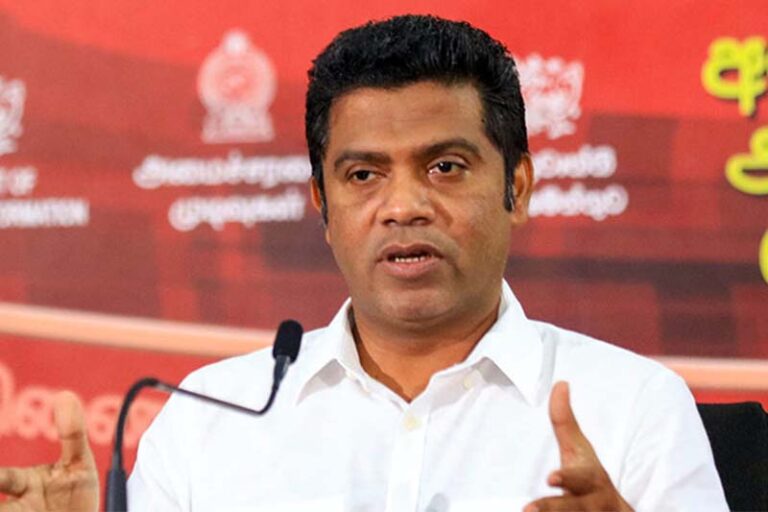
Speaking at the weekly Cabinet media briefing yesterday (02), Cabinet Spokesperson and Minister Dr Nalinda Jayatissa stated that the pricing formula, originally introduced by the previous administration, remains the most viable means of ensuring transparency, repaying the mounting debts of the Ceylon Petroleum Corporation (CEYPETCO), and addressing legacy issues of fiscal mismanagement.
Dr Jayatissa acknowledged the inherent volatility associated with fuel pricing formulas, noting that price fluctuations are an unavoidable reality when such mechanisms are in place. However, he argued that this approach, despite its imperfections, is essential in distributing the burden fairly while safeguarding the country’s financial stability.
Responding to questions regarding the government’s apparent shift in stance—having previously criticised the former regime for implementing the very same formula—Dr Jayatissa emphasised that the circumstances have evolved.
He remarked that although the present administration had reservations about the former government’s policies, the harsh economic realities necessitate difficult but responsible choices.
He further pointed out that the possibility of offering greater relief to the public is constrained by the deep financial woes inherited from the past. The CEYPETCO, he explained, remains heavily indebted, and irregularities in fuel procurement and financial conduct during the tenure of the previous administration continue to weigh on the sector.
“The repercussions of past misconduct do not simply vanish when a minister leaves office,” he said. “We are left to manage the fallout for years to come.”
According to the Minister, the reimplementation of the pricing formula is not a matter of political alignment, but a strategic decision aimed at restoring order and accountability in the energy sector. He reiterated that the government remains committed to reforms that will ultimately ease the burden on citizens, even if short-term adjustments prove difficult.
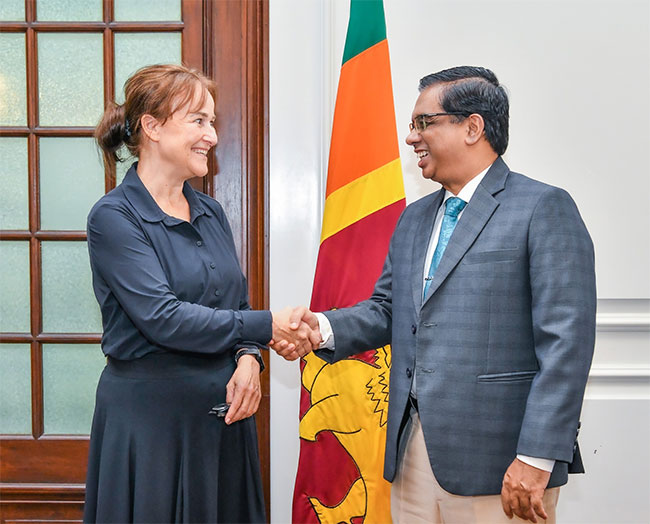
July 03, Colombo (LNW): A key meeting took place yesterday (02) at the Presidential Secretariat in Colombo, bringing together Dr Nandika Sanath Kumanayake, Secretary to the President of Sri Lanka, and Dutch Ambassador Bonnie Horbach, to deliberate on the prospective repatriation of Sri Lankan heritage items currently housed in the Netherlands.
The dialogue centred around a shared interest in facilitating the return of historically significant artefacts and manuscripts that were taken abroad during the colonial period.
Ambassador Horbach acknowledged the positive engagement of Sri Lankan authorities, commending the government’s commitment to cultural restoration. She further highlighted that this collaborative effort not only signifies restitution but also paves the way for enhanced cultural and diplomatic relations between the two nations.
The Dutch administration has recently adopted a proactive approach to the repatriation of cultural heritage acquired during its colonial past, recognising the importance of returning these treasures to their rightful custodians.
As part of this policy, the Netherlands has initiated comprehensive research efforts aimed at identifying and cataloguing such objects in preparation for their eventual return.
In keeping with this approach, a bilateral agreement has been forged to facilitate joint research, with both Sri Lankan and Dutch scholars engaging in detailed studies of the colonial-era collections. The research is to be conducted under the guidance of Sri Lanka’s Department of National Archives, which will oversee the examination and authentication of these artefacts.
Also in attendance were Senior Additional Secretary to the President, Roshan Gamange, and Krishen Mendis, who serves as the Cultural Affairs Advisor to the Dutch Ambassador. Their presence underscored the high-level support for this collaborative undertaking.
July 03, Colombo (LNW): A long-simmering salary dispute at Wijaya Newspapers, a major Sri Lankan newspaper company, has now escalated into a full-blown crisis, with employees accusing senior management of corruption, favouritism, and wilful neglect.
Sources within the company reveal that staff salaries have consistently been delayed for over a year, with payments now typically being disbursed after the 5th of each month. Non-permanent workers fare even worse, receiving their wages in staggered instalments.
This precarious situation has led to mounting frustration among employees, who allege that internal operations are dictated solely by Janaka Ratnakumara, a figure referred to internally as the “competent authority”. According to staff, even the head of finance, Sumith, appears powerless in the face of Janaka’s unchecked decisions.
Despite reported objections from company chairman Ranjith Wijewardene, insiders claim Janaka continues to ignore dissenting voices. More disturbingly, two employees — Roshan Thanthirige Sajith from the accounting department and Tharanga Attanayake, a watchman from the paper unit — are said to have openly proposed halting salary payments altogether, citing financial losses.
Tensions have further escalated with allegations of verbal abuse. Several employees claim that Roshan Sajith and Tharanga have resorted to shouting profanities at staff who inquire about delayed payments. The workers say they played a role in ousting former manager Lal Jayawardena, but now face increasing hostility for raising concerns. But one employee, Kalupahana — a printer associated with the Frontline Political Movement — has emerged as a vocal critic of the current administration and is seen as a thorn in the side of those accused of mismanagement, they revealed.
Despite reports that the company earns over Rs. 300 million monthly from advertising, employees argue that Janaka diverts significant funds into failing ventures. Amongst them are the ‘Times School’, ‘Supreme’ textbook project, and the underperforming ‘Horavpothana Tourist Hotel’ in Anuradhapura. These side projects, according to staff, have failed to produce any tangible results.
Two individuals linked to these ventures, Ruwani and Buddhika of the Supreme Book Department, reportedly receive monthly salaries of Rs. 700,000 and Rs. 600,000 respectively, along with other perks. However, employees question the merit of such generous compensation, pointing out that the school has yet to enrol a single student and Buddhika has not managed to produce a single printed item of value.
In sharp contrast, editors of the Wijaya Newspapers’s flagship publications — including Lankadeepa, Sunday Times, and Daily Mirror — are said to be paid far less, despite their proven track records. Staff members have also reported that commission payments for advertising personnel have been arbitrarily suspended.
When one employee, Darshana, inquired about the issue, he was allegedly told by accounting staff Roshan and Sajith that no payment timeline could be confirmed due to what they described as “company losses.”
There are signs that internal dissent is coalescing into an organised pushback. Indika Jayamaha, head of the advertising division, recently met with colleagues Darshana Silva and Nipuli Weeratunga at the Gymkhana Club to discuss forming a new media venture — a clear indication of growing dissatisfaction and potential defection from within the company’s ranks.
Founded over four decades ago by Ranjith Wijewardene — a titan of Sri Lankan media who once led Lake House — the Wijaya Newspapers company was once considered the industry leader. However, many now blame Janaka Ratnakumara for steering the institution toward financial ruin. Kalupahana, said to represent nearly 2,000 workers, has openly accused Janaka of singlehandedly driving the company to collapse.
Senior figures are also being criticised for inaction. The editor of Irida Lankadeepa has reportedly lamented that Deputy Chairman Sujan Wijewardene has turned a blind eye to the crisis. Similarly, veteran journalist Sujith Hewajuli has expressed concern to Kalupahana, warning that Lankadeepa is rapidly declining under the current leadership.
In what may be a precursor to widespread industrial action, head of personnel Tissa Kahadawala issued an internal email last evening declaring that employees will don black ribbons in protest on the 25th of this month. The email reportedly states that the only viable resolution is the immediate resignation of Janaka Ratnakumara and the reinstatement of former director Prithi Viraj de Silva.
As employee unrest reaches boiling point, the future of one of Sri Lanka’s most storied media institutions hangs precariously in the balance.
July 03, Colombo (LNW): Several spells of showers will occur in the Western, Sabaragamuwa and North-western provinces and in Nuwara-Eliya, Kandy, Galle and Matara districts, the Department of Meteorology said in its daily weather forecast today (03).
Showers or thundershowers may occur at a few places in the Uva province and in Ampara and Batticaloa districts during the afternoon or night.
Fairly strong winds of about (30-40) kmph can be expected at times over Western slopes of the central hills and in Northern, North-central and North-western provinces and in Trincomalee and Hambantota districts.
The general public is kindly requested to take adequate precautions to minimise damages caused by temporary localised strong winds and lightning during thundershowers.
Marine Weather:
Condition of Rain: Several spells of showers will occur in the sea areas off the coast extending from Puttalam to Matara via Colombo and Galle.
Winds: Winds will be south-westerly and wind speed will be (30-40) kmph.
Wind speed can increase up to (50-55) kmph at times in the sea areas off the coast extending from Chilaw to Kankasanthurai via Mannar and from Matara to Pottuvil via Hambantota.
Wind speed can increase up to 45 kmph at times in the sea areas off the coast extending from Chilaw to Matara via Colombo and Galle and from Kankasanthurai to Trincomalee via Mullaittivu.
State of Sea: The sea areas off the coast extending from Chilaw to Kankasanthurai via Mannar and from Matara to Pottuvil via Hambantota will be rough at times.
The sea areas off the coast extending from Chilaw to Matara via Colombo and Galle and from Kankasanthurai to Trincomalee via Mullaittivu may be fairly rough at times.
Sri Lanka’s corporate sector is regaining momentum in 2025, buoyed by a strong resurgence in exports and a thriving technology industry. Key data from the Export Development Board (EDB) highlights a 7.14% year-on-year rise in total exports during the first five months of 2025, reaching US$ 6.93 billion—a notable improvement from the US$ 6.47 billion recorded in the same period last year.
This growth is driven by both merchandise and service exports, with the latter contributing significantly to the upward trend. Merchandise exports saw a 5.46% increase, totaling US$ 5.34 billion, while service exports surged by 13.2% to US$ 1.59 billion between January and May.
Sectors such as spices, food and beverages, electrical components, and coconut-based products have played a major role in this export performance. Notably, export-oriented companies producing coconut kernel and fibre products—such as coconut oil, milk powder, cream, coco peat, and fibre pith—posted strong gains. The apparel sector also showed signs of a robust recovery, with exports to the European Union (excluding the UK) growing by an impressive 27.04%.
Among the standout performers in the corporate space are Teejay Lanka PLC and Hayleys PLC. Teejay, a major textile exporter, is poised to benefit from expanded trade agreements and improved export facilitation, while Hayleys continues to maintain a strong presence across sectors like activated carbon, textiles, and rubber. Ex-Pack Corrugated Cartons PLC, which supports packaging for export goods, and Kelani Tyres PLC, a rubber-based manufacturer, also recorded improved performance amid rising global demand.
Adding to this optimistic outlook is renewed investor confidence, particularly among Japanese companies operating in Sri Lanka. A majority of these firms expect profit growth in 2025, reflecting an improved economic environment and growing business confidence.
Meanwhile, the technology sector continues to thrive, not only in performance but also in workplace satisfaction. According to a recent study by Great Place to Work, the top 10 companies in Sri Lanka’s tech industry reported an average 91% positive employee perception. These companies include Adapt Information Technologies, Altrium Ltd., BoardPAC, Dijital Team, EGUARDIAN Lanka, Huawei Technologies Lanka, ITX360, Stelacom, SYNERGEN Health, and SYNERGEN Technology Labs.
The EDB expects the manufacturing sector, particularly textiles and garments, to lead the industrial recovery, supported by a rise in new orders. Overall, the corporate outlook for 2025 remains positive, as exports and tech continue to be key drivers of economic resurgence.
Sri Lanka’s consumer inflation in Colombo is beginning to show signs of resurgence after a long period of stability, raising new questions about the sustainability of monetary policy as food prices rise. While overall inflation remains subdued on a year-on-year basis, short-term price pressures—particularly from the food sector—have begun to mount, complicating the Central Bank’s policy outlook.
According to the Department of Census and Statistics, the Colombo Consumer Price Index (CCPI) rose by 0.9 percent in June 2025, following a 0.8 percent increase in May. This recent uptick is largely driven by rising food prices, with the food sub-index increasing by 1.8 percent in June to reach 249.3 points, after a sharper 2.7 percent rise the previous month.
Although prices have been on the rise in the short term, consumer inflation over the past 12 months actually recorded a deflationary trend of -0.6 percent. This paradox highlights the uneven nature of Sri Lanka’s post-crisis recovery. Over the past 33 months since monetary stability was restored around September 2022, consumer prices in Colombo have only risen by 3.6 percent—an unusually low figure given the volatility experienced during the economic crisis that preceded this period.
The food sub-index has increased by just 0.9 percent since September 2022, signaling that while price pressures are currently intensifying, they remain moderate compared to historical norms. Nonetheless, the sharp climb in vegetable prices and other staples in recent weeks has stoked fresh concerns among consumers and policymakers alike.
The Central Bank of Sri Lanka (CBSL) is currently targeting an inflation range of 5 to 7 percent, though actual inflation has remained below this level for several months. Despite high levels of excess liquidity in the money market, inflation has remained in check due to disciplined monetary and exchange rate policies. The rupee has remained stable, and interest rates have gradually declined as the government reduced domestic borrowings.
Economists note that the CBSL’s success in preserving capital and preventing currency depreciation has been a key factor in maintaining price stability. However, recent monetary easing—particularly the most recent policy rate cut—has raised caution. While it was not directly inflationary, given weak private credit demand and the mid-corridor signaling, some analysts warn that further loosening may carry risks if not aligned with underlying economic fundamentals.
Historically, Sri Lanka maintained inflation on par with the United States up until 1978. However, subsequent changes to the central bank’s operating framework led to recurrent inflation spikes. Since the deflationary turn in 2022, these “anchor conflicts” have been largely muted, and stability restored.
Nevertheless, with inflation creeping up and food prices leading the charge, the CBSL may soon face a delicate balancing act—sustaining growth without igniting inflation.
German-affiliated companies in Sri Lanka are expressing renewed confidence in the country’s economic trajectory, despite facing turbulent global economic conditions, according to the Spring 2025 AHK Business Barometer released by the Delegation of German Industry and Commerce in Sri Lanka (AHK Sri Lanka).
The survey, based on feedback from 54 German-linked businesses operating in Sri Lanka, revealed that over half (54%) described their current business situation as “good,” with none reporting a negative assessment. A strong 66% anticipate improved business conditions over the next 12 months, while 32% expect stability—leaving only one respondent forecasting a downturn.
These findings were presented by AHK Sri Lanka Chief Delegate Martin Klose at a high-profile Breakfast Dialogue event in Colombo. Klose noted that German companies in Sri Lanka are demonstrating “cautious optimism,” especially in contrast to the prevailing sentiment back home in Germany, where firms are grappling with stagnant growth, weak demand, and escalating labour costs.
Klose emphasized the contrasting outlooks, stating that while German firms in Europe face shrinking GDP forecasts and declining investment appetite, their counterparts in Sri Lanka are showing readiness to expand. According to the survey, 33% of German businesses in Sri Lanka plan to increase local investment, and 48% aim to maintain current levels. Furthermore, 31% intend to expand their workforce, and 63% expect to retain their current staffing—indicating a relatively stable employment outlook.
However, companies also identified a number of structural challenges. Chief among them is the shortage of skilled labour, highlighted by 47% of respondents. Other concerns include weak local demand (26%), tight financing conditions (25%), and rising labour costs. These issues are common across many emerging markets and are being closely monitored by German businesses in Sri Lanka.
Geopolitical concerns also loom large. A significant 71% of the companies surveyed believe evolving U.S. trade policies will negatively impact their operations in Sri Lanka, although the expected severity varies among firms. Long-term strategic challenges such as global economic fragmentation, climate change, supply chain restructuring, and the energy transition were also identified as critical factors for future business planning.
The survey also shed light on the business composition: nearly 50% operate in the trade sector, with the rest engaged in manufacturing, construction, and services. About 70% are subsidiaries or branches of German firms, and 39% represent companies employing over 1,000 people globally.
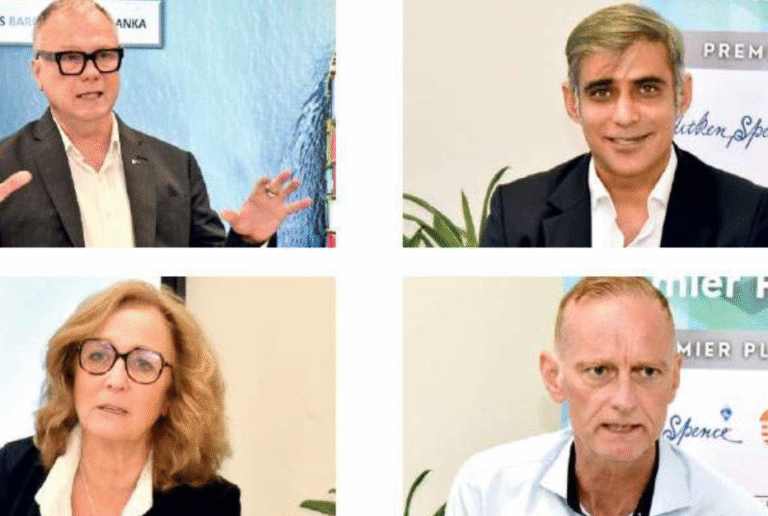
The event concluded with a panel discussion featuring B. Braun Lanka’s Managing Director Dr. Nathalie de Dieuleveult and Allianz Insurance Lanka CEO Prashant Grover, who shared insights on adapting to global challenges, workforce strategies, and aligning with sustainability goals.
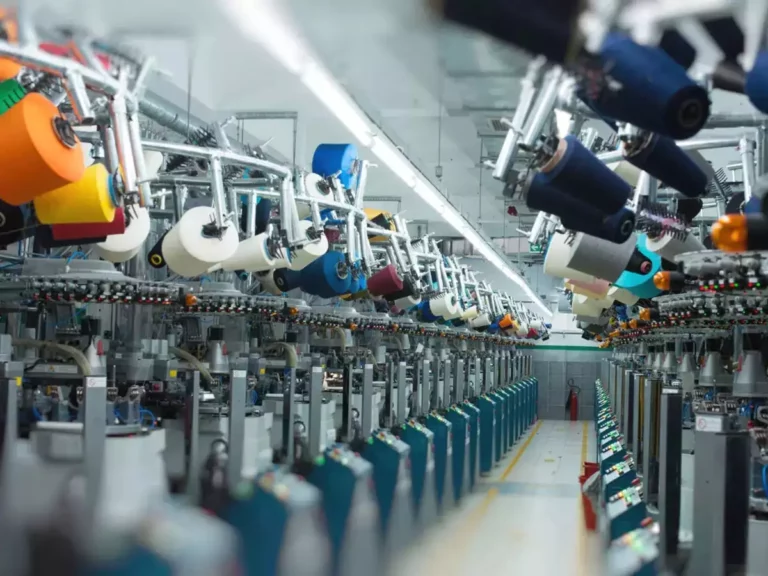
Sri Lanka’s apparel sector continues to demonstrate resilience despite global uncertainties, including looming tariff threats from the United States and ongoing demand volatility in key Western markets. As the country’s largest industrial export sector and a major employment provider, the apparel industry has remained a pillar of economic stability through turbulent times—supported by market diversification and a pivot towards value-added products.
In May 2025, Sri Lanka’s apparel exports remained broadly stable, recording only a marginal decline of 0.63% compared to the same month in 2024. Total export earnings reached US$ 365.08 million. While this figure suggests a temporary softening, the overall export performance for the first five months of the year tells a story of steady recovery and adaptability.
The May downturn was primarily due to reduced demand in two key markets— the United States and the United Kingdom. Shipments to the US fell by 7.59%, while exports to the UK declined by 6.81%. These contractions underscore the persistent uncertainties in Western consumer markets, which continue to be affected by high inflation, shifting consumption patterns, and geopolitical concerns, including trade policy fluctuations such as the potential re-imposition of tariffs by a future Trump administration.
However, this dip was largely offset by strong performances in other regions. Exports to the European Union rose by 5.15%, while shipments to non-traditional markets surged by an impressive 11.1%. This diversification strategy appears to be yielding results, with exporters successfully penetrating alternative markets amid sluggish Western demand.
From January to May 2025, total apparel export earnings climbed by 9.8% to US$ 2.02 billion, reflecting the sector’s broader recovery momentum. The EU (excluding the UK) recorded the highest growth at 15.36%, followed by a 13.12% increase in non-traditional markets. Even the US and UK markets showed year-to-date growth of 6.52% and 3.74%, respectively—suggesting that despite monthly fluctuations, overall demand remains stable over the longer term.
Commenting on the sector’s performance, a spokesperson for the Joint Apparel Association Forum (JAAF) said, “The industry’s year-to-date performance demonstrates resilience and adaptability, driven by strategic market shifts and continued investment in value-added products. We are encouraged by the momentum, particularly in emerging and EU markets.”
To sustain this recovery trajectory, JAAF emphasized the critical need for a stable and predictable trade policy environment. Industry stakeholders continue to advocate for policies that ensure long-term competitiveness and help exporters navigate global headwinds. As the global landscape evolves, Sri Lanka’s apparel sector is proving its capacity to adapt, innovate, and survive.
The United Arab Emirates continues to solidify its reputation as a premier destination for the world’s ultra-wealthy, driven by regulatory reforms, favourable tax policies, and long-term residency options such as the Golden Visa, as reported by the Gulf News.
According to the latest Henley & Partners Private Wealth Migration Report, at least 9,800 millionaires are projected to move to the UAE in 2025 alone, underscoring the country’s appeal to high-net-worth individuals seeking stability and strategic advantage.
Norwegian-born shipping tycoon John Fredriksen is among the several high-profile billionaires from around the globe who made the move to the UAE. Fredriksen, long based in the UK, has moved a significant part of his business operations from London to the UAE.
Once ranked the UK’s ninth-richest individual, Fredriksen cited the British government’s decision to scrap the long-standing “non-dom” tax regime as a major catalyst for his relocation. Known for building one of the world’s largest oil tanker fleets, his move is seen as symbolic of a broader trend of wealth migration from Britain to the Gulf. Additionally, Michael Edward Platt, British billionaire and hedge fund veteran, Michael Platt, co-founder of BlueCrest Capital Management, has also shifted his base to the UAE. The firm, once Europe’s third-largest hedge fund, has managed assets exceeding USD 35 billion at its peak. In June 2025, Platt moved his primary residence and family office to Dubai, continuing a UAE expansion that began in 2022 following regulatory approval for BlueCrest’s operations in the region.
Shravin Bharti Mittal, son of telecom magnate Sunil Bharti Mittal and Managing Director of Bharti Global Ltd, has also made a high-profile shift to Abu Dhabi. As the founder of Unbound, a global technology investment firm, Mittal represents the younger generation of India’s Bharti family. In April 2025, he registered a new branch of Unbound in Abu Dhabi amidst tightening tax regimes in the UK. The Bharti family remains the largest individual shareholder in BT Group Plc.
Furthermore, Pavel Durov, the Telegram founder, has called Dubai home since 2017. After leaving Russia in 2014 due to political pressure, Durov and his brother established the encrypted messaging platform’s global headquarters in the UAE. Now a UAE citizen, Durov was ranked the world’s 120th richest person in 2024 and was previously named the richest expatriate in the UAE by Forbes. In 2023, Arabian Business hailed him as Dubai’s most powerful entrepreneur.
Nassef Sawiris, Egypt’s richest man, Nassef Sawiris, has also chosen the UAE as his financial base. In late 2023, his family office, NNS Group, relocated to the Abu Dhabi Global Market (ADGM). Sawiris controls a 30 per cent stake in OCI NV, a leading global fertiliser producer, and owns significant shares in Adidas and LafargeHolcim. His move reinforces Abu Dhabi’s growing status as a global hub for elite wealth management.