Home Blog Page 483

Coconut Industry calls for urgent government action to address severe shortage

0

January 22, Colombo (LNW): The Ceylon Chamber of Coconut Industries (CCCI), the leading body representing Sri Lanka’s vital coconut sector, has called on the government to urgently approve a proposal to import 200 million coconuts.

This move, the Chamber warns, is critical to preventing an imminent crisis that threatens both domestic consumers and the country’s export industry.

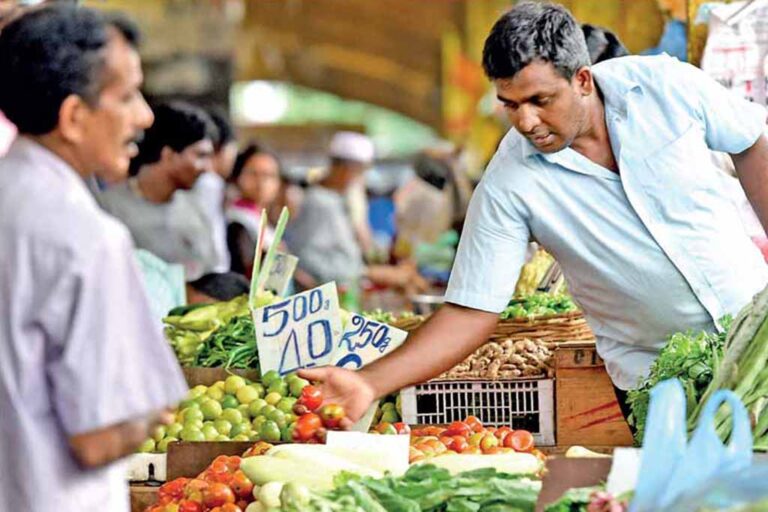
Speaking at an emergency press conference held in Colombo yesterday, CCCI President Jayantha Samarakoon expressed deep concern over the ongoing shortage, which is causing coconut prices to soar to alarming levels, with the cost of a single nut approaching Rs. 200.

The shortage is also severely impacting Sri Lanka’s coconut exports, an important source of revenue for the island nation.

Samarakoon pointed out that the lengthy approval process for the importation of coconuts, which involves several government ministries and departments, has been moving at a frustratingly slow pace.

He emphasised that the lack of swift government intervention is exacerbating the supply chain crisis and leaving little time to avert further disruption.

This shortage is creating a dual crisis – one that directly affects households struggling with rising prices and another that threatens the livelihoods of thousands of people in the export sector,” Samarakoon said. “Immediate action is needed to secure the importation of coconuts and stabilise the market before the situation becomes even more dire.

The CCCI’s appeal highlights the urgent need for coordinated action at the highest levels of government to safeguard both local consumers and the country’s valuable coconut export trade.

With coconut-based products being a staple in Sri Lankan diets and a key export commodity, the consequences of inaction could be far-reaching, affecting both the economy and the daily lives of many Sri Lankans.

Industry experts have warned that if the importation process continues to be delayed, the shortage could worsen, further inflating prices and potentially leading to supply shortages across the island.

The Chamber has urged the government to prioritise this issue and take immediate steps to ensure the coconut industry remains stable in both the short and long term.

World Bank official engages with Sri Lankan Prime Minister on development priorities

0

January 22, Colombo (LNW): Martin Raiser, the Vice President for the South Asia Region of the World Bank, recently met with Sri Lanka’s Prime Minister, Dr. Harini Amarasuriya, in a cordial meeting at the Sri Lankan Parliament to discuss the country’s pressing development priorities.

The two leaders explored a range of critical issues that are central to Sri Lanka’s future growth, with particular focus on education, gender equality, and regional inclusivity.

The talks highlighted the necessity of addressing the country’s current challenges and advancing sustainable solutions. A key topic was the enhancement of the education sector, with both Raiser and Dr. Amarasuriya underscoring the importance of improving access to quality education across the country.

There was a specific emphasis on the Technical and Vocational Education and Training (TVET) sector, which the Prime Minister’s office noted as a crucial element in creating diverse and viable career options for young people.

The leaders agreed that integrating TVET more effectively with mainstream education systems would provide students with the skills needed to thrive in a rapidly changing job market.

Gender equality also emerged as a central theme of the discussions. Both parties acknowledged the significant barriers women still face in entering the workforce and the broader economic sphere.

They agreed that targeted policy reforms and support systems are essential to ensuring greater female participation in economic activities and achieving gender equity in the workforce.

In addition to these vital topics, the dialogue reaffirmed the strong commitment of Sri Lanka and the World Bank to work together on sustainable development initiatives.

Both sides expressed a shared dedication to fostering long-term solutions that promote education, economic inclusion, and balanced regional development across Sri Lanka.

The meeting was attended by several senior officials from both the World Bank and the Sri Lankan government. David Sislen, the Regional Country Director for Nepal, Maldives, and Sri Lanka, was present alongside other key figures, including Pradeep Saputhanthri, Secretary to the Prime Minister; Sagarika Bogahawatta, Additional Secretary to the Prime Minister; Samantha Bandara, Director General of the Department of External Resources; Dharshana M. Perera, Senior Director-General for Economic Affairs (Bilateral) at the Ministry of Foreign Affairs; and Lashinka Dammullage, Director of the Southeast Asia & Central Asia Division at the Ministry of Foreign Affairs.

Fairly heavy showers expected across island: Strong winds to persist (Jan 22)

0

January 22, Colombo (LNW): Showers will occur at times in Eastern, Northern, North-central, Central and Uva provinces and in Hambantota district, and showers or thundershowers will occur at several places elsewhere in the evening or night, the Department of Meteorology said in its daily weather forecast today (22).

Fairly heavy showers about 75 mm can be expected at some places in Eastern, North-central, Uva and North western provinces.

Showers may occur in Western province and in Galle and Matara districts in the morning too.

Fairly strong winds of (30-40) kmph can be expected at times over Eastern slope of the central hills and Northern, North-central, Eastern and North-western provinces and in Hambantota and Monaragala districts.

The general public is kindly requested to take adequate precautions to minimise damages caused by temporary localised strong winds and lightning during thundershowers.

Marine Weather:

Condition of Rain:
Showers or thundershowers will occur at times in the sea areas extending from Kankasanthurai to Galle via Trincomalee, Pottuvil and Hambantota.  Showers or thundershowers will occur at a few places in the other sea areas around the island during the afternoon or Night.
Winds:
Winds will be north-easterly and speed will be (30-40) kmph. Wind speed can increase up to 50 kmph at times in the sea areas off the coast extending from Colombo to Kankasanthurai via Puttalam and Mannar and from Matara to Pottuvil via Hambantota.
State of Sea:
The sea areas off the coasts extending from Colombo to Kankasanthurai via Puttalam and Mannar and from Matara to Pottuvil via Hambantota will be fairly rough at times. Temporarily strong gusty winds and very rough seas can be expected during thundershowers.

Indian Salt to Arrive in Sri Lanka Next Week to Tackle Shortage

0

By: Staff Writer

January 21, Colombo (LNW): The recent salt shortage in Sri Lanka, exacerbated by adverse weather conditions during the Maha season, has led the Cabinet to approve the import of 30,000 metric tons (MT) of non-iodised salt as an urgent measure.

This decision, announced on December 18, 2024, aims to stabilize market supply and prevent a severe salt deficit in the first quarter of 2025, but it has sparked public debate and criticism.

Import Measures to Address Shortage

The Sri Lanka State Trading Corporation confirmed that 15,000 MT of salt ordered from India would arrive next week, with a total of 30,000 MT to be imported by January 31, 2025.

Two importers have been authorized for this initiative. While the country is nearly self-sufficient in salt production, producing 180,000 MT annually to meet domestic and industrial demand, the industry is heavily reliant on solar evaporation—a process highly sensitive to weather conditions.

Weather Disruptions Impacting Production

The Puttalam area, a major production hub contributing 45% of the national salt supply, faced severe disruptions due to heavy rains and typhoons during the last monsoon season. This area, spanning 4,000 hectares of salterns, employs around 20,000 families and plays a critical role in Sri Lanka’s salt production.

However, recent adverse weather left parts of the region submerged, jeopardizing salt harvesting and infrastructure.Sri Lanka’s saltern industry, concentrated in coastal regions such as Hambantota, Trincomalee, and Mannar, depends on prolonged dry periods of 40–45 days for efficient solar evaporation.

The increased frequency of erratic rainfall and extreme weather events, linked to global climate change, poses a significant challenge to maintaining consistent production.

Industry Overview and Challenges

Sri Lanka’s salt sector, comprising government and private players, has evolved from colonial-era practices to a modern, well-organized industry. Notable innovations include the production of high-purity vacuum-dried (PVD) salt and exports of specialty products like “Singithi Lunu,” a crystal-clear salt from Bundala Saltern, to markets like Japan.

Despite these advancements, the industry’s dependency on favorable climatic conditions leaves it vulnerable.The decision to allow imports highlights the urgent need to address the sector’s vulnerability to climate variability.

While importing salt to an island nation surrounded by seawater has drawn criticism, the government’s measure is intended as a temporary solution to stabilize supply and prevent economic losses.

Call for Long-Term Solutions

Looking ahead, sustainable strategies are crucial to safeguarding Sri Lanka’s saltern industry against the growing impact of climate change. Stakeholders, including policymakers, industrialists, and academics, must collaborate to enhance the sector’s resilience.

 Potential solutions could include diversifying salt production methods, improving saltern infrastructure to withstand flooding, and investing in climate-resilient technologies.

As part of broader efforts, the government must also address the systemic challenges posed by unpredictable weather patterns, which threaten the livelihoods of tens of thousands of families and the stability of salt-dependent markets.

While imports provide a temporary fix, a long-term, multidisciplinary approach is essential to ensure the industry’s sustainability in an era of increasing climate uncertainty.

Conclusion

The government’s decision to import 30,000 MT of non-iodised salt underscores the critical impact of climate change on Sri Lanka’s salt industry. While this measure ensures short-term stability, it also serves as a wake-up call for a comprehensive strategy to protect and strengthen the sector.

This crisis presents an opportunity to reimagine the future of Sri Lanka’s saltern industry, making it more resilient, innovative, and sustainable.

Tea production reaches three-year high in 2024

0

By: Staff Writer

January 21, Colombo (LNW): Sri Lanka’s tea production hit a three-year high in 2024, bouncing back from detrimental policy decisions in 2021 and the lingering impacts of climate change.

The cumulative tea crop for the year reached 262.15 million kilos, marking an increase of 6.07 million kilos or 2.4% year-on-year (YoY) growth compared to 256.08 million kilos in 2023.

Data analysed by Asia Siyaka Commodities showed all tea-growing elevations posted positive variances in 2024, with the exception of the high-grown sector due to excessive rainfall during the second quarter which contributed to a decline in output in the region.

“Production gains came primarily from the medium-grown elevation, by a sharp 12.5% YoY increase to 47.62 million kilos, while low-grown tea, which accounts for the majority of the production, saw a modest 2.4% rise, reaching 158.81 million kilos.

The high-grown region produced 55.72 million kilos, a 5% YoY decrease, reflecting its vulnerability to climatic conditions,” it added.Despite the improvement, 2024’s total production fell short of the 299.49 million kilos achieved in 2021, registering a drop of 37.34 million kilos.

Asia Siyaka said December 2024 contributed 21.71 million kilos to the annual total, a 9.6% YoY increase compared to 19.08 million kilos in December 2023.

All elevations performed better in December 2024 relative to the same period a year ago. High-grown tea edged up by 0.4% YoY to 4.60 million kilos, medium-grown tea surged by 26.6% YoY to 3.75 million kilos, and low-grown tea production increased by 9% YoY to 13.35 million kilos.

The December 2024 output also shows a 1.19 million kilo increase compared to 20.52 million kilos registered in December 2021.

Tea production categories also painted a largely positive picture in 2024. Orthodox tea, the dominant category, registered a 2.2% YoY increase, totalling 236 million kilos, whilst CTC tea saw a 4.7% YoY rise to 23.68 million kilos. However, green tea lagged slightly, falling 1% YoY to 2.26 million kilos.

In December 2024, tea production categories showed broad-based gains, with orthodox tea rising 10.1% YoY to 19.59 million kilos, CTC tea increasing by 5% YoY to 1.93 million kilos, and green tea climbing 5.3% YoY to 190,307 kilos.

It was noted that these production improvements were achieved despite irregular weather patterns and modest fertiliser usage by smallholders, who contribute nearly 75% of the national tea crop.

Asia Siyaka believes if the growing conditions remain stable, production could exceed 275 million kilos in 2025.

Sri Lanka Pioneers Green Bonds to Champion Sustainability

0

By: Staff Writer

January 21, Colombo (LNW): Sri Lanka has taken a significant step towards sustainable development with the introduction of green bonds, marking its commitment to addressing climate change and fostering renewable energy initiatives.

This pioneering move aims to attract global investors to finance environmentally friendly projects while aligning with the nation’s ambitious target of generating 70% of its electricity from renewable sources by 2030.

A noteworthy example of this effort is DFCC Bank’s historic Green Bond, which has achieved dual listing on the Luxembourg Stock Exchange (LuxSE) and the renowned Luxembourg Green Exchange (LGX).

DFCC Bank’s Green Bond, initially issued and listed on the Colombo Stock Exchange (CSE) in September 2024, holds the distinction of being Sri Lanka’s first-ever Green Bond. Raising Rs. 2.5 billion (approximately EUR 8 million), this innovative financial instrument is dedicated to funding solar energy projects, underscoring the bank’s commitment to promoting renewable energy and catalyzing private investment in green finance.

The dual listing on LuxSE is a milestone for DFCC Bank, strengthening its leadership in sustainable finance. DFCC Bank CEO Thimal Perera highlighted that this achievement reflects the bank’s dedication to creating lasting positive change for the nation through renewable energy and climate action.

By facilitating access to international capital markets, the bank not only amplifies its impact but also supports Sri Lankan enterprises in establishing robust ESG frameworks.

DFCC Bank’s pioneering efforts in renewable energy finance are well-established. The bank financed Sri Lanka’s first private sector mini-hydro power project and co-financed groundbreaking ventures such as the country’s first grid-scale wind, solar, and waste-to-energy projects.

Additionally, DFCC Bank serves as Sri Lanka’s sole Direct Access Entity of the Green Climate Fund, further cementing its role in driving climate action and fostering long-term resilience.

LuxSE Head of Sustainable Finance Laetitia Hamon expressed delight at welcoming DFCC Bank’s inaugural Green Bond, emphasizing its significance in international cooperation and sustainable development.

The dual listing aligns with the bank’s vision to diversify Sri Lanka’s financial markets while promoting innovative financial solutions that contribute to environmental and social goals.

Building on this success, DFCC Bank plans to expand its Green Bond Framework into a Sustainable Bond Framework, broadening its impact to encompass social projects alongside environmental initiatives.

This transformative step sets a benchmark for Sri Lanka’s financial sector, showcasing the potential of its financial instruments to attract global attention and drive sustainable development.

DFCC Bank’s Green Bond initiative not only highlights the nation’s commitment to sustainability but also paves the way for other emerging markets to follow suit, reinforcing the importance of innovative financing in addressing global climate challenges.

The Decline of Sri Lanka’s Bicycle Industry: Lumala’s Struggle for Survival

0

By: Staff Writer

January 21, Colombo (LNW):

The Collapse of an Iconic Industry

The once-thriving bicycle industry of Sri Lanka is on the brink of collapse, with Lumala City Cycle Industries Manufacturing Ltd., a household name and one of the country’s oldest manufacturing giants, facing an unprecedented crisis.

For decades, Lumala not only symbolized Sri Lanka’s industrial prowess but also served as a vital economic contributor.

However, mounting challenges such as unfair market practices, excessive taxation on raw materials, and a flood of unregulated imports have brought this iconic company—and the broader industry—to its knees.

A Call for Urgent Government Intervention

Employees of Lumala are now calling for urgent Government intervention to prevent the shutdown of South Asia’s leading bicycle manufacturer. Based in Panadura, Lumala has been a cornerstone of Sri Lanka’s industrial sector for over five decades. However, escalating costs and unethical market competition threaten the company’s survival.

“The management has already begun a phased shutdown, closing the steel rim department and one of Sri Lanka’s few chromium plating plants. Further closures, including fork and mudguard production, alloy rim production, frame manufacturing, and the paint department, are imminent unless immediate action is taken.

Employees, many of whom have worked at Lumala for over two decades, now fear for their livelihoods,” said Lumala Factory General Manager Ranjith Siriwardana.

Challenges Undermining Local Manufacturing

Employees have identified several critical challenges driving Lumala’s crisis:

Unregulated Imports: The local market is flooded with imported bicycles and electric bicycles, many of which bypass regulatory checks.

Tax Loopholes: Certain trading companies allegedly exploit tax loopholes by misdeclaring imported parts as raw materials, evading customs duties and VAT. This enables them to sell substandard products at artificially low prices, undercutting domestic manufacturers.

Excessive Taxation on Raw Materials: While finished products are imported cheaply, raw materials for local production face heavy taxation, increasing costs and undermining competitiveness.

These challenges not only threaten ethical manufacturers like Lumala but also deprive the Government of substantial tax revenue.

Far-Reaching Consequences

If Lumala’s shutdown continues, the impact will extend far beyond the company. Hundreds of employees risk losing their jobs, including many who have dedicated decades of service. Renowned local suppliers who depend on Lumala’s operations will face disruption, and related industries such as motorcycles and motor vehicles—many of which rely on Lumala’s facilities for raw materials—may also suffer.

Despite achieving a local value addition of 50% to 70%, as verified by the Industries Ministry, Lumala’s concerns remain unaddressed, leaving employees disillusioned.

A Collective Plea for Fair Policies

In their collective plea, Lumala’s employees urge the Government to implement fair tax policies to eliminate unethical market practices and ensure consistent enforcement of regulations. They call for a comprehensive investigation involving the Industries Ministry, the Industrial Development Board (IDB), Sri Lanka Customs, and the Inland Revenue Department to address systemic challenges.

Employees emphasize that they are not seeking special privileges or tax cuts but a level playing field to compete fairly. They remain hopeful that timely Government intervention can prevent further job losses and halt the decline of Sri Lanka’s bicycle industry.

The fate of Lumala is a stark reminder of the urgent need to protect local industries, which form the backbone of the national economy.

Trump singlehandedly puts 3 million lives in danger by his new “Gender Policy”

0

By: Isuru Parakrama

January 21, World (LNW): In his inaugural speech yesterday (Jan 20), new US President Donald Trump made a stark and regressive announcement that sent shockwaves through the nation and the world.

By declaring that the United States will henceforth recognise only two genders, “male” and “female”, he has set a policy that will jeopardise the rights, dignity, and safety of millions of Americans, specifically those who identify as transgender or non-binary.

This decision represents not only a blatant disregard for the diverse experiences of gender, but also an affront to the progress made by countless activists and organisations advocating for human rights and equality.

With an estimated 3 million people in the United States identifying as transgender or non-binary, as indicated by the US Census Bureau Household Pulse Survey, this policy will directly impact over 1 per cent (1.14 per cent) of the population.

These individuals, who already face systemic discrimination and violence, will now be further marginalised by a government that refuses to acknowledge their identities.

The rhetoric used by Trump, referring to non-binary and transgender identities as “socially engineered race”, reveals a profound misunderstanding of both gender and history.

It echoes dangerous ideologies that seek to erase the diverse spectrum of human identity and force individuals into narrow, binary categories that have no basis in the lived realities of many.

The far-right ideologies that Trump endorses not only undermine basic human rights but also perpetuate the colonial mindset that has historically sought to erase indigenous and non-Western ways of understanding gender. Across the globe, many cultures have long recognised more than two genders, from the hijra community in South Asia to the Two-Spirit people amongst Native American tribes.

These cultural frameworks, which celebrate gender diversity, were brutally genocided by colonial powers that imposed Western gender norms influenced by the Roman Catholic Bible through violence, discrimination, and legal persecution. Trump’s stance, rooted in a return to an outdated and exclusionary worldview, echoes this colonial history, where difference was not tolerated but erased.

The implications of such a policy are far-reaching. Transgender and non-binary individuals will likely face increased obstacles in securing basic rights, such as healthcare, education, and employment, as well as legal recognition of their gender.

This decision also undermines the progress made in fostering inclusive spaces, such as schools, workplaces, and public services, where all people, regardless of gender identity, should feel valued and safe.

The far-right ideology that Trump champions, which seeks to deny the existence of a gender spectrum, is not just an attack on the LGBTQIA+ community but also a setback for broader societal progress towards inclusivity and equality.

Furthermore, the psychological toll on transgender and non-binary individuals cannot be underestimated. Being told that your identity is invalid, or that it is the result of some sort of societal manipulation, can be devastating.

This policy disregards the overwhelming body of scientific research that affirms the validity of gender identities outside the binary, reinforcing harmful stereotypes and perpetuating stigma.

Further fuelling the feud against queer individuals, Trump also announced that the US will be officially exiting the World Health Organisation (WHO), a global body that continues to remain steadfast for diverse sexual identities regardless of regional politics, in what he described as response to its ‘mishandling’ of the Covid-19 pandemic. Not only has Trump resorted to axe-grinding against the WHO over his own failures in containing the pandemic, but he has also set ground for conservatives to question the credibility of the global healthcare provider.

By adopting this policy, Trump is aligning himself with a dangerous ideology that ignores the complexity of human identity and perpetuates division. Whilst progress has been made in some areas, there is still much work to be done to protect and uphold the rights of all people, regardless of their gender identity.

The decision to enforce a binary gender system is not just a policy mistake; it is a moral failure that stands in direct opposition to the values of equality, justice, and human dignity.

SL to lift vehicle import ban starting next month amid economic recovery

0

January 21, Colombo (LNW): In a significant development, the Sri Lankan government has announced that it will lift the ban on vehicle imports beginning next month, marking a shift towards revitalising the country’s economy.

The import restrictions, which included a ban on vehicles, were first introduced on March 1, 2020, as part of measures taken in response to the economic crisis that severely impacted the nation at the time.

However, with the country’s economic situation gradually improving, the government has decided to allow vehicle imports once again to help stimulate business activity and meet growing demand.

The move is expected to provide a boost to various sectors, including the automotive industry, whilst also aiding in the recovery of other related industries.

Despite the positive outlook, concerns remain regarding the potential strain on the country’s foreign exchange reserves, as vehicle imports are a significant expense.

Central Bank Governor Nandalal Weerasinghe highlighted the importance of managing the volume of imports effectively to avoid depleting financial reserves.

He pointed out that whilst vehicles are essential for daily life and business, it is vital to strike a balance between meeting this demand and preserving the country’s economic stability.

The Central Bank has estimated that Sri Lanka will spend approximately $1 billion on vehicle imports this year.

However, Dr. Weerasinghe reassured the public that this expenditure would not impede the growth of financial reserves, provided that the import process is carefully managed.

In line with this, the Ministry of Finance is set to determine the necessary tax policies and revenue strategies to ensure that the importation process remains financially sustainable.

One of the key concerns following the lifting of the import ban is the potential impact on the affordability of vehicles for the average consumer. Dr. Weerasinghe cautioned that a sudden influx of vehicles could lead to higher demand, resulting in price increases.

He stressed that a controlled and gradual approach would be essential to maintaining reasonable vehicle prices, ensuring that they remain accessible to the general public.

Whilst the decision to lift the ban on vehicle imports has been made, several key details, including the finalisation of related taxes and other regulatory measures, are still under review.

EU Election Observation Mission meets Speaker to discuss democratic progress and new initiatives

0

January 21, Colombo (LNW): Jose Ignacio Sanchez Amor, the Chief Observer of the European Union Election Observation Mission and a Member of the European Parliament, recently led a delegation in a meeting with Speaker Dr. Jagath Wickramaratne at the Sri Lankan Parliament.

During the meeting, Sanchez Amor conveyed his congratulations to both the Speaker and the newly-formed government, recognising the efforts in maintaining democratic values in the country.

Sanchez Amor presented the final report of the 2024 Presidential Election Observation Mission to the Speaker, highlighting several positive aspects of the election process.

He commended the election’s democratic nature and the significant role played by the Election Commission.

The Chief Observer emphasised the necessity of continuing to strengthen the commission in order to uphold free and fair elections in the future.

He also praised the increased representation of women in the current Parliament, noting it as a progressive step towards gender equality.

In his response, Speaker Dr. Wickramaratne expressed his appreciation to the European Union Election Observation Mission for its valuable insights and support.

He reassured the delegation that the government is committed to advancing transparency, reducing corruption, and embedding true democratic values into the governance system.

Additionally, the Speaker shared plans to hold a landmark conference of Members of Parliament who are differently-abled, a first in the country’s history.

This initiative is intended to ensure that the voices of all elected representatives are heard and to promote inclusivity within the legislative process.

The Secretary General of Parliament, Mrs. Kushani Rohanadeera, was also present at the meeting.