Home Blog Page 543

‘Wind theft’: The mysterious effect plaguing wind farms

0

As wind farms expand, some can accidentally “steal” each others’ wind – causing worries over some countries’ energy transition to net zero.As offshore wind farms are expanding around the world in the race to meet net zero climate targets, a worrying phenomenon is attracting growing attention: in some conditions, wind farms can “steal” each other’s wind.

“Wind farms produce energy, and that energy is extracted from the air. And the extraction of energy from the air comes with a reduction of the wind speed,” says Peter Baas, a research scientist at Whiffle, a Dutch company specialising in renewable energy and weather forecasting. The wind is slower behind each turbine within the wind farm than in front of it, and also behind the wind farm as a whole, compared with in front of it, he explains. “This is called the wake effect.”

Simply put, as the spinning turbines of a wind farm take energy from the wind, they create a wake and slow the wind beyond the wind farm. This wake can stretch more than 100km (62 miles) for very large, dense offshore wind farms, under certain weather conditions. (Though more typically, the wakes extend for tens of kilometres, according to researchers). If the wind farm is built upwind of another wind farm, it can reduce the downwind producer’s energy output by as much as 10% or more, studies suggest.

Colloquially, the phenomenon is known as wind theft – though as Eirik Finserås, a Norwegian lawyer specialising in offshore wind energy, notes: “The term wind theft is a bit misleading because you can’t steal something that can’t be owned – and nobody owns the wind.”

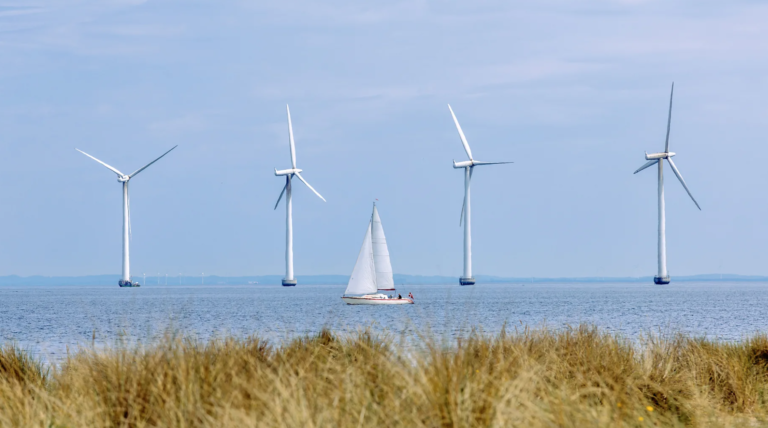
Getty Images The wind wake caused by wind turbines can stretch for more than 100km (62 miles) (Credit: Getty Images)
The wind wake caused by wind turbines can stretch for more than 100km (62 miles) (Credit: Getty Images)

Still, he points out that the phenomenon can have a number of negative consequences for wind farm developers, and even, potentially, cause problems across borders (more on this later). There are in fact a number of ongoing disputes between wind farm developers over alleged wind theft, raising concerns in countries that rely on ramping up offshore wind energy to meet their net zero climate targets.

While the problem of wind theft has been long known in principle, it is growing more pressing due to the scale and speed of the offshore expansion, and the size and density of offshore wind farms, experts say.

In less than five years, we need to deploy thousands more turbines – Pablo Ouro

In the North Sea, which is seeing an offshore wind boom, the impact of such wakes on offshore energy production is likely to increase in the next decades as the sea becomes more crowded with wind farms, according to simulations by Baas together with researchers from the Delft University of Technology and the Royal Netherlands Meteorological Institute. The denser and bigger the wind farm, the stronger the wake effect, Baas says.

new research project in the UK, launched this spring, aims to provide a clearer picture of the wake effect to help governments and developers improve their planning, and avoid disputes. The project will model wakes and their impact on wind farms’ output in 2030, when there will be thousands more turbines in UK waters than today, says project lead Pablo Ouro, a research fellow in civil engineering at the University of Manchester.

“We have seen wake effects for years, and knew they happen,” says Ouro. “The problem is that in order to achieve net zero, we need to deploy a given amount of offshore wind capacity. So for 2030, we need to have three times more capacity than we have now, which means that in less than five years, we need to deploy thousands more turbines,” he explains. 

“[Some of] these turbines are going to be operating very close to those that are already operating, so things are getting more and more crowded. So these wake effects are now starting to have more impact,” he says.
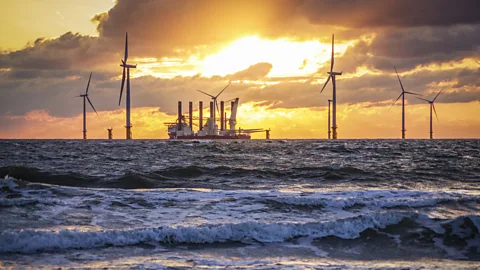
Getty Images Countries are ramping up offshore wind energy, resulting in disputes between wind farm developers over "wind theft" (Credit: Getty Images)
Countries are ramping up offshore wind energy, resulting in disputes between wind farm developers over “wind theft” (Credit: Getty Images)

The UK government has pledged that by 2030, Britain will generate enough power from renewable sources, such as wind, to cover its electricity needs. A 2025 UK government policy paper highlights the need to better understand wake effects in this context, describing them as an emerging issue that creates uncertainty for offshore wind farms. 

Currently, there are a number of disputes in the UK between offshore wind farm developers over potential wake effects, Ouro says. In his view, these disputes are partly caused by uncertainty over the precise impact of wakes. For example, current UK guidelines on how much offshore wind farms should be spaced apart to avoid wake effects, may not reflect the actual extent the wakes can reach, he says. Also, because offshore wind farms are built in clusters, it can be difficult to assess how they might all affect each others’ energy output, he explains.

“When you have two wind farms, it’s very simple to assess that wind farm A is interacting this much with wind farm B, and vice versa. But what if you have six wind farms, how do they interact with each other? That’s what we don’t know – but it’s going to be happening for sure,” as more and more wind farms are built, Ouro says.

“The other issue is that turbines are getting very big,” he notes. Turbines have been growing taller and their blades getting larger to capture more energy from the wind. The latest turbines have blades that can span more than 100m (328ft), the length of a football pitch. Among the biggest offshore turbines, a single one can power around 18,000 to 20,000 average European households. But this increase in size could worsen the wake effect since a bigger rotor diameter may create a longer wake, Ouro says, adding that more research should be done to understand the impact. 

Grabbing the best spots? 

Finserås led a study of wind wakes and regulatory gaps while undertaking doctoral research at the University of Bergen in Norway. The study analyses how the wake of a planned wind farm in Norway could negatively affect a downwind farm in Denmark. Finserås warns that unless the problem of managing wake effects is addressed, it could result in legal and political conflicts and make it harder to invest in wind energy. 

“The North Sea and particularly the Baltic Sea, in Europe at least, will likely be a hub for a massive-scale build-out of offshore wind farms,” Finserås says. “So this issue of wake effects will very likely permeate the energy transition in the North Sea, and elsewhere.”

From an investment perspective, even relatively small wake effects can cause problems for offshore developers, Finserås says. “There are huge costs to building an offshore wind farm,” he explains, due to the sheer scale of these farms as well as all the complex related work, including deploying special-purpose vessels. To justify their investment and make a profit, “it’s very important for a developer to be able to project that the wind farm will produce a given amount of electricity for 25 or 30 years“, the typical lifespan of a wind farm, he says. Even a relatively small, unexpected reduction in that energy output can upset this investment calculation and make the wind farm not financially viable, Finserås says.

If operators or countries try to avoid these wake effects by securing the best spots for themselves, it can create another risk, he warns: wake effects may cause what’s known as “the ‘race to the water’ phenomenon, whereby states rush development in order to reap benefits from the best-yet available wind resources”. Rushing development could then increase the risk of ignoring other important aspects of wind farm planning, such as protecting the marine environment, he says.
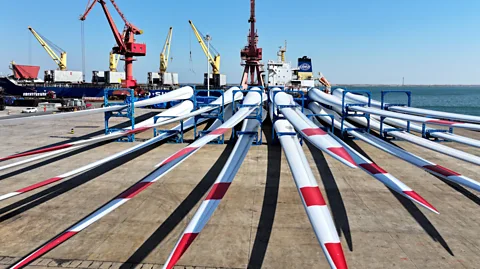
Getty Images Wind turbines are getting taller and their blades larger, in a bid to capture more energy from the wind (Credit: Getty Images)
Wind turbines are getting taller and their blades larger, in a bid to capture more energy from the wind (Credit: Getty Images)

Ouro, at the University of Manchester, also sees a growing risk of cross-border problems: “All the disagreements that are filed to date [in the UK] are between UK wind farms, but what if tomorrow there’s a dispute between a UK wind farm and a Dutch, Belgian or French wind farm? So, the sooner we anticipate this situation, and lay the groundwork for: ‘Ok, that’s how we’re going to address this,’ the better. It reduces uncertainty and is much better for the industry.” 

Finserås recommends European countries address the problem of wind theft by cooperating and consulting with one another when planning wind farms, as well as introducing clear regulations that help manage wind as a shared resource. Essentially, wind could be treated like other shared marine resources for which there is regulation, such as oil deposits that cross state boundaries, or fish, he suggests. “It’s not like [states] haven’t regulated similar issues before,” he says.

To tackle these thorny issues, it’s helpful that the European countries involved generally have good political relations, says Finserås.

“We have to decarbonise energy sectors, and we have to do so very quickly, that’s the ambition of the European Union when it comes to offshore wind policies,” he says. “So there’s no question that all of this is happening very quickly. But we shouldn’t be prevented from finding good solutions just because things are happening quickly.” After all, he says, it’s in nobody’s interest to fight over the wind. “There is an incentive to cooperate to find equitable solutions between states, despite the fact that [the wind energy expansion] is going ahead at full speed.”

It’s not only Europe that’s racing to better understand wake effects. China, for example, is rapidly expanding its offshore wind farms, and researchers there have cast a spotlight on the growing impact of wake effects on Chinese offshore wind farms.

Since the project was announced in March, Ouro has been flooded with emails from people interested in it, which in his view shows just how urgent the issue is. “We need to understand this, we need to progress more on the modelling, so everyone is confident, because we need this amount of offshore wind to get to net zero. We have to deliver this.”

BBC
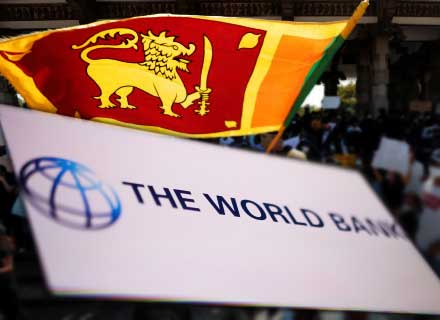
World Bank Launches $1 Billion Initiative to Boost Jobs and Private Sector Growth in Sri Lanka

0

The World Bank Group has unveiled a landmark initiative to support job creation and accelerate private sector growth in Sri Lanka, pledging more than US$1 billion in financing over the next three years. The funding will target sectors with strong potential for employment and investment—namely energy, agriculture, tourism, and regional development—with the goal of expanding economic opportunity, strengthening local industries, and attracting private capital to drive long-term growth.

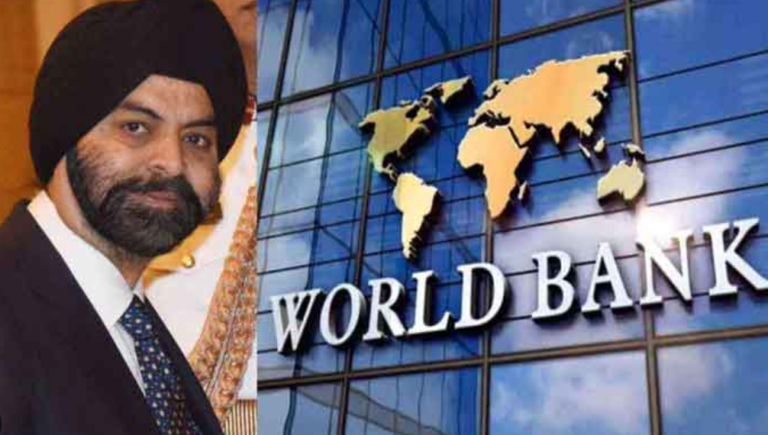
The announcement followed a meeting in Colombo between President Anura Kumara Dissanayake and World Bank Group President Ajay Banga, marking the first visit by a World Bank President to Sri Lanka in over two decades. The visit signals a renewed commitment to the country’s economic recovery and future development.

President Dissanayake emphasized that the support represents a significant investment in the Sri Lankan people, adding, “It will help create jobs, support small businesses, and open up new opportunities across the country. We are committed to ensuring this partnership delivers real change for our communities.”

World Bank President Ajay Banga highlighted that Sri Lanka is at a pivotal moment to build on recent economic stabilization efforts. “With progress underway to stabilize the economy and restart growth, core elements for job creation are in place. Now is the time to accelerate reforms and create the conditions for private enterprise to thrive—particularly in sectors that can create jobs at scale,” he stated.

According to the World Bank, nearly one million young people are expected to enter Sri Lanka’s workforce over the next decade, while only about 300,000 jobs are projected to be created under current conditions. The new financing aims to close this gap by mobilizing both public and private investments in high-impact sectors.

The immediate funding allocations include US$185 million for energy, targeting the development of solar and wind projects with one gigawatt of capacity and mobilizing over US$800 million in private investment. Agriculture will receive US$100 million to help farmers adopt new technologies and reach markets, benefiting more than 380,000 people. Tourism development will be supported by US$200 million to protect cultural and natural heritage while expanding employment. Another US$200 million will be directed toward regional development, with a focus on infrastructure and job creation in the Northern and Eastern Provinces.

The World Bank’s integrated approach, combining financing, knowledge-sharing, and private sector tools, underscores its ability to support comprehensive economic growth and job generation. With current investments in Sri Lanka exceeding US$2.2 billion, this new package deepens a seven-decade partnership aimed at fostering a more resilient and inclusive economy.

EU Delegation Commends Sri Lanka’s Policy Reforms During GSP+ Monitoring Mission

0

The European Union Delegation on the GSP+ Monitoring Mission has expressed its appreciation for Sri Lanka’s recent policy reforms, particularly those aligning with the fundamental objectives of the GSP+ mechanism. This recognition came during a high-level meeting with Prime Minister Dr. Harini Amarasuriya on Monday, where the EU team also offered guidance on Sri Lanka’s re-application process for GSP+ concessions and reiterated their readiness to support the country’s formal application.

Key topics discussed during the meeting included ongoing engagement with the International Monetary Fund (IMF), the importance of enhancing women’s participation in politics and the economy, and the need to improve support systems such as childcare, eldercare, and public transportation to foster broader inclusion. The discussions also addressed Sri Lanka’s major development priorities, including poverty alleviation, digital transformation, and the Government’s “Clean Sri Lanka” initiative. Prime Minister Amarasuriya further emphasized legal reform efforts underway, such as new legislation to combat drug and human trafficking and the enactment of the Online Safety Act, as part of broader reconciliation and governance objectives.

The EU delegation was led by Charles Whiteley, Head of the South Asia Division of the European External Action Service, and included other senior officials. The meeting concluded with remarks from EU Ambassador to Sri Lanka Carmen Moreno, who reaffirmed the EU’s continued commitment to deepening its relationship with Sri Lanka across economic, cultural, and tourism sectors. Key Sri Lankan officials present included Prime Minister’s Secretary Pradeep Saputhanthri, Additional Secretary Sagarika Bogahawatta, and Sugeeshwara Gunaratna, Director General of the Europe and North America Division at the Ministry of Foreign Affairs.

Major Foreign Employment Scam Exposed: Over Rs. 2.5 Billion Lost as 30,000 Sent Abroad Without Training

0

A massive fraud has been uncovered at the Sri Lanka Bureau of Foreign Employment (SLBFE), where over 30,000 individuals, primarily women, were sent overseas for employment without undergoing the mandatory training program, resulting in financial losses exceeding Rs. 2.5 billion. The scam reportedly took place between 2022 and August 2024 and involved forged documents used to falsely show first-time job seekers as experienced workers, thereby bypassing the required training and associated fees.

So far, six SLBFE officials have been interdicted, including an Additional General Manager, four Arabic translators, and an Administrative Officer. However, SLBFE sources believe a larger network of officials and foreign employment agents is involved. The racketeers are alleged to have charged between Rs. 70,000 and Rs. 130,000 from each individual, while avoiding the official Rs. 28,000 training fee imposed by the SLBFE. The forged documents included fake job agreements and falsified travel histories, which were used to present these individuals as eligible for exemption from training based on prior experience.

The SLBFE had previously issued a circular allowing returning migrant workers with proof of experience and prior training to bypass the program. Investigators say this policy was exploited by racketeers to facilitate fraudulent departures. As a result, many women who were sent abroad through this scheme faced serious risks, including exploitation and abuse, due to their lack of proper training and preparation.

Alongside the internal SLBFE investigation, complaints are also being filed with the Criminal Investigation Department (CID) and the Commission to Investigate Allegations of Bribery or Corruption (CIABOC) for further action.

SLICGL and Royal College Union Forge Strategic Partnership to Empower Alumni and Students

0

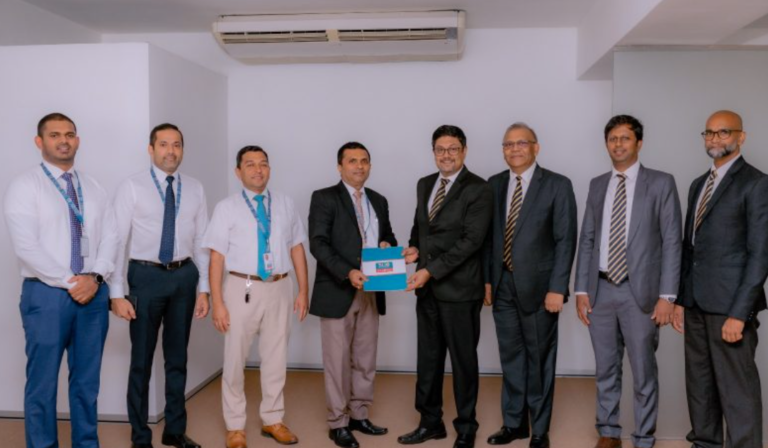
In a significant move to blend financial security with community empowerment, Sri Lanka Insurance Corporation General Ltd. (SLICGL) and the Royal College Union (RCU) signed a Memorandum of Understanding (MoU) on April 9, 2025. The strategic partnership aims to offer exclusive insurance benefits to RCU members while channeling support towards the education and development of deserving students from Royal College.

Under the agreement, SLICGL will contribute a portion of net premiums from policy conversions directly to the RCU Loyalty Pledge. This fund supports honorary scholarship schemes for talented students, reinforcing both organizations’ commitment to social responsibility and long-term educational impact.

Highlighting the unique value of the collaboration, SLICGL Chief Operating Officer Priyantha Perera stated, “We are proud to collaborate with RCU in an initiative that not only provides financial security but also strengthens alumni engagement. This partnership redefines the role of insurance, showing that it can be a vehicle for community upliftment, not just profit.”

RCU members will enjoy a range of tailored benefits, including discounted rates on SLICGL’s medical insurance policies ‘Medi Plus’ and ‘Medi 60’, as well as loyalty rewards on apparel, vehicle services, eyewear, and travel. For Old Royalists insuring high-value vehicles under SLICGL’s Motor Comprehensive Policy, additional perks such as the ‘Inform & Move’ service and complimentary Home Protect Lite or Solar Insurance cover are available.

Aruna Samarajewa, Secretary of RCU, welcomed the partnership as a powerful example of community-driven progress. “This collaboration is a testament to the strength of the Royal College community. Through the Loyalty Pledge scholarship programme, we are ensuring sustainable support for our young students, and SLICGL’s contribution enhances our ability to give back to our alma mater.”

As one of Sri Lanka’s most respected alumni networks, RCU has long played a pivotal role in supporting Royal College. This latest partnership not only brings financial advantages to its members but also establishes a model for impactful corporate-alumni collaboration. By linking insurance benefits with educational philanthropy, SLICGL and RCU are setting a new standard in socially conscious partnerships.

World Bank President Banga Visits Sri Lanka amid Post-Election Recovery Push

0

World Bank Group President Ajay Banga arrived in Sri Lanka today, marking the first presidential visit by a World Bank chief to the island nation in nearly two decades. The high-level visit follows the recent local council elections and underscores the World Bank’s commitment to supporting Sri Lanka’s path to economic recovery and sustainable development.

Banga’s arrival comes at a pivotal time for the country, as it continues to emerge from a severe economic crisis and navigates the early political landscape shaped by the newly elected local councils. His visit was initiated at the invitation of President Anura Kumara Dissanayake, who extended congratulations to Banga in a call shortly after taking office in November last year.

The visit highlights the World Bank Group’s strategic interest in strengthening its 70-year partnership with Sri Lanka. With a focus on boosting private sector engagement, creating jobs, and promoting inclusive growth, Banga is expected to reinforce the importance of continued reform and investment in key economic sectors.

During his stay, Banga will hold discussions with President Dissanayake, Prime Minister Dr. Harini Amarasuriya, and other senior government and private sector stakeholders. The talks are expected to centre on strategies to tackle poverty, attract private investment, and build a more resilient economic foundation.

 The World Bank Group currently manages a $2.2 billion portfolio in Sri Lanka, encompassing projects across both the public and private sectors. Recent World Bank assessments have acknowledged the country’s progress in stabilising its economy, while emphasizing the need for sustained reforms and targeted support to vulnerable communities.

Observers see Banga’s visit as both symbolic and practical—signalling renewed confidence in Sri Lanka’s economic reform trajectory and the World Bank’s readiness to assist in implementing long-term solutions.

With the local council elections concluded, the visit also serves as an opportunity to align national development goals with grassroots governance, ensuring that economic recovery efforts translate into tangible benefits for communities across the country.

As Sri Lanka works to rebuild trust in its institutions and attract international investment, the presence of the World Bank President provides an important boost to morale and a reminder that global partners remain engaged in the island’s recovery journey.

Banga’s visit is expected to conclude with joint statements on collaborative efforts aimed at fostering inclusive growth and ensuring that the country’s hard-earned economic progress is both equitable and sustainable.

Rise in Sri Lankan Migration to the UK Prompts Stricter Visa Plans

0

The UK government is reportedly preparing to introduce tighter visa controls targeting countries with high asylum claim rates, including Sri Lanka, amid growing concerns over migration levels. The move, which could significantly affect Sri Lankan nationals seeking better opportunities abroad due to economic and political instability at home, comes as part of the UK’s broader efforts to reduce net migration.

According to a report by The Times, Sri Lanka is among a list of countries—including Pakistan and Nigeria—under increased scrutiny by the Home Office for visa overstays and asylum claims. The upcoming Immigration White Paper is expected to outline new measures aimed at curbing applications for work and study visas from such nationalities.

Sri Lanka’s deepening economic crisis, compounded by ongoing political tensions, has prompted a surge in migration to countries like the UK, with many citizens viewing migration as the only viable path to financial stability. In some cases, migrants initially entering the UK on legal visas later apply for asylum, citing fears of persecution or economic hardship.

The Labour government, elected with a pledge to manage immigration more effectively, is under pressure to act. In its manifesto, the party promised that net migration figures would be brought under control, arguing that high migration can undermine local workforce development. “Failure to do so reduces the incentives for businesses to train locally,” the party stated.

A spokesperson for the Home Office confirmed that intelligence gathering is underway to identify and prevent visa abuse. “To tackle abuse by foreign nationals who arrive on work and study visas and go on to claim asylum, we are building intelligence on the profile of these individuals to identify them earlier and faster,” the spokesperson said.

The Home Office emphasized that the visa system is under continuous review, and trends that threaten to undermine immigration rules will be swiftly addressed. “Our upcoming Immigration White Paper will set out a comprehensive plan to restore order to our broken immigration system,” the spokesperson added.

Recent data indicates a substantial drop in visa applications, with work, study, and family visa requests falling 37% year-on-year—from nearly 1.24 million to 772,200 in the 12 months to March 2025. This decline is largely attributed to stricter rules introduced by the previous Conservative government, such as banning overseas care workers and international students from bringing dependants, and raising the skilled worker salary threshold to £38,700.

The UK’s tougher stance on immigration is likely to affect Sri Lankans disproportionately, especially those fleeing economic despair and seeking greener pastures. As the government tightens its policies, many migrants may find fewer legal avenues available, potentially increasing irregular migration or asylum claims.

With political uncertainty still looming in Sri Lanka and economic recovery slow, the motivations for migration remain strong. However, the UK’s evolving immigration strategy signals that access to such destinations may become increasingly difficult for those hoping to escape crisis through legal means.

United Opposition Could Derail NPP’s Grip on Local Power following the poll results

0

The 2025 Sri Lankan local government elections, held on May 6, marked a significant political event, with the National People’s Power (NPP) party, led by President Anura Kumara Dissanayake, securing a substantial number of seats across various local councils. However, the elections also highlighted the complexities of coalition politics and the challenges of governance at the local level.

Election Outcomes

National People’s Power (NPP): The NPP emerged as the dominant party, winning 932 seats across 339 local councils, including municipal, urban, and pradeshiya sabhas.

Samagi Jana Balawegaya (SJB): The SJB secured 393 seats, positioning itself as a significant opposition force at the local level.

Sri Lanka Podujana Peramuna (SLPP): The SLPP experienced a decline, obtaining 189 seats, a significant drop from previous local elections.

United National Party (UNP): The UNP managed to win 100 seats, reflecting its continued presence in local governance.

Implications of a United Opposition

If opposition parties such as the SJB, SLPP, and UNP were to form a united front, their combined seat count would surpass that of the NPP in several local councils. This coalition could effectively challenge the NPP’s control in specific areas, necessitating the NPP to engage in negotiations and potentially form alliances to maintain governance.

For instance, in the 2024 Elpitiya Pradeshiya Sabha election, the NPP won 15 out of 30 seats, falling short of an outright majority. The SJB and other parties secured the remaining seats, compelling the NPP to seek coalition partners to govern effectively.

Consequences of NPP Receiving Less Than 50% of Votes

In councils where the NPP received less than 50% of the vote, it may face challenges in implementing its policies without support from other parties. The need for coalition-building becomes imperative in such scenarios to ensure stable governance and the passage of local legislation.

For example, in the Tangalle Urban Council, the NPP secured 46.18% of the votes, translating to 9 out of 19 seats. Without a clear majority, the NPP would need to collaborate with other parties to form a functioning council.

Broader Political Context

The NPP’s performance in the local elections follows its significant victory in the 2024 parliamentary elections, where it secured 159 seats, including 18 bonus seats, representing 61.56% of the total votes. This success marked a shift in Sri Lanka’s political landscape, moving away from traditional party dominance.

However, the local elections underscore the importance of coalition politics in Sri Lanka’s multiparty system. Even with substantial support, parties like the NPP must navigate alliances and partnerships to govern effectively at the local level.

Conclusion

The 2025 local government elections have reinforced the NPP’s position as a leading political force in Sri Lanka. Nevertheless, the necessity for coalitions in councils where no single party holds a majority highlights the complexities of governance in a diverse political landscape. The NPP’s ability to build effective partnerships will be crucial in translating its electoral success into tangible governance outcomes.

CB Unveils Sustainable Finance Roadmap 2.0 to Boost Green, Inclusive Economy

0

In a landmark move to promote environmental and social resilience, the Central Bank of Sri Lanka (CBSL) has launched the Sustainable Finance Roadmap 2.0 (2025–2029), an enhanced version of its original 2019 framework. The roadmap aims to integrate Environmental, Social, and Governance (ESG) principles more deeply into the financial system, ensuring Sri Lanka’s financial sector aligns with global sustainability goals.

Launched with technical support from the International Finance Corporation (IFC) and funding from the European Union, the roadmap is part of the Accelerating Climate Smart and Inclusive Infrastructure in South Asia (EU-ACSIIS) program. It arrives at a time when Sri Lanka is increasingly vulnerable to climate-related economic shocks and social disparities.

CBSL Governor. Nandalal Weerasinghe described the roadmap as a “critical step” towards embedding ESG into core business operations. While ESG adherence in Sri Lanka remains voluntary, other countries have begun enforcing mandatory climate disclosure regulations.

The roadmap seeks to bridge that gap by merging global best practices with insights from Sri Lankan institutions such as the Securities and Exchange Commission (SEC), Insurance Regulatory Commission (IRCSL), Colombo Stock Exchange (CSE), and industry associations.

A key element of the roadmap is the development of risk-informed decision-making and targeted financial tools. These include:Green loans for sectors like renewable energy and sustainable agriculture.Climate risk insurance to protect farmers from natural disasters  and training bank staff on green finance principles to better assess environmental risks.

Weerasinghe stressed the urgency of these measures, referencing World Bank data projecting that climate change could push 32 to 132 million people into extreme poverty by 2030. He noted that financial resilience for all, especially in rural and vulnerable communities, is essential.

Another major focus is inclusive finance. The roadmap supports the second phase of the National Financial Inclusion Strategy (NFIS), which targets Micro, Small, and Medium Enterprises (MSMEs) through Inclusive Green Finance (IGF). The CBSL aims to uplift these sectors while protecting financial consumers, strengthening digital payments, and enhancing trust through transparency.

He also emphasized the importance of financial literacy, especially for women, low-income households, and people with special needs. Educating these groups is seen as key to building climate-resilient MSMEs and preventing financial exploitation.

The roadmap aligns with the recent adoption of SLFRS S1 and S2 (based on international sustainability reporting standards), now effective from January. These standards mandate the disclosure of sustainability and climate-related financial information, enhancing accountability across sectors.

Additionally, the CBSL supports Sri Lanka’s Carbon Net Zero 2050 Strategic Plan, which outlines emissions reduction strategies across energy, transport, industry, agriculture, waste, and forestry. The goal is to shift industries toward sustainable practices that combine profitability with measurable environmental and social impact.

IFC’s Country Manager Gevorg Sargsyan commended the CBSL’s leadership, noting that sustainable finance is pivotal for job creation, economic growth, and attracting investment. He reaffirmed the IFC’s continued commitment to building a resilient and inclusive financial ecosystem in Sri Lanka.

LET’S GET READY TO DREAM POSITIVELY – SRI LANKA SCORES 10 RUNS AGAINST NEW ZEALAND

0

LET’S GET READY TO DREAM POSITIVELY – SRI LANKA SCORES 10 RUNS AGAINST NEW ZEALAND

May 05, Colombo LNW:

In the under-85 kg category, New Zealand defeated Sri Lanka 50–

10 in the rugby match between the two nations.

Despite the loss, playing against a world-class rugby nation like

New Zealand holds great value for Sri Lanka. With fewer errors

and more experience, the outcome could have been more

favorable for the Sri Lankan side.Sri Lanka put unexpected pressure on New Zealand in this match.

It is an important omen. Even in the heat of the Kandy match, the

New Zealand players suffered some. These conditions can also be

turned into a further advantage for Sri Lanka if they are careful.Dahan Wickramarachchi scored a try against New Zealand in a

display of modern rugby spirit. His successful conversion and

goal, with support from Nigel Ratwatte, brought Sri Lanka 10

points.

Pacia Asiata opened the scoring for New Zealand, scoring another

try. Apart from Asiata, Francis Morrison also scored two tries.

The remaining four tries were shared between Jamie Petford, Ben

Megson, Jack Leighty and captain Jared Percival. Five of the

eight tries scored were converted, with Jared Percival converting

four of them. The remaining successful conversion was scored by

Tane Cordell Hull.

In a country like New Zealand, which has a top rugby game with

a wide range of resources, Sri Lanka’s rugby composition is

limited to eight teams to face players from different parts of the

country. The teams are permanently based in those places. Apart

from the Tri-Forces and the Police, three of the remaining four

teams are based in Colombo, with one team coming from Kandy.

While their contribution to national sports is significant, there is

a pressing need for the game to grow and for the competitive

standard to rise. This tournament presents an opportunity to

consider a more dynamic structure one where the eight teams are

not fixed, allowing for promotion and relegation, and creating

space for new sports clubs to enter the scene.The reason why a very limited number of people have the

opportunity to compete at a high level at the national level is that

only a limited number of sports clubs have access to these

facilities. These sports clubs have been able to enjoy high-value

land plots under high tax concessions. Also, the sale of alcohol

and other forms of property rental have also taken place in

connection with these sports clubs.

Although not to the same level as A, the status of B and women’s

rugby should also improve. A club player playing in B should

wait for a vacancy to play for that club. Not all talented players

among the 15 will be allowed. Sometimes a talented person may

have to end his rugby career without ever leaving a national club

and having a chance at a national championship in A. When these

differences, which can be considered privileges, are shown to

others, A clubs will come forward to use them and share them.

In the same way, with a major intervention on our website (as

evidenced by the Director General of Sports and the head of that

sports club, Dr. Kelum Sujith), the Sri Lions Sports Club also

entered the competition to play in that category. They managed to

finish the tournament well. They also enjoyed very basic sports

fields and were privileged to have a super space in the middle of

Colombo. One of the suggestions that made the sports clubs in

that category unsuitable was the lack of a sports field. It is a low

status that does not consider the ability of those who have it or do

not have it and humiliates them. (It is a tragedy that plans are

being made to provide state political support to these clubs at this

time)If the current administration recognizes these realities and is

willing to challenge the status quo of existing sports clubs, then a

promotion-relegation system should be introduced where the

champions of division B move up to division A, and the bottom

team of Group A moves down. This would not only enhance the

competitive standard of one of the country’s most important

sports, but also ignite a deeper passion for the game. The Sports

Minister must look beyond the narratives presented by advisors

about club expenses and demands for fairness. Instead, he should

also consider the tax exemptions granted to these clubs at the

diplomatic level, intended to support their financial needs.

A division sports club offers to maintain talented players without

any of these. The minister is also praised as a person who was

born to walk, but he does not know how to find the places where

he was born. Therefore, he says that going on the same wave and

defeating Malaysia is like defeating New Zealand.

Meanwhile, the middle section is convincing to a person with a

general sense that the energy and speed of Sri Lankan bodies

can be transformed into a rugby-like form, based on the situation

of the match between New Zealand and Sri Lanka. Especially

for the seven-a-side rugby game, it is very good to say it simply.

But this composition is formed with a shrunken rugby spread.

When taken as eight sports clubs, those eight clubs are limited to

two provinces. Seven of them are in Colombo.Only Colombo and Kandy (including the tri-forces and the

police) maintain rugby at the school level and at the national

level. Even in urban areas that are ahead of cricket like Galle,

Kurunegala, Matara, rugby is hardly heard of.

So, while it is true that the players in this representation are

excellent, we must understand that only a limited area has been

used to measure that excellence. If there were no widespread

system to find women’s representation in a game like cricket,

Chamari Atapattu would still be in Ibbagamuwa. If that is true,

there are many more examples. It is unwise and impractical to

manipulate rugby for the sake of those who, with political favor,

have committed crimes against Sri Lanka and gone international

with impunity.

There are talents who are not tested due to lack of these talents

and programs. Provincial level administrations should be

strengthened for the sake of sports in the country to find and keep

those talents alive. If the politician examines this player from the

player and observes the journey of his talent from birth to now,

he will be able to draw some conclusions about its limitations and

opportunities for development.

We reiterate that Sri Lanka’s performance against New Zealand

was excellent. If the opportunity to perform better had not been

missed in the match itself, it seems that they could have scored at

least 20 runs against this 50. Drop goal attempts are also worth

considering in future matches.It is also important if Sri Lanka has the ability to slow down the

rhythm a little when the ball is in their hands, rather than trying

to adapt to New Zealand’s pace. Even if we win, we cannot.

Although not the top team in New Zealand, considering the

distance between New Zealand and Sri Lanka in the rugby media,

the style of play they built against New Zealand is a win. But if

rugby develops to a point where the test of the composition that

will line up for this win can be tested from a wider area spread

across the country, we may see even better 15s on the field. Don’t

miss out on positive dreams. We can dream your assumptions

again and again. They are positive dreams. When considered in

the light of the facts, they do not fall into the category of dreams

that cannot be realized.

Below is the group that contributed to the positive dream

machine.

Front row

01) Vimukthi Gamage

02) Shamika Kaushan

03) Tanuja Jayaweera

04) Naveen Marasinghe

05) Thilina Bandara

06) Nisran Nilar

07) Lahiru Thilakaratne

08) Dahan WickramarachchiBack row

09) Mohamed Rifan

10) Nigel Ratwatte – (Captain)

11) Kavindu Perera

12) Hirantha Perera

13) Shahid Sumri

14) Jayatu Rajaratne

15) Pasindu Bandara

Finishers

16) Venura Kodagoda

17) Janindu Fernando

18) Hafeez Thabeeth

19) Senura Perera

20) Chathurana Zoysa

21) Dinesh de Silva

22) Sudesh Jayawickrama

23) Srinath Suriyabandara

24) Nirosh Perera

25) Thenuka NanayakkaraTeam Officials:

1. Mr. Udaya Hettiarachchi – Chef de Mission

2. Mr. Rohan Chinthaka – Team Manager

3. Mr. Sanath Martis – Head Coach

4. Mr. Dushanth Lewke – Forward Coach

5. Mr. Saliya Kumara – Back Coach

6. Mr. Tharaka Algama – Strength and Conditioning Coach

7. Dr. Pradeep Kiriella – Team Doctor

8. Mr. Shafin Majeed – Teamq Physiotherapist

9. Mr. Manoj Silva – Masseur

10. Mr. Sankha Dilshan de Silva – Masseur

11. Mr. L.P.P Sameera – Masseur

12. Mr. Spencer Lyon – Data Analyst

13. Mr. Kamal Jayathilaka – High Performance Manager