Home Blog Page 558

Central Bank losses on money printing. Is it modern economics? or independence?

0

Article’s Purpose and Background

This short article highlights why central banks making losses on the business of money printing is unjustified and unethical even in common sense in modern monetary economies. Therefore, this article is in the following background.

  • It has now become a general practice for many central banks led by the US Federal Reserve, the world’s largest and most influential central bank, to report massive losses.
  • This is a puzzle why central banks make losses although they fund their operations through the monopoly printing of money or issuance of fiat money without any business rules and regulations. In contrast, banks who carry on business through the creation of money are required to make a sufficient profit if they are to stay in the business within rules stipulated by central banks as bank regulators.
  • In economics, any business must make at least normal profit or be breakeven to escape the closure. However, central bank can continue with any amount of loss, irrespective of economic principles. 
  • In fact, in the event a central bank goes bankrupt due to accumulated losses, the law requires that tax payers make the central bank solvent. However, if a state enterprise makes losses or becomes bankrupt due to its public welfare-based business, it is labelled as corruption, waste and inefficiency. In some cases, even criminal charges are framed against identified officials on the ground of loss to public funds. Instead, loss-making or bankrupt central banks are treated as having managed professionally by the cream of economists with divine knowledge.
  • In conventional central banking topic, what students learn is the profit of central banking which is known as seigniorage that goes to the government as profit on the state monopoly of fiat money. Therefore, the government to receive negative seigniorage in modern central banking is a puzzle.

What is the business of central banks? Why should they make profit?

The primary role of central banks is to supply money called “reserves” to meet the demand of the economy. This is called money printing. Reserves so supplied consist of currency notes and coins in circulation and deposits held by banks and government in their current accounts at the central bank.

The source of the supply of reserves is the central bank’s lending and purchase of foreign currency. This is bluntly known as the monetary policy.

They lend to banks and governments without having any credit risk. Central banks in developing countries supply reserves by the purchase of surplus foreign currency from banks and governments. They all print money by book entries in the computers to respective bank and government accounts when they lend reserves or purchase foreign currency.

Therefore, central banks should make profit due to three fundamental reasons.

  • First, they do not pay interest on currency in circulation and bank deposits of reserves at central banks which are the key financial liabilities of central banks. Therefore, the financial cost on money printing business is zero, other than the small amount of staff and currency printing cost.
  • Second, they charge interest on loans granted to banks and governments and earn interest and profit on foreign assets acquired from foreign currency proceeds whereas they do not take business risks in these assets.
  • Third, this money printing operation is exclusively licensed to central banks and, therefore, they do not confront any competition in producing reserves to the economy.

If so, why central banks make losses?

The nature of monetary policy-based business operations stated above is largely same for almost all central banks. Therefore, their profits/losses follow same reasons.

Financial highlights of the US central bank are given in the table below to understand central bank business and reasons for profit/loss.

  • Accordingly, the excessive interest cost than the interest income on money printing operations is the cause for the Fed losses of US$ 114.3 bn and US$ 77.6 bn reported in the last two years.
  • The loss of the Bank of England was £ 75 mn in 2023 and £ 111 mn in 2024 on total assets of £ 1,075 bn and £ 945 bn, respectively.
  • The profit of the European Central Bank was zero in 2022 and a loss of EUR 1,266 mn in 2023 on total assets of EUR 698.9 mn and EUR 674.5 mn, respectively.
  • However, some central banks like Indian Central Bank make significant profit and remit dividends to the government. In India, central bank dividend is an announced source of monetary financing of budget deficit. A Governor who resisted the profit transfer had to step down.
  • Meanwhile, some central banks adopt creative accounting practices to hide actual profit and to prevent profit transfer to the government on the belief that such profit used by the government is inflationary.

Accordingly, following highlights are presented to understand the root causes of the losses of the Fed in special and of other central banks in general. However, creating accounting practices used by some central banks are not covered here.

  • Printing money or supply of reserves primarily takes place on the purchase of government securities in the open market. Meanwhile, lending to banks is generally for the supply of reserves for inter-bank payments settlements on a daily basis.
  • Therefore, interest income is driven primarily by market yield rates on government securities.
  • Reserves so supplied roll over in the economy in two forms.
  • Currency not earning any interest income from the central bank.
  • Banks depositing and investing excess reserves in the accounts with the central bank for interest income. It is this portion of reserves that causes losses due to payment of interest depending on the central bank interest rate policy or monetary policy model.
  • The reasons for unnecessary interest payments on such excess reserves are two-fold.
  • First, inter-bank overnight interest rates targeted policy of reserve supply and monetary policy. Accordingly, central banks set a lower bound of inter-bank interest rates (policy interest rate) and pay interest to banks to absorb excess reserves to the central bank so that the lower bound interest rate is maintained. At present, Fed’s lower bound policy rate is 4.25% (upper bound of 4.50%). For this purpose, in addition to interest payment on bank reserve balances, central banks further absorb reserves from banks through repurchase agreements at higher interest rates than interest rates paid on reserve deposit balances.
  • Second, the imbalance and time gap between money printing (supply of reserves) and its roll-back keep excess reserves continued in the economy forcing central banks to mop-up them on concerns over possible inflationary pressure. For example, the Fed’s balance sheet ballooned from around US$ 900 bn in 2007 to 4.5 trillion in 2014 consequent to the excessive supply of reserves to deal with the global financial crisis 2007/09 and then to 8.9 trillion in 2022 consequent to another round of the excessive supply of reserves to deal with financial stability concerns over the global Covid-19 pandemic. However, the Fed has no monetary policy to roll-back such excess reserves once concerns at the time of supply are resolved. For example, the Fed’s balance sheet is still at US$ 6.7 trillion at present even if the Fed has pursued a tightest monetary policy of the past two decades during the last two years. Therefore, central banks have to continue paying interest on excess reserves accumulated in the economy, given its policy interest rates corridor-based monetary policy model.
  • Therefore, the excessive interest cost has been the root of the loss of the Fed and many other central banks.
  • In addition, central banks in developing countries are involved in a huge cost on keeping foreign reserves and over-valued exchange rates as the major component of the monetary policy to please national leaders and general public. In some central banks, the major cause of loss is the cost involved in foreign reserve operations. 

Is central bank independence justified for losses?

During the past 2-3 decades, a concept of central bank independence has grown in line with the US central bank. The underlying assumption is that central banks have the ability to keep economies stable if they are allowed to operate independently from government policies. Its economic rationale prevails as monetary conditions are believed to drive economic activities. Therefore, central bank independence is advocated for maintenance of the price stability, financial stability and production activities as the central bank mandates are driven by their ability to control and drive monetary conditions of the economy as appropriate.

Therefore, the central bank independence has led the public not to question any operations of central banks. Even if questioned, nobody understands technical answers provided by central banks. Their typical answer is that, if they wish to operate for profit targets, they can change interest rates, exchange rates and money printing accordingly. However, the fact is they cannot do it in modern markets. 

Further, It has become customary for the public to confront high inflation or deflation, financial crises and high unemployment from time to time despite central bank stability mandates and independence. What central banks state in such instances is that the stability will reach in the medium and long-term which never starts or ends and they engage in supply of reserves on a day to day basis to banks by stating that the market liquidity is maintained at appropriate levels.

Therefore, no auditors or lawmakers or economists tend to question the rationale of central bank losses. In that context, economic principles are not applicable to monetary business of central banks and they can stay in business despite losses and accounting insolvencies.

However, banks also are engaged in a monetary business by creation of money through lending-deposit business while taking different risks. Unlike central banks, banks are required to manage risks and make profit if they are to stay in the monetary business. Therefore, banks who make losses and become insolvent have to get shut down. Therefore, this dichotomy of monetary business between central banks and banks is against economic principles.

Overall, the present policy interest rates and reserves based monetary policy model is singularly responsible for central bank losses and irregularities. The policy model used before was the monetary sector or money supply regulation in consolidation of money printing and bank business regulation on same page. Therefore, the cost and benefits of the monetary policy were shared by all participants. 

However, the present monetary policy model separates money printing (or supply of reserves) from banking business regulation and, it is the central bank’s supply of reserves that is used for all stability objectives of central banks. Therefore, it is now observed that even banks tend to fail because of the monetary policy. The fine example is the waive of the turmoil across mid-sized banks led by Silicon Valley bank in the US in March/April 2023 in response to rapid interest rate hikes by the Fed even though banks followed a model of investments in government securities. As a result, the Fed had to increase the supply of reserves by about US$ 200 bn in few weeks.

Therefore, banks and markets now gamble on policy interest rates and speculations drive even policy interest rates whereas central banks have no knowledge on interest sensitive economic activities to gage the policy effectiveness.

Therefore, it is now time to question the central bank independence and loss-making monetary policy in view of economic imbalances and uncertainties and economic principles, especially due to the new US trade disputes and new dollar policy. Country governments now desperately need a monetary policy coordinated with the fiscal policy to resolve trade disputes and rebalance economies as required by the US authorities if they are to survive. The US President Donald Trump also heavily criticizes the delay of the Fed to assist its new economic policy and prepares even to amend laws to intervene in the Fed.

Overall, this type of information and analyses shows how flawed is key elements of country governance systems that are expected to improve living standards. The trust in the system without periodically assessing its hidden risks is disastrous.

(This article is released in the interest of participating in the professional dialogue to find out solutions to economic issues affecting living standards. All are personal views of the author based on his research and knowledge on the subject and, therefore, the author has no intension to personally or maliciously discredit views and characters of any individuals or institutions.)

P Samarasiri

(BA (Hons) in Economics and MA in Economics)(Former Deputy Governor, Central Bank of Sri Lanka)

(Former  Deputy Governor, Assistant Governor, Secretary to the Monetary Board, Compliance Officer and Director of Bank Supervision of the Central Bank, Former Chairman of the Sri Lanka Accounting and Auditing Standards Board and Credit Information Bureau, Former Chairman and Vice Chairman of the Institute of Bankers of Sri Lanka, Former Member of the Securities and Exchange Commission and Insurance Regulatory Commission and the Author of 13 Economics and Banking Books and a large number of articles published.)

Source: Economy Forward

*The content in this article is of personal views of the author and does not reflect the opinion of LNW in any way.


Met Dept issues advisory for severe lightning

0

By: Isuru Parakrama

May 02, Colombo (LNW): Thundershowers accompanied by severe lightning are likely to occur at several places in for Central, Uva, Sabaragamuwa and Eastern
provinces and in Hambantota and Polonnaruwa districts, the Natural Hazards Early Warning Centre of the Department of Meteorology said in a statement today (02).

There may be temporary localised strong winds during thundershowers. General public, therefore, is kindly requested to take adequate precautions to minimise damages caused by lightning activity.

The statement urged the public to seek shelter, preferably indoors and never under trees, avoid open areas such as paddy fields, tea plantations and open water bodies during thunderstorms, avoid using wired telephones and connected electric appliances during thunderstorms, avoid using open vehicles, such as bicycles, tractors and boats, and beware of fallen trees and power lines.

Government urges reverent observance of Vesak, bans festivities and alcohol sales

0

May 02, Colombo (LNW): Authorities have issued a formal directive emphasising the importance of preserving the sanctity of Vesak, urging the public to approach the holy day with religious devotion rather than celebratory fanfare.

The Ministry of Public Administration, Provincial Councils and Local Government has advised that Vesak Poya Day, which falls on May 12 this year, should be observed exclusively through spiritual and reflective practices, in keeping with its deep religious significance in the Buddhist calendar.

The directive stresses that the occasion, which marks the triple milestones of the Buddha’s birth, enlightenment and passing away, should not be diminished by musical events, carnivals, or entertainment-based gatherings.

Instead, citizens are encouraged to engage in Pratipatti Pooja—offerings made through the observance of moral conduct, meditation and the pursuit of spiritual teachings.

Instructions have been circulated among senior government administrators, including ministry secretaries, provincial chief secretaries, district and divisional secretaries, as well as the heads of state institutions and public corporations.

These officials have been tasked with educating the wider community about the proper observance of Vesak, ensuring that the public is aware of the religious and cultural expectations surrounding the holiday.

The government has also called upon Buddhist temples across the country to conduct Seela Bhavana programmes—organised sessions of moral discipline and meditation—encouraging the participation of Dhamma school attendees, schoolchildren and youth organisations.

These activities aim to foster a sense of discipline, introspection and community engagement, particularly among the younger generation.

In line with national customs, all public and private entities, as well as households, are expected to display the Buddhist flag and decorate their surroundings with eco-friendly Vesak lanterns and other traditional ornaments throughout the designated Vesak Week, spanning from 10 to 16 May.

Further underlining the solemnity of the occasion, the government has mandated a nationwide suspension of certain commercial operations. All abattoirs and meat vendors—including meat sections in supermarkets—are to remain closed for three consecutive days from May 12 to 14.

Liquor stores, bars, and recreational clubs that serve alcohol will also be prohibited from operating during this period, with the goal of maintaining a peaceful and respectful atmosphere during the sacred observance.

Election Commission issues detailed instructions ahead of LG Polls

0

May 02, Colombo (LNW): With local authority elections set to take place on May 06, 2025, the Election Commission has released an official set of instructions aimed at guiding voters through the correct procedures for casting their ballots.

These measures are intended to safeguard the integrity of the voting process while ensuring clarity and consistency at polling stations across the island.

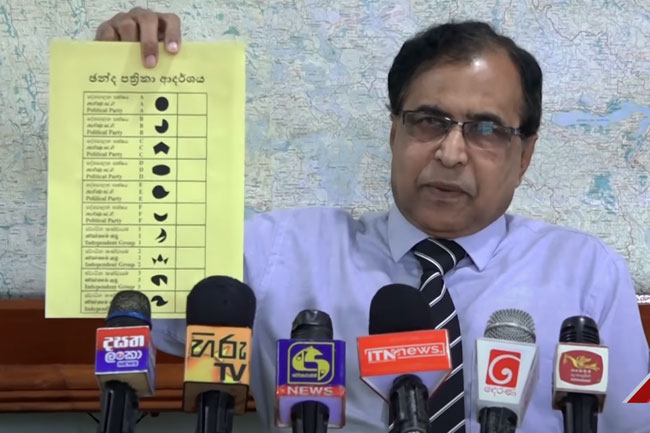
Addressing the public ahead of the polls, the Chairman of the Election Commission, R.M.A.L. Ratnayake, clarified that each eligible citizen will be issued a single ballot paper, reinforcing the principle of one person, one vote.

The design of the ballot has been standardised to include only the names and emblems of registered political parties, and where applicable, the identifying number and symbol for each independent group. No individual candidates or ward numbers will be listed.

The commission has specified that electors are required to indicate their preference by placing a single cross (X) within the box adjacent to the party or independent group of their choice.

Marking more than one box or placing any alternative symbol or annotation on the ballot paper could result in the vote being declared invalid.

Such actions may be interpreted as an attempt to compromise the anonymity of the vote, and therefore fall outside the bounds of electoral procedure.

Voters are strongly urged to take care when completing their ballot, ensuring that no stray marks or identifying features are added, intentionally or otherwise. Any deviation from the standard marking method may lead to the ballot being rejected during counting.

In preparation for polling day, the Commission has also reiterated the list of documents that may be used to confirm voter identity. A broad range of identification options will be accepted, including the National Identity Card, a valid passport, a current driving licence, as well as identity cards issued for retirees, members of the clergy, or senior citizens.

Additionally, temporary ID cards provided by the Election Commission for persons with disabilities or others lacking standard documentation will be deemed valid. A temporary driving licence featuring a photograph will also be considered acceptable.

Importantly, the Commission clarified that a polling card is not essential to exercise one’s franchise. As long as a recognised form of identification is presented, voters will not be turned away from the polls.

The Election Commission has also called on the public to assist in upholding the transparency and credibility of the election by following all stipulated procedures without deviation.

Key bilateral pacts to be signed between Sri Lanka and Vietnam

0

May 02, Colombo (LNW): President Anura Kumara Dissanayake is set to embark on a state visit to the Socialist Republic of Vietnam from May 04 to 06, 2025, marking a pivotal moment in the deepening of bilateral relations between the two nations.

The invitation was extended by Vietnamese President Luong Cuong, as both countries commemorate 55 years of formal diplomatic engagement.

During his visit, President Dissanayake will engage in a series of high-level discussions with key figures in the Vietnamese government, including President Luong Cuong, Prime Minister Pham Minh Chinh, and other senior leadership figures such as the General Secretary of the Communist Party.

These meetings are expected to focus on strengthening cooperation across a range of sectors, including trade, tourism, education, and regional security.

The visit takes on added cultural and diplomatic significance as President Dissanayake has been invited to serve as the Chief Guest at the United Nations Day of Vesak celebrations in Ho Chi Minh City.

Vesak, which commemorates the birth, enlightenment and passing of the Buddha, holds great spiritual and symbolic importance for many nations across Asia.

President Dissanayake is scheduled to deliver the keynote address at the event, underlining Sri Lanka’s historic and spiritual contributions to global Buddhist heritage and interfaith understanding.

A series of formal agreements and memoranda of understanding are anticipated to be signed during the state visit, reflecting a shared commitment to enhanced cooperation.

These documents are expected to cover a spectrum of interests including technological collaboration, labour mobility, tourism development, and academic exchange.

Additionally, the itinerary includes a business forum where President Dissanayake and his delegation will engage with members of Vietnam’s private sector, aiming to foster greater economic collaboration and explore opportunities for joint ventures.

With both economies currently undergoing significant transformation, the meeting offers a timely platform for strategic partnerships that align with their respective national development agendas.

Accompanying the President on this diplomatic mission will be Foreign Minister Vijitha Herath, who also oversees the portfolios of foreign employment and tourism, along with senior officials from the Ministry of Foreign Affairs and other government departments.

Government eases vehicle import restrictions with policy shift

0

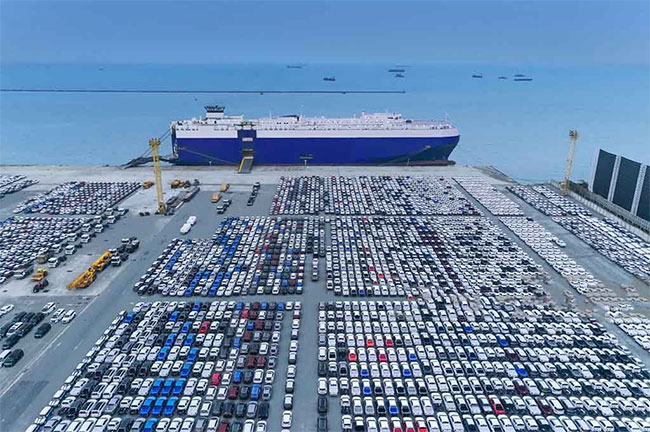
May 02, Colombo (LNW): In a notable policy shift aimed at easing supply constraints in the automotive sector, the Ministry of Finance has announced a fresh set of relaxations on vehicle import restrictions, effective from April 29, 2025.

The move signals a gradual loosening of controls that have been in place for several years as part of broader measures to stabilise Sri Lanka’s economy during its financial crisis.

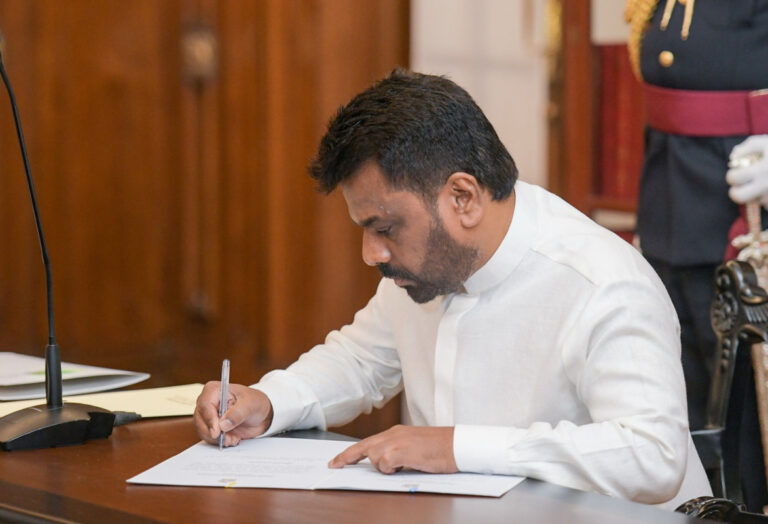
The revised regulations, issued under the signature of President Anura Kumara Dissanayake in his capacity as Minister of Finance, Planning and Economic Development, are expected to facilitate the immediate release of numerous vehicles that have been held at ports for weeks due to previous import limitations.

Amongst the categories now approved for clearance are popular hybrid models, including the Toyota Raize and Nissan X-TRAIL, as well as other environmentally friendly vehicles utilising comparable technologies.

The shift has been welcomed by industry stakeholders who have long voiced concerns over the impact of prolonged import restrictions on both consumers and the automotive trade.

Speaking on the development, the Chairman of the Vehicle Importers’ Association, Prasad Manage, noted that the new directive offers much-needed relief to importers and dealers who had seen vehicles held up in limbo for nearly two months.

He emphasised that the clearance of hybrids would also help meet the growing demand for fuel-efficient, low-emission vehicles amid rising environmental consciousness and cost pressures.

In a related move, the government has further extended its liberalisation by lifting the ban on the importation of new, unregistered motorcycles. This change comes under a separate gazette notification, which outlines a licensed import mechanism for new motorbikes, providing a formal channel for dealers to resume trade within a regulated framework.

Industry experts believe this decision could inject fresh dynamism into the two-wheeler market, which remains crucial for middle-income consumers and the urban workforce reliant on affordable mobility.

The relaxation of these restrictions is seen as part of the administration’s broader attempt to revive consumer markets and encourage investment in sectors that have suffered under years of austerity and import controls.

Whilst the government continues to stress the importance of managing foreign exchange reserves prudently, it appears to be testing a more balanced approach—easing certain controls whilst maintaining overall macroeconomic discipline.

Critics, however, caution that increased imports could place renewed pressure on the trade deficit if not managed carefully. They urge policymakers to ensure that any easing of restrictions is accompanied by robust fiscal planning and continued efforts to boost exports and attract foreign capital.

Sri Lanka sees robust growth in exports and remittances amid economic recovery

0

By: Isuru Parakrama

May 02, Colombo (LNW): Sri Lanka witnessed encouraging signs of economic momentum in March 2025, with a surge in foreign remittances and export performance contributing to a cautiously optimistic outlook, according to data published by the Central Bank of Sri Lanka (CBSL).

Merchandise exports reached approximately US$ 1.24 billion during the month, representing an 8.1 per cent increase compared to the same period last year. This growth, seen across a variety of sectors including textiles, tea, rubber-based products, and electrical components, points to improved international demand and a gradual strengthening of the country’s export base.

Imports, meanwhile, also experienced a rise—climbing by 8.6 per cent year-on-year to over US$ 1.63 billion. This uptick suggests a recovery in domestic consumption and industrial activity, but also underlines the ongoing challenge of narrowing the trade deficit, a long-standing concern for Sri Lanka’s external sector stability.

One of the most significant developments noted in the report was the historic peak in foreign worker remittances. March recorded an inflow of US$ 693 million, the highest ever for that month in Sri Lanka’s history.

Analysts attribute this increase to improved labour market conditions abroad, seasonal factors, and enhanced efforts to channel remittances through official banking channels.

The boost in remittance inflows is expected to bolster foreign reserves and ease pressure on the country’s balance of payments.

Tourism, another vital pillar of the economy, also continued its post-crisis resurgence. A total of 229,298 visitors arrived in March, generating approximately US$ 354 million in revenue.

The uptick reflects ongoing promotional campaigns and the gradual restoration of traveller confidence in Sri Lanka as a safe and attractive destination.

Industry stakeholders are cautiously hopeful that tourism earnings will return to pre-pandemic levels over the coming years.

However, the Central Bank report also acknowledged certain macroeconomic pressures. The Sri Lankan rupee depreciated by 2.3 per cent against the US dollar between January and the end of April 2025.

Although this movement remains relatively contained, it underscores the continued vulnerability of the rupee to global currency fluctuations and import-driven outflows.

Despite these mixed signals, the broader economic indicators offer some hope for recovery following years of turbulence marked by debt crises, political instability, and a global pandemic.

Policymakers are expected to maintain a delicate balance between stimulating growth, managing inflation, and safeguarding foreign reserves as the country navigates its way through an ambitious economic reform agenda.

Call for independent probe as student’s death at Sabaragamuwa University sparks outrage

0

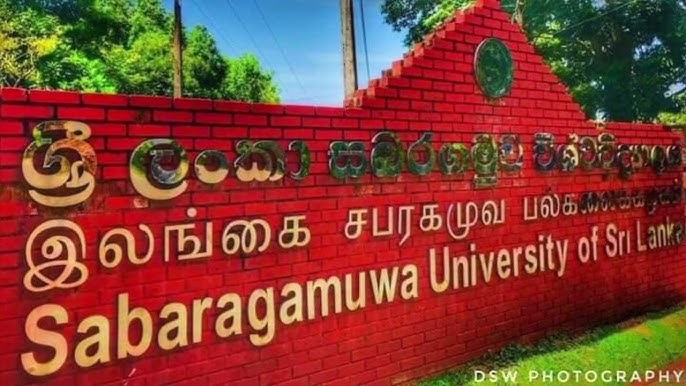
May 02, Colombo (LNW): The sudden and tragic death of a young undergraduate at the University of Sabaragamuwa has ignited a wave of concern and condemnation, with academic unions, student bodies, and government authorities calling for a full and impartial investigation into the circumstances surrounding the incident.

The deceased, a 23-year-old student enrolled in the Department of Engineering Technology, was discovered having taken his own life under deeply troubling circumstances.

The case has sparked widespread suspicion that the suicide may be linked to a suspected ragging incident—a practice long condemned but still reportedly prevalent in some corners of the university system.

The Federation of University Teachers’ Associations (FUTA), voicing its dismay over the incident, issued a strongly worded statement urging an independent inquiry, stressing the need for absolute transparency and credibility in the investigative process.

According to FUTA Secretary and Senior Lecturer Charudatta Ilangasinghe, the death, believed to be associated with peer abuse or intimidation, must be thoroughly examined without institutional bias or delay.

He warned that academic institutions risk becoming complicit in a culture of silence unless proactive measures are taken to address violence disguised as tradition.

Further raising the alarm, a fellow student has formally filed a complaint at the Samanalawewa Police Station, suggesting that the deceased may have been driven to suicide by prolonged psychological and possibly physical torment under the guise of ragging.

This allegation has intensified public scrutiny and reinforced longstanding concerns about the failure to root out toxic initiation rituals from campuses across the country.

In response to the growing pressure, the Ministry responsible for higher education issued a statement confirming that a formal Board of Inquiry has been appointed to examine the incident.

Officials pledged that if evidence confirms that ragging played a role in the student’s death, those found responsible—whether directly or through negligence—would face the full weight of legal consequences.

The University Management and the University Grants Commission are reportedly awaiting the findings of this inquiry to determine further disciplinary or legal action.

This tragedy is the latest in a series of similar incidents over the years that have shaken confidence in the safety and ethical standards of Sri Lanka’s university system.

Whilst several institutions have instituted codes of conduct and zero-tolerance policies against ragging, implementation remains inconsistent, and many cases are thought to go unreported due to fear of retaliation or institutional inaction.

Human rights advocates and mental health professionals have also weighed in, pointing to the urgent need for reform. They stress that the emotional wellbeing of students cannot be treated as an afterthought, and that universities must create environments where abuse is neither tolerated nor obscured by administrative red tape or misplaced loyalty to campus hierarchies.

Slight decline in heavy falls across country (May 02)

0

May 02, Colombo (LNW): The Intertropical Convergence Zone (where winds from the Northern Hemisphere and Southern Hemisphere converge) affects the island’s weather, and showers or thundershowers, therefore, will occur at several places in Western, Central, Sabaragamuwa, Southern, Uva and Eastern provinces during the afternoon or night, the Department of Meteorology said in its daily weather forecast today (02)

Fairly heavy falls above 50 mm are likely at some places.

Showers or thundershowers will occur at a few places elsewhere of the island during the afternoon or night.

Showers may occur in Western provinces and Galle and Matara districts in the morning too.

The general public is kindly requested to take adequate precautions to minimise damages caused by temporary localised strong winds and lightning during thundershowers.

Misty conditions can be expected at some places in Central, Sabaragamuwa and Uva provinces during the morning.

Marine Weather:

Condition of Rain:
Showers or thundershowers will occur at several places in the sea areas extending from Puttalam to Hambantota via Colombo and Galle. Showers or thundershowers will occur at a few places over the other sea areas around the island.
Winds:
Winds will be south-westerly and wind speed will be (20-30) kmph. Wind speed can increase up to 45 kmph at times in the sea areas off the coast extending from Chilaw to Kankasanthurai via Mannar and from Hambantota to Pottuvil.
State of Sea:
The sea areas off the coasts extending from Chilaw to Kankasanthurai via Mannar and from Hambantota to Pottuvil will be fairly rough at times. The other sea areas around the island can be slight to moderate.  Temporarily strong gusty winds and very rough seas can be expected during thundershowers.

Ministry pledges firm response amid tragedy at Sabaragamuwa University

0

May 01, Colombo (LNW): The Ministry of Higher Education has pledged decisive action should it be established that the recent death of a student from Sabaragamuwa University was the result of ragging.

In a statement released to the media, the Ministry confirmed that a formal investigation is now underway and that a dedicated inquiry team has been appointed to examine the circumstances surrounding the incident.

The case concerns the tragic death of a second-year undergraduate from the Faculty of Technical Engineering, who was found dead by suicide at his residence in Gampola on April 29.

The student had reportedly returned home after participating in the university’s Sinhala and Tamil New Year festivities. Allegations have since emerged suggesting that the student endured significant emotional distress linked to degrading treatment by fellow students during the celebration, with some relatives and friends claiming that this humiliation may have directly contributed to his death.

Responding to the growing public concern and extensive media coverage, the Ministry acknowledged the seriousness of the allegations and confirmed that it is working in close coordination with both the University Administration and the University Grants Commission (UGC).

Should the findings of the investigation substantiate the claims of ragging, the Ministry assured that firm disciplinary and legal measures would be imposed against all those implicated.

This incident has reignited public debate over the ongoing presence of ragging within Sri Lankan universities—a practice that has been widely condemned yet persists in various forms across institutions.

Whilst once dismissed as a rite of passage, ragging has increasingly been associated with patterns of psychological and physical abuse, with calls intensifying for stricter enforcement and preventative measures.

The Ministry’s latest remarks appear aimed at sending a strong message, not only to university communities but also to the wider public, about the zero-tolerance policy it claims to uphold regarding student harassment and abuse.

Officials have stressed the importance of fostering a safe and respectful environment within higher education institutions, whilst reiterating that mental health and student welfare must be central priorities.