Home Blog Page 66

Tax Changes Target Booming Vehicle Imports Amid Economic Recovery

0

Sri Lanka’s latest amendments to the Social Security Contribution Levy (SSCL) signal a shift in the Government’s fiscal strategy as the economy gradually recovers and vehicle imports rebound after years of severe restrictions.

The amendment Bill to the SSCL Act, gazetted in late February and released in early March 2026, introduces significant revisions to both the registration thresholds for businesses and the tax treatment applied to motor vehicles.

Financial analysts say the timing of the changes is closely linked to the rapid revival of vehicle imports, which have surged in recent months following improved foreign exchange availability and the easing of import restrictions introduced during the economic crisis.

Under the proposed legislation, the threshold requiring businesses to register for the SSCL will be lowered substantially from April 2026. Companies generating quarterly turnover above Rs. 9 million will now fall within the levy framework, compared with the previous threshold of Rs. 15 million. The annual threshold will also be reduced from Rs. 60 million to Rs. 36 million.

This policy shift effectively broadens the tax base by bringing a larger number of small and medium-sized businesses into the SSCL system.

Companies that exceed the threshold will be required to register with the Inland Revenue Department within 15 days, while entities with turnover below Rs. 36 million across four consecutive quarters will be permitted to apply for de-registration.

The Bill also restructures how the levy applies to the vehicle sector, which has become one of the most active areas of post-crisis consumer spending.

From 1 April 2026, the exemption currently granted on the SSCL at the point of importing motor vehicles will be removed. Instead, the Government proposes exempting turnover generated from wholesale and retail sales of vehicles.

Tax specialists interpret this change as an attempt to shift the levy burden toward the import stage rather than the domestic sales chain.

In practical terms, importers may face higher upfront tax obligations, while dealerships selling vehicles to consumers will be exempt from the levy on their sales revenue.

While the measure may help the Government capture additional fiscal revenue from rising import volumes, economists warn that the broader economic impact could be complex.

Vehicle imports represent a major component of Sri Lanka’s merchandise import bill. A rapid increase in vehicle purchases could place renewed pressure on the country’s fragile external sector if foreign exchange outflows accelerate faster than export earnings.

Some analysts believe the SSCL adjustment may indirectly act as a moderating mechanism by increasing the cost structure for importers.

However, tax experts have pointed out a potential policy gap in the legislation. The amendment Bill does not provide clear transitional guidelines for vehicles imported before the new rules come into force but still held in dealer inventories after March 2026.

This lack of clarity may create uncertainty for importers and distributors who made purchasing decisions under the previous tax regime.

As Sri Lanka navigates its fragile economic recovery, policymakers face the challenge of strengthening government revenue while avoiding measures that could destabilise key sectors of the economy.

The evolving tax treatment of vehicle imports under the SSCL may therefore become an important test of how fiscal policy adapts to changing economic conditions in the post-crisis period.

Gulf Conflict Reshapes Sri Lanka’s Shipping, Energy, Tourism Industries

0

The escalating conflict in the Middle East, triggered by United States military action against Iran in March 2026, is sending shockwaves across global trade routes and energy markets. For Sri Lanka’s private sector, the crisis is producing a complex mix of short-term opportunities and serious economic risks.

According to analysis by First Capital Research, the disruption to shipping lanes and rising oil prices are already altering business dynamics in several key sectors of Sri Lanka’s economy.

Shipping and Logistics Sector Sees Immediate Gains

One of the few sectors benefiting from the geopolitical turmoil is shipping and logistics. With vessels avoiding certain Middle Eastern routes due to security risks, traffic through the Port of Colombo has increased as shipping companies reroute cargo across alternative corridors.

This shift has led to higher demand for port services, marine fuel, and cargo handling operations. Freight charges and marine insurance premiums have also risen sharply along longer shipping routes.

Major Sri Lankan conglomerates with diversified operations in logistics and maritime services, such as John Keells Holdings and Hayleys PLC, are positioned to benefit from these developments in the short to medium term.

Higher freight rates and increased vessel traffic are expected to temporarily strengthen profit margins for companies operating in shipping support services and bunkering.

Energy Companies Gain from Rising Oil Prices

The global spike in crude oil prices has also created a short-term advantage for energy distributors in Sri Lanka.

Companies holding surplus petroleum and gas inventories are likely to benefit as domestic demand rises alongside global price increases. Firms such as Lanka IOC PLC and Laugfs Gas PLC could record improved revenues as energy prices climb.

However, analysts caution that these gains may be temporary and could be overshadowed by broader economic pressures caused by the conflict.

Tourism Sector Faces Uncertain Recovery

Sri Lanka’s tourism industry, which has been gradually recovering after several years of economic instability, faces a mixed outlook.

On one hand, the island could attract travellers seeking to avoid conflict zones in the Middle East. On the other hand, many international flight routes linking Europe and Asia pass through Middle Eastern aviation hubs.

With airlines adjusting flight paths and reducing connectivity through the region, tourist arrivals from Europe could face temporary disruptions.

This uncertainty threatens to slow the sector’s recovery momentum, particularly if the conflict continues for an extended period.

Inflation and Consumer Pressure Build

Despite isolated gains in shipping and energy sectors, the broader outlook for Sri Lanka’s corporate sector remains cautious.

Higher global oil prices typically translate into increased transportation costs, rising electricity expenses, and higher production costs for businesses.

These inflationary pressures ultimately affect households through higher prices and reduced purchasing power.

As disposable incomes shrink, consumer demand for goods and services is likely to weaken, placing additional pressure on retailers, manufacturers, and service providers.

According to First Capital Research, while some industries may enjoy temporary gains from shifting trade routes and energy markets, the overall impact of the Gulf conflict could create significant economic volatility for Sri Lanka’s private sector in the months ahead.

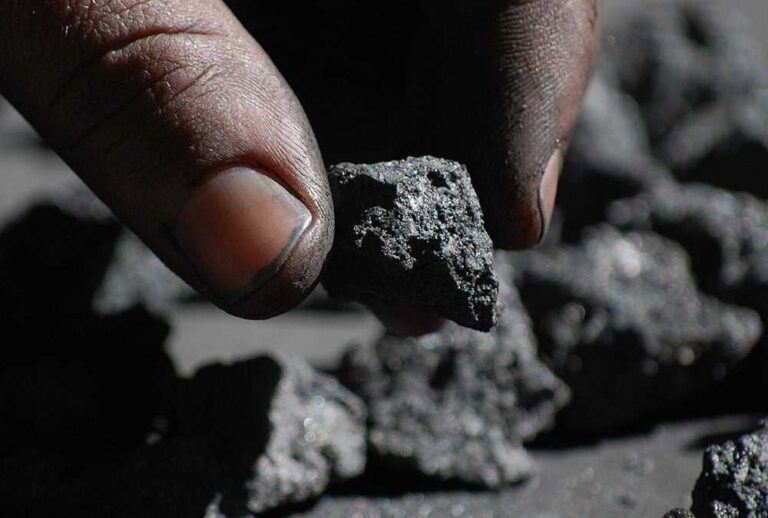
Substandard Coal Imports Threaten Sri Lanka’s Power Supply Stability

0

A new investigation into coal imports for Sri Lanka’s largest thermal power station has raised serious concerns about the country’s electricity security, operational efficiency, and environmental safety.

A report by the Public Utilities Commission of Sri Lanka (PUCSL) has revealed that recently imported coal used at the Lakvijaya Power Plant in Norochcholai has significantly reduced electricity generation efficiency while increasing pollution and operational risks.

The findings, submitted to the Parliamentary Sectoral Oversight Committee on Infrastructure and Strategic Development on March 4, 2026, come amid growing controversy surrounding the coal procurement process overseen by Energy Minister Kumara Jayakody.

Power Output Falls Below Expected Levels

According to the PUCSL investigation, the Lakvijaya plant failed to reach its normal generating capacity when using nine coal shipments received from the current supplier between December 2025 and February 2026.

Under the previous supplier, each generating unit at the plant produced an average gross output of about 300 megawatts. However, operational records show that Units One, Two, and Three were unable to reach that benchmark when operating with the newly imported coal.

Engineers also recorded a significant rise in coal consumption rates. More coal had to be burned per hour to produce the same amount of electricity, a clear sign of reduced efficiency.

This means the country is effectively paying more for less power at a time when Sri Lanka’s electricity demand continues to rise.

Coal Quality under Question

The report also highlighted discrepancies in the declared quality of the imported coal.

Operational performance data suggested that the coal’s actual calorific value was much closer to the lower results obtained from laboratory tests conducted at the power plant than to the higher figures stated in the official shipping documentation.

Reports indicate that some shipments recorded gross calorific values below the required benchmark of 5,900 kcal/kg.

Lower calorific value coal generates less heat during combustion, forcing operators to burn larger quantities to maintain electricity output.

This not only reduces efficiency but also accelerates wear and stress on critical plant equipment.

Operational Stress inside the Power Plant

Operational logs examined by the PUCSL revealed repeated instances where steam temperatures exceeded limits specified in the plant’s operational regulations while burning the new coal.

To control these temperature spikes, operators were forced to fully open the desuperheating valve, which injects water into steam to reduce temperature.

In some cases this was not enough, forcing engineers to vent steam from the system.

Steam venting is considered a last-resort safety measure because it wastes energy and reduces generating capacity. In one incident, it caused a sudden drop in power output.

Pollution Levels Rise

The report also documented a dramatic increase in fly ash emissions.

Average fly ash discharge rose from approximately 0.046 kilograms per kilowatt-hour under the previous supplier to about 0.093 kilograms per kilowatt-hour with the new coal an increase of more than 100 percent.

Emission monitoring further showed higher levels of carbon monoxide, nitrogen oxides, particulate matter, and sulphur dioxide during plant operations.

Although emissions remained within the limits permitted under the Environmental Protection Licence, regulators warned that sustained increases could worsen air quality for communities living around Norochcholai.

Procurement Controversy and Power Crisis Risk

The coal supply contract itself has become the subject of political controversy.

Opposition lawmakers allege irregularities in the procurement process and claim the country may suffer financial losses and potential electricity shortages if the quality issues persist.

Opposition parliamentarian S. M. Marikkar previously alleged that the coal issue could impose a financial burden exceeding Rs. 1.8 billion on the public.

The government has already been forced to approve emergency coal purchases of 300,000 metric tonnes to prevent a potential power crisis.

With Norochcholai generating a major share of Sri Lanka’s electricity supply, any sustained disruption could place additional strain on the national grid.

Energy analysts warn that unless procurement transparency and quality controls are strengthened, the country risks repeating past power shortages that disrupted households, industries, and economic recovery.

Sri Lanka’s Weak FDI Record Exposes Structural and Corporate Failures

0

Sri Lanka’s continuing struggle to attract meaningful levels of foreign direct investment (FDI) as of February 2026 reflects not only policy weaknesses but also deeper structural and corporate sector shortcomings, according to international investment analysts and economic observers.

Sarath Sathkumara, Chief Investment Officer International at Aditya Birla Sun Life AMC Ltd., which manages a global portfolio exceeding $50 billion, recently highlighted a critical concern: many Sri Lankan companies have failed to generate returns that meet international investor expectations.

Speaking at a Colombo symposium on trade and geopolitical challenges, Sathkumara noted that a review of the country’s top 25 listed companies revealed that only around five consistently produced returns above their cost of capital. From an investor’s perspective, this narrow pool of profitable firms significantly limits the attractiveness of Sri Lanka’s corporate landscape.

“For international investors, the most basic requirement is sustainable profitability,” he explained. “If companies cannot generate returns above their cost of capital, global investors will inevitably look elsewhere.”

Sri Lanka’s annual FDI inflows remain just above $1 billion, representing roughly 1% of GDP. This is well below the 3% to 4% typically recorded by competing emerging economies in Asia.

While the Government frequently points to fiscal incentives such as tax concessions and duty exemptions to attract investors, Sathkumara argued that such incentives are no longer decisive factors in investment decisions. Almost every competing economy offers similar benefits, making them insufficient as a competitive advantage.

Instead, investors place greater emphasis on macroeconomic stability, predictable policies, efficient regulatory systems, and strong corporate performance.

Another recurring criticism from investors relates to the country’s institutional investment framework, particularly the administrative procedures of the Board of Investment (BOI). While the BOI was originally established to facilitate foreign investment through streamlined processes, many investors today view its procedures as outdated and excessively bureaucratic.

Approvals often require multiple layers of documentation and lengthy processing times, undermining Sri Lanka’s competitiveness against faster-moving regional economies such as Vietnam and Thailand.

In addition, analysts have raised questions about the way FDI figures are presented in official statistics. Critics argue that the BOI’s methodology sometimes aggregates reinvested earnings, intra-company loans, and previously committed project funds as new FDI inflows. While such accounting practices may comply with certain statistical definitions, they can create a perception of stronger investment performance than the economy is actually generating in terms of fresh capital.

For a small economy like Sri Lanka, attracting export-oriented investment is essential. Experts stress that foreign investors must see the country not merely as a domestic market but as a regional production and export platform.

Opportunities exist in sectors such as tourism, technology services, and manufacturing partnerships linked to India’s expanding industrial hubs. Sri Lanka’s proximity to India and its skilled workforce provide natural advantages, particularly in supply chain integration and IT services.

However, economists argue that unlocking these opportunities will require deeper structural reforms. These include modernising investment facilitation systems, improving logistics and connectivity, and strengthening corporate governance within the private sector.

Without such reforms, Sri Lanka risks continuing its pattern of modest FDI inflows, leaving the economy unable to fully capitalise on its strategic geographic position in the Indian Ocean.

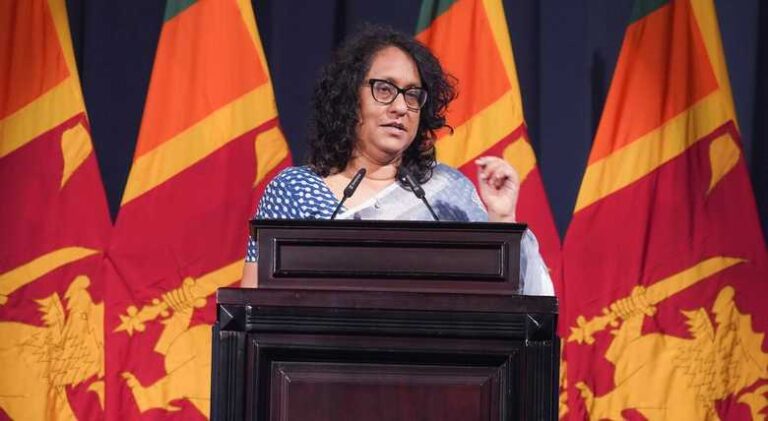
National Care Policy Key to Building a Fair Society – PM Harini

0

Prime Minister Dr. Harini Amarasuriya stated that establishing a National Care Policy is essential to building a fair society that properly values women’s labour and recognizes the importance of the care economy.

The Prime Minister made these remarks in Parliament on March 5 while expressing her views on a proposal submitted by the Women Parliamentarians’ Caucus advocating for the development of a National Care Policy, according to the Prime Minister’s Media Division.

Speaking during the debate, the Prime Minister said it was particularly meaningful for her to address the issue on International Women’s Day, recalling that when she first spoke about the care economy in Parliament six years ago, the topic received little attention due to the limited representation of women in the House.

She noted that discussions on the subject have since grown significantly, both within Parliament and in the broader public sphere, enabling concrete proposals to be presented for the development of a national policy.

The Prime Minister also highlighted the increasing representation of women across multiple sectors, including local government institutions, community organisations, the public service and the education sector.

She emphasized that recognising women as equal citizens and addressing the barriers that prevent them from participating freely and respectfully in public life is essential to strengthening their role in society.

Amarasuriya further noted that while more attention is now being given to women in politics, it is equally important to ensure that media and social media spaces are organised in a way that protects women’s dignity and security.

She stressed that such protections should not rely solely on legal measures but must be supported by broader social transformation that promotes fairness and justice.

The Prime Minister added that the goal is to build a society where all citizens can participate equally, with dignity, security and equal opportunity.

Minister Warns of Rising Online Image Misuse Targeting Women and Children

0

Women and Child Affairs Minister Saroja Savithri Paulraj has warned that the misuse of images on social media to harass, blackmail and extort money from women and children is becoming a growing concern.

Speaking on the issue, the Minister said the unauthorized use of photographs and personal images to threaten victims for financial gain has emerged as a global challenge.

She said discussions have already been held with the Ministry of Digital Economy to strengthen cybersecurity laws and improve mechanisms to address such forms of online abuse.

Paulraj noted that victims can seek assistance through the Sri Lanka Computer Emergency Readiness Team (SLCERT), which is able to help identify the sources of harmful content, facilitate the removal of such images from the internet and support legal action against those responsible.

The Minister urged victims not to remain silent or feel pressured to hide such incidents due to fear or social stigma, stressing that legal protection is available.

She also cautioned individuals not to respond to online harassment by isolating themselves or harming themselves, emphasizing that institutional support systems are in place.

Those facing such abuse can seek help through the Women and Children’s Affairs Ministry hotline 1938, contact the Women and Children Abuse Investigation Division at the nearest police station, or report incidents through SLCERT.

FR Petition Filed Challenging Arrest of Ex-SIS Chief Suresh Sallay Under PTA

0

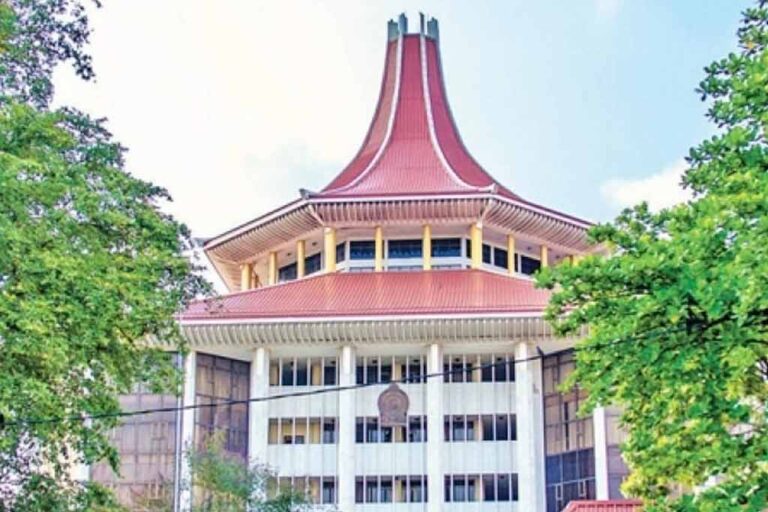
A fundamental rights petition has been filed before the Supreme Court challenging the arrest and detention of former State Intelligence Service (SIS) chief Major General (Retd.) Suresh Sallay under the Prevention of Terrorism Act (PTA).

The petition was filed by a retired Air Force officer, naming the Minister of Defence, the Secretary to the Ministry of Defence, the Secretary to the Ministry of Public Security, the Inspector General of Police (IGP), and the Criminal Investigation Department (CID) as respondents.

The petitioner argued that the PTA can only be applied to individuals involved in activities that undermine the unity and territorial integrity of the country or those who directly or indirectly support the unlawful overthrow of a constitutionally elected government.

However, the petitioner stated that no such charges have been filed against the former head of the State Intelligence Service.

Major General (Retd.) Suresh Sallay was arrested by CID officers on February 25 in connection with investigations into the 2019 Easter Sunday terror attacks. Authorities later obtained approval to detain him for 90 days under the provisions of the PTA.

Trump Seeks Role in Choosing Iran’s Next Leader as War Intensifies

0

rumpU.S. President Donald Trump said he wants the United States to play a role in determining Iran’s future leadership as the conflict in the Middle East continues to escalate.

In a phone interview with Reuters, Trump stated that Washington should be involved in selecting the individual who will lead Iran in the future. He also suggested that Mojtaba Khamenei, son of the late Supreme Leader Ayatollah Ali Khamenei, is unlikely to succeed his father.

The remarks came as U.S. and Israeli forces continued coordinated strikes across Iran, targeting military assets and infrastructure. U.S. officials said American forces have struck at least 30 Iranian vessels, including a large drone carrier, while B-2 bombers carried out attacks on missile launch sites and production facilities.

Meanwhile, Iran launched retaliatory attacks targeting Israel and several Gulf countries, including the United Arab Emirates and Qatar. A missile strike also caused a fire at a refinery in Bahrain, according to reports.

The Israeli military issued evacuation warnings to residents in several parts of Tehran as airstrikes intensified, with Iranian state media reporting multiple explosions across the capital. Authorities said an airstrike on a guesthouse near Tehran killed 17 people.

U.S. Defense Secretary Pete Hegseth said the United States has sufficient munitions to sustain military operations, adding that Iran’s missile and drone attacks have significantly decreased since the start of the conflict.

The conflict has also drawn in other countries in the region. Azerbaijan accused Iran of launching drones into its territory and temporarily closed its southern airspace, though Tehran denied the claim.

According to the Iranian Red Crescent Society, at least 1,230 people have been killed in Iran since the fighting began. Additional casualties have been reported in neighboring countries, including Lebanon.

The war has also affected global markets, with rising oil prices and disruptions to energy supplies impacting economies worldwide.

Israeli Prime Minister Benjamin Netanyahu said Israel had achieved significant military gains but warned that further operations were planned, including strikes on underground missile facilities.

Iranian officials have condemned the attacks and vowed retaliation, with senior commanders stating that Iranian forces will continue to target American interests in the region.

Sri Lanka Navy Rescues 204 Crew Members from Iranian Naval Vessel

0

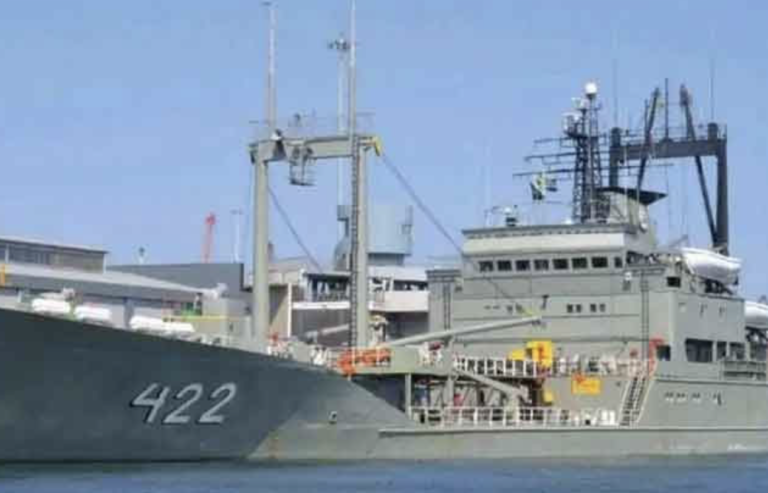
A total of 204 crew members of the Iranian navy vessel IRIS Bushehr, located near Sri Lanka’s territorial waters, have been safely evacuated by the Sri Lanka Navy.

According to the Navy, the rescue operation was successfully carried out by Sri Lanka Navy personnel, who brought the evacuated crew members safely to the Colombo Port.

Navy Spokesman stated that all rescued personnel were transported to Colombo following the operation.

WEATHER FORECAST FOR 06 MARCH 2026

0

Showers or thundershowers are likely at a few places in Southern province and in Rathnapura, and Kaluthara districts during evening or night.

Mainly dry weather will prevail over the other parts of the island.

Misty conditions can be expected at some places in Northern, North-central, Central, Sabaragamuwa, Uva and North-western provinces during the early hours of the morning.