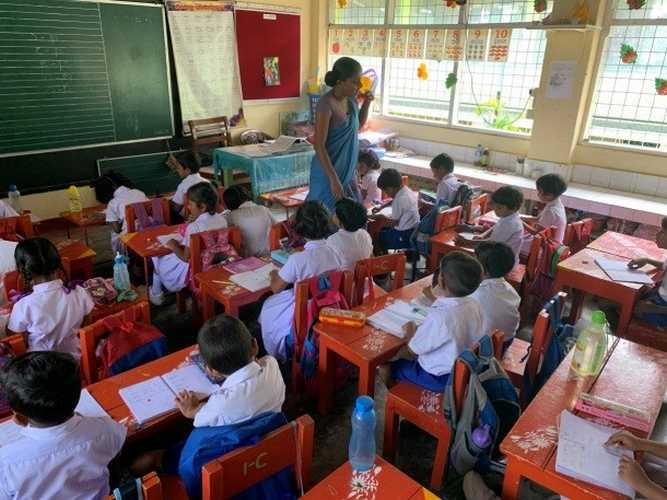
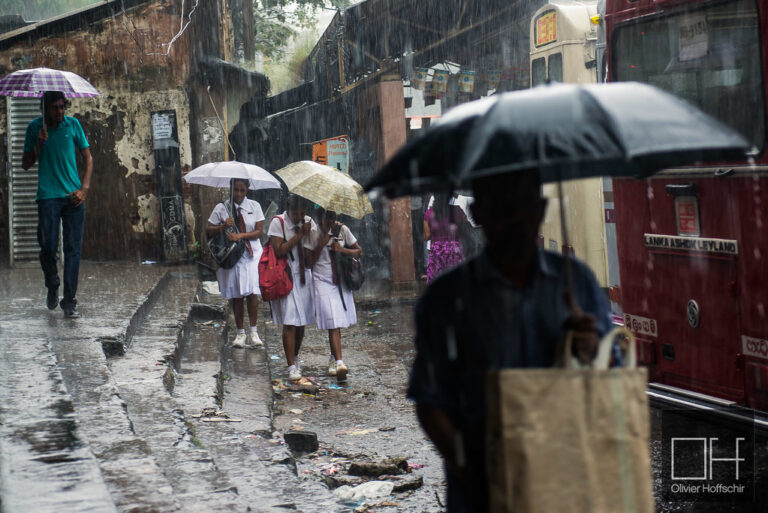
August 25, Colombo (LNW): The Ministry of Education has confirmed that the third term for government and government-recognised schools officially commences today (26).
This marks the beginning of the final stretch in the academic year, following the conclusion of the second term on August 16.
The Ministry outlined that the initial phase of the third term will extend until November 22, with this period being critical for students as they prepare for year-end assessments and exams.
Teachers and administrative staff have also been advised to focus on curriculum completion and revision sessions to ensure students are adequately prepared for the upcoming examinations.
This term is expected to be particularly intensive, as schools work to complete syllabus targets while balancing extracurricular activities and inter-school competitions scheduled throughout this period.
The Ministry has also reiterated its commitment to ensuring that all educational institutions adhere to the academic calendar, maintaining consistent standards across the board.
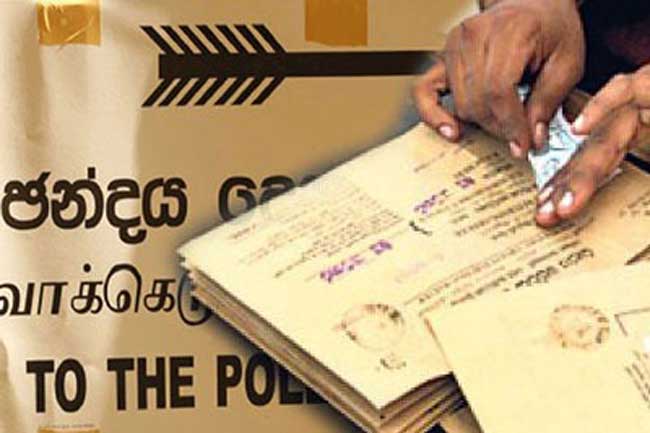
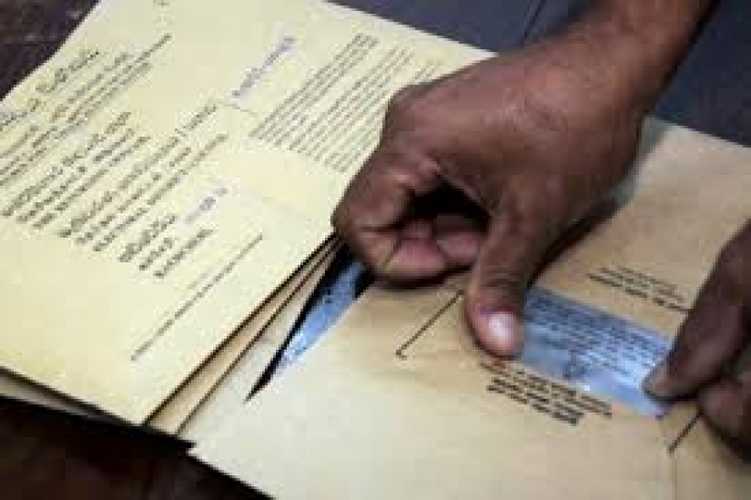
August 26, Colombo (LNW): The Postal Department is set to receive the reserved consignment of registered postal ballot papers today (26) in preparation for the 2024 Presidential Election.
This marks a crucial phase in the election process as postal voters across the country await the distribution of their ballot papers.
The distribution of official polling cards for the upcoming election will commence on 3 September, with 8 September designated as a special day to ensure widespread distribution.
As election preparations intensify, Deputy Postmaster General Rajitha Ranasinghe announced yesterday that all staff leave within the Department of Posts has been suspended until the election period concludes.
This measure aims to ensure the smooth handling of election-related duties. However, staff requiring leave for urgent reasons must obtain permission from the Deputy Postmaster General overseeing their region.
The Presidential Election is scheduled for 21 September, with postal voting set to take place on 4, 5, and 6 September.
Notably, 4 September is allocated for postal voting within District Secretariats, Election Offices, and the Police. Additional days, 11 and 12 September, have been set aside for those who are unable to cast their postal votes during the initial period.
Commissioner General of Elections Saman Sri Ratnayake confirmed that 736,589 postal vote applications were received, out of which 24,268 were rejected, leaving 712,321 eligible postal voters.
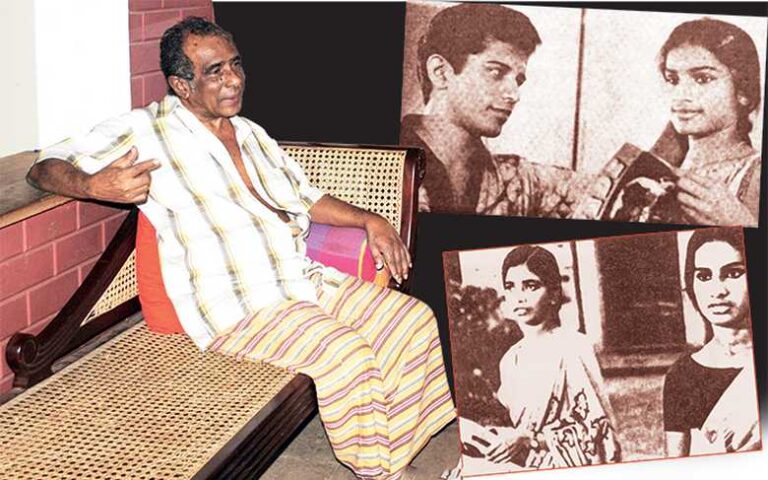
August 26, Colombo (LNW): Esteemed filmmaker Sugathapala Senarath Yapa, a pioneering figure in the Sri Lankan film industry, has passed away at the age of 89.
Yapa was celebrated for his visionary work and for helming several critically acclaimed films that have left a lasting impact on the nation’s cinematic landscape.
His iconic productions, such as Hanthane Kathawa, Pembara Madhu, and Induta Mal Mitak, are considered milestones in Sinhala cinema, showcasing his adeptness at weaving profound social themes with artistic storytelling.
Yapa’s works not only resonated with local audiences but also garnered recognition at both national and international film festivals.
Throughout his career, Yapa’s unique style and commitment to authentic Sri Lankan narratives earned him widespread respect among peers and film enthusiasts alike.
He leaves behind a legacy as one of the nation’s most influential and cherished directors, whose contributions significantly shaped the evolution of Sri Lankan cinema.
August 26, Colombo (LNW): Several spells of light showers will occur in Western, Sabaragamuwa, Southern and North-western provinces and in Kandy and Nuwara-Eliya districts, the Department of Meteorology said in its daily weather forecast today (26).
Showers or thundershowers may occur at a few places in Badulla, Ampara and Batticaloa districts during the evening or night.
Fairly strong winds about (30-40) kmph can be expected at times over Northern, North-central and North-western provinces and in Hambantota and Trincomalee districts.
The general public is kindly requested to take adequate precautions to minimise damages caused by temporary localised strong winds and lightning during thundershowers.
Marine Weather:
Condition of Rain:
Several spells of showers will occur in the sea areas off the coast extending from Puttalam to Galle via Colombo.
Winds:
Winds will be south-westerly in direction and wind speed will be (30-40) kmph. Wind speed can increase up to (55–60) kmph at times in the sea areas off the coasts extending from Trincomalee to Puttalam via Kankasanthurai and Mannar and from Hambantota to Pottuvil. Wind speed can increase up to 50 kmph at times in the sea areas off the coasts extending from Puttalam to Hambantota via Colombo and Galle.
State of Sea:
The sea areas off the coasts extending from Trincomalee to Puttalam via Kankasanthurai and Mannar and from Hambantota to Pottuvil will be rough at times. The sea areas off the coasts extending from Puttalam to Hambantota via Colombo and Galle may be fairly rough at times.
August 25, Colombo (LNW): Sri Lanka’s engagements with countries in the Central Asian region has achieved considerable progress in recent times with the conclusion of foreign office consultations with Kazakhstan, Kyrgyzstan and Turkmenistan and the decision to establish reciprocal resident diplomatic Missions in Astana, Kazakhstan and Colombo.
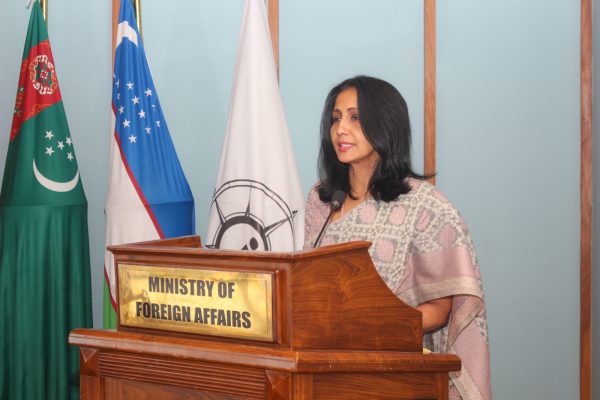
This was highlighted at the Central Asia Forum 2024 organized by the Ministry of Foreign Affairs of Sri Lanka, together with the Geopolitical Cartographer held at the Granbell Hotel in Colombo on August 21.
Exploration of the potential for future cooperation between Sri Lanka and Central Asia was underway, a region with increasing geopolitical and geo-economic significance
The Forum explored emerging opportunities for Sri Lanka in the Central Asia region with a specific focus on economic diplomacy.
The outcomes of the discussion are expected to enrich future engagements with the region. The importance of developing better connectivity between Sri Lanka and Central Asia, expanding and diversifying trade.
It is aimed at tapping on synergies in areas such as the environment, tourism and sports, and building on the people-to-people contacts that have already started, were identified as elements for strengthened cooperation between Sri Lanka and the Central Asian region.
The potential to expand economic and trade ties with Central Asian countries in several areas ranging from textiles, energy, tourism, agriculture, IT sector, education, food and beverages, tea, gems and jewellery, transport and logistics and Ayurveda and wellness products was discussed.
The success story of Sri Lanka’s pioneering investment by LOLC in Central Asia, in the financial services sector, provided useful insights into entering the Central Asian market and building a competitive business in a hitherto unexplored region.
The Forum also focused on Sri Lanka’s role in the Conference on Interactions and Confidence Building Measures in Asia (CICA) which is Central Asia’s own initiative towards peace, security, stability and cooperation in Asia.
Panellists, Moderators and Participants included Aruni Wijewardane, Secretary, Ministry of Foreign Affairs and Senior Officials of the Ministry of Foreign Affairs, Colombo based Heads of diplomatic Missions and members of the diplomatic corps, experts from the Central Asia region, academia, and think-tanks and from Geopolitical Cartographer as well as business leaders.
Valuable insights were shared on the potential of the region and collaboration with Sri Lanka. The outcomes of this Forum are expected to guide future initiatives that Sri Lanka envisages in deepening engagement with the Central Asia region leaders. Valuable insights were shared on the potential of the region and collaboration with Sri Lanka.
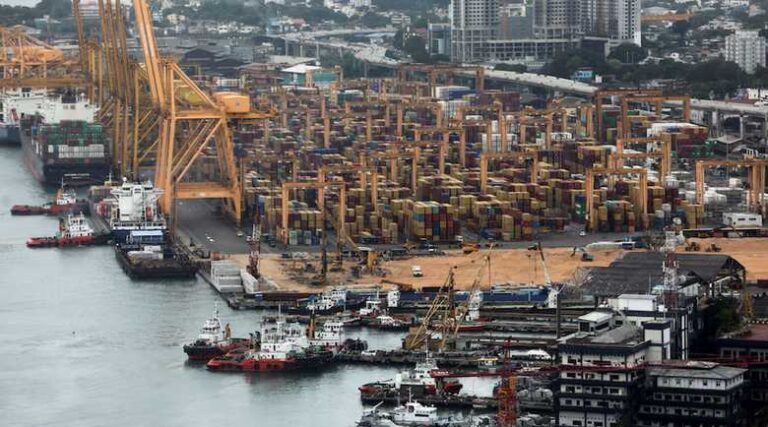
August 25, Colombo (LNW): Sri Lanka’s trade and logistics sector is currently grappling with a severe corruption crisis, especially within its customs, Inland Revenue Department (IRD), ports, and airports, Sean Van Dort, Chairman of the Sri Lanka Shippers Council said.
This deep-rooted issue, fueled by outdated, manual systems, is strangling the nation’s export sector and impeding economic growth.
The urgent solution lies in the digitalization of customs and trade operations, which promises to eradicate inefficiencies and bring transparency to the system.
The existing paper-based customs processes are woefully inadequate for the demands of the modern global economy, he added.
These outdated systems are rife with errors, deliberate delays, and a lack of accountability, creating an environment where corrupt practices can flourish. As global trade standards become increasingly stringent, Sri Lanka’s need for a transparent, efficient, and secure customs operation has never been more critical.
Digitalizing customs operations presents a clear path forward. It would significantly reduce clearance times and associated costs, eliminate opportunities for bribery, and restore integrity within the customs framework.
By adopting international best practices and harnessing technology, Sri Lanka can finally liberate itself from the grip of corruption and better integrate into the global digital trade network.
Currently, traders in Sri Lanka are burdened by a complex web of red tape, excessive documentation, and persistent delays at ports—issues that are both frustrating and financially draining.
The additional costs, such as storage fees and demurrage charges, are ultimately passed on to consumers, leading to higher prices and diminishing trust in Sri Lankan exports.
Without decisive action to eliminate corruption and modernize these processes, the future of Sri Lanka’s export sector—and by extension, its economy—is in jeopardy.
The ramifications of inefficiency are immediate and widespread. For example, when customs officers strike or deliberately slow down operations, importers face costly delays that quickly escalate due to accumulated storage and demurrage fees.
This lack of urgency and accountability among customs officials exacerbates the problem, as there are no robust systems in place to monitor and track performance effectively.
The solution lies in a comprehensive digital transformation. Implementing digital tracking and management systems for customs operations can revolutionize the sector, holding officers accountable and reducing opportunities for corruption.
However, the resistance to change remains strong. The absence of digital infrastructure perpetuates corrupt practices, as manual processes allow for document manipulation and bribery.
Beyond customs, inefficiencies at ports, warehouses, airports, and the IRD further highlight the urgent need for modernization.
A new Internal Customs Unit within Sri Lanka Customs, as announced by the Finance Ministry, is a step in the right direction.
This move has been welcomed by the Sri Lanka Shippers’ Council, which hopes that the unit will enhance transparency and public trust. The Council also advocates for extending such reforms to other departments to ensure comprehensive sector-wide improvements.
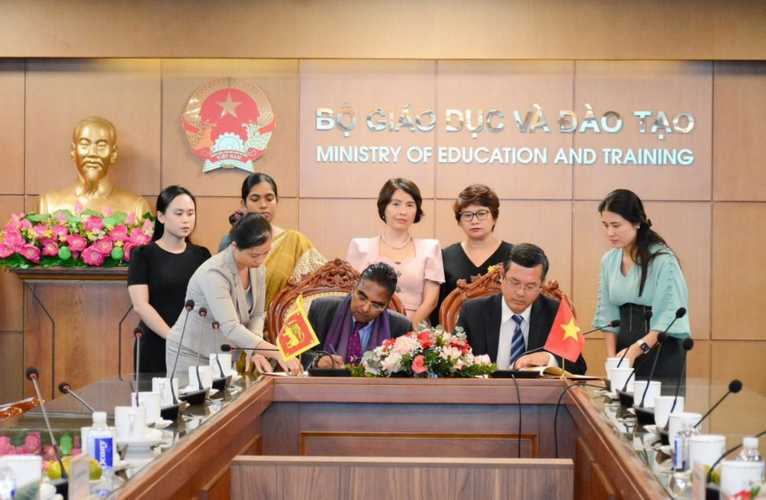
August 25, Colombo (LNW): Sri Lanka and Vietnam have signed an Education Cooperation Agreement aimed at fostering the exchange of information on development and innovation, enhancing collaboration between universities and academic institutions, and facilitating academic exchanges, collaborative research, and scholarships for students.
The agreement, signed by Vietnam’s Deputy Minister of Education and Training, Prof. Nguyen Van Phuc, and Sri Lanka’s Ambassador to Vietnam, Dr. A. Saj U. Mendis, will be in effect from 2024 to 2026.
Initially established in 1999, the agreement has been periodically renewed, serving as a key framework for promoting educational and training collaboration, especially benefiting Sri Lankan students, researchers, and academics. The signing took place at the Ministry of Education and Training in Hanoi, according to a statement from the Sri Lankan Embassy in Vietnam.
During the ceremony, Minister Nguyen Van Phuc underscored the critical role of education in a country’s socio-economic development, regardless of its status as a developing or advanced nation.
He highlighted the importance Vietnam places on education, which has been instrumental in the country’s significant economic transformation over the past two decades. Vietnam now attracts over USD 30 billion in Foreign Direct Investment (FDI) and exports more than USD 360 billion annually, largely due to its skilled and adaptable workforce.
Ambassador Mendis, in his remarks, praised Vietnam’s rapid economic transformation, noting the remarkable increase in GDP per capita from USD 90 in 1990 to USD 4,500 today. He also expressed admiration for the English proficiency of Vietnam’s younger generation, which he views as a positive sign for the country’s future.
Dr. Mendis concluded by recalling the wisdom of Confucius, stating that “Education breeds confidence, confidence breeds hope, and hope breeds peace.”
The Sri Lankan delegation included Minister Counsellor Kethma Rajapaksa Yapa and other officials from the Sri Lankan Embassy in Hanoi, while the Vietnamese delegation was led by Director General Nguyen Thi Thanh Minh and senior officials from Vietnam’s Ministry of Education and Training.
Viet Nam has extended a number of opportunities and scholarships to Sri Lankan students to study in Viet Nam and with the passage of time, it hopes to witness greater fostering and nurturing of students as well as universities.
Ambassador Mendis, enunciated that one of the compelling and cogent reasons for Viet Nam to be amongst the fastest growing economies in the world was due to its sound education structure.
This is one of the reasons that Viet Nam could attract and woo foreign investments and manufacturing outsourcing in an unprecedented manner during the last couple of decades, thus being described by economists and political thinkers as “China Plus One” and “Miracle on Mekong Region”.
August 25, Colombo (LNW): Sri Lanka’s recent economic crisis and recovery efforts present a complex narrative marked by internal challenges and external shocks.
The crisis, which began in 2019, was exacerbated by ill-advised tax cuts, a poorly managed shift to organic farming, and a series of devastating events such as the 2019 Easter bombings, the COVID-19 pandemic, and the Ukraine-Russia war.
Sri Lanka’s Minister of Foreign Affairs, Ali Sabry, briefed the Colombo-based diplomatic community on the country’s recent developments during a session held at the Ministry of Foreign Affairs on August 23, 2024.
Minister Sabry emphasized significant achievements over the past year, particularly in economic recovery, legal reforms, and the strengthening of domestic institutions focused on reconciliation.
He detailed the government’s efforts towards establishing a Commission for Truth, Unity, and Reconciliation, including the gazetting of the draft bill and its introduction in Parliament.
As the Minister of Justice, Sabry also reported progress in drafting comprehensive counter-terrorism legislation to replace the Prevention of Terrorism Act (PTA) and highlighted the advancements in reconciliation processes managed by the Ministry of Justice, including the work of the Office on Missing Persons (OMP), the Office for Reparations (OR), and the Office for National Unity and Reconciliation (ONUR).
Central Bank Governor. P. Nandalal Weerasinghe provided an overview of Sri Lanka’s economic revival and future plans for continued stabilization, thanking the international community for its support.
J.M.S.D. Ratnayaka, Additional Director General of the Department of National Planning, discussed the social safety measures implemented by the government and the new Social Protection Policy aimed at supporting vulnerable groups.
Foreign Secretary Aruni Wijewardane urged the diplomatic community to recognize Sri Lanka’s progress and to participate in the upcoming Interactive Dialogue on Sri Lanka at the Human Rights Council. She reiterated Sri Lanka’s cooperation with UN human rights mechanisms while opposing UNHRC Resolutions 46/1 and 51/1, which were adopted by divided votes.
Representatives from various governmental and justice-related offices, including the Ministry of Justice, Prison Affairs, and Constitutional Reforms, were also present at the briefing. The diplomatic corps expressed appreciation for the regular updates provided by the Ministry of Foreign Affairs on Sri Lanka’s ongoing recovery and reconciliation efforts.
The country’s heavy reliance on foreign debt, particularly high-interest commercial loans, increased its vulnerability to external pressures. As the country transitioned to middle-income status, access to concessional funding declined, leading to a rise in International Sovereign Bonds (ISBs) with short repayment periods. By 2019, commercial loans comprised 56 per cent of Sri Lanka’s foreign debt, up from 2.5 per cent in 2007.
In June 2022, the United Nations warned of a potential “full-blown humanitarian emergency” in Sri Lanka, calling for USD 47 million in aid for the most vulnerable populations. Although the Sri Lankan economy is forecasted to grow moderately by 2.2 per cent in 2024, the country continues to grapple with high poverty rates, income disparity, and labour market issues.
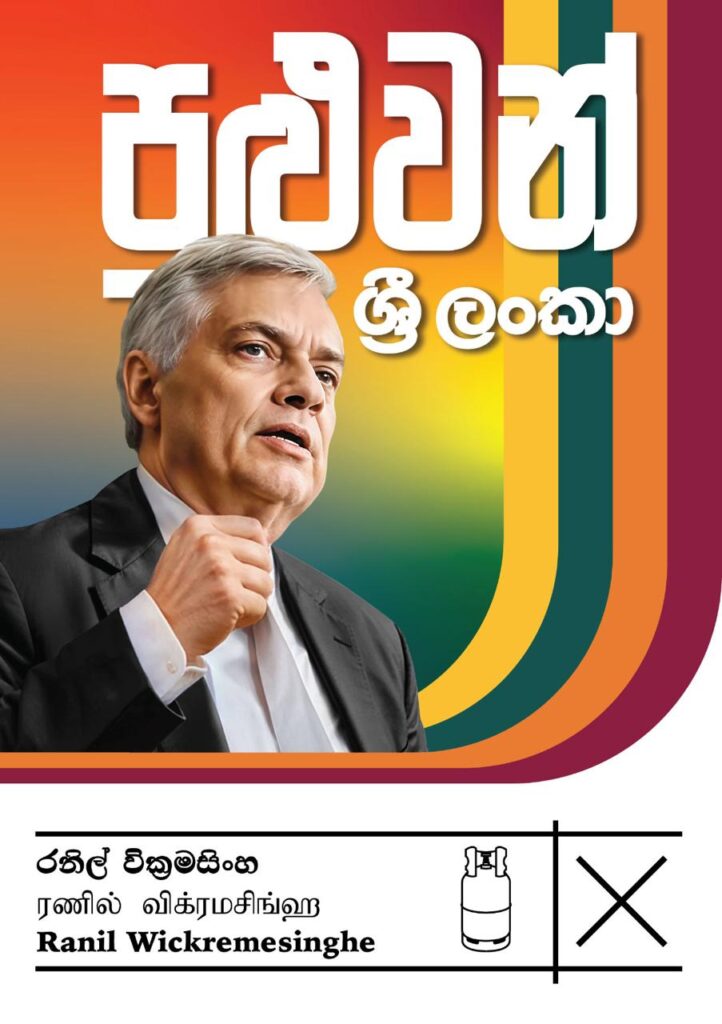
President Ranil Wickremesinghe holds discussions with Bishop Harold Anthony Perera and Catholic leaders at the President’s House on key national issues: addresses educational reforms, the Easter Sunday attack investigation, environmental concerns, and the Church’s societal role: The constructive dialogue focused on collaboration, with the President reaffirming commitment to justice, sustainability, and economic resilience amidst ongoing challenges.
Opposition Leader and SJB Presidential Candidate Sajith Premadasa says under a SJB-rule a special commission will be appointed to revise the salaries entitled to public servants to match the cost of living and its recommendations will be implemented: asserts the basic salary of the public service will be increased by 24% from January, 2025: adds the minimum wage entitled to public servants, which is Rs. 17,800, will be increased to Rs. 25,000, thereby increasing the minimum salary of a public servant up to Rs. 57,500.
NPP Leader Anura Kumara Dissanayake announces an NPP government would bring in a foreign investor to manage Sri Lanka Telecom, though it opposes selling the company: cites the need for specialised management due to the sector’s rapid technological changes and plans to send 200 students abroad annually to enhance local expertise.
Minister Mahinda Amaraweera praises President Ranil Wickremesinghe’s leadership, crediting him for economic recovery and stable governance amid challenges: notes Wickremesinghe’s growing public approval, predicting broad cross-party support in upcoming elections: also emphasises crucial economic measures like salary hikes and retirement benefits, viewing them as indicators of future growth under the President’s leadership.
As of 21 August, the Election Commission of Sri Lanka has received 901 complaints regarding the upcoming Presidential election: These reports primarily address violations of electoral laws, with concerns escalating in recent weeks: The complaints include incidents ranging from alleged irregularities in campaigning to acts of intimidation: The commission’s efforts focus on ensuring a transparent election amidst heightened public scrutiny.
The Sri Lanka Computer Emergency Readiness Team (SLCERT) flags a fraudulent website imitating the National Election Commission’s platform, falsely promoting job offers for the 2024 Presidential Election: The phishing site, detected on 9 August and taken down by 12 August, sought to collect personal data: Although removed, authorities warn the public to verify information and remain cautious against similar scams.
The National Election Commission invites election observers from 12 countries, including India, Nepal, Bangladesh, Pakistan, and the Maldives, as well as Commonwealth and Asian Election Observation Network representatives, to oversee Sri Lanka’s 2024 Presidential Election: EU observers are already in place: Chairman R.M.A.L. Ratnayake emphasised these observers will ensure transparency and democratic integrity throughout the electoral process.
This week, NPP Presidential Candidate Anura Kumara Dissanayake will unveil his election manifesto on Monday at 10:00 AM at the Monarch Imperial Hotel in Colombo: SJB Contender Sajith Premadasa will reveal his manifesto on Wednesday, with details forthcoming: Additionally, the UNP will hold a meeting on 25 August at 2:00 PM to endorse Ranil Wickremesinghe as ‘an independent’ candidate for the 2024 Presidential Election.
The Postal Department will receive a vital shipment of registered postal vote ballot papers tomorrow (26) for the 2024 presidential election: Distribution of official polling cards begins on 3 September, with 8 September set as a special delivery day: Staff leave is cancelled until the election concludes, ensuring smooth operations: Over 712,000 postal vote applications have been approved, with voting scheduled for early September.
Kamindu Mendis scored his third Test century, guiding Sri Lanka to 291-6 and a 169-run lead over England by lunch on Day 4 of the first Test at Old Trafford: Mendis (101) and Dinesh Chandimal (62) formed an unbeaten 101-run partnership, taking control despite a rain delay: England struggled, missing injured pacer Mark Wood.
August 25, Colombo (LNW): The Postal Department will receive a crucial shipment of reserved packets containing registered postal vote ballot papers for the 2024 presidential election tomorrow (26).
This marks a significant step in the preparation for the electoral process.
Official polling cards for the upcoming Presidential Election will begin distribution on 3 September. Additionally, 8 September has been set aside as a special day for the distribution of these cards.
In related news, Deputy Postmaster General Rajitha Ranasinghe announced that all postal staff leave has been cancelled with immediate effect until the conclusion of the election.
This measure is to ensure the efficient management of election-related duties. Employees needing leave for essential reasons must seek approval from the Deputy Postmaster General of their respective province.
The Presidential Election is slated for 21 September, with postal voting scheduled for 4, 5, and 6 September.
The 4th is designated for postal votes from District Secretariats, Election Offices, and the Police. Additionally, 11 and 12 September have been reserved as supplementary dates for postal voters who missed the initial voting period.
Election Commissioner Saman Sri Ratnayake has reported that 736,589 postal vote applications were received for this election.
Of these, 24,268 were rejected, leaving 712,321 applicants eligible for postal voting.