August 16, Colombo (LNW):Following persistent appeals by the Ministry of Foreign Affairs, 20 Sri Lankans who were victims of human trafficking and stranded in Myanmar have been rescued and safely arrived in Mae Sot, Thailand, on Wednesday (14th). Sri Lanka’s Ambassador to Thailand, Wijayanthi Edirisinghe, visited Mae Sot to meet the rescued individuals and inquire about their welfare. The Sri Lankan Missions in Yangon and Bangkok have been working closely to secure their safe release and ensure their well-being.
All 20 rescued Sri Lankans are reported to be in good health. Thai authorities are providing Consular assistance, and the Sri Lankan Embassy in Bangkok is coordinating with them to facilitate the repatriation process.
The Ministry of Foreign Affairs is also actively working to rescue the remaining 34 Sri Lankans currently stranded in the Myawaddy area of Myanmar, with the cooperation of the relevant governments.
These individuals had traveled to Myanmar seeking foreign employment without following the proper procedures, using tourist visas, and were subsequently lured into cybercriminal operations, becoming victims of human trafficking.
The Ministry of Foreign Affairs has issued a warning, urging the public to be cautious and to adhere to proper procedures when seeking employment abroad to avoid falling prey to human trafficking.
August 16, Colombo (LNW):Transport, Highways, and Mass Media Minister Dr. Bandula Gunawardhana has emphasized the importance of revealing the work accomplished by seven former Cabinet Ministers who are running in this year’s Presidential Election. Speaking at a joint forum of former Local Government representatives from various parties, including Sri Lanka Podujana Peramuna, United National Party, Sri Lanka Freedom Party, and Mahajana Eksath Peramuna in Homagama, Dr. Gunawardhana highlighted the need for voters to be informed about the candidates’ past achievements.
Minister Gunawardhana shared his own contributions as a Cabinet Minister under multiple governments. He mentioned the establishment of special Economic Centres across the country, aimed at creating markets for agricultural products, and the revival of the cooperative business model through the implementation of Coop City and Mini-Coop City. He also noted the creation of a nationwide network of Lak Sathosa branches.
As the Minister of Education, Dr. Gunawardhana introduced technology streams into the national curriculum, established Technology Faculties in universities, and oversaw the construction of Mahindodaya technology labs and faculties across the country.
The Minister asserted that the past performance of these former Cabinet Ministers is crucial for evaluating their ability to fulfill future responsibilities. He called for the public to be informed of their achievements, which he believes will help voters make an informed decision in the upcoming Presidential Election.
August 16, Colombo (LNW):India’s 78th Independence Day was celebrated with great fervor across Sri Lanka on August 15, 2024. The main event in Colombo took place at ‘India House,’ the official residence of the High Commissioner of India, Santosh Jha. The High Commissioner hoisted India’s National Flag and inspected the Guard of Honour. He also read excerpts from the address by the President of India to the nation on the eve of Independence Day.
The celebration was enhanced by various cultural events, including a performance by the Sri Lanka Navy Band, which played tunes embodying valour and patriotism. A visiting troupe from the Indian Council for Cultural Relations (ICCR), led by Ranjith Gogoi, captivated the audience with a soulful Bihu Dance performance. In addition, the High Commissioner and officers of the High Commission of India paid homage at the Indian Peace Keeping Force (IPKF) Memorial, honoring the soldiers who sacrificed their lives for peace and unity in Sri Lanka.
Special events were also organized by the Assistant High Commission in Kandy, the Consulate General in Jaffna, and the Consulate General in Hambantota to mark the occasion.
Later in the day, the Bharat Sri Lanka Maitri Utsav 2024 was inaugurated at the iconic Independence Square Park in Colombo. This four-day festival, running from August 15 to 18, will feature a traditional handicrafts exhibition showcasing artisans from India and Sri Lanka, cultural performances, and a food festival. The Utsav will remain open to the public until 10 pm on August 18.
August 16, Colombo (LNW):Prevailing showery condition over the South Western parts of the Island is expected to be temporarily enhanced today and tomorrow.
Showers or thundershowers will occur at times in Western, Sabaragamuwa and North-western provinces and in Kandy, Nuwara-Eliya, Galle and Matara districts. Heavy showers above 100 mm are likely at some places in Western, Sabaragamuwa provinces and in Galle and Matara districts.
Showers or thundershowers will occur at several places in Eastern and Uva provinces during the evening or night.
General public is kindly requested to take adequate precautions to minimize damages caused by temporary localized strong winds and lightning during thundershowers.
August 15, Colombo (LNW): SLT-Mobitel, Sri Lanka’s telecommunications giant, is still waiting for necessary actions from various stakeholders to bring the online visa system back into operation, despite two weeks having passed since the Supreme Court ordered a return to the previous visa processing system.
This followed the Court’s decision to abandon a controversial outsourced visa arrangement.
On Tuesday, SLT-Mobitel Chairman A.K.D.D.D. Arandara sent a follow-up letter to the Department of Immigration and Emigration (DIE) Controller General I.S.H.J. Ilukpitiya, stressing the urgency of the situation. This letter was a follow-up to an initial communication sent on August 7.
Arandara informed the DIE that SLT-Mobitel had restored the Mobitel ETA Front-End System on its servers. However, for the system to go online, several immediate steps from the DIE and other relevant parties are required:
Informatics Ltd. needs to resume the backend services that were in operation as of April 16, 2024.
Sampath Bank PLC and Nations Trust Bank PLC must provide the same IPG services that were available on April 16, 2024.
The network configuration must be restored, including the re-establishment of the domain “eta.gov.lk” to SLT-Mobitel’s servers as it was on April 16, 2024.
Any additional facilities that were available as of April 16, 2024, must also be re-implemented.
Arandara reassured the DIE in his second letter that once these requirements are met, SLT-Mobitel can restore the ETA Front-End System within 24 hours. He further assured that the company’s contact center would be ready to handle any queries related to the system once it is back online.
The delay in restoring the visa system has caused significant disruption in the travel and tourism industry, leading to confusion among potential international visitors.
Sri Lanka originally shifted to an outsourced visa processing system on April 17 after awarding a controversial contract to a consortium that included GBS Technology Services and IVS Global-FZCO, among others.
However, after eight fundamental rights petitions were filed, the Supreme Court on August 2 ordered a return to the previous system. The outsourced arrangement had imposed service and convenience fees, the legality and rationality of which were challenged.
The Court’s interim orders sought to maintain the previous status quo, preventing any service or convenience fees from being charged until a final decision is made.
The petitions named 28 respondents, including the Public Security Minister Tiran Alles, 17 other Cabinet Ministers, the Controller General of Immigration and Emigration, and the companies involved in the outsourced visa processing.
This situation has sparked widespread concern, as the new visa process was seen as a violation of the law and principles of natural justice, lacking transparency and competitive bidding. Despite the disruption, tourist arrivals in the first 11 days of August reached 73,373, bringing the year-to-date total to 1.27 million.
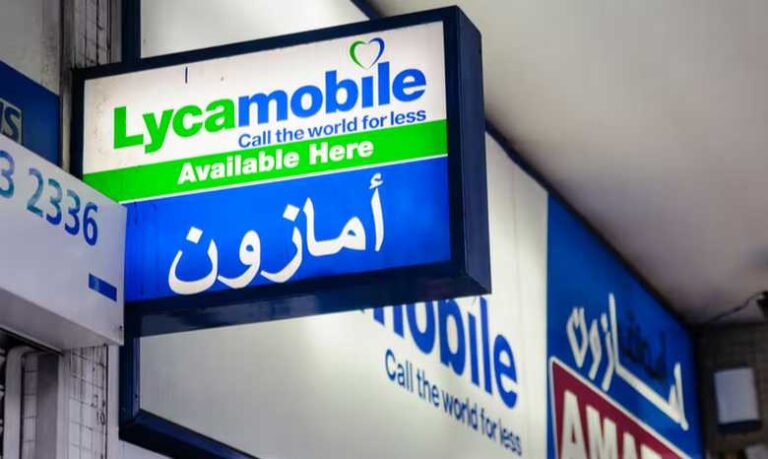
The Guardian: Lycamobile, a telecoms company that has given more than £2m to the Conservative party, has been issued with a winding-up petition by HM Revenue and Customs, amid a long-running VAT dispute.
The company, founded by businessman Allirajah Subaskaran in 2006, sells pay-as-you-go sim cards that are popular with low-paid workers wanting to make cheap phone calls to family overseas, as well as in the UK.
While the company generated revenues of more than £145m in 2022, it is now loss-making. Its accounts have repeatedly been filed late and have at times confounded its own auditors.
Successive accounting firms have raised concerns about the opacity of Lycamobile’s books, while the company has also been locked in an eight-year tussle with HMRC over its treatment of VAT on phone “bundles” sold to customers over seven years.
The amount in dispute is £51m, according to a tax tribunal that ruled in favour of HMRC last month. In accounts filed earlier this year, Lycamobile estimated the potential cost to the company at £99m.
A winding-up petition is a formal legal process that creditors can use against a company that owes them money and is unable to pay its debts. HMRC regularly issues such petitions, which can result in assets being forcibly sold, against companies that have not paid their tax bill.
HMRC issued the winding-up petition against Lycamobile UK Ltd on Monday, according to a court filing seen by the Guardian and first reported by City AM. Identical petitions were served against sister companies Lycatel Services Ltd and, a week earlier, against Lycamoney Financial Services Ltd. All are ultimately owned by Subaskaran, a British-Sri Lankan entrepreneur who is Lycamobile’s founder and chair.
Lycamobile was one of the Tory party’s most generous donors between 2011 and 2016, giving more than £2.1m. It also supported Boris Johnson’s successful attempt to become London mayor.
It came under scrutiny in 2015 when an investigation by BuzzFeed revealed that Lycamobile employees were depositing rucksacks full of cash, some containing up to £250,000, at the Post Office.
There is no suggestion of any connection to the VAT dispute and Lycamobile said at the time that its cash deposits were part of “day-to-day” banking sanctioned by the Post Office.
Lycamobile has repeatedly filed its accounts late, putting it at risk of being struck off the corporate register. In 2016, the auditor KPMG said it was unable to account for £134m of assets, citing an arcane corporate structure including offshore entities.
The company’s latest auditor, PKF Littlejohn, said in June that it could not sign off Lycamobile’s accounts because it had “not been able to obtain sufficient appropriate audit evidence to provide a basis for an audit opinion”.
Those results, for the year to the end of December 2022, showed a £24m loss, compared with an £8m profit the previous year.
In the subsequent financial year, for which accounts are not yet available, the company suffered a malware attack that reportedly prevented customers making calls or topping up their accounts.
The Guardian has approached Lycamobile for comment.
HM Revenue and Customs said it could not comment due to rules regarding taxpayer confidentiality.
August 15, Colombo (LNW): The Sri Lankan government has suggested to the International Monetary Fund (IMF) that income tax relief be provided by adjusting tax brackets, according to President Ranil Wickremesinghe’s office.
This comes as tax burden discussions gain traction in the ongoing presidential election campaign.
President Wickremesinghe indicated plans to offer relief on personal income tax soon, with two proposals under consideration—one from the Treasury and a counterproposal from the IMF. These plans aim to benefit middle-income groups, including academics.
As part of economic reforms agreed upon with the IMF, Wickremesinghe’s administration increased the top personal income tax rate from 24% to 36% and lowered the tax brackets to 500,000 rupees after the country faced a severe economic crisis in 2022.
While this move boosted government tax revenue, it also drew criticism from millions of public and private sector workers due to the higher tax rates and reduced brackets.
In light of stronger tax revenue performance this year, the government has proposed to the IMF an adjustment in the Personal Income Tax brackets from 500,000 to 720,000 rupees, aiming to ease the burden on mid-level taxpayers impacted by recent tax changes.
The IMF has suggested modifications to this proposal, offering more relief to lower-income groups, similar relief for mid-level earners, and slightly less for higher-income earners, while keeping the core proposal intact.
Opponents in the presidential race have suggested renegotiating IMF agreements and lowering taxes, although they have yet to present a detailed economic plan. Additionally, the government has increased the value-added tax (VAT) from 8% to 18% over the past two years.
Wickremesinghe’s strict economic reforms have contributed to Sri Lanka’s economic recovery, though they have resulted in reduced disposable income for many citizens who now face direct tax deductions from their salaries.
The President outlined a series of economic targets, including achieving a primary budget surplus of 2.3% by 2025-2032, reducing the public debt-to-GDP ratio to 95% by 2032, and maintaining inflation below 5%. He emphasized that these terms are non-negotiable and necessary for the country’s continued economic recovery.
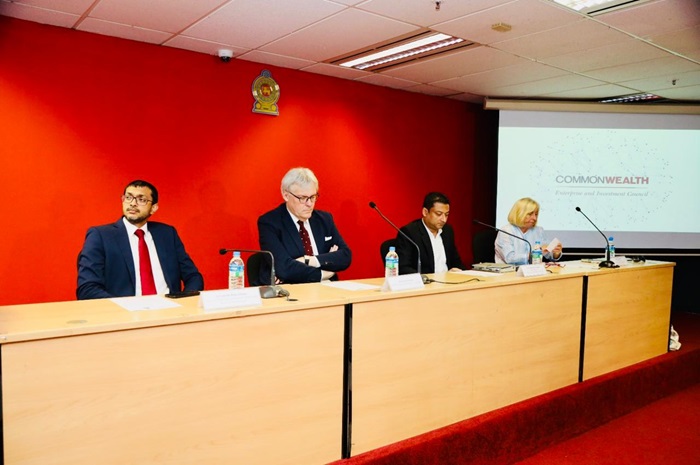
August 15, Colombo (LNW): The Commonwealth Enterprise and Investment Council (CWEIC) has inaugurated its Sri Lanka centre, marking a significant advancement in promoting trade and investment within the Commonwealth.
This initiative, developed in partnership with the Sri Lankan Government, aims to expand trade and investment opportunities while strengthening connections among Commonwealth member nations.
The newly established hub will act as a gateway for Sri Lankan businesses to explore new markets within the Commonwealth, thereby encouraging foreign direct investment (FDI) into the country.
It will also serve as a platform for corporate leaders and officials to network, collaborate, and exchange best practices.
Currently, CWEIC includes six members from Sri Lanka, including the government. As the Commonwealth’s business network, CWEIC was created to foster trade and investment among its 56 member countries, uniting businesses and governments to promote economic growth and development.
Lord Jonathan Marland, Chairman of CWEIC, expressed his enthusiasm for the new Sri Lanka hub, describing it as a crucial step in connecting businesses across the Commonwealth. He highlighted Sri Lanka’s strategic location and renewed focus on international trade, making it an ideal choice for this new centre.
State Minister for Investment Promotion, Dilum Amunugama, commended the initiative, noting that it reflects Sri Lanka’s increasing commitment to multilateralism. He emphasized that the hub will open new opportunities for local companies and demonstrate Sri Lanka’s dedication to creating a favorable environment for international investors.
Niro Cooke, CWEIC Sri Lanka Chair, also shared his optimism, stating that the hub will significantly bolster efforts to position Sri Lanka as a key player in global trade and investment. He believes that the centre will enable vital connections and partnerships, enhancing export trade, fostering innovation, and creating growth opportunities across various sectors of the economy.
The launch event, attended by prominent business leaders, investors, and officials, underscores the Sri Lanka hub’s potential to strengthen the country’s trade links and investment prospects. It is expected to play a pivotal role in supporting economic diversification and long-term prosperity.
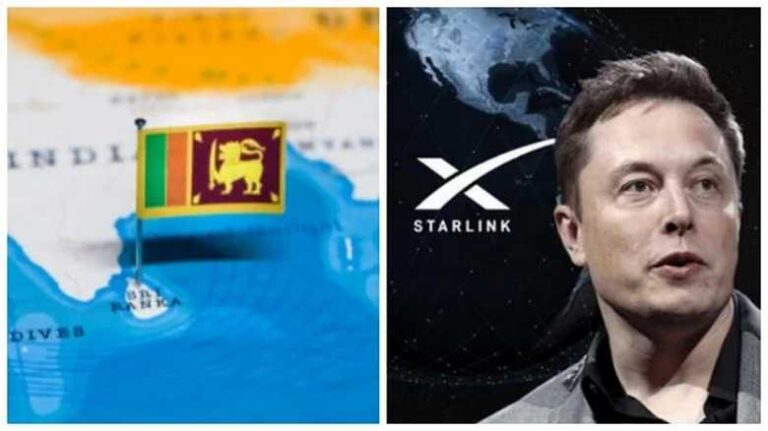
August 15, Colombo (LNW): Elon Musk’s Starlink has been given a licence to launch its service in Sri Lanka this month, the President’s Media Division said.
The Telecommunications Regulatory Commission of Sri Lanka (TRCSL) issued a Telecommunications Service Provider Licence to Starlink Lanka (Private) Limited to launch services with effect from 12th August 2024.
The Telecommunications Regulatory Commission of Sri Lanka (TRCSL) said it has officially issued a telecoms licence to SpaceX’s LEO satellite broadband operator Starlink to offer services in the country.
According to a statement from TRCSL, Starlink Lanka (Private) Limited has been granted a Telecommunications Service Provider Licence under Section 17B of the amended Sri Lanka Telecommunications Act No. 25 of 1991.
The licence – effective August 12 – enables Starlink to offer “internet facility services in Sri Lanka through satellite technology”. Starlink will have to pay a tariff for the licence.
Starlink’s entry into Sri Lanka has been in the works since May, after Sri Lankan president Ranil Wickremesinghe met with SpaceX chief Elon Musk in Bali, where Musk was attending the launch of Starlink services in Indonesia.
During the meeting, Wickremesinghe and Musk discussed expediting Starlink’s application to offer services in Sri Lanka, the TRCSL statement said.
Starlink received preliminary approval in June after TRCSL fast-tracked the process, but the LEOsat operator had to wait for the government to update its telecoms law to create three new types of telecoms licenses, one of which would allow Starlink to provide internet connectivity. Parliament passed the Sri Lanka Telecommunications (Amendment) Bill last month.
The government had previously granted preliminary approval to Starlink, the satellite unit of SpaceX, to provide internet services in the country. The process was fast-tracked by amending the Telecommunications Regulatory Act for the first time in 28 years.
Director General of the Sri Lanka Telecommunications Regulatory Authority, Madushanka Dissanayake, saidthat the basic template for licensing Starlink’s operation is currently being prepared. He stated that new rules and regulations for this purpose will be established in accordance with the amended Act.
“We have given time till the end of July to complete the task. However, we are confident that we can complete it well ahead of time,” Dissanayake said. Regarding Musk’s arrival, Dissanayake confirmed that the visit is scheduled for August.
Following the launch, it will take approximately three weeks to operationalize the service. “They need this time to lay the infrastructure and install the necessary equipment,” he explained.Under the new Act, Starlink will be offered a service provider’s license.
August 15, Colombo (LNW): Due to surpassing the International Monetary Fund’s (IMF) growth forecast, the government plans to raise the Cost of Living index to Rs. 25,000 by implementing a 24 per cent salary hike for public sector employees.
The above announcement was made by Finance State Minister Shehan Semasinghe.
Speaking at a briefing in Anuradhapura yesterday (14), the Minister noted that this decision aligns with President Ranil Wickremesinghe’s commitment to ensuring citizens benefit from the country’s economic improvements.
The IMF initially predicted a 2 per cent growth rate for 2024, but the government reported a more robust 5 per cent growth in the first quarter alone. As a result, the salary adjustments have been incorporated into the forthcoming budget.
The lowest-ranking government employees will see their salaries increased by Rs. 50,000, while their living expenses allowance will rise from Rs. 17,000 to Rs. 25,000.
Semasinghe emphasised that the government’s broader goal is to raise state revenue to 15 per cent of GDP next year, while maintaining fiscal discipline.
The administration aims to transform Sri Lanka into a model of financial management and anti-corruption governance over the next five years under President Wickremesinghe’s leadership.