Home Blog Page 983

Visiting Indian Foreign Minister holds bilateral talks with President Ranil

0

By: Staff Writer

June 20, Colombo (LNW): In what seems to be a preface to Prime Minister Narendra Modi’s likely visit to Sri Lanka somewhere between  July/August), External Affairs Minister S Jaishankar  began his official visit to Sri Lanka today Thursday 20.

“Reaffirming India’s Neighbourhood First Policy, the visit underlines India’s continued commitment to Sri Lanka as its closest maritime neighbour and time tested friend.

The visit will add momentum to connectivity projects and other mutually beneficial cooperation across sectors,” said the Ministry of External Affairs (MEA).

The visiting Indian External Affairs Minister Dr. S. Jaishankar has called on President Ranil Wickremesinghe at the President’s House a short while ago.

Dr. S. Jaishankar is currently engaged in a one-on-one meeting with President Wickremesinghe, the President’s Media Division (PMD) said

Indian External Affairs Minister arrived in Sri Lanka this morning and he met the President this morning and discussed on wide-ranging issues of the partnership, the Indian High Commission in Colombo said.

This will be Jaishankar’s first bilateral visit after the formation of new Government under Indian Prime Minister Shri Narendra Modi.

“Reaffirming India’s Neighbourhood First Policy, the visit underlines India’s continued commitment to Sri Lanka as its closest maritime neighbour and time tested friend.”

The visit will add momentum to connectivity projects and other mutually beneficial cooperation across sectors, the PMD statement said

It is learnt that Jaishankar could also meet leaders across Sri Lanka’s political spectrum who are gearing up for national elections this year.

President Wickremesinghe was in Delhi on June 9 for PM Modi’s swearing-in ceremony for his third term as PM.

Jaishankar had called on Wickremesinghe on June 10 and they discussed the resumption of development projects funded and initiated in Sri Lanka with Indian investments which have been paused.

Jaishankar had also spoken about India’s plans for developing an industrial zone in the eastern part of Trincomalee.

It may be recalled that in a vision statement released during President Wickremesinghe’s visit to Delhi in July 2023, there was discussion on developing Trincomalee as a national and regional hub of industry, energy and economic activity.

Indian Prime Minister Narendra Modi is likely to visit Sri Lanka in August this year, officials from the President’s office told journalists here.

President Ranil Wickremesinghe who attended the swearing-in ceremony of Prime Minister Modi had invited the latter to visit Sri Lanka when the duo met on Sunday at Rasthrapati Bhavan. 

Both the President and the Indian External Affairs Minister discussed the visit of the Indian Leader during which it was revealed that the visit is likely to take place in August this year.

Sino – SL diplomatic consultations conclude with optimism on debt deal

0

By: Staff Writer

June 20, Colombo (LNW): China is ready to continue providing assistance to Sri Lanka’s socio-economic development, supporting the country’s debt sustainability, the Chinese Foreign Ministry has said.

Sri Lankan President Ranil Wickremesinghe has also embraced Beijing’s position on key issues, including the AUKUS security alliance between Australia, the United States, and the United Kingdom, which he has labeled a “mistake,” and the term “Indo-Pacific,” which he has called an “artificial framework.”

He is proceeding cautiously during an election year for Sri Lanka. Colombo’s deals with Beijing, including the latter’s 99-year lease on the Hambantota International Port, have led to increased anti-China sentiment in the country in recent years.

 In thi backdrop China is ready to continue providing assistance to Sri Lanka’s socio-economic development, supporting the country’s debt sustainability, the Chinese Foreign Ministry has said.

China’s Foreign Ministry Spokesperson Lin Jian responded to a question by reporters on the progress of reaching a final agreement between Sri Lanka and China’s Exim Bank and the China Development Bank.

“Chinese side has been providing assistance to Sri Lanka’s socioeconomic development to the best of our capability. We stand ready to continue to work with relevant countries and international financial institutions to support Sri Lanka’s debt sustainability,” he said, declining to comment further.

The question came after Sri Lanka and China concluded the 13th round of diplomatic consultations in Beijing, with the participation of Secretary of Foreign Affairs of Sri Lanka, Aruni Wijewardane, and Vice Minister of Foreign Affairs of the People’s Republic of China, Sun Weidong.

Both governments said that a range of matters, including debt restructuring, were discussed; however, they specified no details on reaching an in-principle deal.

China is Sri Lanka’s largest bilateral creditor and has indicated willingness to restructure external debt amounting to approximately US$37 billion.

President Ranil Wickremesinghe has expressed optimism this week that Sri Lanka will soon reach agreements with its official bilateral creditors, including India, Japan, and France.

China, however, did not join the official creditors’ platform, which negotiated the common debt treatment plan with Sri Lanka.

Sri Lanka’s actions may be driven by a commitment to strategic autonomy, but its motivations are as much about practicality as principle.

The country is emerging from an acute economic crisis, and it needs as much financial assistance as it can get. It’s easier to achieve that goal when it works with all the major powers.

It’s not coincidental that China, India, and the United States were three of Sri Lanka’s most generous donors during its crisis.

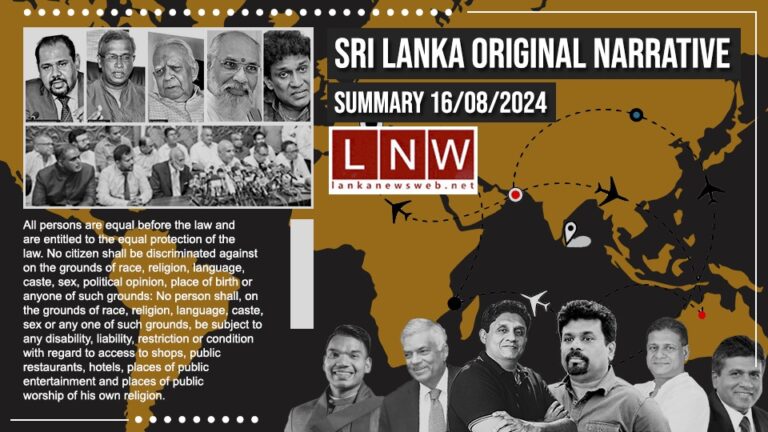
Sri Lanka Original Narrative Summary: 20/06

0

  1. President Ranil Wickremesinghe outlines plans for Sri Lanka’s children, targeting economic recovery within two years and ensuring no child suffers: Initiatives like the Aswasuma for income support, Urumaya for land rights, and educational scholarships were emphasised during a ceremony where 5,108 students received awards directly from the President.
  2. SJB activist Chamith Wijesundara alleges NPP Leader Anura Kumara Dissanayake has spent over Rs. 1.5 million on business class air travel while party members collect funds for Sri Lankan flood victims: questions why leader’s funds aren’t used for relief efforts, contrasting with SJB’s own contributions.
  3. Cabinet approval was granted for Sri Lanka Ports Authority to sign a cooperation agreement with Virginia Ports Authority, facilitated by the US Embassy and Colombo Plan: The agreement aims to enhance expertise exchange between ports, focusing on professional development of executive staff from both sides.
  4. Justice Minister Wijeyadasa Rajapakshe reveals corruption amongst lower court judges in Sri Lanka, including illegal electricity and water connections at the Mount Lavinia Magistrate’s residence and a Rs. 200 million whiskey disappearance from the Colombo Magistrate’s Court: criticises the Judicial Services Commission for inadequate investigations and lack of legal action.
  5. Indian Minister of External Affairs S. Jaishankar emphasises Sri Lanka’s importance in India’s ‘Neighbourhood First’ and SAGAR policies during his visit: Greeted by officials, this is his first visit since reappointment: He will meet President Wickremesinghe, Prime Minister Gunawardena, and hold discussions with his Sri Lankan Counterpart Sabry.
  6. The Prisons Department warns officers against trade union activities, stating strict disciplinary actions and legal proceedings will be enforced: Prisons Commissioner Gamini B. Dissanayake emphasises prison officers lack the legal right for such actions and noted a small faction coercing others: A senior officer will oversee the mandated disciplinary actions.
  7. IGP Deshabandu Tennakoon announces the rehabilitation of 1,500 young drug users and plans for 285 new centres to treat 12,500 more: The Yukthiya operation, reducing crime by 23% since December 2023, will intensify next month to address remaining addicts.
  8. Major General Rohitha Aluwihare assumes the role of Chief of Staff of the Sri Lanka Army, effective immediately: Aluwihare has a notable track record within the military: Recently, he chaired a seven-member committee tasked with investigating the unfortunate accident at the ‘Fox Hill Super Cross 2024’ racing event in Diyatalawa this past April.
  9. Sri Lanka resumes its eye cornea donations to Pakistan, paused due to the Covid-19 pandemic: Five corneas were sent to Lahore for surgeries at Rawalpindi’s army hospital: Sri Lanka has donated over 88,000 corneas globally, including 36,000 to Pakistan: This initiative strengthens bilateral ties and supports 300 awaiting patients.
  10. Tharushi Karunaratne achieves second place in the 600m race at the Bilbao Reunion International Athletic Meet in Spain, setting a new Asian Continental record with 1 minute 24.84 seconds: This performance, outside her usual 800m event, also contributes to Olympic 800m qualification points, positioning her for potential selection for the Paris Olympics.

Police launch drug rehabilitation programme in Sri Lanka

0

June 20, Colombo (LNW): Inspector General of Police Deshabandu Tennakoon announced that around 1,500 young individuals have successfully undergone rehabilitation for drug use through a recent initiative by the Sri Lanka Police.

In a significant expansion of this effort, 285 new rehabilitation centres are planned across the country to treat 12,500 drug users, making it the largest drug rehabilitation programme in Sri Lankan history, Tennakoon stated.

Discussing the ‘Yukthiya’ special operation aimed at tackling drug and crime-related activities, Tennakoon mentioned that the programme will see increased intensity in the coming month.

“The Yukthiya operation will ramp up significantly over the next month, addressing the remaining drug addicts with a force akin to a tsunami,” he asserted.

Tennakoon lauded the effectiveness of the Yukthiya programme, noting that since its inception in December 2023, there has been a 23 per cent decrease in crime rates.

Justice Minister exposes corruption among lower court judges in Sri Lanka

0

June 20, Colombo (LNW): Justice Minister Wijeyadasa Rajapakshe has unveiled instances of corruption involving lower court judges in Sri Lanka, bringing to light several troubling activities during a parliamentary address on Wednesday (19).

Rajapakshe disclosed that an illegal electricity connection had been discovered at the official residence of the Mount Lavinia Magistrate.

He stated that the electricity supply, intended for court premises, had been tampered with to power the magistrate’s residence illicitly.

This was uncovered when an electrician from the Justice Ministry was electrocuted while inspecting the power line but was rescued with considerable effort.

Further investigations revealed that the water supply to the magistrate’s residence had also been illegally connected, with bills being covered by the court’s accounts.

In another instance, Minister Rajapakshe brought attention to a complaint regarding the disappearance of whiskey valued at Rs. 200 million from court-seized goods at the Colombo Magistrate’s Court.

The incident allegedly occurred while a former justice was present. Contrary to initial claims of theft, the Government Analyst’s report indicated that the items had not been stolen but that someone had accessed the storage room using a key.

Minister Rajapakshe criticised the Judicial Services Commission for its inadequate investigation and lack of legal action concerning these corrupt practices.

He emphasised that his own efforts to address these issues have been largely unsuccessful and stressed the urgent need to eliminate such corruption within the judiciary.

Dollar rate against LKR at banks today (June 20)

0

June 20, Colombo (LNW): The Sri Lankan Rupee (LKR) indicates further depreciation against the US Dollar today (20) in comparison to yesterday, as per leading commercial banks in the country.

At Peoples Bank, the buying and selling prices of the US Dollar have increased to Rs. 300.03 from Rs. 299.35, and to Rs. 310.19 from Rs. 309.48, respectively.

At Commercial Bank, the buying price of the US Dollar has increased to Rs. 299.31 from Rs. 299.06, and the selling price to Rs. 309.50 from Rs. 309.25.

At Sampath Bank, the buying and selling prices of the US Dollar remain unchanged at Rs. 300.50 and Rs. 309.50, respectively.

Indian External Affairs Minister arrives in Sri Lanka

0

June 20, Colombo (LNW): The Indian Minister of External Affairs, S. Jaishankar, has highlighted Sri Lanka’s significance in India’s ‘Neighbourhood First’ and ‘Security and Growth for All in the Region’ (SAGAR) policies during his official visit to the island nation.

Minister Jaishankar was greeted upon arrival by State Minister of Foreign Affairs Tharaka Balasuriya and Eastern Province Governor Senthil Thondaman.

This marks his inaugural visit to Sri Lanka since being reappointed under Prime Minister Modi’s administration following the recent elections.

Expressing his anticipation for the visit, Minister Jaishankar mentioned that he looks forward to engaging with the Sri Lankan leadership.

His itinerary includes courtesy visits to President Ranil Wickremesinghe and Prime Minister Dinesh Gunawardena.

Additionally, Minister Jaishankar and his delegation are set to hold discussions with Foreign Minister Ali Sabry at the Ministry of Foreign Affairs.

Major General Rohitha Aluwihare appointed as new Chief of Staff of Sri Lanka Army

0

June 20, Colombo (LNW): Major General Rohitha Aluwihare has assumed the role of Chief of Staff of the Sri Lanka Army, effective immediately.

A distinguished officer from the Vijayabahu Infantry Regiment, Major General Aluwihare has a notable track record within the military.

Recently, he chaired a seven-member committee tasked with investigating the unfortunate accident at the ‘Fox Hill Super Cross 2024’ racing event in Diyatalawa this past April.

Truth verses Projection: Sri Lanka’s queers never demanded ‘same-sex marriage’

0

By: Isuru Parakrama

The sin of sodomy is so prevalent in this kingdom of Kotte that it almost frightens us to live here. If one of the prominent men of the kingdom is reproached for not being ashamed of such an ugly vice, he replies that they do everything that they see their king doing, for this is their custom.

Those were the words of a Portuguese messenger from Sri Lanka to their Governor João de Castro during the ruling of King Buwanekabahu the VII (1525 – 1551) [Portuguese Encounters With Sri Lanka And The Maldives Translated Texts From The Age Of The Discoveries – Edited By Chandra R. De Silva]

June 20, Colombo (LNW): In recent times, Sri Lanka has witnessed significant debates concerning the rights and recognition of LGBTQIA+ individuals. The Supreme Court of Sri Lanka’s recent ruling, which was unfavourable to certain clauses aimed at promoting equality based on gender identities and sexual orientations, has further highlighted the challenges faced by the LGBTQIA+ community in the country.

The argument develops that promoting gender equality in a manner by which people of all genders should be given equal opportunities for the benefit of rights promotes same-sex marriage, in what they describe as ‘a threat to cultural and traditional values’ of Sri Lanka.

President Ranil Wickremesinghe criticised the court’s decision in Parliament, which led to accusations of contempt of court from various MPs. 

This political backlash underscores the contentious nature of LGBTQIA+ rights within the legislative framework of Sri Lanka. Criticising Sri Lanka’s apex court’s ruling on affairs does threaten judicial independence, but the situation has been exacerbated by the reactions of nationalist, racist and homophobic groups, whose inflammatory comments have been widely reported in the media, fuelling further persecution against LGBTQIA+ individuals.

The two legislative drafts under scrutiny—the Gender Equality Act and the Empowerment of Women Act—aim to address various forms of discrimination and promote equality. The Empowerment of Women Act seeks to ensure the empowerment of women by eliminating gender-based violence and providing equal opportunities in various spheres of life, as outlined in its objectives and provisions. 

However, these acts also implicitly touch upon the broader issues of gender identity and sexual orientation, which remain contentious topics in Sri Lankan society.

The role of the media in shaping public perception cannot be overstated. In Sri Lanka, media coverage of LGBTQIA+ issues often mirrors the societal prejudices and biases that exist. 

Following the Supreme Court’s ruling and President Wickremesinghe’s criticism, certain media outlets amplified the views of nationalist, racist and homophobic groups, thereby reinforcing negative stereotypes and fostering a hostile environment for LGBTQIA+ individuals. 

This type of reporting not only perpetuates discrimination but also emboldens those who seek to marginalise and harm the LGBTQIA+ community.

Sri Lankan queers never demanded the right-to-marriage

LGBTQIA+ individuals in Sri Lanka face multifaceted challenges, ranging from legal discrimination to social ostracism. The lack of legal recognition and protection means that many are vulnerable to violence, harassment, and limited access to essential services. 

The community’s struggle for equality is compounded by cultural and religious norms that often reject non-heteronormative identities. Definitely not all lesbian, gay or bisexual individuals demand a constitutional framework ensuring the so-called same-sex marriage.

Marriage is a broader concept to be argued or discussed upon, as Sri Lanka, with its rich cultural diversity, recognises various types of marriages that reflect its multi-ethnic and multi-religious society. The main types of marriages in Sri Lanka include civil marriages, religious marriages, customary marriages, and foreign marriages. Nowhere do they explicitly exclude a union between two people of the same sex.

Civil marriages in Sri Lanka are governed by the Marriage Registration Ordinance. These marriages are performed by a Registrar of Marriages and are legally binding under Sri Lankan law. Couples from different ethnic and religious backgrounds often opt for civil marriages to ensure their union is recognised legally. The process involves registering the marriage with the appropriate government authority, ensuring all legal requirements are met.

Religious marriages are solemnised according to the rites and customs of the couple’s faith. The primary religions in Sri Lanka—Buddhism, Hinduism, Islam, and Christianity—each have their own traditions and ceremonies for marriage.

Customary marriages follow the traditional practices of Sri Lanka’s different ethnic groups, particularly among the Tamil and Sinhala communities. These marriages often involve elaborate ceremonies and rituals passed down through generations. Although primarily cultural, they are usually followed by civil registration to ensure the marriage is legally recognised.

Marriages conducted abroad between Sri Lankan nationals or between a Sri Lankan national and a foreigner can be recognised in Sri Lanka. For legal recognition, such marriages must be registered with the Sri Lankan consulate or the Department of Registrar General upon returning to Sri Lanka. This ensures the marriage is acknowledged under Sri Lankan law.

Cut-off penis? Nonsense!

Contradictory to sentiments made by certain groups, not all transgender individuals intend to undergo gender-affirmation surgery. It should also be noted there are three steps of transition for individuals who identify themselves as transgender and wish to transition; Medical Transition, Legal Transition, and Social Transition. In 2016, legal provisions were provided for transgender individuals of age above 18 seeking either one or more forms of transition to receive a Gender Recognition Certificate (GRC) from a licenced consultant psychiatrist practicing in Sri Lanka to officially change their gender in legal documents, without having to undergo surgery. These clinics are still available in selected government hospitals, in stark contrast to what certain extremist MPs and civil groups suggest as ‘sex-change businesses’ operating in Sri Lanka influenced by ‘western norms’.

Sections 365 and 365A of the Penal Code of Sri Lanka prohibits sexual acts against the ‘order of nature’ labelling them as acts of ‘gross indecency’ whilst failing to provide adequate definition for either. These clauses fail to provide any recognition of diverse sexual orientations, gender identities, gender expressions, or sex characteristics (SOGIESC), further harbouring their vague nature to be misinterpreted. Meanwhile, section 399 of the Penal Code prohibits ‘cheating by impersonation,’ a clause which has often been misinterpreted to constitute persecution against transgender individuals.

Despite the Attorney General’s Department’s repeated claims before the United Nations of Article 12 of the Constitution recognising the rights of queer individuals, such clauses have often been abused by law enforcement officers to harass, persecute and even prosecute LGBTQIA+ individuals.

As of March 2023, 62 member states of the United Nations still criminalise consensual same-sex relationships in law, with two states criminalising such conduct in practice, as disclosed by the International Lesbian, Gay, Bisexual, Transgender and Intersex Association (ILGA). The Penal Codes of many Asian states were influenced by the once infamous Indian Penal Code formulated by Lord Macaulay in 1860 reflecting Great Britain’s 16th century Buggery Act. The “buggery”, or “sodomy” laws introduced by the British during the colonial era aimed the so called “need to protect British soldiers from being led astray by the toxic and overly erotic oriental culture” of Asia and the Middle East. Any cultural evidence suggesting the dismissal of same-sex relations in a South Asian country like Sri Lanka, therefore, remains highly elusive.  

The real struggle of queer individuals in Sri Lanka is not a grapple against the government demanding matrimonial benefits from law, or authorisation of a ‘penis cut-off’, but equal protection under a legislative reform to be recognised as equal citizens without being subjugated to discrimination.

Despite these challenges, there have been efforts by various non-governmental organisations and civil society groups to advocate for the rights of LGBTQIA+ individuals. These groups walk forward seeking support, raising awareness, and lobbying for legislative changes that would offer greater protection and equality for all, regardless of one’s sexual identity.

Addressing the plight of LGBTQIA+ individuals in Sri Lanka requires a multifaceted approach, in which legislative changes, such as those proposed in the Gender Equality and Empowerment of Women Acts, are crucial first steps. 

However, these must be accompanied by broader societal changes, including education and awareness campaigns to combat prejudice and discrimination. The Supreme Court of Sri Lanka has ruled that the enactment of the ‘Gender Equality’ Bill is inconsistent with Article 12 of the Constitution, but with certain amendments can be passed into law by a simple majority in Parliament. The same Supreme Court last year delivered a special determination that consensual same-sex sexual relations between adults do not violate the Constitution, and any bill proposing decriminalisation, therefore, can be passed into law by Parliament. The Supreme Court ruling, therefore, in my opinion, has been misinterpreted.

Building a more inclusive and accepting environment must include fostering dialogue, challenging harmful stereotypes, and ensuring that media reporting is responsible and fair. Only through such comprehensive efforts can the struggles of LGBTQIA+ individuals be alleviated, paving the way for a more just and equitable society in Sri Lanka.

Sri Lanka explores establishment of development bank to boost industrial competitiveness

0

June 20, Colombo (LNW): Sri Lanka is considering the creation of a development bank to provide essential funding aimed at enhancing the competitive edge of its industries, President Ranil Wickremesinghe announced.

Wickremesinghe assured that the proposed bank would offer loans at low interest rates, facilitating industrial growth.

In the 1960s, Sri Lanka established DFCC Bank, followed by NDB Bank in 1980. After privatisation, these banks evolved into significant commercial entities.

President Wickremesinghe noted that these banks were instrumental in President Premadasa’s success with 200 garment factories, highlighting the necessity of establishing a new development bank.

The President made these remarks during the opening ceremony of the International Industry Expo 2024.

He also mentioned the formation of an economic commission to advance this and other initiatives.

Additionally, plans are in place to launch Enterprise Sri Lanka, an institution aimed at supporting small and medium-sized enterprises across the nation. This framework is designed to benefit all industrialists.

“We aim to progress steadily over the next five to ten years,” Wickremesinghe said, adding that the government plans to explore production opportunities in countries such as Bangladesh and Myanmar.

“We are actively collaborating with India on these projects. I have already discussed this with Prime Minister Narendra Modi and will continue discussions with the Indian Foreign Minister tomorrow,” he added.

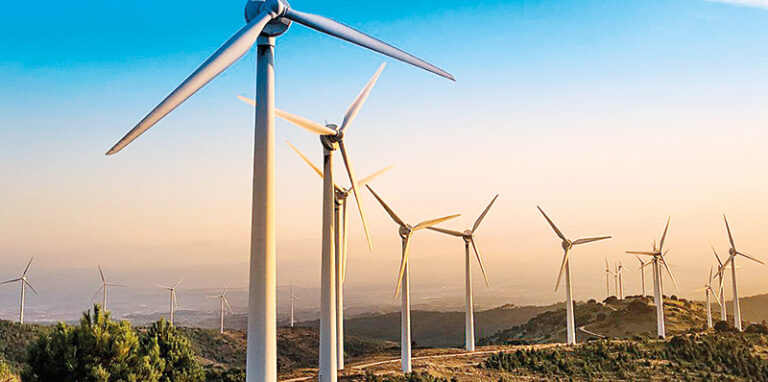
The cooperation with India will focus on solar and wind energy and the acquisition of green hydrogen. Sri Lanka aims to capitalise on these resources, potentially even in the North Sea.

“The Adani Company has already started its operations in Sri Lanka. Embracing this new direction is crucial,” Wickremesinghe stated.

The President also noted that frequent litigation often benefits lawyers rather than contributing to national development.

“It is crucial to recognise that litigation alone cannot drive national progress. We must adhere to our national policies. I have instructed the Industries Minister to initiate discussions and develop a new programme to boost industrial growth. We plan to present the Economic Transformation Law to Parliament to support these initiatives,” he concluded.