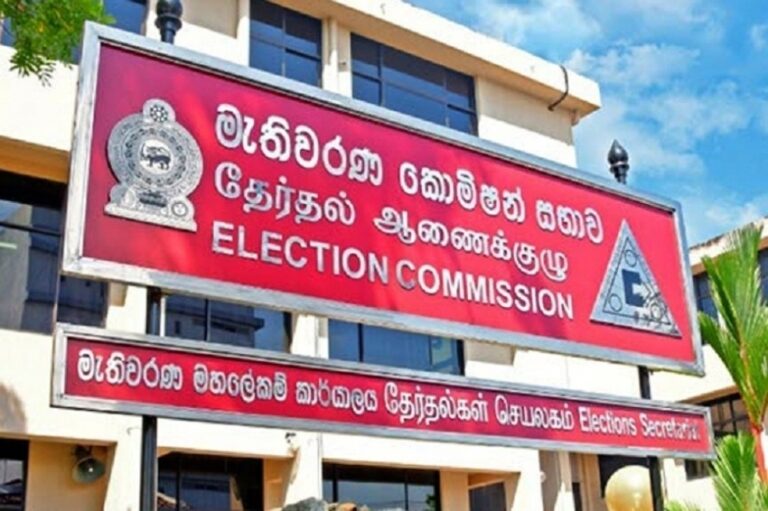
August 09, Colombo (LNW): Election Commission Chairman R. M. A. L. Ratnayake has requested an explanation from Public Administration, Home Affairs, Local Government, and Provincial Councils Ministry Secretary Pradeep Yasaratne regarding a circular instructing all ministry secretaries to pay state pensioners an interim allowance of Rs. 3,000 starting in September. This action was taken despite the Election Commission’s directive to postpone the payment until October due to election law constraints.
In a letter sent on August 8, the Election Commission emphasized that issuing the payment during an election period sets a negative precedent. The Commission had previously informed the ministry secretaries during a meeting that such payments should be deferred. However, the ministry’s circular contradicted this directive.
The letter also highlights that this move by the Ministry Secretary undermines the authority of the Election Commission and sets a concerning precedent for government employees. According to Article 104b(4)(a) of the Sub-Constitution, the Election Commission holds the authority to prevent the use of government property for political purposes during election periods. Article (b) further obliges officials in charge of government properties to comply with these regulations.
A total of 24 candidates have so far placed cash deposits for the upcoming Presidential Election, says the Election Commission of Sri Lanka. This includes 11 candidates representing recognised political parties, 12 Independent candidates whose names have been nominated by a voter and one candidate from other political parties.
Sri Lanka Podujana Peramuna (SLPP) Presidential candidate Namal Rajapaksa will be the first national leader to gain youth support in the North and East, as his engagement and understanding of local issues have resonated with the citizens there, SLPP politburo member representing the Northern Province Geethanath Cassilingham said.
Sri Lanka’s Foreign Minister Ali Sabry is scheduled to undertake an official visit to Egypt from 07 to 09 August 2024, on an invitation extended by the Egyptian Foreign Minister Badr Abdelatty. During the visit, Minister Ali Sabry will engage in bilateral discussions with his counterpart at the Ministry of Foreign Affairs in Cairo and also meet with Minister of Investment and Foreign Trade of Egypt, the Ministry of Foreign Affairs said.
Former DIG Vass Gunawardena, his son Ravindu Gunawardena and three other police officers, who were convicted of several charges including the abduction and unlawful detention of Nipuna Ramanayake, a student of an IT Institute in Malabe in 2009, have been sentenced to 04 years of rigorous imprisonment by the Colombo High Court.
Former Health Minister Keheliya Rambukwella and 03 other suspects implicated in the alleged importation of substandard immunoglobulin vials have been further remanded until August 22. The order was issued after the defendants were produced before the Maligakanda Magistrate’s Court
Minister Pavithra Wanniarachchi has decided to support President Ranil Wickremesinghe, who is contesting the upcoming Presidential Election as an independent candidate.
The ‘Tamil National Common Structure’, an alliance of Tamil political parties, has announced its decision to nominate former MP P. Ariyanenthiran as their common candidate for the upcoming Presidential Election. Several Tamil political parties and a group of civil society representatives had reached an agreement to nominate a common candidate for the forthcoming Presidential Election.
Minister of Health Ramesh Pathirana says there is a shortage of 52 essential medicines in Sri Lanka at present. Addressing the Parliament, Minister Pathirana said the Health Ministry had identified 862 essential medicines, stating that there was a shortage of 250 medicines last year.
The International Cricket Council (ICC) have confirmed that Sri Lanka player Praveen Jayawickrama has been charged with three counts of breaching the ICC Anti-Corruption Code. Jayawickrama allegedly failed to report to the Anti-Corruption Unit, without delay, that he was approached to carry out fixing during International matches and in the 2021 Lanka Premier League.
Sri Lanka Cricket (SLC) has raised concerns over the safety of its Test team ahead of the three-match series against England, starting on August 21 in Manchester, due to anti-immigrant riots that have erupted in various cities of the United Kingdom.
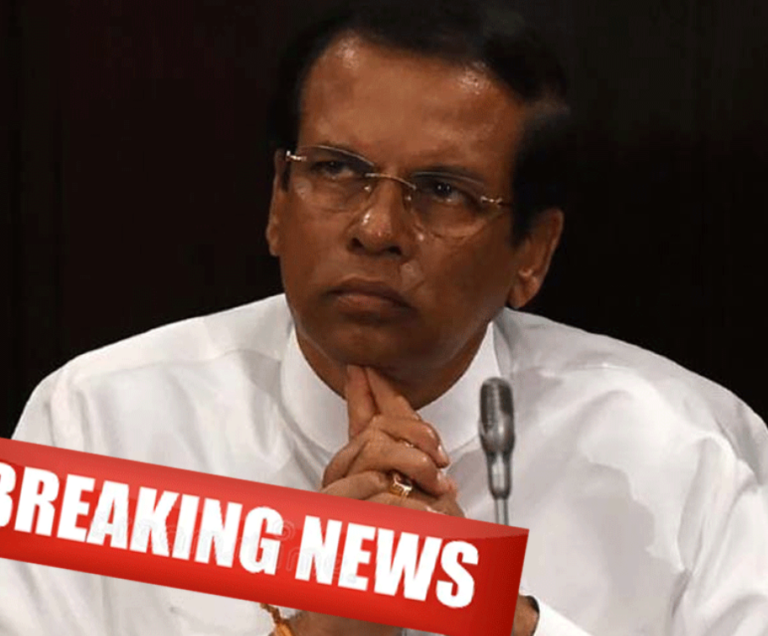
August 09, Colombo (LNW): A group of civil activists and lawyers is reportedly preparing to file a case demanding the abolition of former President Maithripala Sirisena’s civic rights. This legal action stems from allegations of willful violation of the Constitution during the controversial formation of the 52-day government in 2018.
As the highest authority in the executive branch, the President is sworn to uphold the Constitution. The Executive President’s foremost responsibility is to adhere strictly to the Constitution, and any intentional violation is considered a grave offense.
In 2018, the Supreme Court invalidated the gazette notice issued by President Sirisena to dissolve Parliament following the establishment of the 52-day government. The Court ruled that this action was unconstitutional, clearly indicating a deliberate violation of the Constitution by the former President.
Sources indicate that the petition, which seeks to revoke Sirisena’s civic rights for life or for a significant period, is being prepared to set a precedent for future presidents and to ensure that such actions are not repeated. The petition is being filed by civil activists and lawyers who played a key role in bringing the good governance government to power, with the aim of safeguarding the constitutional integrity of the country.
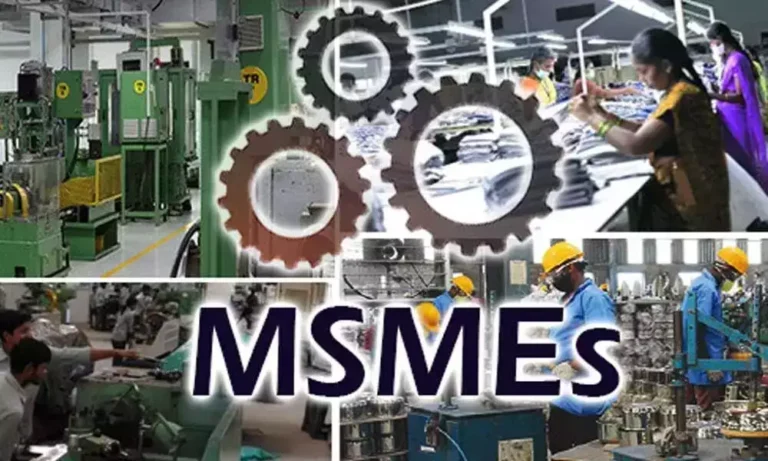
August 09, Colombo (LNW): A new bill will be introduced to address bankrupt Micro, Small and Medium Enterprises (MSMEs.) as it was not feasible to indefinitely maintain the temporarily suspended Parate law.
President Ranil Wickremesinghe mentioned that the proposed bill includes provisions for restructuring loans taken by Micro, Small and Medium Enterprises (MSMEs).
“Currently, the government has suspended the Parate law, but it cannot remain suspended indefinitely. Therefore, we are working on a new Insolvency Bill, which we have now presented. A copy will be made available for discussion
Additionally, a new institution named “Enterprise Sri Lanka” will be established to provide necessary support and assistance to Micro, Small and Medium-Scale Entrepreneurs. The President emphasised that the Government is committed to encouraging and empowering these entrepreneurs in Sri Lanka.
The President made these revelations at the Ceylon Federation of MSMEs organised “Critical initiative to revitalise Sri Lanka’s micro, small and medium scale economy” forum at the BMICH.
The President stated that a copy of the new bill, which has already been drafted, can be provided to the Ceylon Federation of MSMEs. He requested that micro, small, and medium enterprises submit their views and suggestions on the bill.
Additionally, the President mentioned that an opportunity could be arranged to discuss the issues faced by micro, small, and medium enterprises with the International Monetary Fund (IMF) delegation scheduled to visit Sri Lanka at the end of this month.
President Wickremesinghe further stated: “There have been many questions from you, the Micro, Small and Medium-scale Entrepreneurs, about the recent challenges. Before addressing your specific concerns, I want to explain the background that led to these issues. We need to find solutions based on this context.”
“During the recent past, the country’s economy faced a severe collapse, impacting all businesses, particularly small enterprises and causing widespread losses among micro-enterprises. The banking system was also at risk. Our immediate priority upon taking office was to stabilise the situation, negotiate with the IMF, and work towards economic recovery.
They indicated that reaching an agreement with the IMF would allow us to move forward. Private creditors also agreed to address the framework once we had an agreement with the official creditors. Without financial support, making progress was impossible.”
“During that period, we had to agree on several key issues. We decided not to print more money or borrow from banks, as banks themselves were struggling. These practices had become our main sources of income, but we were advised to abandon these flawed approaches and adopt a new strategy.”
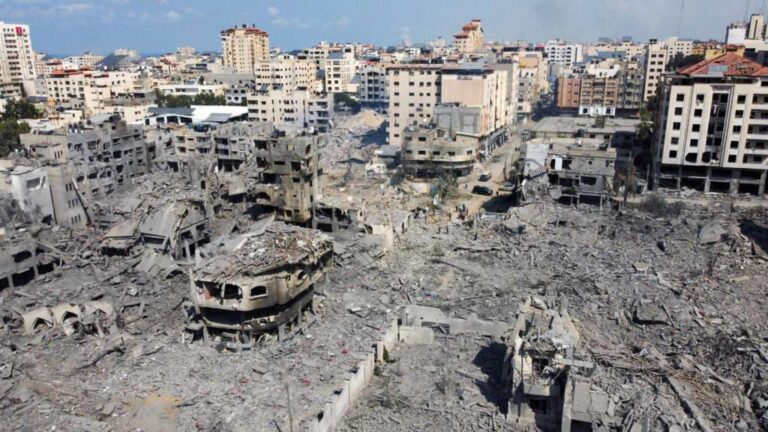
August 09, Colombo (LNW): An additional sum of US$ 590,000 has been received by the “Children of Gaza Fund,” which was established by President Ranil Wickremesinghe to provide for the basic needs of children displaced due to the current military situation in the Gaza Strip.
The official handover to the Palestinian government took place yesterday (07) at the Presidential Secretariat under the patronage of President Ranil Wickremesinghe.
The official documents were presented by President Wickremesinghe to the Palestinian Ambassador to Sri Lanka, Dr. Zuhair M.H. Zaid, and the Resident Representative of UNDP in Sri Lanka, Azusa Kubota.
Following a proposal by President Ranil Wickremesinghe during the Cabinet meeting on March 4, 2024, the government of Sri Lanka agreed to provide financial assistance of US$ 01 million to cover the essential expenses of nearly one million children trapped in the Gaza Strip due to the war. The Cabinet of Ministers approved this grant.
As per the President’s request, funds allocated by ministries and government institutions for the last Iftar celebration were redirected to this fund. The US$ 01 million received was donated to the Palestinian government on April 01st, 2024, as part of the first phase.
Additionally, in response to the President’s request, business institutions, various organizations, and the general public contributed to the fund, with the opportunity to donate extended until July 31, 2024. As a result, the fund collected a sum of US$ 590,000 by the deadline, which was handed over to the Palestinian government yesterday.
Meanwhile, President Ranil Wickremesinghe and the Presidential Secretariat expressed their gratitude to everyone who contributed to the Children of Gaza Fund. to the Palestinian Government
An additional sum of US$ 590,000 has been received by the “Children of Gaza Fund,” which was established by President Ranil Wickremesinghe to provide for the basic needs of children displaced due to the current military situation in the Gaza Strip. The official handover to the Palestinian government took place yesterday (07) at the Presidential Secretariat under the patronage of President Ranil Wickremesinghe.
Following a proposal by President Ranil Wickremesinghe during the Cabinet meeting on March 4, 2024, the government of Sri Lanka agreed to provide financial assistance of US$ 01 million to cover the essential expenses of nearly one million children trapped in the Gaza Strip due to the war. The Cabinet of Ministers approved this grant.
As per the President’s request, funds allocated by ministries and government institutions for the last Iftar celebration were redirected to this fund. The US$ 01 million received was donated to the Palestinian government on April 01st, 2024, as part of the first phase.
Additionally, in response to the President’s request, business institutions, various organizations, and the general public contributed to the fund, with the opportunity to donate extended until July 31, 2024. As a result, the fund collected a sum of US$ 590,000 by the deadline, which was handed over to the Palestinian government
August 09, Colombo (LNW):Sri Lanka is experiencing significant losses in tax revenue due to the surge in the online casino market, with many young people accessing internationally regulated betting sites, according to the Ministry of Finance. The country currently does not issue licenses for any online gambling operators to function domestically, leading Sri Lankans to participate only in offshore online casinos that operate without jurisdictional restrictions.
Sports betting, now commonly offered by online casinos, falls under the broader category of gambling. At least ten internationally licensed gambling platforms, including those based on the Sri Lankan rupee, attract both local and international users.
While Sri Lanka’s legal framework permits land-based casinos, the Ministry of Finance is considering the legalization of online casinos and the establishment of a dedicated regulator, as advised by the Committee on Public Finance (CoPF) led by SJB MP Dr. Harsha de Silva. Dr. de Silva emphasized in a recent CoPF meeting that the current laws are inadequate, allowing offshore operators to function freely and resulting in lost tax revenue.
During a recent parliamentary session, officials from the Ministry of Finance and the Central Bank supported the idea of creating a specialized regulator to address the challenges in the gambling sector. In an effort to better manage the casino industry, Sri Lanka has amended its casino licensing regulations, introducing minimum investment thresholds and updated fee structures.
These changes, effective January 1, 2024, reflect a shift in the country’s approach to integrated development projects, following the submission of ten casino applications.The revised regulations aim to mitigate the social and economic impacts of gambling, such as addiction and financial overextension. Under the new rules, applicants for casino licenses within integrated developments must meet government-set minimum investment requirements.
Projects with an investment of at least $250 million are required to pay a casino license fee and a renewal fee of $31 million. For investments exceeding $500 million, the casino license fee is $15.5 million, with the same renewal fee of $31 million.
In 2023, Sri Lanka’s Cabinet of Ministers approved the creation of a Gambling Regulatory Authority to oversee the gambling industry and ensure proper tax collection. However, CoPF recently expressed concerns over delays in establishing this regulator. The director-general of fiscal policy has been summoned to provide details on both physical and online casinos, including the tax revenues generated.It was revealed that although the law prohibits online casinos, they continue to operate openly, depriving the country of significant revenue. Players using foreign online gambling sites in Sri Lanka face no legal consequences, and the government does not restrict access to these platforms. Additionally, no online gambling websites offer services in Sri Lanka’s official languages, Sinhala and Tamil
August 09, Colombo (LNW): The government has developed a comprehensive State-Owned Enterprise (SOE) policy and has begun divestiture processes for several entities, attracting significant interest from both local and international investors. However, the speed and approach of these reforms have caused concern among trade unions and employees.
Sri Lanka’s SOEs have managed to turn financial losses into profits in the first six months of this year, despite delays in restructuring certain entities. The SOE Act is designed to align with good governance principles and, if implemented properly, could improve both fiscal and governance outcomes for commercial SOEs.
Key factors for success include the independence, competence, and diligence of the holding company’s board and management, alongside effective oversight mechanisms such as an advisory committee free from political interference.
The IMF has recommended model performance contracts and transparency measures, including quarterly accounts and annual reports, to enhance accountability. The proposed bill, which is being finalized by the Attorney General, aims to reduce financial stress on State banks from Treasury guarantees for loss-making SOEs and increase SOE transparency.
It also addresses issues like overstaffing, with around 80 SOEs slated for restructuring, some of which will be granted a grace period for revival.The SOE Restructuring Unit (SOERU) has identified 60 key SOEs for restructuring, including high-profile entities like the Ceylon Electricity Board (CEB), Sri Lanka Insurance Corporation Ltd. (SLIC), and Sri Lankan Airlines.
Despite the government’s previous calls for bids and shortlisting of companies, President Ranil Wickremesinghe’s administration has not restructured any SOEs in the past two years. Delays in restructuring at least seven entities over the past eight months have been attributed to the government’s emphasis on transparency, maximizing value, protecting employee rights, and improving service quality, according to State Minister of Finance Ranjith Siyambalapitiya.
In the first half of 2024, 52 key SOEs recorded a collective profit of Rs. 185.9 billion, up from Rs. 144 billion in the same period of 2023. Finance ministry data shows that key SOEs turned a total loss of Rs. 743 billion in 2022 into a profit of Rs. 456 billion in 2023.
The government has called for bids on several state-owned entities, including Hotel Developers Lanka Ltd, Canwill Holdings Pvt Ltd, Lanka Hospitals Corporation PLC, Sri Lanka Telecom PLC, Litro Gas Lanka Limited, and Sri Lanka Insurance Corporation. However, the restructuring process has slowed due to political uncertainty with the upcoming presidential election. Pre-qualified bidders for Sri Lanka Telecom (SLT) include India’s Jio Platforms Ltd. and China’s Gortune International Investment Holding Ltd., according to finance ministry sources.
Respondents to RFQs for Sri Lanka Insurance Corporation Life Ltd. include LIC (Lanka) Ltd., Union Assurance PLC, and Asiri Hospital Holdings PLC. For Sri Lanka Insurance Corporation General Ltd., respondents are Fair first Insurance Ltd. and Euro Exim Bank Ltd. The next step for these entities is the issuance of RFP documents.
Canwill Holdings, the parent company of Sino Lanka Hotels & Spa Ltd. and Helanco Hotels & Spa Ltd., received proposals from six bidders, including five Indian firms and one Sri Lankan firm.
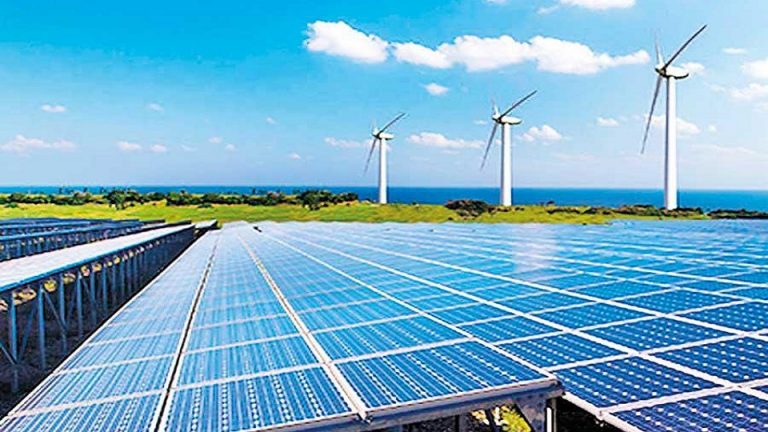
August 09, Colombo (LNW): Hayleys Solar, the leading player in Sri Lanka’s renewable energy industry and the renewable energy arm of Hayleys Fentons, has completed a groundbreaking project for the Watch Tower Bible and Tract Society of Lanka. The project establishes Sri Lanka’s largest non-government-funded battery energy storage system (BESS), powered by solar photovoltaic (PV) technology.
The Battery Commissioning Event took place on 24th of July 2024 at the Watch Tower Sri Lanka headquarters.
By storing excess solar power during peak production times and releasing it when needed, battery storage ensures a reliable and consistent power supply.
This not only enhances the usability of solar power but also mitigates the impact of power outages. Sascha Balakrishnan, representing Watch Tower Sri Lanka, states, “We are grateful for this successful partnership with Hayleys Solar.
This innovative system will facilitate our energy independence and significantly contribute to our sustainability efforts. Furthermore, our independence will ensure that more energy will be available for our community’s benefit. This would be in line with the government’s overall sustainability initiative.”
“This journey began in September 2023, when Hayleys Fentons installed hybrid systems at 17 of Watch Tower Sri Lanka’s strategic locations across the country. This installation showcases our expertise in designing and implementing cutting-edge renewable energy solutions, strengthening Hayleys Solar’s position as a leader in sustainable energy in Sri Lanka,” said Hasith Prematillake, Managing Director of Hayleys Fentons Limited.
“At a time when energy security became a priority with the scarcity of fuel in Sri Lanka, this project showcases that any institution that wishes to be independent of on-grid power or fossil fuel now has the technology and knowhow within the country to become energy independent,” emphasises Roshane Perera, the Executive Director and CEO of Hayleys Solar.
“I am happy that Hayleys Electronics collaborated with Hayleys Solar to win this project,” stated Clyed Gabriel, General Manager of Hayleys Electronics.
The project recently secured the overall best-managed project of the year title at the National Project Management Excellence Awards, winning the gold award for ‘Best Managed Project in the Social Enterprise Sector.’
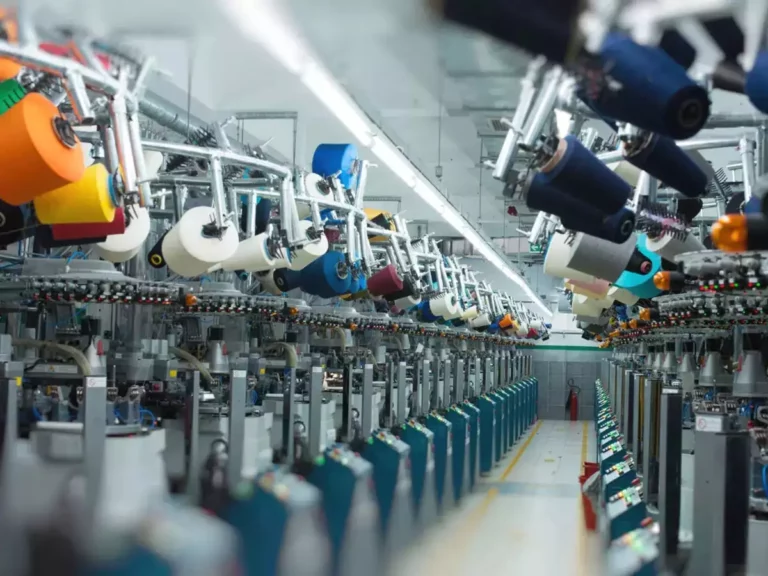
August 09, Colombo (LNW): The 15th edition of the premier international textile sourcing platform in South Asia commenced in Colombo yesterday (August 7) and will run until August 9 at BMICH, Colombo.
Over the last 10 years, Intex Sri Lanka has been at the forefront of Sri Lanka’s textile and apparel sector, playing a pivotal role in facilitating trade, innovation and driving business opportunities to support the country’s garment exports.
Dedicated country pavilions from China, India, Taiwan, Pakistan, Korea and Japan with exhibitors from 12+ countries including Korea, Taiwan, Japan, Sri Lanka, India, Pakistan, China, Thailand, Netherlands, Germany, Luxembourg & USA will present the latest natural and MMF fibres & yarns, textiles & fabrics, trims & accessories, dyes & chemicals and software solutions across four halls at BMICH.
International buyer delegations from Russia, Mexico, India, and buyers from 20+ countries including Bangladesh, China India, Indonesia, Japan, Maldives, Mexico, Myanmar, Pakistan, Qatar, Russia, Seychelles, Singapore, Taiwan, Thailand, UAE, UK, USA & Vietnam will visit Intex Sri Lanka.
Buying teams from MAS Holdings, Brandix, Hirdaramani, Maliban and many more will visit Intex Sri Lanka to discover the next big thing.
“2024 presents a unique opportunity to reshape the global textile and apparel industry,” said Arti Bhagat, Executive Director of Worldex India and Organiser of Intex Sri Lanka.
“Intex Sri Lanka is at the forefront of driving this transformation by connecting the Sri Lankan manufacturing powerhouse with global and regional stakeholders to create a more resilient, secure supply chain that prioritizes efficiency and long-term industry sustainability.
It is setting new industry standards and solidifying our position as Sri Lanka’s premier B2B platform.
The Textile Association India (TAI) is also partnering with Intex Sri Lanka and organized the TAI Overseas Conference at BMICH where industry leaders from India will network with Sri Lankan businesses at the day-long Conference.
The Interactive Business Forum (IBF) Seminar Series will share actionable strategies to future-proof and grow your business internationally by industry experts.
Intex Sri Lanka also presents Trendz Now – The Innovation and Fashion Zone by the University of Moratuwa, presenting the future of fashion, latest trends, innovations, upcoming designs and movements in the fashion world.
This year also sees the debut of InMac, the international garment machinery & technology show co-located with Intex Sri Lanka. InMac showcases the latest machinery and technology including printing, packaging & automated systems, providing much needed solutions to drive efficiencies empowering Sri Lankan manufacturers and exporters to be globally competitive.
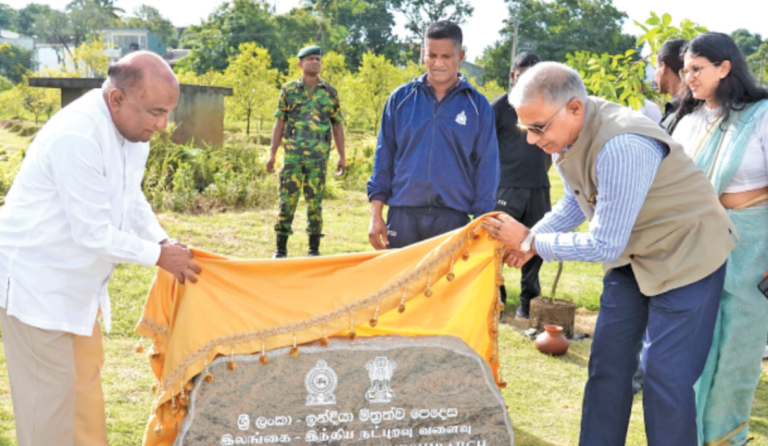
August 09, Colombo (LNW): The Indian High Commission, in collaboration with the Sri Lanka–India Parliamentary Friendship Association and the Urban Development and Housing Ministry, inaugurated the ‘Sri Lanka–India Friendship Arch’ at the National Sandalwood Garden in Sri Jayewardenepura Kotte on August 8.
The event began with the unveiling of the arch by Speaker Mahinda Yapa Abeywardana, who served as the chief guest, alongside Indian High Commissioner Santosh Jha. Prominent attendees included Minister Prasanna Ranatunga, and members of the Sri Lanka–India Parliamentary Friendship Association, such as Parliamentarians M.A. Sumanthiran, Dr. V. Radhakrishnan, and Jagath Kumara Sumithraarachchi. They participated in the planting of murutha tree saplings in an arch-shaped tract within the garden.
The inauguration was part of the #Plant4Mother campaign, initiated by Indian Prime Minister Narendra Modi on World Environment Day 2024. The campaign, launched with the planting of a Bodhi Tree sapling at Buddha Jayanti Park in New Delhi, aims to plant 800 million trees across India by September 2024, and 1.4 billion trees by March 2025.