The Parliamentary Caucus for functioning towards safeguarding National Heritage discuss regarding the measures taken by several institutions for the preservation of national heritage
The Parliamentary Caucus for functioning towards safeguarding National Heritage took into discussion the measures taken by several institutions for the preservation of national heritage.
This was discussed when the Parliamentary Caucus for functioning towards safeguarding National Heritage met in Parliament recently under the Chairmanship of Hon. Jayantha Samaraweera Member of Parliament.
Officials representing the Department of Archeology, Sri Lanka Police, Tourism Promotion Bureau, Cultural Affairs Department, Central Environment Authority, Wildlife Conservation Department, Forest Conservation Department, Buddhist Affairs Department, Central Cultural Fund and Department of National Museums were involved for the said.
Furthermore, there was a discussion regarding the places identified as places with archaeological values that are currently destroyed or are likely to be destroyed.
Accordingly, Hon. Jayantha Samaraweera, Member of Parliament recommended that the places which have been gazetted as archaeological sites and those which have not been gazetted and the places which are currently destroyed and the places which are at risk of destruction should be submitted to this Committee district wise.
Furthermore, the creation of an archaeological fund was discussed at the Committee meeting held. Accordingly, the officials present mentioned that the matter is currently being discussed. Moreover, there was a discussion at length about how the other institutions that were called for are working for the preservation of national heritage. State Minister Hon. Sisira Jayakody, Hon. (Dr.) Sarath Weerasekera, Hon. Udaya Gammanpila, Hon. Upul Mahendra Rajapaksha, Hon. Jagath Kumara Sumithraarachchi,
The Ministry of Defence in Sri Lanka has announced that it has put in place necessary arrangements to offer stipends to disabled tri-forces personnel who retire from service due to disabilities incurred during the course of the terrorist war. This stipend will be provided until the age of 55 years and will continue for the lifetime of the serviceman and his widow.
Under the current procedures, if a disabled serviceperson passes away before reaching the age of 55, a medical board must confirm that the cause of death is directly linked to the disability of the individual for the widow to qualify for the aforementioned stipend.
In cases where a disabled serviceperson passes away due to other causes not directly related to their disability, and the medical board cannot confirm a direct link, the widow will be eligible for the Widow’s and Orphan’s Pension, as outlined by the ministry.
In response to numerous requests from affected widows seeking the continuation of allowances and salaries, the Defence Ministry has taken steps to seek Cabinet approval to provide relief to them.
The ministry has urged retired disabled servicepersons and their family members not to be unduly concerned, highlighting that certain groups have attempted to create confusion on this matter.
Furthermore, the Defence Ministry has pledged to take all necessary measures to ensure the welfare of retired tri-forces personnel and their families in the future.
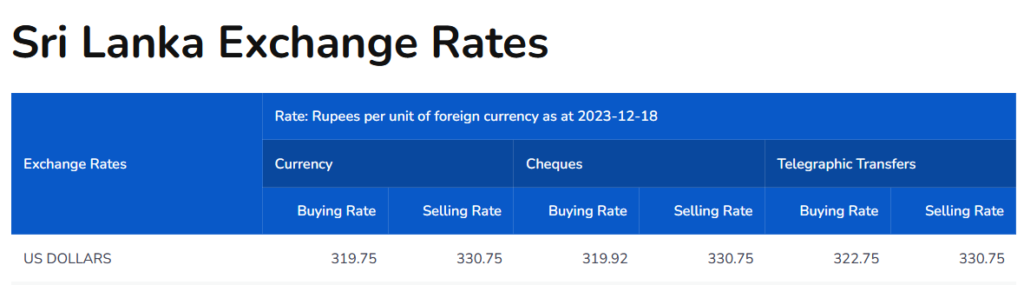
In a concerning development, the Sri Lankan Rupee has experienced a further depreciation against the US Dollar at commercial banks in Sri Lanka today, September 13th, in comparison to the previous day.
Peoples Bank has witnessed an uptick in both the buying and selling rates of the US Dollar, with figures escalating from Rs. 314.72 to Rs. 315.45 for buying, and from Rs. 328.85 to Rs. 329.62 for selling.
Meanwhile, according to the Commercial Bank, the buying rate for the US Dollar has climbed from Rs. 314.73 to Rs. 315.72, while the selling rate has also risen from Rs. 326 to Rs. 327.
Contrastingly, at Sampath Bank, the buying and selling rates of the US Dollar have remained stable, with figures standing at Rs. 318 for buying and Rs. 328 for selling.
President Ranil Wickremesinghe embarked on a journey to Cuba this morning, September 13th, where he is set to address the prestigious G77+China Leaders’ Summit.
The summit, centered around the theme “Current Development Challenges: Role of Science, Technology, and Innovation,” is scheduled to unfold in Havana from September 15th to 16th, 2023.
President Wickremesinghe’s participation in this summit has been orchestrated through an official invitation extended by Cuban President Miguel Diaz-Canel.
On the sidelines of this crucial gathering, President Wickremesinghe has a strategic agenda that includes bilateral discussions with his Cuban counterpart, aimed at fortifying the bonds of cooperation between the two nations.
The G77+China Leaders’ Summit stands as the most extensive intergovernmental coalition, uniting 134 developing nations, as formally recognized by the United Nations. This influential platform empowers Southern nations to advocate for and advance their common economic interests, bolstering their collective negotiation capabilities.
At the core of this conference lies the opportunity to address pressing challenges in the domains of science, technology, and innovation, with a particular emphasis on fostering inter-Southern collaboration to unearth cooperative solutions.
Anticipated as a hallmark of the summit, the leaders of these nations are expected to adopt the ‘Havana Declaration.’ This pivotal document will chart the course for reforms and innovative approaches, with the ultimate aim of enriching cooperation among Southern countries in the dynamic realms of science, technology, and innovation.
Accompanying the President on this significant diplomatic mission is Ms. Aruni Wijewardena, Secretary of the Ministry of Foreign Affairs, along with a distinguished delegation of senior officials hailing from the Ministry of Foreign Affairs.
President Ranil Wickremesinghe leaves the island to attend the UN General Assembly in New York: before the UN summit, the President is due to visit Cuba to address the G77 + China Leaders’ Summit.
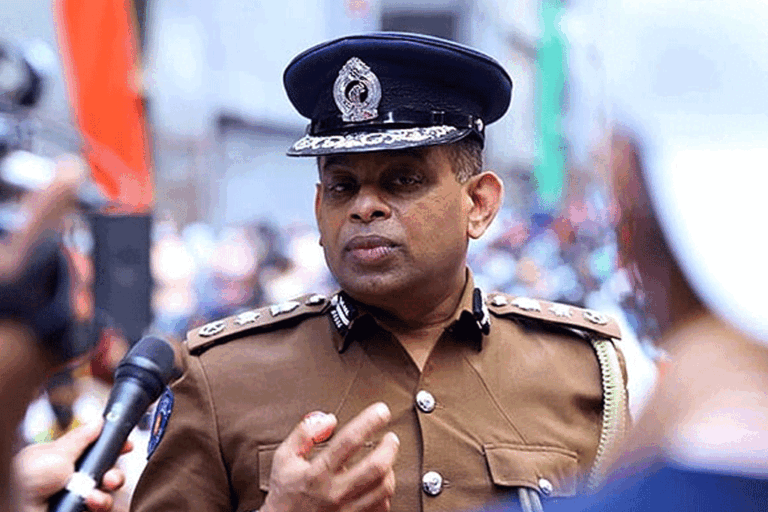
Police DIG Indika Hapugoda says at least 12,000 people die in accidents in Sri Lanka annually, with around 3,000 being attributed to road accidents.
Former Senior Professor at Geology Dept of the University of Peradeniya, Athula Senaratne warns that more large earthquakes may occur in the Indo-Australian tectonic plate where SL is located.
President Ranil Wickremesinghe declares railway services as an essential service with immediate effect, under the Essential Public Service Act: Army personnel deployed to Fort and Maradana railway stations for security: a young person travelling on the roof of the Kandy-Colombo train dies after knocking against the roof of the Horape railway station.
Opposition raises concerns over MP Ali Sabri Raheem, who was recently arrested and subsequently released after being implicated in smuggling a consignment of gold and mobile phones worth Rs. 70 mn into SL, is still functioning as a member of the Parliamentary Committee on Ethics and Privileges.
Cabinet postpones the removal of the Simplified Value Added Tax (S-VAT) system until 1April’25.
Former Mrs. Sri Lanka Pushpika de Silva giving evidence before the Colombo Chief Magistrate says she was shamed in front of the world when the crown she won at the Mrs. Sri Lanka beauty pageant, was forcibly removed from her head.
IUSF blames the Govt for seeking to degrade the quality of medical education in SL by giving approval for the establishment of private sector medical universities: IUSF Convenor Madushan Chandrajith says the Govt is attempting to establish private medical faculties under the guise of expanding new opportunities in the medical sector.
National Livestock Development Board starts the 1st phase of the programme to provide fresh milk to households in the Colombo City and suburbs.
India beats SL by 41 runs in the Asia Cricket Cup 2023 Super Four stage: India – 213 all out (49.1): Wellalage – 40/5: SL – 172 all out (41.3): Wellalage – 42*: man of the match – Wellalage.
In response to an ongoing strike by the Locomotive Operating Engineers’ Union, Sri Lanka has deployed Army personnel to ensure the security of the Colombo Fort and Maradana railway stations, with the possibility of extending coverage to other stations if necessary, as announced by the Department of Railways.
The strike, which commenced at midnight on Monday, revolves around a series of demands, including overdue amendments to the recruitment process and promotions, which have reportedly been delayed for nearly five years. Consequently, over a hundred train services have been canceled, significantly disrupting the daily commute of passengers and leading to tense situations at various railway stations.
The scarcity of operational trains has led to overcrowding on the ones that are still running, forcing many commuters to resort to train surfing due to the adverse conditions.
A particularly distressing incident occurred at the Maradana railway station, where commuters were left incensed by the railway strike. Tragically, a youth lost his life after falling from the roof of an overcrowded train near the station.
In response to the escalating situation, President Ranil Wickremesinghe took decisive action by issuing a gazette notification. This notification declared public transport services for passengers or goods, as well as the provision and maintenance of facilities for transport services via railway lines, as essential services with immediate effect under the Essential Public Service Act.
Sri Lanka has officially accepted offers to exchange approximately $10 billion worth of defaulted local debt for new bonds, according to a statement from the Finance Ministry on Tuesday. This move marks a significant stride towards meeting the prerequisites for debt restructuring ahead of an imminent review by the International Monetary Fund (IMF).
The island nation has been grappling with its most severe financial crisis in over seven decades, triggered by a depletion of foreign exchange reserves to historic lows, leading to a default on its debts in May 2022.
The bonds in question, primarily held by pension funds, were deemed eligible for exchange as part of a domestic debt restructuring initiative unveiled by Sri Lanka in June.
Out of the 8.7 trillion rupees in bonds eligible for exchange, a total of 3.2 trillion rupees have been accepted, as confirmed by the Finance Ministry in its statement. The exchange is scheduled to take place on September 14.
The Finance Ministry’s statement noted, “The success of the Invitation to Exchange will enable the Republic to reduce Gross Financing Needs (GFN) over the next 10 years, thereby contributing to achieving the Republic’s GFN target agreed in the context of the current IMF-supported program.”
An IMF delegation is set to arrive in Colombo on Thursday to commence the evaluation process for the first review of the $2.6 billion four-year program secured by Sri Lanka in March.
Under the auspices of the IMF program, Sri Lanka has set an ambitious goal of restructuring its debt over the next decade and lowering its debt-to-GDP ratio from the existing 120% to approximately 95% by 2032.
However, Sri Lanka’s journey towards debt restructuring still hinges on completing negotiations with key bilateral creditors, including Japan, China, and India, before proceeding with the next phases of the restructuring plan.
Showers will occur at times in Western, Sabaragamuwa and North-western provinces and in Kandy, Nuwara-Eliya, Galle and Matara districts.
A few showers may occur in Hambantota district.Showers or thundershowers may occur at a few places in Uva province and in Batticaloa, Ampara districts during the evening or night.Fairly strong winds about (40-45) kmph can be expected at times in western slopes of the central hills, Northern, North-central, and North-western provinces and in Trincomalee and Hambantota districts.General public is kindly requested to take adequate precautions to minimize damages caused by temporary localized strong winds and lightning during thundershowers.
The media these days is full of news of the government’s plan to restructure its domestic debt through the restructure of Treasury bonds held by superannuation funds led by the EPF. The central bank (CB) presents that this is the only option available to the government to make its domestic debt sustainable in order to avoid a near-term default similar to the default of foreign debt on 12 April 2022. The CB also presents that this is the best option available to superannuation funds to protect their interests of the members.
The Parliament’s Finance Committee also took up this subject for consideration last week and seems to have given the concurrence after assessing the loss outcomes of the DDO proposal based on information submitted by the CB.
Therefore, this short article is intended to shed some light on the false information presented by the CB on this subject despite the fact that the CB has been managing the public debt for the past 73 years.
Can superannuation funds make domestic debt sustainable?
The answer is “it cannot.” The reason is bluntly seen from the data as cited below.
Domestic debt stock as at the end of 2022 : Rs. 15,033.8 bn
Total assets of superannuation funds : Rs. 4,345 bn (i.e., Rs. 3,459.9 bn of the EPF, Rs. 468.8 bn of the ETF and the balance Rs. 416.3 bn of other funds)
Investment of superannuation funds in domestic debt : Rs. 3,953.8 bn which is only 26.3% of the domestic debt stock.
Therefore, even if the government freezes or writes off all debt raised from superannuation funds, domestic debt stock will not decline to a sustainable level, given the acute profile of the present fiscal front.
Further, the debt restructuring proposal (DDO) is the exchange of Treasury bonds held by these funds for 12 new Treasury bonds carrying new interest rates/coupon rates of 12% (up to mid 2026) and 9% (from mid 2026 up to maturity from 2027 to 2038) which involves only in reducing the burden of interest payment component in debt service on Treasury bonds held by superannuation funds. However, the CB has not publicized relevant figures how the proposed reduction in interest rates payable to superannuation funds would make the present domestic debt stock (Rs. 15,664.5 bn in April 2023) sustainable.
Two restructuring options available to superannuation funds
Accepting the exchange of existing Treasury bonds for new Treasury bonds at lower interest rates.
If not opted for the option above, being subject to 30% of tax on investment income of superannuation funds in place of 14% tax at present.
As such, the proposed debt restructuring is targeting a reduction of the flow of interest payment on domestic debt (so called debt sustainability in the DDO proposal) or an increase in the tax revenue of the government to enable it to enhance its debt service ability.
This appears to be similar to the modus operandi followed by the government of Ghana for its DDO options applied for all investors in government securities.
Figures cited by the CB Governor at the Finance Committee meeting covered in the attached video
At the said meeting held last week, following figures and information were cited to show the impact of the proposed DDO on superannuation funds. This was based on assumptions-based projection of the growth of a fund portfolio of Rs. 100 bn during the proposed restructuring period from 2023 to 2038. see the video https://www.youtube.com/watch?v=HzCSLcZqPI0
The portfolio will increase to Rs. 387 bn if the portfolio grows as it is without participating in any restructuring option.
If participated in the debt restructuring, the portfolio will increase to Rs. 369 bn showing a reduction of the portfolio by 4.8% as compared to no restructuring position.
If the restructuring option is not exercised and the portfolio is subject to 30% tax, the portfolio will increase to Rs. 304 bn showing a reduction of 21.6% as compared to no restructuring position.
The 4.8% reduction is arrived at the assumption of the ability of the government to continue debt rollovers at current interest rates.
However, as the current deb stock is unsustainable, there is no status quo. Therefore, the government will have to default domestic debt very soon as was done on foreign debt whereas this position also has been informed to the Supreme Court through an affidavit filed by the CB Governor.
Accordingly, the Finance Committee praised the DDO on the ground of 4.8% loss to superannuation funds on debt structuring DDO option as compared to 21.6% loss due to 30% high tax DDO option.
Inapplicability and deceptiveness of the debt restructuring proposal
Information presented above establishes that the DDO proposal as presented by the CB is baseless and contains false data as highlighted below.
Domestic debt stock of the present level (Rs. 15,665 bn) cannot be made sustainable from the present DDO proposal.
The government does not have to default debt in sovereign currency as it always has the ability to rollover debt through the creation of credit at the contemporary interest rates structure partly determined by the central bank’s monetary policy. The government has this ability as the domestic debt is reflective of the risk-free investment portfolio of the private sector (banks, shadow banks, businesses and households). The default of the foreign debt in Sri Lanka was in fact a default of foreign currency payment by the CB. Therefore, the domestic debt unsustainability and the fear of the near-term default as cited by the CB Governor are baseless notions unless there is another hidden, fresh conspiracy to make the government default and bankrupt the country further.
The projected growth of the portfolio of Rs. 100 bn as presented at the Finance Committee is baseless as debt service at current interest rates is assumed for the estimation of the future growth of the portfolio until 2038. While this assumption is unpractical for a central bank which conducts the monetary policy and drive interest rates in the economy, the organic growth of a superannuation portfolio largely depends on the net contribution which is a combined result of new employment, retirement and wage rates in the future. For example, if the young and adults migrate the country at the current rate along with the ongoing aging profile and ongoing economic contraction, the organic growth of superannuation funds could be negative in the next decade. Therefore, the use of the CB’s projections for the DDO as proposed has no professional or macroeconomic basis.
The DDO as proposed is a type used in restructuring of bankrupt business entities in order to improve the quality of financial conditions (the balance sheet and income statement) for regaining the financial solvency. The application of this model as it is for governments is not appropriate because the fiscal front (government finance) is operated on various macroeconomic and public interest principles and objectives that are opposite to operations of business entities. This is evident from many countries which continue to struggle in decades after debt restructuring exercises.
Concluding Remarks and Concerns
It is questionable that the CB continues to manage public debt despite the hard fact that it has managed public debt for the past 73 years with international expertise to the present unsustainable level. Therefore, the same debt manager and officials trying to make debt sustainable now through such baseless DDO proposals is a grave concern over the governance.
The present DDO proposal targets the EPF which is about 80% of the superannuation sector assets whereas the same CB (Monetary Board) has been the financial manager of the EPF throughout the past. Therefore, the conflict of interest is a grave concern observed in the DDO governance. It is not secret that the CB has been using the EPF unduly for debt management and monetary policy’s interest rates control simultaneously at the expense to the EPF. As the CB Governor is the chief of both public debt management and EPF financial management, he cannot not expected to act at arm’s length of the good governance to balance the interests between the debt and EPF. Accordingly, the present DDO proposal is a fresh attempt to abuse the EPF in a new model of macroeconomic mismanagement.
If the CB Governor being the manager of public debt declares that domestic debt is unsustainable and likely to be defaulted soon, the superannuation sector (EPF, ETF and others) which has invested its almost all member funds in domestic debt due for default is also unsustainable now. This will be a grave public issue on the lives of the aged and retired population in the country. Therefore, what is immediately required for the government is to guarantee benefits to employees present and future if the government wishes to prevent a social rise potential in the near-term by maintaining the public trust in the system of the government. The situation world be unmanageable as the new CB will not be able to bailout banks hit by a liquidity crisis due to repeal of lender of last resort powers in the new Act.
The declaration of the domestic debt unsustainability and the near-term risk of default by the CB Governor at the Finance Committee casts doubts on the stability of the banking and financial system too as the system’s liquidity and trust are built on investments in govt domestic debt. Therefore, the resilience of the banking/financial system as viewed by the authorities is highly questionable. In that context, the CB Governor’s declaration as above is a serious matter to be investigated independently, given systemic risks connected.
Restructuring of debt raised in sovereign currency is an unnecessary concept not warranted in modern macroeconomics.
The discrimination of domestic debt in the DDO proposal between superannuation funds and other investors could lead to concerns over the violation of fundamental rights guaranteed by the Constitution of the country.
Therefore, the present DDO proposal would no doubt open up further sources of the instability to both the government and the economy and delay the recovery from the present foreign currency and debt crisis caused by the CB itself.
It is of grave concern as to why the CB being the failed public debt manager continues to manage public debt despite the fact that the government has hired international debt management experts for the purpose and the Parliament has approved of setting up an independent debt management office.
The recommendation of the Finance Committee to the CB Governor to talk only to economists rather than activists is also flawed as the CB Governor’s DDO has no economics while professional economists are not seen so active in the country.
It is hard to understand why such a DDO is proposed if superannuation funds will not incur any losses to their members due to the DDO whereas the EPF will be guaranteed the returns it received in the past as frequently stated by the authorities. It is the common sense that any restructuring of debt is intended to bailout the borrower at the expense of the lender. Further, the fondly reason expressed by the authorities to exclude banks from the proposed DDO on the ground of the financial system stability is baseless because financial system stability cannot be separated in the way the authorities wish. Therefore, the relevant authorities must reveal the bare truth to the public as they cannot deceive the public all the time.
Overall, the proposed DDO is a meaningless waste of another bureaucratic act costly to public funds.
Therefore, domestic debt unsustainability and the potential for a near-term default stated by the CB Governor at the Finance Committee are just his personal presumptions and views and, therefore, are not reflective of the facts, some of which are presented in this article. In that context, the contents of the affidavit referred to by the CB Governor at the Finance Committee may be questioned on grounds whether what have been sworn are the facts or unjustified, personal presumptions relating to unknown future that are not appropriate for making national decisions of this nature.
(This article is released in the interest of participating in the professional dialogue to find out solutions to present economic crisis confronted by the general public consequent to the global Corona pandemic, subsequent economic disruptions and shocks both local and global and policy failures.)
P Samarasiri
Former Deputy Governor, Central Bank of Sri Lanka
(Former Director of Bank Supervision, Assistant Governor, Secretary to the Monetary Board and Compliance Officer of the Central Bank, Former Chairman of the Sri Lanka Accounting and Auditing Standards Board and Credit Information Bureau, Former Chairman and Vice Chairman of the Institute of Bankers of Sri Lanka, Former Member of the Securities and Exchange Commission and Insurance Regulatory Commission and the Author of 12 Economics and Banking Books and a large number of articles published.
The author holds BA Hons in Economics from University of Colombo, MA in Economics from University of Kansas, USA, and international training exposures in economic management and financial system regulation)
The Minister of Ports, Shipping, and Aviation, Nimal Siripala de Silva, officially opened the Enquiry Centre at the Sri Lanka Ports Authority (SLPA) yesterday. This significant development is set to bolster the operational capabilities of the Port of Colombo, a pivotal hub for international trade and shipping activities.
The primary objective behind establishing the SLPA Enquiry Centre is to streamline and expedite the provision of information on port services, benefiting both local and international customers associated with the Port of Colombo. Moreover, it seeks to educate and inform the public about the intricacies of port operations.
Operating from 8:30 a.m. to 5 p.m. daily, the center will be accessible through the dedicated hotline number 1984. This hotline promises to be a valuable resource, particularly for individuals involved in import, export, and shipping endeavors.
For those seeking additional information, the SLPA Enquiry Centre, conveniently located at Lotus Road, Canal Yard, Colombo 01, welcomes walk-in inquiries. Alternatively, questions can be submitted via email to [email protected].
During the center’s inauguration, Minister Nimal Siripala de Silva placed the inaugural call to the hotline, emphasizing the significance of this service’s international connectivity. He highlighted how this initiative will provide swift access to the latest updates in the domains of trade, shipping, and ports.
“The efficiency of the Sri Lanka Ports Authority’s services is poised for a significant boost with the introduction of the new Enquiry Center,” noted the Minister. He added, “This proactive measure aims to reduce the need for in-person meetings between officials and customers, ultimately mitigating certain irregularities.”
Prominent figures in the SLPA leadership, including Chairman Keith Bernard and Managing Director Prabath Malavige, along with numerous senior officials, also graced the event with their presence.