Home Blog Page 1385

State visits must not become a Social Media Playground 

0

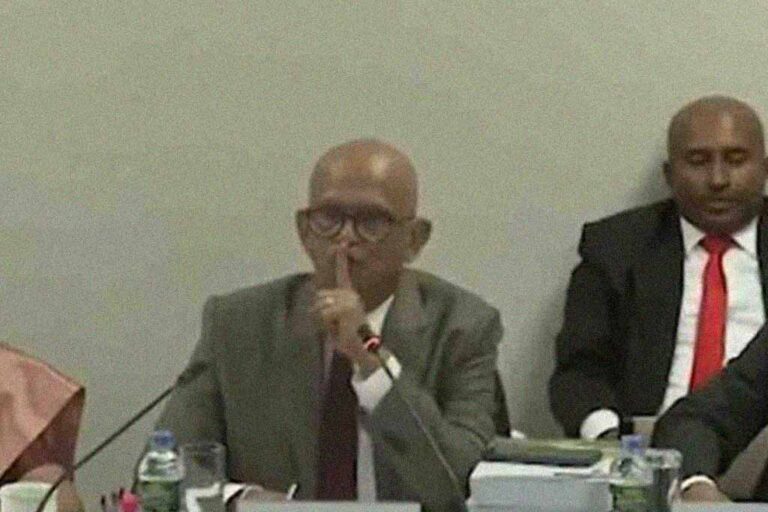
The Presidential Secretariat according to a leading newspaper the Sunday Times has issued instructions to its entire staff telling them not to solicit or take personal photographs or selfies with any visiting head of state, VIPs or dignitaries in the future.

The staff have further been instructed that any information on such visits should be confined to the respective official media statements.

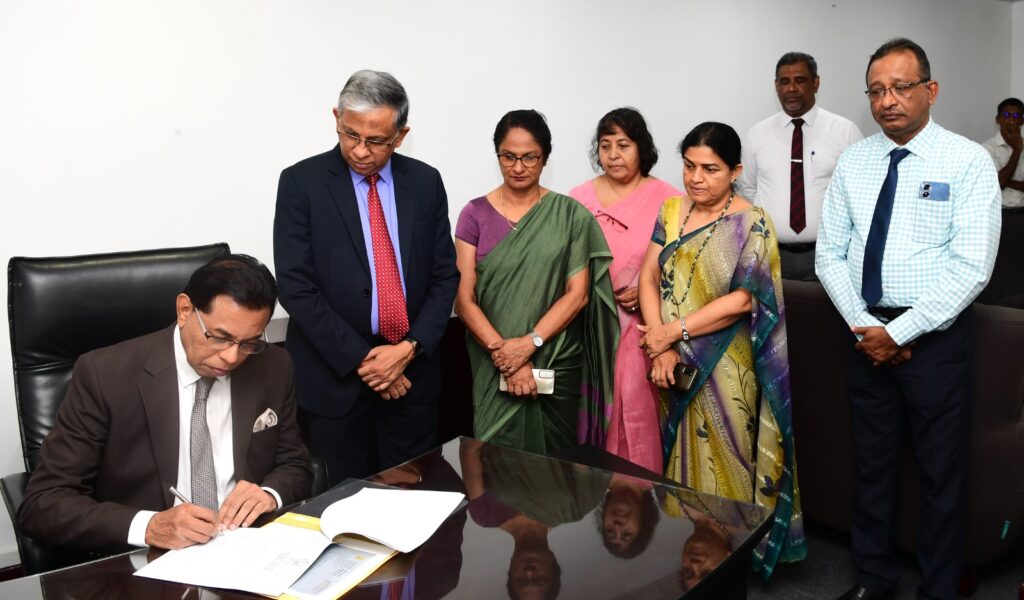
The instructions came after attention was drawn to Presidential Secretariat staff having taken selfies with French President Emmanuel Macron during his visit to Sri Lanka on July 28. This had irked several VIPs. Even the Prime Minister ( No 2 ) nor the Speaker (No 3) in the country were not present. But Presidential Secretariat staff were seen stalking the French President for pictures on video . A retired Secretary told LNW that he was surprised because the President was from the old school . How is personal staff got access to the French President was not diplomatic at all. Further he said his personnel staff are not official positions in the hierarchy in the state to attend high level Head of State visits. His official secretary must take the lead. He praised the First Lady Wickramasinghe for her dignified conduct. But unfortunately for some it is like the old saying “monkey getting a razor knife “ it has become the norm and they are following the Mahinda Rajapakse era. People wanted a break from the past,  he noted. 

The Sunday Times went on to say posting of these selfies drew adverse comments on social media with few calling the President’s office to ask if this was protocol observed in the breach. Protocol among public servants is a matter that requires classes to be given by, maybe the Foreign Ministry the paper noted.

Adolf .

Several spells of light showers will occur in Western province

0

Several spells of light showers will occur in Western and Sabaragamuwa provinces and in Galle, Matara, Kandy and Nuwara-Eliya districts.

Showers or thundershowers may occur at a few places in Eastern and Uva provinces during the evening or night.

Mainly fair weather will prevail elsewhere over the Island.

General public is kindly requested to take adequate precautions to minimize damages caused by temporary localized strong winds and lightning during thundershowers

Sri Lanka Transport Board Busts Counterfeit Ticket Scam on Southern Expressway

0

Officers from the special raid unit of the Sri Lanka Transport Board (SLTB) recently uncovered a major counterfeit ticket scam on the Southern Expressway. During a routine inspection on a SLTB bus traveling from Kadawatha to Galle, 52 passengers were found to be using fake tickets. The bus’s two conductors and the driver were arrested and handed over to the Kadawatha Police, later appearing in the Mahara Courts and being remanded.

The total amount defrauded from the counterfeit tickets amounted to Rs. 49,400, with each passenger paying Rs. 950 for a one-way fare between Kadawatha and Galle.

SLTB Chairman Lalith De Alwis has initiated an internal investigation into the incident. Additionally, Transport, Highways, and Mass Media Minister Dr. Bandula Gunawardhana revealed that the SLTB Chairman filed a complaint with the Criminal Investigation Department (CID) about frequent reports of counterfeit tickets being issued to passengers on SLTB buses operating on the Southern Expressway. The CID is currently conducting an investigation into the matter.

SLTB buses on the Southern Expressway operate without conductors, and tickets are issued before the journey. However, it has come to light that a systematic scheme is pilfering the income due to the SLTB by issuing counterfeit tickets. Another inspection on a bus traveling between Embilipitiya and Makumbura revealed that 17 out of 24 tickets issued were counterfeit, resulting in an embezzlement of Rs. 17,770 for that single journey.

Due to the seriousness of the situation, the CID has now launched a comprehensive investigation into the income of all SLTB buses operating on the Southern Expressway. The authorities are determined to apprehend those responsible for this fraudulent activity and ensure the integrity of the transportation system.

Ports Ministry Initiates Reconstruction of Talaimannar Pier for India Passenger Vessel Service

0

The Ports, Shipping, and Aviation Ministry of Sri Lanka have set in motion plans to reconstruct the Talaimannar Pier, enabling passenger vessels to operate between Talaimannar and Rameswaram, India. The pier had been destroyed and abandoned during the conflict era in the North.

Under the guidance of Ports, Shipping, and Aviation Minister Nimal Siripala de Silva, the Sri Lanka Ports Authority (SLPA) has been entrusted with the task of reconstructing the pier, with an estimated investment of Rs. 1,800 million.

Concurrently, around 10 acres of government-owned land adjacent to the port will be acquired to facilitate port infrastructure development, including the construction of a modern passenger terminal and warehouse facilities. These developments will be carried out under Public-Private Partnership (PPP), with Request for Proposals (RFPs) being called for the investments.

In the past, a passenger ferry service operated between Talaimannar and Danushukodi, but the Dhanuskodi Port was severely damaged by cyclones. Presently, India has completed developments at the Rameswaram Port and has obtained clearance from the Indian Government to commence a passenger ferry service between Mannar and Rameswaram.

To kickstart the project and conduct necessary assessments, Minister Nimal Siripala de Silva conducted a special visit to the port on August 4. During the inspection visit, the Minister also participated in a discussion to address project-related issues.

The Minister emphasized that the reconstruction of the Talaimannar Pier will rekindle the close ties between the two neighboring countries. He highlighted that the launch of the ferry service between Talaimannar and Rameswaram will offer affordable travel options for Sri Lankan pilgrims to India and foster bilateral trade by facilitating the exchange of goods.

Various officials, including SLPA Chairman Keith Bernard, Vice Chairman Gayan Algewattege, and representatives from the Sri Lanka Navy, were present at the event to support the endeavor. The reconstruction of the Talaimannar Pier marks a significant step towards enhancing connectivity and cooperation between Sri Lanka and India.

PM Gunawardena Engages with Farmers in Trincomalee as part of ‘Aluth Gamak – Aluth Ratak’ District Development Programme

0

During his visit to the Eastern Province to attend the ‘Aluth Gamak – Aluth Ratak’ District Development Programme, Prime Minister Dinesh Gunawardena took the opportunity to have an interactive session with farmers in Kawantissagama, Trincomalee, over the weekend.

The Prime Minister’s visit was accompanied by Eastern Province Governor Senthil Thondaman and Members of Parliament Kapila Athukorala and Yadamini Gunawardena, who also participated in the engagement with the local farming community.

The government is prepared to address any food crisis that may arise

0

The government intends to re cultivate 11,000 acres of abandoned paddy lands before the end of this year in order to prepare for a potential food crisis, State Minister of Agriculture Mohan Priyadarshana De Silva said.

The State Minister pointed out that the program for harvesting abandoned paddy lands is being implemented through the Department of Agrarian Development, and the government has allocated Rs.420 million for this purpose.

He expressed these views Agust (03) during a press conference themed ‘Collective Path to a Stable Country’ held at the Presidential Media Centre (PMC).

State Minister Mohan Priyadarshana De Silva, further commented;

The export of rice has been temporarily halted by Pakistan and India in order to deal with a potential future global food crisis. Some nations are also experiencing a rice crisis as a result of India stopping the export of rice.

Therefore, as a country, we must likewise get ready to deal with this calamity. The government cannot improve the country’s agriculture industry alone. Support from everyone is necessary for that. As a result, the government has chosen to replant the nation’s abandoned paddy lands. Under the initial phase, the Department of Agrarian Development is working to cultivate 11,000 acres. The government has allocated 420 million rupees for this purpose.

The agricultural sector is responsible for 7.5% of this nation’s GDP. As an agricultural country; there is an opportunity to raise this contribution to the country’s GDP to a higher value. Developing the agricultural sector is another way to boost the national economy.

President Ranil Wickremesinghe has given many concessions for the farmers of this country. There are subsidies for fertilizers. The government offers farmers insurance free of charge. As a result, there is some increase in rice production in this country compared to the past. Additionally, necessary steps have been taken to streamline the farmers’ paddy purchasing mechanism.

The annual rice requirement of this country is about 2.4 million metric tons. This year, it is predicted that 2.7 million metric tons of rice will be harvested. As a result, it is feasible to maintain a surplus of 300,000 metric tons of rice.

Furthermore, I do not believe that the nation will experience a food crisis in future. Additionally, the President has issued directives prohibiting the release of rice reserves for beer manufacturing.

The government has focused on enhancing the cultivation of new crops in addition to expanding rice production. The budget declaration from President Ranil Wickremesinghe states that the program to bring contemporary technologies to the agricultural sector has already commenced.

The establishment of agricultural villages for young entrepreneurs is another ongoing initiative with the goal of orienting the youth community in the agricultural sector. Additionally, measures have been taken to allow youth access to government-owned land that is not being used for agriculture.

Also, the work of drafting the National Agriculture Policy with amendments is in the final stage. It will eventually be presented to the Cabinet. Through the National Agriculture Policy, it is possible to do a great deal for the advancement of the agricultural sector in this country.

Expediting Sri Lanka Unique Digital Identity (SL-UDI) Framework with an INR 450 Million Advance

0

The Indo-Sri Lanka Joint Project Monitoring Committee has taken a decisive step towards the implementation of the Sri Lanka Unique Digital Identity (SL-UDI) – a crucial milestone in the country’s digitization drive.

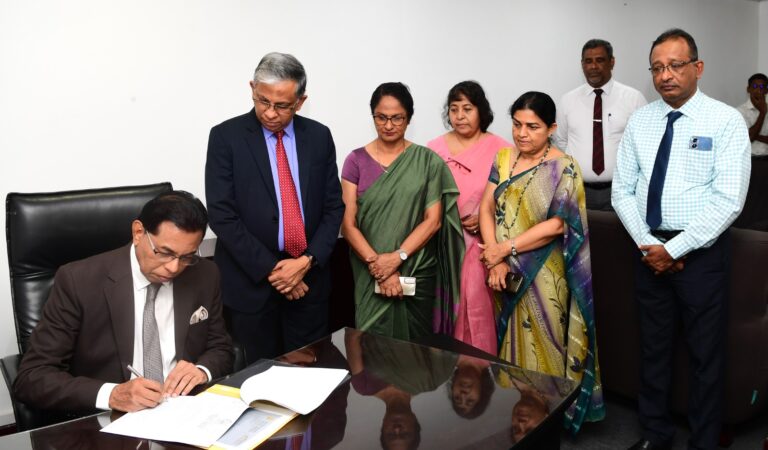
During a meeting at the Presidential Secretariat, Aagust (04), key stakeholders, including Presidential Senior Adviser on National Security and Chief of Presidential Staff, Sagala Ratnayaka, State Minister of Technology, Kanaka Herath, Indian High Commissioner, Gopal Bagle, and First Secretary of the Indian High Commission, Mr. Eldos Mathew, Secretary of the Ministry of Technology, Prof. M.D. Gunawardena, Secretary of the Ministry of Public Security, Viyani Gunathilake, and Additional Secretary of the Presidential Secretariat, Dr. Sulakshana Jayawardena, engaged in extensive discussions on the project’s execution.

During the meeting, it was reported that tenders related to the SL-UDI project had been received and were currently under review, adhering to a meticulous timeline. Signifying the Indian government’s commitment to the initiative, the Indian High Commissioner handed over a significant contribution of Indian Rs. 450 million to Minister Kanaka Herath, constituting 15% of the total funds required for the successful implementation of the project as an advance payment.

In his directive, Mr. Sagala Ratnayaka emphasized the paramount importance of adhering to a well-defined timeline to ensure the project’s seamless execution. He further advised convening regular weekly meetings to monitor and evaluate progress.

Acknowledging the project’s profound significance in Sri Lanka’s economic recovery process, Mr. Sagala Ratnayaka expressed heartfelt gratitude to the Indian government for its unwavering support in this endeavour.

The SL-UDI project holds immense promise in bolstering Sri Lanka’s digital infrastructure and fostering growth across various sectors. With this notable step, the nation inches closer to a more technologically advanced future, poised for enhanced economic development and prosperity.

Singer partners with vivo to bring innovative smartphones to Sri Lanka

0

By: Staff Writer

Colombo (LNW): Singer Sri Lanka PLC has partnered with vivo, a prominent global smartphone manufacturer, as their official National Distributor.

This collaboration marks a significant step towards enhancing the smartphone landscape in Sri Lanka, providing consumers with access to innovative and high-quality vivo smartphones.

Speaking about the partnership, Singer Group of Companies Chief Executive Officer Mahesh Wijewardene said: “vivo, a brand that shares the passion for innovation and customer-centricity.

Through this partnership, Singer aims to bring the latest technology and feature-rich smartphones that vivo offers to our customers in Sri Lanka.”

Vivo is celebrated worldwide for its groundbreaking technology and inventive features, and this partnership brings its impressive lineup of smartphones to the fingertips of Sri Lankan consumers, he added.

The government is set to lift the restrictions imposed last year on white goods by this September.

“”We have seen month-on-month a slow but gradual improvement in purchases. Certain categories of import restrictions on consumer durables and home appliances were lifted and we feel that by September everything could be lifted, he said.

He said that there is an immediate need for air conditioners in this hot weather. “We witness an immediate need for air conditioners with tourism kicking in.

Especially in the Northern areas Sri Lankans who fly in now for festivals etc are finding it very difficult without air conditioning,” he added. There are many enquiries through Singer branches islandwide for air conditioners which they cannot meet, Mr. Wijewardene said.

He said that there are a lot of grey market activities going on with import restrictions and high duties kicking in.

“It is very much seen on digital devices such as mobile phones and computers as well as electrical items. “These importers evade import taxes and devalue the goods when importing causing a serious loss of revenue to the government,” he pointed out.

Vivo began its monumental journey in Sri Lanka in 2017 and has successfully carved out a niche for itself in last 5 years through its innovative smartphone technology and customer care services.

Since its introduction into the Sri Lankan smartphone market, vivo has gained popularity as an outstanding and a reliable brand, boasting of a robust offline network of 2500+ retail stores that ensure accessibility for sales and after-care services.

Making further inroads into the regional market, vivo has established business partnerships with key industry players, ensuring exceptional service to Sri Lankan consumers.

Kevin Jiang, CEO of vivo Sri Lanka commented, “vivo’s tremendous success in Sri Lanka has been a cohesive effort propelled by our dedicated employees, customers, retailers, distributors, media and partners.. Going ahead, we plan to continue expanding our services, catering the best technology, and driving the country towards greater digital integration.”

The country needs an architecture that is compatible with future climate changes 

0

President Ranil Wickremesinghe emphasized that Sri Lanka has demonstrated a strong commitment to addressing climate change goals. Going forward, Sri Lankan architects will play a pivotal role in this endeavour.

They will need to integrate climate change criteria into their designs, ensuring that the built environment aligns with sustainable and environmentally responsible practices. Integrating sustainable and environmentally conscious practices into our architectural designs will be instrumental in achieving our climate goals ahead of the set timeline. Also, together, we can build a resilient and environmentally friendly future for Sri Lanka, contributing to global efforts to combat climate change and protect our planet for generations to come.

The President further mentioned prominent examples of significant architectural achievements such as the grand dagabas, including Ruwanwelisaya, Abhayagiri, and Jetavanaramaya, as well as iconic structures like Sigiriya, which stands as a prime example of exceptional architecture recognized worldwide. These architectural marvels are further exemplified by the structures found in Polonnaruwa. Notably, even during a period of decline, architectural endeavours persevered, evidenced by the expansion of the Dalada Maligawa featuring its octagonal design, and the construction of the Kandy Lake under the reign of the last king.

President Wickremesinghe further stressed that throughout history, Sri Lanka has showcased its architectural prowess, evident in remarkable structures like the Trinity College Chapel, Kelaniya Vihara, Lake House building, Peradeniya University, Independence Square, and the Art Gallery, among others. The iconic Parliament building designed by Jeffrey Bawa has added to this rich architectural heritage.

The President emphasized that if remarkable architectural feats were accomplished 2,000 or 1,000 years ago, there is no reason why the same level of excellence cannot be achieved in the present and future. The responsibility to create a lasting impact through architecture was entrusted to the Architects.

President Ranil Wickremesinghe made these remarks at an international conference on Architecture, which was organized by the Royal Institute of British Architects (RIBA) Chapter in Sri Lanka, in collaboration with the American Institute of Architects (AIA) and the Italian Embassy of Sri Lanka, on the theme: “Architecture: A Lasting Impact,” held this morning (05) at Cinnamon Grand, Colombo.

The vision to transform Colombo into a beautiful city is already in motion, with plans provided by Surbana Jurong. Similar plans have been prepared for Trincomalee, aiming to enhance the development in that region as well. Additionally, Surbana Jurong is actively involved in creating a tourist zone from Verugal Aru to Batticaloa and Arugam Bay areas, contributing to the growth of the tourism industry.

The focus on expanding the tourist industry is expected to create opportunities for non-government universities in Sri Lanka. The recent enactment of the new act, allowing provincial councils to establish universities, marks the beginning of this endeavour. There is a growing need for skilled professionals, including engineers, architects, IT specialists, and others, with the demand estimated to be at least 10,000 engineers alone.

To address these requirements, discussions are underway with Japan, which has shown a willingness to assist in the past. Despite some challenges posed by the recent crisis, the commitment to progressing these plans remains strong, with the hope of securing the necessary support to meet the country’s developmental needs.

Envisioning the future, the potential for architects to participate in the development of the Port City holds significant promise. A notable portion of the Port City land is under government ownership and is slated for diverse utilization. The involvement of the private sector in this initiative offers an added avenue to harness architectural expertise. This exploration requires collaborative dialogues involving relevant chambers and stakeholders.

These emerging opportunities symbolize valuable prospects for Sri Lanka. Seizing these chances has the potential to establish a notable standing for the nation. It’s imperative to acknowledge that as India’s progress persists, architectural possibilities might also arise there. Those with established recognition could potentially tap into this market, mirroring the engagement of architects in Africa for house design.
Effectively orchestrating these prospects is critical for architects’ personal growth and the broader advancement of the discipline. By tapping into these potentials, Sri Lankan architects can substantially contribute to the country’s advancement while carving an illustrious identity for themselves on both regional and global platforms.

The President acknowledged that his expertise lies primarily in the field of the economy and not architecture. As the discussion revolves around architecture and the lasting impression it creates, the President opted not to delve into the topic extensively. It was emphasized that ancient architects achieved the task of leaving a lasting impression through their work.

Numerous architects have contributed to this legacy with their creations. However, the present challenge lies in not only preserving this rich heritage but also elevating it to meet global standards. This endeavour comes at a time when the construction industry is facing a downturn, a consequence of the recent crisis. Over the past two years, this sector has experienced significant setbacks, resulting in the unfortunate loss of numerous jobs and a noticeable reduction in available projects. However, amidst the challenges faced by the construction industry, the country now stands at a critical juncture. The last two years have witnessed a downturn in the construction sector, leading to job losses for many and a decline in available projects. Despite these difficulties, there is a pressing need to preserve and elevate this architectural legacy to international standards.

The future lies in how the nation can continue its architectural journey and build upon its heritage to create structures that not only exemplify Sri Lanka’s identity but also meet global standards. Emphasizing innovation and creativity will be crucial in revitalizing the construction industry and rekindling its growth for a promising future.

In the past, the economy predominantly revolved around concrete-based development, primarily directed at infrastructure like roads and irrigation projects. However, the resulting debt burden has contributed to the current crisis. This situation doesn’t mandate a complete halt to construction; rather, economic restructuring calls for a shift in focus to other sectors. While revitalizing construction is desired, it may not reach previous levels. Furthermore, there’s a need to encourage our construction companies to explore international opportunities.

As part of the approach, the government is looking to involve private companies in building homes and structures. This is just the beginning. It will create more affordable housing for people with low and middle incomes. The government land that’s worth more than the buildings can be used for this purpose and to relocate people from there and give the land to private companies to build affordable homes and apartments. This will also free up space in Colombo for other developments. It’s like a cycle – more buildings, more possibilities. Imagine what could happen if they repurpose places like Welikada Prison or even the railway area. Some buildings on Mount Mary can be kept, but the rest can be used for new projects. Many areas could benefit from this. And the cost of land today makes it feasible. The Treasury is working on the details, so starting maybe next year or the year after, as the economy gets stronger, this could become a reality.

The government is actively engaged in the promotion of tourism, with a target of increasing the number of tourists from 2.5 million to 5 million, and potentially up to 7.5 million. This endeavor entails diverse categories of accommodations, including various styles of bungalows. The restoration of historical structures to create smaller boutique hotels and the revitalization of larger hotels in various regions across the country represents a significant focus area. This ambitious goal involves doubling the existing capacity. It’s important to note that the majority of this expansion will be realized through the construction of new buildings or the renovation of existing ones, thereby offering yet another avenue for the involvement of architects.

A third strategic initiative involves the expansion of our existing investment promotion zones. The current discussions revolve around the establishment of expansive zones spanning thousands of acres, which will be gradually opened up. This expansion is set to facilitate the construction of additional factory buildings to accommodate growing industries. With Sri Lanka’s increasing role as a logistical hub, there will also be a heightened demand for logistics buildings, which are relatively straightforward to design.

These represent just a few of the concepts we’re considering. As the economy gains momentum, it’s likely that we’ll witness an increase in the construction of skyscrapers, high-rise structures, and residential homes. However, strategic planning is crucial to determine the locations, methods, and integration with our evolving transportation system. This is the direction I envision for the future, and it’s where our dedicated efforts must be focused.

The re-planning of Kandy Town to potentially extend its boundaries up to Teldeniya, along with considerations for incorporating Peradeniya and potentially Talatu Oya, are subjects currently under committee deliberation. The committee will be responsible for making informed decisions regarding these proposals. Notably, the extension of the new town and bridge to Peradeniya is viewed as a significant priority. These opportunities signify important prospects for development. Similarly, Galle is engaged in evaluating the enhancement of its urban landscape, particularly the sea frontage.

Additionally, it is likely that other regions, such as Nuwara Eliya town, will also require reimagining and redesigning in new locations. This presents a significant task. The pertinent question is whether we are prepared to embrace this challenge, which we must undertake. Collaboration with international counterparts will also be essential for successful execution.

The impending tasks are undoubtedly of substantial magnitude. However, there is another crucial aspect that warrants attention. Sri Lanka remains steadfast in its commitment to climate change objectives. Notably, upon assuming leadership, adjustments were made to hasten the timeline from 2060 to 2050 for achieving climate change targets. Recent discussions at a UN session, prompted by the concerning fires in Europe, have spurred a re-evaluation of this timeline. There is a contemplation of expediting these efforts even before 2050. This endeavor’s feasibility rests, in part, upon available resources. Consequently, architects now face the imperative of aligning their designs with climate change criteria, marking a significant shift in their role and responsibilities.

Reflecting on the past, Jeffrey Bawa’s remarkable work, such as the Kandalama project, highlights a growing trend of impressive designs in various scales. Sri Lankan architects are excelling in creating climate-responsive buildings, outperforming their counterparts elsewhere. Future laws and regulations will demand climate-adaptive constructions. An innovative concept emerges: establishing the International Climate Change University, comparable in size to Peradeniya University, within the former Kotmale Skanska camp. This presents significant opportunities. Presently, architects have a mission: leaving a lasting impact, reminiscent of historical achievements. The ability to achieve greatness in the past prompts a pertinent question: Why not now and in the future? This call is directed towards those pioneering architectural progress. The blueprint is set, and the drive to establish an enduring legacy rests with the architects of tomorrow.

Douglas E. Sonnek, Deputy Chief of Mission at the U.S. Embassy in Colombo, Lisa Whanstall, the Acting British High Commissioner to Sri Lanka, Representatives from the Italian Embassy in Colombo, and nearly 350 people, including architects from Sri Lanka and South and Southeast Asia, attended the event.

PMD

Sri Lanka and Iran hold bilateral talks opening options on oil for tea deal

0

By: Staff Writer

Colombo (LNW): Sri Lanka and Iran held talks on bilateral relations as the island nation is in the process of starting a crude payment through exporting tea to Tehran.

The meetings of Sri Lanka Foreign Minister with President Ebrahim Raisi AND Iranian Foreign Minister Hossein Amir-Abdollahian Will focus on a new area of bilateral relationship and explore new investments while the sanctions are on, a Sri Lankan Foreign Ministry official disclosed.

“Sri Lanka does not want to go against the sanctions, but it wants to have close relations with Iran,” the official said

Iran and Sri Lanka revived an agreement to barter tea to retire $250 million in oil debts dating to 2012.

Terms call for the state-run Ceylon Petroleum Corp. to transfer the equivalent of $5 million monthly (about 1.5 billion rupees) to the Sri Lanka Tea Board.

The funds will then be paid to tea exporters Tea Board top official said adding that, Iranian tea importers will pay the National Iranian Oil Company in riyals.

Sri Lanka’s Foreign Minister Ali Sabry met with his Iranian counterpart Hossein Amir-Abdollahian on Saturday (05) and discussed bilateral relations as the island nation is in the process of starting a crude payment through exporting tea to Tehran.

Sri Lanka inked a deal in December 2021 again after 2012 to set off export of tea to Iran against a legacy oil credit owed by state-run Ceylon Petroleum Corporation to the National Iranian Oil Company, without breaking US sanctions.

However, the ‘oil for tea’ deal did not materialize until recent months due to some practical difficulties, both Iran and Sri Lankan officials have confirmed.

Sabry has traveled to Tehran at the invitation of Iran’s Foreign Minister Abdollahian and is scheduled to meet President Ebrahim Raisi and some other senior officials of Iran in his four-day official visit.

Iran and Sri Lanka revived an agreement to barter tea to retire $250 million in oil debts dating to 2012. The agreement effectively bypasses Western sanctions and will ease financial hardships in both countries caused by politics, economics, and war.

Sri Lanka’s plantation ministry issued a statement assuring all parties that the agreement “will not violate UN or U.S. sanctions since tea is categorized as a food item on humanitarian grounds. None of the blacklisted Iranian banks will be involved in the equation.”

In past years, Iran spent as much as $125 million buying Sri Lankan black tea, an expenditure that declined to $70 million in 2022.

Iran’s domestic demand for tea stands at 100,000 metric tons per year. Growers in Iran produce some 25,000 to 30,000 metric tons each year, so a volume of 60,000 to 70,000 metric tons of tea need to be imported from various origins.

Trade resumed in July as Sri Lanka exporters shipped an estimated $2 million worth of tea to offset $251 million owed Iran, according to the publication Iran International. Terms call for 48 monthly installments.