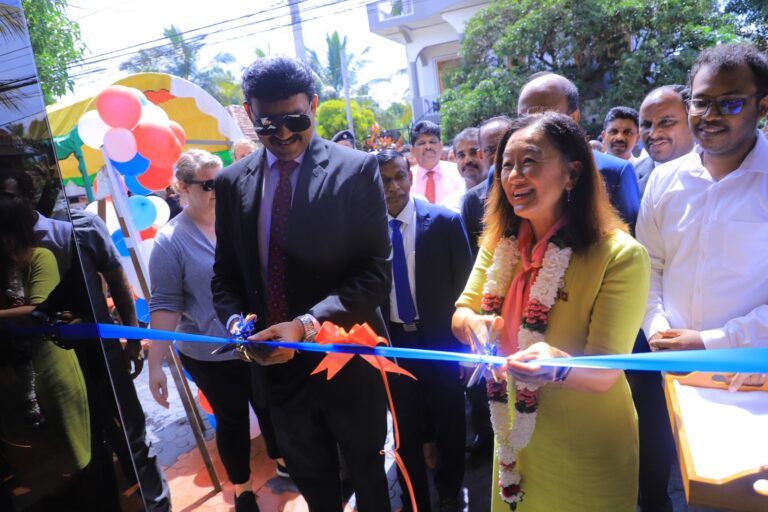
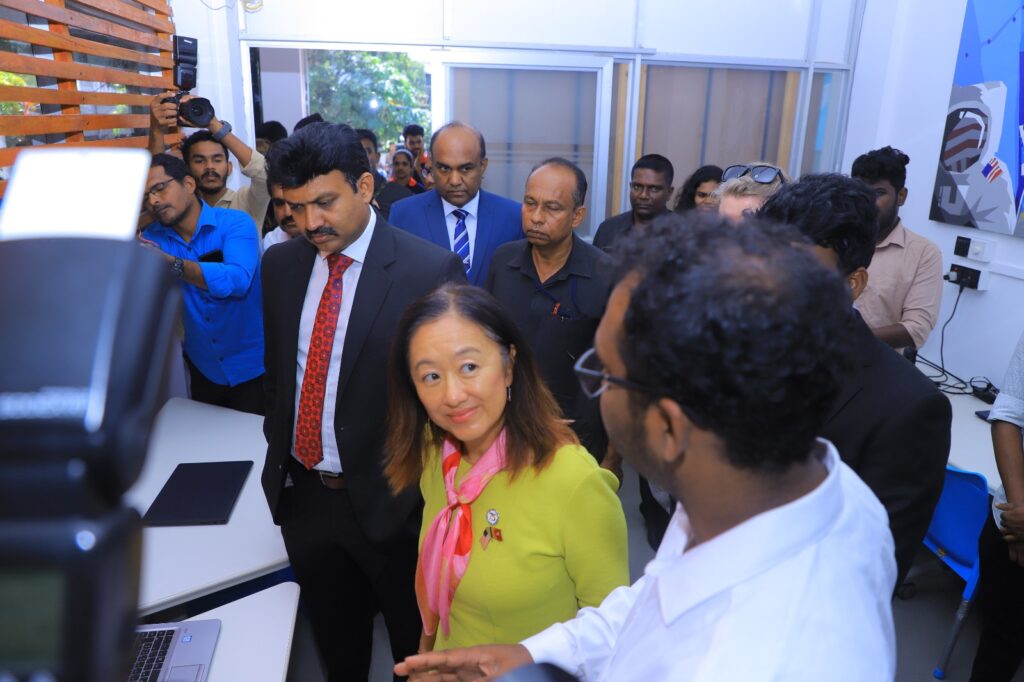
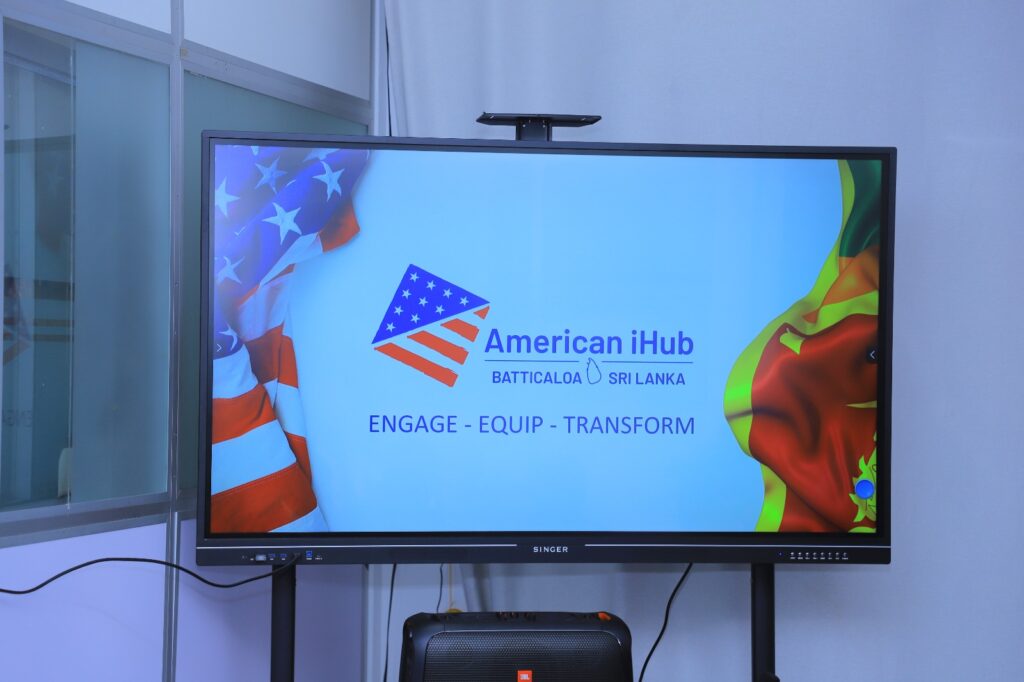
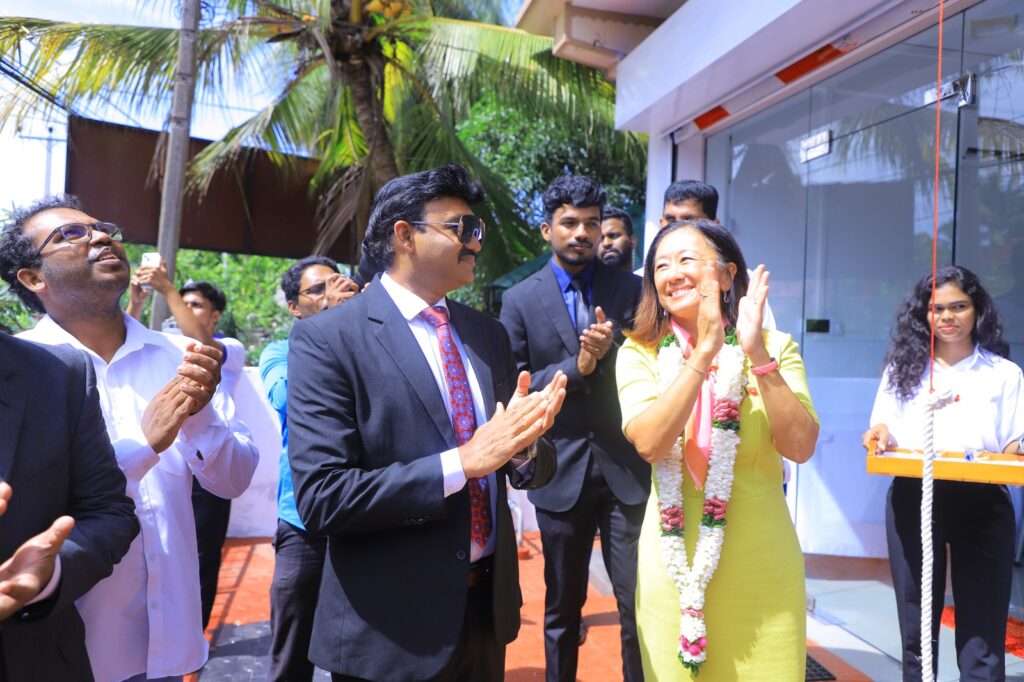
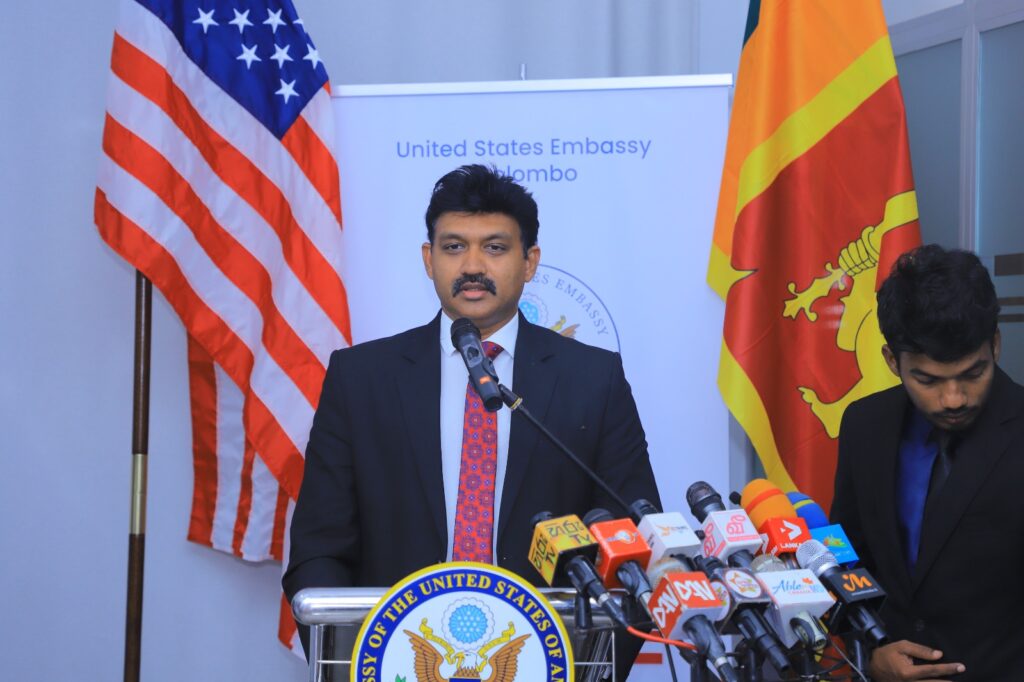
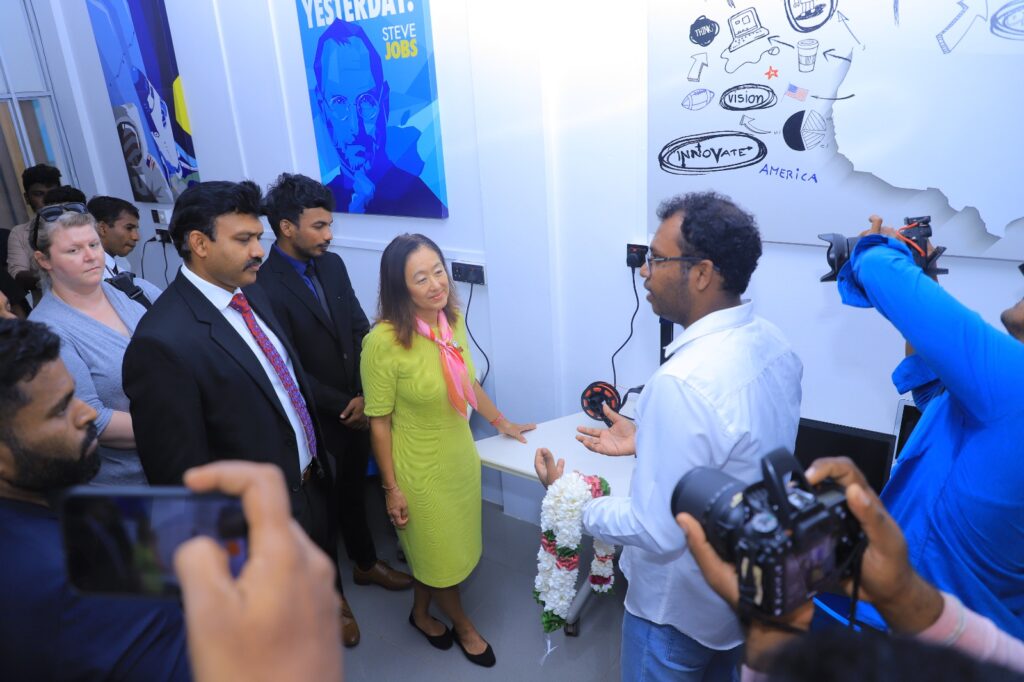
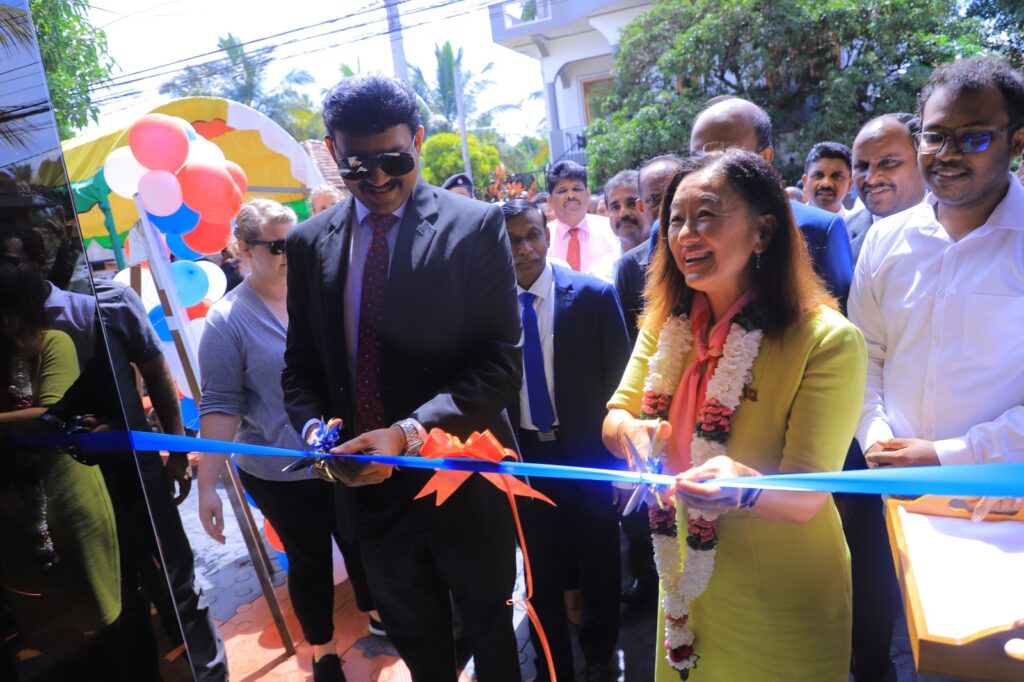
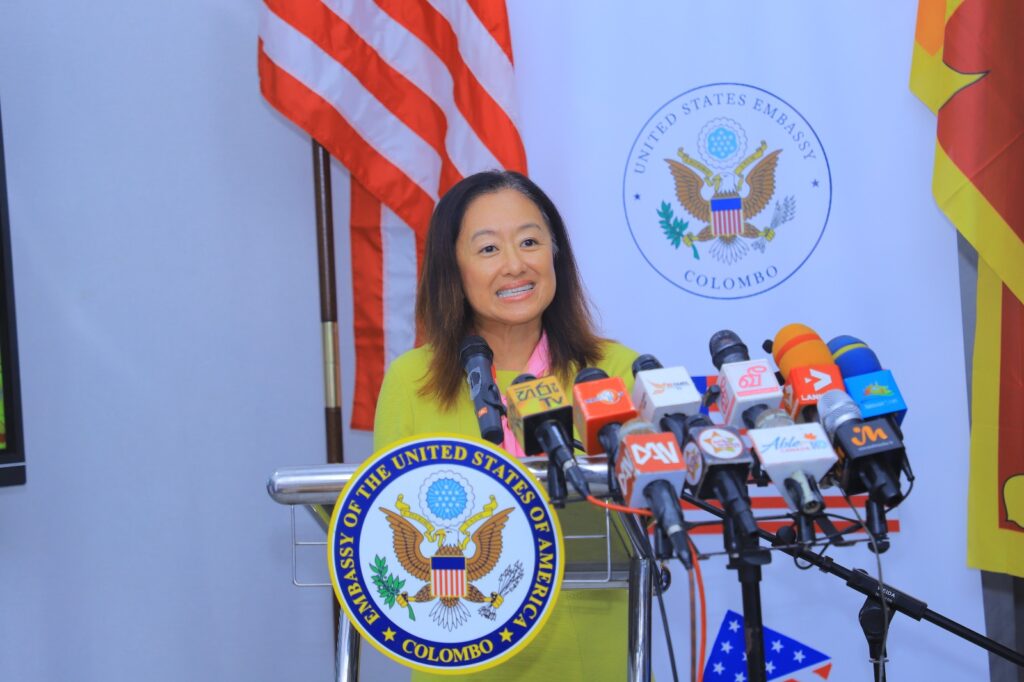
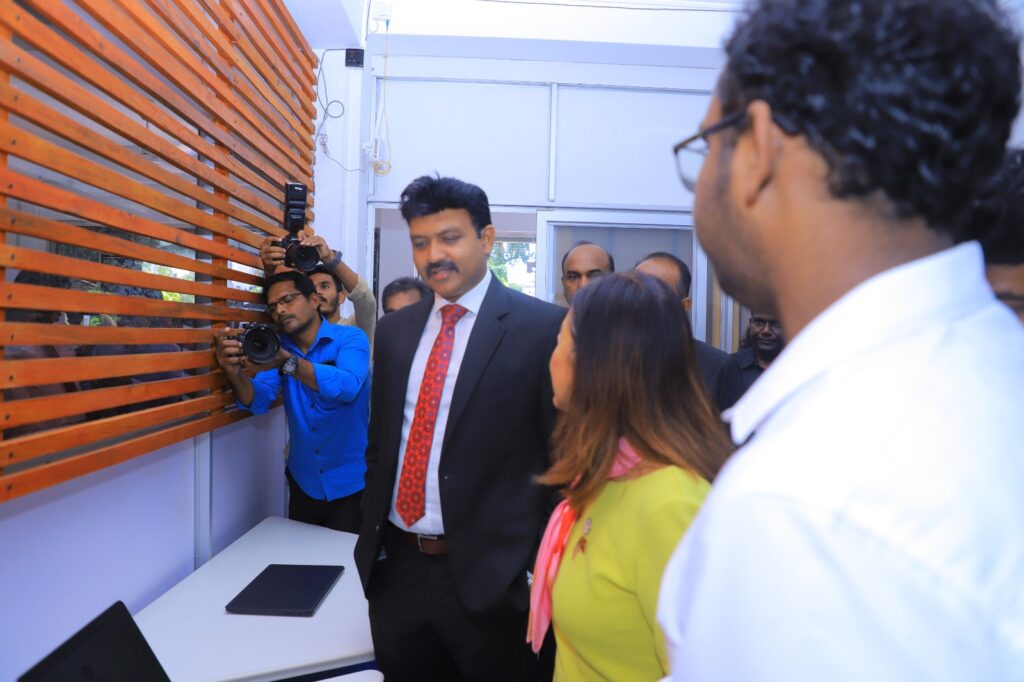
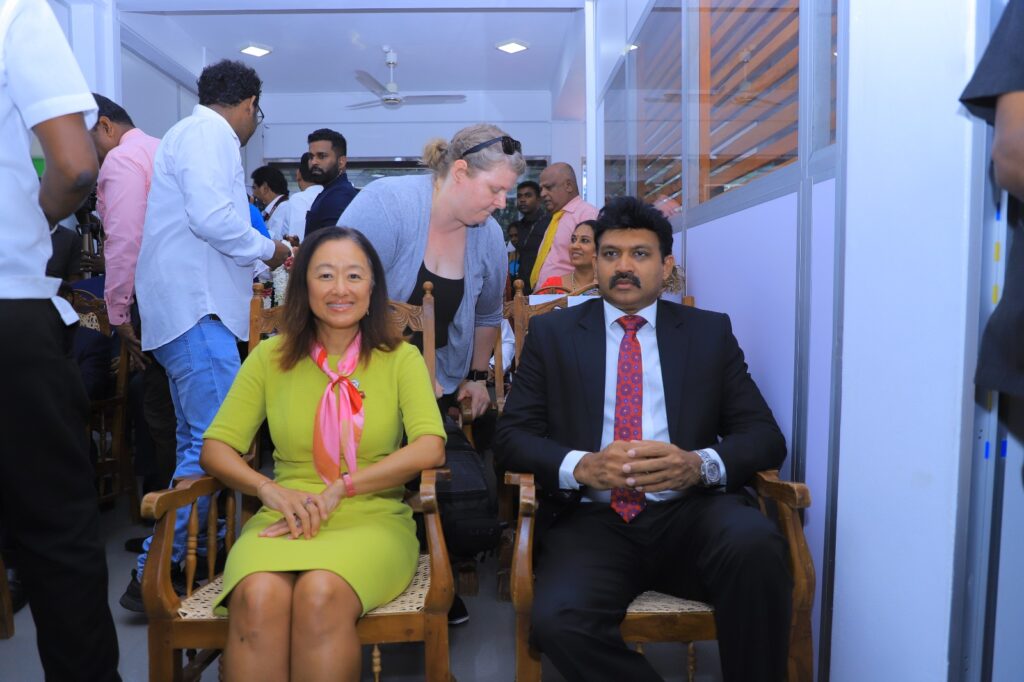
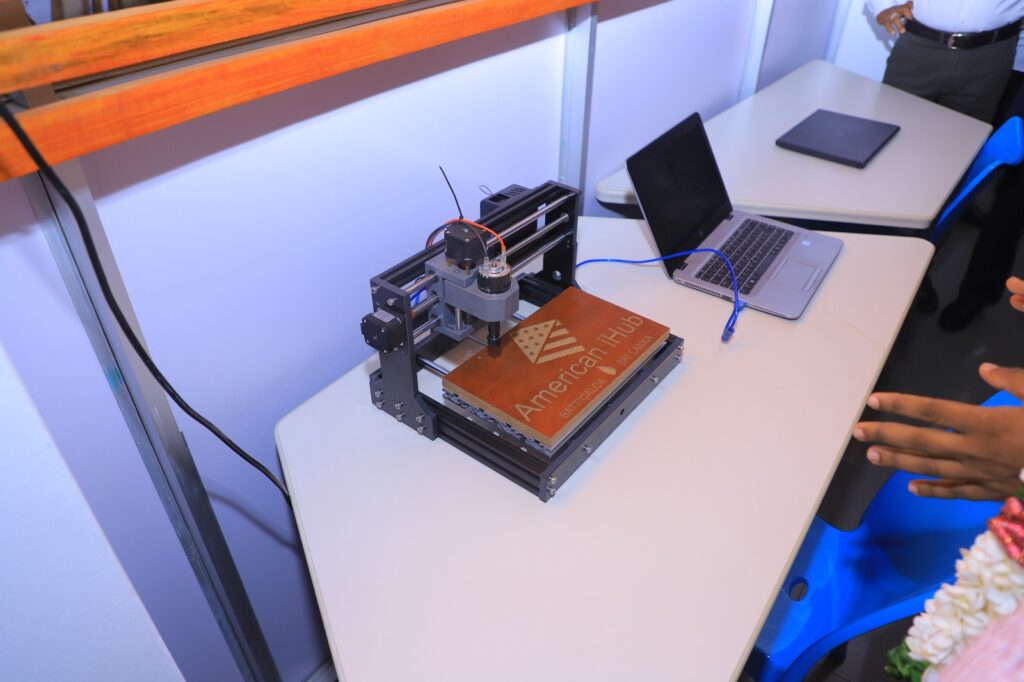
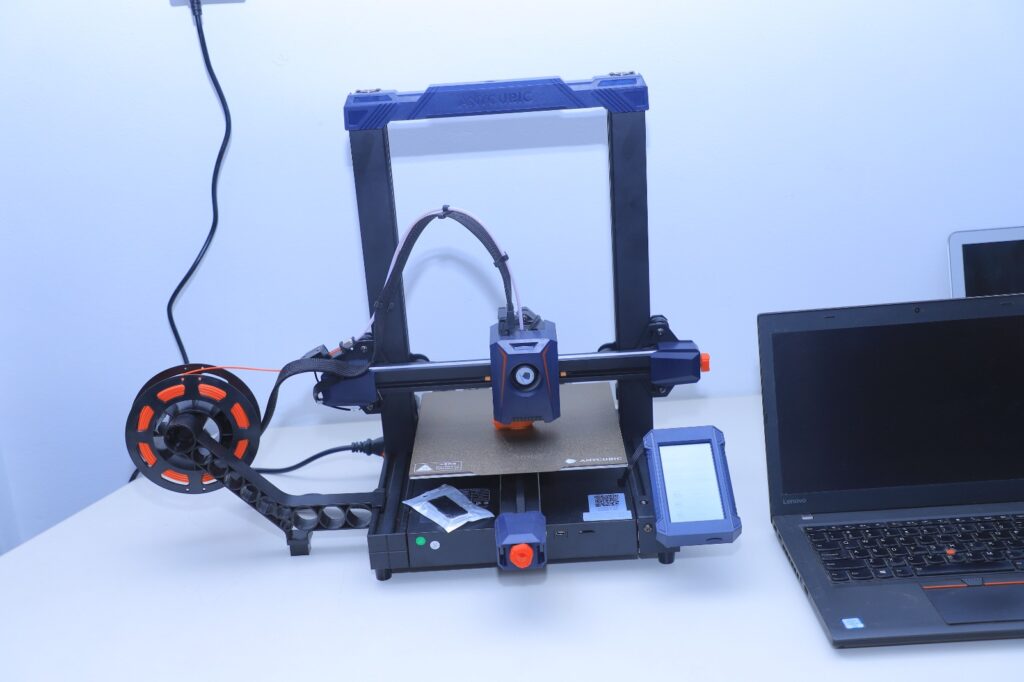
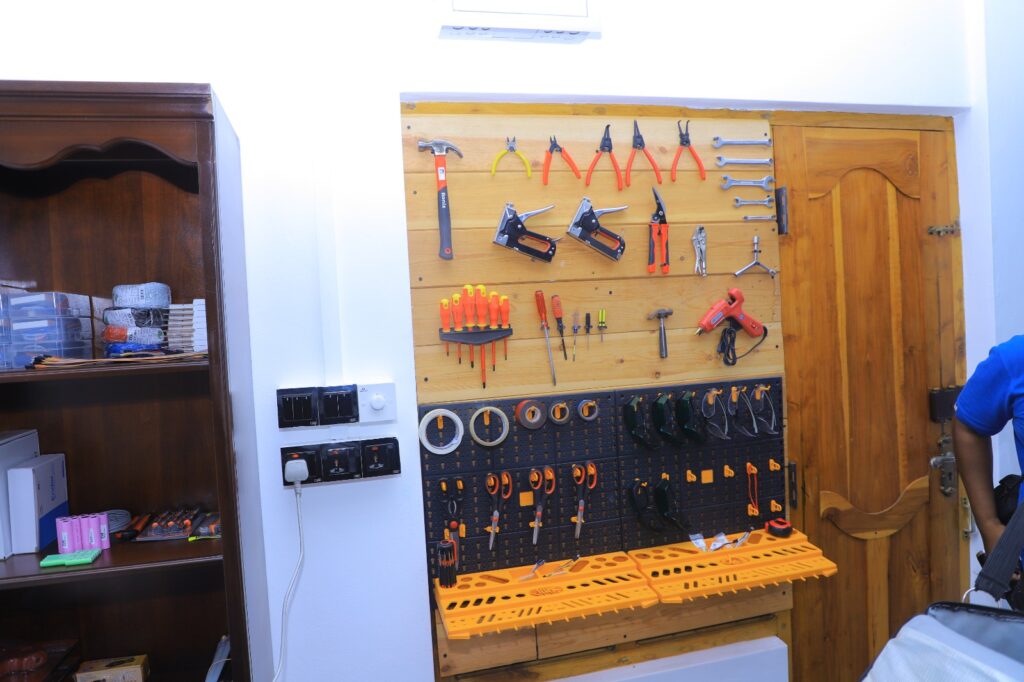
Colombo (LNW): American ihub declared opened by American Ambassador Juli Jang and Senthil Thondaman, Governor of Eastern Province, today (15th) in Kallady, Batticaloa.
Purpose of this event is to centralise several development activities for the school leavers who completed their higher studies for improving their Technical Education Skills and promoting English knowledge. It is specially providing foreign scholarships to the youth.
Officials from American Embassy, Chief Secretary R.M.P.S. Rathnayake , L.P. Madanayake, Secretary to the Governor and other officers attended this event.
Dhammika Perera is preparing to start the ‘DP Silicon Valley IT Office’ to direct the students studying through the DP Education IT campus to the job market.
DP Education, Sri Lanka’s leading digital education provider, held a certificate awarding ceremony for the students who completed the projects of the DP Education IT Campus branch at Nanasaran Education Center, Sri Seethavanarama, Nuwara Eliya, with the participation of over 1200 people on 11th November 2023 at Nuwara Eliya Town Hall. There, a prize was awarded to a winner of the cording competition held in conjunction with the 2023 Children’s Day.
Dhammika Perera, Founder and Chairman of DP Education, Nuwara Eliya Katumana Seethavanarama Viharadhi, President of Susarana Lanka Social Development Foundation, Royal Pandita Darshanapati Venerable Galahitiagoda Sumanarathana Thero and many other dignitaries participated in the certificate awarding ceremony.
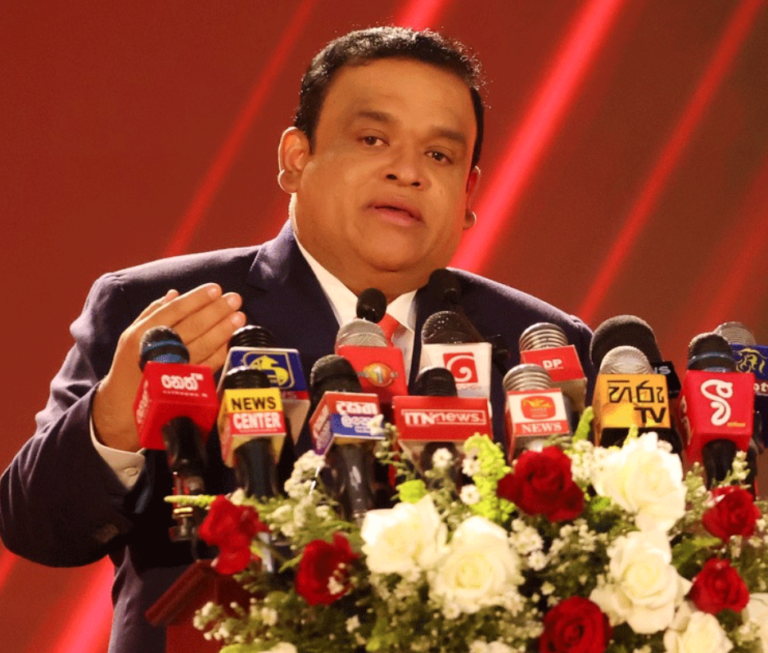
Dhammika Perera, the founder and chairman of DP Education, who delivered the keynote speech, explained the importance of the knowledge gained by the students studying in the DP Education IT campus and said that smart classrooms have already been set up in 675 schools for school development.
Dhammika Perera said that the necessary activities have already been started to bring up the children through digital education. He said that 92 DP Education IT campuses are open all over the island and more than 80,000 students are studying in those campuses, and in addition, more than 125,000 students are studying online. He said that his goal is to provide digital education to one million children and 20% of them are already being educated.
Perera’s speech highlighted the fact that he has already planned to orient the students studying through the DP Education IT Campus to the job market. Accordingly, in the future, DP Education will set up centers called DP Silicon Valley IT Offices in the IT campus centers to provide them with opportunities to work in the job market. He further explained that it can bring foreign exchange to the country.
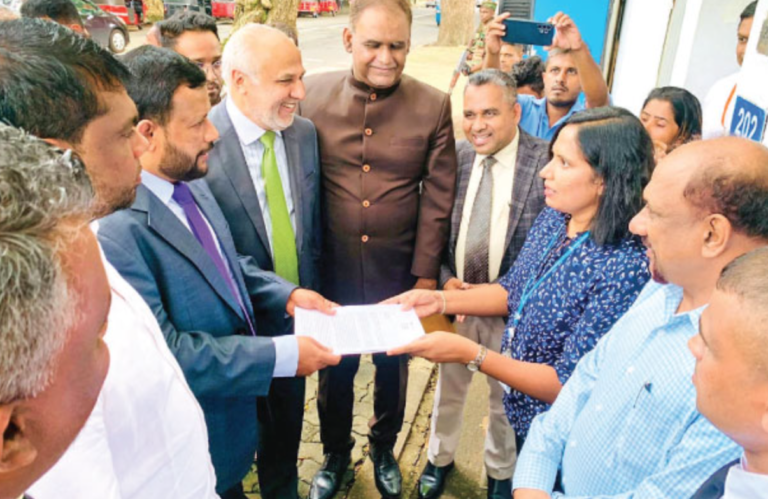
A delegation of 159 Parliamentarians took a significant step in the Palestine issue by submitting a formal letter to the United Nations Office at the UN Headquarters on November 14, marking a pivotal moment in diplomatic efforts.
Following this submission at 11:00 a.m., a duplicate copy was also delivered to the Palestinian Ambassador in Colombo, reinforcing the Parliamentarians’ unified stance on the matter.
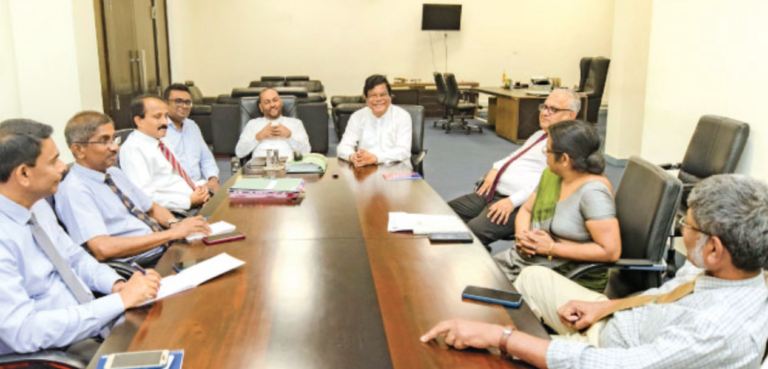
In a pivotal move, the Agriculture Ministry of Sri Lanka sanctioned a groundbreaking initiative proposed by local investors to cultivate strawberries for export purposes. The approval was granted during a discussion held at the Agriculture Ministry, with key participation from Agriculture and Plantation Industries Minister Mahinda Amaraweera and Minister of Transport and Mass Media Dr. Bandula Gunawardhana.
The discussion highlighted the global demand for strawberries, which stands as an untapped opportunity for Sri Lanka. While the country currently ranks 57th among strawberry-exporting nations, the domestic production, often lacking modern technology, hasn’t met international standards. However, the fruit’s popularity and the rising market demand offer a promising avenue for export.
As a first step, the Agriculture Ministry agreed to allocate one hectare of land in Nuwara Eliya for a pilot project. Based on its success, the project could potentially expand to encompass up to ten hectares for strawberry cultivation.
Utilizing cutting-edge technology, the project anticipates significant economic gains. With an estimated income projection of US$117,600 per hectare annually and a potential yield of 120,000 kilograms from the same area, the initiative presents an enticing prospect. The investment required for cultivating one hectare is approximately Rs. 250 million.
Minister Amaraweera emphasized the forthcoming year’s focus on agricultural enhancement. Acknowledging the President’s contribution through the new budget, he underscored the government’s commitment to revolutionizing agriculture by integrating advanced technology.
Janaka Dharmakirthi, Ministry Secretary, was also present during the discussions, signifying the collaborative effort toward this progressive venture.
Colombo (LNW):The proposed removal of Value-Added Tax (VAT) exemptions has raised concerns about the potential application of VAT on power and energy from January of next year.
Prior to the budget, the Cabinet of Ministers approved a 3 percent VAT hike to 18 percent effective from January 1, 2024, and said most of the VAT exemptions would also be removed.
The 2024 budget presented to parliament on Monday said almost all the VAT exemptions barring education, healthcare and food will be removed.
“The VAT rate will be increased up to 18 percent in January 2024 along with elimination of almost all VAT exemptions other than for products relating to health, education, and a few essential foods,” the budget speech said.
As of now, VAT is not applied on power and energy products—meaning on petrol, diesel and electricity.
When queried about the application of VAT on fuel and electricity with the proposed VAT exemption removal, Advisor to the Finance Ministry Deshal de Mel said it was not right for him to comment on it as the 2024 budget is yet to be passed in parliament, and pointed out that changes could occur at the committee stage of passing it.
He said this during a post-budget webinar organized by the Centre for Banking Studies, yesterday.
“Since the exemptions are only for education, health and food items, as mentioned in the budget, I believe VAT will have to be applied on power and energy from the beginning of next year, unless the government decides to make a change before passing the budget,” a tax expert told Mirror Business on the grounds of anonymity.
VAT is a consumption tax levied on goods and services ultimately paid by the end consumer. It is often considered a regressive tax because it tends to have a disproportionate impact on lower-income individuals and households.
According to the 2024 budget estimates, the government plans to raise Rs.2,235 billion from taxes on goods and services, substantially higher from the 2023 estimate of Rs.1,376 billion.
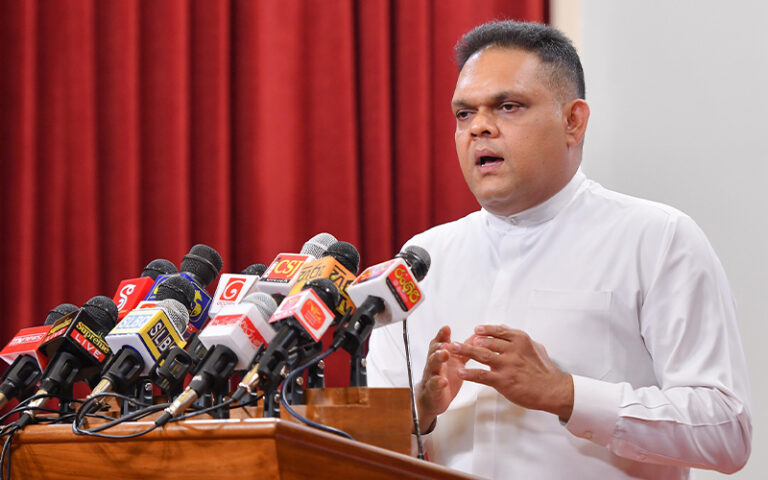
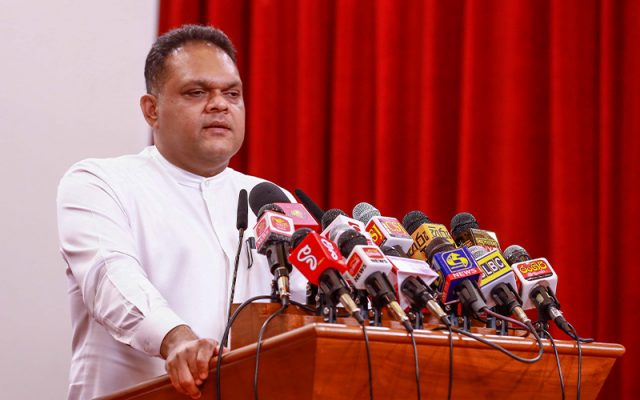
In a recent press briefing at the Presidential Media Centre, State Minister of Finance, Shehan Semasinghe, unveiled Sri Lanka’s projected economic growth for 2024, anticipated at 1.8%. Emphasizing the government’s commitment to a robust economy, he outlined a focus on bolstering small and medium enterprises (SMEs) as a pivotal component of this strategy.
The Minister highlighted the upcoming budget’s priorities, addressing the needs of government employees, impoverished families, and the vulnerable. This budget also places significant emphasis on SME upliftment, reflecting a dedication to inclusive economic growth.
Reflecting on the challenges faced in 2023 due to a severe economic recession, Minister Semasinghe lauded President Ranil Wickremesinghe’s leadership in navigating this difficult period. The government’s strategic approach, contrary to populist measures, aimed at stabilizing the nation’s economic foundations.
Key economic targets for the fiscal year 2024 were outlined, focusing on reducing the budget deficit and optimizing domestic debt. The budget strategy aims to diminish debt burden, reduce financial requirements, and streamline foreign debt servicing, all crucial aspects for sustainable economic recovery.
The Minister stressed the government’s proactive stance in providing targeted stimulus to reignite the economy, addressing concerns raised by various stakeholders. Strategies such as domestic debt optimization and bilateral foreign debt restructuring were highlighted as pivotal in securing the nation’s economic stability and potential IMF support.
A strategic allocation of funds was earmarked for SME rehabilitation, demonstrating a commitment to bolstering this sector. Additionally, initiatives for land rights, educational reforms, and support for SMEs form essential pillars of this economic roadmap.
Despite opposition to certain budgetary decisions, the Minister reaffirmed the government’s commitment to prudent economic management and sustainable policies. The focus remains on responsible economic governance to prevent undue pressure on the nation’s finances.
Minister Semasinghe underscored the need for a robust revenue collection system, particularly through enhanced income tax collection, as pivotal for Sri Lanka’s economic stability. He emphasized that effective implementation of these programs could avert future economic crises and pave the way for sustained economic growth.
The wave of Artificial Intelligence (AI) is swiftly reshaping industries, from agriculture to healthcare, propelling a transformative wave across the economic landscape. This paradigm shift has spotlighted the critical notion of “AI readiness,” recognizing its potential to elevate public services and enhance efficiencies in diverse sectors.
In a significant move, the Sri Lankan government has taken proactive steps by appointing a dedicated committee, operating under the Presidential Secretariat, to steer the country’s AI strategy. Joining this endeavor, the United Nations Development Programme (UNDP) Sri Lanka has initiated the AI Readiness Assessment (AIRA), a crucial step in shaping the nation’s AI trajectory.
AIRA comprises a comprehensive survey within the public sector and Key Informant Interviews engaging various non-governmental sectors, including academia, development partners, and the private sector. Recently, a mission led by UNDP’s Chief Digital Office undertook interviews and orchestrated a workshop involving over 80 public sector officials, kickstarting the survey component of AIRA in Sri Lanka.
Emphasizing the significance of this assessment, Technology State Minister Kanaka Herath highlighted its role in establishing a robust National AI Strategy. Meanwhile, UNDP Sri Lanka’s Deputy Resident Representative, Malin Herwig, underscored AI’s potential to enhance public services, foster economic growth, and generate employment, underscoring the need for preparation and ethical utilization of AI.
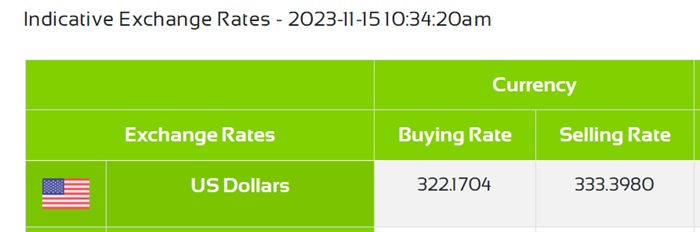
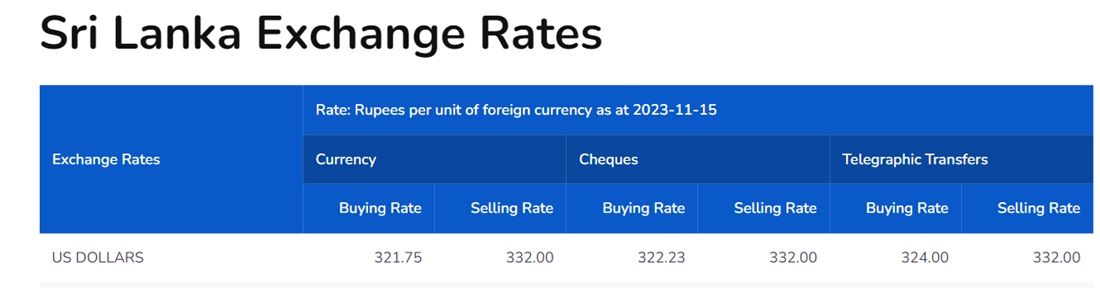
Today (Nov 15), the Sri Lankan Rupee experienced a decline against the US Dollar in various commercial banks across Sri Lanka, reflecting a change compared to Tuesday’s rates.
At Peoples Bank, the buying and selling rates for the US Dollar surged from Rs. 321.43 to Rs. 322.17 for buying and from Rs. 332.63 to Rs. 333.39 for selling.
Commercial Bank reported an increase in the buying rate of the US Dollar from Rs. 320.76 to Rs. 321.75, while the selling rate rose from Rs. 331 to Rs. 332.
Meanwhile, at Sampath Bank, the buying and selling rates for the US Dollar climbed from Rs. 322 to Rs. 323 for buying and from Rs. 332 to Rs. 333 for selling.
Colombo (LNW): The Government has anticipated economic growth of 1.8 percent for the year 2024 with the finance ministry’s commitment to fostering a robust economy during this period. State Minister of Finance, Shehan Semasinghe said
Addressing a press briefing at the Presidential Media Centre (PMC) on Tuesday (Nov.14), the lawmaker has emphasized that the ministry has given priority to the advancement of small and medium enterprises as part of this overarching objective.
The state minister further highlighted that the recently announced budget for the upcoming year places particular emphasis on addressing the needs of government employees, and impoverished and economically vulnerable families.
Additionally, a special focus has been directed towards uplifting small and medium enterprises.
Semasinghe also provided insights during the discussion, noting that the budget unveiled for the fiscal year 2023, following President Ranil Wickremesinghe’s appointment as the Minister of Finance, stands as one of the most formidable budgets in the nation’s history.
“Faced with the daunting backdrop of a severe economic recession prevailing up to 2022, the circumstances for presenting a budget in 2023 were notably challenging.
“Nevertheless, under the leadership of President Ranil Wickremesinghe, the government rose to the occasion and accepted this formidable challenge.
Building upon the stability achieved, the Government is now successfully implementing the government program for the year 2024, propelling towards the envisioned economic objectives.
“Presently, the government’s focus lies on meeting the primary requisites of state revenue amounting to Rs. 4,127 billion, managing state expenditures totaling Rs. 6,978 billion, and addressing a budget deficit of Rs. 2,851 billion.
“Aligned with the objectives outlined in this year’s budget, the government is diligently pursuing key targets as elucidated in the domestic debt optimization program.
The 2024 budget is crafted with a strategic focus on alleviating the debt burden, aiming to reduce it from 128% to 95%.
Concurrently, efforts are directed towards diminishing the financial requirement from 34.6% to 13% and curtailing foreign debt servicing from the current 9.4% to 4.5%.
“In response to the prevailing economic challenges, the government’s approach involves providing essential stimulus to reinvigorate the economy.
This involves targeted measures in areas that have garnered attention and commentary from various stakeholders over the past few months.
The commitment lies in addressing the economic crisis by proactively responding to identified concerns and fostering sustainable economic recovery.
“An integral focus to the priorities has been the domestic debt optimization, recognizing its pivotal role in achieving sustainable credit practices.
The successful conclusion of the domestic debt optimization program has laid the groundwork for the on-going efforts in bilateral foreign debt restructuring.
As we navigate this process, we hold the expectation that these strategic initiatives will pave the way for securing the second instalment from the International Monetary Fund (IMF).
Health sector sources say shortage of medical specialists, which was around 400 in the first few months of this year, has now increased to approximately 800: shortage due to several factors including medical specialists leaving the country and joining the private sector & universities.
Supreme Court in a 4-1 majority ruling, determines that former President Gotabaya Rajapaksa, former Finance Ministers Mahinda Rajapaksa & Basil Rajapaksa, former CB Governors Ajith Nivard Cabraal & Professor W D Lakshman, former Secretary to the Ministry of Finance S R Attygalle, former Secretary to the President Dr P B Jayasundara & the Monetary Board Members had violated public trust and breached Article 12 (1) of the Constitution, in their administration of the economy, leading to the economic crisis in the country: particularly faults the leadership for the reduction of taxes in 2019 and not seeking IMF assistance earlier.
SJB MP Rajitha Senaratne says the 2024 Budget is a “UNP budget”: also says what is important is the proper implementation of the budget proposals.
Supreme Court dismisses 2 contempt cases against Secretary to the Treasury Mahinda Siriwardana filed by SJB General Secretary Ranjith Madduma Bandara & NPP MP Vijitha Herath, alleging non-compliance with an SC order related to Local Govt elections.
Minister of Justice Wijeyadasa Rajapakshe says those who are not fit to be MPs can be removed once the proposed Parliament Standards Bill is enacted: promises to present the Bill to Parliament after PM Dinesh Gunawardene speaks to party leaders on this.
US-funded think-tank Verité Research’s Executive Director Dr Nishan de Mel describes the Budget 2024 as another “fairytale” with promises of revenue that lack grounding in reality: urges private sector to take the lead in professionalising tax compliance, budgeting and planning processes.
Geological Survey and Mines Bureau says a Magnitude 6.1 earthquake had occurred 800km southeast of Sri Lanka in the Indian Ocean at a depth of 10km: confirms there is no danger to SL.
Chairman of SL Cricket Selection Committee Pramodya Wickramasinghe points fingers at certain individuals vying for power in the SL Cricket Board, brokers involved in match-fixing & those attempting to secure spots in the National team, as being the reasons for the challenges faced by SL Cricket: asserts there is a multi-faceted conspiracy operating at various levels for a long time.
Court of Appeal President Justice Nissanka Bandula Karunaratne, who was at the centre of the controversy surrounding the issuing of an interim order against Sri Lanka Cricket’s Interim Committee appointed by the Sports Minister, recuses himself from hearing the case.
COPE Chairman Ranjith Bandara rebukes SL Cricket for following weak processes in performing its activities which have led to the current crisis in Cricket.