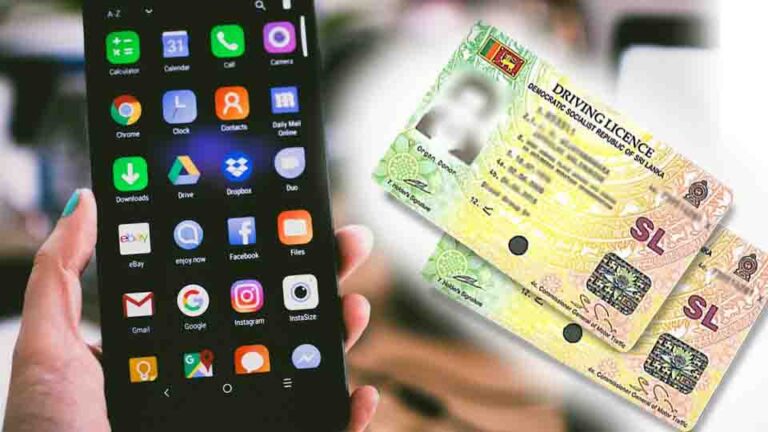
Commissioner General of the Department of Motor Traffic Nishantha Weerasinghe revealed discussions are underway to introduce driver’s licence to mobile phones.
Accordingly, the introduction of a digital driver’s licence generated for mobile phones is currently under discussion, he told the media.
Revealing that there was a backlog of over four hundred thousand driver’s licences for which cards have to be printed and issued, Weerasinghe added that the introduction of a digital licence will ease the process and one will not simply have to require licence cards unless requested by the driver.
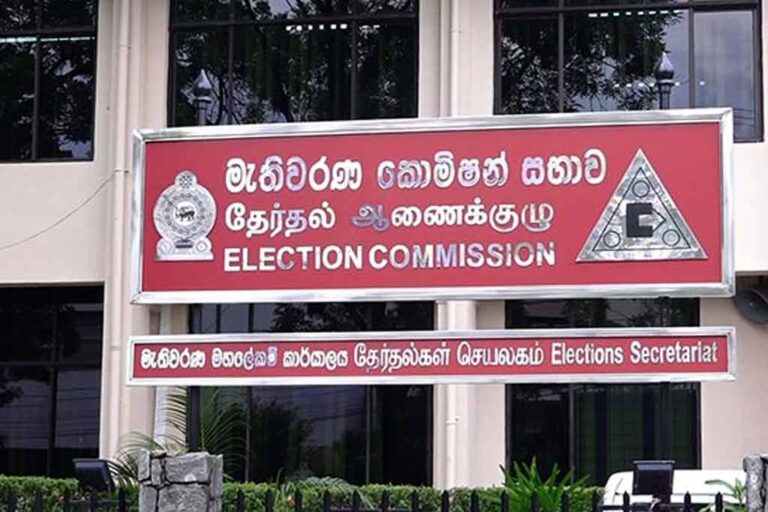
Elections Commission Member P S M Charles has reportedly tendered her resignation to President Wickremesinghe.
The announcement of her resignation comes in following endless speculations inbound of deep divisions within the Commission over several issues including the holding of the Local Government Election.
Despite the reported resignation, ex Commission Chief Mahinda Deshapriya leaving a social media remark claimed that it will not affect the operations of the Election Commission, stressing that the Local Government Election, therefore, can be held on March 09 as planned without an obstacle.
He added, however, that a court injunction, a bill passed in by the Legislature and approved by the Judiciary, or a decision taken by the Commission itself in compliance with the powers vested in it may contribute to any event of a postponement.
Showers or thundershowers will occur at several places in Western and Sabaragamuwa provinces and in Kandy, Nuwara-Eliya, Galle and Matara districts during the afternoon or night, and several spells of light showers are likely in Eastern and Uva provinces and in Hambantota and Polonnaruwa districts, the Department of Meteorology said in a statement today (26).
General public is kindly requested to take adequate precautions to minimise damages caused by temporary localised strong winds and lightning during thundershowers.
Marine Weather:
Condition of Rain:
Showers or thunder showers will occur at several places in the sea areas off the coast extending from Hambantota to Trincomalee via Pottuvil during the afternoon or night.
Winds:
Winds will be north-easterly and wind speed will be (20-30) kmph. Wind speed may increase up to 40 kmph at times over the sea areas off the cost extending from Colombo to Kankasanthurai via Puttalam and Mannar, and from Pottuvil to Matara via Hambanthota.
State of Sea:
Sea areas off the coast extending from Colombo to Kankasanthurai via Puttalam and Mannar, and from Pottuvil to Matara via Hambanthota will be fairly rough at times. The other sea areas around the island will be slight. Temporarily strong gusty winds and very rough seas can be expected during thundershowers.
The Republic of Italy has expressed its willingness to help Sri Lanka by supplying helicopters for anti-human trafficking measures taken by the Government of Sri Lanka.
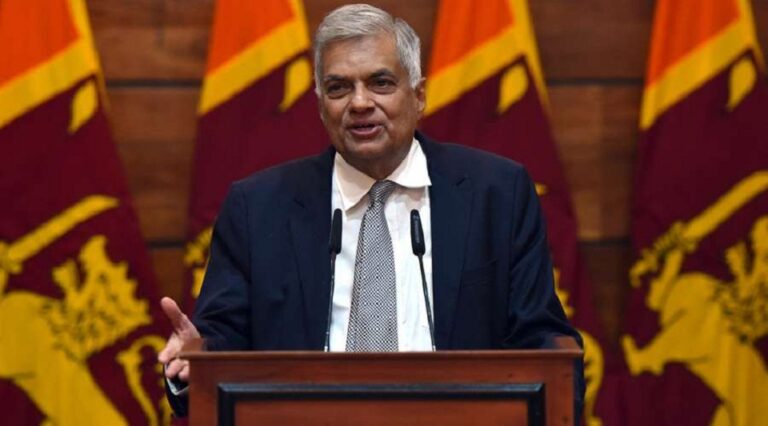
Her Excellency the Italian Ambassador Rita Giuliana Mannella revealed this during a meeting with President Wickremesinghe January (25) at the Presidential Secretariat.
The duo discussed the strengthening of the partnership between Italy and Sri Lanka and special attention was paid to cultural exchanges, tourism enhancement, possible investments, defence aspects, and on how Italy can help Sri Lanka during these challenging times.
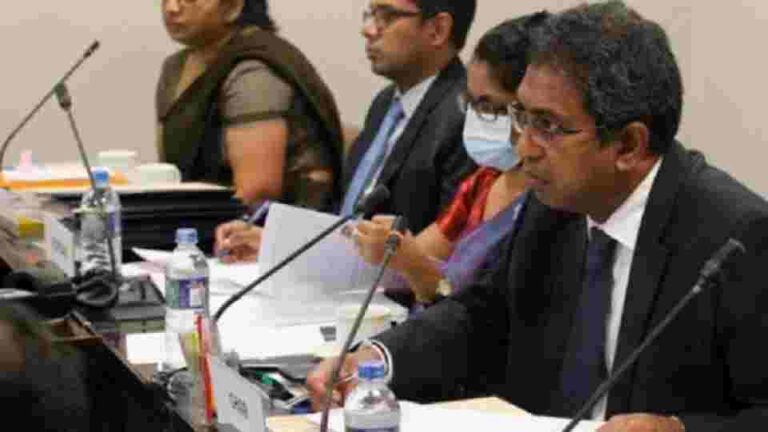
The Committee on Public Finance (CoPF) chaired by MP (Dr.) Harsha De Silva, three days ago (23) stressed that the aim of the committee regardless of allegiances will be to stand by the reforms promulgated by the International Monetary Fund (IMF) and being executed by the Central Bank of Sri Lanka (CBSL).
This comes in the wake of a CBSL confirmation that they are confident of having an actual IMF first tranche disbursement within the 1 st Quarter of 2023. CoPF queried the severe social implications of such steep mechanisms to adhere to IMF conditions.
The CBSL responded by confirming that the IMF are wary about the social impact to vulnerable communities and has invoked certain safeguards such as expenditure ceilings to negate those effects.
When queried as to the adverse effects of market contraction due to the stifling interest rates, the CBSL acknowledged that those measures have been taken to limit growth in order to prevent the need for greater foreign exchange given the dwindling amount currently in the country. They went on to reiterate that with a cash infusion via the Extended Fund Facility (EFF) from IMF, interest rates can once again be relaxed, and the market will once again have an opportunity to expand. When the question of alternatives to an IMF bailout were reached, the CB stressed that no other international financing/funding institute is willing to partner with Sri Lanka on its debt management unless they see an IMF partnership materialise first. With the ostensible debt treatment measures that an IMF program accompanies, it reassures international agencies of Sri Lanka’s credibility to once more partner with the country for future ventures including debt management. This is why the CBSL stresses that it is imperative for Sri Lanka to lock in the bailout.
State Minister Suren Raghavan, MPs Anura Priyadarshana Yapa, Rauf Hakeem, Chandima Weerakkodi, Harshana Rajakaruna, Vijitha Herath, Mayantha Dissanayake and Madhura Withanage were present at this committee meeting.
An All-Party Conference is scheduled to be held today (26) at 4.00 pm at the Presidential Secretariat with the participation of all party leaders representing the Parliament, under the patronage of Hon President Ranil Wickremesinghe. The purpose of this conference is to come to a consensus and strengthen national harmony.
The Speaker, the Prime Minister, the Leader of the Opposition, as well as former Presidents Mahinda Rajapaksa and Maithripala Sirisena, Tamil National Alliance Leader R. Sampanthan, National People’s Force Leader Anura Kumara Dissanayake, and all party leaders representing Parliament, have been invited.
Following Hon. President Ranil Wickremesinghe’s appointment as President, a meeting of party leaders was called on December 13, where the program to improve national harmony was discussed. During this meeting of party leaders, it is expected to discuss these issues further and reach an agreement among them.
Pivithuru Hela Urumaya leader Udaya Gammanpila proposes payment of wages on a weekly basis for public and private sector workers: claims it would help the cash-strapped govt and private sector to cope up with the continuing economic crisis.
CB Governor Dr Nandalal Weerasinghe says the Central Bank prevented the contraction of the economy by hiking interest rates: analysts contradict the Governor and say it’s universally acknowledged that interest rates are lowered to stimulate growth and increased to curtail growth.
CB Governor Dr Nandalal Weerasinghe says Sri Lanka suppressed interest rates for 2 years by “printing” large volumes of money before he took office: CB data shows in the first 269 days of Weerasinghe’s tenure upto 31Dec’22, “money printing” by the CB had been Rs.868 bn at an average of Rs.3.2 bn per day, which is 45% higher than during the tenures of his 2 immediate predecessors.
Ven. Thiniyawela Palitha Thera withdraws private plaint filed by him against former CB Governor Ajith Nivard Cabraal in the Fort Magistrate’s Court: Fort Magistrate Thilina Gamage dismisses case.
China’s Exim Bank offers a 2-year “moratorium” on its loans to Sri Lanka: India also had previously agreed to a “maturity extension” of its loans to Sri Lanka: no mention of agreement to suffer any “haircuts” on its loans: analysts point out that IMF’s requirement of “Debt Sustainability” will not be possible without substantial haircuts by both bilateral and private creditors.
Motor Traffic Department says a method of issuing the driving licence to the mobile phone, is being formulated.
Armed gang robs an ATM of a private bank in Gampola by threatening the security officer at gunpoint.
Newly constituted Constitutional Council meets for the first time, presided by Speaker Mahinda Yapa Abeywardana: PM Dinesh Gunawardena and Opposition Leader Sajith Premadasa also participate.
Elections Commission Member Ms. P S M Charles tenders resignation to the President: rumors abound of deep divisions within the EC over several issues including the holding of the LG Election.
Health Ministry admits the country’s health care system is facing a severe shortage of over 140 essential medicines, including 43 “cancer” drugs: Health Secretary Janaka Chandragupta says purchase orders have been placed for the medicines that are in short supply.
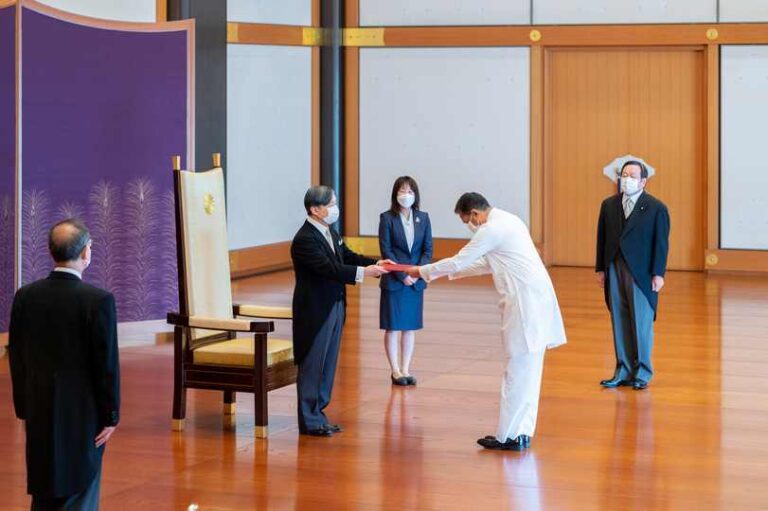
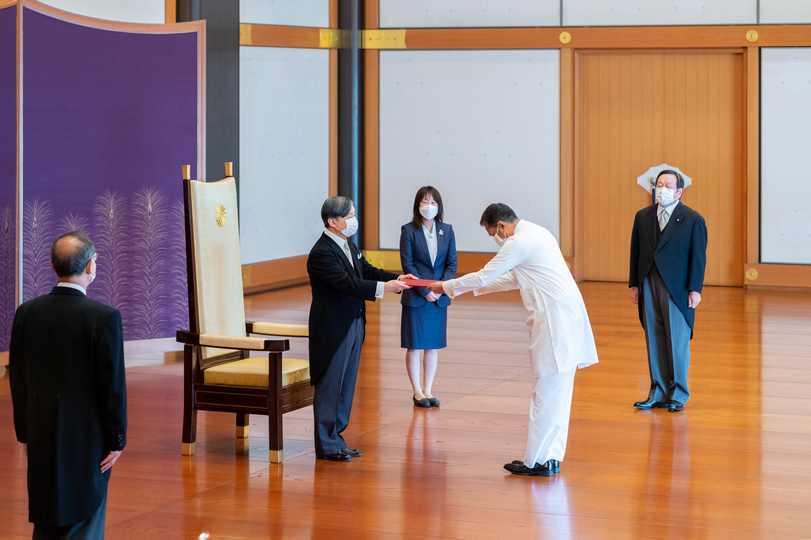
Newly appointed Ambassador of Sri Lanka to Japan E. Rodney M. Perera presented the Letters of Credence to His Majesty Naruhito at the Imperial Palace in Tokyo on 19 January 2023. The Credentials Presentation Ceremony is one of the most solemn and formal ceremonies held by His Majesty the Emperor of Japan.
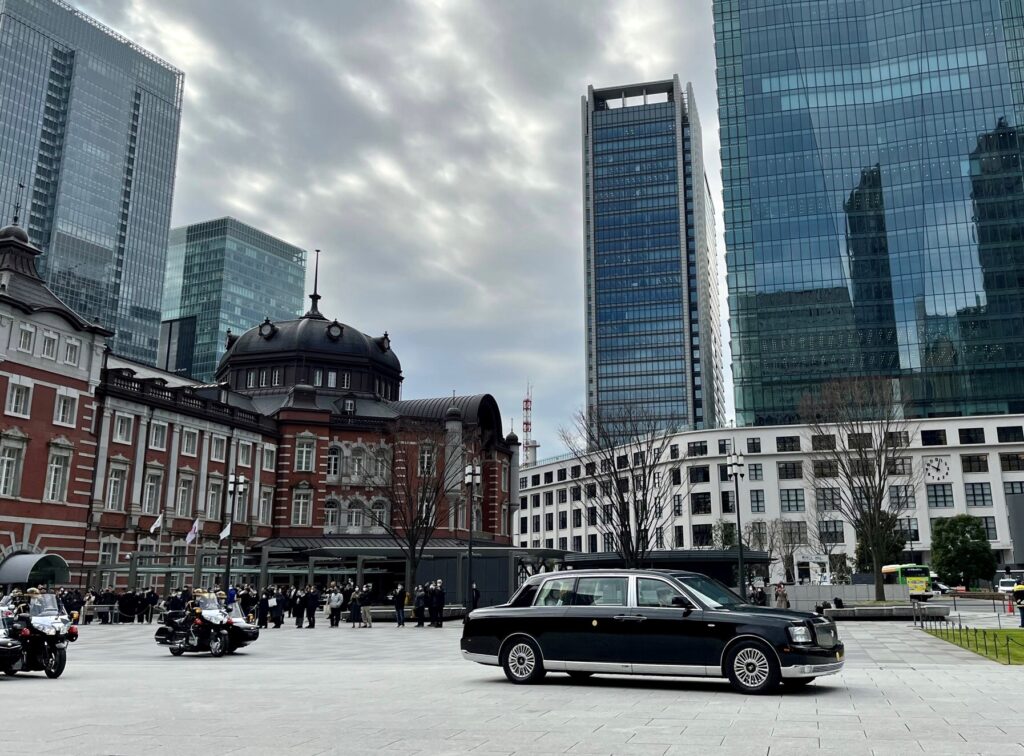
Escorted by the Master of Ceremonies of the Imperial Household Agency, Ambassador Perera was driven in a custom-built limousine courtesy of His Majesty from the historic Tokyo Station to the Imperial Palace.
At the outset of the formal occasion, His Majesty the Emperor conveyed warm greetings and best wishes to President Ranil Wickremasinghe and the Sri Lankan people which was warmly acknowledged by Ambassador Perera. After the formal presentation of his credentials in the presence of the Minister of Defense Yasukazu Hamada representing the Prime Minister and the Government of Japan, Ambassador Perera was afforded the opportunity to engage in an informal conversation with His Majesty Naruhito.
Ambassador Perera joined the Sri Lanka Foreign Service in 1988 and brings with him four decades of professional education, research, global travel, speaking opportunities, and interactions concerning Sri Lanka’s relations with the rest of the world. Ambassador Perera is an alumnus of St. Joseph’s College of Colombo, and has a Bachelor of Business Administration in Management Information Systems, a Master of Arts Degree in International Studies from Columbia University in New York. He has also completed specialized study programs at reputed institutions in Sri Lanka and in other countries, including, Harvard University and the National Defence University in Washington DC.
Ambassador Perera’s first overseas diplomatic assignment was at the Embassy of Sri Lanka in Tokyo as Second Secretary from 1989 to 1992. Thereafter, he served as First Secretary of Sri Lanka’s Permanent Mission to the United Nations in New York; Acting High Commissioner of the Sri Lanka High Commission in Nairobi, Kenya (concurrently accredited to UN environment and housing agencies).He was Sri Lanka’s Ambassador in Italy (concurrently accredited to Cyprus, Greece and Malta along with Rome-based UN Agencies in food and agriculture), Norway, Belgium (concurrently accredited to Luxembourg), and the European Union and Sri Lanka’s Ambassador to the United States of America in Washington D.C. until the end of 2020.
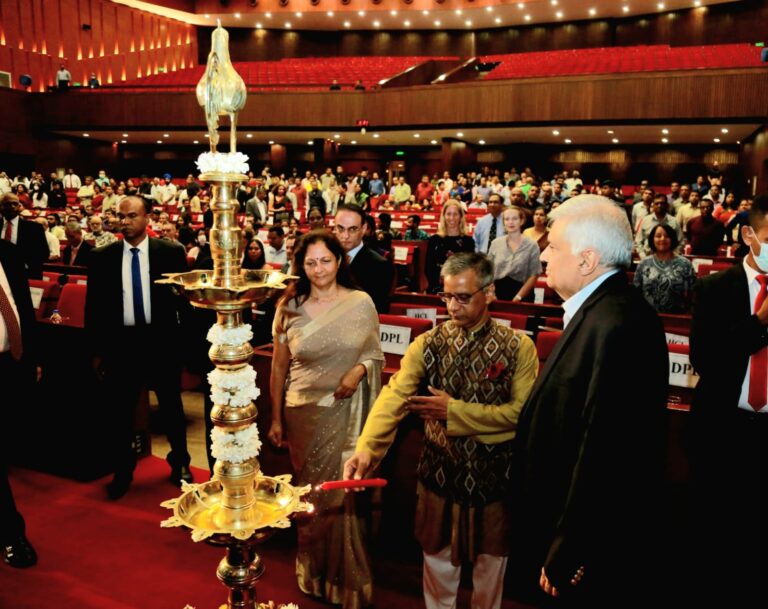
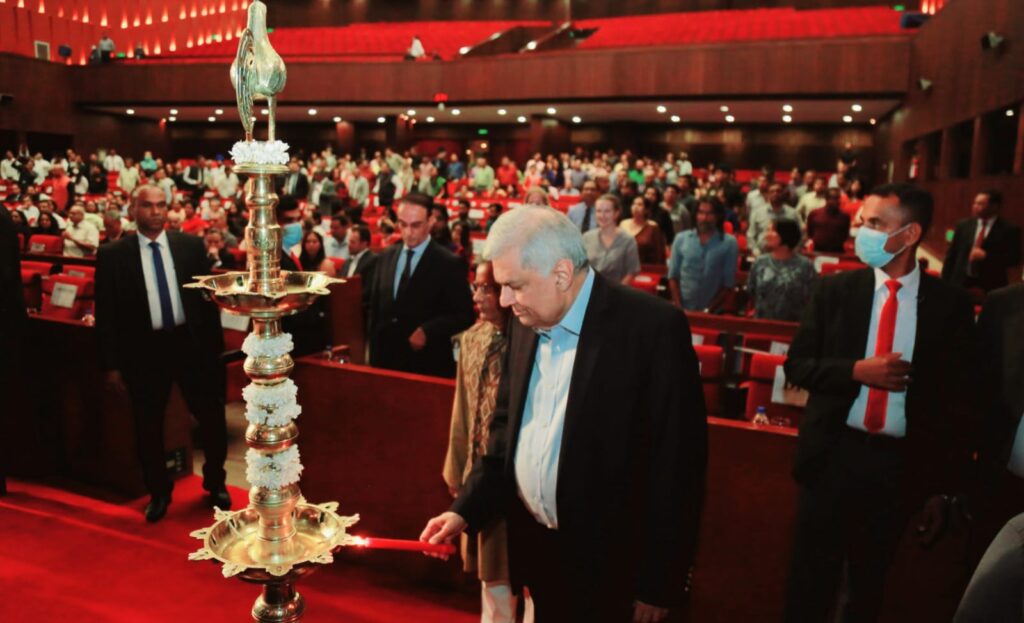
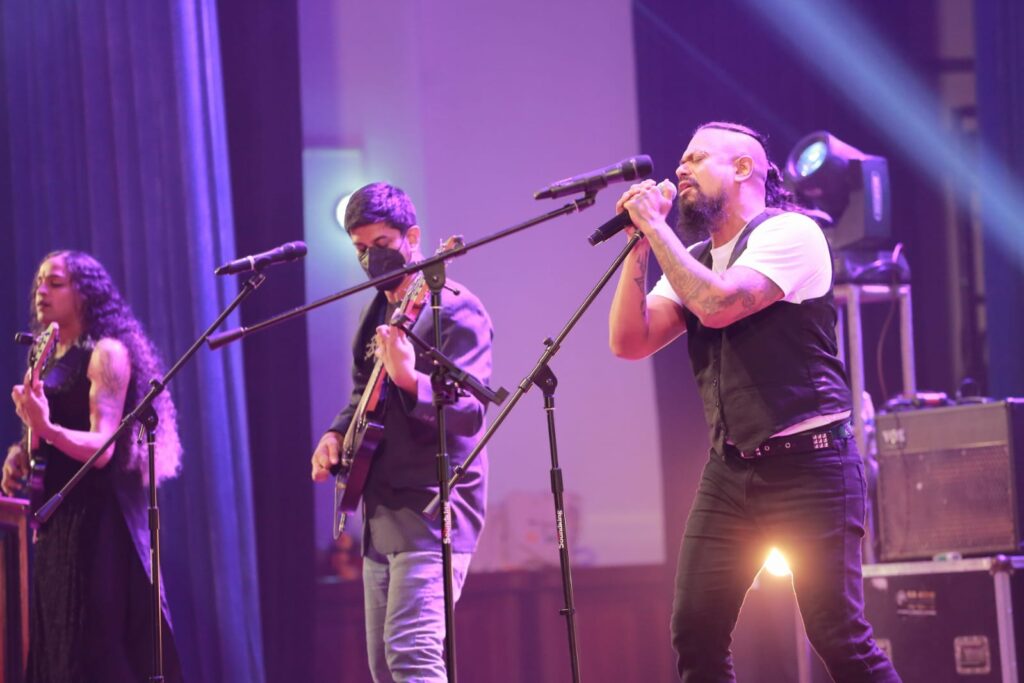
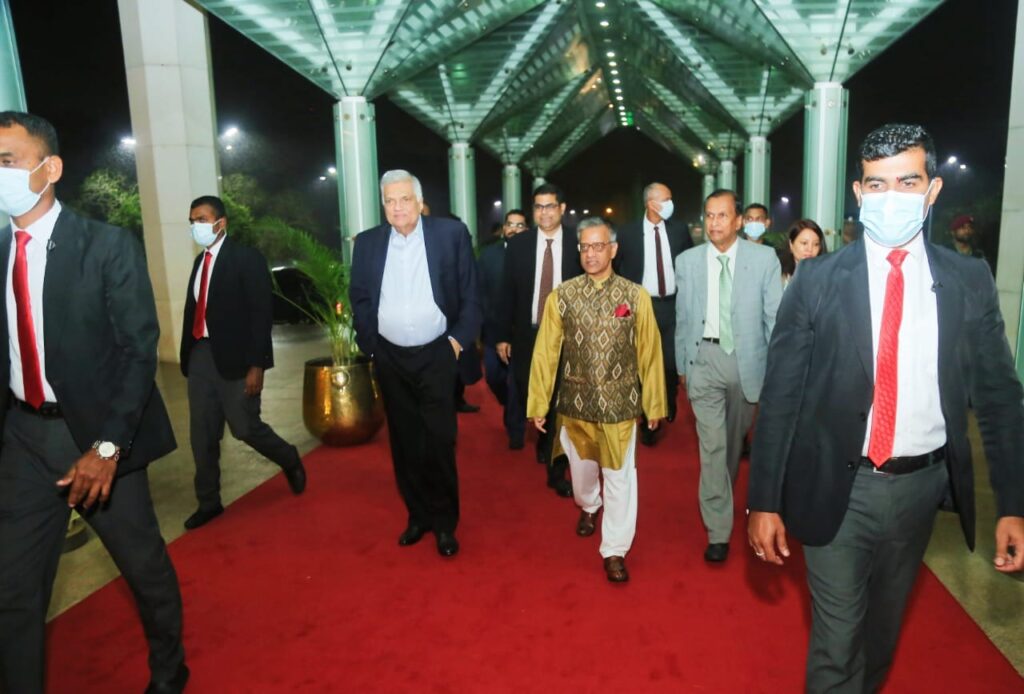
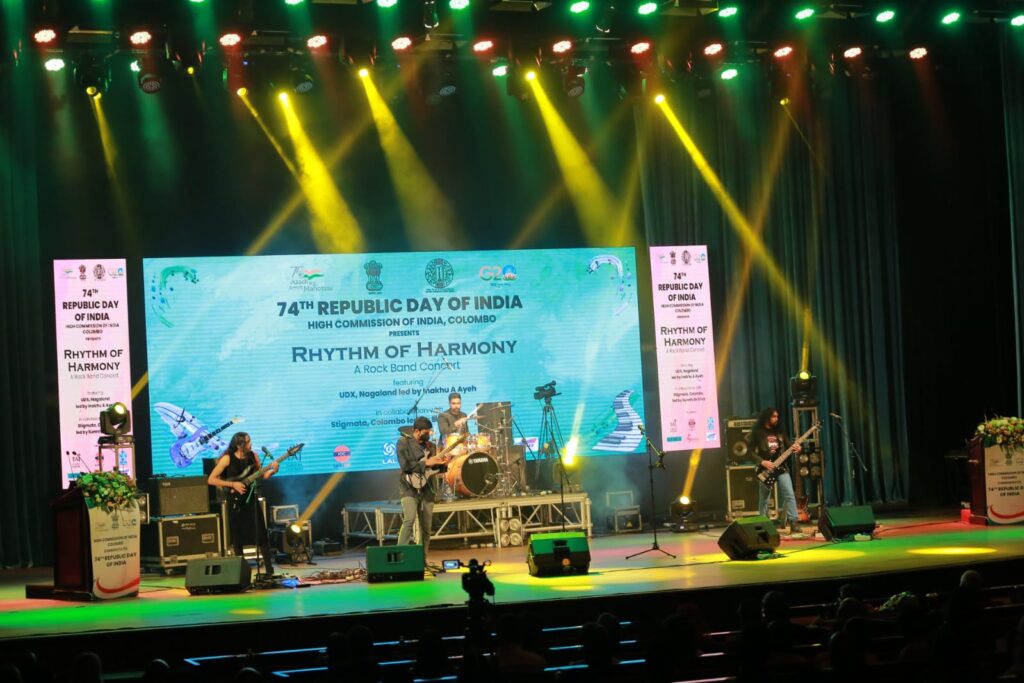
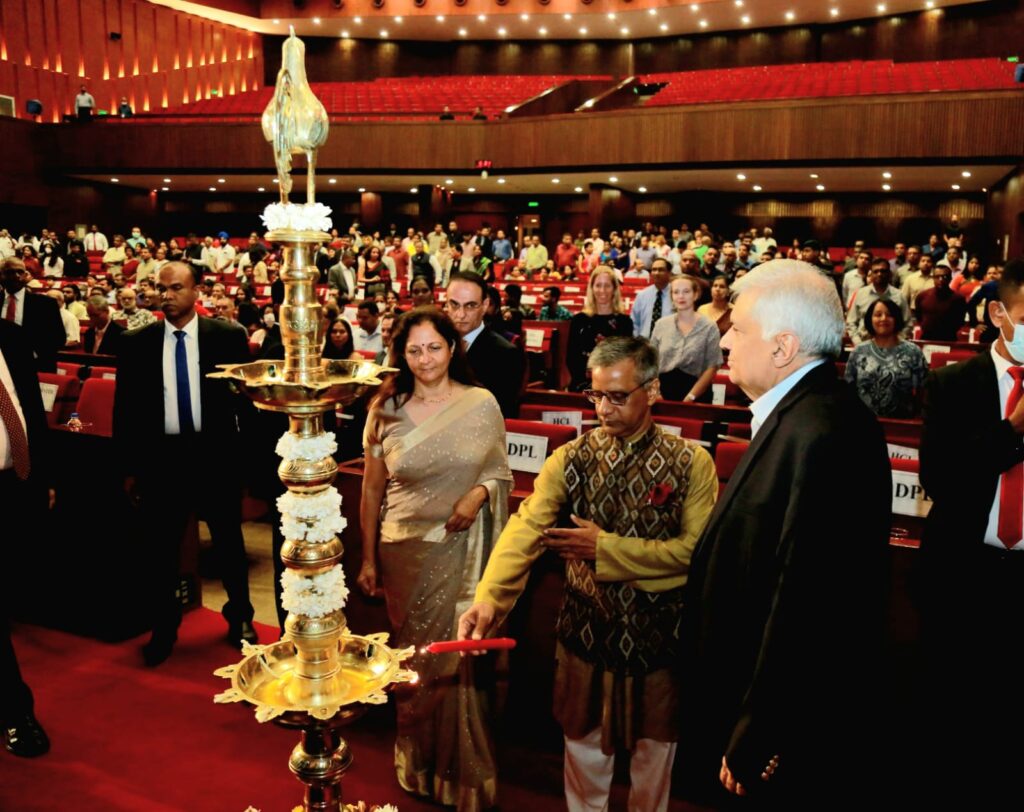
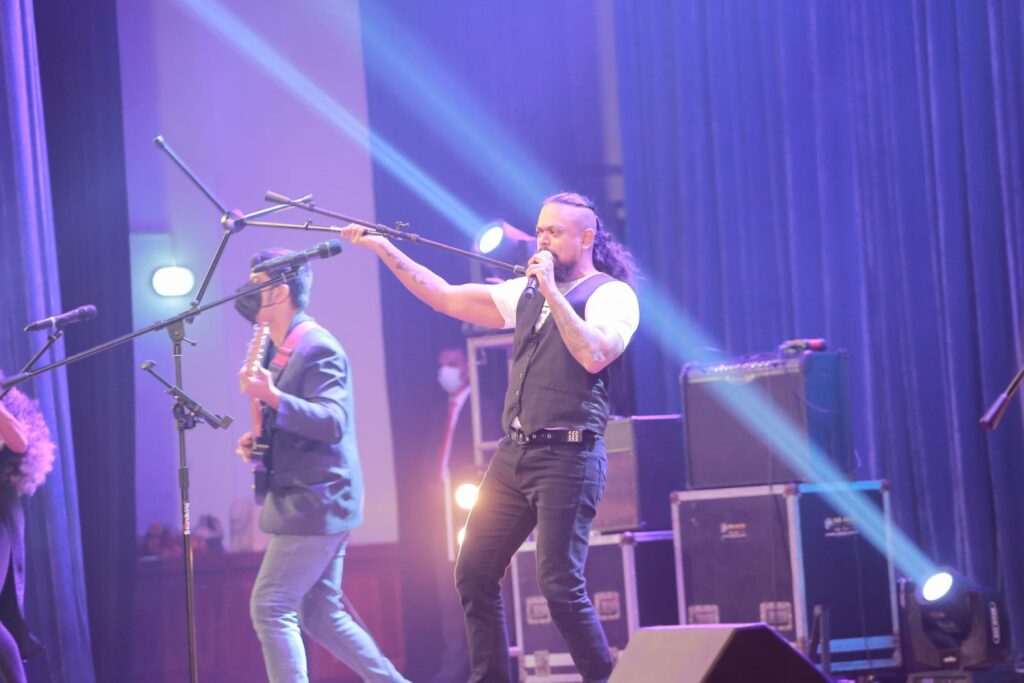
On 24 January 2023, High Commission of India in Colombo organized a Rock Band concert- ‘Rhythm of Harmony’ to commemorate the 74th Republic Day of India falling on January 26, 2023. The President of Sri Lanka H.E. Mr. Ranil Wickremesinghe graced the event as the Chief Guest. A renowned Rock band from India- UDX led by Inakhu Atoshe Ayeh, collaborated with a Sri Lankan band, Stigmata led by Suresh De Silva for this special event. Several Sri Lankan Ministers, Members of Parliament, members of the diplomatic corps, Indian diaspora and other dignitaries were present at the occasion.
2. UDX a seven-member band, which performed in Sri Lanka for the first time, hails from a province in the North-Eastern part of India, Nagaland, known for its musical talent. With the 75th Independence Day of Sri Lanka being commemorated on February 4, 2023, performance by artists from UDX and Stigmata together was a fitting tribute to the joint celebrations of the national days of India and Sri Lanka. The event reflected the close links between the two countries in the field of art and culture.
3. In the next few days, UDX will travel around the Island and give performances at Jaffna, Kandy and Hambantota.
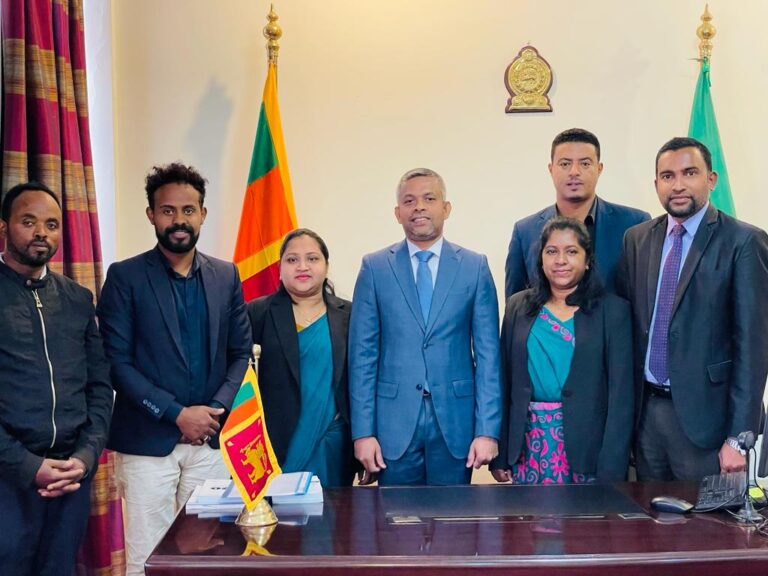
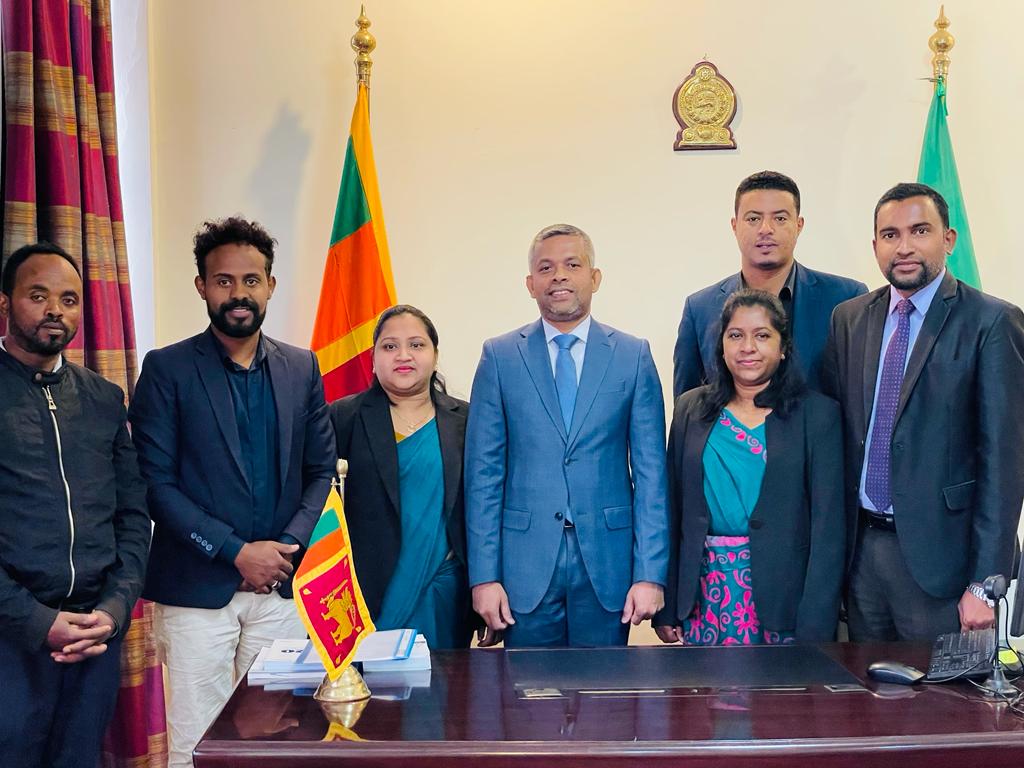
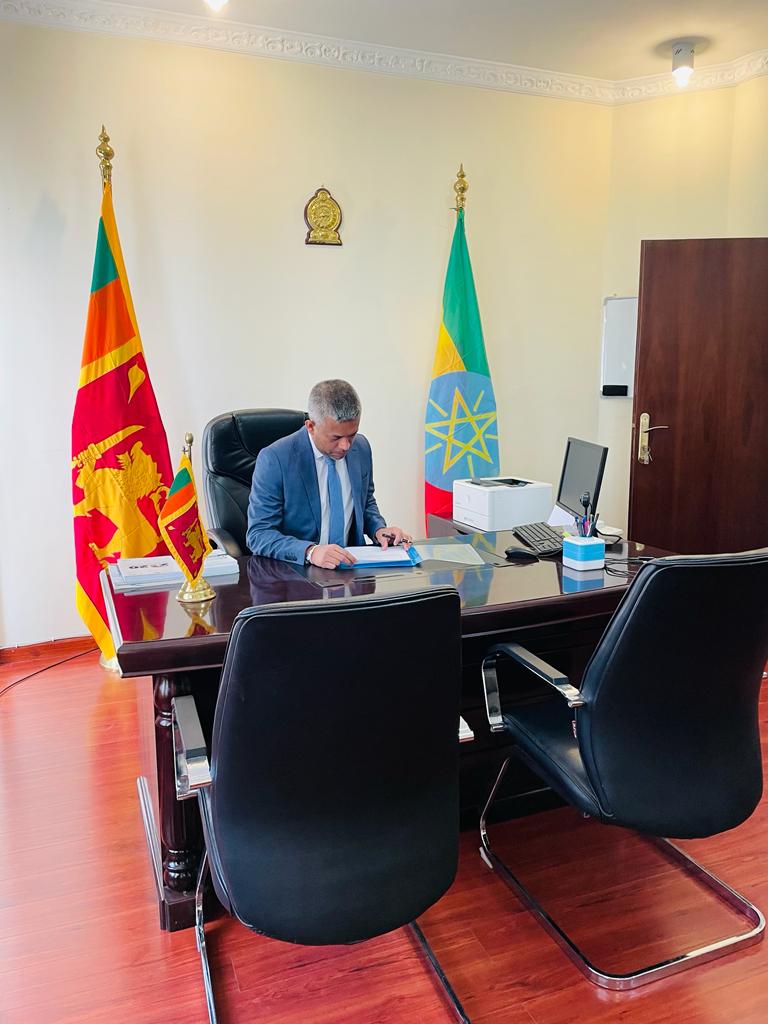
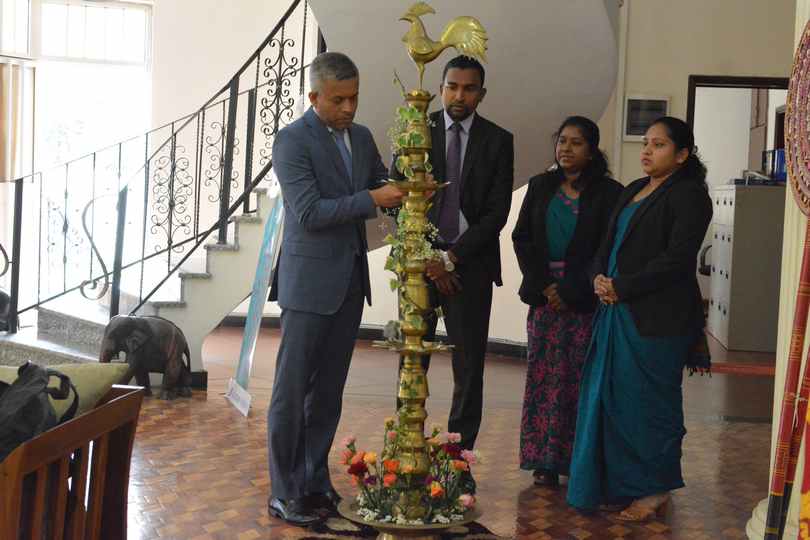
Ambassador-designate of Sri Lanka to the Federal Democratic Republic of Ethiopia K.K.Theshantha Kumarasiri assumed duties at the Embassy of Sri Lanka in Addis Ababa on 18January 2023.
Addressing the Embassy staff upon assumption of duties, the Ambassador-designate stated that there was a renewed focus on expanding Sri Lanka’s relations with countries of the African Continent. In this regard, Ethiopia is an important partner both from political and economic perspectives as well as reaching out to other African countries given its central role as the headquarters of the African Union.
Ambassador-designate, K.K.Theshantha Kumarasiri counts 20 years in the Sri Lanka Foreign Service, having served in Sri Lanka Embassy in Brazil, South Korea, France and Permanent Delegation of Sri Lanka to UNESCO in Paris.
He is a graduate of the University of Kelaniya and has Masters in Human Rights & Democratization from the University of Colombo, Sri Lanka.